Cornering the World Market on Fentanyl : Beijing's Industrial Complex
"We're looking to collaborate with China, because it's not an indictment against the Chinese government, per se.""It's companies, chemical companies in China, that are engaged in this kind of conduct -- and the Chinese government has taken a lot of action in terms of regulating and prohibiting various [fentanyl] precursors.""There's very little north-south movement of produced fentanyl across the borders [U.S./Canada/Mexico].""Even if [there's 0.01 of a pound or percent going across, my uber-focus -- while I suppose to a degree aspirational -- has been to lower that to zero, and to eliminate fentanyl the best as I can from a supply perspective, but also reduce demand in this country.""[U.S. officials expressed] strong acknowledgment of the efforts being made and encouragement to continue on this path [tackling fentanyl, if not necessarily] satisfaction."Kevin Brosseau, Liberal government 'fentanyl czar'
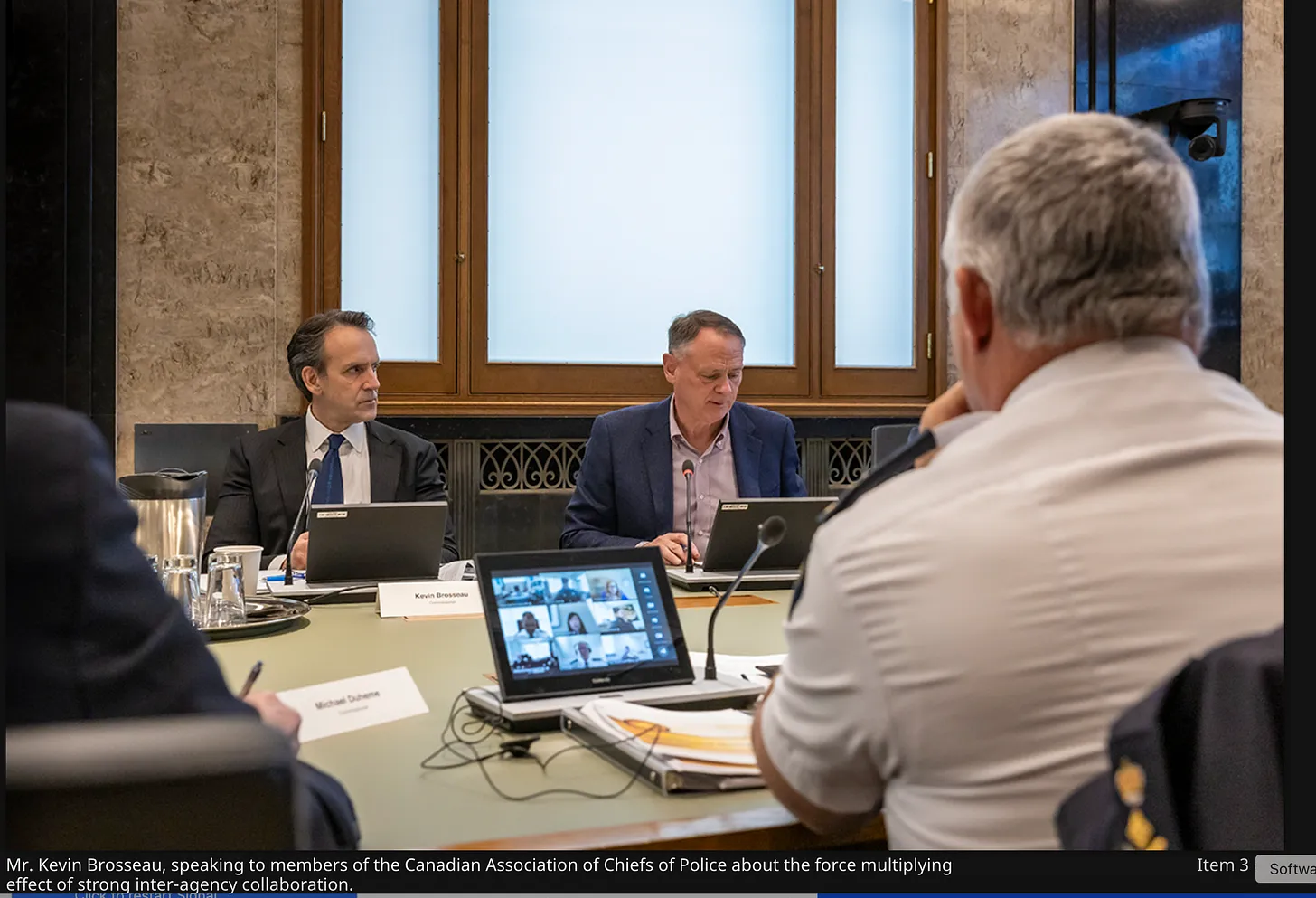
In line with Canadian Prime Minister Mark Carney's plan to visit China next year to confer with President Xi Jinping over trade issues primarily linked to poisoned diplomatic relations over the past several years when Beijing's hostage-diplomacy went a long way to alienating its regard in Canada, along with China's penchant for industrial piracy and cyber espionage as well as blatant interference in Canadian politics, a move is underway to collaborate with China for the purpose of putting a halt to the chemicals pouring into Canada used in the production of the synthetic opioid that has caused an overdose epidemic in Canada.
Under successive Liberal governments, business and trade with China has always been seen as a high priority. This, despite China's investing in Canadian universities to launch China-friendly studies, and its record of criminally taking possession of industry and government blueprints to enhance and speed China's own industries at a cost to those whose successful systems, mechanisms and techniques made them world leaders in the world of high tech. The end result has been China perfecting its rival industries and those from whom production expertise was surreptitiously taken saw their own collapse.
Canada's liberal governments were always able to overlook these inconveniences in favour of smoothing over differences and getting on with what they considered to be the more important work of benefiting from trade and cooperation with the world's industrial colossus. Years ago the United States managed an agreement with Beijing to help ensure that opioid-type drugs and their chemical precursors would be monitored in an effort to stop the carnage in human lives they cause as they flood into the West. The situation has persisted and continues to take its toll.

To believe that the Chinese Communist Party is incapable of fully controlling the flow of fentanyl and its precursors produced by chemical producers in China, is to disregard the total control it has over its industries, many of which have direct ties to the government or to the Peoples' Liberation Army. China monitors its population carefully and closely, thanks to face recognition technology and the ubiquitous presence of closed circuit cameras and apps Chinese must download to their iphones. To assume it has little knowledge of fentanyl production and trade is naive. It is just another industrial production that Beijing nurtures in control of a lucrative market.
The punitive tariffs that the Trump administration has slapped on trading partners throughout the world has made strange bedfellows in any event. U.S. President Donald Trump, in his insistence that the United States would no longer be taken advantage of through what he claims is uneven trade, has upended the world economy as a struggle ensued to plead for a more moderate tariff toll on those who consider themselves allies of the U.S. who have been hit just as hard as those the United States considers adversarial countries.
 |
| Donald Trump in talks with Xi Jinping (Daniel Torok/White House Photo) |
Citing illegal migration crossing the border from Canada into the U.S. as well as large fentanyl shipments entering across the border, the tariffs imposed on Canada as punishment for presumed laxity in those areas has been a stinging blow. Seizures of fentanyl at or close to the border with the U.S. are minuscule from Canada, averaging 3.5 pounds monthly over the past three years. In comparison those drug seizures with Mexico averaged slightly over 1,500 pounds per month. But even 3.5 pounds of a deadly opioid has catastrophic consequences.
Citing China as "the primary source country for illicit fentanyl precursor chemicals" as well as pill-pressing equipment, U.S. intelligence agencies named India as second in line; the drug itself, acknowledges Brosseau, is produced now "largely" within North America. Adding that the US. produces its own fentanyl as well as what comes across its border from Mexico. Canada, on the other hand, is responsible for its own fentanyl production. In the background, President Trump signed one of his famous 'executive orders' classifying fentanyl as a "weapon of mass destruction".
 |
| Barrels of fentanyl production precursor materials displayed to the media in Pasadena, Ca, September 2025 / Getty Images |
Labels: Beijing, Canada, Chemical Precursors, Drug Overdoses, Fentanyl, Mexico, U.S.
posted by Pieface @ 7:43 PM


0 Comments:
Post a Comment
<< Home