Risking Children's Health Consuming Energy Drinks
 |
| “We’re seeing more teenage patients come in with symptoms like anxiety, palpitations, and elevated heart rates” TorranceMemorial.org |
"[Energy drinks can lead to extra heartbeats and while that's not necessarily a major health risk], it does show that even small doses affect the heart rate and rhythm of young people and children.""Why do these drinks have these effects? Probably because of the enormous amounts of caffeine they contain."Dr. Felix Oberhoffer, clinician scientist and pediatric resident, Munich"We have warnings on cigarette products and we still have four million people who smoke. [Supplemental labels are vague]."When we use the word 'supplement', most often people think, 'Oh, that's a nutritional supplement. That's good for me. That's what we do for old folks and little kids, and infants.""What it's meant to do is flag things that are in such high concentrations they could be harmful, but most folks aren't picking up on that."David Hammond, professor, university research chair, School of Public Health Sciences, University of Waterloo"Member companies adhere to several voluntary marketing commitments, including a commitment] to not engage in any direct commercial activity [with respect to K-12 schools and not to advertise energy drinks] in programming/advertising whose primary target audience is children.""[Sales restriction on energy drinks is] arbitrary, discriminatory, ineffective and not justified."Krista Scaldwall, president, Canadian Beverage Association"Seeing my daughter on the floor not being able to move or speak properly was the scariest thing I've been through. I've never condoned buying energy drinks for her, ever.""We've told her plenty of times that they can be dangerous. It wasn't just that she was able to buy them. It was the amount -- it was how she was able to purchase such an excessive amount.""At the hospital, we got her blood tested, urine tested -- everything possible to make sure that's why she had the seizure.""Eventually she got her mobility back, within about an hour. But she was moving around like a sloth because her muscles were so seized up.""They double-checked her kidneys, to make sure there was no kidney failure They did an ECG when she was on the ground, in the ambulance and at the hospital.""All the kids are drinking energy drinks. They all want to be like their older siblings. They all want to be like everybody they see on TikTok."Kayla Duguay, of Miramichi, N.B.
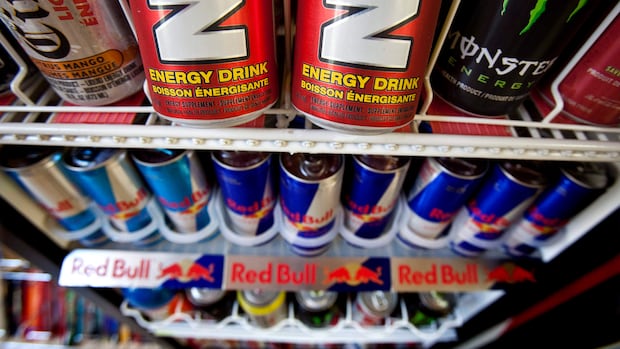 |
| England is moving to ban energy drink sales to kids under 16, citing health risks and rising youth consumption. Canada’s public health agency says its current rules, like warning labels and marketing limits, are enough. CBC |
The issue of health risks posed by caffeinated energy drinks to children is one of growing concern. In England energy drinks with over 150 mg of caffeine per litre, exceeded by many popular brands, are likely to be banned in Britain for under-16s. A special committee of the European Parliament is studying a potential EU-wide ban on energy drink sales to minors, with ten member states currently limiting their sale by age. A special committee of the European Parliament listened to medical researchers speak of "high acute consumers" referring to young people consuming at least a litre in a sitting, the equivalent of five espressos plus 150 grams (a cup) of sugar.
An increasing number of children are being seen by pediatricians, with heart palpitations and chest pains; teachers reporting an increase in restless, irritable or zoned-out students suffering from insufficient sleep. The potential of "undesirable cardiac consequences" has been noted emerging, inclusive of arterial stiffness, and stiffening of the heart's blood vessels in young people and children, according to Dr. Felix Oberhoffer of Munich.
Dr. Oberhoffer and colleagues conducted a small study involving 27 healthy children and teens between the ages of ten and 18, finding that one energy drink in the morning was associated with higher blood pressure throughout the day and into the night. He explained that, while caffeine is the major troubling component in energy drinks they also contain other stimulants like taurine and guarana seed extract. With their lower body weight, children and teens are more sensitive to stimulants, making them more vulnerable to the effects of excess consumption.
In Canada, Health Canada and the Canadian Food Inspection Agency require that energy drinks must contain no greater amount than 180 mg of caffeine per serving; their labels containing "a cautionary statement" aimed at pregnant or breastfeeding women and people sensitive to caffeine, while the products are not recommended for children under 14 years of age. Children, according to the Canadian Paediatric Society, should have no caffeine whatever, though chocolate and chocolate milk do contain caffeine.
An expert panel convened by Health Canada in 2011 recommended energy drinks be sold under direct supervision of a pharmacist, limiting to people 18 and older and labelled "stimulant drug-containing beverage". The recommendations were never implemented. Two years later, a Health Canada risk assessment concluded that for adolescents 12 to 18, a typical energy drink's caffeine content would be unlikely to pose a health hazard, taken in the recommended maximum daily levels.
"At moderate levels there are minimal risks. But there are lots of people, including kids, who don't consume at moderate levels.""[Risks are greater when used in conjunction with sports or alcohol] which, again, are some of the most common patterns of use.""I'm not a medical doctor, but they're stimulants. They increase blood pressure and heart rate.""When you're doing sports or vigorous activities, you're already stressing your cardiovascular system. Your heart rate and blood pressure is [sic] already up and you're adding additional stress on top of that."David Hammond, School of Public Health Sciences, University of Waterloo
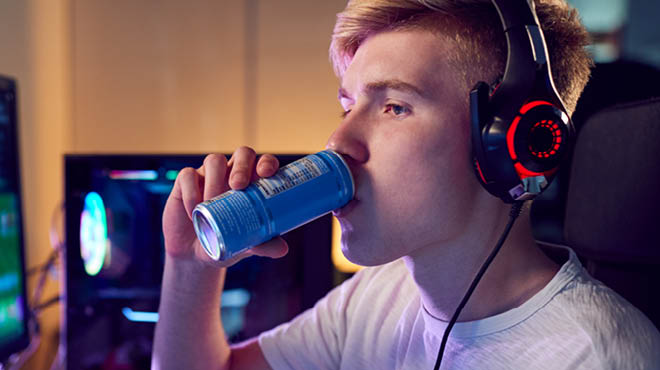 |
| About 90% of adults consume caffeine every day, making it the most common stimulant in the world. Widely available sources of caffeine include coffee, green and black tea, soft drinks, "energy shots," over-the-counter supplements, energy or protein bars, sports and energy drinks, chocolate, chewing gum and even ice cream. Mayo Clinic |
Labels: Blood Pressure, Britain, EU, Excess Caffeine, Health Canada, Heart Rate, Stimulant, Underage Teen Caffeine Risk
posted by Pieface @ 8:16 PM


0 Comments:
Post a Comment
<< Home