Ruminations

Blog dedicated primarily to randomly selected news items; comments reflecting personal perceptions

Saturday, December 13, 2025

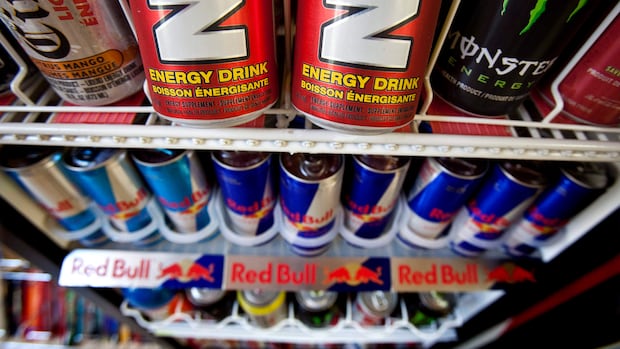
Risking Children's Health Consuming Energy Drinks

https://www.torrancememorial.org/app/files/public/e5953858-fc86-4836-aad9-ba96b07bcc48/1.png
“We’re seeing more teenage patients come in with symptoms like anxiety, palpitations, and elevated heart rates” TorranceMemorial.org
"[Energy drinks can lead to extra heartbeats and while that's not necessarily a major health risk], it does show that even small doses affect the heart rate and rhythm of young people and children." 
"Why do these drinks have these effects? Probably because of the enormous amounts of caffeine they contain."
Dr. Felix Oberhoffer, clinician scientist and pediatric resident, Munich
 
"We have warnings on cigarette products and we still have four million people who smoke. [Supplemental labels are vague].
"When we use the word 'supplement', most often people think, 'Oh, that's a nutritional supplement. That's good for me. That's what we do for old folks and little kids, and infants."
"What it's meant to do is flag things that are in such high concentrations they could be harmful, but most folks aren't picking up on that."
David Hammond, professor, university research chair, School of Public Health Sciences, University of Waterloo

 
"Member companies adhere to several voluntary marketing commitments, including a commitment] to not engage in any direct commercial activity [with respect to K-12 schools and not to advertise energy drinks] in programming/advertising whose primary target audience is children."
"[Sales restriction on energy drinks is] arbitrary, discriminatory, ineffective and not justified." 
Krista Scaldwall, president, Canadian Beverage Association 
 
"Seeing my daughter on the floor not being able to move or speak properly was the scariest thing I've been through. I've never condoned buying energy drinks for her, ever."
"We've told her plenty of times that they can be dangerous. It wasn't just that she was able to buy them. It was the amount -- it was  how she was able to purchase such an excessive amount."
"At the hospital, we got her blood tested,  urine tested -- everything possible to make sure that's why she had the seizure."
"Eventually she got her mobility back, within about an hour. But she was moving around like a sloth because her muscles were so seized up."
"They double-checked her kidneys, to make sure there was no kidney failure They did an ECG when she was on the ground, in the ambulance and at the hospital."
"All the kids are drinking energy drinks. They all want to be like their older siblings. They all want to be like everybody they see on TikTok."
Kayla Duguay, of Miramichi, N.B. 
England is moving to ban energy drink sales to kids under 16, citing health risks and rising youth consumption. Canada’s public health agency says its current rules, like warning labels and marketing limits, are enough. CBC
 
The issue of health risks posed by caffeinated energy drinks to children is one of growing concern. In England energy drinks with over 150 mg of caffeine per litre, exceeded by many popular brands, are likely to be banned in Britain for under-16s. A special committee of the European Parliament is studying a potential EU-wide ban on energy drink sales to minors, with ten member states currently limiting their sale by age. A special committee of the European Parliament listened to medical researchers speak of "high acute consumers" referring to young people consuming at least a litre in a sitting, the equivalent of five espressos plus 150 grams (a cup) of sugar. 
 
An increasing number of children are being seen by pediatricians, with heart palpitations and chest pains; teachers reporting an increase in restless, irritable or zoned-out students suffering from insufficient sleep. The potential of "undesirable cardiac consequences" has been noted emerging, inclusive of arterial stiffness, and stiffening of the heart's blood vessels in young people and children, according to Dr.  Felix Oberhoffer of Munich. 
 
 Dr. Oberhoffer and colleagues conducted a small study involving 27 healthy children and teens between the ages of ten and 18, finding that one energy drink in the morning was associated with higher blood pressure throughout the day and into the night. He explained that, while caffeine is the major troubling component in energy drinks they also contain other stimulants like taurine and guarana seed extract. With their lower body weight, children and teens are more sensitive to stimulants, making them more vulnerable to the effects of excess consumption.
 
In Canada, Health Canada and the Canadian Food Inspection Agency require that energy drinks must contain no greater amount than 180 mg of caffeine per serving; their labels containing "a cautionary statement" aimed at pregnant or breastfeeding women and people sensitive to caffeine, while the products are not recommended for children under 14 years of age. Children, according to the Canadian Paediatric Society, should have no caffeine whatever, though chocolate and chocolate milk do contain caffeine.
 
An expert panel convened by Health Canada in 2011 recommended energy drinks be sold under direct supervision of a pharmacist, limiting to people 18 and older and labelled "stimulant drug-containing beverage".  The recommendations were never implemented. Two years later, a Health Canada risk assessment concluded that for adolescents 12 to 18, a typical energy drink's caffeine content would be unlikely to pose a health hazard, taken in the recommended maximum daily levels.  
"At moderate levels there are minimal risks. But there are lots of people, including kids, who don't consume at moderate levels."
"[Risks are greater when used in conjunction with sports or alcohol] which, again, are some of the most common patterns of use."
"I'm not a medical doctor, but they're stimulants. They increase blood pressure and heart rate."
"When you're doing sports or vigorous activities, you're already stressing your cardiovascular system. Your heart rate and blood pressure is [sic] already up and you're adding additional stress on top of that."
David Hammond, School of Public Health Sciences, University of Waterloo  
https://www.mayoclinichealthsystem.org/-/media/national-files/images/hometown-health/2022/drinking-an-energy-drink.jpg?sc_lang=en&hash=B7FBBA513C7E96E9AEF99A2F6ECB8A28
About 90% of adults consume caffeine every day, making it the most common stimulant in the world. Widely available sources of caffeine include coffee, green and black tea, soft drinks, "energy shots," over-the-counter supplements, energy or protein bars, sports and energy drinks, chocolate, chewing gum and even ice cream.  Mayo Clinic
 

Labels: , , , , , , ,

Friday, November 26, 2021

Restricted Flights? Because Its Necessary, South Africa

"This new variant of the COVID-19 virus is very worrying. It is the most heavily mutated version of the virus we have seen to date."
"Some of the mutations that are similar to changes we’ve seen in other variants of concern are associated with enhanced transmissibility and with partial resistance to immunity induced by vaccination or natural infection."
Professor Lawrence Young, virologist, Warwick University, Britain
 
"What we do know is there's a significant number of mutations, perhaps double the number of mutations that we have seen in the Delta variant."
"And that would suggest that it may well be more transmissible and the current vaccines that we have may well be less effective." 
British Health Secretary Sajid Javid
Passengers walk past artwork between terminals at IAH George Bush Intercontinental Airport in Houston, Texas. REUTERS/Adrees Latif

The dread likelihood of a more virulent, transmissible, vaccine-avoidance mutation of the SARS-CoV-2 virus that causes COVID-19 emerging at some point in the trajectory of variants mutating from variants was always thought by scientists to be a matter of time, although they also hoped that opportunities for such a mutation to develop might be mitigated by the speed with which pharmaceutical companies developed effective, safe vaccines against COVID. It looks now that among the known 'variants of concern', one is now swiftly spreading that may resemble the dreaded apparition.

A newly identified variant out of South Africa is being watched with rising concern within the global medical community with the fearful trepidation that its properties may result in seeing highly successful vaccines far less effective when countering the new strain. The immediate course of action has been to shut the door of opportunity to the virus in the hope that travel restriction imposed on seven African countries where the new variant has been identified, would stem its course.
 
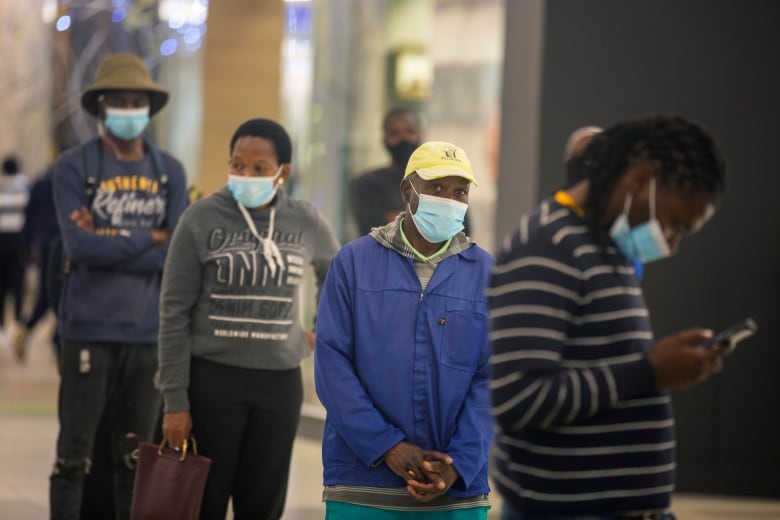
People queue to get vaccinated against COVID-19 at a shopping mall in Johannesburg on Friday. South African scientists doing genomic sequencing said on Tuesday they detected a new coronavirus variant. (Denis Farrell/The Associated Press)
 
Britain has taken immediate steps to temporarily ban flights from South Africa and six other African countries and mandating that returning British travellers from these very destinations go into immediate and strict quarantine. According to the U.K. Health Security Agency, the variant, labelled B.l.l.529 on an interim basis, boasts a spike protein far different to the original coronavirus that the composition of the COVID-19 vaccines are based on.

Leading to the concern that its mutations are likely to be able to evade the immune response generated through prior infection as well as through inoculation with current vaccines. Investigators are awaiting the opportunity to collect additional data, but as a precautionary move reflecting lab studies required to assess the likelihood of greatly reduced vaccine efficacy of the mutations, the travel restrictions were viewed by scientists as a necessary step.

The British government was advised to react without delay, pre-emptively, should the concerns of the variant impact be borne out, regardless of the fact that it could take a matter of weeks-long investigations for all the information required to shine a light of understanding on the new variant's characteristics to be collected and adequately assessed. 
 
Scientists in South Africa announced their detection of the new COVID-19 variant in limited numbers and were involved in efforts to better comprehend its potential implications. The World Health Organization has praised the South African scientists for their quick detection and timely warning to the international community. 

Diagnostic laboratories' early studies of the variant suggest it has increased its presence rapidly in the most populated province of Gauteng, and the expectation is that it may be present in the country's other eight provinces, according to the announcement by the South African scientists. Up to a day previous there was confirmation of the presence of 100 specimens identified as B.l.l.529, in South Africa.
 
Europe and the U.K. imposing travel restrictions against southern Africans because of the emergence of a new coronavirus variant is 'unjustified,' says South African Health Minister Dr. Joe Phaahla. (Jerome Delay/The Associated Press
 
To the present, the variant has also been found in Botswana and Hong Kong; the Hong Kong case a traveller from South Africa. Scientists in South Africa now speculate that up to 90 percent of new cases in Gauteng could be B.l.l.529. "Although the data are limited, our experts are working overtime with all the established surveillance systems to understand the new variant and what the potential implications could be", explained a statement from South Africa's National Institute for Communicable Diseases.

Following Britain's decision to close to flights from the seven African countries, the European Union followed suit, followed closely by the United States and Canada. Israel, which identified a case of the new variant in an Israeli arrival returning from a trip to the African continent, has done likewise. As concern over the presence of the new, threatening variant, India, Japan, Turkey, Switzerland the United Arab Emirates have also taken cautionary measures to impose tougher travel curbs.

Dr. Isaac Bogoch says it's important to understand the new coronavirus variant, and equally important to get people around the world vaccinated. Credit: AP Photo/Tsvangirayi Mukwazh


Labels: , , , , , ,

Friday, November 22, 2013

The Spoilers

Canada and Australia are now being viewed as the bad boys of the international environmental movement. Neither country has made much of an effort to join those like the European Union which have pledged to cut back on greenhouse gas emissions and to lower their footprint on the international atmosphere. Which is to say that under new management of a new government, Australia has decided to throw in the clean-up towel, joining Canada.

Even China has ingenuously portrayed itself as becoming more environmentally conscious, although there is little sign that anything substantial has been put into play; their constant smog levels are staggeringly dreadful, impacting on peoples' health and raising carbon emissions worldwide. The dependence on particulate-producing coal-fired furnaces with huge smokestackes in evidence everywhere continues unabated.

The United States never did sign on to Kyoto, and it too has a significant impact on global carbon dioxide emissions, given its massive population and its industrial and mining and exploration activities, largely dependent though not to the same scale as China, on coal-fired energy. Though through the enactment of cleaner-burning fuels regulations and better automotive designs there has been some notable reductions.

India is another hugely populous country, emerging at almost a similar rate to China, as a great source of environmental pollution. Not to mention all of the other catch-up economies elsewhere in the world, all wanting a piece of the manufacturing-and-trade pie. No one seems to be listening really seriously to the little countries whose fragile existence within areas threatened by rising sea levels is making them frantically anxious over their future.

And now, here's Britain suddenly discovering just as others have done that the renewable-energy replacements for petroleum products are costly, inefficient and hugely unpopular with consumers and taxpayers alike, though they're obviously one and the same. People generally feel they should support green energy, but when it comes to paying their energy bills their enthusiasm tends to wane proportionately to the constant rise in consumption and pricing.

"The 'green crap', as the Tories call it, are the funds that pay for insulating the homes of elderly people and which support thousands of British manufacturing jobs.
"This is depressingly cynical -- only bothering about political spin, not in protecting our children's future", complained the Liberal Democratic president Tim Farron on news that the governing British coalition has begun to turn its back on green energy.

Prime Minister David Cameron is reported to have informed ministers of the Crown to scrap the "green crap" driving up household energy bills. He promised at one time to lead the "greenest government ever", and that promise undoubtedly endeared him to the hearts of voters, who in theory would support that aspiration, but as a practical measure don't appreciate higher energy bills.

Still, his government has promised to "roll back" green levies which amount to roughly $190 annually on the average consumer's energy bill. "He's telling everyone, 'We've got to get rid of all this green crap'. He's absolutely focused on it", admitted a senior Conservative source; denied, of course by Mr. Cameron's office. The pre-election campaign slogan "vote blue, go green" has been deep-ditched.

In Canada, environmentalists are livid about Prime Minister Stephen Harper's casual attitude toward green energy alternatives. Wind power has proven hugely unpopular as a blight on the landscape and a threat to people's health. Solar-generated power has not proven anything but costly, and the Province of Ontario which pushes both expensive alternatives had gifted consumers with the most expensive energy costs in North America.

While the Official Opposition in Parliament blame the Conservative-led government for Canada's blooming bad reputation on the energy file, it was a Liberal government under Jean Chretien, formerly prime minister, that signed onto Kyoto, promising that Canada's future emissions would be sharply reduced. Trouble was, the Chretien government did nothing to forward that goal, and nor did the succeeding Liberal government of Paul Martin.

Environmental protection yes, to a degree. A degree that doesn't hamper resource extraction, manufacturing, and any number of other vital indices of a country's wealth. Besides which, a whole lot of skeptics keep reminding the puzzled public that the jury is still out on the causes of climate change and that it could very well be that human activities have little-to-nothing to do with the changing climate and environment, and nature everything.

And no one, particularly any human agency, can tell nature how to conduct her business.

Labels: , , , , ,

 
()() Follow @rheytah Tweet