Gene Editing: Optimists and Skeptics
"We're excited by the possibility that you could develop a single editing agent into a drug that may help many different types of patients, circumventing the need to invest multiple years and millions of dollars to develop each new genetic medicine for each individual.""We are purposefully forgoing what is the most obvious way to treat a patient -- fix their individual mutation back to the normal sequence.""[The vast majority of people with genetic diseases] suffer from diseases too rare for companies to be able to recoup the costs of drug development.""We hope this research will eventually pave the way for a clinical trial of PERT, and will inspire other broadly applicable, disease-agnostic gene-editing strategies. If you don’t have to target one mutation at a time, the size of the patient groups that could be treated with a single drug becomes much, much larger.""We hope the result will be many more patients that benefit, as well as greater incentives to develop gene-editing drugs for rare diseases."David R. Liu, biologist, Broad Institute/Harvard University
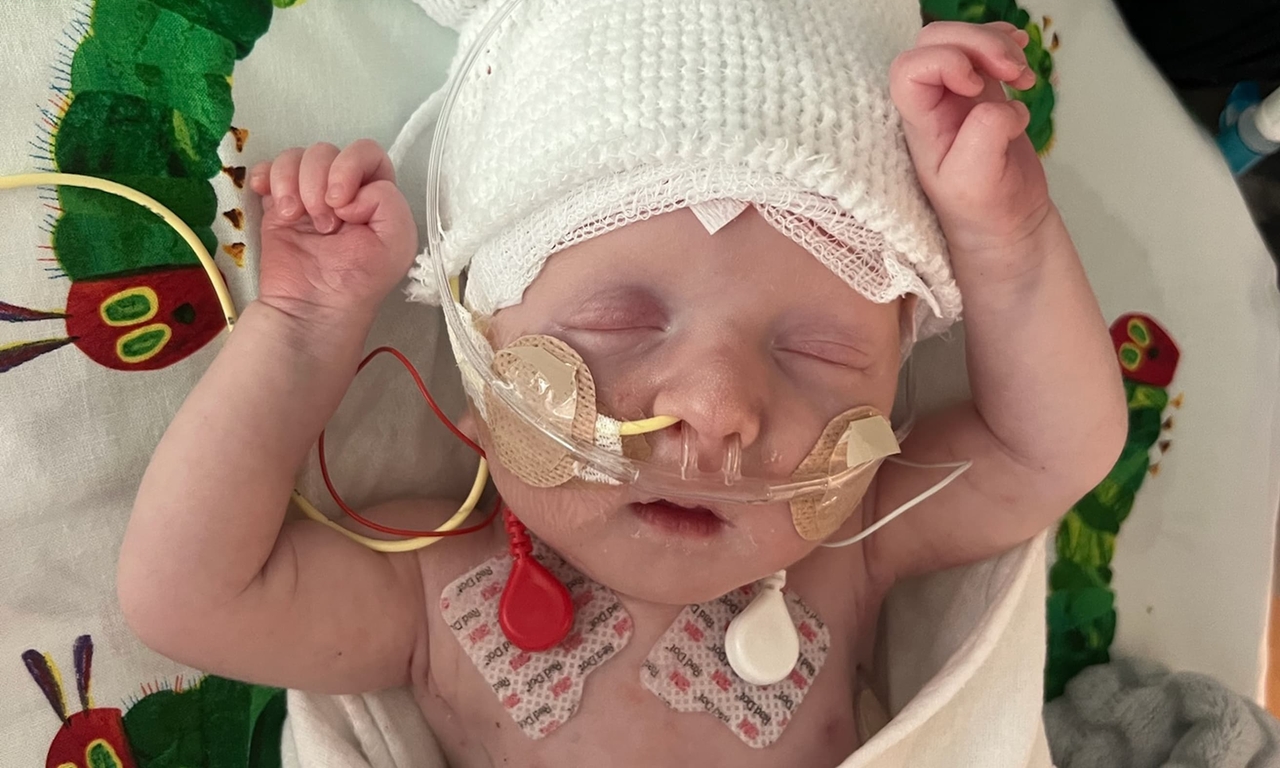 |
| KJ was only days old when he was diagnosed with a rare metabolic disorder and transferred to Children's Hospital of Philadelphia where doctors were actively researching new cell and gene therapies. |
Gene-editing therapies for the treatment of rare diseases hold out great hope for the future, while facing some roadblocks comprised of time and resources committed to devise treatments that may be relevant to only a limited number of patients. A recently published study in the journal Nature sees a new approach outlined that has the potential to make the process more efficient and less costly, comprised of a gene-editing strategy that could over time be standardized for various rare diseases rather than personalized edits for each one.
Over 7,000 rare genetic diseases have been defined, affecting fewer than 200,000 people, in the United States alone. These are diseases that afflict some 400 million people globally. The focus on the study was on 'nonsense mutations' which have the effect of truncating proteins, similar to a sentence halted in its midst by a period inserted where it should not be. These erratic, out-of-place 'stop signs' are labelled as premature stop codons. Their effect is to stop truncated proteins operating as they should, causing or contributing to a number of rare genetic diseases.
A molecule identified as a suppressor tRNA which can insert an amino acid at the stop codon position allowing the cell to read through the area on the gene where it would have paused to produce the full protein was the key to the study. The research team engineered an optimal suppressor tRNA following exhaustive testing. With the use of a genetic search-and-replace method Dr. Liu's lab invented called prime editing, it was inserted into a cell's genome replacing an existing tRNA that had not served any purpose.
 |
| UdeMnouvelles, Universite de Montreal |
The method was tested in human cell models of four diseases -- Batten disease, Tay-Sachs disease, cystic fibrosis and Niemann-Pick disease type C1 -- as well as in a mouse engineered with another human disease, Hurler syndrome. Enough of the relevant protein's function in each case was restored to encourage the expectation that the change would alleviate symptoms of the diseases. The method did not create genetic or biological missteps, the team reported encouragingly.
Dr. Liu explained there is variation within diseases. As a result ,truncated proteins are not the cause for every patient, though the out-of-place stop signs can lead to 30 percent of genetic diseases. The new method, he estimates, could apply to ten to 15 percent of patients with Duchenne muscular dystrophy or cystic fibrosis. The method, estimates Dr. Liu's team, might be of value to 252,000 people with Stargardt disease and 31,000 people with phenyelketonuria.
Funded by the U.S. National Institutes of Health and academic institutions, the study was spurred by a 'bottleneck' in the drive to make gene editing more available to desperate patients. Increased scientific capacity to fix disease-causing mutations aside, the very issue of the diseases' rarity among populations means the pharmaceutical producers would be expending great amounts of time and research to produce specific drugs, yet could only anticipate a limited distribution, making them unable to recoup the steep costs of production.
"In some cases, the bottlenecks in genetic medicine aren’t the science anymore. They’re in meeting regulatory requirements, in the manufacturing costs associated with these treatments, and in the commercial challenges of drugs that treat very small numbers of patients.""Witnessing gene-editing companies make the gut-wrenching decisions of which targets to pursue — synonymous with the gut-wrenching decisions of which patients are left behind — made it clear that we need creative scientific ways to help address some of these problems."Dr. David R. Liu, Broad Institute
Dr. Liu spoke from personal experience, having co-founded gene-editing companies that faced the situation of ebbing funds making it difficult to enable clinical trials treating a limited number of patients. Efforts in the creation of drugs based on suppressor tRNAs face challenges; among them that patients would require repeated dosages indefinitely at the risk of toxic effects over time.
 |
Credit: Agnieszka Grosso, Broad Communications
|
PERT, the reprogramming of cells by a process of a single prime editing system could potentially treat multiple genetic diseases. Dr. Liu's method would result in a one-time edit, producing no toxicity nor errors in other proteins. His study was not universally acclaimed, however. Several experts in gene-editing cautioned considerable further testing and other steps must be considered before the new approach could represent a trusted protocol to meet patients' medical needs.
"[While the new approach is years away from potential use, it might ultimately apply to] a significant fraction [of those patients; conservatively about ten percent].""How do you deliver this to all cells in the body that would need to be corrected to prevent the worse outcomes from the disease?"Dr. Richard P. Lifton, president, Rockefeller University, head, laboratory of human genetics and genomics
Labels: Costly Pharmaceutical Production, Gene-Editing, Rare Genetic Diseases, Research Study
posted by Pieface @ 7:51 PM


0 Comments:
Post a Comment
<< Home