Vital Global Shipping Route --- Strait of Hormuz
"[Iran has managed to profit from oil sales and also] preserve its own export artery [by using control over the choke point].""[The latest passages through the Strait of Hormuz show the Strait was not simply] closed. It is better understood as closed selectively against some traffic, while still functioning for Iranian exports and a narrow set of tolerated non-Iranian movements."Kun Cao, client director, Reddal consulting"[The risks of transiting Hormuz have raised] insurance costs for cargo and ships while increasing logistics costs for shippers choosing alternate routes.""[Supply chain disruptions] would begin to affect production in Turkey earlier than in other areas." [Turkey is a major supplier of light commercial vehicles to the European market].""[If the conflict persists], production cost inflation would become more entrenched."Stephanie Brinley, analyst S&P Global Mobility
 |
| Liberia-flagged tanker Shenlong Suezmax, carrying crude oil from Saudi Arabia, that cleared the Strait of Hormuz and was seen in port in Mumbai, India on March 12. Photo: AP |
"Rerouting shipments around the Strait of Hormuz will add days or weeks to travel time, adding to freight costs and causing a backlog from the slower cargo turnover.""And that’s before any increase in the cost of ‘war risk' insurance premiums.""Though Iran itself isn’t a semiconductor producer, the conflict’s disruption to global shipping will cause chip deliveries to be delayed or stranded at ports in Asia, reducing availability for assembly lines. Given that modern vehicles may contain as many as 3,000 chips each, and the industry hasn’t completely recovered from a number of supply chain issues over the last half decade, another disruption magnifies the ongoing vulnerability.""Automotive manufacturers operate on very thin margins compared to many high tech sectors. There’s just no room to absorb dramatic changes in input costs such as steel, plastics, and freight, and, ultimately, prices to the consumer rise."AutoForecast Solutions manufacturing expert Sam Fiorani
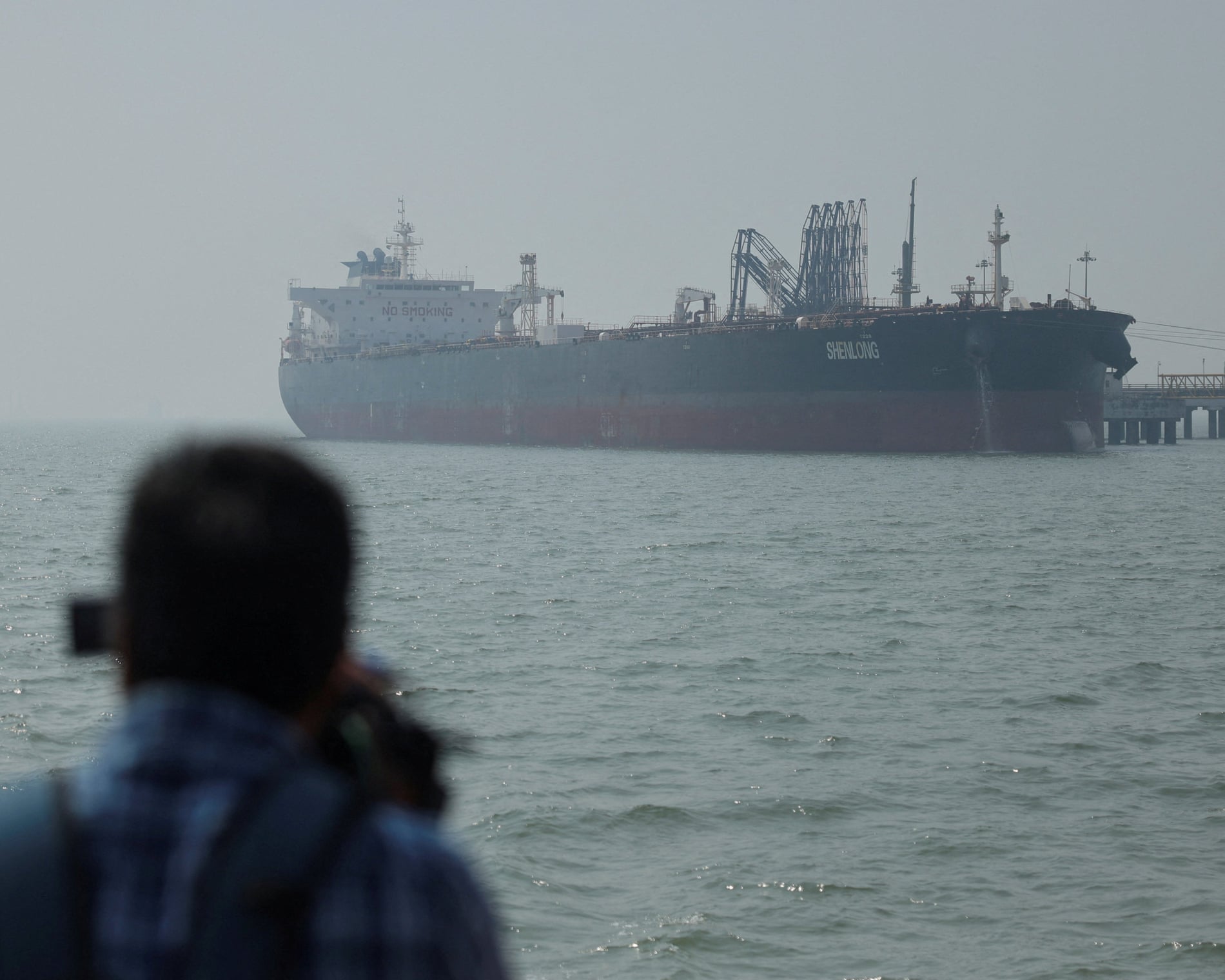 |
| The Liberia-flagged tanker Shenlong Suezmax managed to cross the strait last Friday, one of the few vessels that have done so since the war broke out. Photograph: Francis Mascarenhas/Reuters |
Since the onset of the U.S.-Israel war with Iran, some 90 ships, including oil tankers, have managed to cross the Strait of Hormuz. Iran itself continues to export millions of barrels of oil, despite the waterway having been effectively closed, a revelation owing to tracking by maritime and trade data platforms. The difference is that many of these vessels passing through the strait represent 'dark' transits that evade western government sanctions and oversights, with ties to Iran according to Lloyd's List intelligence.
As governments step up negotiations with Iran, vessels linked to India and Pakistan also have successfully crossed the strait recently. While crude oil prices leaped above US$100 a barrel, Western allies and trade partners were being pressured by U.S. President Donald Trump to send warships to the region to help reopen the strait in the hopes of bringing prices back to a semblance of normal. His request was met with a decided lack of enthusiasm in Europe.
The Strait of Hormuz, long a waterway for global oil and gas transport famously supplying one-fifth of global crude oil, has been closed to shipping traffic since early March, following the start of the conflict. Since then, some 20 vessels were attacked in the area, targeted by Iran. Which hasn't stopped Iran itself from exporting above 15 million barrels of oil during that same time period, according to trade data and estimates by analytics platform Kpler.
China, in the face of Western sanctions, is the largest buyer of Iranian oil. Even so, some transit of ships linked to China have also been blocked from using the Strait. However, data show that between March 1 and 15, including 15 oil tankers, at least 89 ships crossed the Strait of Hormuz, according to Lloyd's List Intelligence, greatly diminished in numbers from the normal 100 to 135 daily vessel passages prior to the war's outbreak.
Of the 89 vessels that transited the waterway, over a fifth were thought to be affiliated with Iran; Chinese and Greece affiliated ships were among the rest, even as other vessels also have been managing the transit, some turning off their transponders to avoid detection. According to Richard Meade, editor-in-chief of Lloyd's List, vessels may be transiting "with at least some level of diplomatic intervention. In other words, the Iranian regime may have effectively created a safe corridor" allowing some ships to pass close to the coast of Iran.
Marine Traffic ship tracking platform revealed that some vessels near or within the strait declared themselves to be linked with China, or they had all Chinese crew to reduce risks of being attacked. Military sites on Kharg Island off the coast of Iran were bombed by the United States. The island is vital for Iran's oil network and exports, but the bombing was confined to military sites, leaving Iran's oil infrastructure intact, for the present.
"The thinkers within the Islamic establishment, they recommended that if there is a next time [following last summer's 12-day war] — and a good half of them actually believed that the next round would be coming at some point in the near future — pressure should be put on the world or oil markets.""And, if the United States is involved, on the US companies involved in the Middle East oil and gas market and also on the Gulf countries because they house those air bases. ""This particular body of water is one of the most important, strategic choke points in the world.""[Iran] no longer allows any ship to use the international shipping corridors in the Strait of Hormuz using Omani waters. They actually reroute them north of the Larek Island, completely inside Iranian waters, and then they’re turned all the way back in toward the Gulf of Oman.""I think [the rerouting is] part of the psychology of this whole thing, they want to show that they have full control, and they want to prevent or dissuade or deter the Americans from interfering with this kind of controlling operation.""They are making the transit too dangerous and, without actually mining the Strait, they [have] effectively stopped all shipping traffic in the Strait of Hormuz."Farzin Nadimi, Iran military analyst, senior fellow, Washington Institute for Near East Policy"Each country, according to international law and the law of the sea, has got about 12 nautical miles [approximately 22km] of territorial sea, which is part of the land of the coastal state.""That means that the narrowest part of the Strait of Hormuz is shared between Oman and Iran as their territorial waters.""This means every vessel which passes through this strait, whether military vessels, ships, oil tankers ... they pass through either the Iranian territorial waters or Oman territorial waters.""[Under the law of the sea, while either nation might put regulations or checks in place], they cannot hamper innocent passage of vessels, including military vessels."International law expert, Hossein Esmaili, Flinders University
 |
| Ships line up in the Strait of Hormuz as seen from Mina Al Fajer, United Arab Emirates, on March 11. (AP Photo/Altaf Qadri) · ASSOCIATED PRESS |
Labels: Global Shipping, Iran at War, Israel, Oil and Gas Transit, Strait of Hormuz, United States
posted by Pieface @ 8:37 PM


0 Comments:
Post a Comment
<< Home