Ruminations

Blog dedicated primarily to randomly selected news items; comments reflecting personal perceptions

Friday, March 20, 2026

Vital Global Shipping Route --- Strait of Hormuz

"[Iran has managed to profit from oil sales and also] preserve its own export artery [by using control over the choke point]."
"[The latest passages through the Strait of Hormuz show the Strait was not simply] closed. It is better understood as closed selectively against some traffic, while still functioning for Iranian exports and a narrow set of tolerated non-Iranian movements."
Kun Cao, client director, Reddal consulting 
 
"[The risks of transiting Hormuz have raised] insurance costs for cargo and ships while increasing logistics costs for shippers choosing alternate routes."
"[Supply chain disruptions] would begin to affect production in Turkey earlier than in other areas." [Turkey is a major supplier of light commercial vehicles to the European market]." 
"[If the conflict persists], production cost inflation would become more entrenched."
Stephanie Brinley, analyst S&P Global Mobility 
https://www.stuff.co.nz/media/images/9Tzi8ywRz924XE3uHaD6DZ3Ef+IdbOiYlvIROR5vlqUeRrexTocZGobKRJ9od%2Fgnk3B%2FCeKTmTAsIjj6Q0YaYSAO725RwfwI+2THgGYlwMDjSJYgVP2ivG7iBHyoXuo8Hf9TGNw1zHPNK+ebzdTM0ZvzaGXAmCc8sOHTPnGsDCMmAXJDTE3+LrKx3I0LYE0MhtRwEMefk2YyTXOhytUXzGITdel3fti+PvM4zzbyenrk7OclcVv1UoZJRFWFPa6TxtNLKrHPECpvYfnNxgKJC6tOmRpp+1gQaFIggI5PmXqMjrppN0oo+Jb23xocpnFqcpQpNghhm%2F+6Tj6Y7DhhoMKcdeNBHwNzpig+Ts3yMgzJDcZCTo%2FaxhZ1Dy+sF8GknlrICvuR7IQzAdCwKOo7o5xWvXxFDQhHlpAOnXaZJpZaAggti1bT0veT9B4u3rQl59Fx58pb6SO55keEqjUojt8mwbpvlifV250mTmoW%2FYOBTVE4xU3aAWOsmVtLIcCa0%2F3G%2FmHtT7rRi9JDeMDb9A==?resolution=1240x700
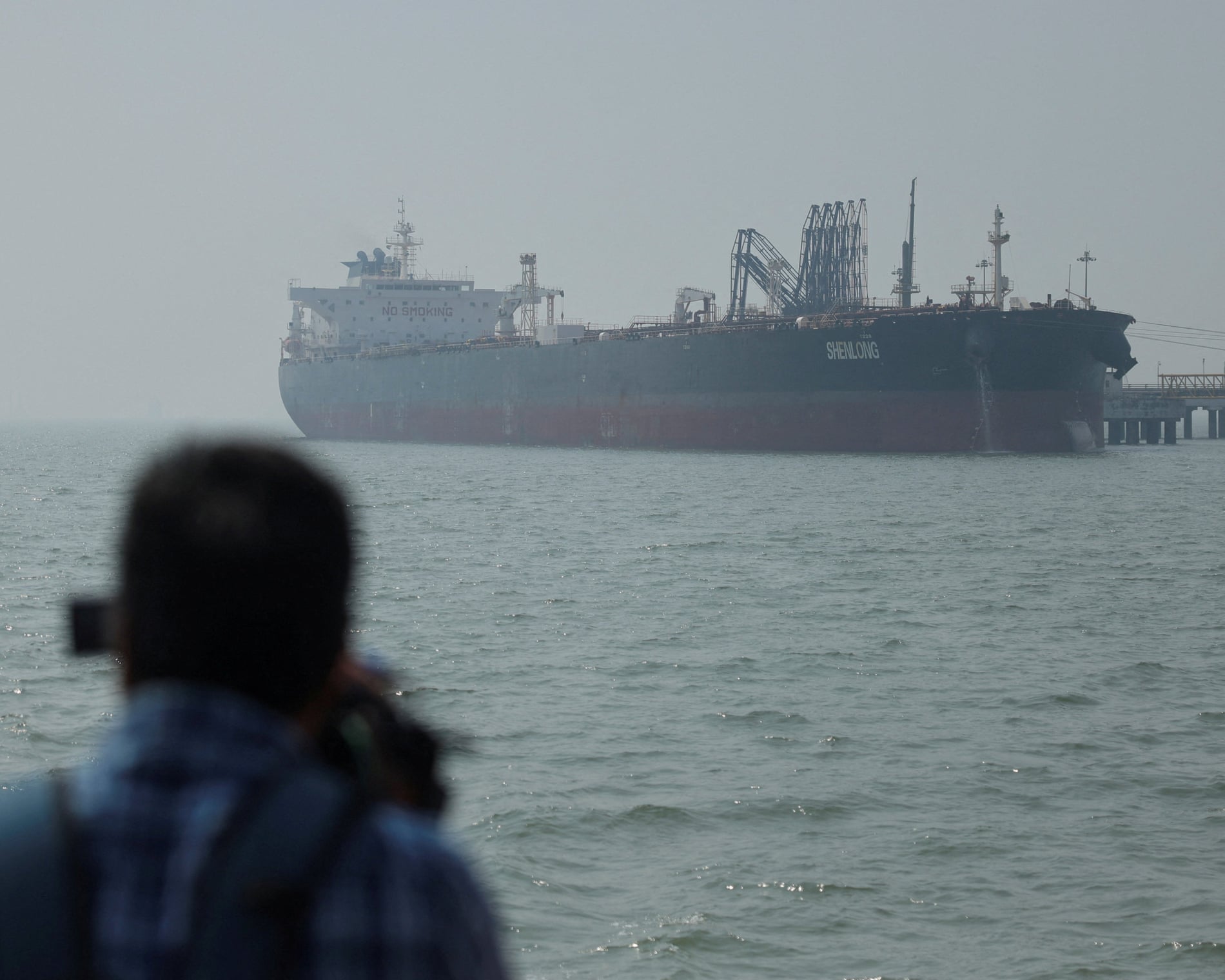
 Liberia-flagged tanker Shenlong Suezmax, carrying crude oil from Saudi Arabia, that cleared the Strait of Hormuz and was seen in port in Mumbai, India on March 12. Photo: AP
"Rerouting shipments around the Strait of Hormuz will add days or weeks to travel time, adding to freight costs and causing a backlog from the slower cargo turnover."
"And that’s before any increase in the cost of ‘war risk' insurance premiums."
"Though Iran itself isn’t a semiconductor producer, the conflict’s disruption to global shipping will cause chip deliveries to be delayed or stranded at ports in Asia, reducing availability for assembly lines. Given that modern vehicles may contain as many as 3,000 chips each, and the industry hasn’t completely recovered from a number of supply chain issues over the last half decade, another disruption magnifies the ongoing vulnerability."
"Automotive manufacturers operate on very thin margins compared to many high tech sectors. There’s just no room to absorb dramatic changes in input costs such as steel, plastics, and freight, and, ultimately, prices to the consumer rise."
AutoForecast Solutions manufacturing expert Sam Fiorani   
https://i.guim.co.uk/img/media/b932da42d1a80939609b7dcc699d9dfcd3bf8c76/220_0_4773_3818/master/4773.jpg?width=1900&dpr=1&s=none&crop=none
The Liberia-flagged tanker Shenlong Suezmax managed to cross the strait last Friday, one of the few vessels that have done so since the war broke out. Photograph: Francis Mascarenhas/Reuters
 
Since the onset of the U.S.-Israel war with Iran, some 90 ships, including oil tankers, have managed to cross the Strait of Hormuz. Iran itself continues to export millions of barrels of oil, despite the waterway having been effectively closed, a revelation owing to tracking by maritime and trade data platforms. The difference is that many of these vessels passing through the strait represent 'dark' transits that evade western government sanctions and oversights, with ties to Iran according to Lloyd's List intelligence.
 
As governments step up negotiations with Iran, vessels linked to India and Pakistan also have successfully crossed the strait recently. While crude oil prices leaped above US$100 a barrel, Western allies and trade partners were being pressured by U.S. President Donald Trump to send warships to the region to help reopen the strait in the hopes of bringing prices back to a semblance of normal. His request was met with a decided lack of enthusiasm in Europe.
 
The Strait of Hormuz, long a waterway for global oil and gas transport famously supplying one-fifth of global crude oil, has been closed to shipping  traffic since early March, following the start of the conflict. Since then, some 20 vessels were attacked in the area, targeted by Iran. Which hasn't stopped Iran itself from exporting above 15 million barrels of oil during that same time period, according to trade data and estimates by analytics platform Kpler.

China, in the face of Western sanctions, is the largest buyer of Iranian oil. Even so, some transit of ships linked to China have also been blocked from using the Strait. However, data show that between March 1 and 15, including 15 oil tankers, at least 89 ships crossed the Strait of Hormuz, according to Lloyd's List Intelligence, greatly diminished in numbers from the normal 100 to 135 daily vessel passages prior to the war's outbreak.      
                                                                                       
Of the 89 vessels that transited the waterway, over a fifth were thought to be affiliated with Iran; Chinese and Greece affiliated ships were among the rest, even as other vessels also have been managing the transit, some turning off their transponders to avoid detection. According to Richard Meade, editor-in-chief of Lloyd's List, vessels may be transiting "with at least some level of diplomatic intervention. In other words, the Iranian regime may have effectively created a safe corridor" allowing some ships to pass close to the coast of Iran. 
 
Marine Traffic ship tracking platform revealed that some vessels near or within the strait declared themselves to be linked with China, or they had all Chinese crew to reduce risks of being attacked. Military sites on Kharg Island off the coast of Iran were bombed by the United States. The island is vital for Iran's oil network and exports, but the bombing was confined to military sites, leaving Iran's oil infrastructure intact, for the present. 
"The thinkers within the Islamic establishment, they recommended that if there is a next time [following last summer's 12-day war] — and a good half of them actually believed that the next round would be coming at some point in the near future — pressure should be put on the world or oil markets."
"And, if the United States is involved, on the US companies involved in the Middle East oil and gas market and also on the Gulf countries because they house those air bases. "
"This particular body of water is one of the most important, strategic choke points in the world."
"[Iran] no longer allows any ship to use the international shipping corridors in the Strait of Hormuz using Omani waters. They actually reroute them north of the Larek Island, completely inside Iranian waters, and then they’re turned all the way back in toward the Gulf of Oman."
"I think [the rerouting is] part of the psychology of this whole thing, they want to show that they have full control, and they want to prevent or dissuade or deter the Americans from interfering with this kind of controlling operation."
"They are making the transit too dangerous and, without actually mining the Strait, they [have] effectively stopped all shipping traffic in the Strait of Hormuz." 
Farzin Nadimi, Iran military analyst, senior fellow, Washington Institute for Near East Policy
 
"Each country, according to international law and the law of the sea, has got about 12 nautical miles [approximately 22km] of territorial sea, which is part of the land of the coastal state."
"That means that the narrowest part of the Strait of Hormuz is shared between Oman and Iran as their territorial waters."
"This means every vessel which passes through this strait, whether military vessels, ships, oil tankers ... they pass through either the Iranian territorial waters or Oman territorial waters."
"[Under the law of the sea, while either nation might put regulations or checks in place], they cannot hamper innocent passage of vessels, including military vessels."
International law expert, Hossein Esmaili, Flinders University  
https://s.yimg.com/ny/api/res/1.2/swu7Tdh4y_eJRsnY5_Vw_w--/YXBwaWQ9aGlnaGxhbmRlcjt3PTk2MDtoPTY0MA--/https://media-mbst-pub-ue1.s3.amazonaws.com/creatr-uploaded-images/2026-03/b7dbea50-1d53-11f1-b6fe-c746db7a38ed
Ships line up in the Strait of Hormuz as seen from Mina Al Fajer, United Arab Emirates, on March 11. (AP Photo/Altaf Qadri) · ASSOCIATED PRESS


Labels: , , , , ,

Wednesday, March 18, 2026

Canadian Curse of Multiculturalism

https://smartcdn.gprod.postmedia.digital/nationalpost/wp-content/uploads/2026/03/threats-of-violence-0960.EJ_.jpg?quality=90&strip=all&w=564&h=423&type=webp&sig=epYjaIst9_4Ji6dF2G7Dtg
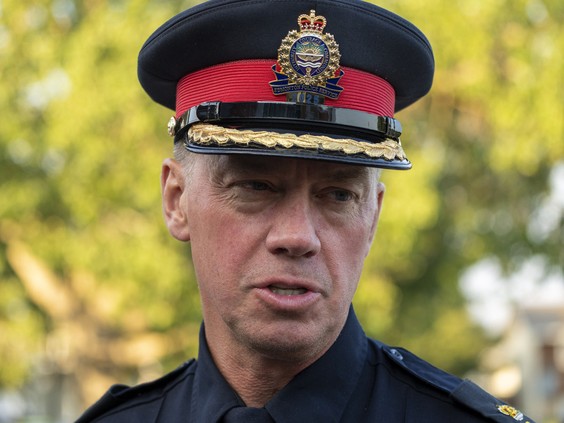
Police Chief Warren Driechel Greg Southam/Postmedia
"[I see my recent trip to Israel] as valuable, among multiple learning experiences I will have in this role." 
"I remain focused on my longstanding and ongoing commitment to dialogue, learning and connection across communities and across boundaries."
"In mid-February, I joined police Chiefs from Canada and the United States, on a visit to Israel where we met police and community leaders in several cities. I spent time with police officers from Jewish, Christian, Muslim and Druze faiths representing a wide range of cultural and ethnic backgrounds. I also met with Muslim community leaders who shared openly about their concerns and their reasons for working with police."
"These officers and community leaders operate in an environment that demands extraordinary vigilance - managing crime, counter terrorism, supporting community and crisis response all amid extreme complexity. Police to police we were able to talk about the toll this work takes on the people who do it. We talked about building trust in communities where there is little trust. We were able to get a glimpse of the undertaking required to police in complex environments. "
"I am grateful for what I was able to learn and share with those we visited and among my North American peers. These missions offer a great deal of insight and valuable perspective. I am grateful for the continued leadership and support of the Edmonton Police Commission who have supported me in this."
Edmonton Police Service Chief Warren Driechel 
https://www.ctvnews.ca/resizer/v2/6O3VBEJFGX5AN57ZRLQKZN7UWA.jpg?auth=bbee6db91bc2c05e8c93c629025dab04db971ad7e232f07982432cc41dca4297&width=1440&height=810

Sharif Hasan Abdulahi is accused of hitting Const. Mike Chernyk with a car and stabbing him multiple times before driving a U-Haul truck through downtown Edmonton and striking and injuring four people on Sept. 30, 2017. CTV News 

 
This professional development trip for the purpose of coming to grips with and intimately coming to an understanding of how the most terrorist-attack-prone nation in the world handles this reality of its existence is one that is conducted on an annual basis, when Chiefs of Police from around the world gather for an unusual type of conference, but one increasingly of concern globally as terror attacks have not abated but gathered steam. The professional organization for North American big-city police chiefs on this year's delegation paid for Chief Dreichel's seat on the tour, and it was approved by the Edmonton Police civilian oversight board. 
 
However, when news of the trip and Chief Dreichel's public comments on the value he took from his participation went public, Edmonton's Muslim community expressed its disapproval of this educational opportunity. No fewer than 26 Edmonton mosques and Muslim groups notified the police commission through a jointly-signed letter that they felt "profound disappointment and hurt".  Chief Dreichel's trip, they emphasized, was the cause of 'deep pain' for Edmonton's Muslim community, affected by the conflict in the Middle East.   
"My big takeaway was that what they're learning and what they're working on. How do they build that connection to all of their community, including the Muslim people that live within Israel."
"[Understanding the] historical, geopolitical context, and how that maybe shapes things that go on in our own community [was helpful]."
Chief Dreichel
 
"At a time when countless families in Edmonton are grieving the devastating violence unfolding in Gaza and the region more broadly, the decision by the chief of police to travel to Israel to meet with policing institutions demonstrates a serious failure of judgment toward the communities he is sworn to serve and protect."
"For many members of Edmonton's Muslim community, particularly those with family directly impacted by the ongoing genocide, this decision has caused great pain."
Edmonton Muslim community joint letter
 
"At a time of rising Islamophobia, anti-Palestinian racism, antisemitism, and hate towards marginalized communities, the choice to make this trip is harmful and further alienates members of our community."
Edmonton Mayor Andrew Knack  
https://pbs.twimg.com/media/HDorORrXUAAqcF-?format=jpg&name=360x360
Chief Dreichel made it clear that the delegation met no one from the Israeli government, its military or intelligence networks. This was purely and simply a police gathering to discuss how societies that face the spectre of terrorism can best use tried-and-true methods of intelligence, communication, cooperation and methods of collaboration with specific smaller communities within the larger one, to find common ground in the interests of security for all concerned.
 
In Canada, as in Israel itself, it is the Jewish community that has been under siege for the years following the Hamas-led terrorist attack that took place in southern Israel, on the border with Gaza, on October 7, 2023. It is also a known fact that Muslim youth groups in Canada on the very day of the atrocities and the day following and other days ad infinitum organized public rallies, marches and protests in support of Hamas, characterizing the mass brutality of murder, rape, torture and abduction of Israeli civilians as an understandable reaction to 'occupation'.
 
An 'occupation' that would never be necessary had Palestinian leaders over the years not incited their populations to hate, resent and resist the very presence of the State of Israel, claiming the very ancestral territory Israel sits on as the property of Arab Palestinians for their state. A state that could have been theirs in 1948, and every year after, had they recognized the legitimacy of Israel's existence, had they not aspired to destroy the Jewish State to claim the geography it sits upon for a Palestinian state, 'from the river to the sea'.
 
Islamophobia is a symbol of the victimhood that Palestinians clasp close to their bosoms, as a grievance against those who believe that Jews, like the Arabs that surround them, are entitled to their sliver of land; a tiny proportion of land apportioned by the United Nations, representing a minuscule part of Judean indigenous heritage, as opposed to the huge areas 'occupied' by the Arab nations that repeatedly went to war with the nascent Israel and failed with each endeavour to dislodge it. Muslims in Canada replay that 80-year-old scenario.
 
Edmonton itself has had experiences with Islamist terrorist attacks. And during the Islamic State reign of terror in Syria and Iraq, Islamist stalwarts from Edmonton went off to join them in their atrocity-laden Caliphate drive. 
 
Israel's response to the mass murder that took place on October 7, 2023, was to do what any other country in the world would do, in total accordance with international norms; enter the geography that had enacted the mass atrocity to hunt down and dispose of the terrorists, which in this case was the governing body of Gaza. It is a conflict of mass proportions, one that Hamas is comfortable with sacrificing its own population to achieve its purpose; destroying Israel. 
 
The charges of 'apartheid' and 'genocide', while playing well to the Muslim ummah abroad, are both hyperbolic terms of propaganda, since Israel's population is itself 20% Muslim, along with a wide array of other groups, from Christians, B'hai, Druze, Kurds and Circassians holding citizenship. As for 'genocide', under the 'occupation', the Palestinian population in both territories grew exponentially in size. It has been Hamas that has fuelled a war that has claimed victims among the population it hides behind. 
 
https://i.cbc.ca/ais/1.7092308,1706035329000/full/max/0/default.jpg?im=Crop%2Crect%3D%280%2C90%2C4032%2C2268%29%3BResize%3D860
Yellow police tape outside Edmonton's city hall after the building was evacuated on Jan. 23. Bezhani Sarvar, 28, was arrested and is facing a number of terrorism-related charges. (Emily Fitzpatrick/CBC)
 

Labels: , , , ,

Tuesday, February 24, 2026

Hargeisa, Republic of Somaliland

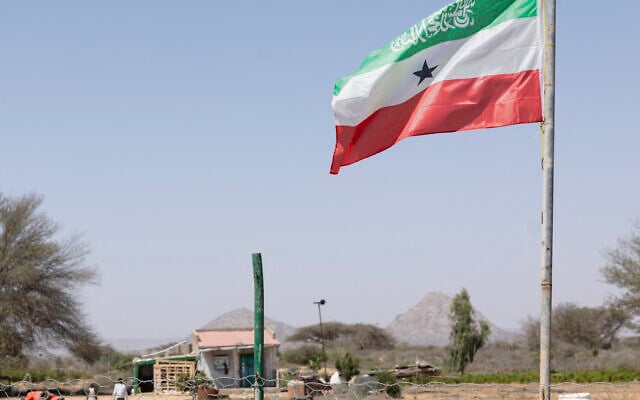
The flag of Somaliland seen at a fruit farm between the capital city of Hargeisa and Port city of Berbera, Somaliland, on February 19, 2026. (Tony KARUMBA / AFP)
"The recent recognition of Somaliland as a sovereign state by Israel, the first and only country to have done so in 34 years, has reignited international debate, drawing attention not only to a long-standing post-colonial anomaly but to the lived reality of the people of Somaliland. Too often reduced to a geopolitical abstraction, Somaliland is first and foremost a society that has spent more than three decades building stability, democratic institutions, and a shared civic identity despite lacking formal statehood."
"This unresolved status is inseparable from the legacy of colonialism. The modern borders of the Horn of Africa, like those of much of the continent, were drawn in European capitals with little understanding of, or regard for, the peoples who inhabited those territories. This externally imposed cartography fractured historical communities, fused incompatible ones, and laid the foundations for conflicts that persist to this day. Africa is not the empty reservoir of resources or the passive geopolitical playground it has been treated as throughout colonial, Cold War, and neo-colonial eras alike. It is a continent of diverse societies, rich histories, and deeply rooted cultural identities that have long been constrained by the political frameworks imposed from outside and by the continued influence of external powers."
"In this context, Somaliland’s situation is emblematic of what it means to be an unrepresented state today: functioning governance without recognition, democratic legitimacy without a seat at the table, and a population whose political will is acknowledged at home but ignored internationally. In a region marked by protracted conflict and chronic insecurity, Somaliland stands out not as a legal anomaly but as a community that has demonstrated resilience, coherence, and the capacity to govern, despite an international system still shaped by the colonial legacy that once defined it."
Elena Artibani, Academy Analyst Assistant, UNP Academy (Unrepresented Nations and Peoples Organization)
https://encrypted-tbn0.gstatic.com/licensed-image?q=tbn:ANd9GcR_4TvNuZ9s1S3E4a6FBZ9Cg6GCoo7WmW3nD-CnbimbPVcSTio33joen7NwsJZAxJXO61sZRmu_e7Cz4kPtTLLMgi4&s=19
Hargeisa, capital of Republic of Somaliland
 
 Somaliland is an authentically sovereign nation, not part of Somalia, and awaiting world recognition for its democratic credentials, its peaceful existence in the Horn of Africa surrounded by nations embroiled in conflict -- most particularly Somalia, a functionally unstable, violence-prone state. The Islamist groups that hunt down and kill other Muslims who reject the fundamentalist demands of Sharia law are a plague in Somalia, but are non-existent in Somaliland. The U.S. military recently conducted  an aggressive bombing campaign in Somalia against the world-threatening presence of jihadist-Islamist predators.
 
The U.S. Africa Command targeted 150 hits in Somalia to eradicate the presence of those dangerously militant terrorist groups. U.S. President Donald Trump is less than convinced of Somaliland's presence as a completely separate nation, aspiring to be recognized as the African continent's 55th sovereign country.
For its part, the state of Israel had no problem recognizing Somaliland as an independent sovereign nation, sharing democratic values of freedom and rule of law. Both countries use their natural resources and their people-power to meet their prosperous futures. 
 
And when Israel formally recognized Somaliland in response to its search for recognition from the global community, emphasizing its independence from Somalia, Israel was the first nation in the world to form an alliance with Somaliland, in full recognition. Almost instantaneously, the world responded, with China, France, Britain, Denmark, Russia and the African Union criticizing Israel's move of diplomatically legitimizing Somaliland's independence. Turkey, Iran, Saudi Arabia and Egypt made it clear that they deplored Israel's action verifying the Republic of Somaliland's right to declare itself independent of Somalia.
 
Hargeisa's street markets where large quantities of money that money changers stack around them without fear of theft.

Regional countries in the Horn are concerned with access to the Red Sea and the Gulf of Aden, considered among the most vital waterways worldwide for global shipping trade. Yemen's Houthi rebels linked to the Islamic Republic of Iran in its global Shiite jihad, have been particularly troublesome for global shipping in their hijacking of shipping vessels, in particular targeting any shipping that may have an Israeli component, linked to the Tehran-led Shiite terrorist axis supporting the Hamas invasion of October 7, 2023 in southern Israel where sadistic barbarism and mass slaughter led Israel to invade Gaza to eradicate Hamas terrorists.
 
According to analysts, Israel's recognition of Somaliland is being interpreted as a measure whereby the conflict with the Houthis can be mitigated. Israeli foreign policy expert Asher Lubotzky at the University of Houston in Texas, stated his interpretation that a greater Israeli footprint in Somaliland could assist in the deterrence of weapons smuggling by the Houthis into Yemen. Israel and Somaliland in their mutual recognition, however, are looking toward agreements in security, trade, technology and agricultural techniques.
 
According to Israeli Prime Minister Benjamin Netanyahu, the agreement with Somaliland reflected the spirit of the Abraham Accords, that series of agreements since 2020 that have established amicable relations between the Jewish state and Muslim-majority countries that include Bahrain, Morocco and the United Arab Emirates. Just as Israel defends Somaliland's right as a sovereign state conducting diplomacy, so too does the United States defend Israel's right to do likewise, even as the U.S. itself holds back yet from recognizing the Republic of Somaliland.  
 
Afar tribe cultural show in Hargeisa
 
Somaliland is a federal republic with a series of  semiautonomous regions. The country broke from Mogadishu in 1991 following a war of independence, during which Hargeisa, Somaliland's capital, and other cities were bombed by the Barre regime. Since then, support by the United Arab Emirates, and relations with Ethiopia and Taiwan have buoyed Somaliland's prospects for future prosperity. The UAE invested in the development of a modern port in Berbera on the Gulf of Aden in recent years. In response, Somalia retaliated by canceling all contracts with the UAE, a move in which it is Somalia that loses. 
 
China is enraged over Hargeisa's decision to maintain ties with Taiwan. Ethiopia, on the other  hand, signed a 2024 deal to build a naval facility on Somaliland's coastline, in exchange for recognition. 
 
Formalities and diplomacy have moved apace between Israel and Somaliland, with Israel's foreign minister, Gideon Saar, visiting Hargeisa in January. And according to Mohamed Hagi, Somaliland's minister of state for foreign affairs, Somaliland would soon join the Abraham Accords. Reciprocal embassies are shortly to be opened and business leaders in Israel are viewing investment possibilities with the Somaliland government.
 
On the cusp between rural tradition and urban modernity, donkey carts can still be seen on Hargeisa streets amidst vehicular traffic.
 

Labels: , , , , ,

Saturday, January 10, 2026

Iran : The Will Of The People

"Trump should know that intervention by the U.S. in the domestic problem corresponds to chaos in the entire region and the destruction of U.S. interests."
"The people of the United States should know that Trump began the adventurism."
"They should take care of their own soldiers." 
Ali Larijani, secretary, Supreme National Security Council, Tehran
 
"Any interventionist hand that gets too close to the security of Iran will be cut."
"The people of Iran properly know the experience of 'being rescued' by Americans: from Iraq and Afghanistan to Gaza."
Ali Shakhani, adviser to Supreme Leader Ayatollah Ali Khamenei
https://ichef.bbci.co.uk/news/1024/cpsprodpb/42b0/live/e740c480-ed30-11f0-a422-4ba8a094a8fa.jpg.webp
Protests were also reported in several other provinces, including Kermanshah - AFP via Getty Images
 
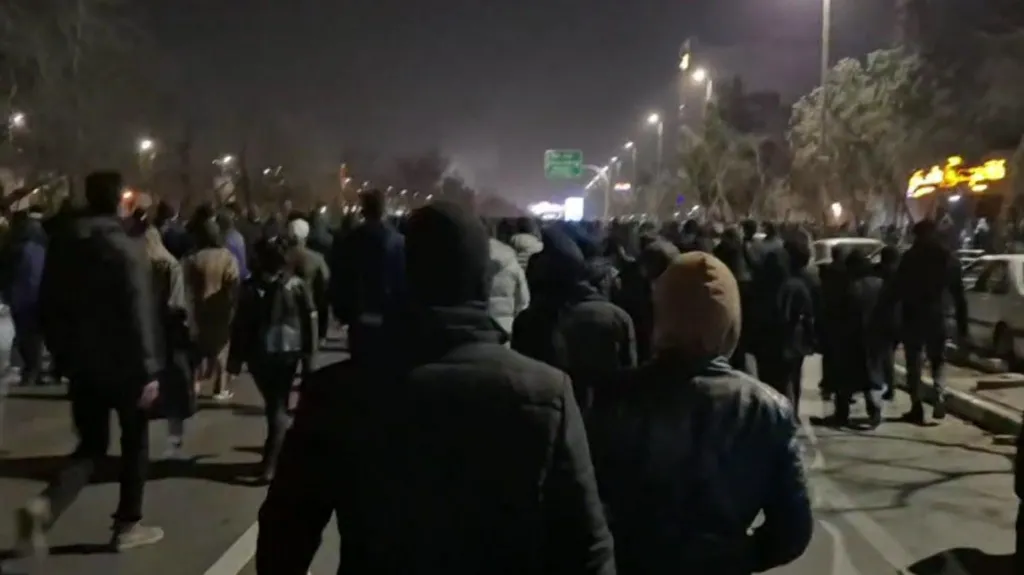
As the street protests throughout Iran against the theocratic regime of the Islamic Republic grow ever more vehement in a chorus of declarations that Iranians will no longer tolerate being governed by a religious dictatorship that has made a misery of their lives for almost half a century, with widening public participation in rallies approaching two weeks of aggravated and totally fed up Iranians excoriating their rulers, officials lash out at external interference as the cause of the riots. Not the years of repression, persecution, forced sacrifice and risk of imprisonment under a version of Shi'ite Islam that exemplifies theocratic Fascism.
 
There was an attempted rebellion -- the Green Revolution in 2009 -- that failed to accomplish its goal, another in 2019-2020 of Bloody November when thousands were killed and yet another in 2022 spurred by the murder of 22-year-old Kurdish Iranian Mahsa Amini, killed in police custody whose casual hijab insulted the strict dress code the morality custodians religiously police, none of them were quite the equal of these current street protests, in dedicated numbers, outright hostility to the regime and calls for the death of the Supreme Leader, as well as attacks by ordinary Iranians on members of the IRGC.
 
This time, Iranians were initially responding to the economic straits they face with rising prices and a failed currency. As the days went on repeating the protests on a wider scale, not only in major cities but smaller towns, country-wide with more agitated and angered citizens deciding it was now or never to express their rage against the government machinery that has turned their country into terror central, produced a strained internal economy while financially supporting the regime's terror proxies abroad, the regime struggles to contain the will of the people it thought it had completely broken.
 
https://cdn.theatlantic.com/thumbor/FQOot7nJrBp7iUEzAU_fG4EdCdo=/0x0:2000x1125/976x549/media/img/mt/2026/01/2026_1_10_Iran/original.jpg
MAHSA / Middle East Images / AFP / Getty
 
President Donald Trump has warned Iran that should it "violently kill peaceful protesters", the United States "will come to their rescue. We are locked and loaded and ready to go", he wrote on his social media site. Statements that enraged the regime, happy to attribute the chaos that now reigns and the resulting threat to the regime's stability to an outside source, in the hopes that they might persuade the population that there is an existential threat from the United States, in concert with Israel -- to produce cohesion and solidarity against their nation's enemies.  
 
Much too late for that, however; it is the regime itself that Iranians view as their enemy, and it is Israel and the United States toward which they look for assurances and empathetic support, despite this past summer's brief attacks by both against their government's nuclear and rocketry programs that have made Iran an outlier, supported by Russia, China, Cuba and Venezuela. And now that Venezuela is out of the picture, Cuba's future is in doubt, and Russia's source of drones and China's source of oil for which they are both reliant on Iran, is in jeopardy
 
Israel's 12-day war on Iran to disrupt its nuclear program and the U.S. bombing of Iranian nuclear sites saw Iran attack the U.S. Al Udeid Air Base in Qatar; Laranjani's reference to the event failed to stir a U.S. response, other than Mr. Trump's placing the country on notice, should a massacre of protesters take place. In a desperate move to bring the protests to a halt before complete destabilization rules the day, President Masoud Pezeshkian signalled his willingness to negotiate with protesters, but the protests have no leader, they are massive, spontaneous kinetic reactions to a half-century of repressive, violent governance.
 
And they are the voice of a people who will no longer tolerate conditions under which they have been forced to live. They want their lives returned to what can only be considered normal, and they want their country to shed itself of the forces that have demanded they enslave themselves to an ideological fundamentalist that is alien to their history and heritage. What the government can offer them is nothing at all that would appeal to reason, since it is an unreasonable expectation that they would now withdraw their demands for freedom, liberty from coercive dictatorship.  
 
https://ichef.bbci.co.uk/news/1024/cpsprodpb/6799/live/8da3c320-ecde-11f0-bba2-5b0f4fc81c5e.jpg.webp
In videos from Mashhad, protesters can be heard chanting "Long live the shah"  X
"Though the grievances that fuel these and past protests are due to the Iranian government's own policies, they are likely to use President Trump's statement as proof that the unrest is driven by external actors."
"But using that as a justification to crack down more violently risks inviting the very U.S. involvement [that] Trump has hinted at."
Naysan Rafati, analyst, International Crisis Group 
 

Labels: , , , , , , ,

Monday, December 08, 2025

That Elusive Peace Between Totalitarian Islam and Israel

"[International mediators, led by the U.S. are working] to force the way forward [to the second phase to cement the deal]. What we have just done is a pause. We cannot consider it yet a ceasefire."
"A ceasefire cannot be completed unless there is a full withdrawal of Israeli forces, there is stability back in Gaza, people can go in and out, which is not the case today."
"There is a root for this conflict. And this conflict is not only about Gaza."
"It's about Gaza. It's about the West Bank. It's about the rights of the Palestinians for their state."
"We are hoping that we can work together with the U.S. administration to achieve this vision at the end of the day." 
Sheikh Mohammed bin Abdulrahman Al Thani, Qatari prime minister 
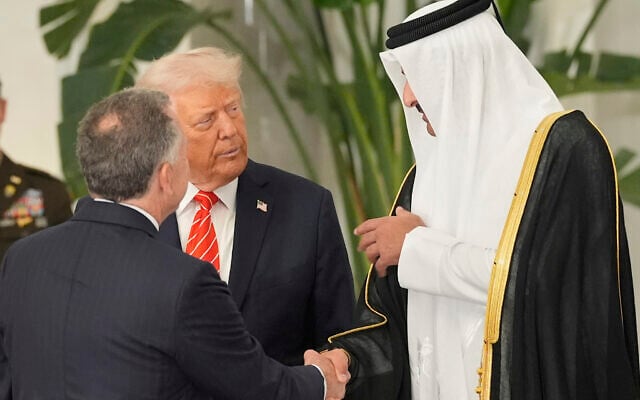
Qatar's Emir Sheikh Tamim bin Hamad Al Thani shakes hands with White House Special Envoy Steve Witkoff, as they speak with President Donald Trump before a state dinner at Lusail Palace in Doha, Qatar, May 14, 2025. (AP Photo/Alex Brandon)
 
In actual fact, this conflict is about Israel refusing to depart from its resumed geographic seat on a mere portion of its ancestral homeland. It is about surrounding Arab/Muslim countries apoplectic at the presence of a Jewish state reborn on land that the Arab conquest consecrated to Islam. It is about over four millennia of historical existence of Jews being wiped off the slate of history to argue that 'Palestine' is a deserved homeland for Arabs who migrated from Syria, Lebanon and Egypt in the last century to claim it as their own, when 'Palestine' always denoted a Jewish presence.
 
It is about repetitive bouts of conflict forced on the Jewish state by hostile, aggressive neighbours in a sectarian-tribal-clan tradition of competition and conflict. And it is, above all, the collective Middle East Arab councils of those governments inciting Arab Palestinians to believe that the land in question is theirs and theirs alone. The Arab Palestinians in fact, serve as a device to convince the international community that a human rights violation of immense proportions took place when Arab Palestinians were displaced when Jews reclaimed their patrimony.
 
And while most of those surrounding states -- who forcefully exiled a greater number of Jews who had lived in Arab countries for millennia, greater in number than the Palestinians who fled 'Palestine' in 1948 -- have now softened their stance and are prepared to accept that the Jewish presence which predated their own is permanent and its presence can enhance future prospects for peace and prosperity, the Palestinians themselves see the imperative of denying Israel's presence as cast in stone. They have, of course, had great assistance from Aryan-Muslim-Shiite Iran and from Qatar and their satellite Shiite militias. Iran has provided the theological impetus and Qatar the funding for terrorist groups dedicated to Israel's annihilation.
 
The Hamas charter pledge of destroying Israel alongside that of the Popular Front for the Liberation of Palestine, Fatah and Palestinian Islamic Jihad are the Palestinian instruments of terror that Iran and Qatar rely upon to produce the coveted goal of Jewish annihilation. Hezbollah, Yemen's Houthis and Shia militias loyal to Iran have collectively done their utmost in that direction. Despite all odds, Israel's military has met them all in combat and remains immovable. Even so, Qatar, aided by Turkey, has no intention of allowing Israel to defeat the combined forces of Islamist jihadists.
 
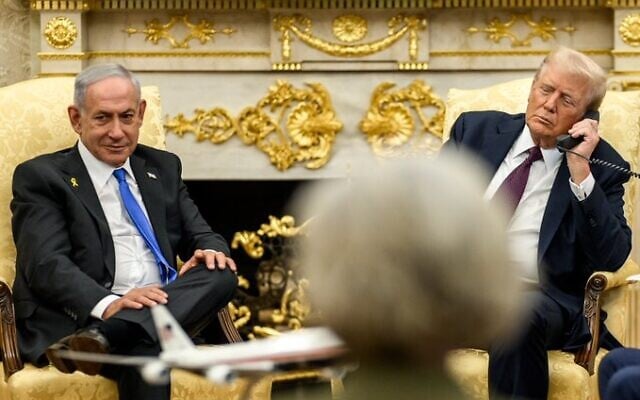
US President Donald Trump hosts a trilateral phone call with Prime Minister Benjamin Netanyahu and Prime Minister Mohammed bin Abdulrahman bin Jassim Al Thani of Qatar in the Oval Office, September 29, 2025. (The White House)
 
Qatar is alerting the United States, Israel's powerful backer, that the Trump peace plan is in a 'critical moment' with the first phase 'over', and the second soon to begin. Actually, it is not over until it is over; the first phase is incomplete, not only because the last of the Israeli hostages held in Gaza has not yet been returned, but critically, Hamas will not, as 'agreed upon' surrendered its arms. It has actually been busy in the interval between 'phases' of the peace plan, rearming, recruiting, reordering priorities and digging in as it resumes its control over that portion of Gaza it still occupies.
 
And this not-unexpected turn of events is being engineered and supported by Qatar, Iran and Turkey, for Gaza to remain in Hamas control, despite powerful rival clans in Gaza opposing Hamas's return to power and the conflict in that sector is ongoing. Gaza 'health officials' -- which is to say Hamas health sector operatives -- warn the international community of Palestinians still being targeted by the Israeli military, but further elaboration explains that these are Hamas operatives approaching Israeli troops in areas off limits to them as per the agreement.
 
The second phase relies upon the deployment of an international security force in Gaza, formation of a new technocratic government, disarmament of Hamas which would in theory lead to an eventual Israeli forces withdrawal. There are no expectations that such an international security force will deploy to Gaza; no foreign countries are anxious to have their military personnel placed in the kind of danger facing Hamas would entail. And since Hamas leaders have stated time and again they will not surrender their arms, Israeli troops will not withdraw.
 
https://media.tag24.de/720x480/q/5/q57mwogxsv4q6rnvhtjiber2ywdw6yjp.jpg
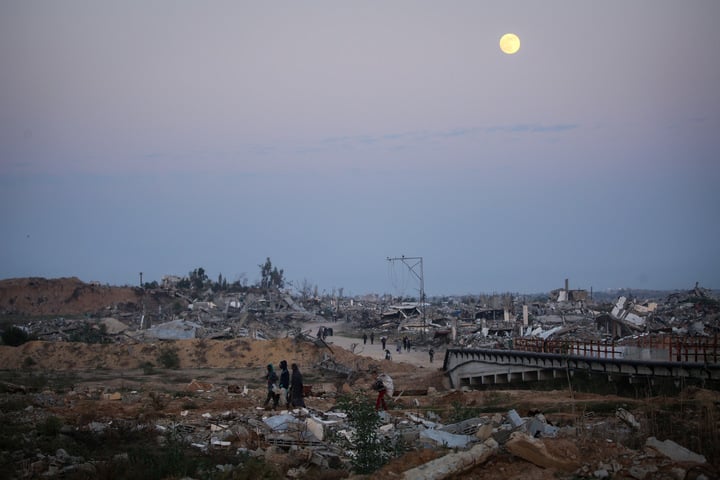
People walk amid the rubble of destroyed buildings as the Cold Moon, the last supermoon of the year, rises over the Nuseirat camp for displaced Palestinians in the central Gaza Strip on December 4, 2025.   Eyad BABA / AFP
 

Labels: , , , , , ,

Monday, September 15, 2025

Weizmann Institute of Science -- Casualty of War

https://www.weizmann.ac.il/wsos/sites/feinberg/files/c1.jpg
Weizmann Institute of Science, Rehovot, Israel
"The first 48 hours, we were trying to stabilize the situation, extract [samples] from laboratories that were hit but not burnt, rescue as many research assets as possible. These are some of the buildings hit: the cancer research centre and immunology research centre. These labs have tumour samples, cultured cells, genetically modified samples."
"We had no [serious] casualties. That's the most important thing. That's how science is lost, when you lose the people. That is because we were careful to evacuate everyone from campus."
"[One of the biggest setbacks] is physical lab space that we lost. We lost five buildings, seriously damaged. That means it'll take up to five years to recover those buildings, lost equipment and thousands that were specialized. They can be rebuilt and repurchased, but it takes time. And physical research assets that were lost."
"When you take 52 research groups, which is the number of groups that lost their physical space equipment, and you set them back by a couple of years, you lose potential treatment for disease. Groups that were hit were working on research topics anywhere from blood tests to cancers, and many other examples."
Professor Roee Ozeri, physicist specializing in quantum information and quantum computing, Weizmann Institute
https://static.euronews.com/articles/stories/09/32/86/75/750x500_cmsv2_6c7fba95-6fd4-5472-ada0-b1e429ff0ff0-9328675.jpg
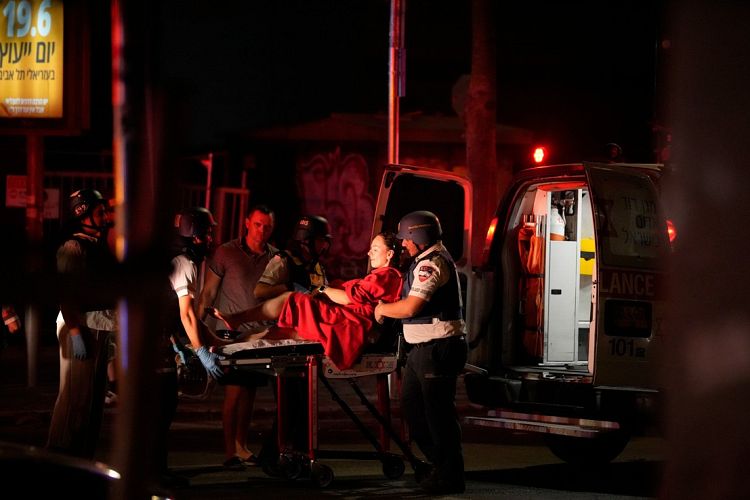
Paramedics evacuate an injured woman from a building hit by a rocket fired from Iran, in Tel Aviv, Israel, on Friday, 13 June. 2025. AP Photo

The Weizmann Institute of Science located in Rehovot, Israel which marked its 90th anniversary last year, is now facing one of its greatest challenges after having been struck by two Iranian ballistic missiles back in June on Friday 13th. The institute's hub for world-leading cancer research was among the hardest-hit buildings and labs. A building which also housed core facilities that are relied upon by many groups using AI to develop personalized medicine or diseases lacking a cure. Another, a building that was home to many breakthroughs in climate science and in astronomy.
 
Across the entire campus, however, there was no building that was left unscathed by the  attacks. There are 52 research groups whose labs conducted groundbreaking science that were affected, and all of them require relocation and restocking to enable research to continue. Weizmann Canada estimates that it will take years to rebuild the  campus as well as hundreds of millions in enabling funding. The institution, before the attack, was home to 23 magnetic resonance scanners, 30 X-ray machines, 610 optical microscopes, and 750 centrifuges There was about 2,500  staff, and the Institute had 246 visiting scientists from 28 countries working there.
 
Of the world's top 25 drugs, seven were developed at the Institute, including the drug Copaxone, for multiple sclerosis treatment. Foundational research on amniocentesis was conducted at the Institute. Professor Ozeri visited Montreal and Toronto recently for the purpose of promoting the Emergency Rebuild Science Campaign in Canada for the Weizmann Institute. Professor Ozeri, as a physicist specializing in quantum information and quantum computing, led the team that built Israel's first quantum computer, in 2022. He is also vice-president of development and communication for the Institute.
 
https://images.euronews.com/articles/stories/09/32/86/75/1366x768_cmsv2_95d99984-19ec-509c-8ad3-0db00c4d8211-9328675.jpg

Iranian strike hits Israel's most important scientific centre.  AP Photo 

"We got offers to help from many institutions, both in and outside of Israel, and we're very thankful for that, both in terms of equipment, in terms of hosting our scientists, in terms of collaborations."
"So it's very heartening at a time where we're facing a lot of, shall we say, challenges as Israelis and as Jews, that we have international co-operation in this regard."
"Listen, I can't tell you how much you learn to appreciate people who help you at a time of need. Getting help from people when all is quiet, that's easy."
Professor Roee Ozeri, Weizmann Institute 

Labels: , , , , , , ,

Sunday, August 17, 2025

Hezbollah Intransigence

"[The government's decision to remove] the defensive weapons of the resistance, its people and Lebanon during an aggression [facilitates the killing of] resistance fighters and their families and evict them from their land and homes."
"[The government should have instead] spread its authority and evicted Israel from Lebanon."
"The government is serving the Israeli project."
"The resistance will not hand over its weapons as the aggression continues and occupation remains." 
"The party will fight a [historic)]battle if necessary in the face of this Israeli-US project, whatever the cost."
"There will be no life in Lebanon if the government tries to confront the party."
"[The government in Beirut] bears full responsibility for any internal explosion and any destruction of Lebanon." 
Naim Kassem, leader, Hezbollah 
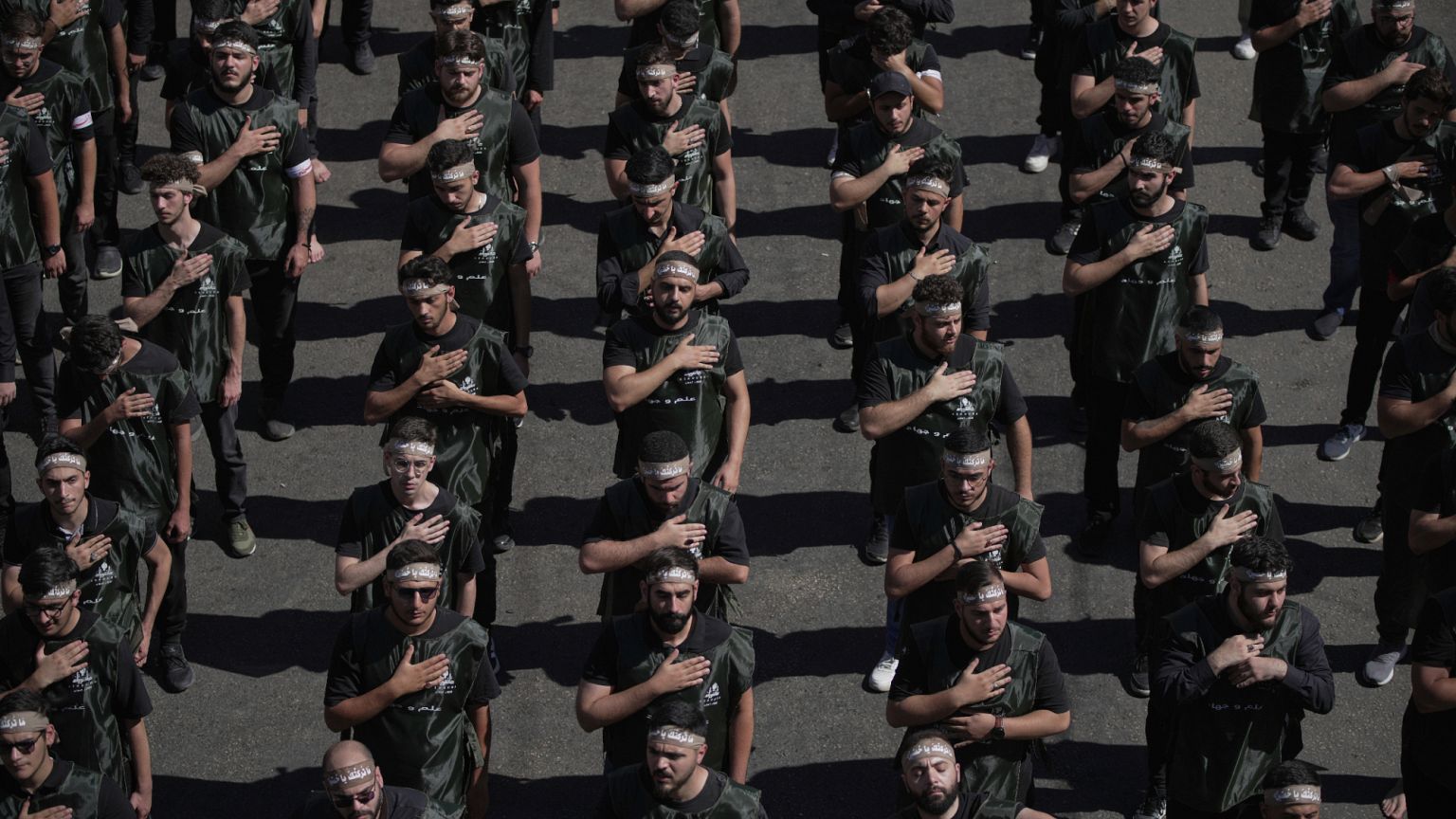
FILE: Hezbollah supporters beat their chests as they march in Beirut, 6 July 2025
Hezbollah troops pledging fealty   Photo: AP
 
Lebanon's hostile factions continue to rent the country asunder, a country once peaceful and the centerpiece of the Middle East's manifold tribal, clan and sectarian heritage communities living tolerably amongst one another in their mostly separate geographic internal Lebanon locations, with a degree of respect for one another. That tolerance was not only social and cultural but political as well, with the government comprised at its elite levels of representatives of the majority groups; Christian, Sunni Muslim and Shia Muslim.
 
Within society itself, the Maronite Christians, Druze and Sunni Muslims dominated, the Shia Muslims relegated to a lower social tier mostly living in poverty and accorded less respect than its sectarian peers. In the 1980s Iran's al Quds division of the Islamic Revolutionary Guard Corps as well as the Syrian Alawite government of Bashar al Assad were tweaking Lebanon's social and political system. The IRGC persuaded Lebanese Shiites that the revolutionary Islam they promoted would help them prosper.
 
Under the tutelage of the IRGC, Lebanon's Shiites received instructions as a non-state military group with an emphasis on jihad. Trained and supplied with weaponry they became a formidable guerrilla group for whom suicide bombing and threats against the presence of French and U.S. peacekeeping troops in Lebanon became a rehearsal for their budding role in the Middle East as a force to be reckoned with, squaring off against Israel during its invasion of Lebanon to oust the Palestine Liberation Organization from its cross-border raids into Israel.
 
Lebanon was transformed into a dysfunctional, violence-addicted state, with its multifarious tribal/sectarian groups at threateningly hostile odds against one another. As the civil war disrupted civic life and Lebanese factions bombed and strafed each other and Western attempts at intervention were attempted, kidnapping and hostage-taking for ransom purposes became world news. As Lebanon eventually attempted to restore itself to a vestige of its peaceful past, efforts at disarming Hezbollah failed and it remained an armed adversary even as it became part of the government in taking political office.
 
Its goal has primarily been the destruction of Israel, as a client of the Islamic Republic. With Hezbollah in Israel's north and Hamas in the south, Iran the ultimate threat to Israel's existence, manipulating its terrorist proxies saw all three engaged in the past several years in an ultimately failed effort to attack and destroy Israel. Hezbollah's decision to support the Hamas 7 October 2023 invasion of southern Israel when thousands of terrorists streamed from Gaza into Israel to slaughter Israeli civilians, and Israel responded by invading Gaza to rout and destroy Hamas, Hezbollah began sending rockets from Lebanon into Israel.
 
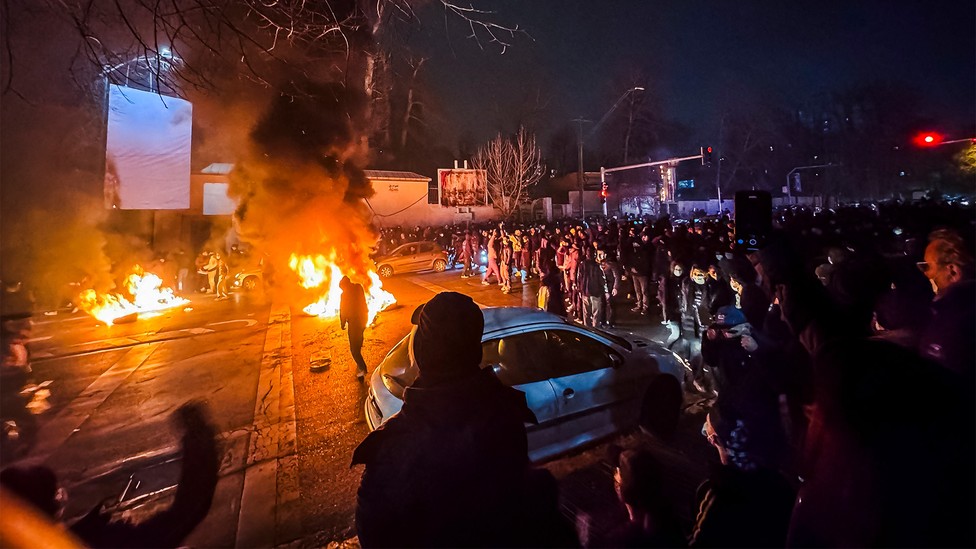
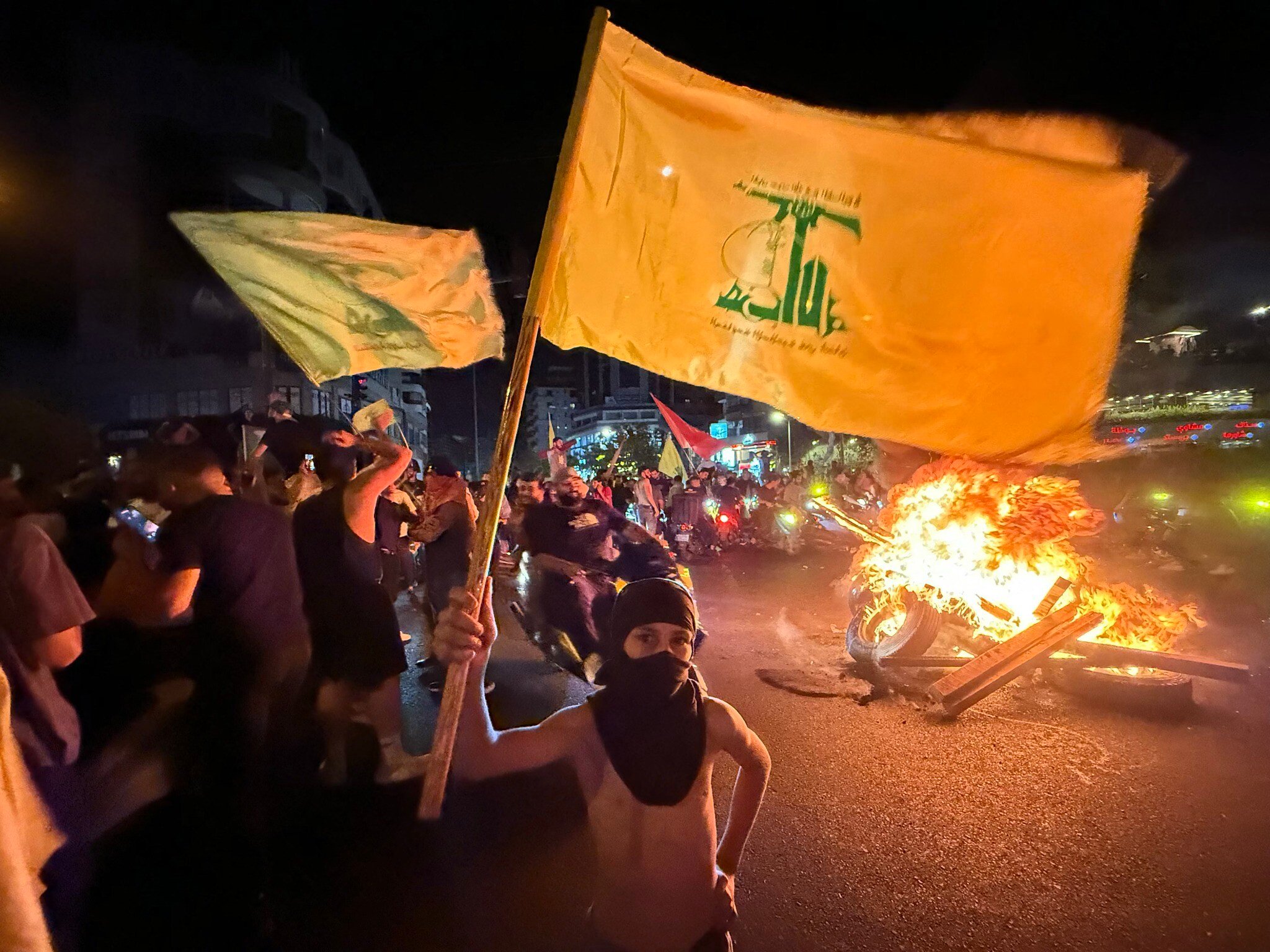
Supporters of Lebanon’s Hezbollah terror group block the streets with burning tires as they rally in cars and motorbikes to protest the government’s endorsement of a plan to disarm it, in Beirut’s southern suburbs, August 8, 2025. (Ibrahim AMRO/AFP)
 
Lebanon has been in crisis mode for decades; coping with the sinister manipulation of Syria and Iran, along with Hezbollah. It has been facing, along with social disruptions, a dire economic situation; it has been limping along, a bare skeleton of survival of its former nationhood as a tolerant society. Latterly the national government has made a decision that Hezbollah must agree to their demand to surrender their weapons and rockets stockpiles, in favour of a tentative agreement with Israel, with the potential of a peace agreement brought into effect by the two nations.
 
The internal crisis is threatening once again to become an internal conflict, another destructive civil war. Hezbollah, aligned with the Shia Amal movement, one of the main armed groups in the 1975-1990 civil war, represented by Parliament Speaker Nabih Berri, threaten together to contest the government's decision. Protesters, warned Kassem, "will be all over Lebanon and head to the U.S. embassy". The groups within Lebanon that want a return to good government and peace between factions, are opposed to Hezbollah retaining its weapons, insisting only the state should carry arms.
 
Last week the Lebanon government voted for a U.S.-backed plan to disarm Hezbollah by year's end, and a ceasefire with Israel be implemented. International pressure applied on Lebanon to force Hezbollah to surrender its arms following the 14-month conflict with Israel until a U.S.[brokered ceasefire in November is behind the government's move and Hezbollah's resistance. 
 
Hezbollah insists it would only be prepared to discuss a national defence strategy relating to its weapons possession on the condition that Israel withdraw from Lebanon and halts its airstrikes that have killed Hezbollah members since the  end of the conflict. Hezbollah's political leadership and much of its military, along with many of its weapons caches were destroyed in its war with Israel. Just as it has been defanged, so too has its sponsor, Tehran, been weakened militarily. 
 
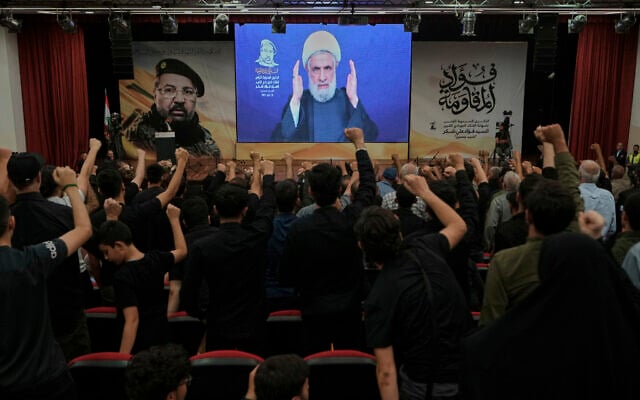
People raise their fists as Hezbollah leader Naim Qassem delivers a televised speech in Dahiyeh, a southern suburb of Beirut, Lebanon, July 30, 2025. (AP Photo/Bilal Hussein)


Labels: , , , , ,

Friday, July 25, 2025

Paleolithic Human Burial Culture

"This is an amazing revolutionary innovation for our species."
"It's actually the first time we are starting to use this behaviour [as a human species]."
"[The stone mound is] one of the three or four most important sites for [the] study of human evolution and behaviour during the Paleolithic time."
"Here we see a really complex set of behaviours, not related to just food and surviving." 
Yossi Zaidner, co-director, Tinshemet excavation, professor of archaeology, Hebrew University, Jerusalem 
 
"[The concept of cemeteries in prehistoric life is important because it symbolizes] a kind of a territory."
"[That same kind of claim over land where ancestors are buried still echoes in the region.] It’s a kind of claim you make to the neighbors, saying ’This is my territory, this part of the land belongs to my father and my forefather’ and so on and so on."
Israel Hershkovitz, physical anthropologist,Tel Aviv University, co-director, Tinshemet site
https://dims.apnews.com/dims4/default/5ed807b/2147483647/strip/true/crop/8640x5757+0+1/resize/980x653!/format/webp/quality/90/?url=https%3A%2F%2Fassets.apnews.com%2F5e%2F99%2F36e0eddfc3a8f039a398585e1a2a%2F4e13ebaf31cf4b1aacbb2e9533941a37
Volunteers work in Tinshemet Cave, where archaeologists are excavating one of the world’s oldest known burial sites, dating back 100,000 years, near Shoam, Israel, July 2025. (AP Photo/Ariel Schalit)
  
The Paleolithic era, or 'Stone Age", so called in reflection of the initial era in the use of stone tools representing the evolutionary time of emerging primeval humanity from 3.3 million years in ancient time up until some 10,000 years ago. Recent discoveries in Israel have unearthed two intact primeval skeletons in an ancient cave. Tinshemet Cave dates from the Middle Paleolithic era which equates to 250,000 to approximately 30,000 years ago -- an enormous sweep of evolutionary time on a vastly unimaginable scale.
 
Tinshemet Cave is located in central Israel, an area of rolling hills. The archeologists working there to unearth mysteries of the far distant past feel they have discovered one of the oldest burial sites in the world at the unassuming stone mound. And where they have discovered the well-preserved skeletal remains of early humans dating back some 100,000 years. They have been gripped with the unmistakable signs of ceremonial burials, where remains were carefully arranged in pits.
 
These findings appear to build on previous discoveries in northern Israel, adding to a growing appreciation of the realization of an emerging primitive social culture specific to the origins of human burial. The intriguing discovery of objects found alongside these remains leading to speculation they may have been used during ceremonies meant to honour the dead, and could possibly lead to more of an understanding of how humanity's ancestors thought about spirituality and an afterlife advances our understanding of ancestral human evolution. 
 
https://dims.apnews.com/dims4/default/68b6287/2147483647/strip/true/crop/4098x2732+0+0/resize/800x533!/format/webp/quality/90/?url=https%3A%2F%2Fassets.apnews.com%2F02%2F60%2Fb8ae058d91c60f0183125d2a6b60%2F8cb9b6701bd3481995f7f2feea3a6e78
Fruit bats in Tinshemet Cave, where archaeologists are excavating one of the world’s oldest known burial sites, dating back 100,000 years, near Shoam, Israel (AP Photo/Ariel Schalit)
 
Work has been ongoing by archaeologists at Tinshemet since 2016, with the discovery of the  remains of five early hominids, dating back to around 110,000 to 100,000 years. Discovered in pits, the skeletons had been carefully arranged in a fetal position, known as a burial position, according to Professor Zaidner. Objects such as basalt pebbles, animal remains or fragments of ochre were found buried with the remains. Some of the objects were recognized as having been found hundreds of kilometres' distant and their practical utility questioned other than serving as objects linked to the ritual of burial.
 
The Tinshemet core findings by researchers were published in Nature Human Behavior. The remains of five early humans were represented by two full skeletons and three isolated skulls, along with other bones and teeth. Although archaeologists have studied the remains for years, it has not yet been established whether they were Neanderthals, Homo sapiens, a hybrid group or an altogether other alternatives. More than 500 various-sized fragments of red and orange ochre, a pigment created by heating iron-rich stones to a certain temperature, provided evidence that early humans discovered the means by which decorative objects could be created.
 
A unique combination of ash that resulted from frequently-made fires, and atmospheric rainfall, along with the geology of acidic limestone in Israel, served to preserve the skeletons and objects; conditions that were optimal for unintended, natural preservation purposes. The local climate conditions and geology in other words, preserved these remains, much as has been seen in other parts of the Middle East; Egypt, for example. 
 
The findings at Tinshemet support analyses and hypotheses from earlier discoveries dating to the same period in northern Israel, where two similar burial sites were discovered -- Skhul Cave and Qafzeh Cave. Skhul Cave was excavated close to a century ago, while Qafzeh Cave was excavated some fifty years ago, when archaeological professionalism in its current systematic and and scientific approach was somewhat less rigorous. 
 
What has been established is that in antiquity, Israel was an evolutionary bridge between Neanderthals from Europe, and Homo Sapiens from Africa. That there was interbreeding producing cross-species is well accepted in general.  Other subgroups of early humans have been identified in the area, leading archaeologists to believe that the groups interacted and may have interbred. In people of European and Asian descent in particular, a small percentage of genetic material from Neanderthals is part of their evolutionary inheritance.
 
https://dims.apnews.com/dims4/default/4edbe5e/2147483647/strip/true/crop/8640x5760+0+0/resize/800x533!/format/webp/quality/90/?url=https%3A%2F%2Fassets.apnews.com%2F48%2Fe8%2F7adeba98d9a9cb34c14409cd295f%2F278234ad7d8a4a7faadaea6789d3615a
Professor of Archaeology Yossi Zaidner works in Tinshemet Cave, excavating one of the world’s oldest known burial sites, dating back 100,000 years. (AP Photo/Ariel Schalit)


Labels: , , , ,

Monday, June 23, 2025

Why It Was Time To Fold Iran's Nuclear Aspirations

"Iran continued supporting acts of terrorism through its proxies and partner groups -- such as Hezbollah, Ansar Allah [Houthis], Hamas and al-Ashtar Brigades -- in Bahrain, Iraq, Lebanon. Palestine, Syria and Yemen."
"[Iran is the world's] leading state sponsor of terrorism." 
"[The Islamic Revolutionary Guard Corps [IRGC] has supported terrorist] recruitment, financing and plotting across Africa, Asia, Europe and the Americas." 
U.S. State Department, Country Reports on Terrorism, 2023
 
"Over the past 40-plus years, the Islamic Republic of Iran has targeted dissidents, western opponents, Israelis and Jews in assassination plots, abduction plots and surveillance operation that facilitate both." 
"Iran has carried out such external operations around the world."
Combating Terrorism Center, West Point, 2022 study 
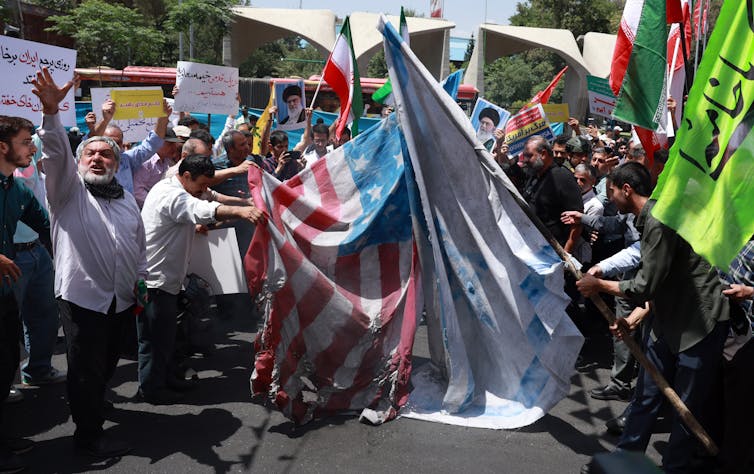
Iranians burn US and Israeli flags during an anti-Israel rally in Tehran on June 20. Abedin Taherkenareh/EPA
 
Last month the International Atomic Energy Agency released a report that found Iran had stockpiled sufficient enriched uranium to build nine nuclear bombs. The IAEA chastised the regime for its attempts to shield areas of its nuclear program from their inspectors. The regime is known to have been developing weapons able to carry out its plans to annihilate Israel, enriching uranium to 60 percent, a short step from producing the 90 percent enrichment for the creation of an atomic bomb.
 
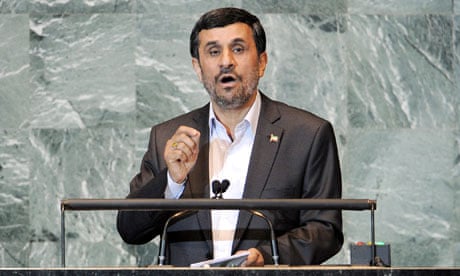
Iran's fixation on destroying Israel is not a covert operation. In 2005, then-Iranian President Mahmoud Ahmadinejad stood before the General Assembly of the United Nations and spoke of the need to see that Israel was "wiped off the map". He spoke too of the otherworldly aura he felt surrounding him, attributable to the unseen presence of the Hidden Mahdi, soon to be revealed, and with that the world would be destroyed, Armageddon. Only those faithful to Islam would be guaranteed a place in Heaven.
 
Mahmoud Ahmadinejad at the UN
Mahmoud Ahmadinejad, Photo: Justin Lane/EPA
That guarantee would be assured only for Shi'ite Muslims, all others would perish; non-Muslims and Muslims in the majority who practise the Sunni version of the faith. Until that blessed event occurred, the Islamic Republic focused on destroying the Jewish state, a long tradition of violent enmity targeting Jews that turned afterward on others deemed unfit to live. The fascist element of most such ideologies. Ayatollah Ali Khamenei spoke of Israel as a "cancerous tumour" to be "removed and eradicated".
 
This man of God, albeit the God of Islam, advocated on his website for a "final solution" to address Israel's existence; reminiscent of the Nazi genocidal fixation that produced the Holocaust. Through its proxy terrorist militias in Iraq, Gaza, Lebanon and Yemen, as their benefactor, inciting them to act on behalf of Islam's injunction to jihad, the Islamic Republic tutored and armed and financed strategies of terrorist attacks against Israel over the years, culminating in the Hamas invasion of October 7, 2023 of southern Israel resulting in thousands of terrorists and Gaza civilians raping, looting, torturing, murdering Israeli children, women, and the elderly.
 
Hamas is still  holding 52 dead and living Israelis as hostages, of the original 250 that were abducted out of Israel and held by terrorists and Palestinian civilians in inhumane conditions of starvation, torture and sensory deprivation. That was the latest mass atrocity forced on Israel. Previous events included attacks on international Jewish targets by Iran's proxies in past years in South America, that terrorized Jews, destroyed their institutions, and left diaspora Jews to mourn their dead.
 
Ukraine Airlines Flight 752 was shot down in 2020 by the IRGC -- ostensibly confusing the civilian airliner with an incoming U.S. missile -- after take-off from Tehran, killing all 175 passengers and crew on board. Iran's dread reputation as one of the world's most lethally ruthless regimes posing a threat to other countries has been well earned. Iran ranks 163 of 165 countries listed on the "Human Freedom Index" published by the Cato and Fraser Institutes. Iranian civilians are repressed and oppressed by their ruling mullahs. Women are forced to adhere to a strict dress code or face imprisonment and sometimes death.
 
When Iranians rebelled in 2022 after the arrest and murder of 22-year-old Mahsa Amini, an Iranian Kurdish woman whose crime was failure to wear a hijab in the prescribed manner, the regime cracked down to the extent of killing an estimated 550 protesters, and arresting close to 20,000 demonstrators. Iran's sharia code of law saw it carrying out executions yearly at a rate far exceeding any other country. Some 975 people were hanged last year, among them political dissidents and those arrested for protesting Mahsa Amini's murder. 
 
https://static-cdn.toi-media.com/www/uploads/2025/06/WhatsApp_Image_2025-06-21_at_20.57.23_1-640x400.jpeg
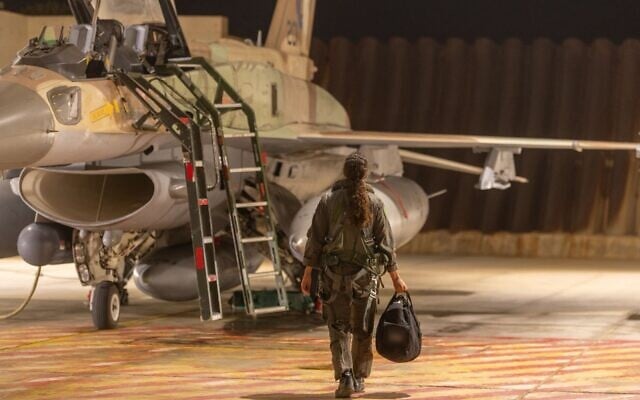
An Israeli Air Force pilot is seen heading to an F-16 fighter jet before taking off for strikes in Iran, in a handout photo published June 22, 2025. (Israel Defense Forces)
 
It was past time for the Islamic Republic's aspiration to achieve nuclear status to be forcefully denied, when negotiations to persuade it to relinquish its nuclear plans fell on deaf ears. Israel began an aerial bombardment over a week ago to destroy Iran's nuclear plants. In the process with pinpoint accuracy the Israeli Airforce eradicated leading political, military, nuclear-scientific and IRGC figures involved in strategies meant to annihilate Israel.
 
The bombardment was relentless, hitting nuclear plants, military bases, IRGC training centers, and the regime's national network towers. Iranian airports were hit, planes destroyed, the country's naval bases hit as well as their ships. Israeli planes flew over Jordanian airspace, refuelled in midflight and continued on to Iran, hitting the capital Tehran, in its planned mission to destroy Iran's nuclear program, and its ballistic missile production sites and weapons depots.
 
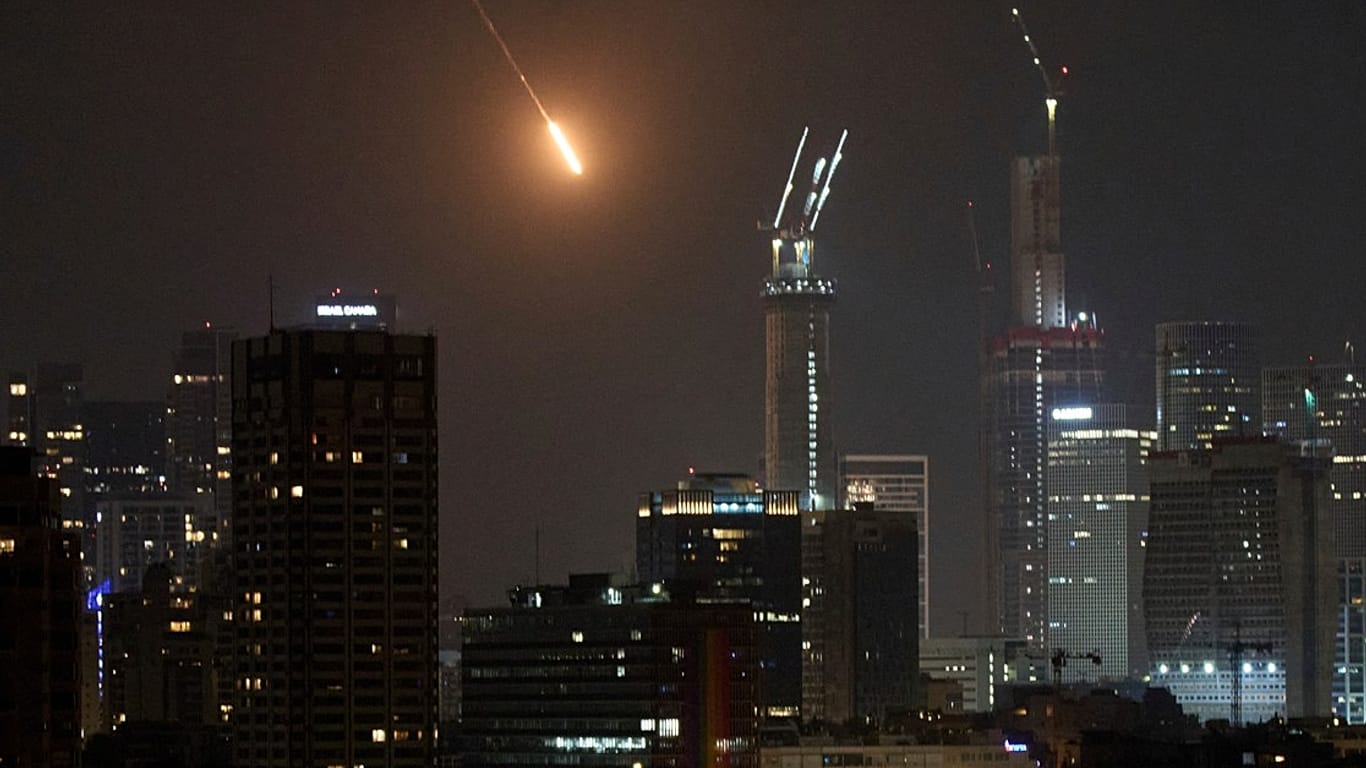
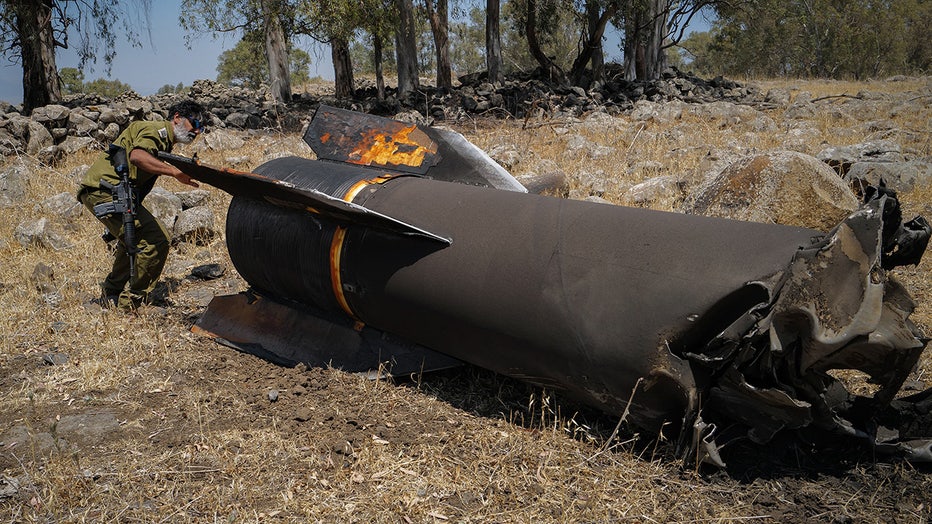
Iran counter-attacked, sending drones and missiles into Israel.  Most of the projectiles were met in midair by Israeli defense technology. Those that landed generally did so in open spaces. It was, for the most part, debris from the drones and missiles hit en route before landing, that caused most of the damage, on falling to earth. But there were some direct missile hits, causing injury and death to Israelis, in fortunately small numbers. Warning sirens sent people to bomb shelters, interrupting the course of normal days for over a week. 
"[Israel is] very, very close [to achieving its goals in Iran]. We are setting them back, we are removing the threat."
"We won’t pursue our actions beyond what is needed to achieve [the goals], but we also won’t finish too soon. When the objectives are achieved, then the operation is complete and the fighting will stop."
"I have no doubt that this is a regime that wants to wipe us out, and that’s why we embarked on this operation to eliminate the two concrete threats to our existence: the nuclear threat and the ballistic missile threat. We are moving step by step towards achieving these goals. We are very, very close to completing them." 
"I told him [President Trump' of our need to act, and he understood it very well. And I knew that when push comes to shove, he would do the right thing. He would do the right thing for America. He would do the right thing for the free world. He would do the right thing for civilization."
Israeli Prime Minister Benjamin Netanyahu  
https://images.foxtv.com/static.livenowfox.com/www.livenowfox.com/content/uploads/2025/06/932/524/gettyimages-2220952073.jpg?ve=1&tl=1

Members of the Israeli security forces check the apparent remains of an Iranian ballistic missile lying on the ground on the outskirts of Qatzrin, Golan Heights, Israel, on Monday, June 23, 2025. (Photo by MICHAEL GILADI/Middle East Images/AFP via Getty

 
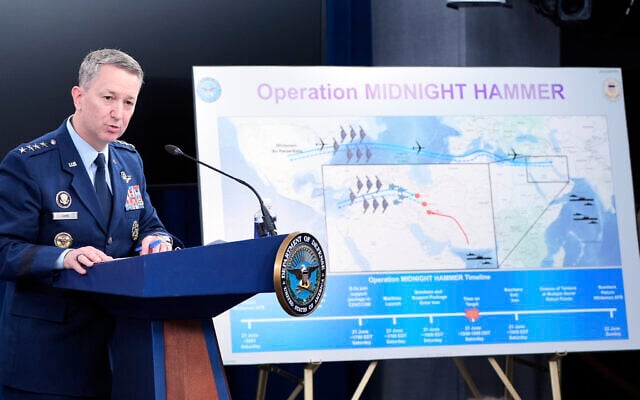
The United States under its president, Donald Trump, made a decision to get involved, using the only heavy-duty bombs capable of penetrating the mountain fastness of Iran's major uranium-processing installation at Fordow. With all of Iran's major nuclear plants destroyed, its airforce now decimated, its naval fleet destroyed and its leadership in disarray, what could not be accomplished through diplomacy has now seen success through the medium of armed conflict. 
 
Joint Chiefs Chairman Gen. Dan Caine speaks during a news conference at the Pentagon in Washington, June 22, 2025, after the US military struck three sites in Iran, directly joining Israel’s effort to destroy the country’s nuclear program. (AP Photo/Alex Brandon)
 

Labels: , , , , , ,

 
()() Follow @rheytah Tweet