Ruminations

Blog dedicated primarily to randomly selected news items; comments reflecting personal perceptions

Thursday, April 02, 2026

Trump, Excoriating U.S. 'Allies'

"You'll have to start learning how to fight for yourself, the U.S.A. won't n e there to help you anymore, just like you weren't there for us."
"Iran has been, essentially, decimated. The hard part is done."
"Go get  your own oil!"
"[Paris has been] VERY UNHELPFUL]. The U.S.A. will REMEMBER!!!"
"We’ve been there automatically, including Ukraine. Ukraine wasn’t our problem. It was a test, and we were there for them, and we would always have been there for them. They weren’t there for us."
"All of those countries that can’t get jet fuel because of the Strait of Hormuz, like the United Kingdom, which refused to get involved in the decapitation of Iran, I have a suggestion for you: Number 1, buy from the U.S., we have plenty, and Number 2, build up some delayed courage, go to the Strait, and just TAKE IT”."
"I’ve long said that, you know, I wonder whether or not NATO would ever be there for us. So … this was a great test, because we don’t need them, but they should have been there."
U.S. President Donald J. Trump
https://www.thedailybeast.com/resizer/v2/K5KS2W5L45A4JNL6OR5LUAHCQI.JPG?auth=ffde8817218f541eef32308836e222c7fc2c8ac856e38fe3e2bfe1660fdf402e&width=1440&height=1004
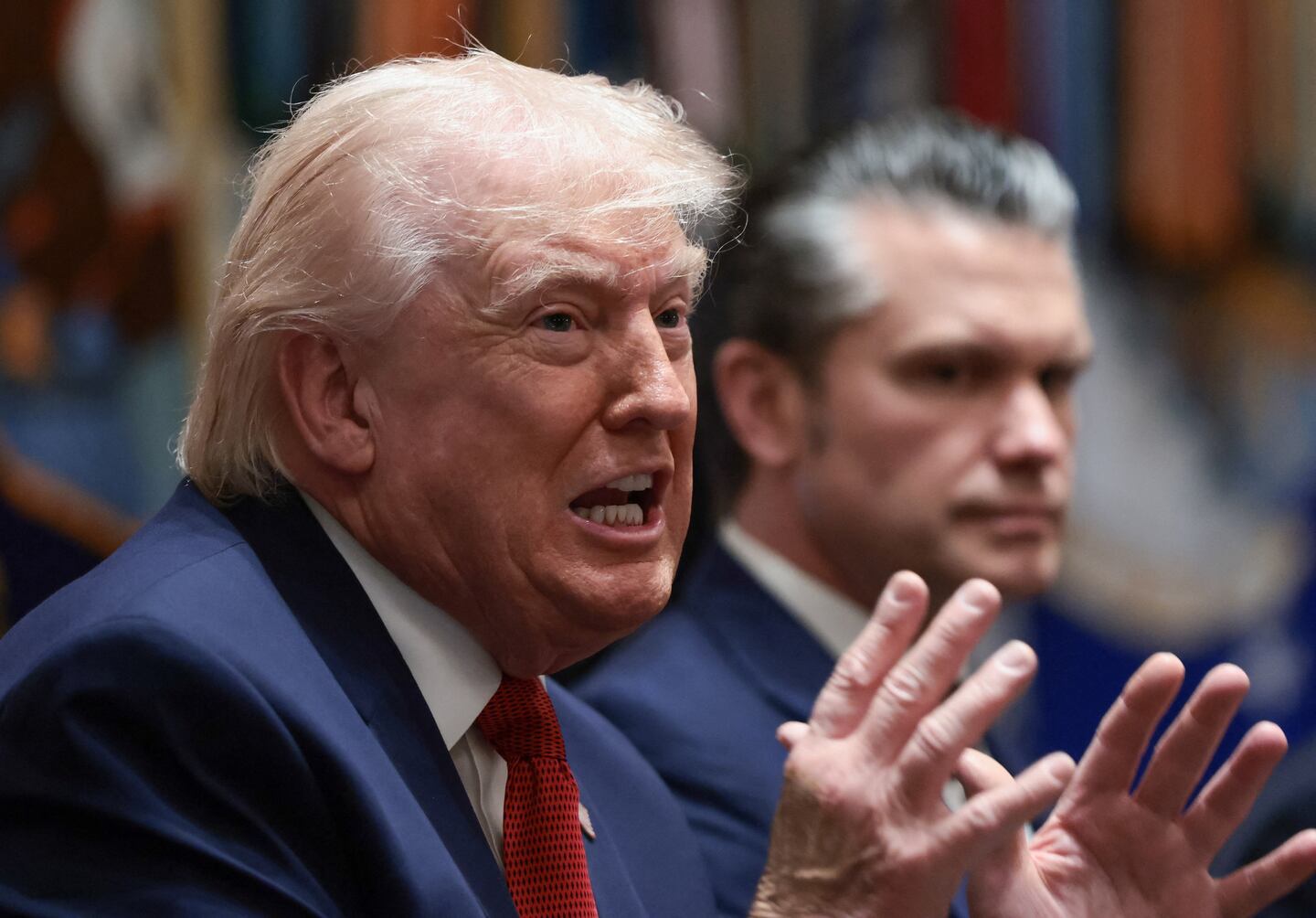
Donald Trump has also called NATO countries that do not help with the war in Iran "cowards." Evelyn Hockstein/REUTERS
 
"I hope that amid the emotions surrounding the President of the United States today, a moment of calm will come."
"And why? Because there is no NATO without the United States, and it is in our interest that this calm comes."
"But there is also no American power without NATO."
Polish Defense Minister Wladyslaw Kosiniak-Kamysz 
https://www.reuters.com/resizer/v2/6VNZZMO6CRJJ3G7AGD7B7N6W3U.jpg?auth=ce471fba128412505d459bc8e38d5acbbc1afa1df3da776fc344ad4e822e9e53&width=960&quality=80
Cargo ships in the Gulf, near the Strait of Hormuz, as seen from northern Ras al-Khaimah, near the border with Oman?s Musandam governance, amid the U.S.-Israeli conflict with Iran, in United Arab Emirates, March 11, 2026. REUTERS/Stringer
 
Frustration with allies  unwilling to commit themselves through the NATO military alliance in support of the U.S. conflict in Iran, has hit boiling point with President Trump who is now telling his erstwhile allies to "go get  your own oil" in respect to the closure of the Strait of Hormuz by Iran, has sent energy prices soaring. 
 
Following U.S. strikes hitting Isfahan, the central Iranian city, leading to Tehran attacking a fully loaded Kuwaiti oil tanker in the Persian Gulf, Mr. Trump's precarious patience appears to have hit its limit. A month after the start of the aerial bombardment by the U.S. and Israel, the intensity of strikes on either side has not levelled off and major disruptions have erupted to the global supply of oil and natural gas, reflected by panicked global markets.
 
Earlier, Mr. Trump  shared footage of the massive attack on Isfahan, home to one of three nuclear enrichment sites that was attacked last June by U.S. strikes, where it is suspected that much of Iran's highly enriched uranium was stored. It seems evident that no agency foretold the extent of Iran's stranglehold on the Strait of Hormuz, with its catastrophic results to world shipping, much less the Iranian leadership's decision to attack its neighbours' energy infrastructure.
 
The roiling of world markets and the strait-closing effect on many basic goods such as fertilizer normally shipped across the world, has had its effect on the American president who directed responsibility at the United Kingdom and France for refusing to enter a war for which no clear endgame could be deduced, a war they were never consulted on, nor an alert given that it would be forthcoming. 

 
https://nationaltoday.com/wp-content/uploads/not-wordpress/2026/03/69cb37cf795ba.jpg
The U.S. attack on an Iranian ammunition depot in Isfahan raises tensions and the risk of further military escalation in the region. Los Angeles Today
 
France  permitted the U.S. Air Force use of the Isteres base in southern France once it received guarantees that planes landing there would not be carrying out strikes in Iran. Europe's loudest critic of the war, Spain stated it chose to close its airspace along with its joint U.S.-Spain airbases for any planes involved in the conflict. As for Italy, an official confirmed that U.S. military assets were refused use of the Sigonella airbase in Sicily for any operation with links to the offensive in Iran. 
 
American bombers were intending to land at the Italian base prior to continuing on toward the Middle East. However, affirmed Italy's Defence Minister Guido Crosetto, Italy would still allow the US. use of its bases; no cooling of relations between the two countries has resulted over the Iran conflict.
 
The world is now on notice that should a ceasefire not be "shortly" reached and the strait reopened, the U.S. was prepared to broaden its offensive, and that would include attacking the Iranian oil export hub on Kharg Island. 
 
https://www.reuters.com/resizer/v2/NB5JSYDZQZICZEQI6W3PU2YAOI.jpg?auth=b794af94d9519a0de03e8d8e92d9db35b8396c2e944f2107c80835dd27527ed9&width=960&quality=80
Luojiashan tanker sits anchored in Muscat, amid the U.S.-Israeli conflict with Iran, in Muscat, Oman, March 7, 2026. REUTERS/Benoit Tessier
"We don't want to have to do more militarily than we have to."
"But I didn't mean it flippantly when I said, in the meantime, we'll negotiate with bombs."
U.S. Defense Secretary Pete Hegseth 

Labels: , , , , , , ,

Friday, March 20, 2026

Vital Global Shipping Route --- Strait of Hormuz

"[Iran has managed to profit from oil sales and also] preserve its own export artery [by using control over the choke point]."
"[The latest passages through the Strait of Hormuz show the Strait was not simply] closed. It is better understood as closed selectively against some traffic, while still functioning for Iranian exports and a narrow set of tolerated non-Iranian movements."
Kun Cao, client director, Reddal consulting 
 
"[The risks of transiting Hormuz have raised] insurance costs for cargo and ships while increasing logistics costs for shippers choosing alternate routes."
"[Supply chain disruptions] would begin to affect production in Turkey earlier than in other areas." [Turkey is a major supplier of light commercial vehicles to the European market]." 
"[If the conflict persists], production cost inflation would become more entrenched."
Stephanie Brinley, analyst S&P Global Mobility 
https://www.stuff.co.nz/media/images/9Tzi8ywRz924XE3uHaD6DZ3Ef+IdbOiYlvIROR5vlqUeRrexTocZGobKRJ9od%2Fgnk3B%2FCeKTmTAsIjj6Q0YaYSAO725RwfwI+2THgGYlwMDjSJYgVP2ivG7iBHyoXuo8Hf9TGNw1zHPNK+ebzdTM0ZvzaGXAmCc8sOHTPnGsDCMmAXJDTE3+LrKx3I0LYE0MhtRwEMefk2YyTXOhytUXzGITdel3fti+PvM4zzbyenrk7OclcVv1UoZJRFWFPa6TxtNLKrHPECpvYfnNxgKJC6tOmRpp+1gQaFIggI5PmXqMjrppN0oo+Jb23xocpnFqcpQpNghhm%2F+6Tj6Y7DhhoMKcdeNBHwNzpig+Ts3yMgzJDcZCTo%2FaxhZ1Dy+sF8GknlrICvuR7IQzAdCwKOo7o5xWvXxFDQhHlpAOnXaZJpZaAggti1bT0veT9B4u3rQl59Fx58pb6SO55keEqjUojt8mwbpvlifV250mTmoW%2FYOBTVE4xU3aAWOsmVtLIcCa0%2F3G%2FmHtT7rRi9JDeMDb9A==?resolution=1240x700
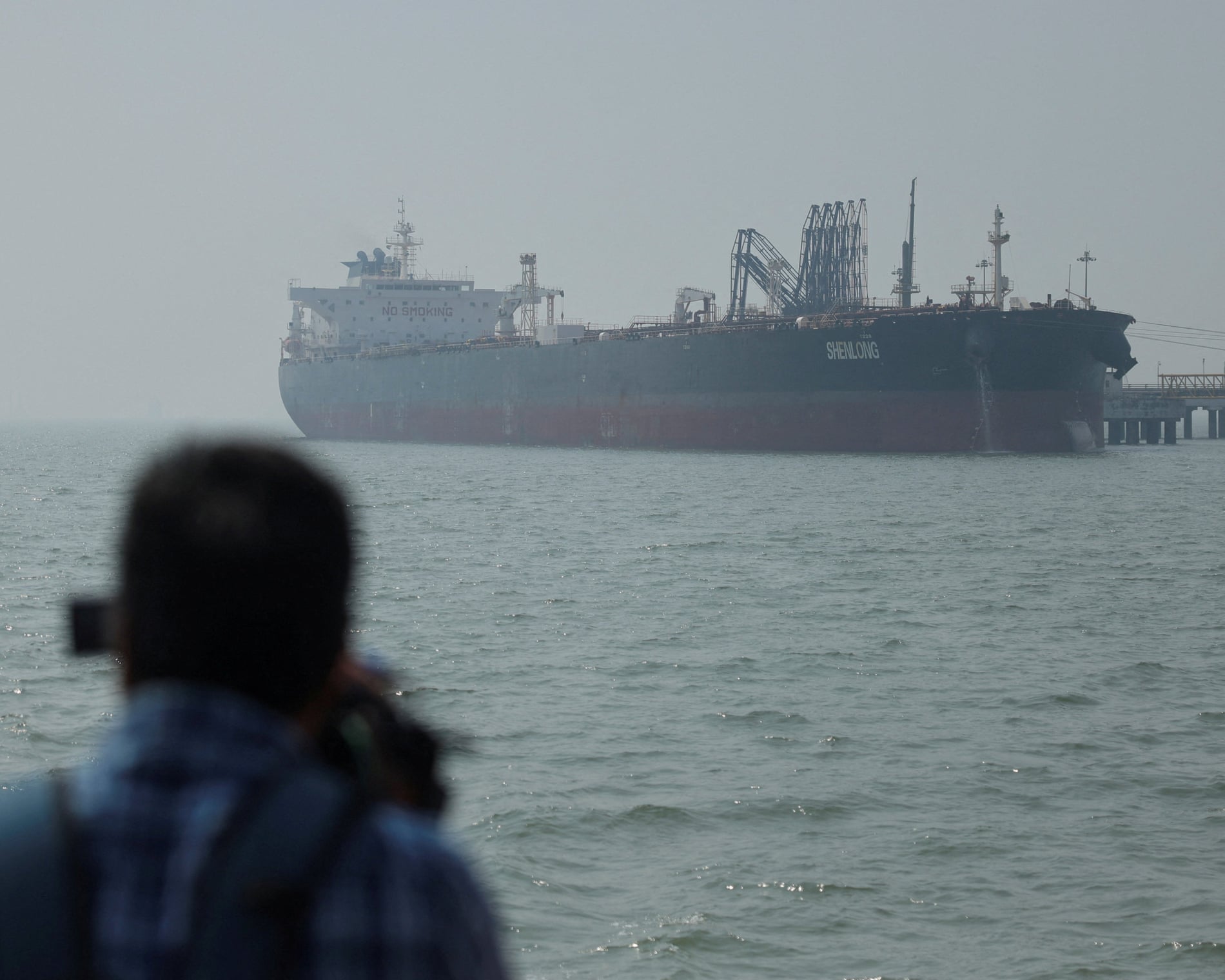
 Liberia-flagged tanker Shenlong Suezmax, carrying crude oil from Saudi Arabia, that cleared the Strait of Hormuz and was seen in port in Mumbai, India on March 12. Photo: AP
"Rerouting shipments around the Strait of Hormuz will add days or weeks to travel time, adding to freight costs and causing a backlog from the slower cargo turnover."
"And that’s before any increase in the cost of ‘war risk' insurance premiums."
"Though Iran itself isn’t a semiconductor producer, the conflict’s disruption to global shipping will cause chip deliveries to be delayed or stranded at ports in Asia, reducing availability for assembly lines. Given that modern vehicles may contain as many as 3,000 chips each, and the industry hasn’t completely recovered from a number of supply chain issues over the last half decade, another disruption magnifies the ongoing vulnerability."
"Automotive manufacturers operate on very thin margins compared to many high tech sectors. There’s just no room to absorb dramatic changes in input costs such as steel, plastics, and freight, and, ultimately, prices to the consumer rise."
AutoForecast Solutions manufacturing expert Sam Fiorani   
https://i.guim.co.uk/img/media/b932da42d1a80939609b7dcc699d9dfcd3bf8c76/220_0_4773_3818/master/4773.jpg?width=1900&dpr=1&s=none&crop=none
The Liberia-flagged tanker Shenlong Suezmax managed to cross the strait last Friday, one of the few vessels that have done so since the war broke out. Photograph: Francis Mascarenhas/Reuters
 
Since the onset of the U.S.-Israel war with Iran, some 90 ships, including oil tankers, have managed to cross the Strait of Hormuz. Iran itself continues to export millions of barrels of oil, despite the waterway having been effectively closed, a revelation owing to tracking by maritime and trade data platforms. The difference is that many of these vessels passing through the strait represent 'dark' transits that evade western government sanctions and oversights, with ties to Iran according to Lloyd's List intelligence.
 
As governments step up negotiations with Iran, vessels linked to India and Pakistan also have successfully crossed the strait recently. While crude oil prices leaped above US$100 a barrel, Western allies and trade partners were being pressured by U.S. President Donald Trump to send warships to the region to help reopen the strait in the hopes of bringing prices back to a semblance of normal. His request was met with a decided lack of enthusiasm in Europe.
 
The Strait of Hormuz, long a waterway for global oil and gas transport famously supplying one-fifth of global crude oil, has been closed to shipping  traffic since early March, following the start of the conflict. Since then, some 20 vessels were attacked in the area, targeted by Iran. Which hasn't stopped Iran itself from exporting above 15 million barrels of oil during that same time period, according to trade data and estimates by analytics platform Kpler.

China, in the face of Western sanctions, is the largest buyer of Iranian oil. Even so, some transit of ships linked to China have also been blocked from using the Strait. However, data show that between March 1 and 15, including 15 oil tankers, at least 89 ships crossed the Strait of Hormuz, according to Lloyd's List Intelligence, greatly diminished in numbers from the normal 100 to 135 daily vessel passages prior to the war's outbreak.      
                                                                                       
Of the 89 vessels that transited the waterway, over a fifth were thought to be affiliated with Iran; Chinese and Greece affiliated ships were among the rest, even as other vessels also have been managing the transit, some turning off their transponders to avoid detection. According to Richard Meade, editor-in-chief of Lloyd's List, vessels may be transiting "with at least some level of diplomatic intervention. In other words, the Iranian regime may have effectively created a safe corridor" allowing some ships to pass close to the coast of Iran. 
 
Marine Traffic ship tracking platform revealed that some vessels near or within the strait declared themselves to be linked with China, or they had all Chinese crew to reduce risks of being attacked. Military sites on Kharg Island off the coast of Iran were bombed by the United States. The island is vital for Iran's oil network and exports, but the bombing was confined to military sites, leaving Iran's oil infrastructure intact, for the present. 
"The thinkers within the Islamic establishment, they recommended that if there is a next time [following last summer's 12-day war] — and a good half of them actually believed that the next round would be coming at some point in the near future — pressure should be put on the world or oil markets."
"And, if the United States is involved, on the US companies involved in the Middle East oil and gas market and also on the Gulf countries because they house those air bases. "
"This particular body of water is one of the most important, strategic choke points in the world."
"[Iran] no longer allows any ship to use the international shipping corridors in the Strait of Hormuz using Omani waters. They actually reroute them north of the Larek Island, completely inside Iranian waters, and then they’re turned all the way back in toward the Gulf of Oman."
"I think [the rerouting is] part of the psychology of this whole thing, they want to show that they have full control, and they want to prevent or dissuade or deter the Americans from interfering with this kind of controlling operation."
"They are making the transit too dangerous and, without actually mining the Strait, they [have] effectively stopped all shipping traffic in the Strait of Hormuz." 
Farzin Nadimi, Iran military analyst, senior fellow, Washington Institute for Near East Policy
 
"Each country, according to international law and the law of the sea, has got about 12 nautical miles [approximately 22km] of territorial sea, which is part of the land of the coastal state."
"That means that the narrowest part of the Strait of Hormuz is shared between Oman and Iran as their territorial waters."
"This means every vessel which passes through this strait, whether military vessels, ships, oil tankers ... they pass through either the Iranian territorial waters or Oman territorial waters."
"[Under the law of the sea, while either nation might put regulations or checks in place], they cannot hamper innocent passage of vessels, including military vessels."
International law expert, Hossein Esmaili, Flinders University  
https://s.yimg.com/ny/api/res/1.2/swu7Tdh4y_eJRsnY5_Vw_w--/YXBwaWQ9aGlnaGxhbmRlcjt3PTk2MDtoPTY0MA--/https://media-mbst-pub-ue1.s3.amazonaws.com/creatr-uploaded-images/2026-03/b7dbea50-1d53-11f1-b6fe-c746db7a38ed
Ships line up in the Strait of Hormuz as seen from Mina Al Fajer, United Arab Emirates, on March 11. (AP Photo/Altaf Qadri) · ASSOCIATED PRESS


Labels: , , , , ,

Wednesday, January 10, 2024

Sleepwalking Into a Colossus's Web of Monopolistic Influence

https://cdn-live.foreignaffairs.com/sites/default/files/styles/_webp_x_large_1x/public/images/2023/05/19/RTX78F6P_1.JPG.webp?itok=QicsdAq1
Chinese President Xi Jinping and Greek Prime Minister Kyriakos Mitsotakis at the port of Piraeus, Greece, November 2019   Orestis Panagiotou / Reuters
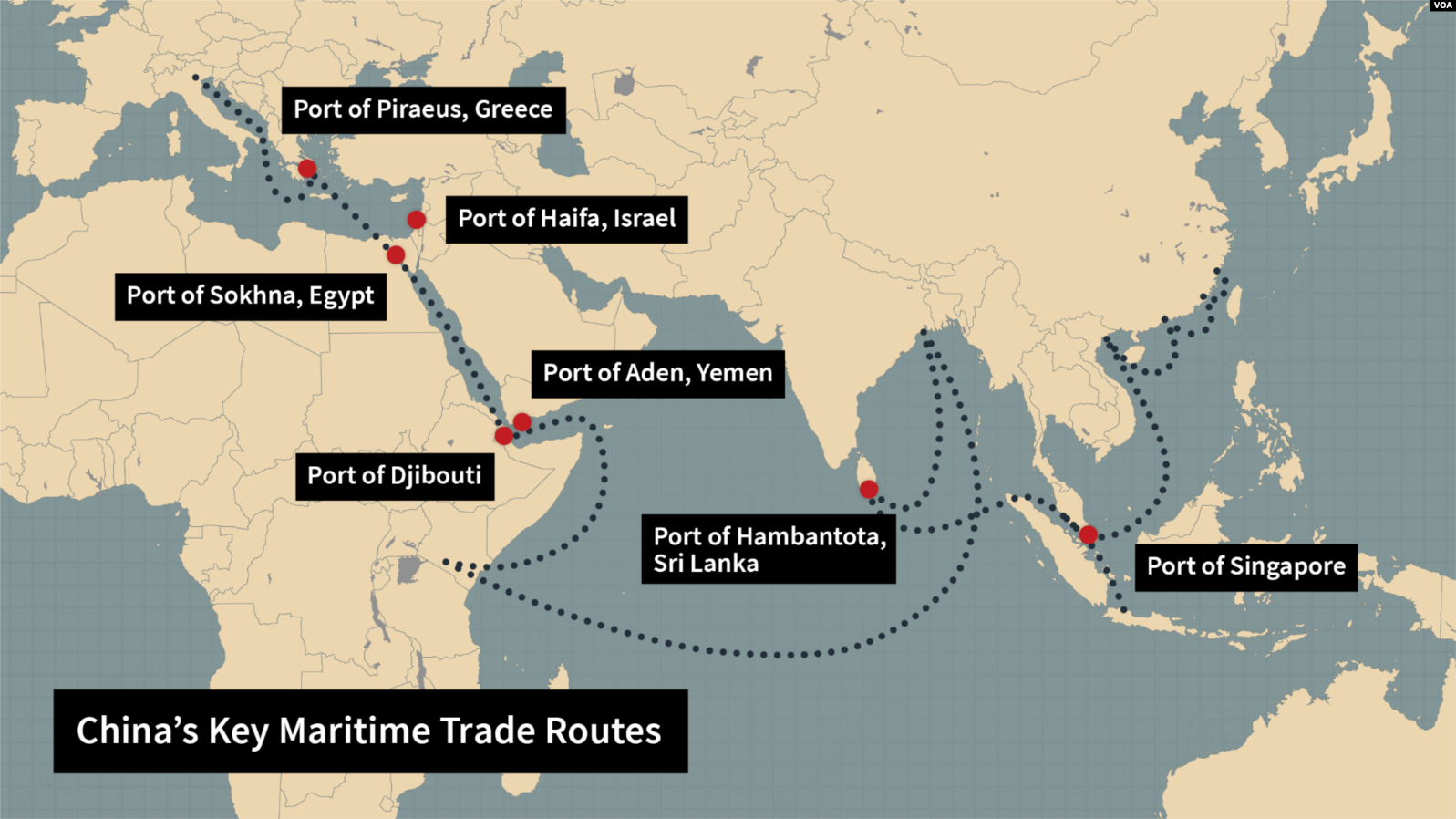
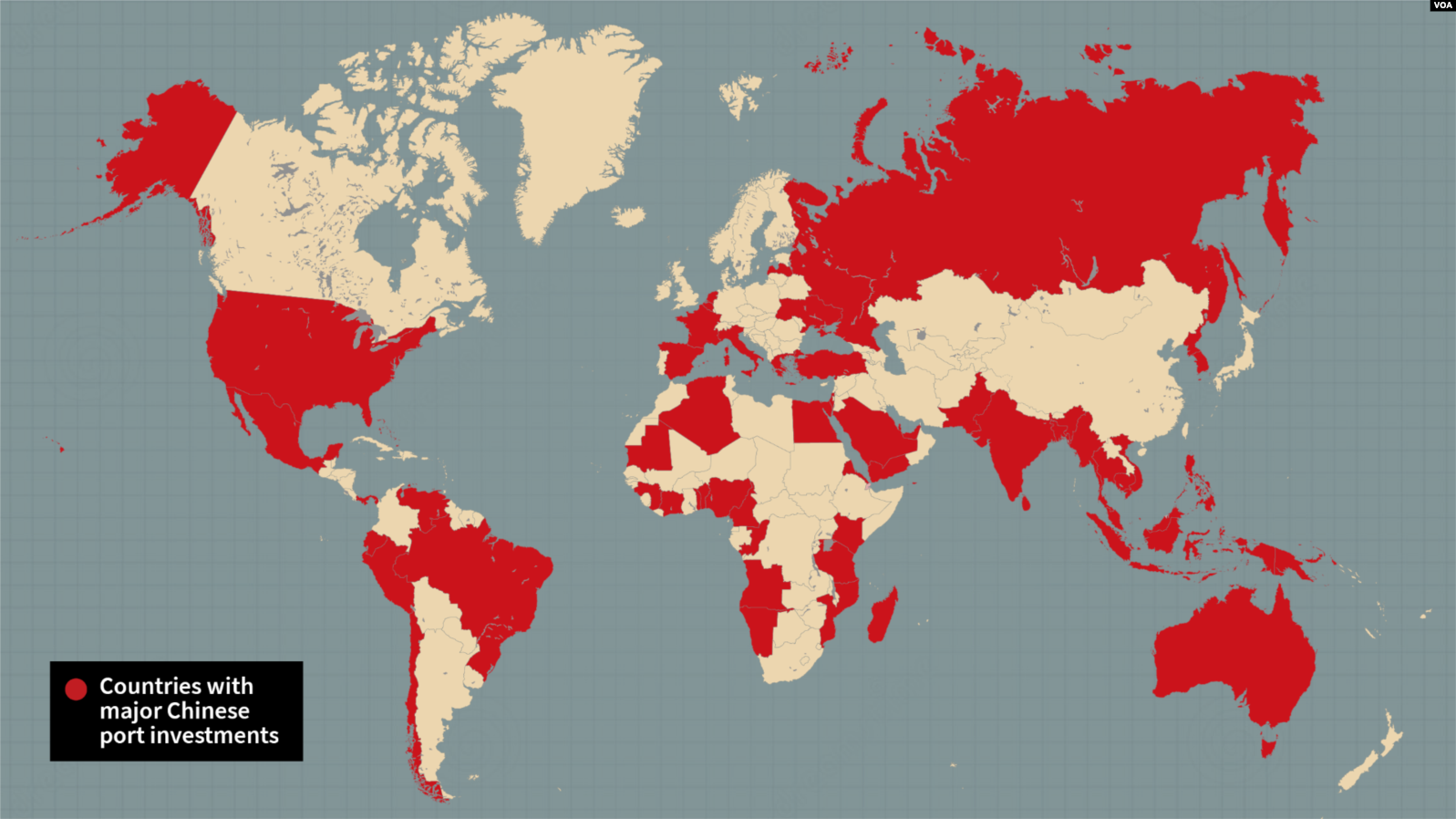
"The original Maritime Silk Road, as laid out in Chinese documents, focused on three main routes. The plan has expanded to include the Atlantic and the Americas. Latin America is one of the fastest-growing destinations for Chinese port investments."
"China manages ports at both ends of the Panama Canal. It is building from scratch a US$3-billion megaport at Chancay in Peru that will transform trade between China and Latin America, enabling the world's largest container ships to dock on the continent for the first time."
Liz Sly/Julia Ledur, The Washington Post
 
"This is not coincidental."
"I firmly believe there is a strategic aspect to the particular ports they're [Beijing/Chinese Communist Party] targeting for investment."
Carol Evans, director, Strategic Studies Institute of the U.S. Army War College
Voice of America

President Xi Jinping thinks long term, strategically. His is a carefully thought-out program to bring the China that he administers to the head of the global trade enterprise in every conceivable way. Once China was inducted into the global community through membership in the World Trade Organization thanks to then-U.S. President Bill Clinton's interpretation of the West's useful collaboration in trade with China, Beijing never looked back. In seemingly no time at all, cheap labour brought inexpensive goods manufactured in China to the world's consumers, bringing an end to domestic manufacturing in countries eager to please their publics with less pricey goods.
 
That loss of manufacturing stemming from an inability to compete with the manufacturing colossus, made those countries dependent on China's low-paid workforce in production of goods. China then turned to rare-earth elements, minerals that modern technical advances were dependent on, planning for a monopoly enabling China to cheaply produce highly technical products, leaving the world dependent on it once again. And when the economy was linked with the environment and a global agreement to reduce environmental carbon and GHGs, it monopolized alternate energy sources where China produces the world's greatest number of wind turbines. And electrical grids.
 
Beijing has stealthily established a secure network of global ports, central to world trade and navigation. Beijing presented its goal in these investments as commercial, but over time the United States and its allies have become increasingly thoughtful of the potential military applications and their implications for the future inherent in an expansion of Beijing's plans for the future. The port networks established to this point reflect China's ambitions, stated by President Xi as a Chinese "maritime superpower"
 
VOA

A decade ago, when President Xi made that statement, China had global stakes in 44 ports; that has grown at the present to its owning or operating terminals and ports at close to 100 locations in over 50 countries, incorporating every ocean and continent on the globe, many located along the world's most strategic waterways. The investments made by companies owned in the majority by the government of China, making Beijing and the CCP the largest operator of ports supplying global supply chains. That represents critical domination.

Furthermore, these investments allow Beijing a window into business dealings of competitors, useful in aiding China to defend its own supply routes, to spy on any military movements of the United States and to engage potentially in U.S. shipping, analysts point out. Chinese warships already view these Chinese-owned ports or terminals as ports of call, like the Chinese flotilla entering the Nigerian port of Lagos this past summer.

Adjacent the Chinese-operated port of Djibouti, China acknowledged in 2015 that it was building a military base which officially opened two years later, a mere six miles from a U.S. military base in the country. Djibouti lies on one of the busiest shipping lanes -- located at the narrow entrance to the Red Sea -- in the world; ten percent of global oil exports and 20 percent of commercial goods pass through the narrow strait, to and from the Suez Canal.
 
https://i0.wp.com/dredgewire.com/wp-content/uploads/2023/11/imrs.png?resize=800%2C600&ssl=1
Chinese-operated port of Djibouti. (Carl de Souza/AFP/Getty Images)
 
Many of the port locations are at strategic choke points, complete with high shipping traffic where sea routes are narrow and ships can be vulnerable. At Khalifa in the Persian Gulf by the crucial Strait of Hormuz, just 50 miles from an important U.S. military base, China has revived an intention to establish military facilities. Beijing's influence has also been increasing in ports on Egypt's Suez Canal where Chinese shipping companies announced investments in ports of Ain Sokhna and Alexandria terminals.

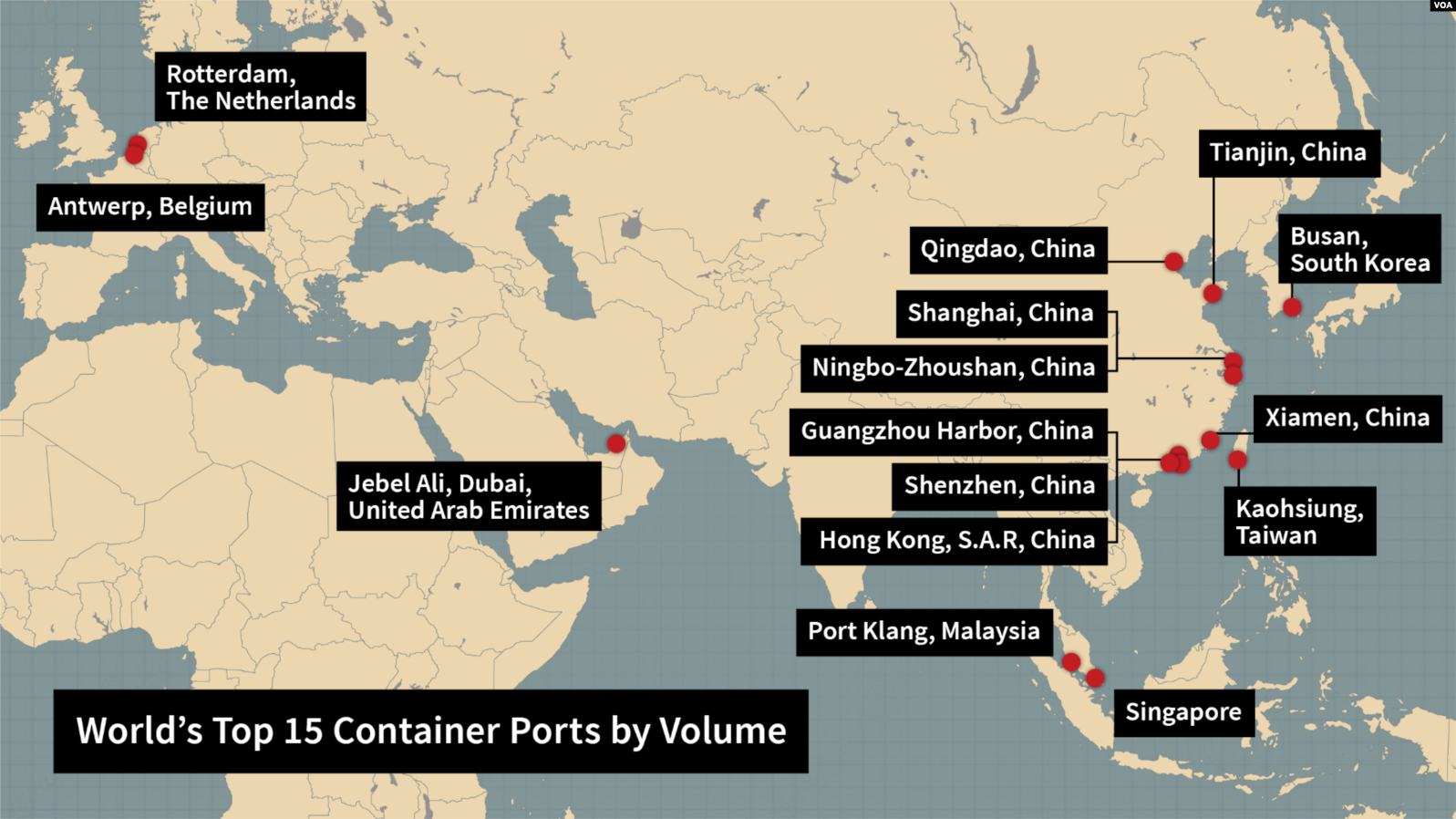
China's ambitions are large and far-seeking, to the extent that it controls or has major investments in over 20 European ports, allowing Beijing significant influence of the supply routes on the continent where many serve as vital logistics and trans-shipment points for NATO and the American Navy. "It's a significant national and economic security concern", stated Michael Wessel of the U.S.-China Economic and Security Review Commission.

A little-known software system named Logink -- a digital logistics platform owned by the Chinese government -- has enabled China to secure a commanding position that allows it access to vast numbers of normally proprietary information on the movement, management and pricing of goods moving around the world. At least 24 ports, including Rotterdam and Hamburg adopted the Logink system; an issue that compelled the U.S. Transportation Department to put out an advisory, warning American companies and agencies to avoid interacting with the system at risk of espionage and cyberattack.


Labels: , , , ,

 
()() Follow @rheytah Tweet