Ruminations

Blog dedicated primarily to randomly selected news items; comments reflecting personal perceptions

Friday, April 24, 2026

Unconscionable Human Skeleton Museum Displays

https://t.prcdn.co/img?regionKey=qzrqWQostY/0V5iMdmehTA==&scale=250
Ilvy Njiokiktjien, New York Times
 
"What the museums have in common is that they all see it as a problem -- and that's already progress."
"They all deal with it in different ways, although there are many similarities."
"Some are more proactive than others."
Jos van Beurden, repatriation expert, researcher, Free University of Amsterdam
 
"It makes me sad. The Dutch destroyed everything of ours, our language, our culture."
"First they forbid it, and we all had to become Christians and learn the Dutch language, and then they displayed and traded our ancestors' skulls." 
Menucha Latumaerissa, 45 Dutch customs official, ethnic Moluccan
 
"What it should emphasize is the idea that, in an ideal situation, collections like these -- racialized collections -- should reach their final resting place, with their communities."
"The empty stands show this important absence so we don't forget these things happened."
"We do feel a sense of shame, but also responsibility. What does it mean to have these remains housed here?"
"We need to find a way to somehow address these collections."
Laurens de Rooy, director, Museum Vrolik, Amsterdam University Medical Center 
https://i.guim.co.uk/img/media/c2df0050dc2ca8d88418b9d8c20fc26fc4a834e3/0_123_3189_1914/master/3189.jpg?width=1900&dpr=1&s=none&crop=none
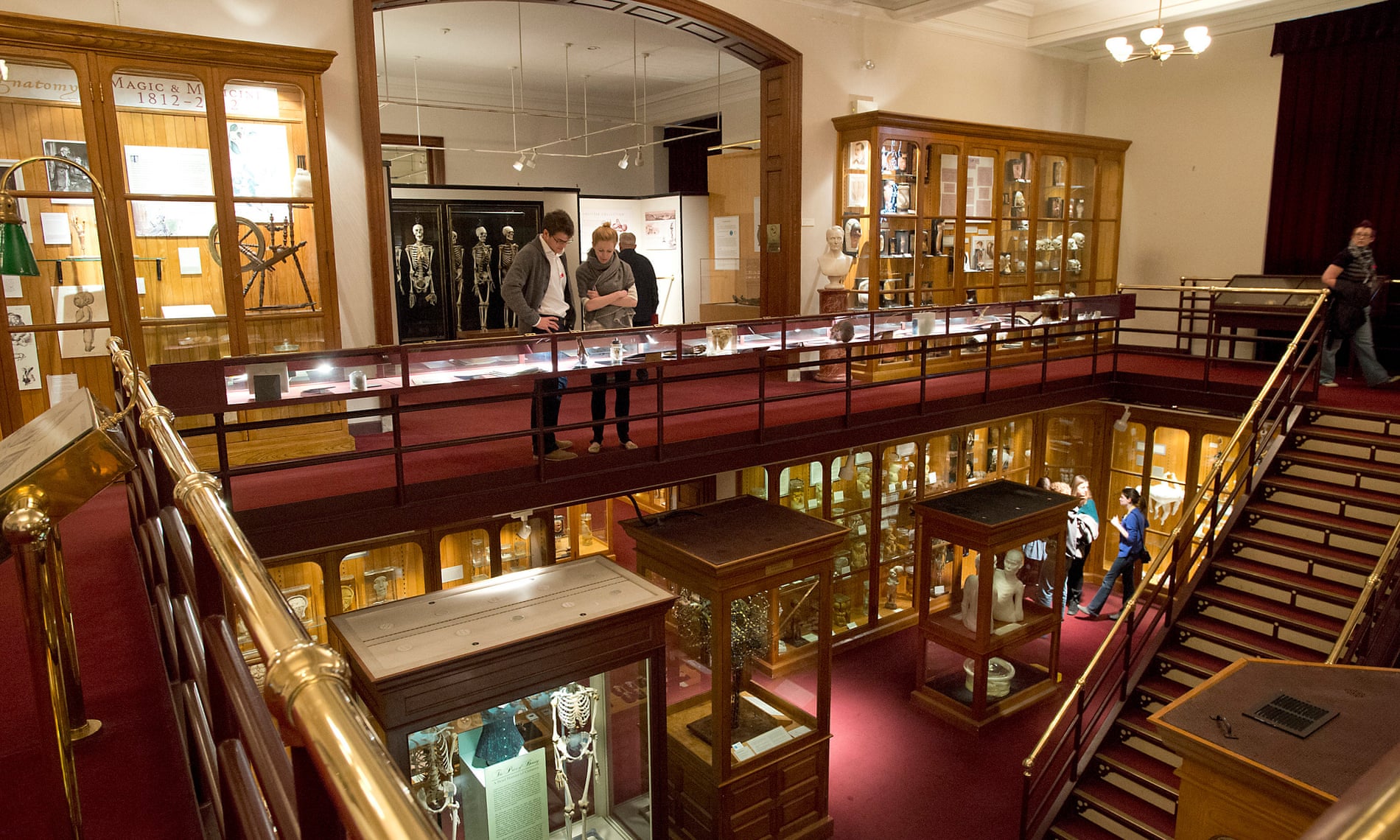
The Mütter Museum in Philadelphia, Pennsylvania. Among its collection are unusual or deformed organs, an iron lung and Einstein’s brain. Photograph: Allentown Morning Call/Tribune News Service/Getty Images
 
 A book, published in 1917, discovered in a thrift shop, motivated Menucha Latumaerissa to begin looking into history reflecting the Moluccan people. The book that so fascinated him to begin his career of searching out museums' artefacts dating from Europe's colonialist days when indigenous peoples' skeletons were taken from their places of origin to become curiosities placed in cabinets and displayed for public view, essentially treating the remains of people considered inferior to Europeans as commodities of curiosity, available for gawking at local museums. Descriptions of studies of human skulls from the Indonesian archipelago taken to the Netherlands during the colonial period, demonstrated the fascination of 'race science' by researchers.
 
As a Dutch customs officer, Mr. Latumaerissa developed a hobby of tracking Moluccan islands specimens taken to Europe, feeding off his own ethnic origins as one of Moluccan birth. A small diaspora from the Mollucan islands arrived in the Netherlands in 1951 following the Indonesian war of independence. On arrival in the Netherlands they were forced into internment camps and minority districts leaving him to contemplate: might those skulls still be on display somewhere in the Netherlands?
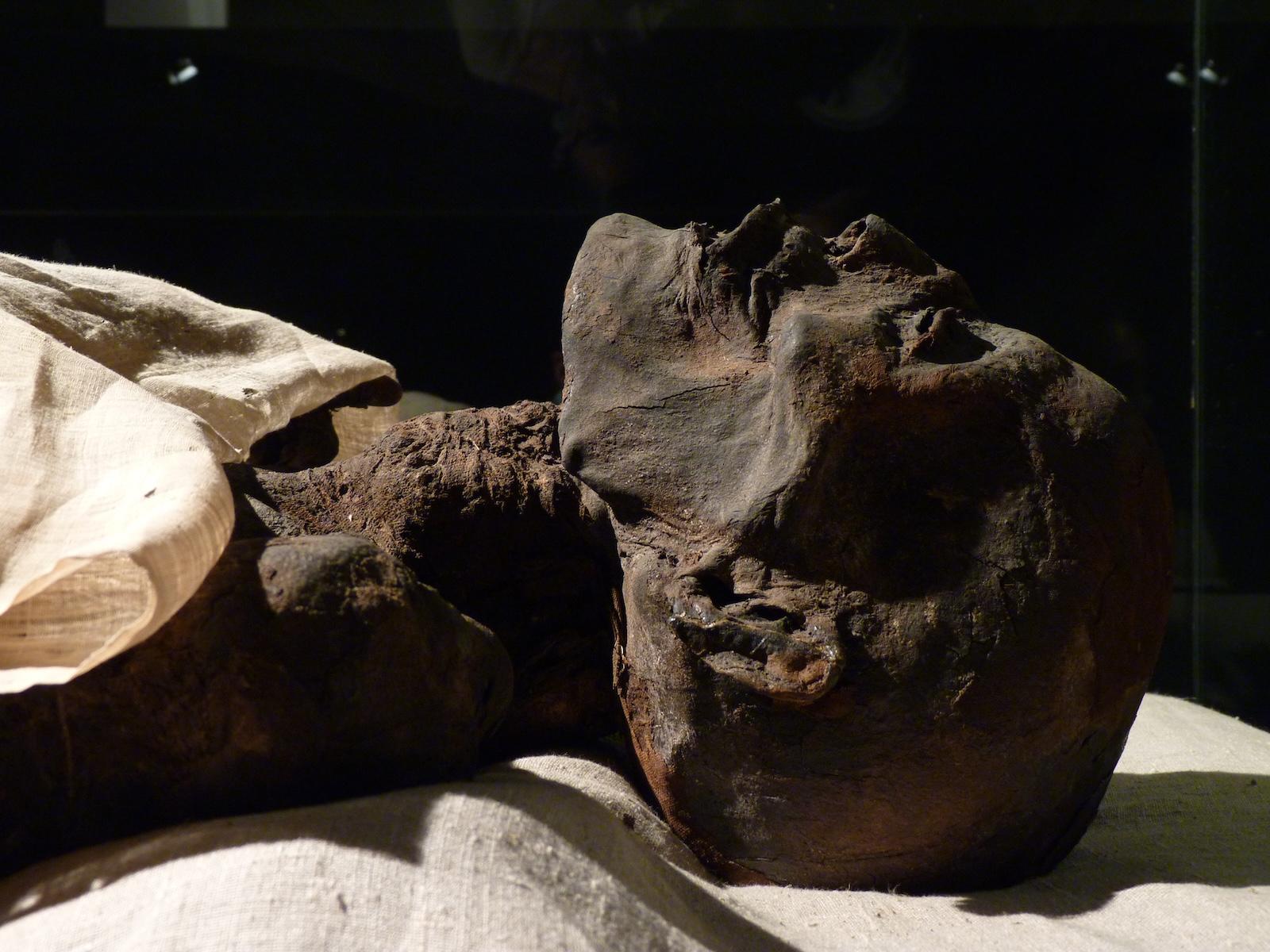
 
https://www.artandobject.com/sites/default/files/styles/gallery_item/public/ramsesimummy.jpg?itok=u9q9a-XY
Ramses I Mummy. The mummy of Ramses I was looted from Egypt around 1860 and held in various private collections in Canada and the US up until 2003. The mummy is currently on display in the Luxor Museum.  Wikicommons
 
 He eventually found them in a tiny anatomical museum, part of the Amsterdam University Medical Center called the Museum Vrolik, dating to the 19th century where jars of body parts were on display. Aside from the feet and ears and irregular fetuses, there were cabinets full of skulls and bones. The Moluccan skulls lined up in the museum have now been returned to the archipelago which gave birth to them, while the empty shelves in the display cabinets and their empty stands are testimony to the uncaring attitudes of scientists and colonists who viewed the Indigenous peoples they dominated as less than human.
 
Today, the Museum Vrolik is featuring a new exhibition which it has titled "Imagine: The Future of Human Remains from Colonial Contexts", scheduled to be on display until June of 2027. The point of the display, according to the museum's director, is to provide food for thought in calling attention to the human treasure troves, taken in a spirit of conquest and contempt, now finding their place back at their beginnings, granting dignity to that which was once a living human being. Needless to say, it is not only the Netherlands alone that indulged in these colonialist-era curiosity cabinets, but a Europe-wide practise.
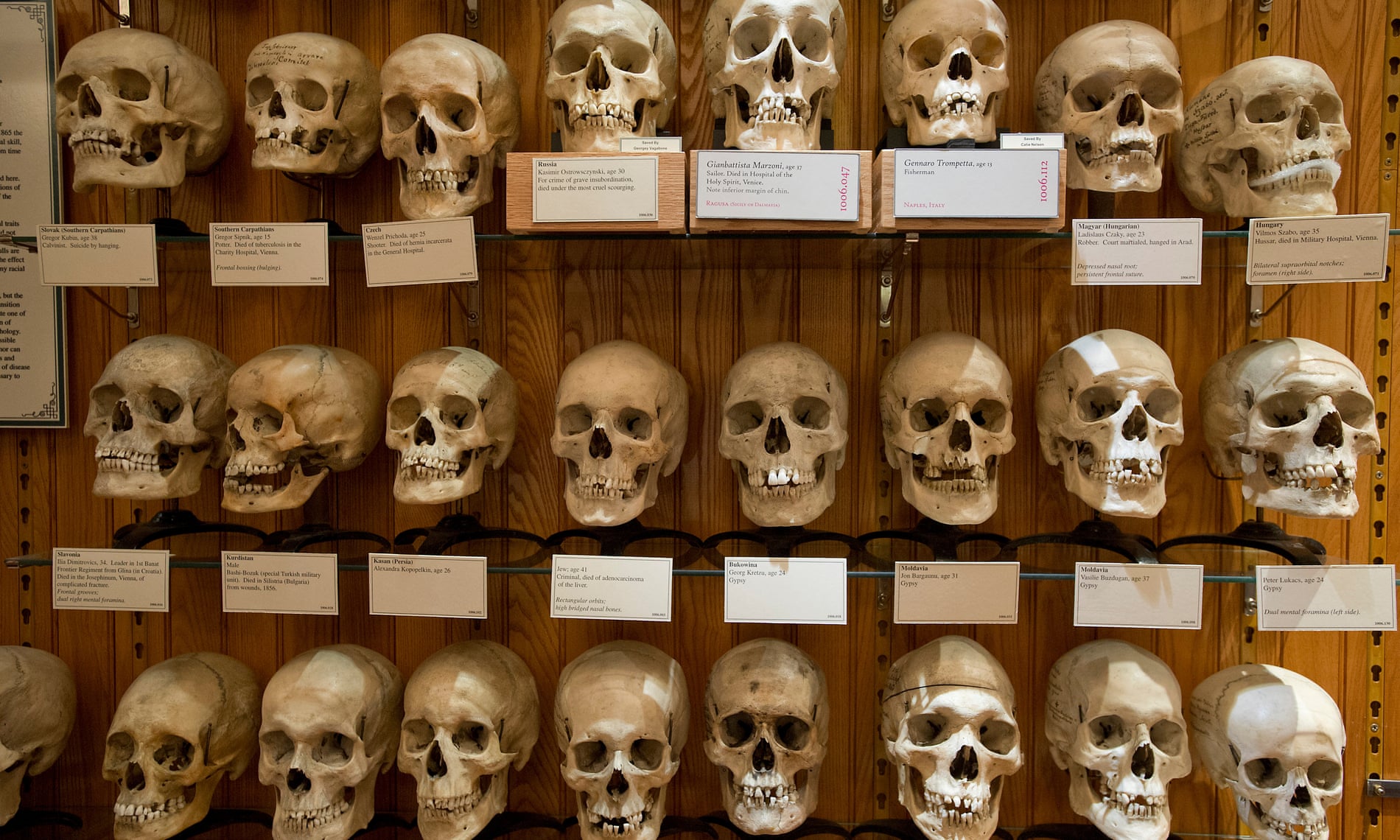
 
https://i.guim.co.uk/img/media/7d00e67f40e9beb2b681f899316017645a0a6b87/0_106_3600_2160/master/3600.jpg?width=1900&dpr=1&s=none&crop=none
The Hyrtl Skull Collection on display at the museum. Photograph: Allentown Morning Call/Tribune News Service/Getty Images
 
 Thousands of colonial-era human remains; skulls, skeletons, mummies, hair and teeth, were preserved and labelled in European collections; many representing anatomical troves used for scientific research at medical institutions; others on display in natural history museums. Most of these human artefacts were procured from hospitals, hauled out of pauper's graves, or procured through commercial trade in skeletons, while a smaller number were gathered through archaelogical looting or as trophies from  colonized geographies in Africa, Asia and Oceania.
 
The European penchant for these public displays dates from the 17th century when anatomists developed preservation methods, placing specimens in jars as educational tools as well as for the purpose of giving the public an opportunity to view spectacular specimens of the human skeletal architecture. "Race science" motivated scientists and anthropologists to collect  human bones with a focus on specimens from Indigenous and local populations from colonies, taken to Europe where hierarchies were invented to justify colonial subjugation, discrimination and slavery.  
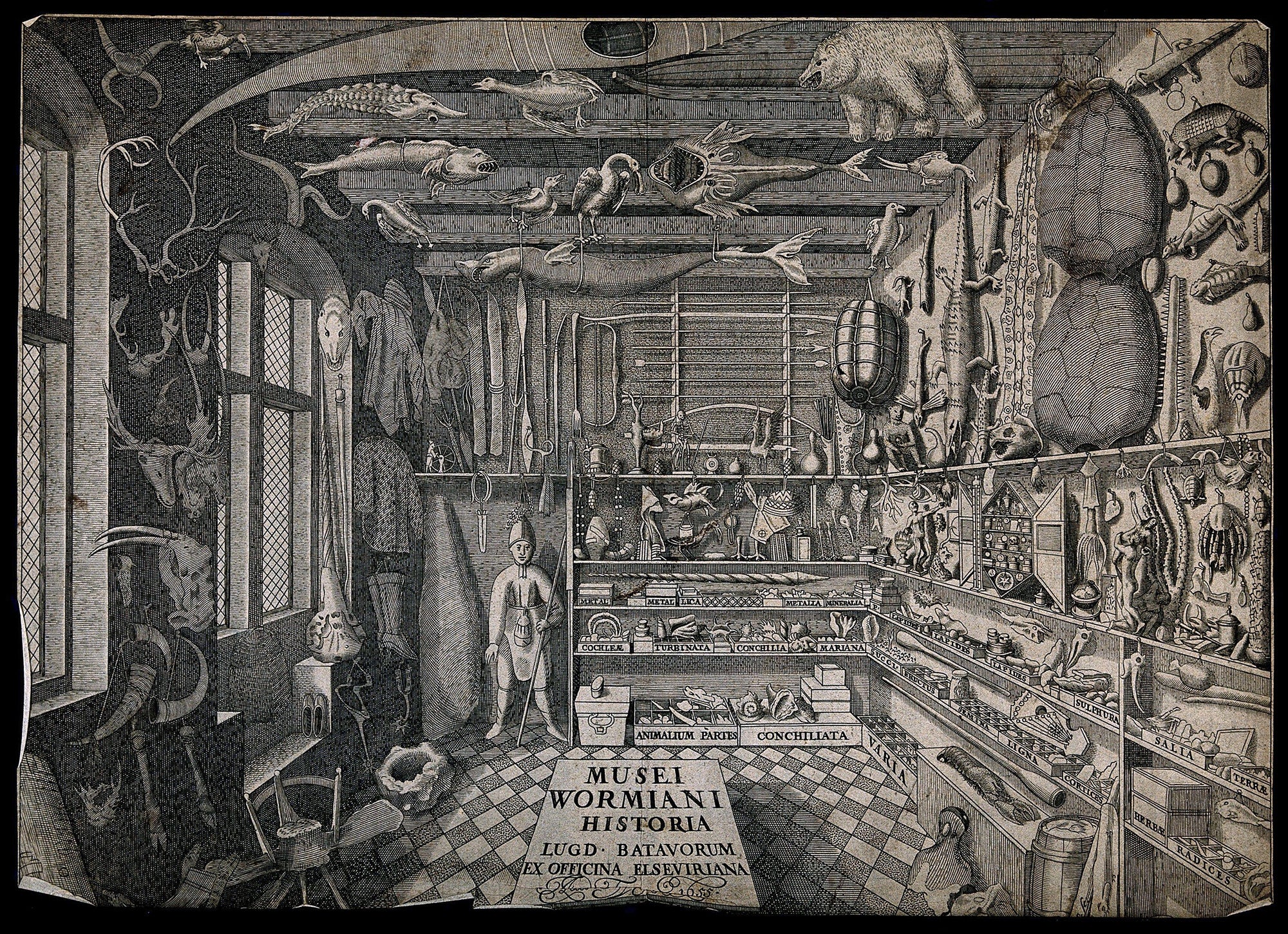
 
https://daily.jstor.org/wp-content/uploads/2025/01/the_age_of_wonder_meets_the_age_of_information_1_2000.jpg
The museum of Ole Worm, Copenhagen: interior. Engraving, 1655.   JStor
 

Labels: , , , , , , , , , ,

Sunday, October 21, 2018

The Great Dismal Swamp : A Desolate Place for a Defiant People

The Slave in the Dismal Swamp
In dark fens of the Dismal Swamp
  The hunted Negro lay;
He saw the fire of the midnight camp,
And heard at times a horse's tramp
  And a bloodhound's distant bay.

Henry Wadsworth LongfellowImage result for the great dismal swamp, tennyson
 "Dar is families growed up in dat dar Dismal Swamp dat never seed a white man, and would be skeered most to def to see one. Some runaways went dere wid dar wives, an' dar childres are raised dar."
"Dar are haps ob folks in dar to work. Most of 'em are fugitives, or else hirin' dar time. There is reefs ob land folks call de high lands. In dem ar canbrakes de ground is kivered wit leaves, kinder makin' a nat'ral bed."
"Dar be whar de wild hogs, cows, wolves and bars be found."
Charlie, runaway slave, 1859

"No one's saying nobody ever ran in there, but there's a difference between a slave running into the Dismal and slaves sustaining communities through generations. If you don't bring in archaeology, all you have is the documents and, if you're lucky, some oral histories. You're talking about a 2,000-square-mile swamp."
"They're not out there writing memos and sending them back to the local courthouse."
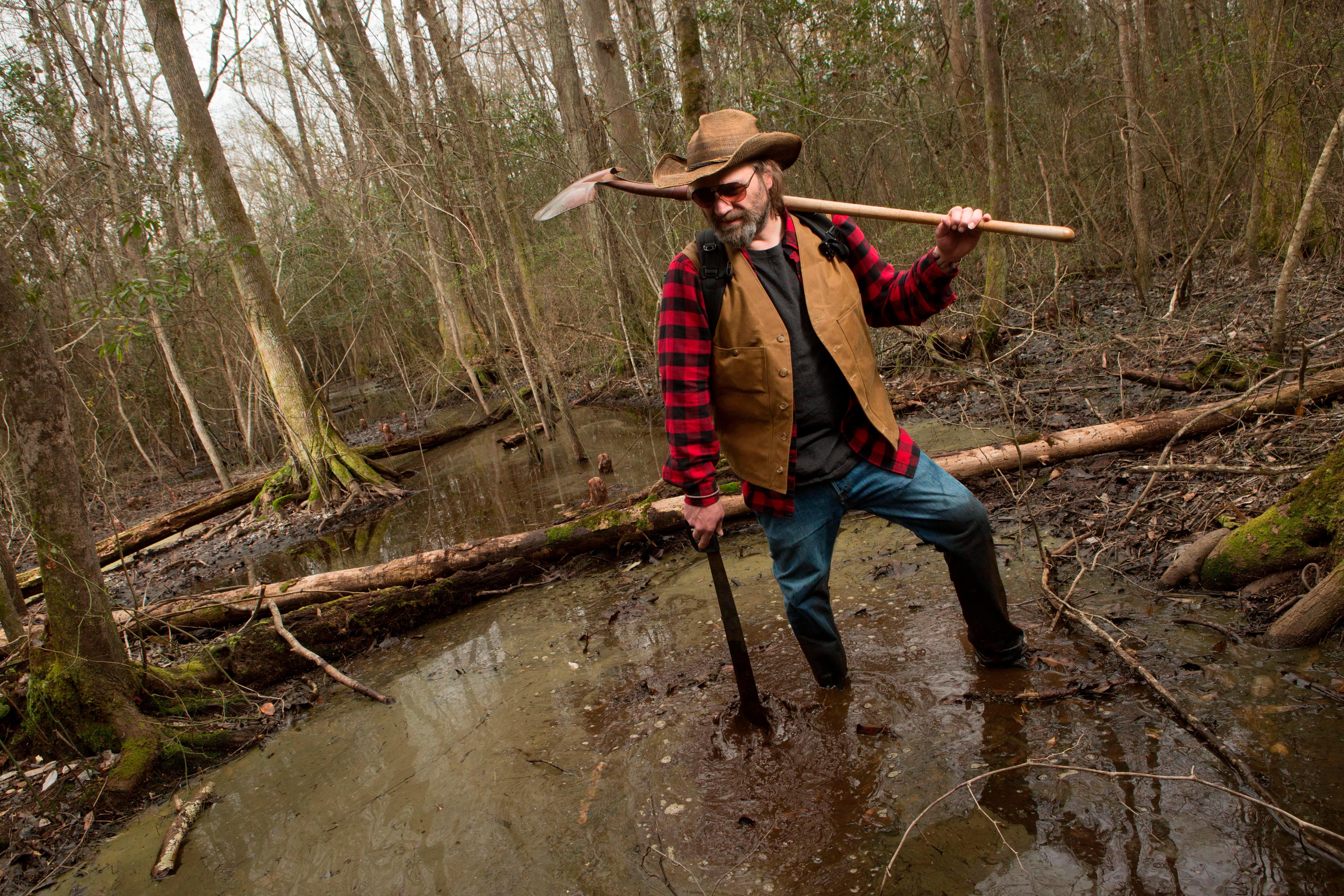
"Wait a minute, this is dry ground [2004 exploration]. Suddenly the ground is rising. The trees are 15 feet apart. It feels like a park. You could feel people here, almost."
"Anywhere I put my shovel, I was finding cultural features.  [Including the outlines of numerous cabins, where posts had rotted away but left circular stains where once they had been pushed into the ground]."
"There's so much focus on these benevolent, white, bearded guys [19th century Quakers]. Somewhere along the way, this radical black history got co-opted."
"We can talk good words about Quakers and abolitionists. But when they become the only point of conversation, we need to rectify this. The main agents were these maroons who took their lives into their own hands. They said, 'I'm getting the hell out of here'."
Dan Sayers, Chair of anthropology, American University, Washington, D.C.

"There's a lot that's unknowable, but I think we've finally been able to flush out the story. There are less than ten firsthand accounts of what life was like in the swamp, none of them exhaustive. We have to rely on conjecture a lot more."
"It was a peat swamp, which means it's highly acidic. Anything organic would not survive. They recycled these things down to disappearance. You had gun flints used down to the last possible spark."
J.Brent Morris, historian, University of South Carolina Beaufort
Sayers emerges from the Great Dismal Swamp near one of his research sites. (Allison Shelley)

A vast tract of marshy, peatland called the Great Dismal Swamp that existed on the border between North Carolina and Virginia was a mysterious place, a place where people hesitated to venture within, yet it captured the imagination. In 1859 reformer James Redpath published a book, Talks with Slaves in the Southern States, focusing on fugitive slaves helping other slaves to escape and find haven in Canada. His book described the swamp area as a "paradise of serpents and poisonous vegetation" but yet a place of haven for runaways. 

It is a place with a history of its own, most often described in hushed, fear-laden tones. But the swamp was not entirely unknown to some, as for example as a place where Native Americans were known to hunt since pre-historical times, where marginalized whites and European criminals found refuge from the 1600s forward. Where Africans who were forcibly enslaved joined maroons who had earlier settled deep in the bog unlike other inhabitants who lived and worked around the edges of the swamp.

It was characterized as a "vast body of mire and nastiness" in 1732 by William Byrd II, a planter, frustrated along with other colonials of the time that slaves were hiding themselves within its interior. George Washington was known to have extracted lumber from the swamp around 1760, planning to drain it for farming, without succeeding. In Dred by Harriet Beecher Stowe, a Dismal maroon was the main character. Poets of the day, like Longfellow and Wadsworth immortalized the swamp in dismal verse.

Finally, 1805 saw the Dismal Swamp Canal built, 35-kilometres linked to other waterways and ultimately altering the environment leaving the swamp with 305 of its original 2,000 metres still unapproachably intact, though during the time of the Civil War it was ten times that size. Anthropologist Dan Sayers was certain examining areas of the Swamp would reveal more of its history, as a significant part of the heritage of Black Americans; verifying that many were determined to take the trajectory of their lives into their own hands, escaping slavery.
Dan Sayers
During more than ten years of field excavations, archaeologist Dan Sayers has recovered 3,604 artifacts at an island located deep inside the swamp. (Allison Shelley)

In 2003 he ventured three kilometres into the swamp discovering a part of the refuge's raised islands, particularly a 20-acre elevated area located deep in the swamp interior where he was certain whole communities had once lived. With students from American University his project grew to become the Great Dismal Swamp Landscape Study, between 2010 and 2014, receiving a $200,000 grant from the National Endowment for the Humanities. They ran into black bears and canebrake rattlesnakes and swarms of mosquitoes drove them beyond frustration.

But they discovered the kind of fragments they were in search of; tobacco pipe pieces, fire pits, stone tools, and bits of ceramic. The sand on which cabins were sited was gauged and dated between the 1600s and 1700s. And while Dr. Sayers and his students worked on location, Dr. Morris of the University of South Carolina undertook the documentation aspect of the project. Out of their work came an exhibit on the Great Dismal Swamp installed at the new Smithsonian National Museum of African American History and Culture, in the Slavery and Freedom gallery.

And Dr. Sayers produced a publication detailing the history of the place and his findings which he titled A Desolate Place for a Defiant People: The Archeology of Maroons, Indigenous Americans, and Enslaved Laborers in the Great Dismal Swamp.

Great Dismal Swamp
Once 2,000 square miles in Virginia and North Carolina, the swamp today is perhaps one-tenth that size. (Allison Shelley)

Labels: , , , ,

Sunday, March 06, 2016

It's a Cruel World of Indentured Labour

"Our investigations at sea and across the Thai seafood sector continue to find extensive violence, corruption and abuse." 
"Slaves are still on the boats; nationals of neighbouring states are still trafficked in to provide cheap or free labour, and Thai fishing vessels continue to fish illegally and unsustainably, thereby reinforcing the economic incentives to use bonded, forced and slave labour to keep the costs down."
Steve Trent, director, Environmental Justice Foundation (EJF)
When we do our supermarket shopping for food products and look at the seafood, deciding whether to buy shrimp this week or something else for the dinner table do any of us give a thought as to where and how those shrimp are caught and transported? Human traffic smugglers persuade vulnerable young people from poor backgrounds in southeast Asia to go to Thailand to earn a living in the fishing market where they will have a good salary, sufficient to send back home to their families. And sometimes families take the initiative and sell their teenage children to the human traffickers out of financial desperation.
A fish-seller sorts shrimp at Klong Toey market in Bangkok. Activists claim that government measures have failed to end labour abuses in Thailand’s seafood industry
A fish-seller sorts shrimp at Klong Toey market in Bangkok. Activists claim that government measures have failed to end labour abuses in Thailand’s seafood industry. Photograph: Barbara Walton/EPA

"In our work in southeast Nepal, we find that unsafe migration and bonded labour are very closely connected."
"The families desperately hope that income from their members, mostly young men, working in the Middle East will allow them to pay off debts to the landlord for whom they work, and even perhaps allow them to purchase some land to be able to gain some independence. But when it goes wrong and the family member is in conditions of slavery in the destination area, then the family at home is often deeper in debt bondage because they have borrowed in order to send the worker abroad."
Ginny Baumann, Senior Programs Officer at the Freedom Fund
In Qatar construction in preparation for the 2022 FIFA World Cup has employed tens of thousands of people from India, Nepal, the Philippines and elsewhere, and hundreds of those workers have died as a result of unsafe working conditions and no regard for the safety of people working as indentured labourers. And nor is Qatar alone in this violation of human rights in exploiting the labour of workers from southeast Asia. Migrant workers are in high demand in Bahrain, Kuwait, Oman, Saudi Arabia and the United Arab Emirates.

Their oil wealth has stimulated massive investment in huge new infrastructure building, and eye-popping architecturally bold ventures to loud acclaim, but with no indigenous workforce to labour at the construction projects, the intake of foreign workers anxious for employment is huge. Gulf state citizens have traditionally, because of their countries' oil wealth, received free social benefits, with no incentive left to them to provide the muscle and talent to engage in construction work. The benefits that accrue to the indigenous citizens do not migrate to foreign labourers. 

The Democratic Republic of Congo, beset by years of conflict in tribal, ethnic and clan violence, is a country rich with natural resources. Slavery is a condition that rears its ugly head there with open pits in the Walikale area tunnelling into a mountain from which men and  women extract coltan, a mineral used in electronic products, like cellphones. The workers have no rights, are kept in deplorable conditions and fed a miserable diet with no medical care. They are pressed to work, hale or ill. Armed guards stand watch over them.

The women are raped by the guards routinely, under this unspeakable system of slave labour. We are unknowingly complicit when we buy products that contain elements procured in trade with these countries. Such a mine has no legal recognition, the mineral extracted goes onto the corporate market through middlemen, at a cheap price enabled by slavery. The supply chain is almost unknowable and untraceable by Western governments attempting to establish origins. We aid slavery by default, through no discernible fault of our own.

Women employed as domestics in the Gulf states must surrender their passports, leaving them unable to flee an abusive employer for fear of being without papers so the authorities will deport them and they will be left without employment unable to send support money back to their countries of origin. Foreign workers labouring under these conditions have no rights under the laws of the countries that import them to produce labour that no Gulf citizen would demean themselves with.

"Women [in Qatar] who have been physically or sexually abused face major obstacles to getting justice. None of the women researchers spoke to had seen their attackers prosecuted or convicted. In one horrific case, a domestic worker broke both her legs and fractured her spine when she fell from a window as she tried to escape a rape attack by her employer. Her attacker then proceeded to sexually assault her as she lay on the ground, injured and unable to move. Only afterwards did he call an ambulance.
When researchers interviewed her six months after the attack, she was still using a wheelchair. Despite her appalling injuries, the Public Prosecutor dismissed the case due to “lack of evidence” and she returned to the Philippines last year. Her employer has never been held accountable."    Amnesty International

Labels: , ,

Friday, July 03, 2015

The Slave Trade in Seafood

"You Burmese are never going home. You were sold, and no one is ever coming to rescue you."
Thai fishing boat captain

"I don’t want to speak that language anymore because I suffered so much there. I hate that language now."
"I feel like a tourist [on his return to his home in Burma]. I feel Indonesian."
"I didn’t want an Indonesian wife, I just wanted to go back home to Myanmar. I felt like I lost my young man’s life. I just thought that all of this time, I should have been in Burma having a wife and a proper family."
"My life was just so bad that it hurts me a lot to think about it. I miss my mom."
Myint Naing, 40, former fisherman slave
Myint Naing
In this May 16, 2015, photo, former slave fisherman Myint Naing, 40, center, and his sister Mawli Than, left, embrace as they are reunited after 22 years at their village in Mon State, Myanmar. He is the oldest of four boys and two girls. In 1990, his father drowned while fishing, leaving him as the man in charge at just 15.   AP Photo/Gemunu Amarasinghe

Thailand has a busy and vast seafood export industry. And it is an industry built on slavery. Where innocent Burmese anxious to find employment are assured by recruiters that in Thailand they will find full employment, earn good salaries and be able to send money back home to their impoverished families living in their Burmese villages. The reality is that they are transported to Thailand and from there handed over for payment to fish in an industry that works its slaves around the clock, sometimes giving them a pittance in recompense, sometimes nothing.

Myint Naing, at the age of 18 became one of those slaves when a broker came to southern Myanmar in 1993 promising excellent, well-paid jobs for young men willing to work. Mying's father had died three years earlier and he, as the oldest male child in the family took on the mantle head of family and wage-earner. Desperate for a living wage for the family, Myint's mother agreed he could go with the agent. He was shipped by sea to the remote Indonesian island of Tual in the midst of rich fishing grounds.

And that was when the captain of the Thai vessel informed all the young men on board that they were no longer independent, but rather that he owned them; that they had been sold to him and there was no way they could return home. The ocean became his life as he became a slave to fishing to profit the captain and the larger, wider Thai fishing enterprise in their growing export market. It is a seafood business operating on the labour of an estimated 200,000 migrant workers.
Dita Alangkara/ Associated Press
Dita Alangkara/ Associated Press   Workers in Benjina, Indonesia, load fish onto a cargo ship bound for Thailand. Seafood caught by slaves mixes in with other fish at a number of sites in Thailand, including processing plants.

Many of them are not simply 'migrant workers', but slaves who were forced onto the boats; tricked, kidnapped or sold as Myint Naing had been. Their plight similar to that of press gangs roaming the streets of 18th Century Britain for sailors when such abductions were a common occurrence. The fishing companies that make up the Thai market have a wide consumer base, from the United States to Europe and Japan. The fish these workers and slaves help catch supplies food for faroff countries unware that slave labour places fish on their dining tables or in the tins of catfood they rely upon.

The young man repeatedly begged to be allowed to return home, and for his efforts was beaten mercilessly, forced to continue working on a boat in Indonesia. Eight years after he had first been taken to the boat as a slave he begged for his freedom only to hear the captain threaten to kill him. He was chained for three days as punishment, food and water denied him. He and 800 other slaves were rescued following a yearlong Associated Press investigation into Southeast Asia's fishing industry.

AP Photo/APTN
AP Photo/APTN In this Thursday, Nov. 27, 2014 image from video, workers from Myanmar load fish onto a Thai-flagged cargo ship in Benjina, Indonesia. An intricate web of connections separates the fish we eat from the men who catch it, and obscures a brutal truth: Our seafood may come from slave workers.

With the expansion of the seafood export industry, overfishing has meant that trawlers were required to sail further and further into foreign waters for fish. The result is that the workers are virtually trapped for months, extending to years aboard their seabound prisons. There is no medical care, boiled sea water is given them, and the rescued fishermen explained that on some boats workers were killed if they slowed the frenzied pace of drawing fish from the ocean. Some, in desperation, fling themselves into the sea.

In 1996, he ran away after having been beaten yet again in response to his pleading to be released. He managed to abandon his captivity, his skull wounded from the beating. An Indonesian family sheltered him until he regained some semblance of health, offering him food and shelter in return for his work on their farm. He stayed with them for five years, yearning to return to Myanmar, and missing the friends he had made and left behind on the boat he had run away from.

Then in 2001, a captain offering to take fishermen back home if they agreed to work caught his attention. In the hope that this would solve his dilemma he returned to the sea, discovering the conditions similar to what he had fled from. The elusive payment for their labour was withheld. After another nine months the captain abandoned them, leaving them free to return to Thailand on their own. When, once again, he asked to be returned to Burma, he was chained to the boat.

He managed to pick the lock on his shackles, dove into the night-time water and swam to shore. He hid in the jungle, fearful of approaching police lest they deliver him back to the fishing captains. By 2011 his life of solitude and privation caused him to move to the island of Dobo and there he heard of a small group of former Burmese slaves, living on vegetables they raised themselves. A friend informed him eventually that the Indonesian government had begun a rescue operation, embarrassed by revelations of slavery.

Myint Naing
In this May 16, 2015 photo, former slave fisherman Myint Naing and his mother, Khin Than, cry as they are reunited after 22 years at their village in Mon State, Myanmar. Myint, 40, is among hundreds of former slave fishermen who returned to Myanmar following an Associated Press investigation into the use of forced labor in Southeast Asia’s seafood industry.  AP Photo/Gemunu Amarasinghe
 
Myint Naing's 22 years in Indonesia had come to an end. He finally received the help he had longed for to return to his small village and be reunited with his family, one of the hundreds rescued and aided to return to their families in the wake of a year-long AP expose of the labour abuses abetting Southeast Asia's seafood industry. Reports documenting the slave-caught fish shipped from Indonesia to Thailand where it was exported to the U.S. spoke volumes of the plight of these poor people.

It was revealed that the supply chains of supermarkets and distributors included Wal-Mart, Sysco and Kroger, and companies such as Fancy Feast, Meow Mix and Iams emphasize their condemnation of such labour abuse, and having had no idea that their pet food was a product of slave fishing conditions; vowing they are committed to taking steps to prevent recurrences for the future.

Labels: , , , ,

Saturday, June 21, 2014

The Slavery Issue of Thai Shrimp

"Ethical businesses ... will be undercut by unethical businesses. It's the curse of all volunteeristic approaches to this [unless governments regulate and enforce stricter regulations]."
Aidan McQuade, director, Anti-Slavery International

Thai 'trash fish' workers unload the catch at Songkhla port.
Thai 'trash fish' workers unload the catch at Songkhla port. Chris Kelly/Guardian 
"One day I was stopped by the police and asked if I had a work permit. They wanted a 10,000 baht ($250) bribe to release me. I didn't have it, and I didn't know anyone else who would, so they took me to a secluded area, handed me over to a broker, and sent me to work on a trawler."
Ei Ei Lwin, 29, a Burmese migrant detained on the docks at Songkhla port

The British newspaper the Guardian has published the results of a months-long investigation. Their conclusion: about 500,000 people are working in Thailand as slaves, many of them on shipping boats employed catching the fish that produces fish meal that feeds mostly shrimp. That half-million enslaved workers is part of the estimated 30 million other poor and vulnerable people who have been caught up in corporate interests that blink at slave labour.

The world can now boast more slaves forced to work against their will presently than at any other time in history. This, at a time when we complacently prefer to believe that slavery of any kind is a scourge that has long passed into history. Slavery, needless to say, is internationally outlawed. It was, in any event, only backward countries of antiquity and more modern countries of racist inclination who practised what we now feel is the immoral shackling of human beings to someone's will.

Not only are slaves employed in hard, back-breaking, never-ending labour on fishing boats and agricultural lands, mines, factories, but regarded as less than human they have few human rights, and are often savagely beaten. There are other slaves as well, women from Asia, Africa and eastern Europe who are trafficked throughout the world, including North America, as prostitutes who rarely see the profitable results of their labour.

Despite the dread that the world itself conjures up of inhumane conditions and misery incarnate, we are all somehow complicit, it would appear. While Western democracies would have nothing to do with such inhuman practises as owning another human being and working that individual to death, we are all involved. Our governments, though aware that slavery is rampant, do little to battle it through the enactment of laws with teeth to outlaw the practise.

So we eat food, wear clothing, and walk on rugs that have been produced by slave labour; indentured children, families living on the edge of existence, reliant on labour that barely earns them food and shelter. CP Foods is a multinational which the Guardian centred its attention on, where slave boats are involved in the products that they market and sell.

This issue is one that merits governments tackling -- from poor rule of law, human development, economic development and access to credit. And to criminalize slavery in a manner that the unscrupulous cannot undermine. So that supply chains are closely examined, existing laws are enforced, investigations take place, and companies that support slavery in their supply chains are boycotted.

CP Foods, when probed for information refused to confirm whether its shrimp are sold in Canada. Walmart refused to confirm whether it sells Thai shrimp, and Costco was fairly shy about responding to queries about its shrimp, but evidently it comes from Thailand.

Labels: , ,

 
()() Follow @rheytah Tweet