Ruminations

Blog dedicated primarily to randomly selected news items; comments reflecting personal perceptions

Friday, April 24, 2026

Unconscionable Human Skeleton Museum Displays

https://t.prcdn.co/img?regionKey=qzrqWQostY/0V5iMdmehTA==&scale=250
Ilvy Njiokiktjien, New York Times
 
"What the museums have in common is that they all see it as a problem -- and that's already progress."
"They all deal with it in different ways, although there are many similarities."
"Some are more proactive than others."
Jos van Beurden, repatriation expert, researcher, Free University of Amsterdam
 
"It makes me sad. The Dutch destroyed everything of ours, our language, our culture."
"First they forbid it, and we all had to become Christians and learn the Dutch language, and then they displayed and traded our ancestors' skulls." 
Menucha Latumaerissa, 45 Dutch customs official, ethnic Moluccan
 
"What it should emphasize is the idea that, in an ideal situation, collections like these -- racialized collections -- should reach their final resting place, with their communities."
"The empty stands show this important absence so we don't forget these things happened."
"We do feel a sense of shame, but also responsibility. What does it mean to have these remains housed here?"
"We need to find a way to somehow address these collections."
Laurens de Rooy, director, Museum Vrolik, Amsterdam University Medical Center 
https://i.guim.co.uk/img/media/c2df0050dc2ca8d88418b9d8c20fc26fc4a834e3/0_123_3189_1914/master/3189.jpg?width=1900&dpr=1&s=none&crop=none
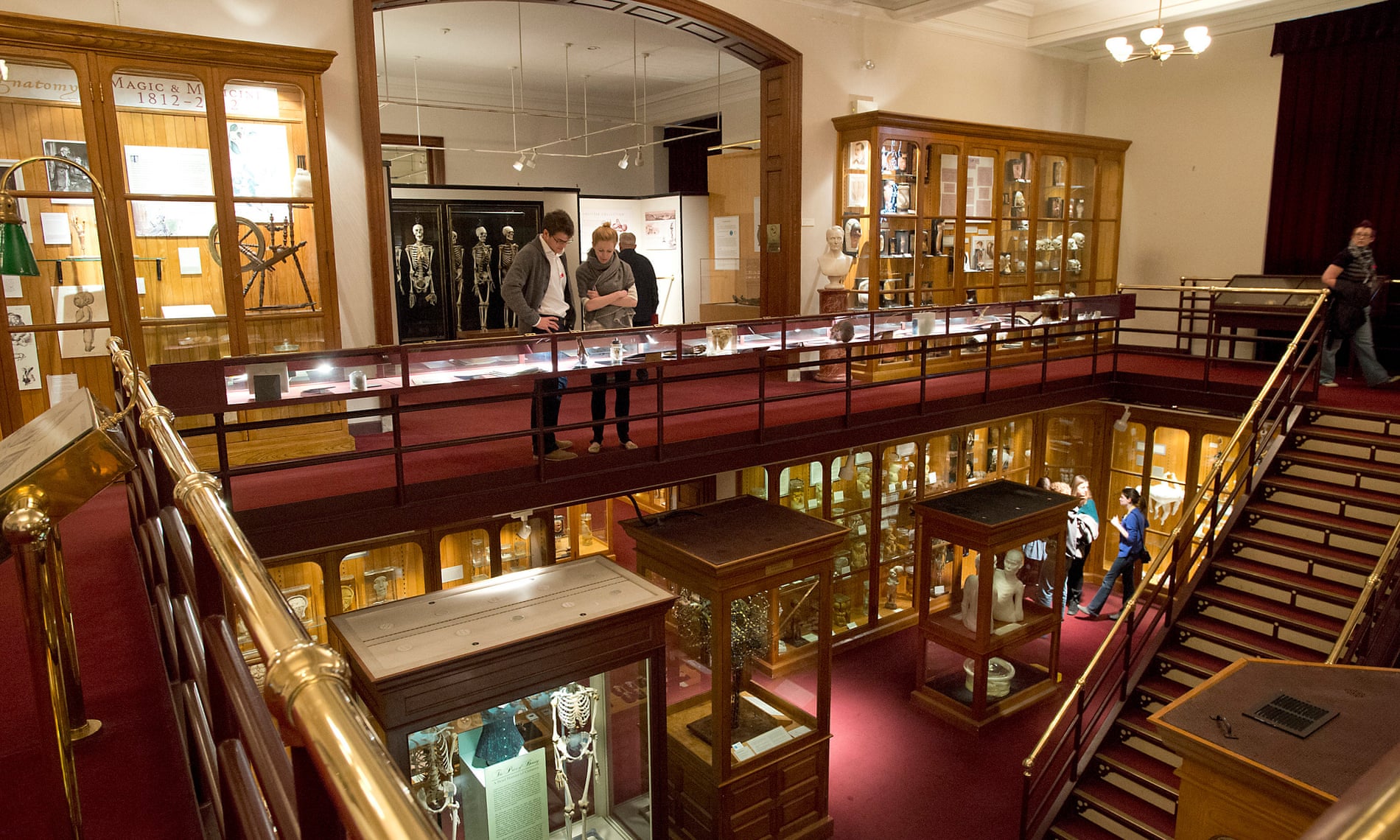
The Mütter Museum in Philadelphia, Pennsylvania. Among its collection are unusual or deformed organs, an iron lung and Einstein’s brain. Photograph: Allentown Morning Call/Tribune News Service/Getty Images
 
 A book, published in 1917, discovered in a thrift shop, motivated Menucha Latumaerissa to begin looking into history reflecting the Moluccan people. The book that so fascinated him to begin his career of searching out museums' artefacts dating from Europe's colonialist days when indigenous peoples' skeletons were taken from their places of origin to become curiosities placed in cabinets and displayed for public view, essentially treating the remains of people considered inferior to Europeans as commodities of curiosity, available for gawking at local museums. Descriptions of studies of human skulls from the Indonesian archipelago taken to the Netherlands during the colonial period, demonstrated the fascination of 'race science' by researchers.
 
As a Dutch customs officer, Mr. Latumaerissa developed a hobby of tracking Moluccan islands specimens taken to Europe, feeding off his own ethnic origins as one of Moluccan birth. A small diaspora from the Mollucan islands arrived in the Netherlands in 1951 following the Indonesian war of independence. On arrival in the Netherlands they were forced into internment camps and minority districts leaving him to contemplate: might those skulls still be on display somewhere in the Netherlands?
 
https://www.artandobject.com/sites/default/files/styles/gallery_item/public/ramsesimummy.jpg?itok=u9q9a-XY
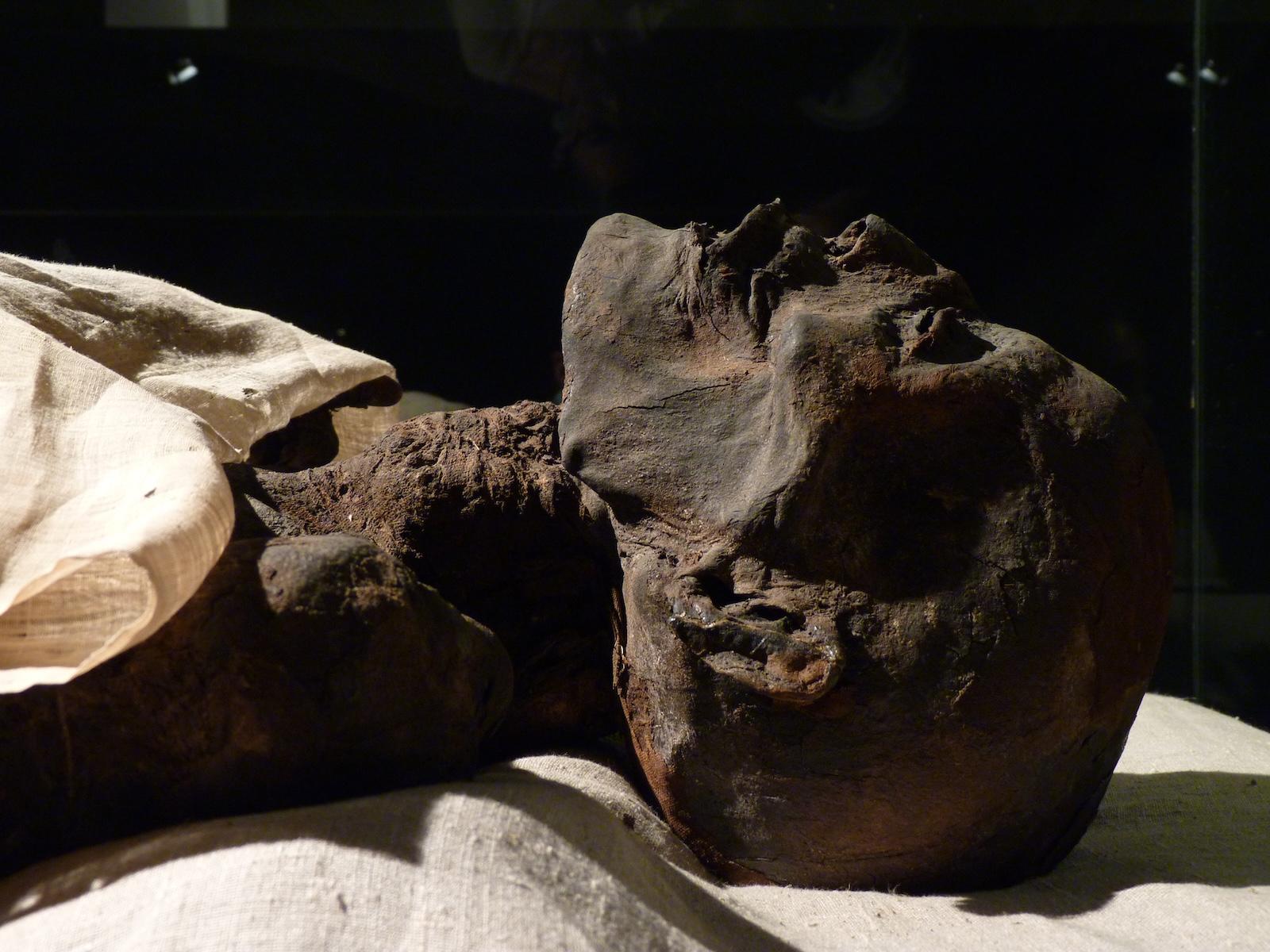
Ramses I Mummy. The mummy of Ramses I was looted from Egypt around 1860 and held in various private collections in Canada and the US up until 2003. The mummy is currently on display in the Luxor Museum.  Wikicommons
 
 He eventually found them in a tiny anatomical museum, part of the Amsterdam University Medical Center called the Museum Vrolik, dating to the 19th century where jars of body parts were on display. Aside from the feet and ears and irregular fetuses, there were cabinets full of skulls and bones. The Moluccan skulls lined up in the museum have now been returned to the archipelago which gave birth to them, while the empty shelves in the display cabinets and their empty stands are testimony to the uncaring attitudes of scientists and colonists who viewed the Indigenous peoples they dominated as less than human.
 
Today, the Museum Vrolik is featuring a new exhibition which it has titled "Imagine: The Future of Human Remains from Colonial Contexts", scheduled to be on display until June of 2027. The point of the display, according to the museum's director, is to provide food for thought in calling attention to the human treasure troves, taken in a spirit of conquest and contempt, now finding their place back at their beginnings, granting dignity to that which was once a living human being. Needless to say, it is not only the Netherlands alone that indulged in these colonialist-era curiosity cabinets, but a Europe-wide practise.
 
https://i.guim.co.uk/img/media/7d00e67f40e9beb2b681f899316017645a0a6b87/0_106_3600_2160/master/3600.jpg?width=1900&dpr=1&s=none&crop=none
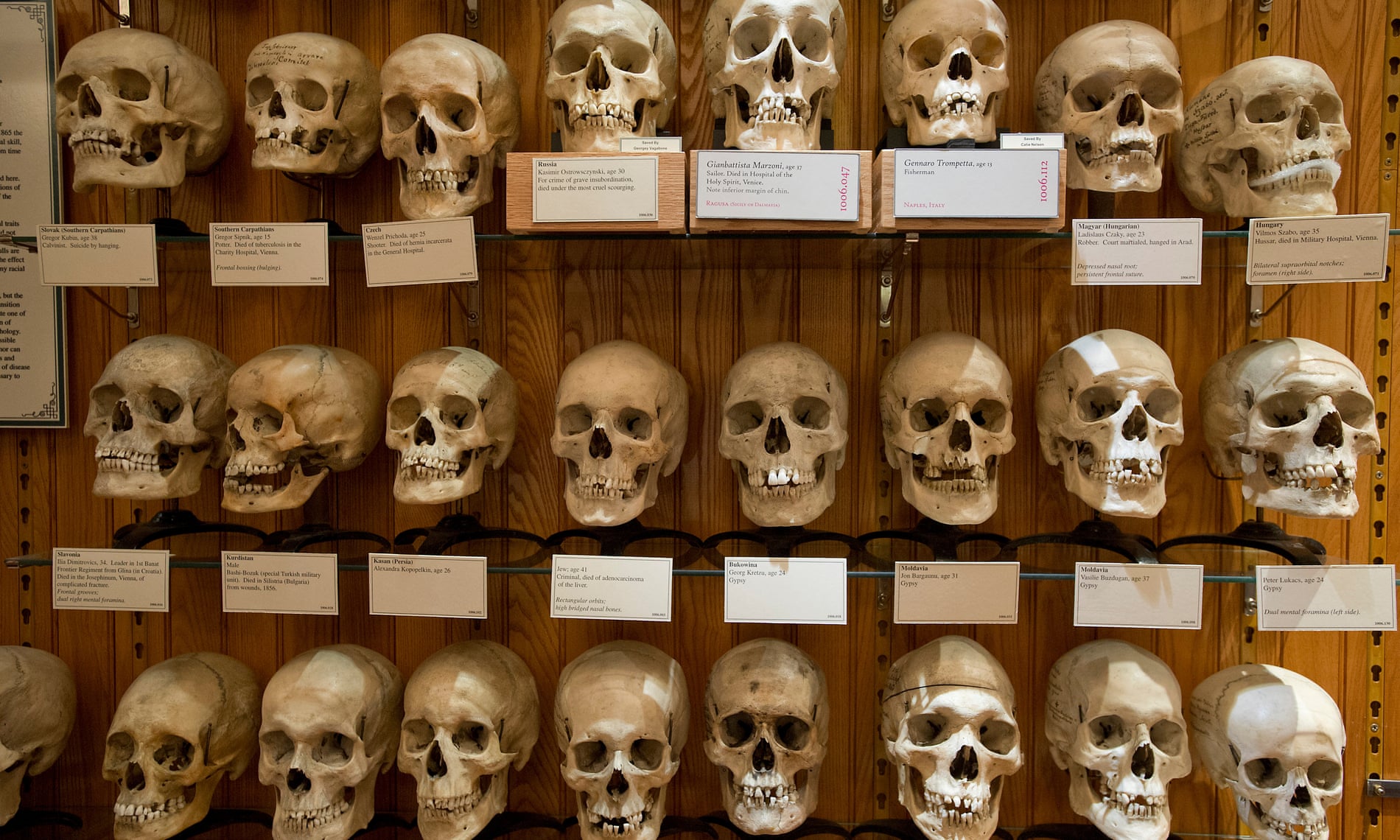
The Hyrtl Skull Collection on display at the museum. Photograph: Allentown Morning Call/Tribune News Service/Getty Images
 
 Thousands of colonial-era human remains; skulls, skeletons, mummies, hair and teeth, were preserved and labelled in European collections; many representing anatomical troves used for scientific research at medical institutions; others on display in natural history museums. Most of these human artefacts were procured from hospitals, hauled out of pauper's graves, or procured through commercial trade in skeletons, while a smaller number were gathered through archaelogical looting or as trophies from  colonized geographies in Africa, Asia and Oceania.
 
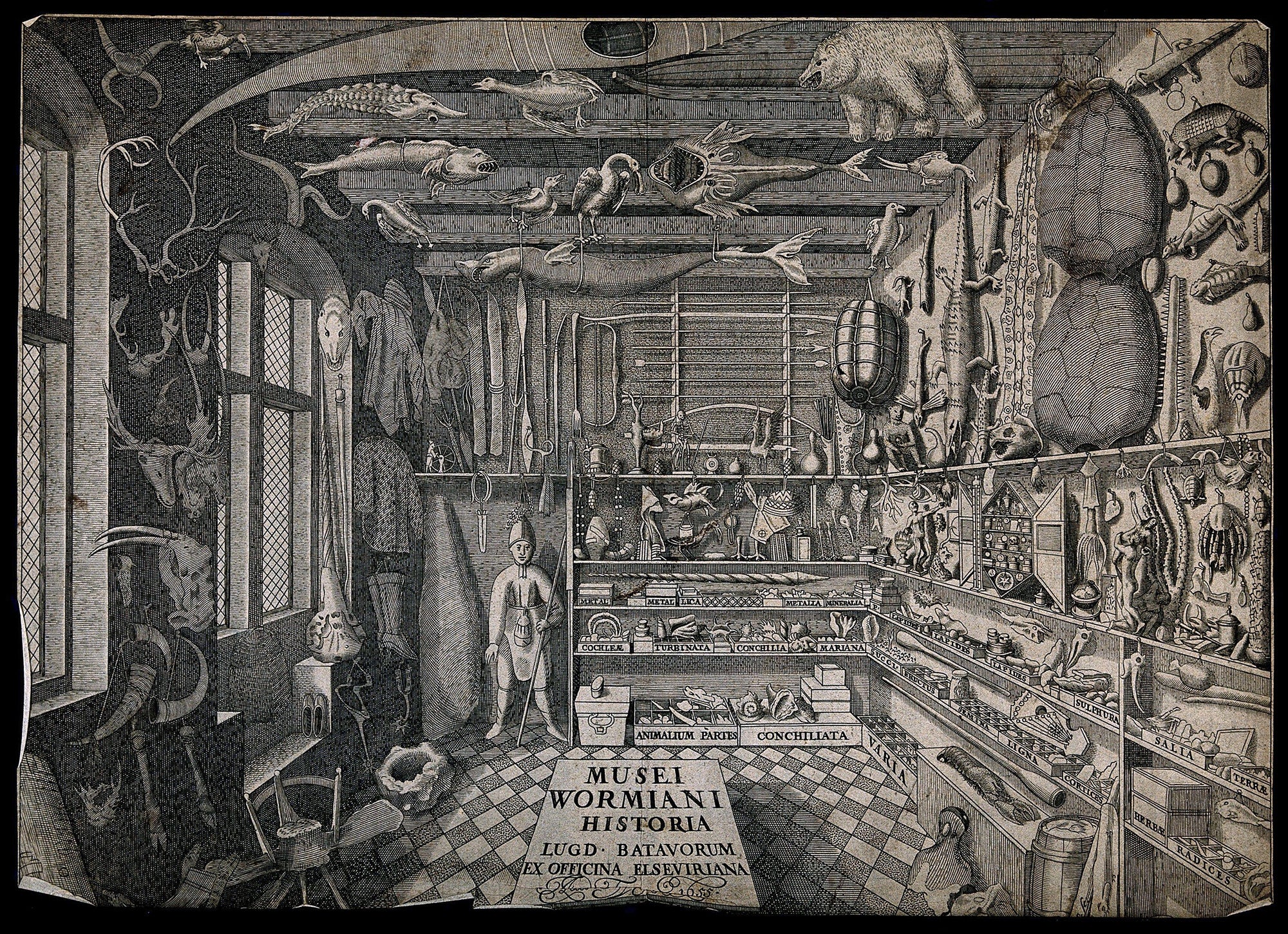
The European penchant for these public displays dates from the 17th century when anatomists developed preservation methods, placing specimens in jars as educational tools as well as for the purpose of giving the public an opportunity to view spectacular specimens of the human skeletal architecture. "Race science" motivated scientists and anthropologists to collect  human bones with a focus on specimens from Indigenous and local populations from colonies, taken to Europe where hierarchies were invented to justify colonial subjugation, discrimination and slavery.  
 
https://daily.jstor.org/wp-content/uploads/2025/01/the_age_of_wonder_meets_the_age_of_information_1_2000.jpg
The museum of Ole Worm, Copenhagen: interior. Engraving, 1655.   JStor
 

Labels: , , , , , , , , , ,

Thursday, November 06, 2025

Intolerance of, and Persecution of Christians

"If you don't know what is going on in Nigeria, your media sources suck. You are in a bubble. I'm not a Christian, but they are systematically killing the Christians in Nigeria. they have killed over 100,000 since 2009. They have burnt 18,000 churches."
"This is so much more of a genocide attempt than what is going on in Gaza. They are literally trying to wipe out the Christian population of an entire country. Where are the kids protesting this?"
Commentator Bill Maher
 
"In North Korea, it's illegal to be a Christian. It's illegal to own a Bible. There's an estimated 60,000 Christians imprisoned or in Labour camps in North Korea. There's no way to openly express your faith in North Korea."
"It's not only you who will be punished: North Korean authorities are likely to round up your extended family and punish them too, even if  your family members aren't Christians."
"Persecution is growing around the world, both in global spread, but also in intensity. We recognize now that more than 380 million Christians face high levels of persecution and discrimination for their faith in Jesus Christ." 
Andrew Croft, communications and relations manager, Open Doors Canada 
 
"You could face house arrest, forced marriage, forced Islamic rituals or even threats to  your life [as punishment for those who convert to Christianity]."
"[In Sudan], More than 100 churches have been damaged so far, and Christians have been abducted and killed."
"[In Pakistan], the number of Christian girls [and those from other minority religions are] abducted, abused and forcefully converted to Islam [frequently backed by lower courts] is growing."
"In recent years the [Chinese] government has aggressively tried to ensure all religious expression is brought into line with official Chinese Communist philosophy." 
Open Doors Canada 
https://images.theconversation.com/files/595021/original/file-20240519-19-grhr6b.jpg?ixlib=rb-4.1.0&rect=0%2C3%2C1024%2C677&q=75&auto=format&w=768&h=512&fit=crop&dpr=1
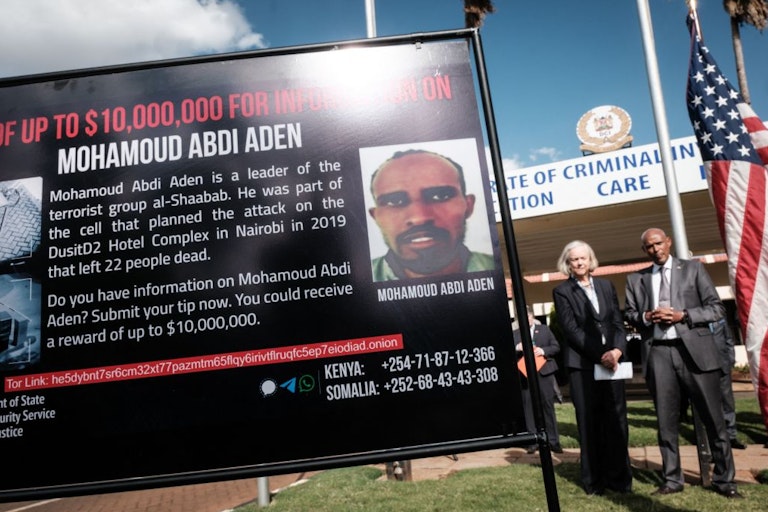
The governments of Kenya and the US announced a US$10 million reward for information on terror suspect Mohamoud Abdi Aden in 2023. Yasuyoshi Chiba/ AFP via Getty Images
 
An estimated 62,000 Christians, since 2000, have been murdered in Nigeria. People found to be Christian in North Korea risk death by government forces, alternately being sent off to labour camps. Blasphemy laws in Pakistan carry the death penalty, with a quarter of all blasphemy cases (blaspheming against Islam or the Prophet) representing charges against fewer than two percent of the population: Pakistani Christians.
 
The reality is that Christians across the world have become an endangered species. And while in the West there is no end of commiseration with alleged charges of 'genocide' being committed by Israel in Gaza resulting from Palestinian terrorist groups -- led by the infamous Hamas having committed a mass atrocity of savage proportions in Israel, owing to the Israel Defense Forces' response in counter-attacking the various Palestinian terrorist groups like Islamic Jihad, Fatah and Popular Front for the Liberation of Palestine alongside Hamas all of which took part in slaughtering 1,200 Jews on October 7, 2023 -- the plight of Christians worldwide appears to be studiously ignored.
 
In the West itself there appears an increasing intolerance for Christianity, despite that democracies have always been Judeo-Christian-inspired in their human rights laws and systems of justice in general. In the past several years as a result of a false report out of Canada that spun around the world, that Indigenous children housed and educated in mostly Catholic but government-sponsored Residential Schools suffered abuse and died in numbers over 160 years, greater than those of the general population, an aboriginal-led cataclysm of rage saw 100 churches being burned, with no one held to account.
 
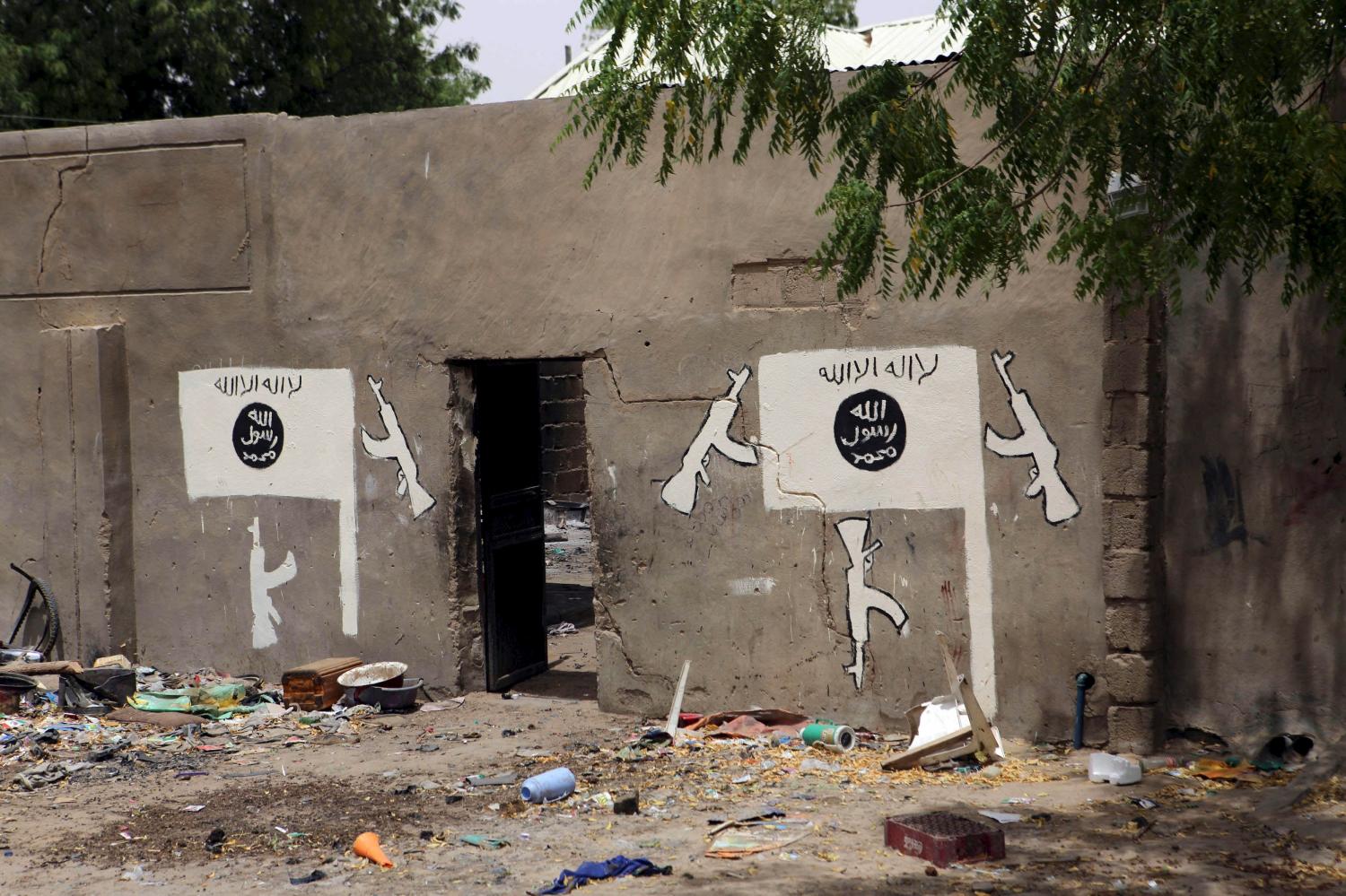
According to the International Committee on Nigeria (ICON) which promotes human rights and religious freedom, "the silent slaughter" of Christians over the past two decades saw 43,000 Christians murdered by the Boko Haram Islamist terror group. Muslim nomadic cattle herders -- extremist Fulanis -- killed another 19,000 who were pastoralists, farmers resisting the arable land they farmed being overrun by cattle, while the herders -- as in Sudan's similar conflict in Darfur against (Muslim) farmers followed a similar trajectory.
 
Brookings
 
Of the 276 Christian schoolgirls kidnapped in 2014 by Boko Haram from the town of Chibok in Nigeria, 82 of the girls have never been recovered. "Both of these groups (Islamic State West Africa and Boko Haram) and other groups like them have radicalized ideologies to build a Sharia state", charged Andrew Croft of Open Doors Canada. Nigeria, wrote U.S. Rep. Riley Moore, is now "the deadliest place in the world to be a Christian", addressing U.S. Secretary of State Marco Rubio, as he called for Nigeria to be re-designated a "country of particular concern".
 
Open Doors published a list of countries in 2025, where Christians are most persecuted. North Korea is top on the list at No.1. Somalia is No. 2 on the list where Christians are the targets of Al-Shabab, the violent Islamist group whose goal is to eradicate Christianity as a curse against Islam. No.3 is Yemen, followed in succession by Libya, Sudan, Eritrea and Nigeria. Some 97 million Christians in China face stern government regulations. 
 
Countries on the record as among those where Christians are persecuted are generally authoritarian where the rising growth of Islamist extremism is a driver.
 
Last year, in an address to the United Nations, Archbishop Paul Gallagher, the secretary for relations with states with the Holy See, stated that "The data show that Christians are the most persecuted  religious group worldwide, and yet the international community seems to be turning a blind eye to the plight". Adding to that plaint from the Vatican, is the peculiarity of the Vatican itself doing little to indicate it is determined to campaign against the oppression of Christians in lands where totalitarian Islamism is the source of that persecution. 
 
"The dignity of the individual and the nature of the quest for the  ultimate truth require that everyone should be free from constraints regarding religion. Society and the state must not force someone to act against his or her conscience, nor prevent anyone from acting in accordance with it", urged the Archbishop. Fine words, but the followup action absent in large part. The Center for Religious Liberty released a report last year: "Free to Believe? The Intensifying Intolerance Toward Christians in the West":
 
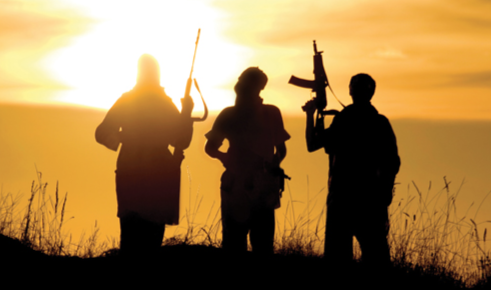
https://leb.fbi.gov/image-repository/silhouettes-of-radcal-islamists.jpg/@@images/image/large"As the mainstream culture moves further and further away from a Christian world view, Christian beliefs that contradict progressive secular values are increasingly denounced by the culture and wrongly portrayed as being hateful or bigoted." As an example, a Finish member of Parliament was prosecuted for 'ethnic agitation' resulting from "a tweet containing a Bible verse in which she indicated disapproval of her church's sponsorship of a Pride event, for discussing her beliefs on a radio show and for publishing a pamphlet promoting a biblical understanding of marriage through her church". 
 
https://www.cambridgepapers.org/wp-content/uploads/2022/02/320px-AbujaNationalMosqueShiraz-Chakera.jpg
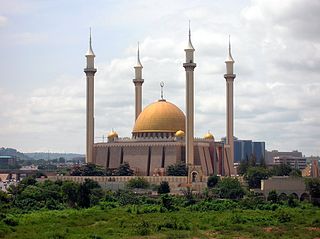
Abuja National Mosque, Shiraz
 
"Since the invasion of Ukraine, Russian Christians have faced increased scrutiny and punishment."
"For Christians, there is no escape from the extremist policies of a government [Islamic Republic of Iran] fuelled by an extremist interpretation of Shia Islam that leaves no room even for Sunni Islam, much less religious minorities like Christianity."
International Christian Concern (ICC)
 
"It is shocking to see western countries -- the same ones we think of as free and open societies -- take authoritarian measures against Christians simply trying to live out their faith."
"Hostility toward Bible-believing Christians is clearly and steadily rising in the west."
Tony Perkins, president, Family Research Council 
 

Labels: , , , , , ,

Friday, April 10, 2020

Trashing the Environment

"In an effort to clean up its own backyard, China stopped importing plastic waste in 2017. There's still a long way to go before the flow of plastic into the ocean is stopped, however."
"Bans on drinking straws or grocery bags in Canada won't stop it; economic development and improved waste-management systems in low-income countries will."
"The best way for us to make sure our waste doesn't end up in the ocean is to send it to the landfill rather than trying to sell it on the international recycling market."
"Meanwhile, for those who have lamented our use of plastic packaging over the years, it's understandable, especially since the marketers sometimes make excessive use of the stuff."
"But the coronavirus shows that public hygiene was, and remains, an important priority, and we downplay it at our peril."
Ross McKitrick, professor of economics, University of Guelph, senior fellow, Fraser Institute 
A man collects plastic waste at a garbage dump in Bali  (Getty Images)

On the other hand, burying plastic waste in landfills doesn't solve the problem of ridding it once it has served its purpose. Plastic is derived from petroleum products. As such, gathering waste plastics to destroy it by burning it through a process that would produce energy, just as gas and oil do, would most certainly produce a desired effect; ridding the world of the waste, and transforming it to usable energy. A process that may even now be in the developing stages, and if not, research into a method whereby this can be achieved, should proceed.

Banning the use of plastics for packaging certainly isn't the answer, since for strictly hygienic reasons, plastic services us well. There was a time in the not-too-distant past when not only at outdoor markets once popular in inner-cities, but also in supermarkets to a degree, all manner of food products were simply piled up for people to riffle through and select what they wanted. Meat and meat products were set out on open shelving, uncovered until shoppers selected portions to take home.
A man sits among massive piles of plastic and other waste on a beach in Munbai, India. (Photo by Akira Kodaka)

For the most part, fruits and vegetables continue to be sold in bulk, unpackaged, to be selected by the purchaser, running their hands along items to ascertain freshness. In a time of care being taken to avoid contamination and cross-contamination where the very real fear of contracting a deadly virus like COVID-19 haunts us all, it has become verboten to handle food that others will eventually acquire for themselves. Public hygiene is now uppermost in everyone's mind, hoping to avoid a nasty infectious pathogen.

Wrapping perishable foods in plastic serves a double purpose; keeping it clean, avoidance of being handled by other than the purchaser, and maintaining a degree of freshness. At the same time, it is also true that packaging can be overdone, and this is another matter to be separately discussed, bringing in packagers to agree to reduce packaging as required. Even wrapping commodities other than food can be useful, done to a minimum degree, to avoid picking up germs.

Society is concerned over environmentalists' messages of garbage-filled oceans, and of bits of plastic being found in the most inaccessible and remote places on Earth. We're right to be concerned. But the issue requires a closer examination. It is not from the developed world and the West that waste plastic has been littering the environment, since for the most part, there recycling of waste plastic has become an absolute requirement.
Plastic and other waste clog a river in Cambodia. (Photo by Akira Kodaka)
In reality, single-use plastics, singled out as the source of environmental degradation and contamination is not the real culprit. Merely a minuscule fraction (about three percent) of the world's plastic production ends up annually as ocean waste, very little of that tiny amount emanating from high-income countries with their effective waste-management systems. Over 50 percent of the Great Pacific Garbage Patch is comprised of abandoned fishing nets and fishing gear.

And the simple fact of the matter is, that most plastic waste that enters the ocean from land -- fully 86 percent of it -- arrives through rivers in Asia, about ten percent of it imported plastic waste that was once gathered by China from recyclers in Europe and North America, to be processed for re-use. The type that proved not to be reusable, was discarded. Which answers to Dr.McKitrick's contention that it would be better off buried in stable landfills away from lakes and rivers.

Children collect plastic bottles from the Buriganga river in Dhaka. (Getty Images)
                                                                       

Labels: , , , ,

Monday, August 12, 2019

Really? Humankind!

"There's an assumption that lion has replaced tiger in the market, and therefore there's a decline of pressure on tigers, but that's not the case."
"The demand for tiger and other big cats marketed as tiger is so huge that not only is it consuming farmed tigers, but wild tigers are also still being poached."
"[The legal trade in lion parts] stimulates demand and perpetuates the desirability of these products."
"So long as there is a demand, there is going to be pressure on the world's remaining tigers."
Debbie Banks, Environmental Investigation Agency, London
South Africa claims that a stockpile of bones has been created by restrictions on international game hunters taking home their “trophies”      STEPHANE DE SAKUTIN/AFP/GETTYIMAGES

"We also believe that around 90 per cent of the lion skeletons that went to Asia still had their skulls, which means they were not hunted or the skulls would have been kept as trophies."
"Growing an industry which slaughters lions in abattoirs specifically for their bones is indefensible and cannot be justified."
Michele Pickover, director, conservation charity, EMS Foundation

"Today’s landmark decision was reached in the High Court in the matter NSPCA vs Department of Environmental Affairs. The decision is with regard to the South Africa’s controversial lion bone trade. The trade of lion bone in 2017 and 2018 was ruled unlawful and unconstitutional . This judgement reiterates the 2016 Constitutional Court judgement. We celebrate the ruling and we must now work towards shutting down this industry which harbours approximately 14,000 lions in captivity."
Conservation Action Trust, 6 August 2019 
By

In December 2015, lions were added to the Endangered Species List by the United States. Leaving Americans free to continue shooting lions in legal hunts throughout Africa, they had to prove the hunt had benefited lion conservation if they wanted to carry home the trophy. South Africa operates a program they call "put and take" hunts. And most certainly those who take advantage of the brave opportunity to kill a lion that is bred with hunting facilities for these "put and take" hunts do not qualify.

Lion breeders in South Africa breed lions specifically for the purpose of exporting their skeletons. The market for lion parts in Asia is booming. And there they are identified as tiger parts. It is a vastly lucrative business and it is rising in popularity. Speculation has it that a ban by the United States instituted in 2015 when imports of captive-bred lion trophies were outlawed may have spurred this trade in lion parts.

This is all linked to a rather serious oversight in an international treaty that prohibits buying and selling products made from any big cat species. The sole exception is the African lion. Their skeletons, including claws and teeth, may be traded, as long as the animals have been bred in South Africa in captivity. The majestic king of beasts bred in captivity so it can be eviscerated, the body parts and bones sent to Asia for 'cultural' purposes.

Prior to the ban, over 8,400 captive-bred lions were housed in South Africa's breeding and hunting facilities, many destined for these "put and take" hunts, where tame animals are released within a fenced-in hunting camp to give a  hunter the thrill of stalking and shooting the animal. Researchers surveyed 117 facilities in South Africa's breeding program, keeping or arranging hunts of captive lions, to determine just how the ban had affected the lion breeding industry. Should quotas constrain their business, half of the respondents in the survey planned to turn to illegal trade.

Prices for live lions were tracked by the researchers, seen to drop up to 50 percent -- with over 80 percent of respondents claiming that the ban had affected their business, others reporting staff lay-offs and being forced by circumstances to euthanize lions. The international bone trade attracted about 30 percent of the respondents where prices for skeletons rose over 20 percent since 2012.

Skeleton exports increased in the year following the ban, from 800 to 1,800 lions, with female skeletons selling for $3,100 on average and male skeletons priced at $3,700. An annual export quota for captive-bred lion parts was mandated for South Africa in 2015 by the Convention on the International Trade in Endangered Species. South African authorities then set a quota in 2017 of 800 skeletons.

While tiger products are wildly popular in Asia, lion bones are meant for use in producing tiger bone wine. Claws and teeth are transformed to jewellery. Additionally over a five-year span, Panthera, a conservation organization, documented a 68 percent decline in Limpopo National Park, Mozambique of their lion population, where in 2017, 21 lions remained. In Namibia and Mozambique, researchers reported finding lions with faces, paws or toes removed.

Researchers are examining whether and how demand for legal big cat products affects poaching, according to Michael 't Sas-Rolfes of University of Oxford in Britain, one of the survey researchers of South Africa's lion industry. The new ban, he warns -- on lion bone exports -- may exacerbate poaching, not merely fail to curb it.

Roaring trade in lion bones fills gap in the market for tiger parts, Conservation Action Trust


Labels: , , , , ,

Sunday, June 02, 2019

Improving Rural Health in Impoverished Countries 

"That [to aid medical diagnoses in rural Africa, Asia and Latin America] was my real motivation for making it [handheld ultrasound scanner]."
"Two-thirds of the world's population gets no imaging at all. When you put something on a chip, the price goes down and you democratize it."
"My team is engineers and computer scientists. We'd love to be able to save lives the way doctors do, but we can't -- so every tweet from Africa about the Butterfly iQ is an incredible adrenalin shot for us."
Jonathan Rothberg, founder, Butterfly Network, Connecticut
Image result for uganda, bridge to health, butterfly iQ
The New York Times

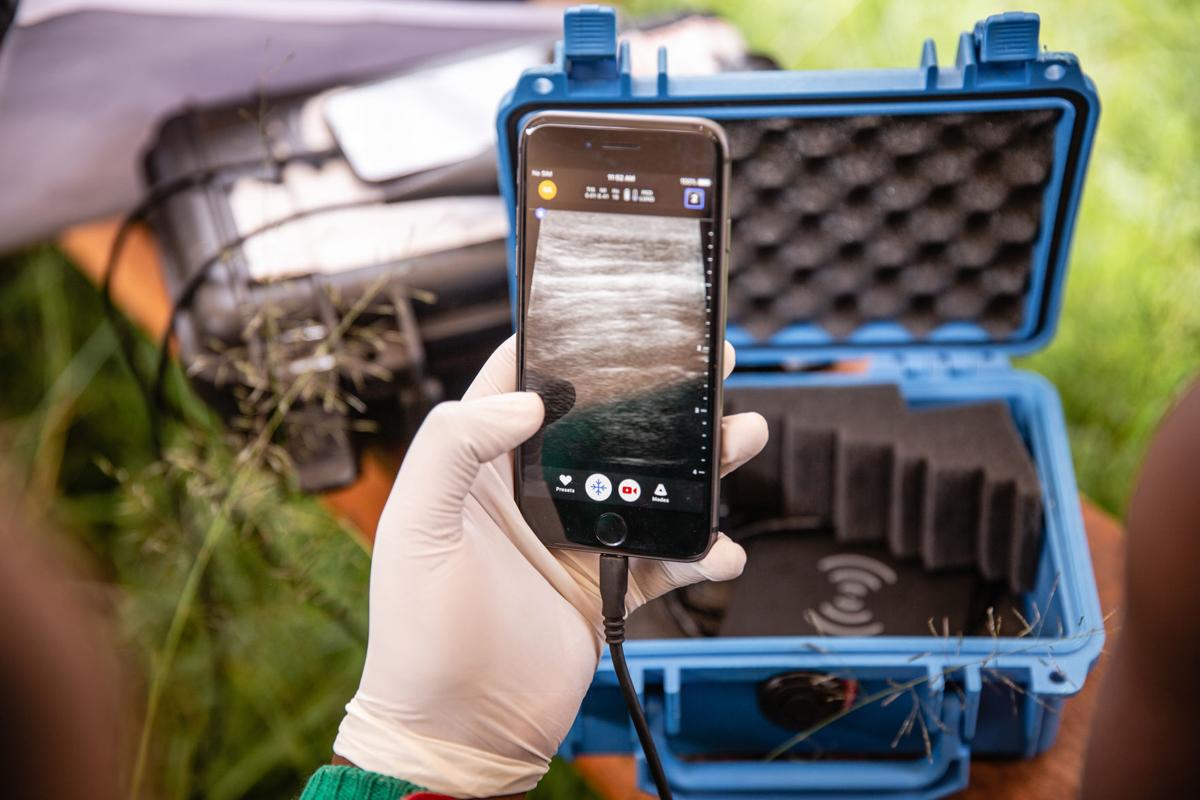
That innovative ultrasound scanner is doing exactly what the founder of the Butterfly Network hoped it would succeed in producing; vastly improved health care for hundreds of thousands of people living in remote areas of Africa, Asia and Latin America, by bringing to them in their isolated towns and villages medical teams and their equipment, among that equipment the scanner that plugs into an iPhone which can send scans to expert health professionals for verification of local doctors' diagnoses on the basis of what the scanner reveals.

Dr. William A. Cherniak works in Bushoro, Uganda, with a local health care contact, Rodgers Ssekawoko Muhumuza, a clinical officer in Uganda, to help in his training and educate in the use of the new device. Dr. Muhumuza interprets what he sees on the scan of a patient's chest and Dr. Cherniak prods him for his recommendation. When the Ugandan doctor prescribes antibiotic and orders blood tests to rule out tuberculosis, malaria and HIV, arranging for the patient to travel to a local clinic for an X-ray and observation, his mentor nods in agreement.

Dr. Cherniak's role in this is twofold; apart from mentoring his student, he uploads the scan to send to an ultrasound specialist in Toronto to validate the diagnosis, which could be early-stage pneumonia. An emergency medicine specialist from Canada, he is the founder of a Canadian charity, Bridge to Health, which works closely with Kihefo, a western Uganda-based medical charity. The Bill and Melinda Gates Foundation is involved as well as other family charitable trusts, by backing Butterfly Network.

Without that new hand-held ultrasound scanner that may shortly revolutionize front-line global medicine, the Butterfly iQ -- the work of the medical teams would not progress as well as it is proving, enabling swifter diagnoses and in the process enabling medical personnel to resolve health problems of people who would not otherwise receive the kind of treatment that people in developed countries take for granted.
Image result for uganda, bridge to health, butterfly iQ
These phones become ultrasound scanners   The New York Times

Around the size of an electric shaver, the Butterfly iQ is battery-powered, containing microchips rather than piezoelectric crystals. If dropped, as a result, it won't break quite as readily. Butterfly Network aims its innovative new product at the medical community for whom the price of the device, at $2,000, is affordable. It fits into a coat pocket and is thus as portable as the old tried-and-true stethoscope.

In rural areas of Africa, Asia and Latin America, access to X-ray machines may involve travelling long distances while CT and MRI scanners may be available only in capital cities. Butterfly Network founder Rothberg has donated scanners to medical charities working in thirteen low-income countries, seven in Africa. Several of the devices were sent to Bridge to Health, the scanners used primarily to check for pneumonia, a major killer of children in poor countries, frequently misdiagnosed.

The devices, Dr. Cherniak's team has discovered, have multiple other uses, as well. Kihefo operates a travelling medical system where at dawn a truck loaded with tents drives into villages, erects the tents and uses improvised examination tables borrowed from schools and churches, such as pews and desks, padding them with yoga mats for comfort, and screening them with light-weight purple curtains.
Image result for uganda, bridge to health, butterfly iQ
The New York Times

Soon afterward, when all is in readiness, the Canadian-Ugandan brigade arrives -- vans conveying doctors, nurses, dentists, chiropractors, gynecologists, ophthalmologists and pharmacists. Local clinical officers and medical students, all carrying bags of equipment accompany them. The dental team fills cavities, the ophthalmologists check eyes, the medical team sees patients from newborns to nonagenarians.

Bridge to Health focuses on teaching Kihefo's clinical officers, exposed to four years of medical training, but are not qualified as physicians, to diagnose pneumonia. Dr. Cherniak and his pupil, clinician Anguyo, agree that success will be realized when the quality of local diagnoses with the use of the Butterfly iQ agree at least 80 percent of the time with those of the ultrasound specialists in Toronto.

Labels: , , , , ,

Friday, January 18, 2019

Intrusions Into Nature's Habitats

"Farmers will walk along fences and find six to eight dead tortoises in the space of one hundred meters."
"These [electrical] fences have got the capacity to decimate whole [animal species] populations, and they're doing that."
Luke Arnot, veterinary surgeon, South Africa
Elephants electrocuted Botswana
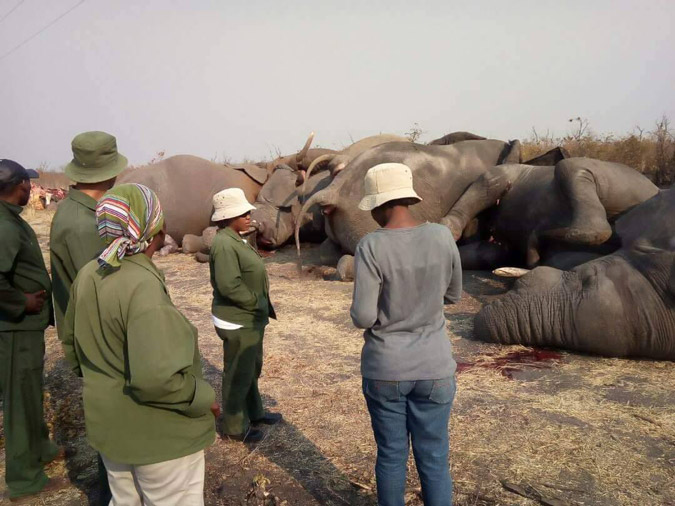
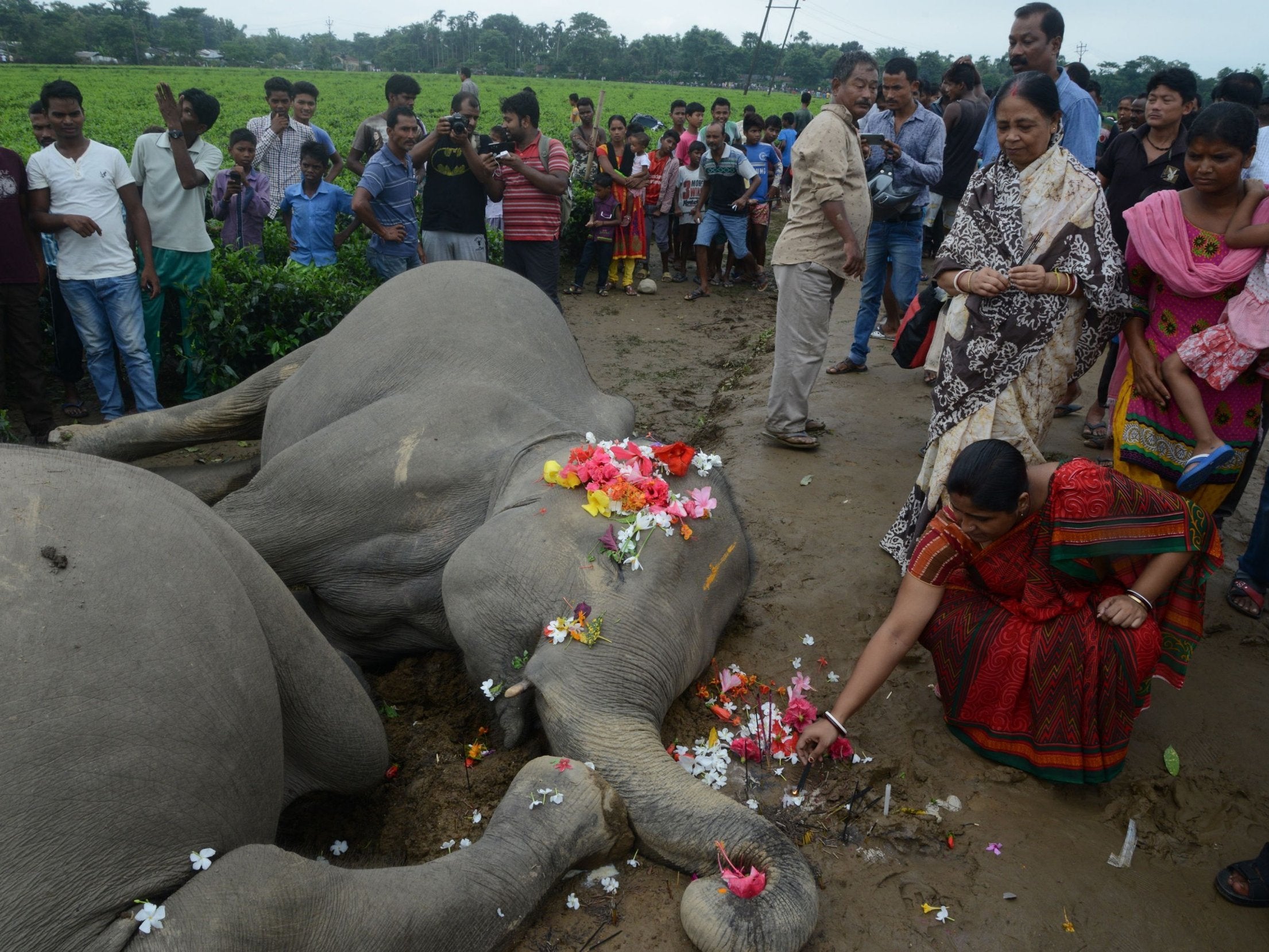
Elephants killed after being electrocuted when they pushed power lines into a pool of water they were drinking from. The blood is from burst blood vessels, a common symptom of electrocution.  Africa Geographic, 2017

"The terrible thing about power lines is that every single one will kill. But people here say they don't care because we need to develop our country." 
"In wildlife areas in Kenya, hyenas and other animals make paths to power lines to get at dead birds."
"This makes it impossible to go underneath power lines to enumerate the number of deaths. But I think this is a growing threat and that it’s enormously underestimated by most wildlife conservationists, wardens and conservancy managers."
Simon Thomsett, ornithologist, trustee, Kenya Bird of Prey Trust
bird-us-power-line.jpg
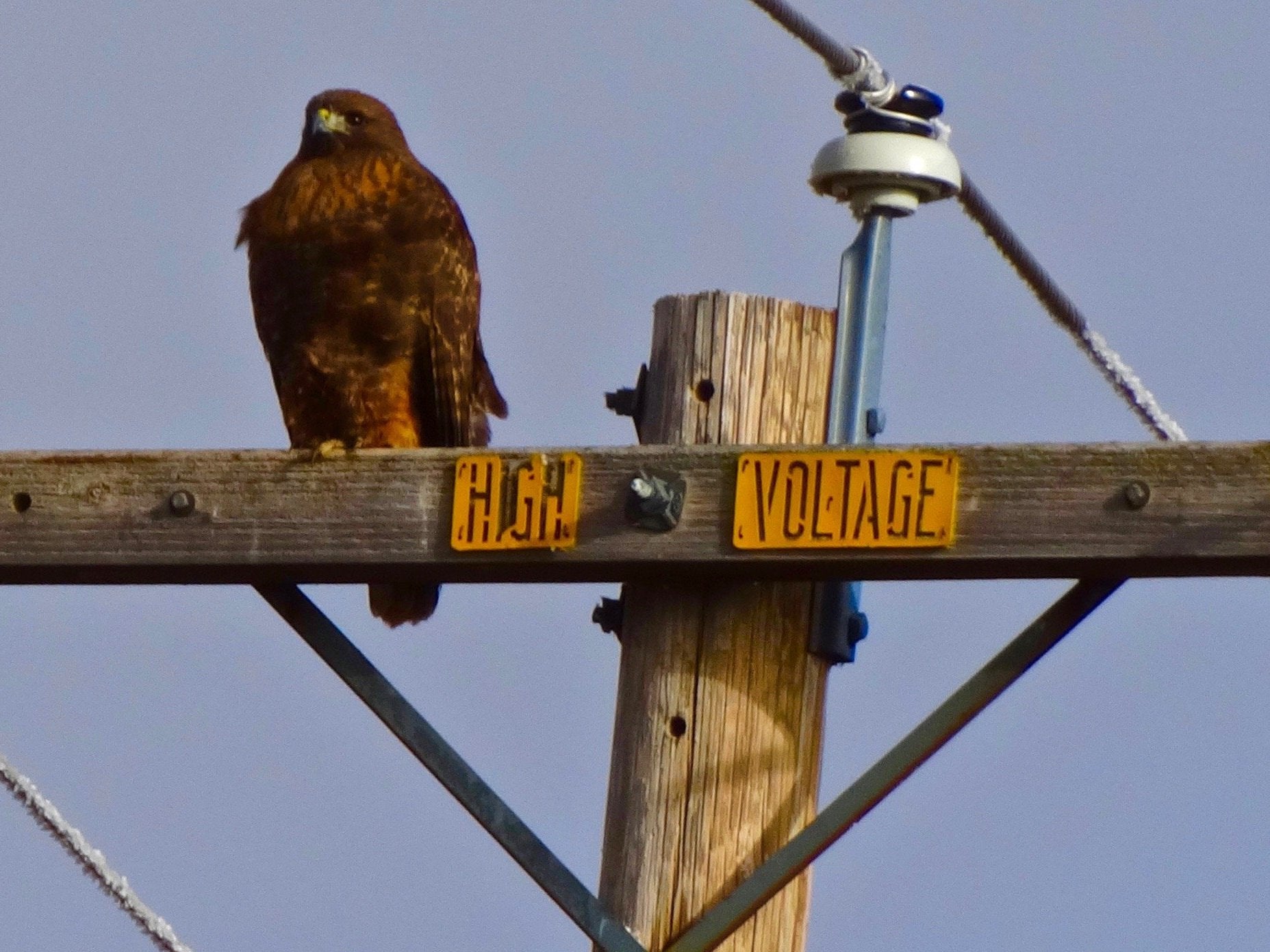
Electrocution is becoming so common that it jeopardises the survival of some species

"Animals have caused outages, disruptions and damage to infrastructure amounting to billions of dollars."
"We estimate that 60 per cent of line faults and interruptions in South Africa are wildlife-related. It’s really important to engineer this problem out."

Constant Hoogstad, senior manager, industry partnerships, Endangered Wildlife Trust, South Africa

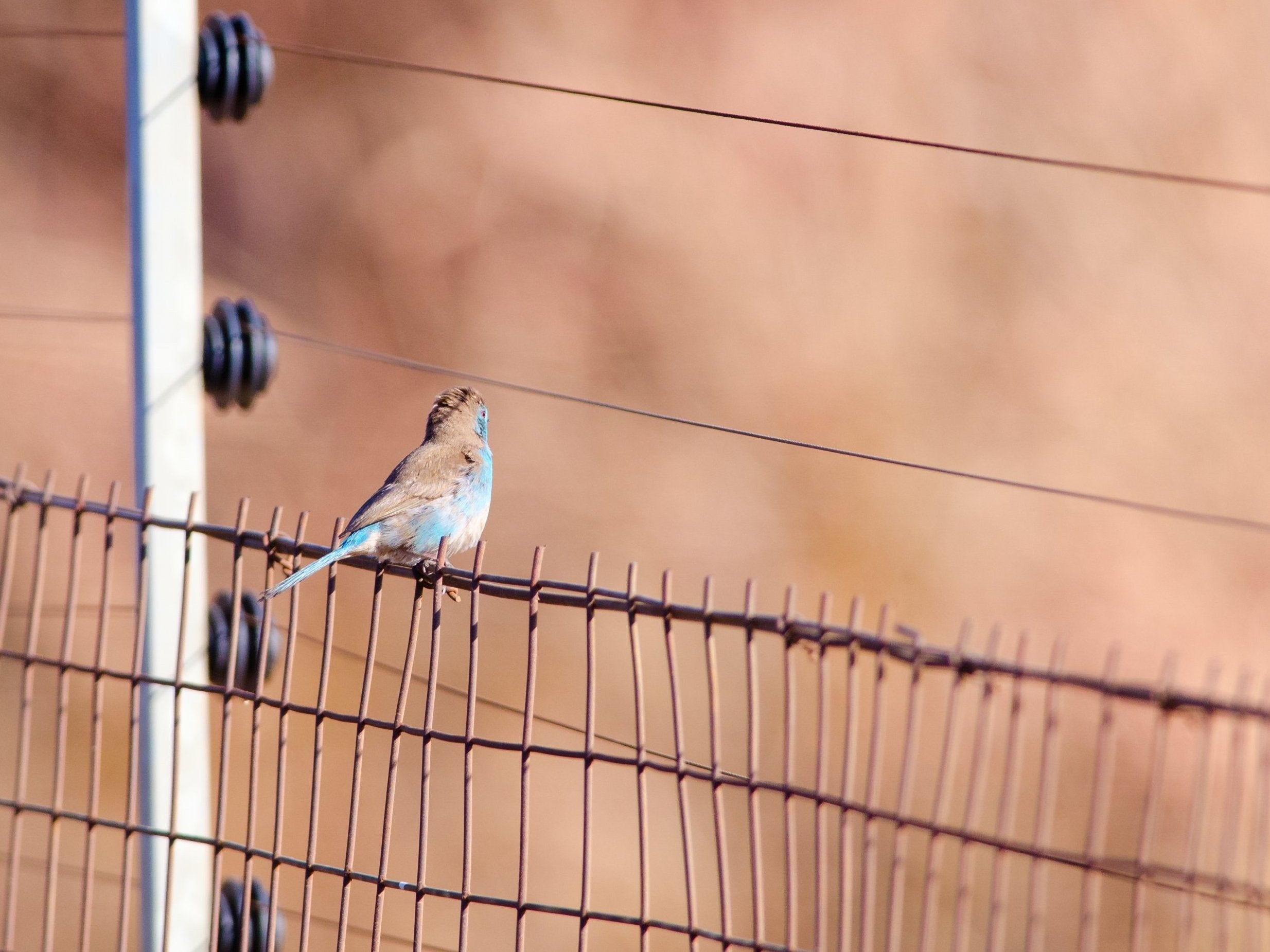
Africa is in its development stages, South Africa a country where ranches, farms and national parks are partitioned off, and surrounded by kilometers of electrical fencing to ensure that unwanted animals are kept out, along with human intruders' that livestock is adequately protected from predators, and so it is with wildlife in national parks as well. The fencing that has such a defined purpose also represents a solution to one problem of unwanted intrusion while at the same time  becomes a deadly hazard to any animals which come afoul of its protective presence.
bird-power-line-south-africa.jpg
Interventions to reduce collisions with power lines have so far met with little success

To these unwary animals these fences have an incontestable deadly impact. Smaller animals such as birds and reptiles which are meant to be environmentally protected become casualties in huge numbers. Trip wires positioned some 15 centimeters off the ground meant to zap a deterrence to hunting carnivores like lions and bush pigs accustomed to raiding crops are to a large measure to blame for the carnage. The presumption of a deterrent effect does not always result; some creatures after being stunned simply remain where they are.

Tortoises hitting a tripwire withdraw into their shells, failing to leave and taking haven in their instinctive withdrawal where it feels itself immune to danger while pangolins tend to curl over the wire into a defensive posture, and when both of these animals react as they would under any threatening circumstances, they remain shocked and finally their hearts cease beating. A 2008 study undertaken in South Africa revealed 21,000 reptiles are killed annually on contact with electrical fences.

Dr. Arnot, alarmed by these statistics, has attempted to alert authorities as well as farmers who install those fences. Publishing articles in farming and ranching journals detailing commonsense and modest changes that will bypass some of the dangers inherent in the electric fences to devise wildlife-friendly guidelines in installing electrical fences. Principally, to lift the trip wires to a greater height from the ground as well as operating the current at night exclusively since this is when predators tend to stalk their prey. Simple. Effective. Ignored.

Alongside the threats to wildlife of electric fences are power lines strung without a thought to outcome in countries in a hurry to advance their infrastructure and which end up electrocuting animals where collisions with power lines are so fatal for the avian population. Along with the deadly costs in conservation, a notable economic toll is guaranteed. As an example, a vervet monkey caused a nationwide blackout after tripping a transformer in Kenya in 2016. Power was cut to 4.7 million homes and businesses.

Surivival of some species is jeopardized through electrocution and considered a leading threat to Cape vultures in southern Africa, already endangered, along with critically endangered white-backed vultures. An estimated four thousand endangered Saker falcons are electrocuted in Central Asia each year. Over one hundred endangered Asian elephants were killed by electrocution in the state of Odisha, India over a dozen years through contact with power lines.
electrocuted-elephants-india.jpg
Even large animals such as elephants are at risk of electrocution (in India)

In various countries leopards, Cape buffalo, white rhinos, Giraffes and African elephants have been electrocuted in numbers. Thirty species and subspecies of primates are affected in Asia, Africa and Latin America by electrocution. According to Lydia Katsis, a recent graduate of Bristol Veterinary School in Britain, "This is a widespread problem, but it’s also under-reported and under-studied, so there could be more species affected."

Labels: , , , , , , ,

Sunday, August 05, 2018

Curing The Ills Of The World

"The scratching hurt my eyes so much I could barely go out in the sun to plow. I was always rubbing them."
"My vision is much better now. I can recognize people. I can work."
Shiva Lal Rana, farmer, Geta, Nepal

"The pain is excruciating. People tell me it's like sandpaper scratching over your eye every time you blink [Eventually, the cornea is scarred, slowly decreasing vision until blindness sets in]."
"Once you get to a particular stage, it's irreversible."
"Ghana has eliminated a painful eye disease which has devastated the lives of millions of its most vulnerable people for years. But the fight does not end here. Many other countries are on the cusp of elimination and must continue to push for the elimination of trachoma -- and other neglected tropical diseases -- across the world."
"The disease thrives in areas that are traditionally short of water."
Simon Bush, director, tropical diseases program, NGO Sightsavers
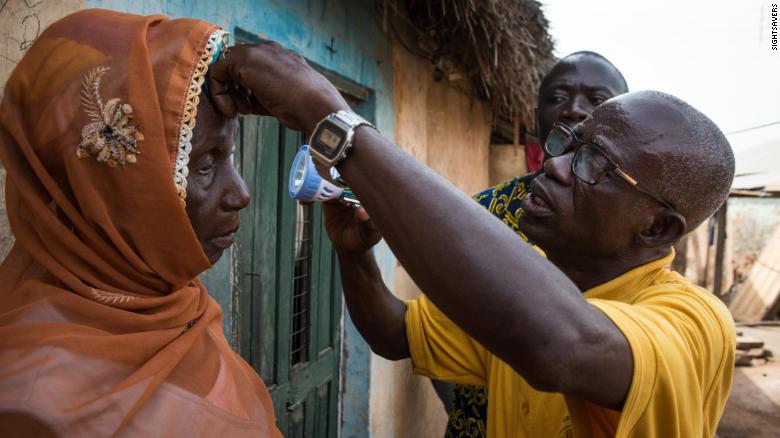
Fuseini Kwadja, an ophthalmic nurse, screens communities in Yendi, Ghana.

China, Gambia, Iran, Iraq and Myanmar claim to have been successful, as a result of a global campaign to wipe out the incidence of trachoma among their populations -- a common affliction of vulnerable people living in Third World conditions lacking proper hygiene and basic amenities that would ensure bacteria resulting from inadequate-to-no latrines are available to isolate human feces from contaminating food and water are kept to a minimum.

Worldwide, according to the World Health Organization's statistics, an estimated 1.2-million people have no vision whatever because of living conditions leading to infections causing trachoma, The WHO further estimates that 190 million people living in infection-vulnerable countries, some 41 in total, are at risk. More people are blinded by cataracts, but they do not result from infections.

While the scientific world community has been focused on fighting the horribly debilitating and often deadly effects of AIDS, malaria and Ebola, for several decade the medical community worldwide has also been focusing on trachoma. According to experts, enforcing basic public health practices is hugely effective in solving much of the problem of infections leading to trachoma.

Millions of people have lost partial eyesight from the effects of trachoma. And roughly seven million sufferers have undergone a brief intervention to reverse the effects of inward-torqued eyelids resulting from trachoma. In addition, 21 million trachoma sufferers suffer from infected lids that can be cured without resorting to surgery. The inversion of inward-torqued eyelids is a surgical procedure, one that takes only 20 minutes to complete.

Mr. Rana, a 65-year-old farmer in Nepal, arrived at the Geta Eye Hospital, a 32 kilometer trip he undertook by walking there, with the request that doctors pluck out his eyelashes. The bacterial infection had swollen and inverted his eyelids so that he suffered excruciating discomfort every time he blinked and his lashes raked his corneas. What he really feared was that the scratches they left and the resulting scar tissue would ultimate blind him.

Doctors responded to his plight by performing a new type of operation. His eyelids were sliced open, then rolled back and sutured, with the lashes facing outward once again. He was prescribed and given antibiotics to clear up the infection. That was fifteen years ago. Nepal's success in eliminating the outcome of this endemic infection led the WHO to declare Nepal's success in clearing up a critical public health condition; the sixth such country to manage that milestone.

Twenty years ago the global campaign to eliminate trachoma was launched, and it has been so successful that Cambodia, Laos, Mexico, Morocco and Oman have succeeded in eliminating the public health problem resulting from the infection. Now, Nepal and Ghana have joined them. The WHO still awaits requests from China, Gambia, Iran, Iraq and Myanmar to achieve certification attesting to their self-proclaimed success.

When fewer than five percent of a country's children show symptoms of trachoma and fewer than one in one thousand adults have vision loss from scarred eyeballs this is taken to represent elimination having succeeded. New cases of trachoma emerge in Nepal yearly, resulting from Nepalis working as seasonal labourers in India. Chlamydia trachomatis, the bacterium, is transmittable from person to person.
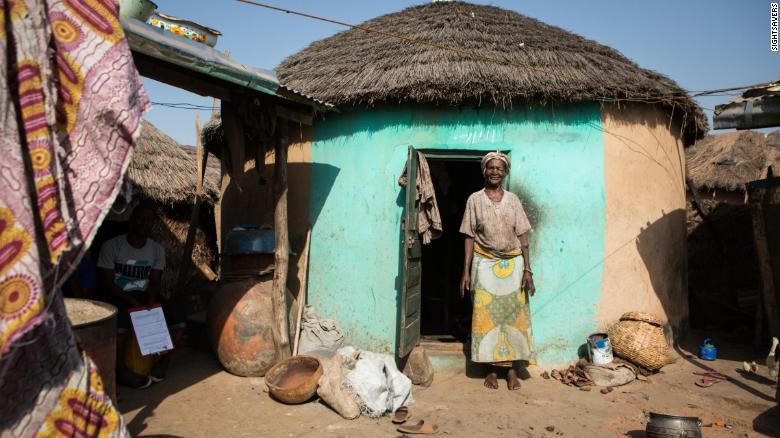
Zeinab Abukari in her home in Yendi district, Ghana. She was infected with trachoma many years ago.
Zeinab Abukari in her home in Yendi district, Ghana. She was infected with trachoma many years ago

In rural areas the common mode of transmission is flies creeping over children's faces eating the discharge from running eyes and noses. Those flies flit about on human feces to lay their eggs, contaminating the children with fecal matter. The first infections occur at the toddler stage; it takes decades for permanent eye damage to set in, after age 30.

A four-pronged strategy is recommended to break the chain of communication; surgery for advanced cases; annual antibiotic doses in hard-hit areas for the residents; teaching mothers to clean their children's faces frequently; and lastly, the use of pit latrines to reduce the fly populations. Suspicion in poor countries leads to problems in implementing the strategy, however.

About 20 percent of all patients requiring eyelid surgery in Tanzania refuse intervention because rumour has it that a six month recovery period follows surgery and they fear being unable to work to earn their daily bread. Attempts to reassure the reluctant patients so that the procedure can proceed to cure their problem are required, to emphasize that bandages are in place for only 24 hours.

And finally, Nepalis -- as elsewhere in poor countries of the world where custom and habit and lack of alternatives lead to outdoor field evacuation -- have resigned themselves to the use of outhouses rather than continue with the familiar traditions of defecating in fields. Many people were resistant to their use simply out of loyalty to old habits.

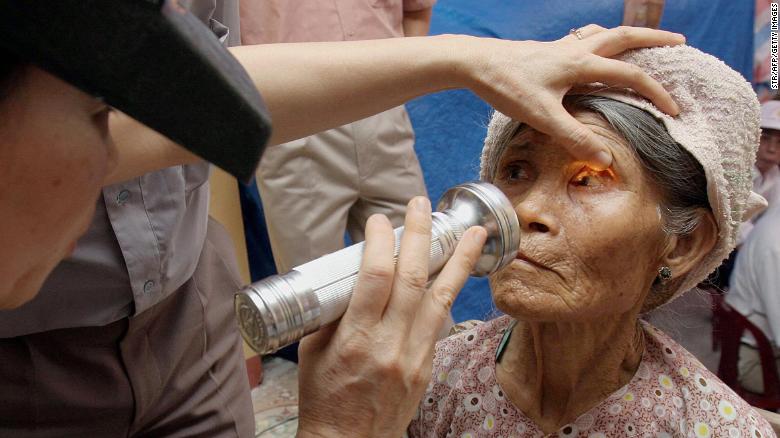
A farmer receives an examination for trachoma at a medical center in Vietnam, one of many countries aiming to eliminate the disease.

Labels: , , , , , ,

Monday, July 02, 2018

The Staff of Life

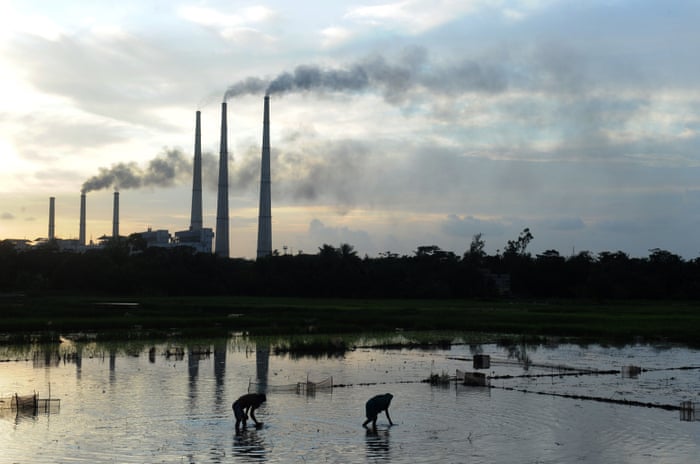
Indian labourers planting rice in front of Kolaghat Thermal Power Plant, 85km south-west of Kolkata. Photograph: Dibyangshu Sarkar/AFP/Getty Images
"Rice is not just a major source of calories, but also proteins and vitamins for many people in developing countries and for poorer communities within developed countries."
Kazuhiko Kobayashi, study co-author, University of Tokyo

"[Nutritional deficiencies] can directly impact on [cognitive development, metabolism, and immune system] and indirectly [obesity, Type 2 diabetes mellitus] affect human health on a panoptic [pandemic] scale."
"[irrespective of location, crops grown in higher C02 environments were less nutritious], containing about ten percent less protein, 8 percent less iron, and 5 percent less zinc than rice grown under current levels of carbon dioxide."
Study researchers
An experimental rice field near Tsukuba, Japan testing the effects of increased carbon dioxide exposure.
An experimental rice field near Tsukuba, Japan, testing the effects of increased carbon dioxide exposure.
Toshihiro Hasegawa/National Agriculture and Food Research Organization of Japan

"We still don't understand why some plant genotypes show a bigger response to higher levels of carbon dioxide."
"That's important [to know] if we want to move from understanding the problem to solving it."
Andrew Leakey, crop biologist
A major study published last month in in Science Advances, concludes that rice, one of the world's food staples, is destined to become infinitely less nutritious with the rise of C02 levels in a warming atmosphere projected for the second half of this century. A precipitous drop in essential nutrients such as protein, zinc, iron, and various B vitamins was found by researchers in Japan, pointing out the "devastating effects" that would result on health mostly in South-east Asia where an estimated 600 million people are reliant on the grain for some fifty percent of their daily calories and protein.

Simply because over two billion people on the planet are hugely dependent on rice as a primary food, where 90 percent of the world's rice eaters are located in Asia, it made good sense for research on C02 food-crop effects to focus on rice. "Anything that impacts rice in terms of its nutritional quality is going to have an impact", emphasized study co-author Lewis H. Ziska.
As CO2 Levels Rise, Rice Becomes Less Nutritious
Credit: Nancy Brown Getty Images

For the study, the researchers made use of an "open-field method" in paddy fields located in China and Japan to proceed with analyzing the impact of climate change on 18 different rice varieties. Their study concluded that irrespective of the location of the rice paddy, all crops were less nutritious as a result of being grown in a higher C02 atmosphere. "These results indicate that the role of rising CO2 on reducing rice quality may represent a fundamental, but underappreciated, human health effect associated with anthropogenic climate change", the researchers wrote.

All of the various rice types showed a drop in vitamins B1, B2, B5 and B9; adversely containing a greater amount of vitamin E than rice grown at the present time. Soaring levels of C02 have been linked in previous studies to reduced protein content and increased carbohydrates in barley, potatoes, rice and wheat, a situation that Irakli Loladze -- "math biologist" -- likened to the "junk-food effect".

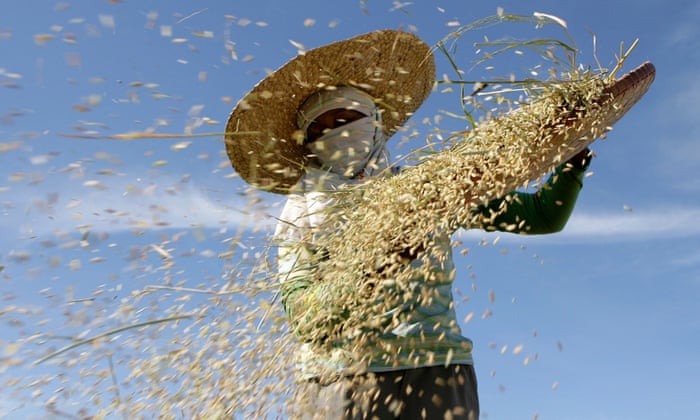
A farmer sifts rice in the Philippines: A drop in the nutritiousness of rice could have profound health effects. Photograph: Cheryl Ravelo/Reuters


Labels: , , , , , , ,

Monday, June 26, 2017

Illegal Asian Wildlife Trade on the Menu

"Legal trade stimulates demand, confuses law enforcement efforts, and opens a huge opportunity for laundering illegal products, which is why ivory markets are now being closed globally."
Scott Roberton, director, Wildlife Conservation Society, Asia program

"When fingers are pointed at China about their tiger farms, they tend to point the finger back at the U.S. and say, 'They have as many tigers as we have, why are  you not criticizing them'?"
Leigh Henry, senior policy adviser, World Wildlife Fund
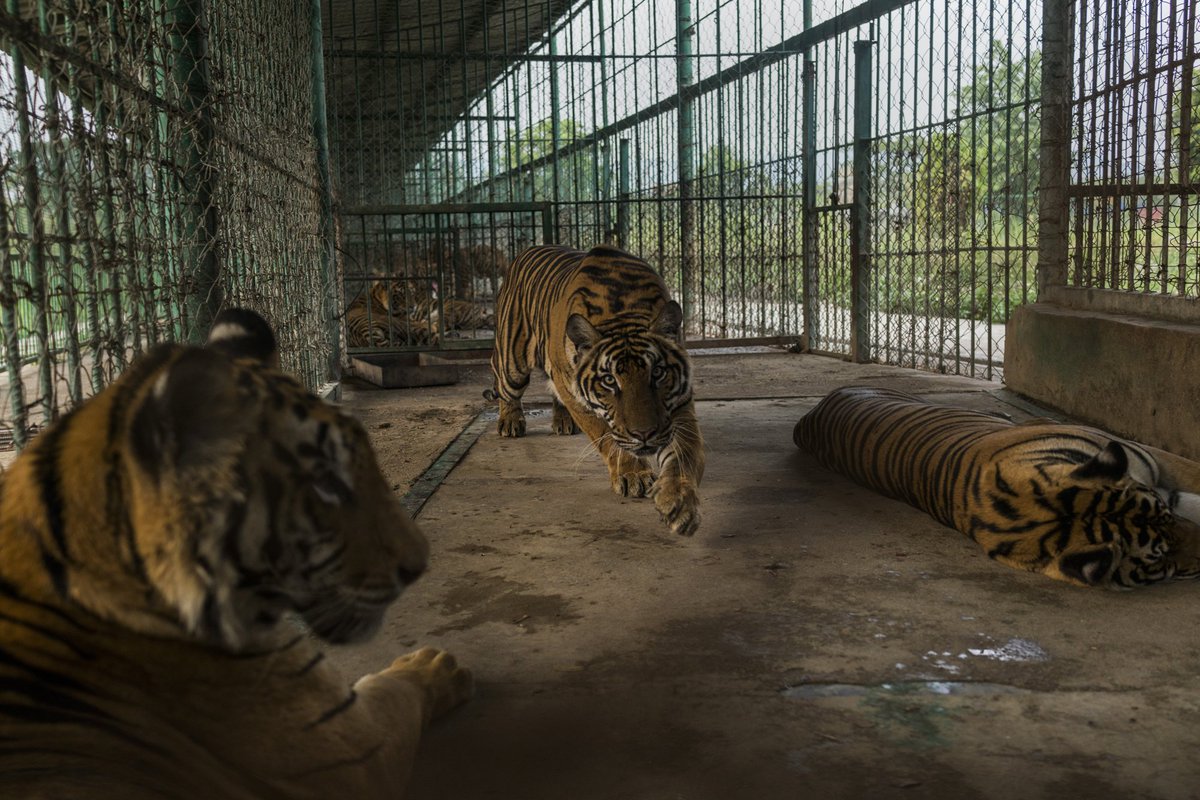
At the Kings Romans complex in Laos, tigers roam cages. Photograph Adam Dean, The New York Times
It seems rather lunatic, and likely because it is certainly immoral, yet across the United States an estimated five thousand tigers are held in petting zoos and even as attractions at truck stops. Most unbelievably they are also privately owned by people who seem to feel that a tiger out of its natural element will do just fine as a pet living somehow in their backyards. The kind of stupidity and hubris exhibited by people who don't appear to be capable of thinking beyond their own vain conceits is mind-boggling. But they're not on the menu.

On the other hand, there is yet another dimension to the keeping of these large cats in confinement, away from their natural habitat, and that is for the purpose of entertainment yes, but also as culinary stars in the East, where jaded tastes require a pick-me-up such a placing rare animal meat on the menu. As unlikely as it may seem, there are those people living in the East whose 'refined' tastes include a yen for tiger meat on their plates.

In Laos, a casino operated and owned by Hong-Kong-based Kings Romans Group comes complete with hotels, a cockfighting and bullfighting ring, a shooting range, shopping center and a zoo. This leisure entertainment complex is located in an area named the Golden Triangle Special Economic Zone. As for the zoo, it is claimed by conservationists that it is in fact a holding centre, a farm where animals are raised for slaughter.

Throughout Southeast Asia such farms are commonplace, where big cats of noble lineage are kept, illegally butchered for a profitable industry comparable in illegality, harmfulness and profitability to the global drug and arms trades, alongside that of human trafficking. All of which speak volumes for the sensibilities and morality invested by nature in human beings.

At Kings Romans, restaurants feature plates of bear paw, pangolin (on the endangered list) and sauteed tiger meat. Tiger wine is also available for the discerning food-and-wine aficionado. "The place is just a mess. Pretty much anything goes", commented Debbie Banks, with the Environmental Investigation Agency in London, who in 2015 with the group Education for Nature-Vietnam issued a report.
Kings Roman Group casino, Golden Triangle Special Economic Zone. Photographs by Adam Dean for The New York Times

From that report the world could have learned that meals, medicine and jewellery produced from tigers, leopards, rhinoceroses, bears and elephants -- all protected species -- were being sold openly in the economic zone, spurring the Laotian government to stir itself to raid a few businesses. Little, however, changed beyond that "cosmetic effort", reports Ms. Banks.

In Laos, an estimated 700 tigers are held on farms, with thousands more believed kept throughout Southeast Asia. There are over 200 breeding centers in China where an additional 5,000 to 6,000 tigers are kept. Contrast that with the fact that fewer then four thousand tigers remain in their wild natural setting. It has been rumoured from trusted sources that some Laotian politicians are involved in the farms.

All Southeast Asian nations signed on to the Convention on the International Trade in Endangered Species (CITES), in effect agreeing that tigers can be bred, but only for conservation purposes. Conservationists have a stock of evidence that zoos and farms serve as fronts for commercial big cat breeding in Laos and other Asian countries.

Two tiger farms in China are supported by government investment. In China there are government officials who feel that such facilities should be legal, on the basis that their presence relieves pressure mounted to hunt wild animals for their body parts and organs. An investigation that took place in 2008 revealed that half of 78 wildlife farms surveyed launder animals caught in the wild.

That investigation by Vietnamese officials in tandem with the Wildlife Conservation Society, was augmented by a later 2016 study of 26 Vietnamese wildlife farms which found that each and every one took part in laundering; presenting animals as being farmed when in fact they were caught in the wild.

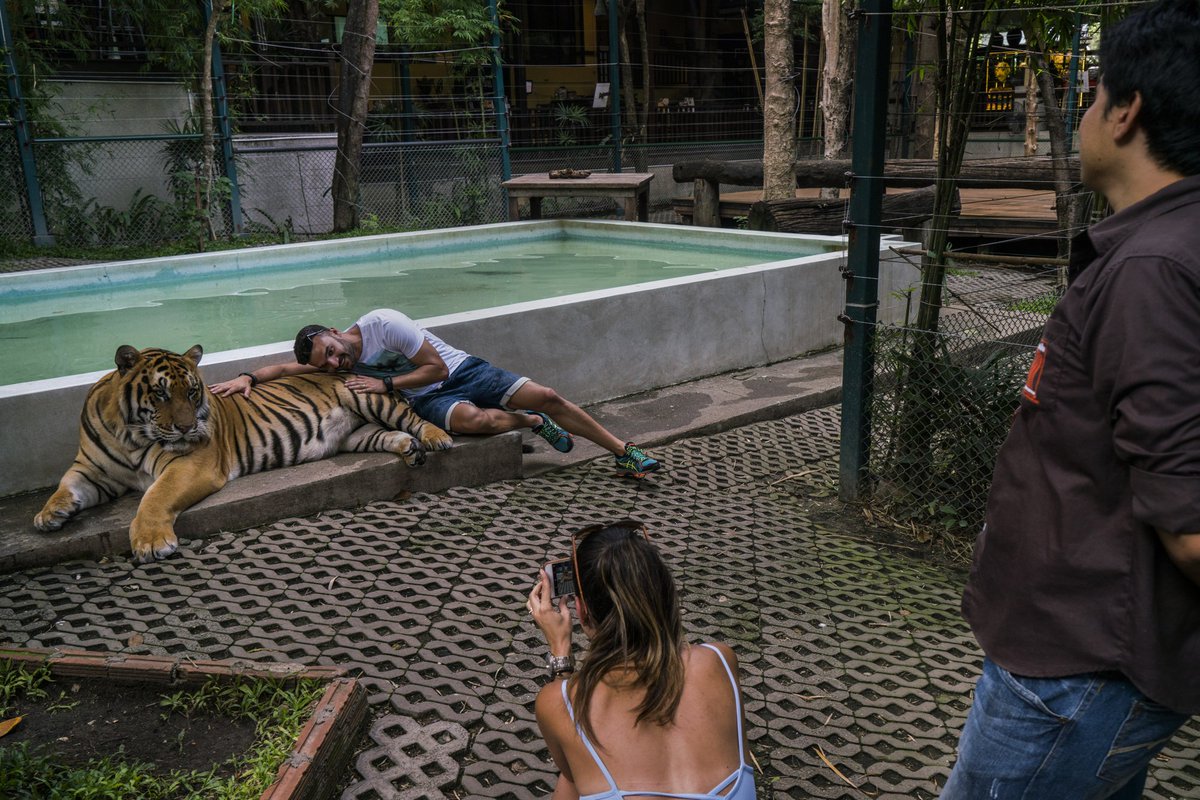
A tourist at Thailand's Tiger World, Photograph by Adam Dean for The New York Times

Labels: , ,

Wednesday, June 22, 2016

Normalized Canine Butchery

"Grandpa strokes my poodle on his lap and says, 'This is just the right size for a bowl of bosintang. He's joking, but whenever he says that, I snatch my dog from him."
Kim Yoo-na, 14, Wonju, South Korea

"It's the difference between heaven and hell [the life of a pet dog and one raised to be eaten in South Korea]."
"I was not ashamed of my way of making a living [raising dogs to be slaughtered for the table], but I was not proud of it either."
Gong In-young, dog-meat farmer, Wonju, South Korea
Thailand's Illegal Dog Meat trade
Trucks containing 130 dogs are seized on the highway between Thailand and Vietnam. Photograph: Luke Duggleby

Ten to twenty million dogs are slaughtered for their meat in China on an annual basis. A tradition that dates back to the time of Confucius. Dogs are bred, raised, kept in cages then sold to slaughterhouses in China, South Korea and other Asian nations where people consider dog meat an indispensable part of their cuisine. Mr. Gong, for example, keeps dogs locked up in steel cages, and there they are kept their entire lives; fed until they are mature enough to be taken to the slaughterhouse, their meat going to the marketplace.

That this is the tradition that keeps Mr. Gong in business supplying a market for ardent dog-meat aficionados has not kept this 55-year-old from loving and doting on an elderly Spitz on his farm, whom he has named Snow-White and who is viewed as one of his family. The dissonance in how he views the two, his beloved pet, well cared for and treasured, and the dogs that have no present and no future; his mind is shut, as a farmer and dog breeder-for-meat, to their plight.

Animal-rights groups have been attempting to reach people like Mr. Gong, to instill in them a humane reaction to the tradition of viewing dogs as table meat. Those groups estimate that 30 million dogs, most of which have been stolen or are feral, are slaughtered annually for meat throughout Asia. In South Korea the trade in dog meat is of an industrialized nature.

Over 17,000 dog farms, some raising over a thousand animals each, supply two million dogs to the marketplace for dog meat. This is a tradition held to be centuries-old, according to government data. Huskies, Rottweilers, Golden Retrievers and other breeds are held in Mr. Gong's cages complex, barking and struggling at the wires of the cages they're held in. As the dog-eating season in summer draws near, dog traders come to visit.

The value of a 36-kilogram dog is about $250. In transporting the dogs, they are crowded into cages unable to move; some suffocate before arrival at slaughterhouses where they are meant to be electrocuted. From there, wholesale meat dealers deliver the carcasses to dog-meat restaurants. Koreans name their special dog dish "bosintang", or "soup good for your body", popularized at a time when meat was in short supply.

It is a culinary history of which Koreans take great pride, including those who shun the dish, taking umbrage when foreigners criticize the practise. Yet South Korean tastes are changing as are their attitudes toward the practise of eating dog meat, particularly among the young for whom keeping pets has replaced eating dogs. The very idea of eating dog meat is grotesque and disgusting to young Koreans.

Mr. Gong's own son would never touch dog meat. Recently, he watched as the process of taking 17 of his dogs in flight to the United States under an agreement with the Humane Society International group whose campaign against dog farms in South Korea has made some inroads. Mr. Gong expressed his reaction, viewing photographs of the dogs now living abroad as pets, saying he "felt better".

Yulin, in southern China, has an annual dog-meat eating festival, where protests from animal rights activists have had no effect whatever. At dozens of restaurants across the city, vendors slaughtered dogs, cooking their meat for their avidly awaiting clients. In reaction, activists bought dogs from dealers planning to slaughter them, doing whatever little they could to ease the plight of individual dogs under the circumstances.

Labels: , , , , ,

Thursday, April 14, 2016

Our Civilized, 21st-Century World

What a flawed world we have created for ourselves. Not necessarily the world that surrounds us, the world that nature allows us to live within, the natural world of our environment which we depend so heavily on to support everything we do, however we live, and in the process exploit its resources beyond sustainability. No, I mean the world that we have constructed, the social world that reflects our values and what we think of as our survival imperatives.

Perhaps it's fair to point out that we are endowed with characteristics that nature has designed for us, and some of them -- many of them -- are less than admirable. Our penchant, for example, of constantly dedicating ourselves to having power of one kind or another over others whom we presume to be less worthy than ourselves, or with whom we have a long-standing, ongoing argument about resource ownership, from land to the natural resources within that land that we boast is our own to do with as we will.

And then there are the ideas, the idea that one religion, one ideology is far superior to another, valued by a great body of people also inhabiting a pluralist geography, when the majority throws its weight around and the minority chafe and cry foul, and sometimes surrender, but sometimes create non-state militias to bring the polarized views to a head through violent conflict. Through it all, we live and we love and we raise the next generation, and we attempt to instill in them the values that we feel hold true, reflecting human rights and dignity.

Which is to say, some of us do, and many more do not, and the tension between the two continues to breed suspicion, hatred and violence. In Western societies the right to life and liberty under a democratic system of governance is held up as the most certain way to achieve equality and peace. In other parts of the world, where tribalism, clan conquests and religious beliefs clash with those of others' widespread beliefs in the sanctity of life and the requirement to shelter children to adulthood often don't prevail.
"It may seem unimaginable to you that child soldiers exist. It seemed impossible to me when I first encountered them that anyone would abuse the state of childhood so ruthlessly. And yet the reality for many rebel and gang leaders, and even state governments, is that there is no more complete end-to-end weapon system in the inventory of war machines than the child soldier. Its negligible technology, simple sustainment requirements, unlimited versatility in all possible facets of low-intensity conflict, and capacity for barbarism has made the child soldier the weapon of choice in over thirty conflicts around the world, [an] ultimate cheap, expendable, yet sophisticated human weapon, at the expense of humanity's own future: its children."
"Thanks to a worldwide proliferation of light weapons and ammunition, combined with the limitless resource of children as a result of the overpopulation in developing countries in conflict, such as we see in so many cases in Africa, there is no more readily available, cost-effective and renewable weapon system in existence today. Desperate children, boys and girls, are cheap to sustain, have no real sense of fear, and are limitless in the perverse directions they can be manipulated through drugs and indoctrination since they have not yet developed a concept of justice and have been ripped away from their families to fend in the new perverted family of armed force."
"Children are vulnerable and easy to catch, just like minnows in a pond, especially in places where families are being destroyed by famine, epidemic, AIDS, warring factions. Children are faceless and they are considered expendable. The guns are light enough for children to carry, and they are plentiful."
"Girls are an even greater asset, as they can do everything that boys can do, and so much more. They set up bivouacs, prepare the food, control the younger children and are used as sex slaves and bush wives."
"Children are excellent as combatants, as bait for ambushes, as cannon fodder. They are light to transport but still heavy enough to explode land mines so adults can move safely in their wake."
Romeo Dallaire, former Canadian soldier, head of UN mission to Rwanda, parliamentarian : They Fight Like Soldiers, They Die Like Children
child soldier gun
emmanuel braun / reuters    A young rebel fighter mans a large-caliber machine gun on the Chad-Sudan border. UNICEF estimates that there are 250,000 child soldiers worldwide
During the Iran-Iraq war Iranian boys were given 'keys' to hold to open their way to Paradise, as they walked through areas heavily mined by the Iraqis, to clear the way for troops; the children expendable, the seasoned, battle-hardened Iranian soldiers not. In Gaza, young, very young children are dressed in fatigues, given weapons to brandish, while older children are enrolled in 'summer schools' to teach them the rudiments of battlefield action. Sudan, Somalia, South Sudan, Libya, Mali, Chad, Uganda and Central African Republic are some of the African countries which train and deploy child soldiers. South America, Asia, the Middle East and Africa can boast with pride their use of child soldiers.
child soldier gun
jamal saidi / reuters     A young Palestinian member of Fatah al-Islam trains with a weapon at Nahr al-Bared refugee camp, Lebanon. Fatah al-Islam is a militant Sunni Islamist group with reported ties to Al-Qaeda
Accusations have recently surfaced against Nigeria's Boko Haram for its abductions of children for the purpose of training them as child soldiers. These vulnerable children whose family villages have been destroyed by the jihadist group, members of their families raped and murdered, are horribly abused, threatened, starved, then taught to redeem themselves by adapting their childhood years to the pursuit of military atrocities. 

Last year in Kenya al-Shabaab, a Boko Haram counterpart, attacked a residential school in Garissa, and slaughtered 147 young university students. In Iraq, the Islamic State of Iraq and the Levant which is seen as a beacon guiding light for Islamist jihad, declared war on the world, starting with Christians and Yazidi minorities. When they stormed the Yazidi stronghold of Sinjar, a bloody slaughter took place, and thousands of women and children were abducted, the women and children raped, and taken as slaves. ISIL indoctrinates children into Islamist jihad, preparing them to engage in conflict.

This is 21st-Century barbarism.


child soldier gunHo/News: Reuters

Labels: , , , ,

 
()() Follow @rheytah Tweet