Ruminations

Blog dedicated primarily to randomly selected news items; comments reflecting personal perceptions

Wednesday, August 26, 2026

Afghanistan's Starving Children
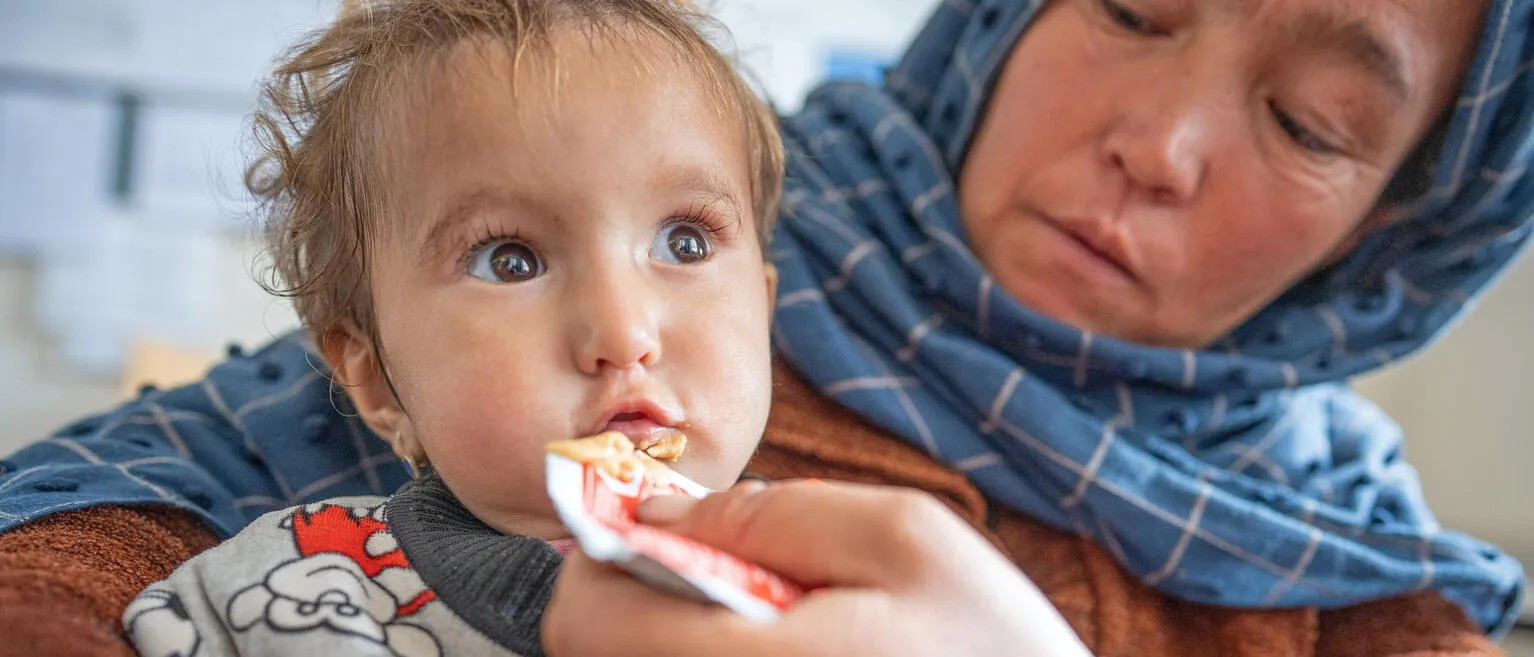
 https://www.unicef.ca/sites/default/files/styles/hero_internal_large/public/hero/images/UNI680216.jpg.webp?h=aabcfb29&itok=raFFcmXO

"One million children who are suffering from life-threatening severe acute malnutrition."
"If there is no treatment, and we are not able to act fast, that one million number are at risk of dying."
"Malnutrition plays a central role [in the growing number of deaths of very young children]."
"In parts of southern Afghanistan, some hospitals are now seeing three or four severely malnourished children for every available bed." 
UNICEF Afghanistan representative Tajudeen Oyewale
https://www.wfp.org/sites/default/files/styles/media_embed/public/2026-07/Sediqa%27s%20three%20year%20old.jpeg?itok=xbsFPUas
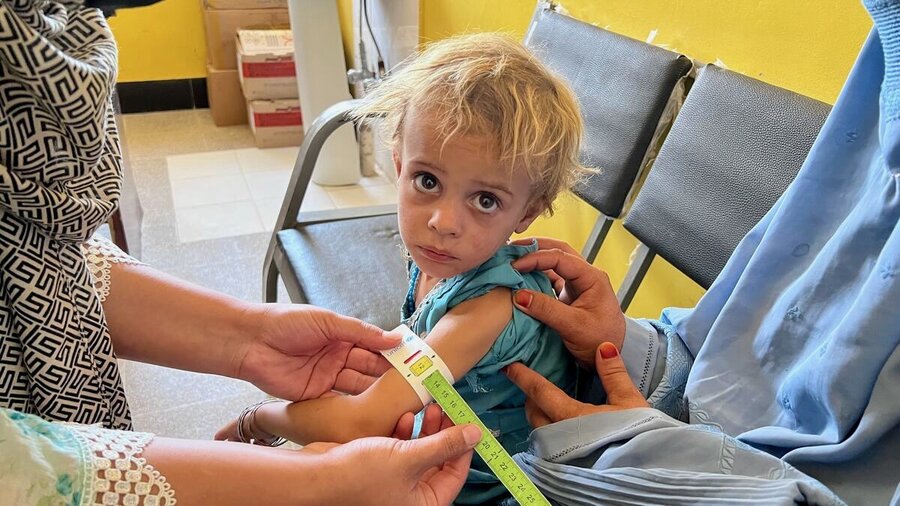
Three-year-old child tested for malnutrition. Photo: WFP/Isheeta Sumra
 
When the United States peremptorily pulled out of Afghanistan in 2021, while the Taliban was on the march toward Kabul, incentivizing other NATO nations to do likewise -- all the work that had been done by the international coalition to bring that war-wearied country into the 21st century, the establishment of medical clinics, schools, water wells in remote villages went to naught. During the U.S.-led invasion and occupation, women were empowered, able to reach academic levels toward professions they aspired to, humanitarian groups set up shop in the  country to contribute to the modernization efforts and mitigate miserable living conditions -- all came to a grinding halt.
 
It took no time at all for the West-aligned Afghan government to dissolve in the pending approach of the Taliban forces. Government ministers fled abroad, government workers were cognizant that the Taliban meant to search them out, imprison and/or kill them. All the forward-looking enterprises that Afghanistan's population was able to develop were swiftly placed in mandatory retirement. The old misogynistic order where women were not permitted in public without wearing a burqa or abaya returned. Those employed by humanitarian agencies were forced to stop, and the humanitarian groups left the country.
 
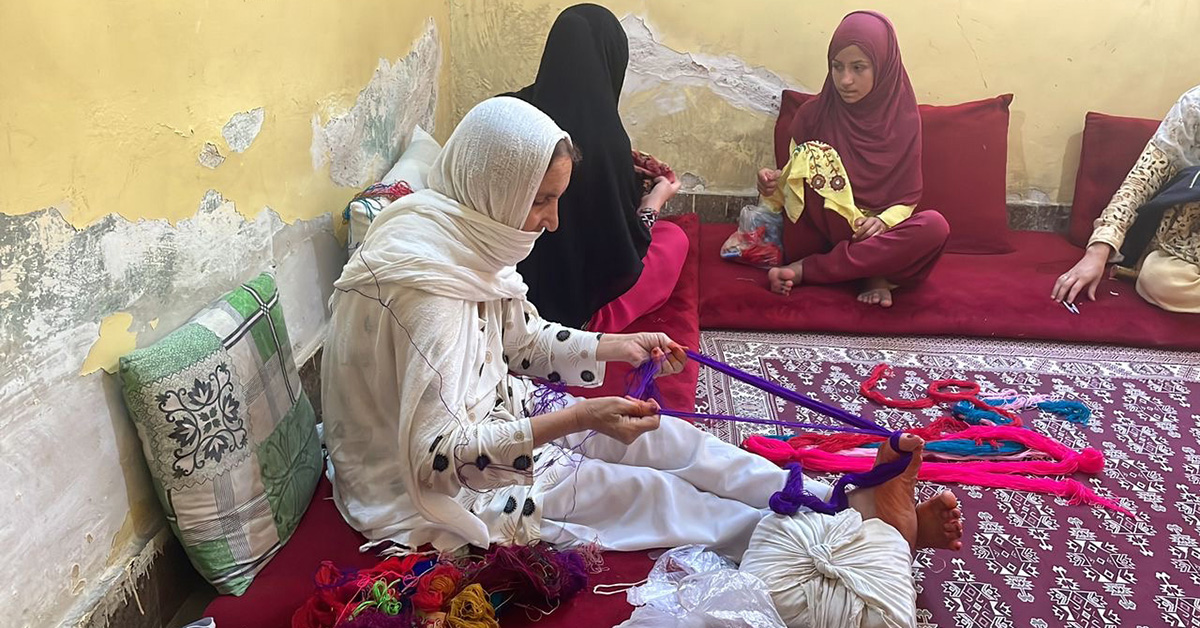
Foreign investment that had been robust under the UN-approved occupation came to a stop. Afghanistan's assets abroad were frozen. Girls were no longer able to attend secondary, much less higher-level education past the primary grades. The strict separation of males and females became mandatory. Pre-teen girls were sold by their parents into marriages with older and elderly men to become their property. Men reverted to having multiple wives. Some Afghan women set up cottage industries in discreet locations where they could earn a basic living to keep food on the table.
 
https://www.wfp.org/sites/default/files/styles/media_embed/public/2026-07/Farida%2C%20kds%20and%20health%20worker.jpeg?itok=tCe02zW-
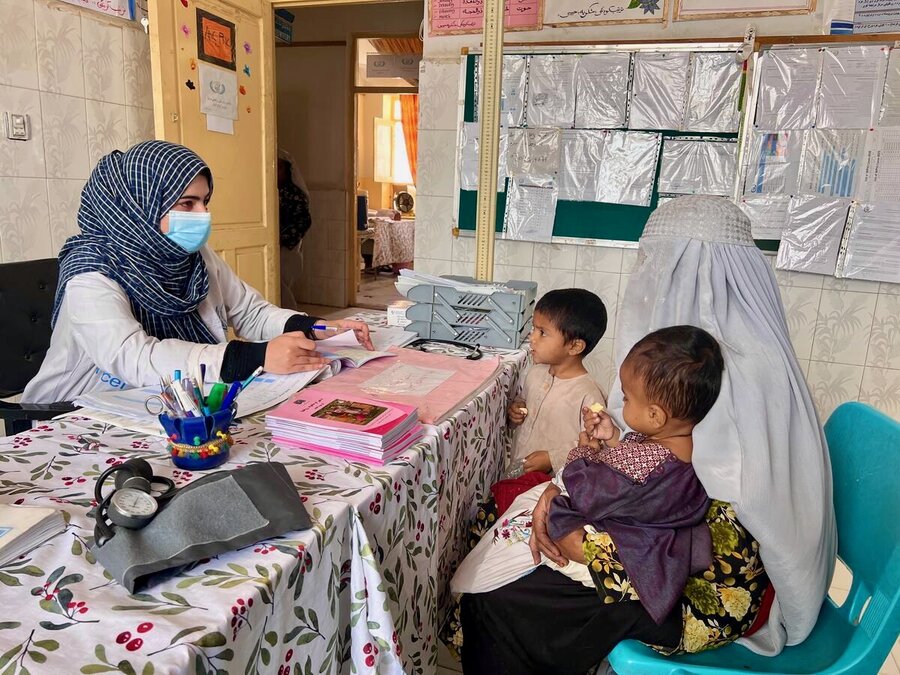
Farida and her sickly children (R) need healthy food – which she cannot afford on the family's tiny income. Photo: WFP/Isheeta Sumra
 
The country copes with natural disasters like drought, flash floods, regional instability along with clashes with neighbouring countries over territorial and trade issues. And the country's children are in parlous condition, warns the United Nations, where across Afghanistan, 3.7 million children suffer from wasting disease; a condition linked to malnourishment. 
 
Babies under six months of age represent close to 40 percent of the children admitted to hospitals with severe wasting and grim medical complications. Over 80 percent of severe acute malnutrition cases in the country are represented by children under two years of age. The UNICEF country representative for Afghanistan speaks of a "worsening nutrition crisis" with over half a million children admitted to hospital in 2026 for high-risk, moderate and severe wasting conditions. 
 
Families, reports Tajudeen Oyewale, are scaling back nutritious food and serve increasingly smaller meals to deal with food insecurity; an "increasingly alarming picture", where infants' first solid food graduating from breast milk can be represented by bread and tea or watered-down yogurt, "and for a growing child, this is simply not enough". A vicious cycle of poor nourishment, developing of severe diarrhea or respiratory infections while becoming more malnourished.
 
https://www.wfp.org/sites/default/files/styles/media_embed/public/2026-07/Sediqa%20and%20children.jpeg?itok=QfebEmnM
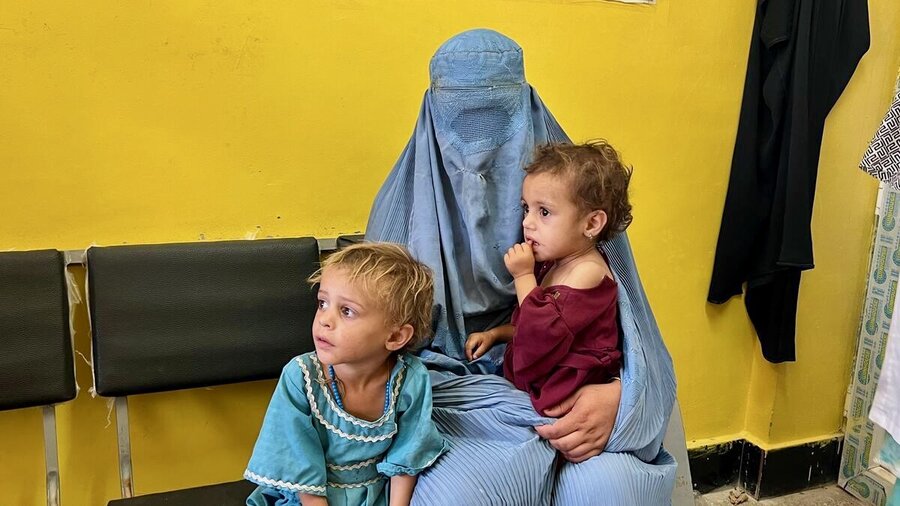
Sediqa's two young girls count among nearly 3.7 million Afghan children projected to suffer from malnutrition this year. Her impoverished family often lives on a diet of bread and tea. Photo: WFP/Isheeta Sumra
 

Labels: , , , , ,

Thursday, July 09, 2026

Women in Afghanistan--Striving and Surviving

"Our mothers used to tell us that they worked hard so our future would be better and more peaceful."
"Our future did not become better or more peaceful."
"Now we tell our own children the same thing, but I don't think that will happen."
Fariba Noori, acting head Afghanistan's Women's Chamber of Commerce and Industry 
https://asiapacific.unwomen.org/sites/default/files/2025-09/af-20250422236-zafran-14-1679px.jpg
A woman working in a saffron company, Herat province, western Afghanistan, May 2023. Photo: UN Women/Sayed Habib Bidell
 
Over ten thousand Afghan women have secured business licenses, according to the Afghanistan Chamber of commerce and Industry, in the country where the ruling Taliban government has imposed the world's strictest restrictions on girls and women. Those same women and girls have been faced with the existential necessity of fending for themselves and some manage do just that by starting their own businesses which must comply with government rules. 
 
Women's enterprise in seeking out ways that can help them avoid starvation and feed their families, do so within the most incongruously infelicitous political/social/religious atmosphere almost anywhere on the globe under totalitarian Islamist governance. Girls may not attend school beyond the equivalent of a primary education; where once young woman in Afghanistan flocked to universities, this administration has locked them out. Women who once strode the streets of the country's cities with confidence employed in responsible positions, are now constrained by edict to remain in their homes.
 
https://solidaritycommittee.org/wp-content/uploads/sites/3/2026/03/Kandahar-treasure.jpg
Women-led businesses are the largest employer of women in the private sector. The company Kandahar Treasure is one of them. Photo: Kandahar Treasure
 
Once they were lawyers, engineers, university professors, medical practitioners in women's only hospitals, now they must seek no higher than to become of necessity carpet weavers, cosmeticians or vocational trainers -- for the Taliban government has closed them off from working at government jobs or for nonprofits. They may no longer operate beauty salons, study midwifery or nursing, speak with male clients, suppliers or banking officials.  
 
Fewer than 7 percent of Afghan women had employment in 2024, according to the United Nations Development Program, in a country that restricts its women from working outside their homes other than female-restricted places where men cannot enter. One of the last and only methods by which Afghan women can employ themselves gainfully in support of their households is through entrepreneurship, within the confines of the government's strict guidelines.
 
There are examples of success on a modest, life-saving scale emerging in an unhealthy economy. One such takes place in a warehouse in Mazar-i-Sharif where 60 women  knot, trim and weave rugs for their employer, 19-year-old Nasira Azazi. Barred from studying beyond grade six, she was 14 when the Taliban returned to power.
 
"I fell into depression. Here, there are at least more topics to discuss, more motivation to get the job done", she explained of the business she launched with financial support from the U.N. Development Program. Her business now employees about 450 female workers located in two workshops as well as at their own homes. The business by necessity has become a family affair.
 
She is reliant on her two brothers for the designs of the rugs her business produces, along with the marketing, while her father runs one of the workshops. Management, human resources, finances are Ms. Azizi's responsibility. She is limited in her public activities, since she cannot herself do business with male clients. Women themselves must rely on male family members to conduct business on their behalf.
 
https://static01.nyt.com/images/2026/06/17/multimedia/00int-afghanistan-women-businesses-30-qchz/00int-afghanistan-women-businesses-30-qchz-superJumbo.jpg?quality=75&auto=webp
Ghoncha Karimi, Photo Kiana Hayeri, The New York Times
 
Ghoncha Karimi, a 39-year-old beekeeper, occasionally outfits herself like a man in her travels outside Herat to tend to her apiaries on the city's outskirts. She has 50 beehives and the honey she is able to produce and sell contributes greatly to her family's income. When the Taliban, in 2023 made it clear she could no longer receive male clients in her shop, her sales were diminished. When she objected to these constraints to a Taliban official she was imprisoned for 20 days' punishment.
 
According to Samullah Ibrahimi of the Afghan Ministry of Work and Social Affairs, women are encouraged to pursue vocational training programs, with the women expected to respect "the principles of the country". He referred to a "committee for economic empowerment" that had provided work for 26 Afghan women in 2026, out of a population in Afghanistan of close to 45 million people.
 
https://asiapacific.unwomen.org/sites/default/files/styles/webp_only/public/2025-09/af-20250422236-woman-oman-expo-r02-1679px.jpg.webp?itok=zNfheJms
An Afghan woman entrepreneur displaying her products at the Oman expo, supported by UN Women, January 2025. Photo: UN Women
 

Labels: , , , , ,

Sunday, February 16, 2025

The Sad Social Plight of Afghanistan's Women

"Our analysis shows that by 2026, the impact of leaving 1.1 million girls out of school and 100,000 women out of university correlates to an increase in early child-bearing by 45 percent and an increase in maternal mortality by up to 50 percent."
Alison Davidian, Country Representative, UN Women in Afghanistan
 
"Women like us, who fought against the Taliban and their ideology, need to be in safety."
"The Taliban shut down and destroyed everything I had in my facility [small farm where she kept animals as an animal-rights activist]. They're also against keeping pets. "
"With such routine [being virtually a prisoner in her own house] life becomes meaningless as you cannot do what you want outside  your home."
"There were days I couldn't get out of  bed [deep in depression]."
Negin, former UNICEF worker from Mazar-e-Sharif, Afghanistan
https://www.unwomen.org/sites/default/files/2024-03/afghanistan_photoessay_publishedmarch2024_008_1_1200x800.jpg?t=1709829765
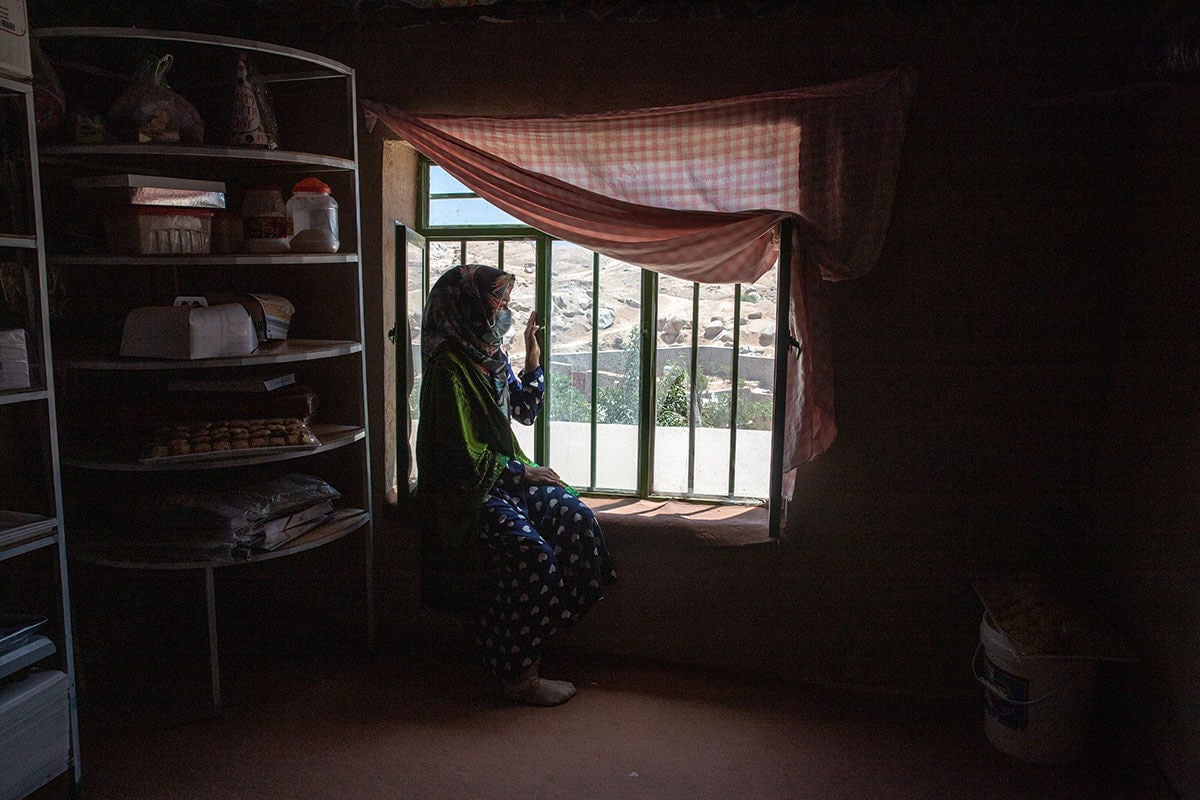
A 31-year-old woman sits by the window. She used to be an entrepreneur before the Taliban takeover. Photo: UN Women/Sayed Habib Bidell.

Up to four years ago, under the auspices of the U.S.-led international forces that dispelled Taliban rule and searched for the leader of al-Qaeda, Osama bin Laden, the eminence grise behind the deadly New York/Washington/Pennsylvania aerial suicide attacks of September 11, 2001, Afghanistan had its re-introduction to democracy and women were freed of the restrictive talons of the Taliban imposed upon them since 1989 following the Soviet Union's departure from Afghanistan after its failed invasion. 
 
In the presence of the Western coalition -- the twenty years from 2001 to 2021 introduced the war-torn country to sweeping social and economic changes. Afghans become involved in sports which both genders participated in, as well as music concerts with male and female singers. Cafes and restaurants served both men and women, after the Taliban years when women were not seen in public, confined to their homes, and permitted outside fully covered only in the company of male relatives. 
 
Women could not be treated by male doctors, nor could they attend hospitals meant for men only. Female surgeons in women-only hospitals served in operating room surgical procedures fully garbed in burqas.Women wee lashed in public squares, stoned in sports stadiums and punished for lack of adherence should they refuse to wear the hijab.
 
In contrast to the situation that prevailed under the U.S.-led coalition, when four million girls were enrolled in school from Grades 1 to 12 in the years 2002 to 2021. There were over 80,000 female teachers in over 18,000 schools while 100,000 Afghan women attended universities. The Afghan parliament had 63 elected female MPs, fully one-third of the total legislators; female journalists and media workers challenged male-dominated officialdom. Women served as cabinet ministers, mayors, governors of provinces, while women also operated small businesses, unlike the Taliban years when women were not permitted to work outside of their homes.
 
Until the Taliban succeeded on August 15, 2021 when the Afghan capital Kabul was captured by the resurgent Taliban. Ashraf Ghani, president of the Republic of Afghanistan, backed by the Western coalition fled to the United Arab Emirates and the nation was in chaos, as the United States withdrew all its troops and diplomatic officials in a 'peace deal' with the Taliban, and the allied nations under UN auspices departed, along with the U.S., leaving the country's population in the hands of the Taliban once again.
https://www.unwomen.org/sites/default/files/2024-03/afghanistan_photoessay_publishedmarch2024_012_1_1200x800.jpg?t=1709829762
Many Afghan women and girls are forced into unwanted marriages. Photo: UN Women/Sayed Habib Bidell.
"I cried out loud when I got engaged. I felt helpless and found myself in a situation where I had no say in my decisions. I was in my second year of university, studying law and political science, and I aspired to work in the judicial system to protect women’s rights in our country. Unfortunately, my dreams were shattered after the return of the Taliban."
"Many of my friends have faced similar fates, giving up their hopes and marrying against their will. For all girls who have been unable to complete their education, marriage is not a choice but a forced reality."
Mahnaz, from Farah, former university student 
Although the Taliban leadership promised the West, in a bid for acceptance and badly needed investment by the West in economically starved Afghanistan, for international investment, and recognition by global bodies, that women's rights would be observed, that the rights of minority groups in Afghanistan would be protected, they soon returned to the former strictures imposed upon women and girls where both could be punished for not adhering to the Taliban's dress code. 

Once again afghan women could appear in public only covered from head to toe by all-enveloping burqas which also covered their faces. Beyond Grade 6, girls could no longer attend school, and university education for women was banned. No offices and workplaces could accept female employees. Women are banned from public places, parks, and nor may they travel long distances in the absence of a male guardian. Medical training as nurses or midwives no longer is permitted.
 
https://thediplomat.com/wp-content/uploads/2024/08/sizes/medium/thediplomat_2024-08-21-145346.jpg
Ebrahim Naroozi, AP
 
"Several times I was thinking of committing suicide because there was no hope and future for me. Women cannot laugh with one another in public. Women cannot go to parks. Women cannot work and study. Do you see hope for yourself?" Of course not, and it makes you think of ending your life."
"Whenever she sees a Talib, she [her twelve-year-old daughter] is scared of them. That's why she always stays at home and cannot go out. She is depressed all the time."
"Whenever she sees girls going to school and living freely in the West [watching television or on social media], she asks me 'Why don't I have such a life and freedom?' Her question stabs my heart like a dagger."
"The most painful part is that I can't do anything for her."
"In exchange for a peace deal with the Taliban, the world traded Afghan women and their future."
Negin, Afghan woman, Mazar-e-Sharif, Afghanistan


Labels: , , , ,

Thursday, April 13, 2023

The Islamic Emirate of Afghanistan

"This decision does not mean there is discrimination here, or that the activities of the United Nations are blocked. On the contrary, we are committed to all the rights of all our countrymen, taking into account their religious and cultural interests."
"Considering the emergency situation in Afghanistan, it is necessary for the member countries of the United Nations to resolve the problem of frozen Afghan assets, banking, travel bans and other restrictions as soon as possible so that Afghanistan can progress in economic, political and security areas."
"Afghans have the capacity to stand on their own feet."
Zabihullah Mujahid, spokesman, Islamic Emirate of Afghanistan
Four men sit in a room with a TV screen on the wall behind them.
UN officials met with the Taliban's higher education minister, at left, in Kabul, Afghanistan, on Jan. 7, 2023 to discuss the country's ban on women attending universities. The organization said Tuesday that the Taliban has since barred its female staffers from working. (Taliban Higher Education Ministry/The Associated Press)
 
A week ago the ruling Taliban in Afghanistan further restricted women's human rights. Initially, when the Taliban took Kabul, they assured the world looking on, that they had every intention of respecting the human rights of women and girls. Presenting themselves as moderately reasonable, in the face of the reputation the first Taliban rule which imposed draconian laws against women seen in public without a male escort. Women were strictly forbidden from being seen without the all-enveloping burqas.

Women were forbidden to hold jobs outside their homes; paid work not for women, even widows without any means of income that could sustain the necessities of life. Child 'brides', a customary Islamist process of engineering girls into early motherhood, was rife. Education for girls was prohibited. Women in ill health could not be examined by male physicians. Women-only hospitals staffed by female physicians and surgeons who during surgeries were forced to wear that same burqa.
 
Women raise their fists and hold signs as they march along a street.
Afghan women chant slogans during a protest against the Taliban's ban on university education for women in Kabul, Afghanistan's capital. The country's Taliban-run administration ordered all local and foreign non-governmental organizations to suspend employing women. (The Associated Press)
 
While the Taliban was busy assuring the global community that it had matured its outlook and was willing to recognize the human rights of women and girls, those same women and girls knew differently. The Taliban's reassurance to the outside world was meant to forestall international involvement in the country's internal affairs as much as to convince global investment to continue its presence in Afghanistan. It took little time before the frail effort to convince the world that the Taliban was anything but the Taliban prevailed.

First to feel the sharp cut of the Islamist sabre were the former government's civil servants, all those who cooperated with the foreign intervenors representing the international community which had ousted the Taliban in search of Osama bin Laden. People were hunted down as traitors to fundamentalist Islam and to Afghanistan. Those that were able to flee to Turkey and Pakistan did, while the former NATO- and U.S.-led coalition members airlifted Afghans known to have assisted them as translators and other workers to safety abroad.
 
Afghan women are protesting against the Taliban’s decision to ban them from the country’s universities. Despite the growing global backlash over the regime's attack on women's rights, the Taliban is refusing to back down.
 
Those Afghans who live under Taliban rule suffer privation and hunger and fear. International NGOs installed themselves to offer humanitarian aid. And then came the pronouncement that Afghan women could no longer work for NGOs. Women attending universities were denied the privilege of returning to classes, joining younger women for whom high school education had previously been forbidden. Now, a week ago the Taliban announced that female Afghan staffers employed with the UN may no longer report for work.
 
In response the United Nations protested the decision, as unlawful and a violation of women's rights. Women, the UN stressed, have been essential for delivering life-saving assistance to millions of Afghans. The UN took the step of instructing its national staff both men and women to remain at home. The response to which was a denial by Taliban authorities that they were responsible for Afghanistan's multiple humanitarian crises. Such decisions as that decried by the UN, they point out, was an internal matter, requiring respect.
 
In the wake of the Taliban takeover of the country and the following economic collapse, aid agencies' role has been crucial in the provision of food, education and health care support. Distribution has been a problem, severely affected by the Taliban edict that banned women from working at non-governmental organizations; citing that they weren't wearing the hijab correctly, or following gender segregation rules.
 
People stand in front of a building complex with a white flag.
Members of the Taliban stand guard at the entrance gate of Kabul University in Kabul a day after the Taliban said female students would not be allowed access to the country's universities until further notice. (Ali Khara/Reuters)

Labels: , , , ,

Sunday, September 19, 2021

The New-Old Afghanistan

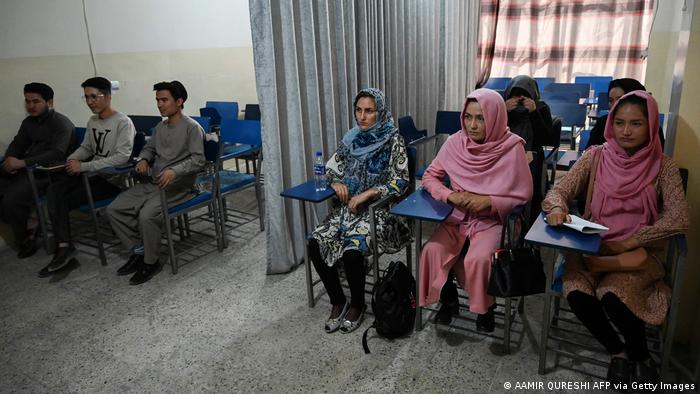
Students attend a class bifurcated by a curtain separating males and females at a private university in Kabul on September 7, 2021
A curtain divides these students at a private university in Kabul. Gender separation is now the official policy here — and that is likely to spread. "Co-education contradicts the principles of Islam as well as national values, customs and traditions,” said Abdul Baghi Hakkani, the incoming minister for higher education, in Kabul.

"It is becoming really, really troublesome. … Is this the stage where the girls are going to be forgotten?"
"I know they don’t believe in giving explanations, but explanations are very important."
"We have to talk. We have to find a middle ground."
Mabouba Suraj, head, Afghan Women’s Network
 
"[t is] the right of women to work, learn and participate in politics on the national and international stage."
"Unfortunately, in the current Taliban Islamic Emirate government there is no space in the Cabinet." 
"By closing the women’s ministry it shows they have no plans in the future to give women their rights or a chance to serve in the government and participate in other affairs."
Sara Seerat, former advisor, Afghan Women's Affairs Ministry

Image
 
By stealth, if not exactly yet official, Afghanistan's women's ministry is no more. "I am the only breadwinner in my family", said an employee of the ministry, now locked out of employment, since the government ministry for which she worked is no longer in operation. "When there is no ministry, what should an Afghan woman do?", she said plaintively. Well, it would appear, nothing, nothing an Afghan woman can do, but heed the direct orders of the Islamic Emirate of Afghanistan: stay home, mind the kitchen, look after the children, be prepared at all times to satisfy her husband's urgent needs. No husband? They'll find one for her.
 
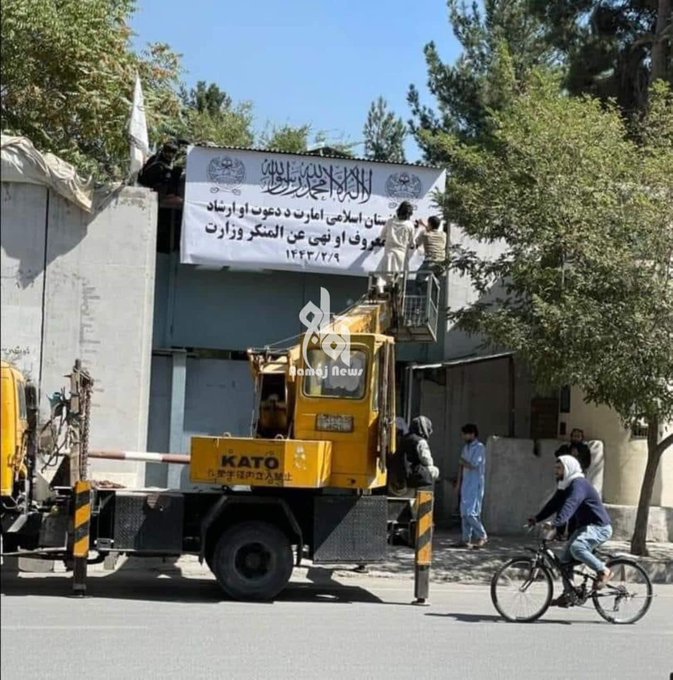
Workers were assigned the job of replacing the women's ministry sign with those of the Ministries of Prayer and Guidance and the Promotion of Virtue and Prevention of Vice. A ministry absolutely integral to the support of sharia law. Henceforth women are to be fully veiled, garbed face-to-foot in black burqas. They must not show their faces, their elbows, their wrists, their ankles to a male other than their husbands. They must not venture out in public other than in the stewardship accompaniment of a male family member.
 
Should they attempt to do otherwise, representatives of the Ministry of the Promotion of Virtue and Prevention of Vice will immediately act to correct such behaviour. Public floggings are in order, as they were between 1996 and 2021. Those not then old enough to remember those days will swiftly become familiar with such penalties. The women who had been employed in the former women's ministry will have understood that something dire was imminent. They had been attempting to enter their workplace for seeks. And informed to return home.
 
On Thursday the building gates were finally locked. There was no direct response from the usual Taliban spokesmen the following day, other than a senior Taliban leader having proclaimed earlier in the week that women would not be permitted to work alongside men in government ministries. A statement not open to interpretation, other than what it represents as a bald directive of Taliban sharia-led obligations all must obey. This is the new Afghanistan -- all over again.
 
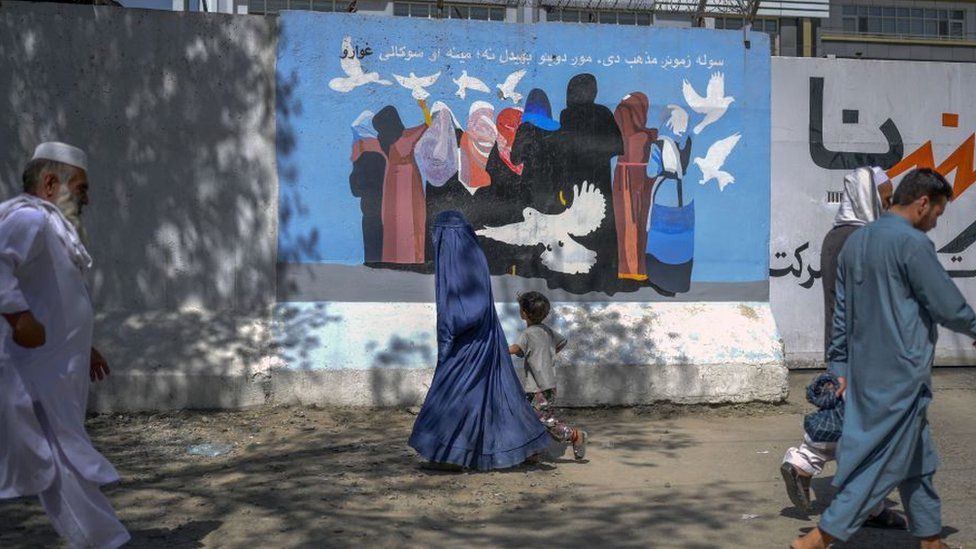
A burqa-clad woman along with a boy walks past a mural depicting women and doves flying along a street in Kabul on September 15, 2021
Getty Images
 
In the years before the U.S.-led NATO mission to Afghanistan the previous Taliban iteration saw its Ministry for Promotion of Virtue and Prevention of Vice exercising its mandate as moral police tasked with enforcing the Taliban sharia including a strict dress code. It was anything but uncommon to see women being struck for dress code infractions, in public. Nor were public floggings and public executions infrequent. A very similar ministry exists in the Islamic Republic of Iran, with men policing the 'morals' of women's behaviour and garb; they have much in common.

It was a time when girls were denied the opportunity to attend school. Women were not permitted to work outside the home, nor were they allowed to attend university. The new Taliban ministry of education has stated that schools meant specifically for boys would reopen, while some schools still operate where girls up to the sixth grade were in attendance. Women still have gone out to university classes, with strict enforcement of physical separation from men, in split classes. Girls' high schools, however have been shuttered.

The Taliban explain much of this as owing to the still-unsettled security situation; not that they have issued an order for schools to close, since their takeover. Simply that many activities specifically meant for women and girls were not yet feasible. "All teachers and male students should attend school", said the statement, with state and private schools at primary and secondary levels along with official madrassas (religious schools) opening.
 
Afghan men are seen in a restaurant in Herat, Afghanistan September 10, 2021
Photos and videos emerging from Afghanistan show bustling activity returning to the streets of cities — as at this restaurant in Herat, where customers are being welcomed back. But there is one conspicuous difference from before: At the tables are men and men alone, often wearing the traditional knee-long tunic. Women have become a rarity in the cityscape.
 

Labels: , , , ,

 
()() Follow @rheytah Tweet