Ruminations

Blog dedicated primarily to randomly selected news items; comments reflecting personal perceptions

Wednesday, August 26, 2026

Afghanistan's Starving Children
 https://www.unicef.ca/sites/default/files/styles/hero_internal_large/public/hero/images/UNI680216.jpg.webp?h=aabcfb29&itok=raFFcmXO

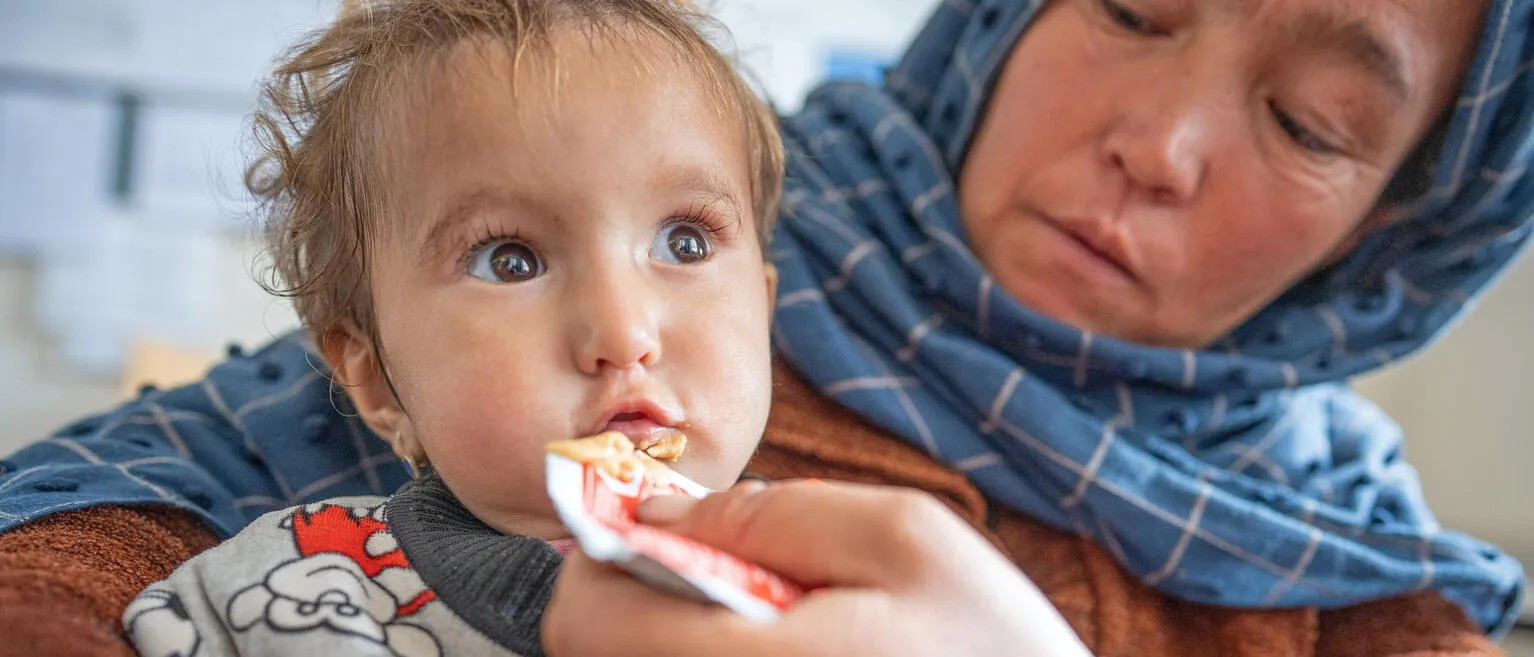
"One million children who are suffering from life-threatening severe acute malnutrition."
"If there is no treatment, and we are not able to act fast, that one million number are at risk of dying."
"Malnutrition plays a central role [in the growing number of deaths of very young children]."
"In parts of southern Afghanistan, some hospitals are now seeing three or four severely malnourished children for every available bed." 
UNICEF Afghanistan representative Tajudeen Oyewale
https://www.wfp.org/sites/default/files/styles/media_embed/public/2026-07/Sediqa%27s%20three%20year%20old.jpeg?itok=xbsFPUas
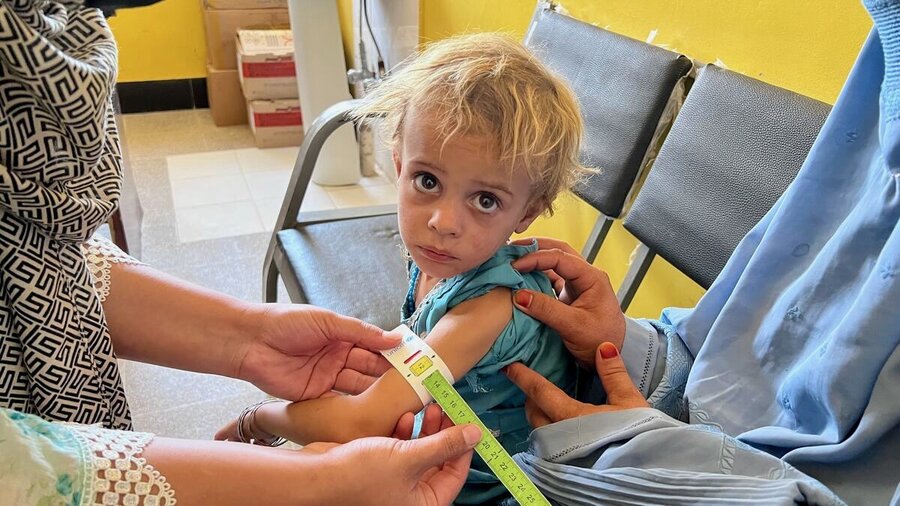
Three-year-old child tested for malnutrition. Photo: WFP/Isheeta Sumra
 
When the United States peremptorily pulled out of Afghanistan in 2021, while the Taliban was on the march toward Kabul, incentivizing other NATO nations to do likewise -- all the work that had been done by the international coalition to bring that war-wearied country into the 21st century, the establishment of medical clinics, schools, water wells in remote villages went to naught. During the U.S.-led invasion and occupation, women were empowered, able to reach academic levels toward professions they aspired to, humanitarian groups set up shop in the  country to contribute to the modernization efforts and mitigate miserable living conditions -- all came to a grinding halt.
 
It took no time at all for the West-aligned Afghan government to dissolve in the pending approach of the Taliban forces. Government ministers fled abroad, government workers were cognizant that the Taliban meant to search them out, imprison and/or kill them. All the forward-looking enterprises that Afghanistan's population was able to develop were swiftly placed in mandatory retirement. The old misogynistic order where women were not permitted in public without wearing a burqa or abaya returned. Those employed by humanitarian agencies were forced to stop, and the humanitarian groups left the country.
 
Foreign investment that had been robust under the UN-approved occupation came to a stop. Afghanistan's assets abroad were frozen. Girls were no longer able to attend secondary, much less higher-level education past the primary grades. The strict separation of males and females became mandatory. Pre-teen girls were sold by their parents into marriages with older and elderly men to become their property. Men reverted to having multiple wives. Some Afghan women set up cottage industries in discreet locations where they could earn a basic living to keep food on the table.
 
https://www.wfp.org/sites/default/files/styles/media_embed/public/2026-07/Farida%2C%20kds%20and%20health%20worker.jpeg?itok=tCe02zW-
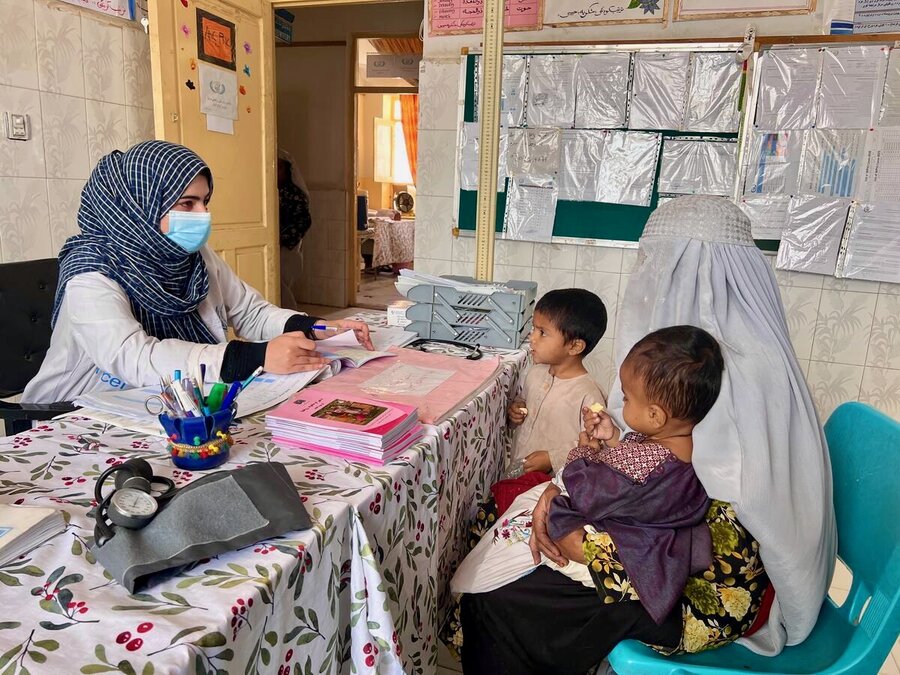
Farida and her sickly children (R) need healthy food – which she cannot afford on the family's tiny income. Photo: WFP/Isheeta Sumra
 
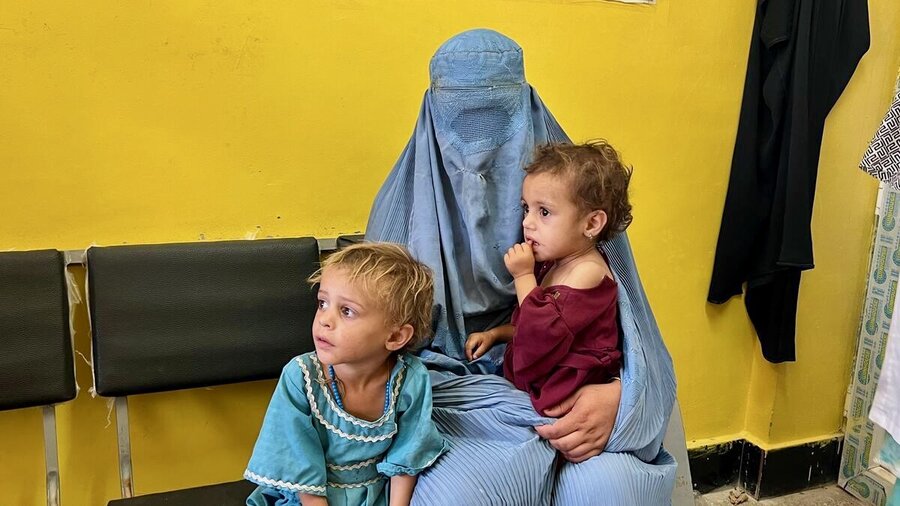
The country copes with natural disasters like drought, flash floods, regional instability along with clashes with neighbouring countries over territorial and trade issues. And the country's children are in parlous condition, warns the United Nations, where across Afghanistan, 3.7 million children suffer from wasting disease; a condition linked to malnourishment. 
 
Babies under six months of age represent close to 40 percent of the children admitted to hospitals with severe wasting and grim medical complications. Over 80 percent of severe acute malnutrition cases in the country are represented by children under two years of age. The UNICEF country representative for Afghanistan speaks of a "worsening nutrition crisis" with over half a million children admitted to hospital in 2026 for high-risk, moderate and severe wasting conditions. 
 
Families, reports Tajudeen Oyewale, are scaling back nutritious food and serve increasingly smaller meals to deal with food insecurity; an "increasingly alarming picture", where infants' first solid food graduating from breast milk can be represented by bread and tea or watered-down yogurt, "and for a growing child, this is simply not enough". A vicious cycle of poor nourishment, developing of severe diarrhea or respiratory infections while becoming more malnourished.
 
https://www.wfp.org/sites/default/files/styles/media_embed/public/2026-07/Sediqa%20and%20children.jpeg?itok=QfebEmnM
Sediqa's two young girls count among nearly 3.7 million Afghan children projected to suffer from malnutrition this year. Her impoverished family often lives on a diet of bread and tea. Photo: WFP/Isheeta Sumra
 

Labels: , , , , ,

Saturday, August 14, 2021

Devasted Economies, Evaporating Quality of Life, the Legacy of the Global Pandemic

"The developed world had the advantage of being formal economies, where if you do a lockdown, people have access to unemployment insurance or social aid."
"That didn't happen in much of the developing world. You saw a middle class move into poverty and the poor move into severe food insecurity."
Maximo Torero Cullen, chief economist, UN Food Agency
 
"We thought they [family children] were just depressed, but we took them to the clinic and found out they have anemia."
"The doctor told me to feed them more. But with what money? With what food?"
"We don't have the virus, but the pandemic is killing us."
Marimar Avila, 27, Lima slum, Peru

"Many of the people facing a lack of access to food are the same ones who started having a better quality of life, some, even in the middle class, who had achieved a good status in life, maybe even a car."
"During the pandemic, they lost all their income. It became a question of survival."
America Arias, Peru director, Action Against Hunger charity

"[My 30-year-old business, small-scale manufacturer of kitchen stoves] basically died in the pandemic."
"Do you know what it's like to spend your whole life building a company, and then, to end up here [soup kitchen]?"
"What am I going to do now? My savings are gone. How am I going to rebuild?"
Juan Tarazona, 57, San Martin de Porres, Lima, Peru
Peruvian man crouching next to harvest
Photo: FAO
 
The global pandemic has had many effects on people's lives, all of them hard and miserable, some dire. From personal bankruptcy to business collapses and national economic failures to issues of growing food scarcity in developing countries, all while governments everywhere focus on hoping to counter successive waves of COVID-19 outbreaks devastating their populations and their national treasuries. The pandemic has also had the effect of widening worldwide inequality with many nations facing serious food shortages.

The deleterious impact of the pandemic is seen through new data released by the United Nations where the unequal impact of the still-evolving situation emphasizes access to the most primary basic human necessity -- food -- has been exacerbated for many globally. A documented additional 118 million people worldwide were beset with food insecurity in 2020, leaping forward to 758 million people. Bringing the current number of people either living with food insecurity or forced to compromise on quantity or quality, to 2.38 billion people worldwide.

The formality of employment, social safety nets and availability of remote work conditions cushioned the effects of COVID isolation in North America and Europe where the percentage of people living with food insecurity rose from 7.7 percent to 8.8 percent. In the developing world where billions of informal workers and insecure government assistance prevail, the situation for populations was far more serious. More people are food insecure conventionally in Asia and Africa under normal circumstances.

Despite which, during and as a result of the global pandemic, Latin America and the Caribbean realized the largest one-year jump in food insecurity of nine percentage points to 40.9 percent, where there is also a chronic shortage of vaccines even as new waves of the virus continue to impact hugely, further contributing to unstable food access. It was Peru that saw the biggest surge in COVID infections and food scarcity.

Before the pandemic Peru had a commodities boom enabling it to cut poverty and malnutrition by 50 percent in the past two decades. That same South American nation now represents a study in deepening inequality where new national data illustrate a spike in poverty from 20 percent to 30 percent in one year. In many neighbourhoods people survive with the use of a "communal pot" representing a food station popping up in destitute quarters of the capital itself, where neighbours pool and share whatever food they have.
 
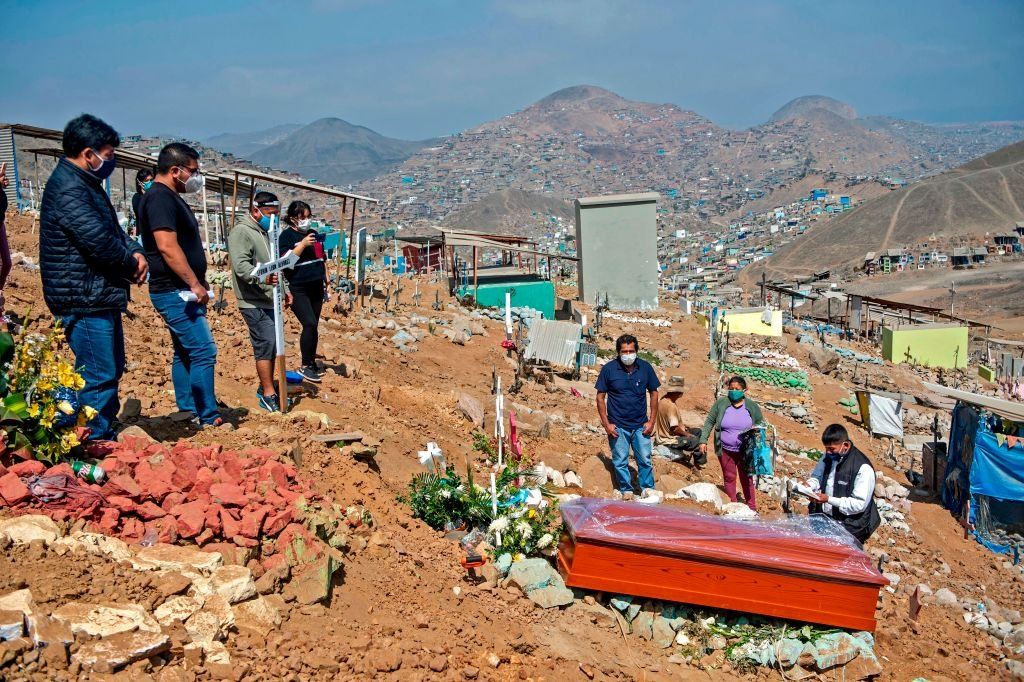
Funeral in Lima
Peru has the highest Covid death rate as a proportion of population in the world, according to the latest data. Getty Images

Latin America, considered largely to be a middle-income region, is also home to some of the most COVID-impacted places on Earth, suffering the largest relative increase in food insecurity as a result of the life-degrading quality of the SARS-CoV-2 virus causing COVID. Peru also happens to be the country with the highest COVID death rate per capita in the world. Despite that poverty and childhood malnutrition were halved in the past two decades. The goal was to end poverty in the nation altogether, a goal that has receded even as the pandemic has generated all manner of negative indicators. 

A marked increase in maternal mortality in childbirth; an increase in deaths attributable to HIV infections, and falling university attendance rates. The nation that financial experts fully expected would join the ranks of high-income nations now struggles to support itself and its people in an atmosphere of degraded quality of life and dissolving opportunities to advance, thanks to the pandemic.
 
Foto: Southern Voice

Labels: , , , ,

 
()() Follow @rheytah Tweet