Euthanasia in Canada (oops) MAID
"While the data suggests that the number of annual MAID [medical assistance in dying] provisions is beginning to stabilize, it will take several more years before long-term trends can be conclusively identified.""[People who receive MAID don't disproportionately come from lower-income or disadvantaged communities; they're] more likely to be represented in higher income neighbourhoods.""Loss of ability to engage in meaningful activities was the most commonly reported source of suffering]."Health Canada's 6th annual report on MAID
 |
Health Canada was in receipt of 22,535 MAID requests last year of which 16,499 were approved to proceed. Of those not having been approved, 4,017 of those requesting medical assistance in dying, did so before MAID could be provided, while 1,437 people were found to be ineligible and another 692 changed their minds, withdrawing their request for MAID. In that same year of 2024, 2,255 doctors and nurse practitioners were actively involved in providing MAID. Of that total it was a small group of medical volunteers who were responsible for providing 38 percent of all requests (6,185).
In 2025, the United Nations Committee on the Rights of Persons with Disabilities called for a repeal of the 2021 law in Canada expanding MAID eligibility to those whose deaths are not reasonably foreseeable, concerned that people with disabilities seek MAID as a result of "unmet needs, a systematic failure of the State party". Groups representing the rights of those with disabilities lobbied government not to include those with disabilities in the expanded eligibility list for MAID, fearing the expansion would take the place of workable medical interventions.
Altogether MAID deaths in Canada account for 5.1 percent of all deaths in the past year, representing a small increase from 2023 of some 0.4 percent. Since the introduction of MAID in 2015, 76,475 MAID deaths have been registered, according to Health Canada. In 2024 alone, a total of 16,499 people died by MAID. The vast majority (85.6 percent) of hose who died by MAID (averaging 76 years of age and older) last year qualified for 'Track 1' deaths, representing the category of a 'reasonably foreseeable' death qualifying them for MAID approval.
 |
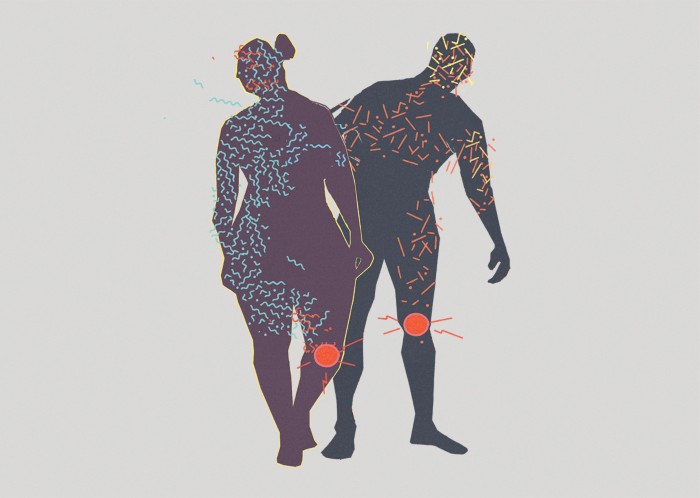
Doctor-assisted deaths where natural deaths were not reasonably foreseeable, saw a majority of women (56.7 percent), slightly younger qualifying, with autoimmune conditions and chronic pain, along with neurological conditions were most often cited among people asking for MAID, who were not on the verge of dying. There was some controversy linked to MAID requests by individuals suffering the effects of mental conditions making their lives impossible, where medical intervention might make a difference.
Concerns that some MAID deaths are driven by loneliness, hopelessness and isolation and that some physicians are stretching the qualification provisions of the law have also emerged. The principal criterion of MAID qualification is that a person must be experiencing intolerable and "enduring physical or psychological suffering". Those applying for MAID approval often report multiple sources of suffering impacting their lives.
The most common in 2024 was loss of capacity to engage in meaningful activities, as well a loss of ability to perform daily routines such as eating, drinking, dressing and moving about. Track 1 applicants were likelier to report inadequately controlled symptoms, "while Track 2 MAID recipients were more likely to report isolation or loneliness and loss of dignity". Other findings indicate that MAID applicants are less likely to live in remote areas, thus lack of access to health services is not an issue.
The most frequently reported condition in most all age groups of those who died by MAID in 2024 was cancer, in particular lung, colorectal, pancreatic and blood cancer. With the exception of those 85 and older "for whom 'other conditions' were the most frequently cited".
 |
| A screen displays a patient's vital signs during open heart surgery at the University of Maryland Medical Center in Baltimore on Nov. 28, 2016. THE CANADIAN PRESS/AP, Patrick Semansky (Patrick Semansky) |
Labels: Autoimmune Conditions, Canada, Chronic Pain, Enduring Physical or Psychological Suffering, Medical Assistance in Dying, Qualifications, Reasonably Foreseeable Death
posted by Pieface @ 7:51 PM
0 comments