Ruminations

Blog dedicated primarily to randomly selected news items; comments reflecting personal perceptions

Friday, July 03, 2026

Canadian Cannabis Consumption

"What followed commercialized legalization was a rise in cannabis addition as well as increases in hospital admissions for psychosis, including cases where psychotic disorders occurred alongside cannabis addiction."
"The emergence of a for-profit cannabis industry can result in commercial interests being prioritized over public health, just as we have seen with the alcohol and tobacco industries."
"Increased availability of cannabis products, greater product strength and active marketing of these products can increase the risk of harm."
Tom Freeman, psychologist, University of Bath

https://www.recoveryanswers.org/assets/Long_web-4.png
Cannabis-related hospitalizations associated with later mortality  Recovery Research Institute
 
The Liberal government of Canada gifted Canadians with MAID -- Medical Assistance in Dying. A program whose original protocol of accessibility was to ensure that patients' ebbing lifeforce was imminent, to spare them further pain and suffering. That soon changed, with guidelines for approval becoming more openly 'benevolent', where applicants eventually could simply decide life wasn't worth living any longer; poverty and lack of adequate medical care prompted some to end their lives. The latest 'improvement' on the guidelines was to include those suffering solely from mental illness; a decision still in abeyance.
 
Living the good life, courtesy of the Liberal government introduced legalized marijuana, and the licensing of cannabis shops throughout the country where the 'weed' and products flavoured with cannabis, some in shapes appealing to children were available. Leading to children being seen at hospital emergency rooms having consumed those appealing tidbits. Government argued that commercializing pot's easy availability would see the end of the illegal black market through regulation. Things haven't exactly worked out that way, with seasoned users still buying on the street at prices more than rivalling commercial outlets.
 
https://smartcdn.gprod.postmedia.digital/saltwire/wp-content/uploads/2026/07/tch-tk070226ganja-sized-scaled.jpg?quality=90&strip=all&w=564&h=423&type=webp&sig=-aEctXrgUW95xWPjI515wg
 NSLC's lone exclusivity cannabis-only outlet is seen on Clyde Street in Halifax on Thursday, July 2, 2026. The NSLC also operates cannabis dispensaries inside its alcohol selling stores across Nova Scotia. Photo by Tim Krochak /The Chronicle Herald
 
Now a global study recently published in the Lancet Journal of Psychiatry points out that the widespread commercialization of cannabis in Canada has seen an explosion of hospital visit for psychosis, psychiatric disorders, and addictive use of the product. Elsewhere globally where legalized cannabis is available, a tighter regulatory regime has been instituted not involving widespread commercial availability and as a result other countries where pot has been legalized don't face the pot-related problems that Canada does.
 
Titled International Cannabis Policies and Their Association with Cannabis Use, Cannabis Use Disorder, and Other Psychiatric Disorders, the study represents a global research survey of the policy of legalization of cannabis. As such studies go, this is the most recent research that raises concerns over health effects resulting from Canada's 2018 cannabis legalization and the commercialization that followed. 
 
https://i.cbc.ca/ais/1.5428221,1717212069000/full/max/0/default.jpg?im=Crop%2Crect%3D%280%2C474%2C4032%2C2268%29%3BResize%3D860
Seniors are among the fastest-growing age group for using cannabis in Canada. Meanwhile, the number of seniors ending up in emergency departments with cannabis poisoning has also risen sharply since legalization, new research shows. (Travis Dolynny/CBC)
 
Most troubling, society has seen teens and young adults to be the most affected. This, when science also warned that up to age 21, the human brain is still maturing, and exposure to the chemicals in cannabis is harmful to that development. A 2019 study published in Lancet Psychology, advanced the result of regular use of strong cannabis (20 milligrams per gram or higher), increases the potential of a psychosis by up to 1,000 percent among teens and young adults.
 
Data from Nova Scotia Liquor Corp. indicates as of 2023 that close to half of its sales were of cannabis products. Those products having a THC content of 20-25 mg/b (10 times stronger than the old weed), 30 percent of sales represented with 24-30 mg/g and just over 10 percent reflected a potency of over 30 mg/g. Further, according to the 2022 Canadian Cannabis Survey, youth in Nova Scotia (age 16 to 19) saw the highest use of marijuana in the country.
 
Halifax's wastewater tests contained the highest rate of cannabis metabolites per capita of any city in Canada. The Canadian Wastewater Survey testing for drug metabolites in wastewater, tracks consumption trends throughout the country. 
 
https://smartcdn.gprod.postmedia.digital/nationalpost/wp-content/uploads/2025/06/pot-1.jpg?quality=90&strip=all&w=564&h=423&type=webp&sig=dUibFWpkidyOOCCuTRkuNA
As pot becomes more potent and more convenient to purchase, emergency doctors are reporting more cases of cannabis hyperemesis syndrome. Photo by Getty Images
 

Labels: , , , , ,

Friday, March 13, 2026

On Offer In Canada -- Death In A Hurry

"Canada is now noted as the fastest growing assisted dying program in the world."
"Although many participants [in MAID deaths] experienced respectful, caring and compassionate interactions with health-care professionals involved in the [Medical Assistance in Dying] process, others did not, adding to already stressful and intense emotional pain."
University of Alberta researchers
 
"It was just like a series of losses, right."
"You lose the ability to work. You lose the ability to play. You lose the ability to eat, to sleep, to do everything."
"So, the loss was already there."
"The final, the MAID, was just like the grand finale of the loss journey."
Relative of a MAID participant 
 
"My mom needed psychiatric help. My mom was a victim of a broken health-care system."
"My mom had been trying to see specialists for months and months and months [for a brain injury]. It got to the point she lost all hope."
"And so my mom ended her life because of desperation, not anything to do with dignity."
Transcribed research interview 
(Thomas Northcut/Getty Images)
 
A new study out of the University of Alberta and published in the  journal BMO Palliative Care, once again sheds light on the  experiences of families dealing with doctor-assisted death.  Some of the study's interviewees were satisfied with the care their loved one was given to the end of their life under Canada's Medical Assistance in Dying protocol, and many others complained that the process was too rushed, too impersonal and traumatic, not the least bit helped in facing cheerfully smiling assisted-suicide providers under the program.
 
The purpose of the law that came into effect in June of 2016, with strict parameters that had to be considered before consent would be given for MAID, was to  focus on the rights and autonomy of individuals to make the decision when their lives should be ended in a program envisioned as 'dying with dignity'. Death would have to be foreseeable in the near future, the result of all medical measures having been taken to deal with disease, injury and illness. 
 
In the years that followed, the law was amended to permit entry to the program of a greater number of people, those whose pain and misery failed to respond to medical intervention, whose quality of life was utterly abysmal and in their personal opinion, unlivable. Applications for MAID consideration would have to be made when an individual was of sound mind to be able to do so; relaxed rules allowed for applications to be honoured prior to an applicant's health descent to the point of no longer being in possession of their full mental awareness.
 
Two independent medical assessments must be made for those deemed eligible for MAID. An individual whose suffering cannot be medically ameliorated and who voluntarily makes application must also give a final assent on the day of the procedure, unless the use of an advance consent has been accepted. During the University of Alberta's researchers' outreach study, many families felt that family members should be involved in a profound decision of such a nature as voluntary life-cessation. 
"I got a phone call on June 1st from her family doctor that I had never met. She said, 'I'm sorry to inform you that your mother has passed away'."
"And I literally told the doctor, I said, 'No, no, no, you've got the wrong person, like you've called the wrong person."
Interviewee 
In another instance, despite having been denied assisted death through previous requests in Ontario, 26-year-old Kiano Vafaeian died by MAID in a Vancouver funeral home after experiencing vision loss from diabetes; his constant state of deep depression led him to seek an assisted death. When informed that her son was no longer living, his mother immediately thought this was someone's idea of a bad joke.
 
Between legalizing MAID in the Criminal Code in 2016 and December of 2024, there had been 76,475 MAID deaths reported in the country. That number is expected to rise to 100,000 by the summer of 2025.  
Euthanasia has now become the fifth leading cause of death in Canada. Another amendment to the MAID law is being deliberated on by a special joint parliamentary committee, to extend 'dignity with dying' to people whose only condition is that of a mental illness; to come into effect in March of 2027.
 
The study funded by Health Canada, saw researchers inviting families from British Columbia, Alberta, Saskatchewan, Ontario and Quebec to discuss their experiences -- in support of 35 Canadian family members who received Medical Assistance in Dying -- through one-on-one virtual interviews. The decision to apply for MAID in some instances could be triggered by "unmanageable or unbearable symptoms"; severe shortness of breath, or unmitigated pain.
 
Some were driven to seek out MAID fearing loss of personal agency, having to rely on others for bathing or toileting; even the possibility of having little option but to move into a nursing home. For some, lack of adequate home care led to the final decision. Hasty assessments, lack of deep discussions of alternative options and advice on how families  could help relieve distress "led to their loved ones choosing MAID sooner than they may have", concluded the researchers.
 
The observation was also made that on occasion a second assessor appeared to 'rubber stamp' the first assessor's eligibility agreement. Health issues rated concerns of not having been fully addressed. "Booking our MAID date was like booking a dinner reservation, So, it's just all very, very, very impersonal." The cheerfulness of one assessor was profoundly off-putting for another family. Although either a doctor or a nurse could perform the final MAID injection some families found it a struggle to find a willing provider.
 
"It was an absolutely brutal contradiction of trying to fight for somebody to be able to die when you don't want them to die", explained one family member. 
 
Dr. Cheryl Rowe a Toronto psychiatrist, says she believes patients have a right to die a dignified death. ”Who am I to say you’re suffering, it’s too bad, you just have to find a way to live like this?” Nick Lachance
"MAID policy is often framed as purely about autonomy. But health care has never treated autonomy as absolute."
"Most families are not asking for veto power. They are asking to share information, to be involved and to know that all safeguards and care options were meaningfully considered."
Dr. Ramona Coelho, family physician, member Office of the Chief Coroner MAID death review committee, Ontario  

Labels: , , , ,

Wednesday, February 04, 2026

Cognitive Capacity of Two-Month-Old Infants

"Parents and scientists have long wondered what goes on in a baby’s mind and what they actually see when they view the world around them. This research highlights the richness of brain function in the first year of life."
"Although at two months, infants’ communication is limited by a lack of language and fine motor control, their minds were already not only representing to how things look, but figuring out to which category they belonged."
"This shows that the foundations of visual cognition are already in place from very early on and much earlier than expected."
Dr. Cliona O'Doherty, Trinity Cusack Lab, Trinity College, London 
 
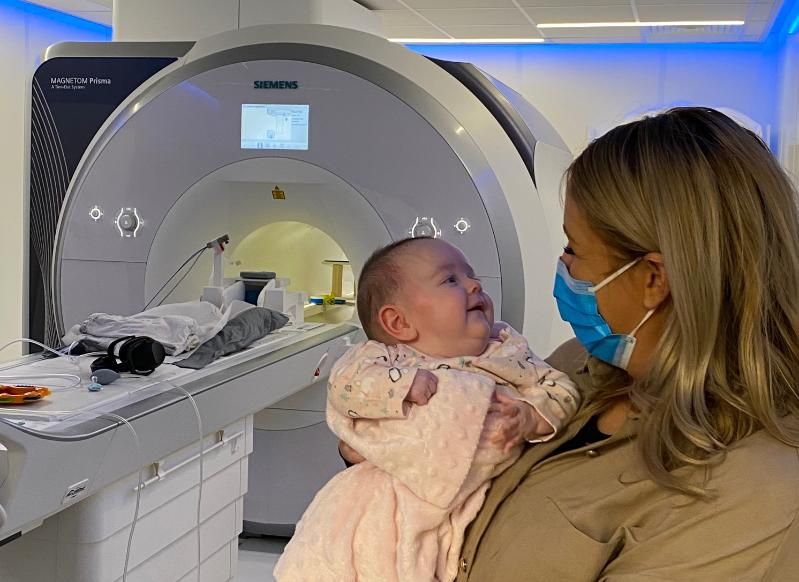
https://pxl-tcdie.terminalfour.net/prod01/channel_3/media/tcd/news-images/Baby_Sadie_with_mum_Donna_at_2_month_Foundcog_scan-2-800X582.jpg
Baby Sadie with mum Donna at her 2-month Foundcog scan. Cusack Lab.  2026.
"This study represents the largest longitudinal study with functional magnetic resonance imaging [fMRI] of awake infants. The rich dataset capturing brain activity opens up a whole new way to measure what babies are thinking at a very early age. It also highlights the potential for neuroimaging and computational models to be used as a diagnostic tool in very young infants."
"Babies learn much more quickly than today’s AI models and by studying how they do this, we hope to inspire a new generation of AI models that learn more efficiently, so reducing their economic and environmental costs."
Rhodri Cusack, Thomas Mitchel Professor of Cognitive Neuroscience, School of Psychology, Trinity College Institute of Neuroscience 
 According to a newly published study, babies are able to distinguish between various objects they view at two months of age. Previously, scientists had no idea that such young infants had the mental acuity to make such distinctions. "It really tells us that infants are interacting with the world in a lot more complex of a way than we might imagine. Looking at a two-month-old, we maybe wouldn't think that they're understanding the world to that level", explained Dr. O'Doherty.
 
Data was studied taken from 130 two-month-old infants who, while awake, underwent brain scans, while viewing images commonly seen in the first year of life from a variety of categories, including trees and animals. Viewing an image such as that of a cat, the babies' brains might 'fire' in such a way that researchers were enabled to record the results. If they observed an inanimate object, the infants' brains would fire differently, indicating the infants' early capacity to differentiate something live from a static object.
 
The study technique, functional magnetic resonance imaging (fMRI), enabled scientists to closely examine visual function more accurately than could be done in the past. Previous studies tended to draw conclusions from observing how long an infant's gaze would be fixed on an object. It was thought from such observations that infants as young as three to four months could distinguish between live and inanimate categories -- as example, between animals and furniture.  
 
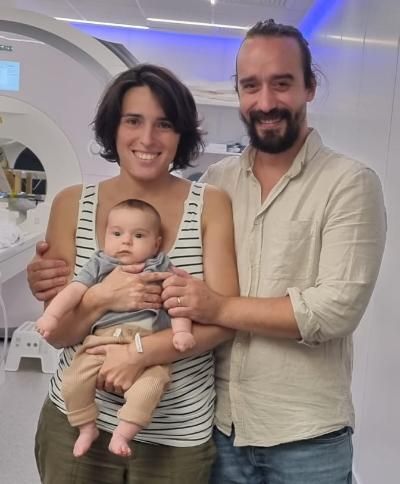
https://pxl-tcdie.terminalfour.net/prod01/channel_3/media/tcd/news-images/Baby_Maeve_Truzzi_Scott_with_mum_Anna_and_dad_Ian_at_2_month_Foundcog_scan-2-400X485.jpg
Baby Maeve Truzzi-Scott (right) attends her 2-month Foundcog scan with her mum, Dr Anna Truzzi (co-author), and her dad, Dr Ian Cecil Scott. Cusack Lab. 2026.
"Until recently, we could not reliably measure how specific areas of the infant brain interpreted visual information. By combining AI and neuroimaging, our study offers a very unique insight, which helps us to understand much more about how babies learn in their first year of life." 
"The first year is a period of rapid and intricate brain development. This study provides new foundational knowledge which will help guide early-years education, inform clinical support for neurodevelopmental conditions and inspire more biologically-grounded approaches in artificial intelligence."
Dr. Anna Truzzi, Queen’s University Belfast   
The study results were published in Nature Neuroscience. Such an interpretive advance in assessing the capacity of very young children to begin understanding the world around them will assuredly be of value to doctors and researchers in acknowledging the advanced speed of cognitive development in infancy.  The study lead author, Dr. O'Doherty from Trinity College Dublin in Ireland, explained the method of making the experience comfortable for participating babies.
 
To ensure the babies felt secure and the comfort of feeling snug prevailed as their reaction to pictorial exposure of objects and living creatures tested their differentiation capabilities, the babies were placed reclining on a bean bag. The images, pointed out Dr. O'Doherty "appear really big above them while they're lying down. It's like IMAX for babies". 
 
https://www.usnews.com/object/image/0000019c-1f22-d648-a9bd-5f3213ee0000/4312f1a31e9343f4b2826a5828557f9bBaby_Cognition_69544.jpg?update-time=1770048180000&size=responsive970
Baby Blaise attends her 9-month Foundcog scan with her mother Mary at Trinity College Institute of Neuroscience in Dublin, Ireland. (Cusack Lab via AP)
 

Labels: , , , ,

Wednesday, December 03, 2025

A Potential Solution to Offset Dementia Onset

Pascal Geldsetzer
Pascal Geldsetzer
"All these associational studies suffer from the basic problem that people who go get vaccinated have different health behaviors than those who don’t."
"In general, they’re seen as not being solid enough evidence to make any recommendations on."
"Because of the unique way in which the vaccine was rolled out, bias in the analysis is much less likely than would usually be the case."
"What makes the study so powerful is that it’s essentially like a randomized trial with a control group — those a little bit too old to be eligible for the vaccine — and an intervention group — those just young enough to be eligible."
"It was a really striking finding. This huge protective signal was there, any which way you looked at the data."
"The most exciting part is that this really suggests the shingles vaccine doesn’t have only preventive, delaying benefits for dementia, but also therapeutic potential for those who already have dementia."  
Pascal Geldsetzer, senior study author, assistant professor, Division of Primary Care and Population Health, Stanford University
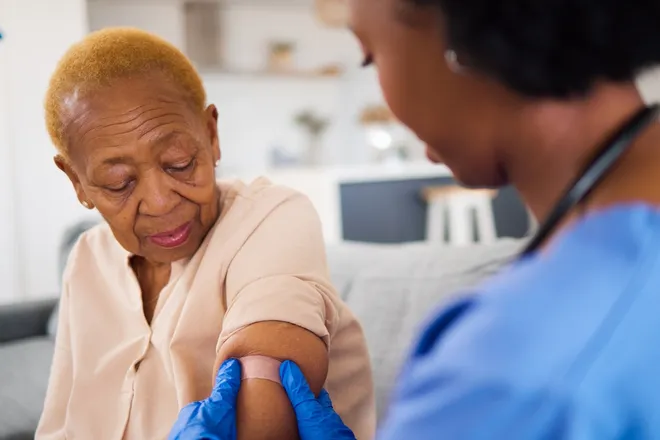
https://cdn.discovermagazine.com/assets/image/57951/elderly-woman-getting-vaccine-m.webp
(Image Credit: PeopleImages/Shutterstock) 
 
"These findings are promising because they suggest that something can be done."
"Obviously the vaccine was not designed or optimized to prevent dementia, so this is sort of an incidental finding."
"In some ways, we are being lucky."
Alberto Ascherio, professor of epidemiology and nutrition, Harvard School of Public Health 
Researchers earlier this year reported that the risk of developing dementia can be cut by 20 percent over a seven-year period through vaccination with the shingles vaccine. Shingles vaccination was found by a large follow-up study to protect against risks at various stages of dementia, including for those people already diagnosed with the disease. Published in the journal Cell on Tuesday, the research found that  cognitively healthy people who were vaccinated were less likely to develop mild cognitive impairment, an early symptomatic preceding dementia onset.
 
The study suggest that the shingles vaccine which consists of two doses -- recommended for adults age 40 and older or for individuals 19 and older with a weakened immune system -- may help those who already have been affected with dementia. Over a nine-year period, those who received the vaccine were some 30 percent less likely to die of dementia. Which suggests that the vaccine may slow the neurodegenerative syndrome's progression. 
 
Anupa Jena, a professor of health care policy at Harvard Medical School, and a physician practising at Massachusetts General Hospital who reviewed the paper, remarked that "It appears to be protective along the spectrum or the trajectory of the disease".  Researchers are reacting with cautious optimism and excitement over these results.
 
Maxime Taquet, an associate professor at Oxford University who has conducted research into shingles vaccination and dementia risk, lauded the research, explaining that "If the findings are confirmed, then this would be groundbreaking for dementia. I think there's no other word for it", he went on. 
 
The scientists who conducted the research took advantage of an age cutoff in how Wales rolled out its shingles vaccination program in 2013 to measure dementia impact, in view of the fact that randomized controlled trials -- the gold standard in medical research -- are often unfeasible in the real world. The conclusion that a common vaccine may succeed in protecting the brain represents a bonanza finding. 
 
When Wales introduced the shingles vaccine for older adults in 2013, while those 79 years of age were eligible to receive the vaccine, those who had turned 80 were deemed ineligible. "Just a one-week difference across this date-of-birth cut-off means that you go from essentially no one getting vaccinated to about half of the population getting vaccinated," explained Professor Geldsetzer.
 
The Wales nationwide electronic health records meant that the researchers were able to study the entire population of Wales born between September 1925 and September 1942, to determine how dementia risk was affected by vaccine status. The researchers' focused analysis on those closest to either side of the eligibility for the shingles vaccine to ensure the study group was as close to the same age as possible.
 
"We know that if you take a thousand people at random born in one week and a thousand people at random, born a week later, there shouldn’t be anything different about them on average. They are similar to each other apart from this tiny difference in age. What makes the study so powerful is that it’s essentially like a randomized trial with a control group — those a little bit too old to be eligible for the vaccine — and an intervention group — those just young enough to be eligible", Professor Geldsetzer said.
 
 
https://i.cbc.ca/ais/1.7500428,1743629182000/full/max/0/default.jpg?im=Crop%2Crect%3D%280%2C0%2C5616%2C3744%29%3BResize%3D805
A new study out of Wales has found those who received the shingles vaccine were 20 per cent less likely to develop dementia over the next seven years than those who did not receive the vaccine. (Carsten Koall/Getty Images)
 
"If the shingles vaccine really prevents or delays dementia, then this would be a hugely important finding for clinical medicine, population health, and research into the causes of dementia."  
"There is a growing body of research showing that viruses that preferentially target your nervous system and hibernate in your nervous system for much of your life may be implicated in the development of dementia."
"It suggests that from a clinical public health perspective, we should be providing this potentially at early stages, maybe on a regular basis."
Professor Pascal Geldsetzer 


Labels: , ,

Sunday, October 12, 2025

Gender Dysphoria -- Transitioning, Detransitioning, Retransitioning

"The mainstream gender-affirming  care system largely presumes that gender identity/expression is immutable and that TGD [transgender and gender-diverse] people will engage in only one gender transition."
"While this may be the reality for many TGD people, this presumption can create environments in which multiple transitions, gender fluidity, and detransitions are misunderstood or even stigmatized."
"[Detransition] has been conceptualized as stopping, shifting or reversing aspects of an initial gender transition, often motivated by a shift in how one understands their sex/gender [although there is no universally agreed-upon definition]."
"Some people who detransition may self-label as 'detrans' for short."
"Irrespective of their current gender identity, those undergoing a detransition often retain 'atypical' sex characteristics from prior hormonal and surgical treatments, leading to vulnerability to gender minority stressors and, potentially, an experience of 'reverse dysphoria'." 
York University research team 
https://smartcdn.gprod.postmedia.digital/nationalpost/wp-content/uploads/2025/10/0927-news-national-detransitioning-4_288953024.jpg?quality=90&strip=all&w=564&h=423&type=webp&sig=_h8v5XeRP0UkmA-ekBnkaw
 
"I feel so alienated now, and super-isolated from the rest of the queer community" reported one of the study's subjects. Another said: "I lost every adult and friend in my life when I chose to detransition. I lost everything I had socially." It is obviously a very lonely journey to be  taken.
 
"Conservatives want us to speak to them to 'prove' that transitioning is 'evil'. Liberals want to silence us for fear that we'll somehow 'influence' trans people to detransition", said another.  "We're in a horrible space and it's nearly more painful detransitioning for me than it was just suffering through an identity that didn't fix my problems like everyone said it would."
 
A new form of stigma -- detransphobia -- is being exposed through the largest study of detransitioners in Canada and the United States in decades, revealing that the medical community is abandoning people who had undergone transition and in time made a decision to reverse that gender journey, finding themselves ignored by the very surgeons who had altered their bodies, while the communities that once embraced them, now choose to ostracize them. 
 
 Close to 1,000 people were included in the survey, to reveal that many who halt or reverse a gender transition end up feeling disappointingly poorly supported by LGBTQ groups and gender-affirming care practitioners, leaving them wistfully regretting their doctors' distancing themselves, wishing instead that they "took a more neutral approach to care".  The study was published in the International Journal of Transgender Health and funded by the Social Sciences and Humanities Research Council.
 
The ritual of name changing and pronouns, the halting of hormone therapy or seeking out reversal surgeries like breast reconstruction following a double mastectomy for masculinizing female-to-male chest surgery are difficult decisions to make in a total makeover of what had preceded that detransitioning process. Findings from earlier research are inconsistent with estimates for detransition ranging from less than one percent to as high as 30 percent. 
 
For some individuals, detransitioning may lead to a reversal - retransition -- particularly if their detransition was 'involuntary, forced' as a result of family pressure, discrimination or "the climate of fear around trans people". In other instances, the pressures are internal; a shift in identity of a realization that their gender dysphoria was related to some other issues "such as trauma or internalized homophobia".  
"According to the detransphobia model, individuals who shift their gender after an initial transition may encounter social rejection and barriers to accessing support within SGM [sexual and gender minority] communities due to misrecognition, gender identity fluidity and detransition-related stigma."
"Many shifted from  transgender to gender non-confirming lesbian, gay or detrans identities, and, in hindsight, wished they had access to providers who took a more neutral approach to care."
"[That backs previous research] and carries implications for gender-affirming care delivery."
York University research team 
The research team itself was comprised of a majority of LGBTQ researchers who stated that no formal health-care guidelines exist that would be of assistance to address the medical and psychological needs to detrans individuals when stigma from LGBTQ communities can also occur. The study is that of an anonymous survey taking place between 2023 and 2024, of 957 individuals from ages 16 and up in the U.S. (704)  and Canada (253) self-identifying, with experiences of detransition -- along with one-on-one interviews with 42 selected participants.
 
https://nouvelles.umontreal.ca/public/nouvelles/_processed_/2/5/csm_20250310_jeunes-discours-detransition_9b91aa6c0b.jpg
Gender detransitioning - going back to living as the gender one was assigned at birth, or identifying differently - is generating more and more headlines these days. Nouvelles Montreal
 
79 percent of participants were born female, a reflection of the surge in biological girls referred to gender clinics. Another Canadian study found that of 174 youth aged 15 and younger who were referred for puberty blocks to 10 gender clinics in the country, 82 percent were born female. Some 42 percent of the total reported a history of discontinuing, then later resuming transition.
 
Challenges to access medial care or financial support to cover detransition procedures such as voice training in response to voice deepening or laser hair removal for body and facial hair;  side-effects from testosterone therapy used in female-to-male transitions were mentioned by many of the study participants. "I was turned down by four surgeons and ghosted by the one who did the mastectomy", one participant said of the search for a breast reconstruction surgeon.
  
Some participants spoke of a wish to secure the services of "non-trans-affirming care providers" on the basis of past therapists appearing too eager to encourage their transition in the first place, or to retransition following detransitioning, "despite no expressed desire to do so". "I had no confidence in my providers when I stopped transitioning" , explained one study participant. 
 
https://www.yorku.ca/yfile/wp-content/uploads/sites/889/2023/04/remi-walle-UOwvwZ9Dy6w-unsplash-scaled-1.jpeg
A new research website launched by a multidisciplinary team led by York University Professor Kinnon MacKinnon aims to provide resources, support and data-driven information about gender detransition/retransition. York U Yfile
 

Labels: , , , , , , ,

Saturday, October 11, 2025

Preserving Life Through a Sense of Purpose

"Our findings show that having a sense of purpose helps the brain stay resilient with age."
"Even for people with a genetic risk for Alzheimer's disease, sense of purpose was linked to a later onset and lower likelihood of developing dementia."
Professor Aliza Wingo, study lead author, Department of Psychiatry and Behavioral Sciences, UC Davis 
https://www.sciencealert.com/images/2025/10/lifes_purpose_header.jpg
Whatever your purpose is, it could do your brain some good. (Hill Street Studios/Getty Images)
 
Older adults who report a sense of purpose in life -- according to new scientific studies -- gain a reduced chance of developing dementia as the years wear on. Researchers at the University of California Davis reported their study results in the most recent edition of the American Journal of Geriatric Psychiatry, based on data collected from 13,765 participants beginning at age 45 and up to their senior years. The study was part of a long-term U.S.-based mega study, titled the Health and Retirement Study. 
 
Participants were surveyed between the years 2006 and 2020, and at the beginning of the study all  those involved had normal cognitive functioning.
 
People who reported a higher sense of purpose in life were found by the team to be roughly 28 percent less likely to develop cognitive impairment. That included mild cognitive impairment and dementia -- over the length of the study. Cognitive decline onset was delayed by about 1.4 months, even among those who did experience cognitive decline, a difference described by the researchers as "meaningful when compared to current treatments".
 
Earlier similar studies reflected similar findings, but it was noted by the UC Davis study that the number of participants and length of their study produced more meaningful results, while also noting that though the  study found an association, the conclusion did not prove definitively that higher levels of purpose caused lowered rates of dementia. Only that psychological well-being plays a notably functional part in healthy aging. 
 
https://smartcdn.gprod.postmedia.digital/nationalpost/wp-content/uploads/2025/10/dementia_FXX3CXB6MMI6NHQWJTYBUQO6ZM.jpg?quality=90&strip=all&w=564&h=423&type=webp&sig=wDBPsyhv4YeHZYYQcfo2xQ
 
Research identified the 'protective effect' of a sense of purpose seen in both males and females and through ethnic groups, making cause-and-effect universal. Identifying the  sense of purpose's protective effect across multiple racial and ethnic groups made for greater significance, even accounting for education, depression and the APOE4 gene  representing a known risk factor for Alzheimer's disease. 
 
The researchers made no effort to identify what the participants' various specific activities or beliefs might be that gave their lives that sense of purpose. They did not hesitate, however, to venture a number of hypothetical possibilities that would lend themselves to being identified as driving a sense of purpose in life: 
  • Such as caring for family, spending time with grandchildren, or giving support to a friend; 
  • Mentoring or contributing to community causes through volunteerism;
  • Faith or spirituality beliefs and involvement in faith-based communities;
  • The pursuit of personal hobbies, learning new skills; achieving personal milestones;
  • Giving help to others through acts of kindness, care-giving, philanthropy or advocacy.
"What's exciting about this study is that people may be able to 'think' themselves into better health."
"Purpose in life is something we can nurture."
"It's never too early -- or too late -- to start thinking about what gives your life meaning."
Thomas Wingo, study co-author, professor/neurologist, UC Davis Health  
https://health.ucdavis.edu/media-resources/contenthub/health-news/2025/08/marquee/five-individuals-excercising-smallmarq.jpg
UCDavis Health
 

Labels: , , , , ,

Tuesday, April 29, 2025

Mind Blanking : Where Is My Mind?

"Mind blanking [is a mental state unlike a lapse of attention or wandering mind]."
"Our minds go nowhere because they seem to lack content."
"When the brain is in a high- or low-arousal state, a mind blank is more likely to occur." 
"[A part of the brain appears asleep], which may represent a state of 'local sleep', rather than outright sleep."
"The experience of a 'blank mind' is as intimate and direct as that of bearing thoughts."
Research team comprised of neuroscientists and philosophers
https://img.etimg.com/thumb/msid-120672096,width-650,height-488,imgsize-66320,resizemode-75/mind-going-blank.jpg
A new study reveals intriguing insights into what happens when your mind goes blank. Researchers discovered that brain activity doesn’t stop; instead, it enters a state resembling “local sleep. The Economist

A new review challenges the assumption that people experience a constant flow of thought in their daily lives, contending through experimentation that the human mind absolutely can go 'blank' during conscious periods throughout the course of a day. A condition that may be slightly familiar to some, as when an individual is seen seeming to stare ahead as though arrested in thought,, eyes blank and when  they're asked 'what are you thinking?', become startled out of what seems like an absent moment, to which the response is invariably, 'nothing'. 

According to new research, moments occur when the human mind appears empty of content, when people are thinking of nothing at all. A newly explored and distinct mental state identified as "mind blanking".  Researchers report that mind blanking has a tendency to occur toward the end of long and demanding tasks requiring attention, such as exams; when people are sleep-deprived; or following an intense workout. So then, mind blanking is characterized as a common, daily phenomenon with links to states of arousal.
 
https://sp-ao.shortpixel.ai/client/to_webp,q_glossy,ret_img,w_750,h_375/https://www.psypost.org/wp-content/uploads/2024/03/mind-blanking-750x375.jpg
PsyPost
The brain shows signs of 'deactivation' and an increase in sleep-like slow brain waves during a reported mind blank, when heart rates and pupil size decrease. The researchers speak of the experience as a "lack of conscious awareness", during which "the individual is not focally aware of any stimuli, either internal or external"; a potentially dangerous state should it occur during high-risk, inopportune moments, such as when driving a vehicle.
 
In experiments, people report feeling sleepier and more sluggish, leading to more errors on attention tasks moment prior to their minds wandering off "nowhere". Some individuals appear never to experience mind blanking, while adults and children with ADHD (attention deficient hyperactivity disorder) can frequently report the experience. One of the core symptoms of generalized anxiety disorder is that of "mind going blank". It can be related to strokes, seizures, traumatic brain injury and an "ultrarare" sleep disorder affecting teenage boys primarily, causing them to sleep up to 20 hours daily. 

What those 'blanks' represent is not entirely clear. However, "We sought to better understand mind blanking by parsing through 80 relevant research articles -- including some of our own in which we recorded participants' brain activity when they were reporting that they were 'thinking of nothing'", explained Athena Demertzi, of the University of Liege, Belgium. With a better understanding of what's occurring in the brain, an interesting strategy for dealing with anxiety negative thoughts or other unpleasant emotions could follow.
 
The review, under the title "Where is my mind? A neurocognitive investigation of mind blanking"  was published in the Cell Press journal, Trends in Cognitive Science. 

https://imagenes.elpais.com/resizer/v2/G4KZQQZGVRAYVC2GHG5B2PJHC4.jpg?auth=f91c07d5e4fcde5b8d5a916bd380f845d33b40bf22f7f0e44217e4440969ff69&width=1200

"'I think, therefore I am' and 'I am, therefore I think'; channelling Descartes' Cogito; ergo sum goes both ways.""
"We challenge the latter by showing that people can be conscious without thinking about something in particular."
"Most of the time, by definition, mind blanking will go unnoticed, since there is no content associated with it. We didn't realize there was a blank."
"But sometimes, there are moments in your everyday life where we can introspect a bit about our own stream of thoughts and we can notice that there has been a gap [as when people walk into a room unable to recall how they got there, or why they're there].
"It's pretty frequent in everyday life."
"[There are moment during the day where parts of the brain start showing signs of sleeping, resulting in gaps and moments of mind blanking."
Study lead author Thomas Andrillon, cognitive neuroscientist, Paris Brain Institute
 

Labels: , ,

Tuesday, February 11, 2025

Cannabis Use Medical Problems: Cannabis Use Disorder

"I think broadly there is a lot of interest for people around the world in what the Canadian experience is." "In a way, much of the cannabis policy decisions made internationally are going to come from Canadian data and U.S. data."
"We found that there have been concerning increases over time in the percentage of people with a new schizophrenia diagnosis who had received care for a cannabis use disorder before their diagnosis."
"I think the concern is that daily cannabis use has really increased in the last 15 years and at the same time the potency of cannabis has rapidly risen. Both are what prior literature says are major risk factors for psychosis and schizophrenia."
Dr. Daniel Myran, Canada Research Chair in Social Accountability, University of Ottawa 
https://i.cbc.ca/1.6989954.1696631784!/fileImage/httpImage/image.JPG_gen/derivatives/original_1180/toronto-4-20.JPG?im=Resize%3D1180
Cannabis is now widely available since being legalized in October 2018. (Heather Waldron/CBC )
 
Ottawa researcher Dr. Daniel Myran led two new studies, both published in the journal JAMA Network Open this week, establishing a link between higher rates of death, along with 'concerning increases' in new schizophrenia diagnoses and cannabis use disorder. Cases of schizophrenia associated with cannabis use disorder, according to one of the studies, tripled between 2006 and 2022, when people looking for hospital treatment for cannabis use disorder increased by 270 percent.
 
https://smartcdn.gprod.postmedia.digital/ottawacitizen/wp-content/uploads/2025/02/1190210172.jpg?quality=90&strip=all&w=564&h=423&type=webp&sig=F1weQukMtMyreadyGVR_kw
People treated at  hospitals for cannabis use disorder, according to the second study, were at a significantly higher risk of death in comparison to the general population. Both studies were based on Ontario data in a period including cannabis legalization. Canada has some of the most reliable research data, given its history as the second country to legalize cannabis in 2018, and the only country to date to have built a retail market. The research work being produced on the impact of cannabis use disorder has caught international attention.
 
Links between cannabis use disorder and schizophrenia, along with psychosis, represent one focus of the research. The recent study found cannabis use disorder contributing to new cases of schizophrenia had tripled over the past 17 years in Ontario.  Individuals unable to deter themselves from cannabis use despite knowing it can cause serious social and health problems are defined by the term 'Cannabis use disorder'. Such situations are not in the majority; many people use cannabis without suffering such consequences.
 
A sharp increase in cases of psychotic disorders "not otherwise specified" (no previous diagnosis with a specific disorder) associated with cannabis use disorder was also noted in the study. A strong association between cannabis use disorder and schizophrenia in young males surfaced in the research with an estimated 18.9 percent of incidents of schizophrenia cases associated with cannabis use disorder in young males. In young women, also, cases of diagnosed schizophrenia had increased, while decreasing among older adults. 
 
Researchers from ICES, The Ottawa Hospital, University of Ottawa Department of Family Medicine and Bruyere Health Research Institute participated in the study which focused on all Ontario residents age 14 to 65 , eligible for universal health care in the years 2005 to 2022. Three policy time periods were encompassed; prior to legalization, following liberalization of medical cannabis, and finally after legalization of non-medical cannabis when a total of 118,650  individuals sought emergency department aid or hospitalization during that period, for cannabis use disorder. 
 
Nine percent of people with cannabis use disorder developed schizophrenia over the study period, in comparison to 0.6 percent of the general population. The second paper found a significantly higher risk of death among people who had been treated at hospital for cannabis use disorder, including all individuals between the ages of 15 and 105 living in Ontario between 2006 and 2021. 

https://www.usnews.com/object/image/00000194-e176-d161-abd4-e77e1b620000/HD1738929195844AdobeStock203265013.jpeg?update-time=1738947600000&size=responsiveFlow970
HealthDay
"Our study highlights the growing public health challenge posed by the combination of increasingly high-potency cannabis and rising regular cannabis use."
" Although our study cannot establish causality, individuals with a hospital-based diagnosis of cannabis use disorder were at elevated risk of death."
"Although cannabis use disorder may not be directly responsible, our findings highlight a growing segment of the population at elevated risk of death and [who] may benefit from preventative measures."
Dr. Daniel Myran, scientist/investigator with ICES, Bruyere Health Research Institute, and associate scientist, The Ottawa Hospital

Labels: , , , , , ,

Wednesday, November 27, 2024

Urban Health Myth: Standing Desks Superior to Sitting

"Standing is generally better than sitting."
"To improve your overall health and lower your risk of heart disease, you have to mix in actual movement."
Matthew N. Ahmadi, research fellow, University of Sydney, Australia
 
"What our research and other literature suggest is that both sitting and standing are part of the problem of physical inactivity."
"[Standing involves few muscular contractions and] muscular contraction is a necessary condition for any activity to maintain or improve health."
"[The supposed health benefits of standing over sitting have been] hugely exaggerated."
"Transitioning frequently from sitting to standing is a good idea, as there will be some muscular contractions while doing that."
Emmanuel Stamatakis, professor of physical activity, lifestyle and population health, University of Sydney
https://domf5oio6qrcr.cloudfront.net/medialibrary/12518/f9d7d752-b126-4430-93be-19f530fec169.jpg
Photo: Harvard Health

Published in the International Journal of Epidemiology, a large new study of over 83,000 adults found that standing for over two  hours daily -- which many people with standing desks do -- offers no protection against the risks of too much sitting, for the cardiovascular system. Scientists at the University of Sydney and other colleagues used records of over 83,000 men and women from the U.K. Biobank study.
 
The researchers found that hours of standing presented their own problems which in the end still increased the likelihood of developing serious circulatory problems -- varicose veins, abnormally low blood pressure and blood clots -- in comparison to people who infrequently stood. A standing desk in and of itself does little to reverse the health risks inherent in sitting. Despite that researchers have been inspiring people to sit less based on studies indicating long hours in a chair contribute to greater risks of heart disease, vascular problems, joint pain, diabetes, obesity and other chronic health conditions.

As a result of public health authorities urging people to sit less, there has been a proliferation of workers using standing  desks as an alternative to sitting at their desks. According to recent epidemiological studies, many workers stand for three to four hours daily, yet little credible science supports standing; some of the studies in fact raise doubts about its effectiveness.

It was found that people who stand for an hour burned a mere nine calories more than than had they remained seated, according to a 2019 experiment; so much for warding off obesity. The most damaging impacts of sitting, however pose risks to the cardiovascular system. The Biobank records the researchers studied gave extensive data relating to lifestyles, health and daily habits along with a typical day's movements.

A sophisticated algorithm allowed the researchers to analyze movement patterns so the researchers could realize whether someone was sitting, standing or in motion through every waking minute of their days. The next step was to check medical databases in Britain to determine whether these same individuals had died from or been hospitalized for a cardiovascular problem in the seven years or so following their participation in the Biobank study.
 
https://www.ctvnews.ca/content/dam/ctvnews/en/images/2023/9/8/worker-working-in-office-stock-generic-1-6553351-1694192599704.jpg
Working in an office. (Pexels/Marc Mueller)
 
Movement patterns were cross-checked against medical outcomes, searching for links between sitting and standing and serious heart conditions such as heart disease, heart failure and stroke, or circulatory problems including venous ulcers, varicose veins and blood clots. People, it turned out, who sat for over ten hours daily -- most people -- were 13 percent more likely to develop serious heart problems in the intervening years than those who sat less. There was also a 26 percent higher risk for circulatory disorders. Standing for over two hours a day saw risks of circulatory problems rise by some 22 percent.

Risks for severe heart problems did not develop for those standing for more than two hours daily in comparison with people who stood less, but the risks did not diminish, either. As one stands, blood flows through legs at a sluggish rate and tends often to pool there, a potential contribution to circulatory disease. One's heart rate is barely raised; necessary to improve cardiovascular health. 
 
A solution to this conundrum is fairly simple; move about, both researchers advised. Make it a point to stroll about in brief breaks every half-hour; use the stairs, slip in some squats while remaining in place at one's desk. Sit down, stand  up, sit down and stand again.
 
https://media.cnn.com/api/v1/images/stellar/prod/gettyimages-1455543750.jpg?c=16x9&q=h_653,w_1160,c_fill/f_webp
Standing desks became a popular choice for people concerned about the effects of sitting all day but they might not have many advantages, a new study has found.

Labels: , , , ,

Tuesday, June 18, 2024

Altering Eating Habits to Avoid Obesity

https://assets1.cbsnewsstatic.com/hub/i/r/2023/10/20/4fdd433c-d0be-453c-858f-40703f338036/thumbnail/1280x720/f278dc59aac3473b223c37f32a1fae9a/cbsn-fusion-how-weight-loss-drugs-like-ozempic-may-impact-consumer-spending-thumbnail.jpg?v=5842509bb796a146f9b20d3e8b03dac6
"Over the last 30 years, we've seen a steady increase in the average BMI [Body Mass Index] in countries like Canada, the United States and the United Kingdom, and this has led to all manner of health issues."
"This [weight loss drugs] is really sensitizing people to that [the connection between obesity and heart/stroke and diabetes] as a problem. And the other thing is, indirectly, it creates an interest in products that are either lower calorie or less fattening. It's interesting because it creates a mentality that is not just related to the product itself but to the problem." 
"When people were spending more time at home [during the COVID pandemic] they shifted some of their buying away from ultra-processed foods to less processed foods."
"Being sensitized to this problem [of overweight [leading to major health issues] may mean that when you go into the store, and you can buy a can of pre-prepared beans, or you can buy fresh beans, maybe you buy the fresh beans."
"Maybe that causes some charges like that at the margin, which actually do make a difference."
David Soberman, marketing professor, Rotman School of Management, University of Toronto
Ozempic and other GLP-1 weight-loss pharmaceuticals are wildly popular in North America, for their usefulness in countering the epidemic of obesity and managing Type 2 diabetes (a product of a sedentary lifestyle and weight gain). It seems that the drug is extremely effective, to the point that one in eight Americans have used them. Goldman Sachs predicts weight loss drugs could become by 2030 a $100-billion market.

"It's not going away. I think we're just going to see more and more acceptance, and everybody in the food industry is going to have to do some scenario planning around this", commented Jo-Ann McArthur, president of Toronto's Nourish Food Marketing. For those using the GLP-1 medications, consuming enough protein becomes vital in helping to maintain muscle mass during weight loss. Ms. McArthur  advises that an increasing number of "GLP-1-friendly foods" will be appearing on the market.

https://domf5oio6qrcr.cloudfront.net/medialibrary/12535/da76ce99-1331-474b-80b1-3423961b7732.jpg
Grocery spending, according to a Morgan Stanley report, has dropped in some households by nine percent among those using weight-loss medications. Snacks and sweet pastries are the most affected. Carbonated soft drinks, baked goods and snacks sales could fall by up to three percent by 2025, according to the Morgan Stanley report. The major effect of GLP-1 drugs is to cause depressed appetite and a feeling of fullness; injurious to the food industry even while it is of benefit to society.

The effectiveness of these drugs in helping users to lose weight and regain some of their agency over health outcomes has energized the public watching the overweight who have struggled against weight gain and the serious chronic illnesses that are the bane of the overweight population, with growing interest. Encouraging even those who have no real need for use of the drugs to become more aware of how they can control their body weight.

Reducing consumption of ultra-processed foods is the first step; selecting food items that are obviously healthier, appearing in the outer aisles of a supermarket; fresh fruits and vegetables, dairy products, and whole-grain bread products have become a matter of concern for food processing corporations seeing their product sales in decline. According to the Morgan Stanley review, as households using GLP-1 drugs focus more on the food they consume, leaving behind snacks, pastries and ice cream, they turn toward more yogurt, fish and vegetables.

California-based food and beverage developer Mattson, conducting a proprietary research, found similar preferences being expressed. Mattson surveyed over a hundred people from a panel of 800 consumers who had taken or were using weight-loss drugs, reporting more mindfulness in their shopping, and tending to shop less often, buying more whole foods, cooking more frequently, and reducing food waste while on the medication. 
 
"These drugs have really fundamentally changed the way people interact with food", innovation and insights leader with Mattson, Katie Hagan, commented. People tended to drink more water, they exhibited less interest in soda and alcohol, and they ate more high-protein foods, whole grains, eggs, fruits, vegetables and salads.

Labels: , , , , , , ,

 
()() Follow @rheytah Tweet