Ruminations

Blog dedicated primarily to randomly selected news items; comments reflecting personal perceptions

Friday, April 10, 2026

Missing and Murdered Indigenous Women (MMIW)

"The record demonstrates that Mr. McCook's life trajectory has been shaped by systemic and intergenerational forces, including early removal from his family, family disruption associated with the legacy of residential schools, and the normalization of alcohol misuse within his social environment."
"These factors provide important context for understanding his background and inform the Court's assessment of proportionality and the appropriate balance between denunciation, deterrence, rehabilitation, and restraint."
Supreme Court of B.C. Justice Sandra Sukstorf
A person walks up the stairs of the Law Courts building, which is home to B.C. Supreme Court and the Court of Appeal, is seen in Vancouver, on Monday, January 12, 2026. THE CANADIAN PRESS/Ethan Cairns
 
Once again, as has been the case since 2014 when the Supreme Court of Canada instituted the Gladue principles to direct judges to take into account specific backgrounds and systemic factors contributing to over-representation of Indigenous men and women in Canada's courts and prisons, a man who was originally charged with second-degree murder in the killing of his wife has received a beneficent reduced sentence for that murder, of significant proportions in terms of time behind bars. 
 
As a result, needless to say, the mother, the woman whose husband murdered her, received no benefit from the Gladue principles, leaving their two young children motherless in their remote Tsek'ehne First Nations community in northern B.C. The community where the couple, their two boys and their extended family live, is a dry community, which prohibits the transportation and possession of alcohol on its territory.  
 
That did not stop the couple from embarking on a long drive of 425 kilometres south to Mackenzie where they bought liquor to the tune of $600. On their drive home they began consuming the alcohol.  Once they arrived back in Kwadacha, the drinking continued. They drank all night and into the morning that followed, during which time McCook, 28, "consumed extreme quantities of alcohol over many hours and became profoundly intoxicated", stated Judge Sukstorf.  
"[When a police officer opened the passenger door to check on her], he observed that Ms. Poole had a visible facial wound, and upon closer examination, he concluded that she was deceased."
"[A post-mortem toxicology report measured her blood alcohol concentration at 0.281 grams per 100 millimetres], a level consistent with severe intoxication and significant cognitive and motor impairment."
Justice Sandra Sukstorf
Court, gavel. (Tingey Injury Law Firm/Unsplash)
Brent Angus McCook was “profoundly intoxicated” in the shooting of his wife, Rochelle Poole. (Tingey Injury Law Firm/Unsplash)
 
The binge was a 17-hour marathon for the two young parents, Brent McCook and Rochelle Poole, on January 24, 2023. Neighbours, witness to the unfolding event, testified that although it was noticed that McCook's state of inebriation was affecting his mood, added that the couple's relationship, in their opinion was without friction and "described their interactions as calm and affectionate". Those neighbours, it seems, were relatives on McCook's side.
 
Mid-morning of the day the killing occurred, the couple had embarked on a drive around town with two of McCook's cousins. Some time later, Jason McCook, hearing gunfire from his home two doors away from the couple's house, looked out and saw his cousin standing next to his truck, a rifle in his hands. Jason McCook approached his cousin Brent  until his cousin fired in his direction, causing him to retreat, another bullet following him. Jason called local the emergency response centre, then managed to subdue his cousin and take possession of the gun. 
 
"It was like no one was home, like the lights were on but no one was there", Jason testified in court. A number of officers and witnesses at the scene described the drunk man as "incoherent, erratic, confused, and severely impaired immediately before and after the event". Rochelle Poole, seated in the truck's front seat was thought to be in deep sleep following her heavy drinking bout. Her death was apparent only after the RCMP arrived.
 
It was determined by police that McCook was inside the family home when he first fired his rifle at the vehicle, the bullet hitting Pool's head. No evidence was found by police that McCook knew his wife was in the vehicle when he shot at it. Nor were they able to establish whether from standing inside the house he could see that his wife was seated in it. Defence counsel sought a sentence of five years. The Crown felt 16 years appropriate, arguing the fatal incident occurred within "a broader pattern of intimate partner violence ... rather than as an isolated event".
 
Supporting that contention was testimony from two witnesses, two of Poole's cousins who testified that she had made remarks of her husband's abuse. Poole once said, according to one of the cousins, something to the "effect that if she ever died, Mr. McCook would be the one who killed her". And though the judge thought this credible, she ruled Crown counsel failed to prove beyond a reasonable doubt that this was an issue of intimate partner violence. A sentence of 7 years was appropriate, in her judgement.
 
Giving McCook a sentence of six years and nine months last month at the sentencing hearing in Prince George, McCook now has two years less six days to serve on his sentence, given credit for time served in custody awaiting trial and sentencing. Three years of probation and a lifetime ban on gun ownership.
 
 
"On the evidence before me, I am satisfied that the relationship between Ms. Poole and Mr. McCook was marked by alcohol-fuelled instability."
"The fact that the offence was committed against an intimate partner remains highly relevant to the sentencing analysis. However, the Crown has not established that the offence itself was the culmination of a pattern of intimate partner violence."
Justice Sandra Sukstorf 

Labels: , ,

Friday, March 27, 2026

Indigenous Women in Canada Failed by the Justice System

"[There is a] reluctance on the part of trial judges to sentence accused persons to penitentiary time, because it means they have to leave the North. Denunciation and deterrence are not adequately served by a presumption that those who commit sexual offences against children and adolescents [in Nunavut] are immune from penitentiary sentences."
"It is simply wrong to say ... that Mr. so-and-so 'is an Inuk, therefore he's entitled to a conditional sentence'. That bald assertion reduces [Gladue] to the very ethnic discount warned against by several courts of appeal."
"[Gladue] was never intended -- and should not be applied as -- engaging an automatic 'heritage-based discount'."
"Far too many reported cases across the country appear to give mere lip service to ... the hurt done to victims of domestic and sexual violence."
"Colonialism's legacy has affected Inuit women and girls every bit as much as Inuit men."
Judge Paul Bychok, Nunavut Court of Justice (retired) 
https://i.cbc.ca/ais/1.4975069,1547234570000/full/max/0/default.jpg?im=Crop%2Crect%3D%280%2C0%2C689%2C435%29%3BResize%3D796
Anne Crawford, who's practiced law in Nunavut for more than three decades, says she hears from women who do not feel they are protected by the law. (Jordan Konek/CBC)
 
R v Gladue mandated that courts take into account systemic factors stemming from the legacy of colonialism, residential schools and intergenerational trauma in sentencing. In 1999 the Supreme Court of Canada ruled that instituting Gladue at the time of sentencing a malefactor of Indigenous descent be undertaken to address the issue of Indigenous overrepresentation in the Canadian prison system. That has had the effect, over the years, of minimizing punishment for crimes committed by people of Indigenous background.
 
The Investigative Journalism Bureau at the University of Toronto has released a study, validating what has become common knowledge in sentencing of aboriginal offenders in Canada. The takeaway featured the fact that Indigenous women are murdered at a significantly higher rate than are non-Indigenous women, at a factor of six times greater. Experts in the law place the responsibility for the situation of male offenders -- who represent by far the majority in the killing of females in their community -- on the Canadian justice system for its failure to secure full justice for Indigenous women.
 
Between 2018 and 2025, of 1329 suspicious deaths of women in Canada, 25 percent (340) were Indigenous, according to the research. 46 percent were convicted of manslaughter rather than first- or second-degree murder, of the75 cases that reached trial. The victim and the accused were known to each other in 97 percent of these cases, raising the unavoidable impression that crime and punishment in Canada have been corrupted in the case of Indigenous offenders, due to the 'Gladue principle'.
 
It stands out as the simple accounting of Indigenous offenders, inclusive of those standing trial for domestic and sexual violence against their Indigenous partners, are gifted with lighter sentences than would accrue to non-aboriginal criminal offenders. Before his retirement, Judge Paul Bychok presided over R v T.T. in the Nunavut Court of Justice. An Indigenous heavy equipment operator with a 'good life' had been charged with assault, sexual assault and voyeurism against his daughters.
 
https://i.cbc.ca/ais/c2502b50-443f-437c-8cf8-043e622204d2,1761353549666/full/max/0/default.jpg?im=Crop%2Crect%3D%280%2C0%2C5712%2C4284%29%3BResize%3D796
Tara  Qunngaataq Tootoo Fotheringham, president of the Amautiit Nunavut Inuit Women's Association, says there is a false dichotomy at play that Canadians must choose between protecting Indigenous women and girls from violence at the expense of the over-incarceration of Indigenous men. (Jaison Empson/CBC)
 
Before that charge leading to trial, the man, known as T.T. to protect his daughters, had racked up nine convictions for violent crimes that included two for sexual assault, six for assault and one for sexual interference of a minor. In view of this man's propensity for violence and sexual assault, Judge Bychok bypassed Gladue, resisting the sentence proposed by the prosecutor (five to six years) and the 'merciful' sentence proposed by T.T.'s defence lawyer, of two to five years, arguing against transfer to a federal penitentiary in another province. 
 
In Judge Bychok's opinion "Nunavut's hundreds of victims of domestic and sexual violence are living a nightmare". It takes "tremendous courage" for victims living in remote communities to bring themselves to testify, all the more so, often in the presence of the family of the accused. The Gladue principle has had the effect of entrenching two-tier justice against Canadian women of Indigenous heritage. 
 
https://smartcdn.gprod.postmedia.digital/nationalpost/wp-content/uploads/2026/03/69c16b044c1a0b0ccc544c38jpeg.jpg?quality=90&strip=all&w=564&h=423&type=webp&sig=aHg_RV8eOTaurExg2DiSww
The  Nunavut Court of Justice in Iqaluit. Photo by William Koblensky Varela/NNSL
 

Labels: , , , , ,

Tuesday, December 09, 2025

Tempering Canadian Justice

Laimiki's assault on Ovilu was unprovoked, and senseless. In a cowardly display, Laimiki and his brother Archie, two grown men under the influence of alcohol, attacked a sober Ovilu because she stood up for Archie's spouse after Archie became abusive towards her."
"The attack was lengthy and persistent and took place in the presence of Archie's spouse and their four young children."
"This is a significant criminal record [14 convictions between 2017-2921] for a man who was only 23 years old when he went into custody for the attack on Ovilu, and it spans his entire adult life up until that point."
"I further note that in 2023, a year-and-a-half after being incarcerated, he was released on bail, only to be arrested 12 days later on new, unrelated charges and remanded back into custody." 
Justice Christian Lyons, Iqaluit, Nunavut Court of Justice
https://smartcdn.gprod.postmedia.digital/nationalpost/wp-content/uploads/2025/09/1130_na_covid_sentencing_81473852.jpg?quality=90&strip=all&w=564&h=423&type=webp&sig=HUIN71MVdu7MftT5JpcesQ
 
Laimiki Toonoo, an Inuit man, was convicted of the intention of choking a woman to death when she tried to protect his abused sister-in law. The judge, taking into account that conviction based on clear evidence decided to sentence the man to eight years and two months in prison for that attempted murder of Ovilu Saila. Citing Toonoo's Indigenous status, his mental state and that a shorter sentence would enable him to remain in Canada's northernmost territory to serve his time there, Justice Lyons took two years off the 10-12 year sentence he would otherwise have chosen commensurate with the crime. 
 
Sentencing by this judge took into account the man's 'chaotic childhood', of the trauma he experienced when his father died when he was eight years old, and Toonoo spoke of himself as an 'abandoned kid' reliant on times when his mother took him in or he stayed at the homes of friends. "Laimiki is an Indigenous man, and these life experiences are significant Gladue factors that are mitigating on sentence", the judge explained. 
 
The Gladue defense relates to Canada's Indigenous population where judges are expected to take into account criminal perpetrators' life experiences in sentencing. It is meant to address and ameliorate in law the over-representation in Canadian prisons of Indigenous people. Citing underprivileged backgrounds and social discrimination experienced by the Indigenous population, the Gladue defense minimizes sentencing for criminal acts ranging from theft to murder. 
 
Since the attempted murder, Laimiki has been in custody save for the 12 days he was released on bail in 2023, and therefore has credit for over four years in jail, explained Judge Lyons. While the man's defence asked for a 6-year sentence, effectively working out to time served with enhanced credit for pre-sentence custody, the Crown disagreed; "given the aggravating factors, and Laimiki's high risk of reoffending, a penitentiary term going forward is necessary". 
 
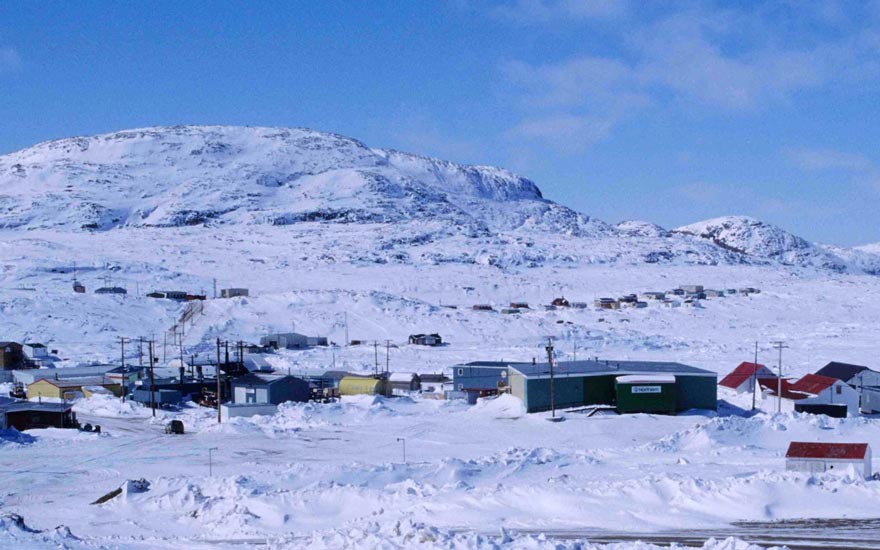
https://canadiannorth.com/wp-content/uploads/2018/03/cape-dorset.jpg
Kinngait, Cape Dorset   Photo: destinationnunavut.ca
 
The details of the crime committed by Laimiki and his brother Archie describe a vile and violent attack against a defenceless woman. Both brothers, one the husband of an abused wife who stood nearby with her children as the attack commenced, and his brother, initially attacked Ovilu Saila. Laimiki began choking the woman while Ovilu attempted to defend herself, until she fell unconscious and her assailant continued choking her, as Archie told his brother to desist. 
 
Because she was still breathing, Laimiki suggested to his brother they could hang the woman and say she had committed suicide, to which once again Archie expressed a need to stop the assault. Ignoring his brother, Laimiki tied a phone charger cord around the woman's neck, attaching a scarf to the cord to make it long enough to hang her from a bolt in a wooden beam. When the cord under pressure snapped, Ovilu regained consciousness while Laimiki continued the assault and Archie called police to report a woman hanging.
 
This event took place in 2021 in Kinngait, a hamlet on Dorset Island. Ovilu was left with significant swelling and bruising to her face, a cord indentation around her neck, and redness and scratches to her neck area, and leaving her with deep emotional trauma. When she escaped the home to report to the nearby RCMP detachment in the hamlet, the cord was still tied tightly around her neck. 
 
At the prison in Iqaluit where Laimiki was incarcerated, a month after his attack on Ovilu, he broke his hand when he punched another inmate. Since that inmate attack, noted the judge, "Laimiki has been stabilized in custody as he has been medicated and kept free from alcohol and illicit drug  use". Since the December 3 sentencing, two years less a day remain of his sentence, allowing him to serve that time out in Nunavut. His brother Archie was sentenced to two years of probation for his role in the attack. 
 
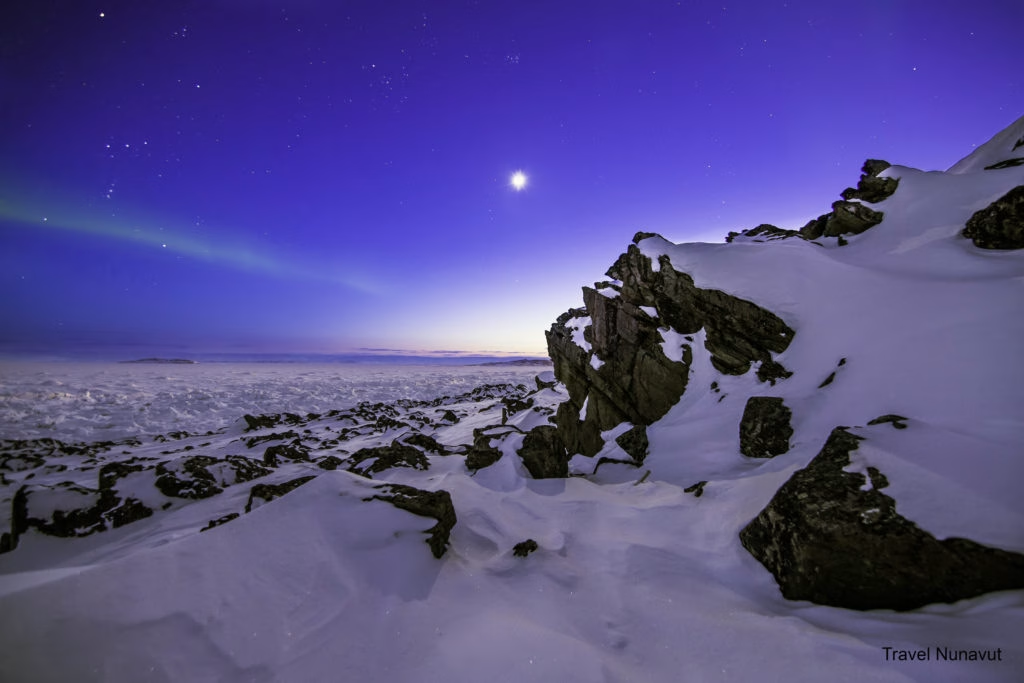
https://travelnunavut.ca/wp-content/uploads/2024/04/Sunset-and-Stars-1024x683-1-jpg.avif
Sunset and Stars, Travel Nunavut
"The imposition of a territorial sentence allows me to put Mr. Toonoo on a lengthy probation order following his release, that requires him to meet with mental health workers, and psychiatrists, and to not drink alcohol or consume illicit drugs."
"This would not be an available option to me if I were to impose a further federal sentence of two years or more."
"He reported feeling more alive in custody [in an Iqaluit jail] and that he has learned to respect others. He is surrounded by other Inuit, and is much closer to home, and has access to programs."
Justice Christian Lyons, Nunavut Court of Justice 
 

Labels: , , , ,

 
()() Follow @rheytah Tweet