Ruminations

Blog dedicated primarily to randomly selected news items; comments reflecting personal perceptions

Tuesday, December 09, 2025

Tempering Canadian Justice

Laimiki's assault on Ovilu was unprovoked, and senseless. In a cowardly display, Laimiki and his brother Archie, two grown men under the influence of alcohol, attacked a sober Ovilu because she stood up for Archie's spouse after Archie became abusive towards her."
"The attack was lengthy and persistent and took place in the presence of Archie's spouse and their four young children."
"This is a significant criminal record [14 convictions between 2017-2921] for a man who was only 23 years old when he went into custody for the attack on Ovilu, and it spans his entire adult life up until that point."
"I further note that in 2023, a year-and-a-half after being incarcerated, he was released on bail, only to be arrested 12 days later on new, unrelated charges and remanded back into custody." 
Justice Christian Lyons, Iqaluit, Nunavut Court of Justice

https://smartcdn.gprod.postmedia.digital/nationalpost/wp-content/uploads/2025/09/1130_na_covid_sentencing_81473852.jpg?quality=90&strip=all&w=564&h=423&type=webp&sig=HUIN71MVdu7MftT5JpcesQ
 
Laimiki Toonoo, an Inuit man, was convicted of the intention of choking a woman to death when she tried to protect his abused sister-in law. The judge, taking into account that conviction based on clear evidence decided to sentence the man to eight years and two months in prison for that attempted murder of Ovilu Saila. Citing Toonoo's Indigenous status, his mental state and that a shorter sentence would enable him to remain in Canada's northernmost territory to serve his time there, Justice Lyons took two years off the 10-12 year sentence he would otherwise have chosen commensurate with the crime. 
 
Sentencing by this judge took into account the man's 'chaotic childhood', of the trauma he experienced when his father died when he was eight years old, and Toonoo spoke of himself as an 'abandoned kid' reliant on times when his mother took him in or he stayed at the homes of friends. "Laimiki is an Indigenous man, and these life experiences are significant Gladue factors that are mitigating on sentence", the judge explained. 
 
The Gladue defense relates to Canada's Indigenous population where judges are expected to take into account criminal perpetrators' life experiences in sentencing. It is meant to address and ameliorate in law the over-representation in Canadian prisons of Indigenous people. Citing underprivileged backgrounds and social discrimination experienced by the Indigenous population, the Gladue defense minimizes sentencing for criminal acts ranging from theft to murder. 
 
Since the attempted murder, Laimiki has been in custody save for the 12 days he was released on bail in 2023, and therefore has credit for over four years in jail, explained Judge Lyons. While the man's defence asked for a 6-year sentence, effectively working out to time served with enhanced credit for pre-sentence custody, the Crown disagreed; "given the aggravating factors, and Laimiki's high risk of reoffending, a penitentiary term going forward is necessary". 
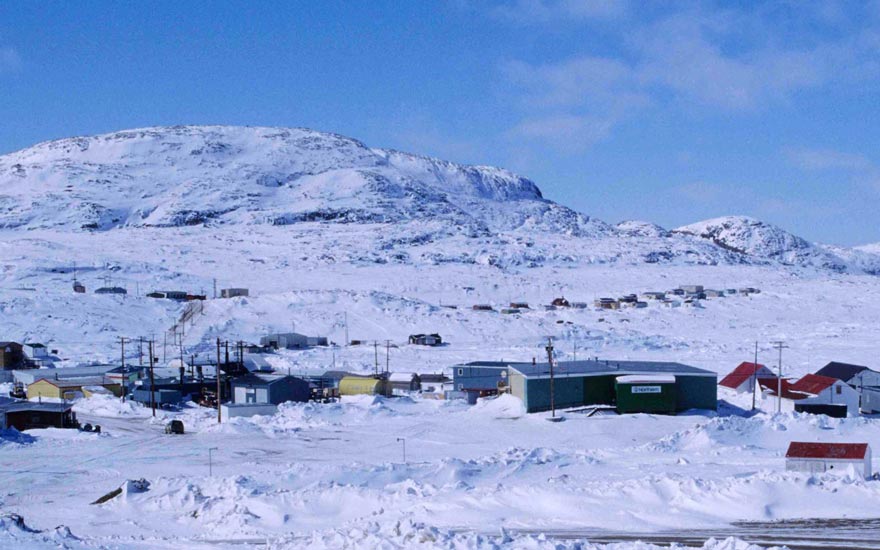
 
https://canadiannorth.com/wp-content/uploads/2018/03/cape-dorset.jpg
Kinngait, Cape Dorset   Photo: destinationnunavut.ca
 
The details of the crime committed by Laimiki and his brother Archie describe a vile and violent attack against a defenceless woman. Both brothers, one the husband of an abused wife who stood nearby with her children as the attack commenced, and his brother, initially attacked Ovilu Saila. Laimiki began choking the woman while Ovilu attempted to defend herself, until she fell unconscious and her assailant continued choking her, as Archie told his brother to desist. 
 
Because she was still breathing, Laimiki suggested to his brother they could hang the woman and say she had committed suicide, to which once again Archie expressed a need to stop the assault. Ignoring his brother, Laimiki tied a phone charger cord around the woman's neck, attaching a scarf to the cord to make it long enough to hang her from a bolt in a wooden beam. When the cord under pressure snapped, Ovilu regained consciousness while Laimiki continued the assault and Archie called police to report a woman hanging.
 
This event took place in 2021 in Kinngait, a hamlet on Dorset Island. Ovilu was left with significant swelling and bruising to her face, a cord indentation around her neck, and redness and scratches to her neck area, and leaving her with deep emotional trauma. When she escaped the home to report to the nearby RCMP detachment in the hamlet, the cord was still tied tightly around her neck. 
 
At the prison in Iqaluit where Laimiki was incarcerated, a month after his attack on Ovilu, he broke his hand when he punched another inmate. Since that inmate attack, noted the judge, "Laimiki has been stabilized in custody as he has been medicated and kept free from alcohol and illicit drug  use". Since the December 3 sentencing, two years less a day remain of his sentence, allowing him to serve that time out in Nunavut. His brother Archie was sentenced to two years of probation for his role in the attack. 
 
https://travelnunavut.ca/wp-content/uploads/2024/04/Sunset-and-Stars-1024x683-1-jpg.avif
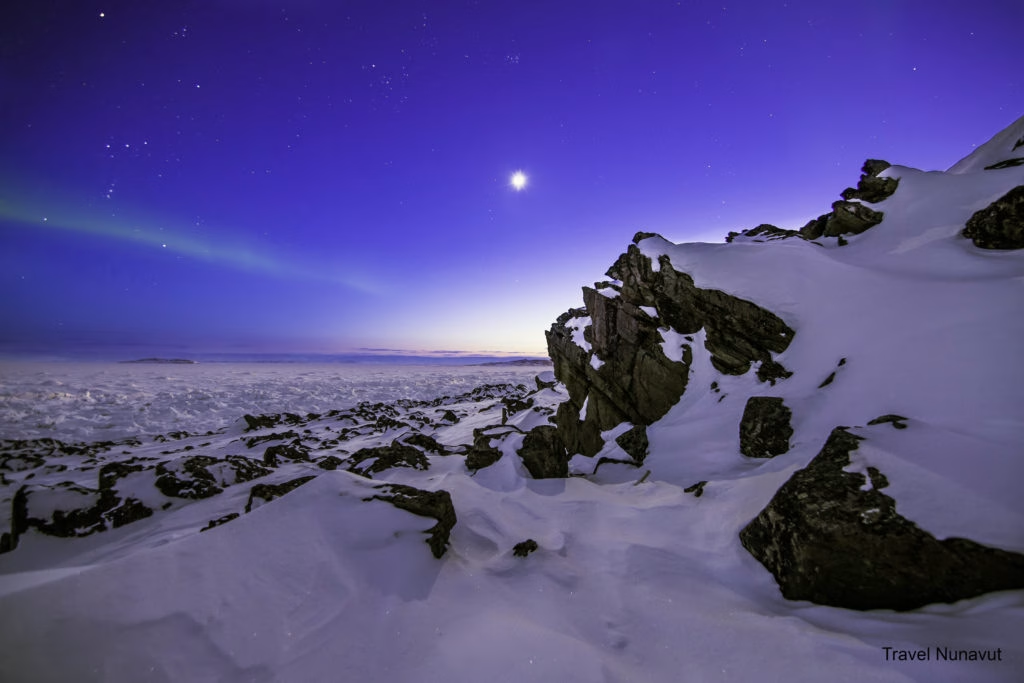
Sunset and Stars, Travel Nunavut
"The imposition of a territorial sentence allows me to put Mr. Toonoo on a lengthy probation order following his release, that requires him to meet with mental health workers, and psychiatrists, and to not drink alcohol or consume illicit drugs."
"This would not be an available option to me if I were to impose a further federal sentence of two years or more."
"He reported feeling more alive in custody [in an Iqaluit jail] and that he has learned to respect others. He is surrounded by other Inuit, and is much closer to home, and has access to programs."
Justice Christian Lyons, Nunavut Court of Justice 
 

Labels: , , , ,

Friday, December 21, 2018

The Franklin Terror and Erebus Northwest Passage Expedition

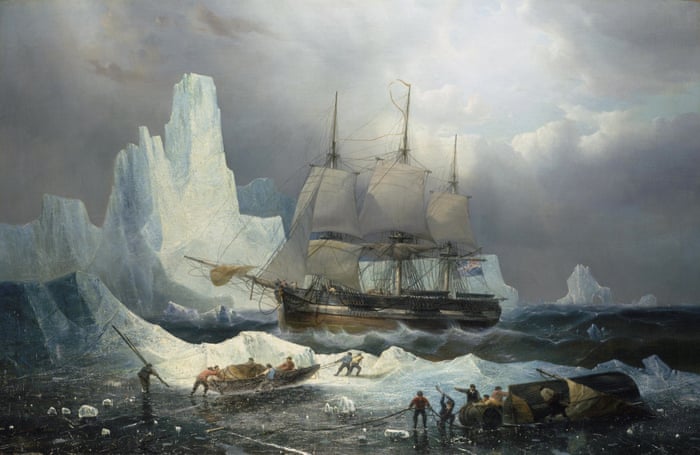
Francois Etienne Musin’s Erebus on Ice (1846) Photograph: National Maritime Museum
"People are superstitious. They feel there is a connection between the deaths and disturbing the wreck sites."
"My late mother told me, even before these wrecks [HMS Terror and Erebus of the 1845 Arctic Franklin expedition] were discovered ... the whole King William Island has non-human people that we cannot see."
"It's a funny feeling when we get on the other side of the island. You sense that somebody's around you, but there's nobody around you."
"It was always like that, even before these shipwrecks were found."
"My mother used to warn me] Don't let them get to you – just do what you have to do."  
Jacob Keanik, president, Nattilik Heritage Centre, Gjoa Haven, King William Island, Nunavut
Louie Kammokak (left) and Jacob Keanik (right) in 2015 at the blessing of the wreck of HMS Erebus. (Parks Canada)

"It is only artifacts that are being taken off wreck sites."
"There are plans in place that if any bodies are found [in and around the wrecked ships' sites on the ocean bottom], they will be left in place."
"We will not bring up or disturb human remains."
Fred Pedersen, Kitikmeot Inuit Association


"This summer, following the tragedies, elders blessed sand from Gjoa Haven and the Terror Guardians brought it to the wreck of HMS Terror, where they sprinkled it over the wreck and performed a blessing."
"Both of these blessings were led by Inuit from Gjoa Haven."
Parks Canada spokesperson Dominique Tessier  
The ship's wheel of HMS Terror. Some in the 1000-member Inuit community link recent deaths with its rediscovery. Parks Canada/Thierry Boyer/The Canadian Press

The search for the fabled Northwest Passage from the Arctic to shorten long sea voyages and connect from the Atlantic to the Pacific consumed the British Royal Navy which sent ship after ship to investigate the presence of the passage -- during times when the Navy wasn't otherwise occupied in fighting various wars -- and to chart the Arctic, to no avail. Finally, a last stab at its location to discover a route through the vast sea-iced Arctic was undertaken by an elderly and unfit Sir John Franklin, his last stab at acquiring notable explorer-status.

Maps showing the route of the Franklin expedition and New York-Hong Kong’s flight trajectory. (Cryopolitics)

His voyage too was destined to end in failure, but it is also known for the tragedy that ensued while he led the expedition when all hands were lost when sea-ice trapped his ships and ultimately the sea claimed them. He died himself of illness before the full tragedy struck, but there were no survivors from the expedition. Ship after ship was dispatched from Britain to search for the missing vessels and every one returned with no hints to solve the mystery of what had occurred to the expedition. It was considered a great disaster with the deaths of 129 crewmen.

Remains were eventually discovered. Along with some grisly evidence that in their desperation to survive cannibalism took place. Through their oral tradition, memory of local Inuit coming across some of the crew in a parlous state was handed down from generation to generation. That memory and its recounting immeasurably helped in the discovery of the wrecks by Canadian divers in 2014 finding Erebus and in 2016 when Terror's preserved underwater presence was discovered.
A 1945 photo of skulls, bleached white by the sun, discovered around King William Island in what is now Nunavut.

Since the wrecks' discovery divers have been carrying off artifacts from the wrecks for historical preservation. Great Britain ceded ownership of the ships and all their artifacts to Canada. The artifacts when fully assembled will be placed on public display. What has disturbed local Inuit is their belief that disturbing the dead will bring their spirits back to life and they will wreak vengeance. Six deaths of natural causes and accidents that occurred in the space of two weeks the past summer led the Inuit community to the conclusion that the wrecks should have been left as they were, undisturbed.

Traditional local Inuit "guardians" performed a formal blessing soon after the Erebus wreck was discovered. Then the realization struck that no blessing had been carried out when the Terror was discovered. Belatedly that blessing was performed and the purpose of it was not only to carry on the traditions respecting history. heritage, and the site of deaths on the island, but in the hope of pacifying the demons the Inuit feel certain occupy the island, and in so doing, putting an end to the "curse" they are convinced has been provoked.

Following the community's tragedies of the six deaths -- two men dead from an all-terrain vehicle accident, another two the result of a boating accident, then the death of a local school staff member who died of a heart attack, and the final death, that of an elder dying of old age -- a traditional ceremony took place where community elders blessed sand taken from Gjoa Haven, to sprinkle it over the wreck of HMS Terror.

The small community of Gjoa Haven is on King William Island in Nunavut. The wreck of HMS Terror was found in an island bay, while HMS Erebus was found further south. (CBC News)


Labels: , , , ,

Wednesday, November 21, 2018

Inuit Knowledge and Climate Change

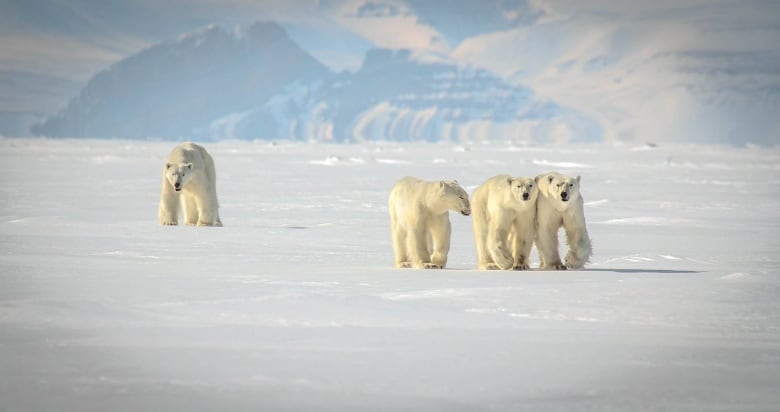
The draft management plan leans heavily on Inuit knowledge, which contradicts polar bear population estimates from Environment Canada. (Niore Iqalukjuak)
"Inuit believe there are now so many bears that public safety has become a major concern."
"Public safety concerns, combined with the effects of polar bears on other species, suggest that in many Nunavut communities, the polar bear may have exceeded the co-existence threshold."
"Although there is growing scientific evidence linking the impacts of climate change to reduced body conditions of bears and projections of population declines, no declines have currently been attributed to climate change."
"[Inuit knowledge] acknowledges that polar bears are exposed to the effects of climate change, but suggests that they are adaptable."
Nunavut government draft management plan 

"That's just plain wrong. That's been documented  in many places now -- not just linked to body condition but reproductive rates and survival."
"They will move into communities seeking food [with a lack of sea ice due to climate change]. There's lots of attractants around Northern communities."
"They [Nunavut] don't ask for input from southern scientists. The less input from the South is where it seems to be moving." 
"If the stated goal is to have fewer polar bears, that may be the tripping point whereby polar bear management in Canada comes under renewed scrutiny." 
Andrew Derocher, polar bear expert, University of Alberta

"[Inuit knowledge] has not always been sufficiently incorporated by decision-makers."
Nunavut Tunngavik Inc., (Inuit land-claim organization)


"This is very frustrating for Inuit to watch ... We do not have resources to touch bases with movie actors, singers and songwriters who often narrate and provide these messages [that climate change is impacting deleteriously on wildlife and particularly Polar bears]."
"We know what we are doing and western science and modelling has become too dominant."
Kitikmeot Regional Wildlife Board
A submission from the Kitikmeot Regional Wildlife Board expresses frustration with how polar bears are used as an icon in the fight against climate change. (Jonathan Hayward/Canadian Press)

This past summer of 2018 saw two Inuit being killed by Polar bears. Among the issues that have led the northern Canadian territory of Nunavut to conclude that the existence of too many Polar bears needlessly endangers the lives of both humans living in the area and other vulnerable animal populations. The report issued by the Nunavut government points out that in their considered opinion, living close to the animals on their shared traditional heritage hunting grounds, if climate change is a reality it has not yet affected the Polar bear population.

That this conclusion flies in the face of the scientific certainty that climate change is altering Polar bear natural environment with dramatic consequences for the bears as a worrying symptom of steady wholesale changes in Earth's atmosphere, is something else altogether. Inuit believe that their lived experience with the land, with its seasons and with its animals in their natural habitat equips them in a far more realistic way to draw conclusions even if they disagree with those reached by biologists studying the bear population.

The territory has proposed a plan set to be examined in public hearings in the territorial headquarters of Iqaluit which states that public safety is being jeopardized and that being the case the situation calls for traditional Inuit knowledge allied with current experience and should drive policies on management of the bear population. Simply put, Inuit knowledge yields population estimates greater than those identified by Western science, encompassing all 13 regional bear populations.

Despite the confidence that Nunavut holds in the Inuit conclusion, scientists claim that there is one only population of bears managing to prosper in contrast to the Inuit number of nine. Four bear populations, according to Environment Canada, are seeing diminished numbers, while the Inuit beg to differ, stating that none are shrinking in numbers. Eleven Inuit groups and hunter's organizations aided Nunavut's conclusions, by their submissions.

The Nunavut management plan has provisions for increased education and programs on bear safety for hunters and communities. It also states that hunting bans would no longer be applied automatically when bear populations appear to be shrinking; that "management objectives could include managing Polar bears for a decrease."

The territory's wildlife management board will take what it hears at the public hearings and include it in a final document, which will go before the Nunavut cabinet for approval. (Niore Iqalukjuak)

Labels: , , , , , ,

Saturday, April 02, 2016

From Fear of Impending Death to Rescue

"I built an igloo [for shelter, carving the blocks of icy snow] with a small knife."
"We were in a kind of blizzard. That's why I got lost. I lost the trail road. I turned in the wrong direction between here and Pang[nirtung, Nunavut]."
"My son and nephew, they got a caribou. That's how we survived -- the meat from the caribou."
"We had one sleeping bag, one mattress. That's all we had. The sleeping bag went for my son. He was the most important to keep warm. Me and my nephew used our parkas to cover ourselves every night. It's hard for me to survive in that kind of weather, cold in the night."
"During the day it was all right, when the sun was up. We would stay outside all the time. We would get up in the morning and go outside right away after drinking tea. We would stay outside and move around so we were not just sitting in the same place. Only when it got dark we'd stay inside our igloo. We'd drink tea and go to bed right away."
"If he [his young son] died before me — if he died before my eyes — which one of us would die first? These thoughts were very heavy on me."
"A wolf started coming around — it was stressing me out at night — we were too afraid to go outside. It was very close. You could hear it howling. It was right on our trail, focused on us."
"We had run out of everything the day we were found. I was jumping happy. Very much. I was crying [when the Twin Otter sighted them and dropped by on its search mission]."
Pauloosie Keyootak, 62, Inuit, Nunavut legislature member
Pauloosie Keeyotak and his son and nephew were only carrying enough food for a short journey when they got lost on Baffin Island. They survived off two caribou, building an igloo and sleeping on the skins.
Pauloosie Keeyotak and his son and nephew were only carrying enough food for a short journey when they got lost on Baffin Island. They survived off two caribou, building an igloo and sleeping on the skins. (Sima Sahar Zerehi/CBC)

It is often said that familiarity breeds contempt. Perhaps more kindly put, it is that it is human nature to regard what we're familiar with as posing no great threat, even if what we are familiar with is a vast tract of frigid isolated, snow-obliterated featureless geology where familiarity with the lay of the land helps, but does not confer infallibility in weather predictions, recognition of direction, and expertly faultless reading of oblique landscape features.

Yet familiarity also all too often results in viewing cautionary measures for survival as excess and unneeded. Perhaps it is only those who have grown up and lived their lives in a geography as starkly inimical to survival as Nunavut in far northern Canada who would shoulder-shrug the possibility that they might conceivably become lost in its vast open white winter landscape where storms descend to lash the environment and confuse the unprepared.

Those who think ahead purposefully to minimize the prospect of being lost and surviving a long delay before a rescue mission might save them, might consider first of all taking along a communication device; satellite phone at the very least. Adequate tools and fuel to enable survival, sufficient food should a prolonged delay occur, and needed protection against the elements, and perhaps one kind of self-protective weapon to stave off threats from beasts whose own survival might depend on obtaining sufficient food.

Pauloosie Keyootak had set out with his 16-year-old son and his 47-year old nephew, Atamie Qiyuqtaq and Peter Kakkik respectively, for a fairly routine run between Iqaluit and Pangnirtung, a journey that generally takes eleven hours' transit in good weather. Because it is such a well-used route, shelter cabins have been erected to aid travellers should poor weather occur. The trio of travellers failed to encounter any of these shelter cabins because they were nowhere near them.

The track that crosses rugged terrain along a twisting coastline, climbing over mountain passes certainly can present as a challenge, but becomes far more of one when inclement weather presents. Intending to head north-east to Pangnirtung, the three travellers rode instead south down the shore of Frobisher Bay, turned around by a weather system that confused the landscape and their sense of direction. Once their error was recognized they realized there was insufficient gas to power them back into the direction they'd come from.

They had no choice other than to seek shelter from the high winds and the minus-30-degree Celsius temperatures. Which was when Pauloosie Keyootak set about using that small knife of his son's to carefully cut ice blocks for a traditional igloo for shelter from the storm and night-time temperature dips. When, after a few days' use, that igloo began deteriorating, it was time to build another. With them was a camp stove, some cooking fuel, tea and sugar. Water was plentiful; they just had to melt the snow surrounding them.


In their prolonged absence, searches were launched with people from both Iqaluit and Pangnirtung scouring the route, which they had inadvertently abandoned, while three aircraft, a government of Nunavut Twin Otter, a Hercules from the Joint Rescue Co-ordination Centre in Halifax, and a military Cormorant helicopter were dispatched to the clear skies that prevailed, as the atmosphere remained cold.

"They were tired and hungry and thirsty when they got off the [rescue] helicopter at about 10:30     p.m.  They walked off under their own steam. They appear to be in good condition. They held their own out there until such a time as the search operation could find them", said government search spokesman Kris Mulaly, who added that travellers would do well to carry a GPS, or emergency locator; some manner of communications device.

Some 15,000 square kilometres of rock and ice had been scoured in that search to find the three lost people intact after eight full days followed without their appearance at their destination. Back in Inuktitut, Keyootak said: "I prayed to be found. I prayed and prayed and I yelled 'Amen!' and then I heard a plane."

Labels: , , , ,

Tuesday, February 02, 2016

"The chief psychological concern is with people withdrawing into themselves. We need to see that people are taking care of themselves."
Chief Petty Officer Second Class Danny Williams, Alert medical official

"Life anywhere is about who you are with, and I had fantastic people with me."
"Christmas was especially fun. People at the station came together as a family. There is a great sense of pride at serving here. Even my children in Ottawa, who are only three and seven, understand this. They told their friends I was away with Santa Claus."
Maj. Walt Michalchuk, aerospace engineer, past Alert commander

"The biggest reality of operating in the north is the weather. The environment is harsh and you can't get away from it."
"[Canadian Forces' presence at the top of the world is] the same as operating in Afghanistan. It is not just the flights. Everything to do with Alert [Nunavut] is expensive and complicated."
Lt.-Col. Cathy Blue, chief of logistic and engineering, CFB Trenton
445_alert_mile_signpost.jpg
Photo: Mental_floss

Expensive and complicated, but a Canadian military presence is seen as a requirement in displaying official sovereignty of that frozen northern geography. In the interests of which 79 Canadians live at the northernmost community on the planet, at CFS Alert, Nunavut, where the sun will be fervently hailed when it returns on February 28 at 10:41 am. The community has been in 24-hour darkness since 12:30 pm on October 14.

The station is manned as a top-secret military installation. Those who have been stationed at Alert have been tasked with listening for and gathering radio signals and intercepts of the electronic variety, emanating from Russia. They perform their tasks within a group of buildings, designed to be well  heated and brightly lit no matter what happens outside in that hostile world where muskox, Arctic fox, polar bears, wolves and giant white hares find their home, equipped by nature to withstand and thrive, regardless of weather severity.

Each one of those buildings at the station is outfitted with everything that is required to sustain human life. Water, emergency rations and sleeping accommodations have been established in each location that makes up the maze of buildings that has become the universe of the "frozen chosen". If a Storm Condition One erupts, lifelines strung between buildings guide people in finding their way safely between each.

445_alertaerial.jpg
Photo: Mental_floss

Should a Storm Condition Two suddenly manifest, with winds exceeding 80 km/h, the wind chill registering below -55C and/or when negative visibility results, all staff are instructed to remain wherever they happen to be within the facility at that point in time, until conditions ease. Environment Canada meteorologists and scientists are stationed there to conduct High Arctic research.

There are no doctors or nurses in residence; reliance for medical services rests with physician assistant Danny Williams, now on his second  tour at Alert, responsible for the physical and psychological well-being of everyone stationed there. Much adjustment is required to accustom the mind and body to months of non-stop darkness; people are known to suffer through a sense of upset of their biological clock.

One video conference call and a single telephone call daily is available to everyone to enable communication with family. A tanning machine is on site so people's bodies can be exposed to Vitamin D as required to sustain health in the absence of the sun. And there are recreational outings in quality time spent in the area where fishing for Arctic char and summer mountain biking and mineral hunts for crystals and pyrite take place.

Contractors for Nasittuq Corp., experienced men in their 50s and 60s, maintain the power equipment that provides the station's water and power, and they mix easily with soldiers whose boot camp experience has been of recent vintage. Supplies are shipped north in the late summer to Thule, Greenland, then ferried to Alert by air each fall and spring.

The remote isolation means that the installation and its residents must be capable of responding to any emergency situations. Of all the concerns of potential emergencies, the possibility of a catastrophic fire is likely the greatest, which is why Alert has its own minuscule fire department. Life-threatening medical emergencies require "Spooling up a bird from Trenton", to have a medevac aircraft arrive in Alert from Ontario, a trip of several days' duration.

Anyone who has ever read the personal account of Dr. Jerri Nielson, in her book Ice Bound: A doctor's incredible battle for survival at the South Pole, will have been familiarized with the beauty and isolation, the challenges and experiences of living in a vast, white hostile environment. As the medical officer of the Amundsen–Scott South Pole Station in Antarctica in 2009, Dr. Nielson learned to cope with adversity, and her detailed descriptions of life in utter darkness within an immense white geography were spell-binding.

Labels: , ,

Monday, September 28, 2015

Suicide Run Amok

"I think the word 'contagion' scares people, because people do start to be worried about young people in their family catching suicide -- or it to be an epidemic in that way -- but suicide doesn't work that way."
"But that we do have evidence of is exposure. Where, if you are a young person and you know someone that has ended their life by suicide, there is an elevated risk that you will, in turn, end your life by suicide."
"The government [of Nunavut] deserves to be shamed for this [not funding anti-suicide strategy]."
"Child sexual abuse is another huge problem. But nobody is willing to talk about it."
Dr. Allison Crawford, psychiatrist, Nunavut

"I had never been exposed to suicide before that [1977 suicide of his two older brothers]. To me, that seemed to be the beginning, and it was usually young men committing suicide."
"Look, we have the highest suicide rate in Canada. Our leadership should be shouting about it from the hilltops."
"Let's make suicide prevention our number one issue."
Jack Anawak, 64, Repulse Bay, Nunavut

"The rates of major psychiatric illness found in this study were higher than in the general Canadian population. The rates of major depressive disorder among Inuit in our study were higher than the national average."
"There's no one single cause for suicide. What the study showed is that suicide is the outcome of a process that starts much earlier."
"Protective factors are also very, very important and they're also part of the picture. Our study is not able to give precise answers because the data we collected could not identify the causes. But there's definitely a pattern there."
"I don't think we could implement a suicide prevention strategy without tackling the mental health problems and substance abuse and childhood adversity."
"This is a process that starts at some point early in life, which in a way tells us there's different windows of opportunity to intervene on suicide prevention."
Eduardo Chachamovich, lead author, report on Nunavut suicide study, 2013
The sun over Iqaluit at noon in December. An inquest into Nunavut's devastating suicide rate has laid bare the territory's lack of capacity to cope, but to trigger federal help, a territory has to ask, writes Laura Eggertson.
The sun over Iqaluit at noon in December.  (Jeanette Gevikoglu) 

The territory of Nunavut's coroner, Padma Suramala, decided to initiate an inquiry/inquest into the prevalence of suicides among aboriginal Canadians, and specifically the high rate of the expression of hopelessness leading to suicide in the far North of Canada. Statistics show that since 1999, 479 Inuit have taken their own lives. The methods used range from hanging themselves, shooting themselves, overdosing, and stabbing themselves.

That number of Inuit children attempting suicide aged 11 to 14, represents 50 times the national average, out of a population of roughly 28,000. A young boy of 15 and older is almost ten times likelier to commit suicide than someone living in the south. In 2013, 45 suicides took place, a dozen of whom were women while 33 were men mostly in the age range of fifteen to twenty-five. The oldest committing suicide that year was 72 years of age, the youngest 13.

The soul-searing emotions of depression, substance abuse, emotions of utter hopelessness and despair can occur to vulnerable people anywhere, and they do, and they are responsible for taking lives everywhere, but the sheer volume of suicides taking place in Canada's far north speak of a far more fundamental issue that drains people's will to live. Researchers speak of the connection of child sexual abuse with later suicidal impulses among the young. Offenders in Nunavut are charged with sexual violations against children and youth at 10 times the national rate.

Research conducted not only in Canada's north but also among troubled youth in Alaska and Greenland reflect similarities. What all three places where Inuit live have in common is the transition in lifestyle, when beginning in the 1950s a social experiment took place with grave consequences seen today. In the 1950s, 60s and 70s, the federal government decided to change a society of hunters and gatherers into an urbane collective; people living in isolated settlements, becoming accustomed to shopping for their food.

As an example, Jack Anawak speaks of the rapid social transformation responsible for confusing traditional roles. He himself grew up with the tradition of hunting and trapping. He already had a family of his own by age 17, with all the responsibilities that normally accompany such a familial status. The food his wife and children relied upon was food he was responsible for providing, and not through a trip to the local grocery; he set traplines and he hunted.

When the social transformation took place, he witnessed the deterioration in purpose that struck his brothers, leading them to suicide in 1977. Additionally in that same generation many young Inuit were sent to residential schools, taken from their families and exposed to a modern lifestyle for the purpose of wrenching them away from a traditional Inuit lifestyle, where they lost memory of their heritage, their language, and were taught instead practical European lifestyle skills.

It isn't that the high suicide rate is being ignored. Years earlier the government of Nunavut, along with the Nunavut land claims organization, a suicide prevention group and the RCMP studied how they might best develop a suicide prevention strategy. In 2010 the completed strategy was announced, consisting of better access to improved mental health services along with suicide-intervention training for responders, including police, teachers, community leaders and parents.

Government departments were supposed to mobilize to "transform the way suicide prevention happens in Nunavut". But adequate funds were never set aside specifically for that purpose, and the plan was never fully implemented. If financial assistance was required to augment whatever the Nunavut government was prepared to allocate, there is a mechanism whereby, if requested, the federal government is prepared to help.

Canada has an Emergency Management Act, and an Emergency Management Framework. Ottawa is prepared to respond to any request for assistance, and to do so swiftly. The federal government has committed to a federal role in suicide prevention or any other emergencies that must be addressed. Requiring "resources beyond their capacity to cope in an emergency or disaster" is a recognized responsibility of the federal government. But it will act only if and when aid is requested of it.

So while the inquest mapped out the situation prevailing, in the process revealing the territory's inability to cope with the epidemic of suicide, federal assistance has not to date been requested, though it obviously should be. There is an atmosphere of malaise that is acknowledged but not much appears to be done to combat it, and that is the issue of sexual violence aimed primarily at women and children, although men too suffer such abuse in the territory.

Some 52 percent of women and 22 percent of men reported sexual abuse in childhood of the most severe nature; according to data from the Inuit Health Survey of 2007-2008. Cases of children presenting with sexually transmitted infections, along with other evidence of sexual abuse are identified by psychiatric nurses and psychiatrists, according to Dr. Allison Crawford, director of the Northern Psychiatric Outreach Program for the Centre for Addiction and Mental Health, Toronto.

"The degree of childhood abuse is something that I think is talked about even less than suicide. It's still present and prevalent in communities", she testified at the inquest. "We have a new case that's come to the attention of mental health at least monthly, and sometimes more frequently. Social services do become involved automatically, and often the RCMP will become involved. But often the outcome — there are very few consequences."

Labels: , , , ,

Wednesday, January 28, 2015

Hunger Gnaws in Nunavut

"There's always been incidents of starvation."
"Economically Inuit were now [with collapse of fox fur trade] in really serious trouble."
"Inuit were moved around [government Northern relocation]. The attitude was, 'Well, you know, what the hell? They can survive anyplace there's snow and caribou and foxes to be had."
"By the mid-1950s, the government sort of saw what they thought was the handwriting on the wall. That Inuit were going to have to be modernized instead of kept in their traditional lifestyle."
Frank Tester, Arctic historian, University of British Columbia

"Bringing something as private as poverty and the fact that you're hungry and you're food insecure, that's very different."
"I think people are saying, 'This is not a hidden problem. We can't pretend it doesn't exist anymore'."
"There is a disparity -- not only ethnically, but also the social classes."
former Iqaluit mayor Madeleine Redfern

"When farms do not make enough produce, farmers are given a lot of subsidies across Canada. But in Canada's Arctic, prices are rising in terms of bullets, ammunition and Ski-Doos, the equipment. So it's more costly to hunt."
Cathy Towtongie, president, Nunavut Tunngavik

  • The shelves at the Northern Store in Arctic Bay, Nunavut, in February 2011 show very high prices for things like processed cheese spread, infant formula and instant noodles. Nunavut MLA Ron Elliott, who represents Arctic Bay, says the prices of these items have risen in Nunavut's High Arctic communities since the federal government started changing its northern food subsidy program last year. (Submitted by Ron Elliott)
  • The shelves at the Northern Store in Arctic Bay, Nunavut, in February 2011 show very high prices for things like processed cheese spread, infant formula and instant noodles. Nunavut MLA Ron Elliott, who represents Arctic Bay, says the prices of these items have risen in Nunavut's High Arctic communities since the federal government started changing its northern food subsidy program last year. (Submitted by Ron Elliott)
The Government of Canada initiated a $60-million food subsidy called Nutrition North to alleviate the burden of food cost for Northern residents of Canada. The high cost of shipping food to the North meant that prices for ordinary food fundamentals were sky-high, unaffordable but for the very necessities, and even those beyond the reach of many of Nunavut's residents. The Northern AirStage Program of the 1960s also known as FoodMail was initiated to try to amend the problem.

That program of subsidizing shipping costs changed in 2011 to Nutrition North, where food retailers were granted a subsidy based on the weight of eligible foods shipped to eligible communities. Canada's auditor general, after recent careful scrutiny, reached the conclusion that the Aboriginal Affairs Department erred in not selecting eligible communities based on need. That designation was instead granted communities based on year-round road access and whether they had made use of the old FoodMail program.
mi-iqaluit-protest-june-9-2012
Leesee Papatsie, the organizer of the Feeding my Family protests, speaks to the crowd Saturday in Iqaluit. (Ronald Elliott)

Those communities that had seldom used the program are under the new one eligible only for a partial subsidy; those that hadn't used it at all, have no eligibility under the new program. "Consequently, community eligibility is based on past usage instead of current need", the audit found; a poor measure of need. Auditor General Michael Ferguson was informed by Aboriginal Affairs that to expand the full subsidy to some 50 fly-in northern communities would increase the cost by $7-million annually.

That niggling problem was solved somewhat with the federal government increasing its spending on the program by another $11.3-million over the following year. Under the current program, merchants are not required to report profit margins, a yardstick of measurement that would reveal whether the full subsidy is being passed on to the consumer. As of April 1, another change has been made where retailers will have to give that information on their current and long-term profit margins.

Organizer of the June 14 food protest, Leesee Papatsie, holds a sign at a protest held across the street from Northmart in Iqaluit. About a dozen people came out to raise awareness of overpriced and expired food in the North. (PHOTO BY DAVID MURPHY)

The emergence of a Facebook group calling itself "Feeding My Family" revealed to a wider audience the shocking price tags that people in Nunavut face when they trek into their local grocery store; the sheer unaffordability of eating decently. That revelation gave way to street protests. And it became clear that those going hungry are Inuit. Their record of unemployment is a hint of the problem they face. Nunavut's labour force represents 14,000 individuals, 9,500 of them Inuit.

A deeper look at the statistics indicate that 8,500 working-age Inuit are not included in the labour force, in comparison to 600 non-Inuit who are unemployed. During the last three months of 2014, the unemployment rate for Inuit in Nunavut stood at 17.9 percent. The territory's statistics bureau indicates that the number of people in Nunavut on social assistance during 2013 was 14,578. To place that in perspective, the total Nunavut population in 2011 was 31,906.

Inuit traditional foods called "country food" is represented by caribou, seal and whale meat. The Nunavut Food Security Coalition, comprised of representatives from the territorial government, Inuit organizations, industry and social groups, recommended that Inuit return to their tradition of hunting for their food. An enterprising former Edmontonian began a hunter's and trapper's market in Iqaluit, inviting hunters to sell their meat through his town market.

"The goal was really to change the conversation about how we deal with country food here in Iqaluit", said Will Hyndman who operates the market. But then, most of the hunters face another struggle; to be able to afford the price of ammunition and fuel, to be enabled to sell their the product of their hunting forays. In Iqalui,t people cope as well with the help of the soup kitchen operated by the city, or they turn to the food bank open two days a month.

The Niqinik Nuatsivik Food Bank, begun in 2001, served about 30 families at its outset. Currently, according to its chairman of the board, Stephen Wallick, 120 families benefit from food and supplies handed out every two weeks. The city's soup kitchen makes enough for 200 servings daily, sometimes finding it's not enough to serve everyone who needs the help.

There are suggestions that the federal government consider operating a program providing funding to hunters to enable them to buy equipment to hunt, fish and trap. Nunavut Tunngavik Inc.'s president feels the government should offer to offset the cost of hunting equipment in the North as a fair and just reflection of the way it aids in the subsidy of farmers in the rest of Canada.

How expensive are groceries in Nunavut? Shop for yourself by checking the items in the grocery cart to find out. 
CART
Celery (1kg)
Onions (1kg)
Canned tomatoes (796ml)
Baked beans (398ml)
White sugar (2kg)
Carrots (1kg)
Dried macaroni (500g)
French fries (1kg)
Bananas (1kg)
Mushrooms (1kg)
Canned soup (284ml)
Ketchup (1L)
Soda crackers (450g)
Oranges (1kg)
Potatoes (4.54kg)
Sliced bacon (500g)
Processed cheese (250g)
Apples (1kg)
Instant coffee (200g)
Bread (675g)
Hot dogs (450g)
Baby food (128ml)
Peanut butter (500g)
Butter (454g)
Canned salmon (213g)
Pork chops (1kg)
2% milk (1L)
Stewing beef (1kg)
Ground beef (1kg)
Eggs
(1 doz.)
Interactive background image.
Arctic Bay
$230.74
Interactive background image.
Arviat
$207.13
Interactive background image.
Baker Lake
$208.36
Interactive background image.
Gjoa Haven
$234.03
Interactive background image.
Igloolik
$214.63
Interactive background image.
Iqaluit
$203.19
Interactive background image.
Kugluktuk
$216.47
Interactive background image.
Pangnirtung
$242.20
Interactive background image.
Pond Inlet
$231.60
Interactive background image.
Rankin Inlet
$205.80
Interactive background image.
Canada
$113.99
Interactive background image.
Nunavut
$219.80
Interactive by Murat Yukselir/The Globe and Mail; Reporting by Josh Kerr for The Globe and Mail; Research by Josh Kerr for The Globe and Mail and Rick Cash/The Globe and Mail Sources: Food Price Survey Report August 2013/Nunavut Bureau of Statistics, Firstair.ca, Interviews with First Air and Arctic Co-op

Labels: , ,

 
()() Follow @rheytah Tweet