Ruminations

Blog dedicated primarily to randomly selected news items; comments reflecting personal perceptions

Thursday, July 31, 2025

Slandering Israel Comes Easy

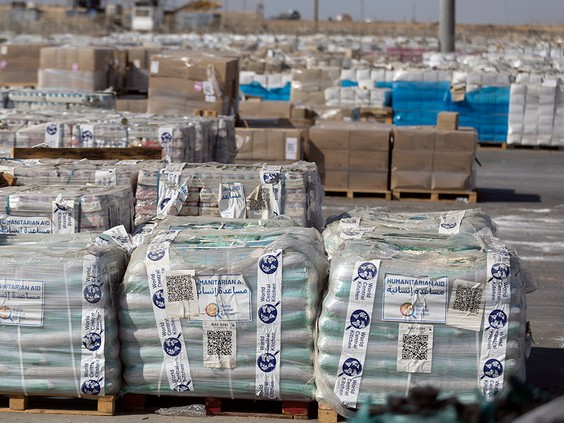
"Hundreds of aid trucks have entered Gaza with Israel's approval, but the supplies are standing idle, undelivered."
"The reason? The UN refuses to distribute the aid. Hamas and the UN prevents the aid to reach the civilians in Gaza."
"The world deserves to know the truth."
"But BBC, CNN, Daily Express and The New York Times spread a misleading story using a picture of a sick, disabled child to promote a narrative of mass starvation in Gaza -- playing into the hands of Hamas's propaganda war."
"Without proper disclosure. Without medical context. Without journalistic ethics." 
Israeli Foreign Ministry  
https://smartcdn.gprod.postmedia.digital/nationalpost/wp-content/uploads/2025/07/Gaza-aid.jpg?quality=90&strip=all&w=564&h=423&type=webp&sig=4Czgm7mJiWexzX6dHtvUlg
Humanitarian aid packages waiting to be picked up on the Palestinian side of the Kerem Shalom border crossing on July 24, 2025. “The UN refuses to distribute the aid,” Israel’s Foreign Ministry says. Photo by  by Amir Levy/Getty Images

 British investigative journalist David Collier wrote an explanation that one of the children used as a shaming condemnation against Israel purportedly failing to ensure that sufficient humanitarian aid reaches the Palestinian civilian population in Gaza, a child with the surname al-Matouq "suffers from cerebral palsy, has hypoxemia, and was born with a serious genetic disorder", data extracted from a 2025 medical file.
 
A BBC documentary titled "Gaza: How to Survive a Warzone" was discovered by Mr. Collier to have been narrated by the son of a senior Hamas official. That revelation led to embarrassment on the part of the British public broadcaster and a retraction of the documentary. The photograph of the emaciated child saw sensational use by international media testifying to the devastation brought by Israel's war in Gaza and the resulting aid crisis there.
 
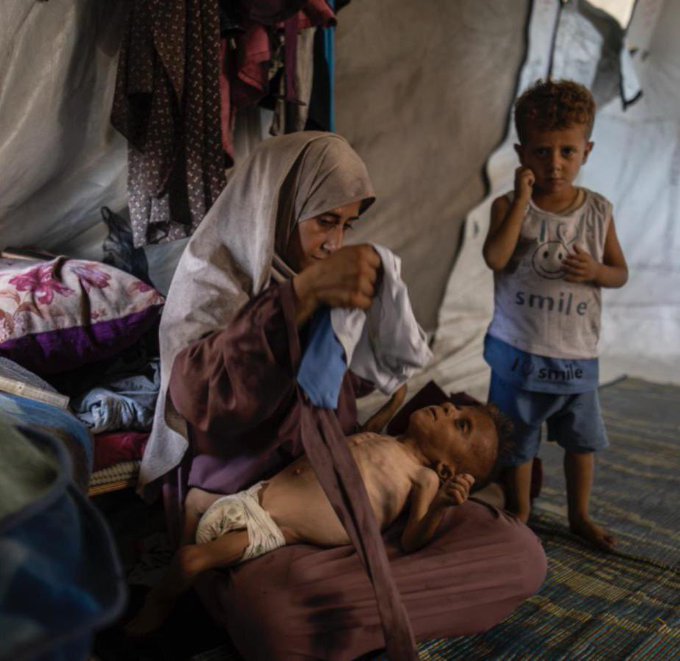
Last Thursday, the New York Times digital story was entitled "Gazans are dying of starvation", over the image of the skeletal child. "A horrifying image encapsulating the maelstrom of human misery gripping Gaza" was how the Daily Express captioned the heart-rending photograph of Muhammad Zakariya Ayyoub Al-Matouq.  
 
https://pbs.twimg.com/media/GxBAUldXYAAPeHp?format=jpg&name=small
Unlike his brother standing by his side, Muhammad Zakariya Ayyoub al-Matouq suffers from cerebral palsy.
 
And then there is the image of five-year-old Osama al-Rakab, yet another child whose photograph saw use as an illustration of the threat of child malnourishment resulting from Israel's 'blockade' of humanitarian aid entering the Strip. Al Jazeera  featured the little boy's skeletal torso throughout a number of Italian media outlets to extract maximum disgust from news readers, holding Israel responsible for the pitiable condition of the child.
 
Israel's Coordinator of Government Activities in the Territories (COGAT), divulged that al-Rakab "suffers from a serious genetic illness unrelated to the war", and with his mother and brother had been transported out of Gaza to an airport in Israel destined for treatment abroad. "This is what a modern blood libel looks like: A sick child. A hijacked photo. A lie that spreads faster than truth", wrote the Israeli Foreign Ministry on its X account.
 
A third infant, 11-month-old Sila Barbakh was featured on Israel's official X account, who "isn't starving", but rather "suffers from a pre-existing chronic gastrointestinal illness, unrelated to the war". In none of these pathetic photos of children suffering from dread diseases were they captioned 'for illustrative purposes only', unrelated to Hamas's wildly successful public relations' campaign aimed at the gullible West.  
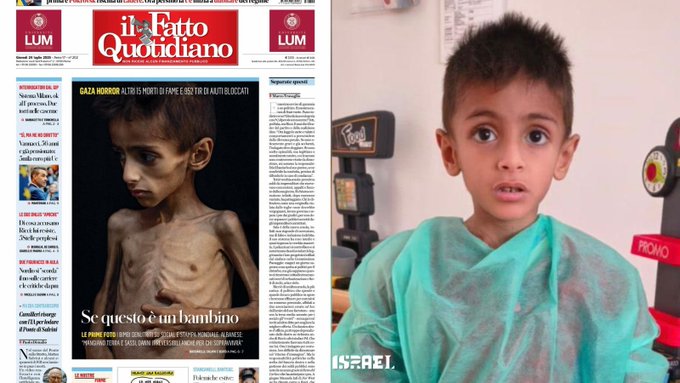
 
https://pbs.twimg.com/media/Gw8DQUVWgAA5rgG?format=jpg&name=small
His name is Osama al-Raqab. He has cystic fibrosis, a serious genetic illness. He’s been in Italy receiving treatment since June 12. Israel enabled his medical transfer from Gaza.
 
The Times of London found it useful when featuring tiny Barbakh's suffering from starvation to expand y explaining that the baby weighted a mere "seven-and-a-half pounds". According to data published by the Hamas-operated Gaza Health Ministry, 56 Palestinians had died in July of starvation. About half the total number reputed to have died of starvation since the war began on October 7, 2023 when Palestinian terrorists led by Hamas stormed into southern Israel to launch its campaign of rape, pillage, torture and mass slaughter. 
 
Humanitarian supplies handover was shifted away from the United Nations in May, with an U.S.-backed, Israeli-supported group, the Gaza Humanitarian Foundation (GHF), taking the initiative. Civilians in Gaza had then to travel into areas controlled by Israeli military to receive the supplies. That solved the issues involved in Hamas armed operatives taking control of aid-delivery trucks to have the goods they carried stuffed into Hamas warehouses, and withheld from the civilian population. Some of that aid ended up at open-air marketplaces selling for exorbitant prices. Most of it was sidelined for the exclusive use of Hamas operatives.
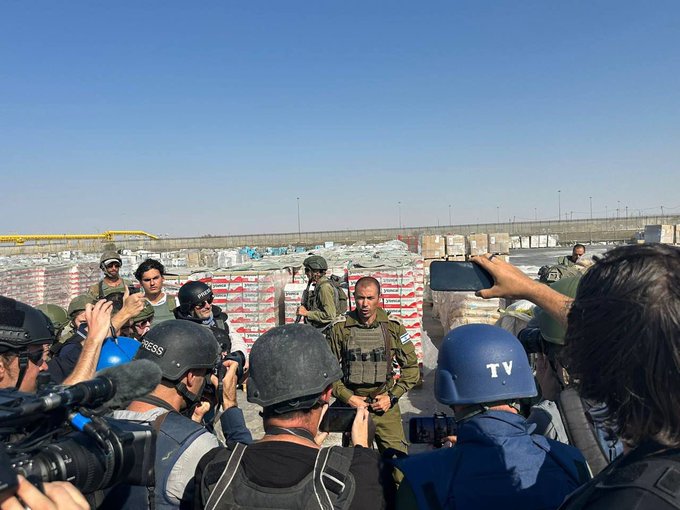
 
https://pbs.twimg.com/media/GwocvTiWcAAxpSi?format=jpg&name=small
Today, the IDF invited dozens of international journalists to the Kerem Shalom crossing inside Gaza, to see for themselves. Israeli Foreign Ministry
 
Reportedly, GHF distributed close to 90 million meals to civilians while facing significant opposition from Hamas, which had attacked and murdered a dozen Palestinian employees of GHF who had been working with the group to help distribute the aid. According to the Gaza Humanitarian Foundation, Hamas offered bounties to any of their followers who kill American contractors or any Palestinians assisting their endeavours in providing aid.
 
The United Nations has accused Israel of reportedly killing hundreds of Gazans seeking aid in what is  essentially an active war zone. Many more have died resulting from stampedes in the chaos of crowds of Palestinians vying among one another to receive aid. A week ago Israel announced its intention to once again commit to airdrops of humanitarian aid, alongside Arab nations, including Jordan and the United Arab Emirates. Airdrops had been suspended in view of properties being destroyed and civilians being hit by the airdrops.
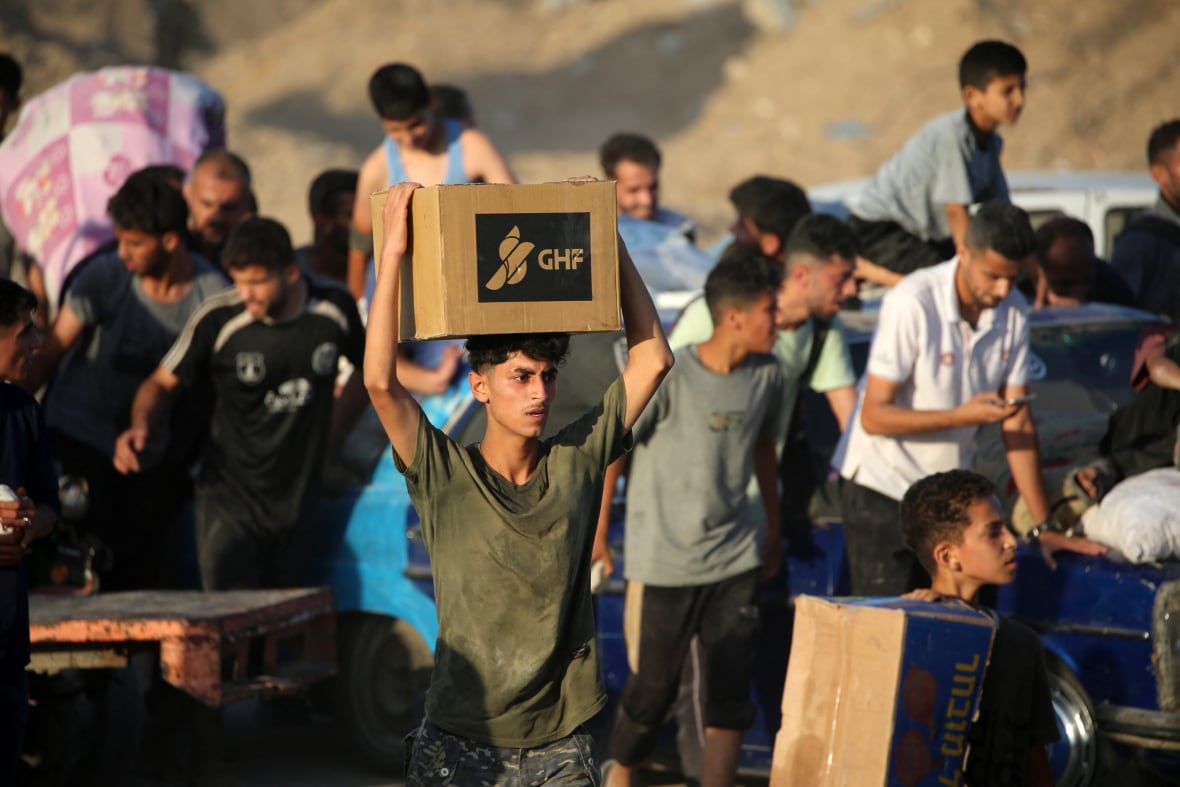
 
https://i.cbc.ca/1.7586106.1752659961!/fileImage/httpImage/image.jpg_gen/derivatives/original_1180/2221370091.jpg?im=Resize%3D1180
People carrying aid parcels from the privately run Gaza Humanitarian Foundation (GHF) walk along the Salah al-Din road near the Nuseirat refugee camp in the central Gaza Strip (Eyad Baba/AFP/Getty Images)
 
The New York Times claimed that the "Israeli military never found proof that the Palestinian militant group had systematically stolen aid from the United Nations, the biggest supplier of emergency assistance to Gaza for most of the war". In response, the Israel Defense Forces released a video showing Hamas militants with rifles "looting an aid truck", while civilians gathered about.  These same images were shared by Ahmed Fouad Alkhatib, a Palestinian-American academic, senior fellow with the Atlantic Council. Showing Hamas operatives stealing aid during an earlier ceasefire.
 
"Right here before your eyes! But according to NGOs & media, there's still 'no evidence' of theft", charged Alkhatib who has been a vocal critic of Hamas and the Netanyahu government, both. Alkhatib shared a video in another post, showing Hamas police officers who stripped, arrested and beat Palestinians who had gone out to the GHF aid distribution site, and paid the consequences, with the aid they had gathered taken from them, for their pains. 
 
https://npr.brightspotcdn.com/dims3/default/strip/false/crop/4843x3229+0+0/resize/1200/quality/85/format/webp/?url=http%3A%2F%2Fnpr-brightspot.s3.amazonaws.com%2F66%2F44%2F2a824efd4425bb1fcf8a7c7a3c7f%2Fkerem-shalom-edit-21.jpg

 A truck loaded with food on the Israeli side of the border crossing heads back into Gaza. However, the food is sitting for days or weeks before it can be distributed. The U.N. and aid groups say they face a host of problems that include a shortage of trucks and fuel due to the war, as well as criminal gangs that are looting the supplies.    Maya Levin for NPR

Labels: , , , , , ,

Saturday, January 18, 2025

Bringing Them Home

"[Israel will not rest until] all of its war goals are completed, [which includes the return of every single hostage being held in Gaza. The US promised Israel would have the weaponry it needed to return to fighting if necessary]."
"[Israel would do so] in new ways and with very great power."
"In the agreement approved just now, we will get back another 33 of our brothers and sisters — most of them alive."
"President Trump joined the mission to free the hostages from the moment he was elected. He spoke to me on Wednesday evening and welcomed the agreement. [Trump] rightly stressed that the first stage of the accord is a temporary ceasefire. That’s what he said, ‘A temporary ceasefire’."
Israeli Prime Minister Benjamin Netanyahu
https://static-cdn.toi-media.com/www/uploads/2025/01/F250118AVS104-e1737229381685-640x400.jpg
Israelis attend a rally calling for the release of captives held hostage by Hamas terrorists in Gaza, at “Hostages Square” in Tel Aviv, January 18, 2025. (Avshalom Sassoni/Flash90)

Women, children, the elderly and the ill are classified as 'humanitarian' for purposes of initial selection in an exchange of hostages for prisoners and it is they, 33 in total number from among whom the initial choices for freedom will be made. They were all randomly, opportunistically snatched from the presumed security of their homes in farming communities, from a feel-good music festival, from bus stops and family outings to be taken to Gaza as human prizes to be held as chess pieces while also being raped, tortured, starved and humiliated in a twisted psychosis of Jew-hate.
 
Three hostages are to be returned Sunday, the initial day of the ceasefire; four on the seventh day, three more for each week in the following four weeks and the final 14 to be released in the sixth week of the agreement. The ceasefire to go into effect at 12:15 p.m. Sunday, the first three hostages, women all, to be freed around 4:00 p.m. Their names were to have been revealed Saturday afternoon by Hamas, but Saturday afternoon arrived and departed and no such revelation was received, causing great unease in Israel by anxious hostage families. But this is typical of Hamas; extracting as much psychological pain as possible from its victims.

Ninety-four of the hostages kidnapped during the October 7, 2023 invasion of thousands of Palestinian terrorists of the Palestinian Islamic and Popular Front for the Liberation of Palestine groups, led by Hamas, remain in Gaza. One third of the total is presumed to be no longer living. Two mentally unstable Israelis who years before had wandered into the Gaza Strip are also being held. The bodies of two murdered Israel Defense Forces soldiers from an earlier period are also being held for ransom and are to be included in the total released over a period of time in exchange for acceding to Hamas demands.

Israel is to release a thousand Palestinians from incarceration in Israeli prisons. It is also to withdraw its forces from populated areas of the Gaza Strip, among whom, needless to say, Hamas terrorists are prone to placing themselves, treating the civilians as human shields. A list of 95 Palestinian prisoners meant to be released on the first day was published by the Israeli Justice ministry.  Among those to be released are 25 male prisoners under age 21 and 70 women; the youngest among them 16 years of age. Accused of crimes such as incitement, vandalism, supporting terror, terror activities, attempted murder or throwing stones or Molotov cocktails.

Among the most well-known prisoners on the list is Khalida Jarrar, a leading member of the Popular Front for the Liberation of Palestine. Among those to be released are murderers of Israelis. A byproduct of securing the release of the Israeli hostages, a steep price to pay, yet one Israeli authorities have countenanced for the urgent purpose of bringing their hostages back home, alive, if at all possible; dead, to be buried with honour, if that is the case. 

Hamas has stated it will not release the remaining captives unless a lasting ceasefire and a full Israeli withdrawal is achieved. Israel has vowed and reiterates that vow repeatedly that it will continue fighting until the Hamas terrorist group is completely dismantled, to ensure that the Hamas pledge to conduct future October 7 atrocities without end will never come to fruition. Israel's intention is to maintain open-ended security control over Gaza. For it has no other choice.
 
https://static-cdn.toi-media.com/www/uploads/2025/01/AP25018539964340-640x400.jpg
A woman and a little girl look at a mural showing female Israeli soldiers taken hostage during the October 7, 2023 Hamas-led attack on Israel in Tel Aviv, Israel, January 18, 2025 (AP Photo/Oded Balilty)

Labels: , , , ,

Wednesday, January 08, 2025

Fallout to Shipping from the Israel/Gaza Conflict

  • U.S. Intelligence Reveals China-Houthi Network: American intelligence sources reportedly revealed that the Iran-backed Houthi rebels in Yemen are using Chinese-made weapons for their assaults on shipping in the Red Sea in exchange for refraining from attacks upon Chinese vessels. After Houthi leaders visited China in 2023 and 2024 to establish a supply chain, the group was able to obtain “advanced components and guidance equipment” for their missiles, according to Israel’s i24 News. The report claimed that the Houthis plan to utilize the Chinese weapons components to produce hundreds of cruise missiles capable of striking Persian Gulf states. Defense of Democracies
"As international scrutiny intensifies on the Houthis due to more than a year of attacks on Israel and commercial shipping, the group is likely seeking to diversify its supply chain to sustain its expanding missile capabilities. Additionally, the Houthis have learned crucial lessons from more than a decade of valuable battlefield experience. They have learned that exerting pressure on key states in the region, especially the affluent Persian Gulf states with their vast oil and gas reserves, may create significant global economic instability."
 — Joe Truzman, Senior Research Analyst and Editor at FDD’s Long War Journal
 
"China’s assistance to the Houthis is yet another signal that Beijing is actively contributing to global chaos and instability. From Chinese firms allegedly providing drones to Russia for its war in Ukraine to now providing support to a proxy group conducting strikes against Israel and the United States, China is cementing its status as an arsenal for autocracies."
 — Jack Burnham, Research Analyst
https://static01.nyt.com/images/2024/01/10/multimedia/10israel-hamas-houthi-explainer-fbzl/10israel-hamas-houthi-explainer-fbzl-jumbo.jpg?quality=75&auto=webp
Newly recruited Houthi fighters marching past an image of their leader, Abdul-Malik al-Houthi, in December.   Credit...Yahya Arhab/EPA, via Shutterstock
"The U.S. mission to deter and degrade the Houthis is not working. In the last week of 2024, the militant group launched a new wave of missile and drone attacks on Israel and shipping lanes in the Red Sea which led to strikes by the United States on military targets on the coast of Yemen. All told, in December alone, the Houthis fired on several U.S. Navy and merchant ships, and conducted ten drone and missile attacks on Israel. Israel and the United States retaliated five times in total, knocking out port and energy infrastructure and Houthi military positions, but the Houthis continue to fire back. In the process, friendly fire brought down a U.S. FA-18 fighter jet, thankfully sparing its crew. This cost-benefit ratio is not sustainable. Houthi operations and ambitions have not been seriously eroded, but U.S. military readiness and reputation have. Washington needs a new strategy, one that is focused on the sources of the Houthis’ growing power and not simply on its symptoms on display in the Red Sea."
Financial Policy
"It's a bit like the autobahn", commented German container ship captain Tobias Kammann wryly, of the number of ships sailing around the southern tip of Africa, where not so long ago there were scant numbers of vessels travelling that way. That was prior to 2024, before the Yemen-based Iran-proxy Houthis began their mission of destroying the Red Sea as a navigable waterway for marine  traffic. The Houthis, considered by many countries (including much of Yemen itself) to be a terrorist group, is pulling its weight on behalf, they claim, of the 'Palestinian' cause.
https://microsites-live-backend.cfr.org/cdn/ff/ToCt22N7-Cy1AGk2flrwxg2ZkotzqabV9QMDI0WWEHI/1728411859/public/2024-10/Houthis_01.jpg
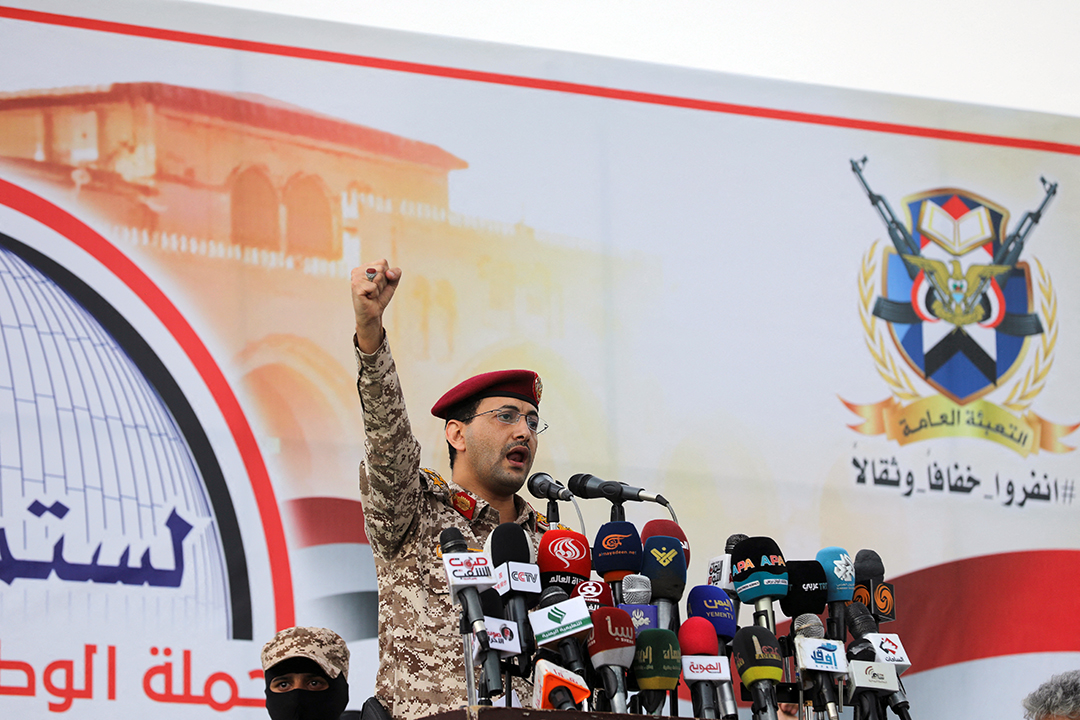
Houthi military spokesman, announcing the targeting of three U.S. destroyers in the Red Sea to show support for the Palestinians in the Gaza Strip, and Hezbollah in Lebanon, in Saana, Yemen on September 27, 2024
 
Originally the Houthi leadership claimed it was acting in support of 'Palestine', where Gaza has been invaded by the Israeli military, in response to Gaza-based terrorist groups led by Hamas when thousands of Palestinian terrorists along with ordinary Palestinian citizens surged across the border into Israel to attack farming communities located close to the border between Gaza and Israel. Most of the looting was likely carried out by the civilians, leaving the bloody carnage of rape, mutilation and slaughter to the terrorists who later carried 250 Israelis -- from infants to the elderly -- back to Gaza, as hostages.

And while it may be perfectly true that the Houthi targets are primarily linked to Israeli shipping, few vessels have been safe from the pillaging of the Houthi pirates. Global shipping companies normally sail through the Red Sea and the Suez Canal to complete a voyage from Asia to Europe and back. Until roughly a year ago, when Houthi insurgents from Yemen began targeting vessels in the Red Sea with drones and missiles. 
 
Defense of Democracies
 
Shipping companies were forced to divert their cargo around the Cape of Good Hope at the southern tip of Africa. This represented a route 3,500 nautical miles and ten days longer than the normally efficient Red Sea/Suez Canal route commonly used. In response, Western-led naval fleets were tasked to quell the attacks. The zeal with which the Houthis -- from one of the poorest countries of the world -- took to their task in opposing all shipping through the Red Sea remained undiminished.

As the attacks continued and commercial vessels continue to avoid passage through the Red Sea, Middle East analysts have expectations that the Houthis would continue their commitment to maintain their attacks, regardless of their mentor the Islamic Republic of Iran seeing its influence diminish, following the near military collapse of Hezbollah in Lebanon and the collapse by insurgents of the Assad regime in Syria.

An average of 136 container ships travelled around the Cape of Good Hope weekly throughout 2024. In comparison, prior to the Houthi attacks, only 40 ships had used that route. The Suez Canal had handled ten percent of world trade, along with over a fifth of global container shipments. Diverting around Africa has effectively increased a requirement for vessels leading to greater numbers being deployed to maintain regular service over the longer route, and with that, shipping rates have surged.

Over a period of twelve months, the cost of shipping a container from Asia to Northern Europe rose by 270 percent. According to Stephen Cotton, general secretary of the International Transport Workers' Federation, there is concern for ship crews carrying bulk cargo like coal, iron ore and fertilizer when operators of the carriers fail to inform their crews of the routes they are scheduled to travel; they may end up going through the Red Sea.

"This sense of anxiety and not knowing if you're a target is an issue", he observed. Large container ships can pay up to $1 million to pass through the Suez Canal. Egypt has been deprived of revenue, reflecting a 70 percent fall in passage through the Suez Canal -- which has not helped Egypt's severely constrained budget. Moreover, it has been calculated that the Red Sea crisis is responsible for the industry pumping out an additional 35.7 million metric tons of carbon dioxide in those 12 months.

Should all shipping companies continue to shun the Suez Canal, the industry would likely arrive at new ways to make the route around Africa more efficient. One remedy, suggested Salvatore Mercogliano, maritime historian and associate professor at Campbell University in North Carolina, would be to build larger container ships. "Shipping will always find a solution", he commented. Meanwhile costs of shipping escalate, and prices of commodities to consumers soar.

https://microsites-live-backend.cfr.org/cdn/ff/IdY6oQb1EdwBvo2bBkqGpqEV81tBWK4RfK0zV1rBDeY/1650906135/public/2022-04/03_Yemen.jpg
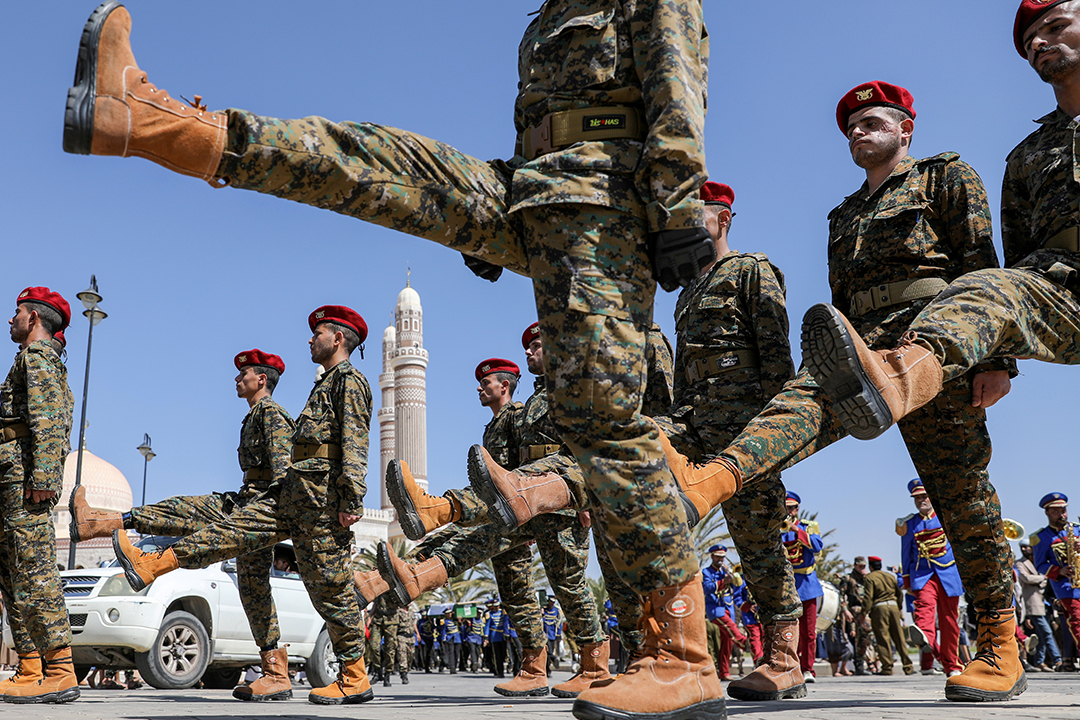
Houthi soldiers march during a funeral procession for Houthi fighters killed during conflict with Yemen government forces, in Saana, Yemen   Center for Preventive Action


Labels: , , , ,

 
()() Follow @rheytah Tweet