Ruminations

Blog dedicated primarily to randomly selected news items; comments reflecting personal perceptions

Thursday, July 31, 2025

Slandering Israel Comes Easy

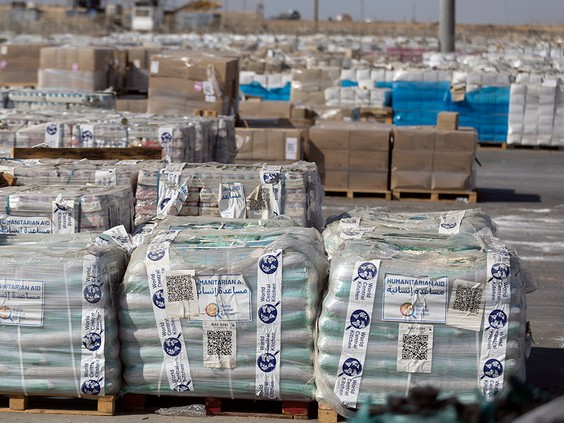
"Hundreds of aid trucks have entered Gaza with Israel's approval, but the supplies are standing idle, undelivered."
"The reason? The UN refuses to distribute the aid. Hamas and the UN prevents the aid to reach the civilians in Gaza."
"The world deserves to know the truth."
"But BBC, CNN, Daily Express and The New York Times spread a misleading story using a picture of a sick, disabled child to promote a narrative of mass starvation in Gaza -- playing into the hands of Hamas's propaganda war."
"Without proper disclosure. Without medical context. Without journalistic ethics." 
Israeli Foreign Ministry  
https://smartcdn.gprod.postmedia.digital/nationalpost/wp-content/uploads/2025/07/Gaza-aid.jpg?quality=90&strip=all&w=564&h=423&type=webp&sig=4Czgm7mJiWexzX6dHtvUlg
Humanitarian aid packages waiting to be picked up on the Palestinian side of the Kerem Shalom border crossing on July 24, 2025. “The UN refuses to distribute the aid,” Israel’s Foreign Ministry says. Photo by  by Amir Levy/Getty Images

 British investigative journalist David Collier wrote an explanation that one of the children used as a shaming condemnation against Israel purportedly failing to ensure that sufficient humanitarian aid reaches the Palestinian civilian population in Gaza, a child with the surname al-Matouq "suffers from cerebral palsy, has hypoxemia, and was born with a serious genetic disorder", data extracted from a 2025 medical file.
 
A BBC documentary titled "Gaza: How to Survive a Warzone" was discovered by Mr. Collier to have been narrated by the son of a senior Hamas official. That revelation led to embarrassment on the part of the British public broadcaster and a retraction of the documentary. The photograph of the emaciated child saw sensational use by international media testifying to the devastation brought by Israel's war in Gaza and the resulting aid crisis there.
 
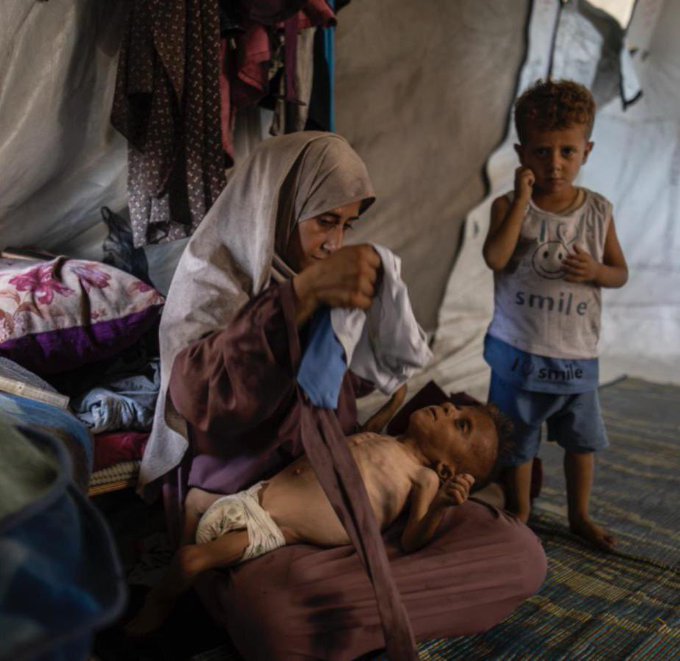
Last Thursday, the New York Times digital story was entitled "Gazans are dying of starvation", over the image of the skeletal child. "A horrifying image encapsulating the maelstrom of human misery gripping Gaza" was how the Daily Express captioned the heart-rending photograph of Muhammad Zakariya Ayyoub Al-Matouq.  
 
https://pbs.twimg.com/media/GxBAUldXYAAPeHp?format=jpg&name=small
Unlike his brother standing by his side, Muhammad Zakariya Ayyoub al-Matouq suffers from cerebral palsy.
 
And then there is the image of five-year-old Osama al-Rakab, yet another child whose photograph saw use as an illustration of the threat of child malnourishment resulting from Israel's 'blockade' of humanitarian aid entering the Strip. Al Jazeera  featured the little boy's skeletal torso throughout a number of Italian media outlets to extract maximum disgust from news readers, holding Israel responsible for the pitiable condition of the child.
 
Israel's Coordinator of Government Activities in the Territories (COGAT), divulged that al-Rakab "suffers from a serious genetic illness unrelated to the war", and with his mother and brother had been transported out of Gaza to an airport in Israel destined for treatment abroad. "This is what a modern blood libel looks like: A sick child. A hijacked photo. A lie that spreads faster than truth", wrote the Israeli Foreign Ministry on its X account.
 
A third infant, 11-month-old Sila Barbakh was featured on Israel's official X account, who "isn't starving", but rather "suffers from a pre-existing chronic gastrointestinal illness, unrelated to the war". In none of these pathetic photos of children suffering from dread diseases were they captioned 'for illustrative purposes only', unrelated to Hamas's wildly successful public relations' campaign aimed at the gullible West.  
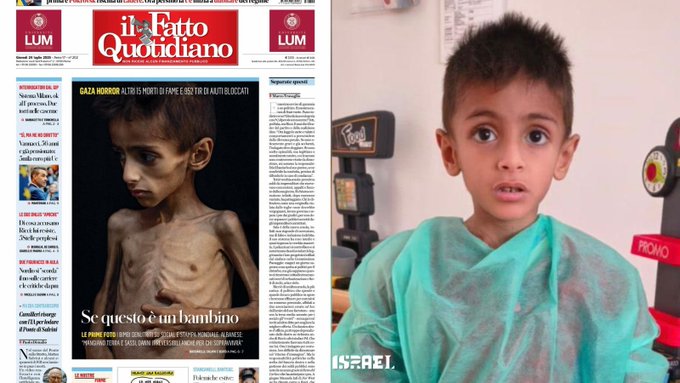
 
https://pbs.twimg.com/media/Gw8DQUVWgAA5rgG?format=jpg&name=small
His name is Osama al-Raqab. He has cystic fibrosis, a serious genetic illness. He’s been in Italy receiving treatment since June 12. Israel enabled his medical transfer from Gaza.
 
The Times of London found it useful when featuring tiny Barbakh's suffering from starvation to expand y explaining that the baby weighted a mere "seven-and-a-half pounds". According to data published by the Hamas-operated Gaza Health Ministry, 56 Palestinians had died in July of starvation. About half the total number reputed to have died of starvation since the war began on October 7, 2023 when Palestinian terrorists led by Hamas stormed into southern Israel to launch its campaign of rape, pillage, torture and mass slaughter. 
 
Humanitarian supplies handover was shifted away from the United Nations in May, with an U.S.-backed, Israeli-supported group, the Gaza Humanitarian Foundation (GHF), taking the initiative. Civilians in Gaza had then to travel into areas controlled by Israeli military to receive the supplies. That solved the issues involved in Hamas armed operatives taking control of aid-delivery trucks to have the goods they carried stuffed into Hamas warehouses, and withheld from the civilian population. Some of that aid ended up at open-air marketplaces selling for exorbitant prices. Most of it was sidelined for the exclusive use of Hamas operatives.
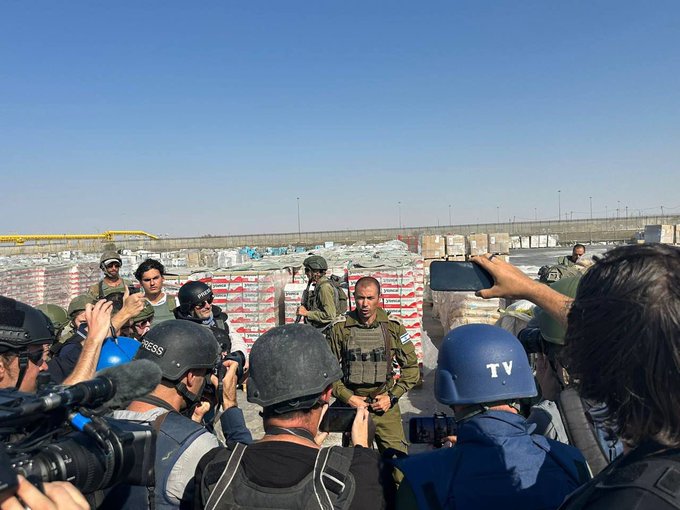
 
https://pbs.twimg.com/media/GwocvTiWcAAxpSi?format=jpg&name=small
Today, the IDF invited dozens of international journalists to the Kerem Shalom crossing inside Gaza, to see for themselves. Israeli Foreign Ministry
 
Reportedly, GHF distributed close to 90 million meals to civilians while facing significant opposition from Hamas, which had attacked and murdered a dozen Palestinian employees of GHF who had been working with the group to help distribute the aid. According to the Gaza Humanitarian Foundation, Hamas offered bounties to any of their followers who kill American contractors or any Palestinians assisting their endeavours in providing aid.
 
The United Nations has accused Israel of reportedly killing hundreds of Gazans seeking aid in what is  essentially an active war zone. Many more have died resulting from stampedes in the chaos of crowds of Palestinians vying among one another to receive aid. A week ago Israel announced its intention to once again commit to airdrops of humanitarian aid, alongside Arab nations, including Jordan and the United Arab Emirates. Airdrops had been suspended in view of properties being destroyed and civilians being hit by the airdrops.
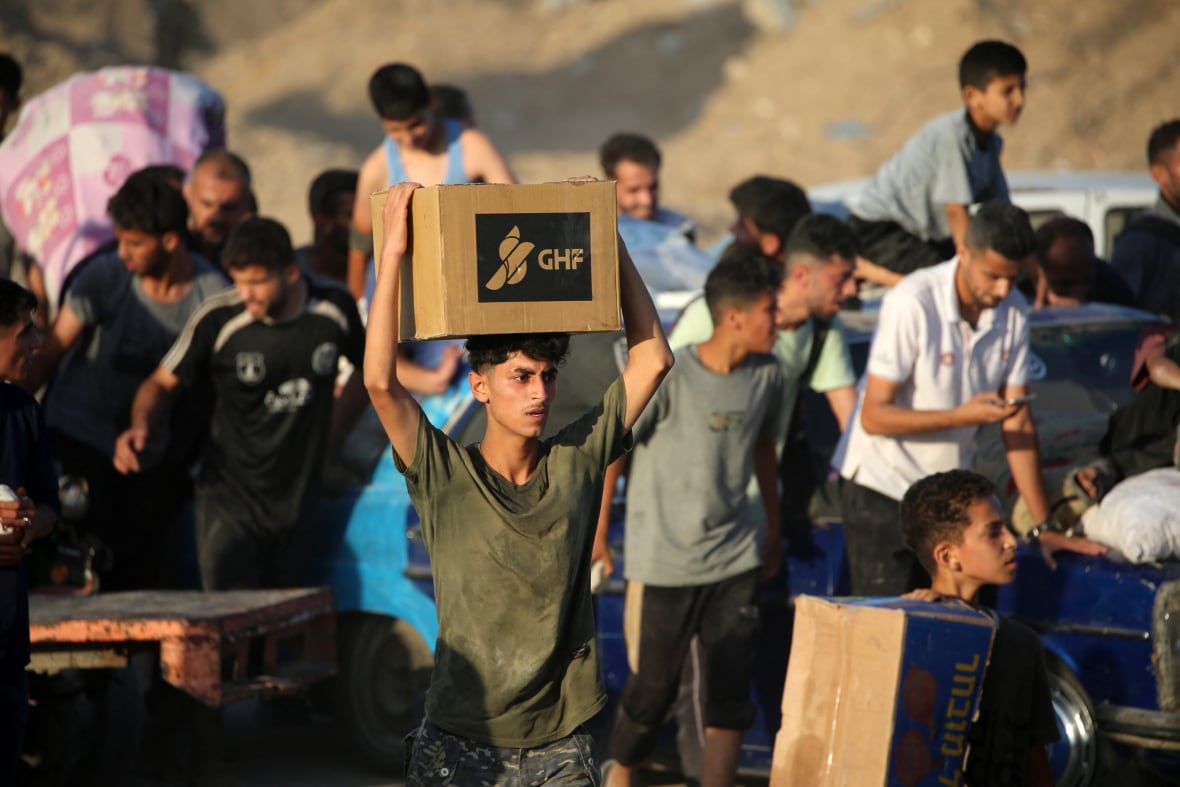
 
https://i.cbc.ca/1.7586106.1752659961!/fileImage/httpImage/image.jpg_gen/derivatives/original_1180/2221370091.jpg?im=Resize%3D1180
People carrying aid parcels from the privately run Gaza Humanitarian Foundation (GHF) walk along the Salah al-Din road near the Nuseirat refugee camp in the central Gaza Strip (Eyad Baba/AFP/Getty Images)
 
The New York Times claimed that the "Israeli military never found proof that the Palestinian militant group had systematically stolen aid from the United Nations, the biggest supplier of emergency assistance to Gaza for most of the war". In response, the Israel Defense Forces released a video showing Hamas militants with rifles "looting an aid truck", while civilians gathered about.  These same images were shared by Ahmed Fouad Alkhatib, a Palestinian-American academic, senior fellow with the Atlantic Council. Showing Hamas operatives stealing aid during an earlier ceasefire.
 
"Right here before your eyes! But according to NGOs & media, there's still 'no evidence' of theft", charged Alkhatib who has been a vocal critic of Hamas and the Netanyahu government, both. Alkhatib shared a video in another post, showing Hamas police officers who stripped, arrested and beat Palestinians who had gone out to the GHF aid distribution site, and paid the consequences, with the aid they had gathered taken from them, for their pains. 
 
https://npr.brightspotcdn.com/dims3/default/strip/false/crop/4843x3229+0+0/resize/1200/quality/85/format/webp/?url=http%3A%2F%2Fnpr-brightspot.s3.amazonaws.com%2F66%2F44%2F2a824efd4425bb1fcf8a7c7a3c7f%2Fkerem-shalom-edit-21.jpg

 A truck loaded with food on the Israeli side of the border crossing heads back into Gaza. However, the food is sitting for days or weeks before it can be distributed. The U.N. and aid groups say they face a host of problems that include a shortage of trucks and fuel due to the war, as well as criminal gangs that are looting the supplies.    Maya Levin for NPR

Labels: , , , , , ,

Monday, April 28, 2025

Famine in Sudan: Where Is The Organization of Islamic Cooperation?!

"I think we're in dire straits here in Sudan."
"Severe acute malnutrition happens over time. It's where kids don't get enough nutrients…They're unable to fight infections like normal."
"They're unable to utilize nutrition like normal…And the majority of children who have severe acute malnutrition end up getting an infection and dying from it." 
"There was no food [his grandmother, Neamat Abubaker, told us]. At times nothing at all, not even water."
Dr. Mohammed Fadlalla, Al-Buluk Children's Hospital, Omdurman
 
"It was ground-breaking [ a channel for direct funding]."
"The only time that USAID had ever done this was with the White Helmets [humanitarian group] in Syria." 
"[Most of the kitchens had closed. Some are trying to get food on credit from local fishermen and farmers, but very soon] we expect to see a lot of people starving."
"I think we can shore up [the emergency kitchens]. But the reality is that [private donations] are going to have to do even more now, because even if humanitarian assistance resumes, it's never going to be what it was."
"These volunteers were challenging us to work differently, and we were responding. [They are] exhausted, traumatized and underfunded [and] we were scaling up to help them".
Andrea Tracy, a former USAID official, now with Mutual Aid Sudan Coalition fund
https://assets2.cbsnewsstatic.com/hub/i/r/2025/02/06/65a698d1-941a-4da3-87d3-c1c733a4e322/thumbnail/620x384/beb18733956ab9125e8f3fe78d98de67/sudan-famine-dr-fadlala.jpg?v=8e9dede207b29c97b32974c53e32aabc
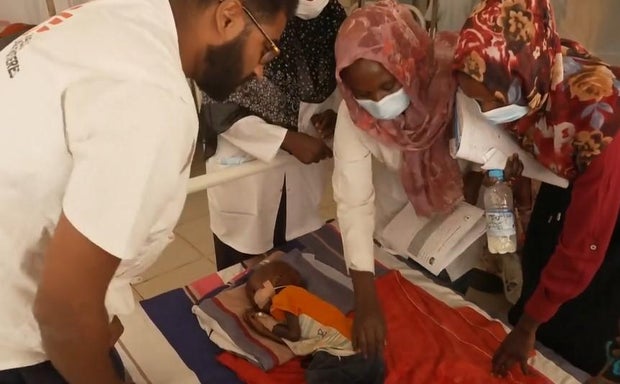
Dr. Mohammad Fadlala (left) a Cincinnati native volunteering in war-torn Sudan with the Doctors Without Borders charity, is seen treating a severely malnourished child at the Al-Buluk Children's Hospital in Omdurman, in late January 2025.   CBS News

 President Trump's decision to slash the funding available through USAID, has stark consequences in many areas of the world. None more than in countries of majority Muslim rule, where constant outbreaks of conflict impact the populations. In Sudan, the conflict is Muslim versus Muslim; the Sudanese military fighting a revolt by its former partner, once known as the horse-mounted Janjaweed Arab militias that aided the former government of Sudan in its conflict with the pastoral people of Darfur. That was a war spurred by herders using the land for pasturage, and farmers farming the land.
 
The former Janjaweed has now become the Rapid Support Forces, comprised of Islamist fundamentalists often described and for good reason, as terrorist brigades. The civil war that ensued with the Sudanese military and the Rapid Support Forces challenging one another for supremacy is a brutal, no-holds-barred conflict, and once again the people of Darfur are faced with potential genocide. Now, in Sudan, 25 million people have been internally displaced. Over half of the population now faces acute hunger.
 
In its third year, the war is considered by the United Nations to be the world's worst humanitarian crisis and aid groups agree as famine spreads throughout the land. In Darfur alone, 400,000 people were made homeless, hundreds killed as the paramilitary terrorists raid camps for displaced people. The U.S. provided $830 million last year in emergency aid to help 4.4 million Sudanese; more aid than any other nation has provided. Since the dismantling of the U.S. Agency for International Development, Khartoum's devastation was completed.
 
https://ichef.bbci.co.uk/news/1024/cpsprodpb/6c9b/live/1dc67c40-f299-11ef-a3b6-f159204ba42b.jpg.webp
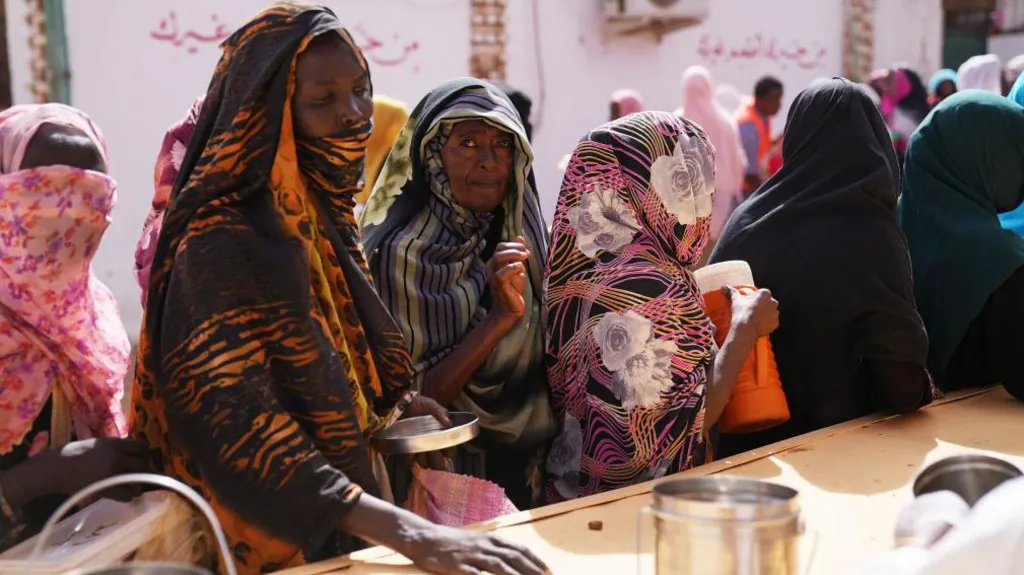
The community kitchens, like this one photographed in December, have provided a vital lifeline for many  Getty Images
 
Over 300 soup kitchens operated by Emergency Response Rooms, a network of volunteer aid workers closed. Leaving 600,000 Sudanese living in famine conditions, another eight million "on the cliff edge". According to the Trump administration, lifesaving aid is exempt from cuts. A State Department spokesperson relayed the information that four million people in Sudan, and 3.8 million refugees in neighbouring countries are given aid by the U.S. 

The question begs to be asked. Yes, the situation is horrible, dreadful, mind-numbing conditions for any population. Yet these conditions are increasingly common in many Muslim-majority countries where incapable and uncaring administrations exploit their vulnerable citizens, and focus on conflict, not civilized governance. Why is it in very particular the obligation of the West and most particularly, the United States to ensure that humanitarian aid flows to these desperate people whose governments ignore their needs and in fact, place them in these life-threatening situations?
 
Where in heaven's name is the Organization of Islamic Cooperation? A compendium of Muslim countries formed to support one another through their common Islamic roots. Surely they could organize missions, including military forces to intervene when their member-nations impose such conditions on their populations? The national collective wealth of the group alone is staggering, and why is some of that wealth not used to give humanitarian assistance to those of their member states badly in need of it? Why is it the West, democratic nations of the world, that these miserable countries at war depend on, and not their religious cohorts? 

https://api.time.com/wp-content/uploads/2025/02/trump-usaid-sudan-emergency-response-rooms.jpg?quality=85&w=1920
Tigrayan refugees collect food rations from USAID at Hamdeyat Transition Center near the Sudan-Ethiopia border in Eastern Sudan on Mar. 24, 2021. After Sudan was plunged into its own intramural war, the U.S. Agency for International Development supplied food to the grassroots self-help effort known as Emergency Response Rooms. In January, President Donald Trump ordered the aid stopped. Nariman El-Mofty—AP


Labels: , , , , , , ,

Thursday, December 21, 2023

Surrender or Die

"We will continue the war until the end. It will continue until Hamas is destroyed, until victory."
"Whoever thinks we will stop is detached from reality."
"[Every member of Hamas is] marked for death."
"Surrender or die."
Israeli Prime Minister Benjamin Netanyahu
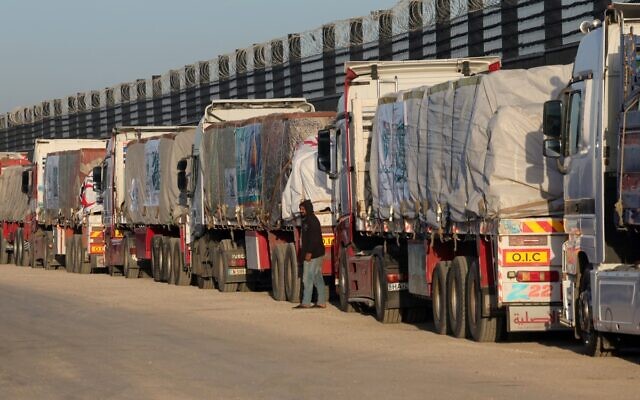
Trucks with humanitarian aid wait to enter the Palestinian side of Rafah on the Egyptian border with the Gaza Strip on December 11, 2023. (Giuseppe Cacace/AFP)

Skilled at perpetually extracting compassion from the world community, portraying itself as the champion of Palestinian human rights, Hamas has never hesitated to sacrifice the lives of Palestinians for the greater cause of destroying Israel and accomplishing the mass murder of Jews, for their charter sets out just that very goal it is determined to bring to fruition. And while Hamas trains Palestinian children in Gaza to become the next generation of dedicated shaheeds fully incorporated into holy jihad as their purpose in life for the glory inherent in killing Jews, it portrays itself abroad as both liberator and victim.
 
Palestinians generally have taken great pains to persuade the outside world that they are victims of Israeli aggression, that Jews have committed the greatest of sins in 'occupying' land consecrated to Islam by reinstating their ancient ancestral lands into 20th Century Israel for all future generations of Jews to find haven from a hostile world. Jews have rediscovered anew just how hostile the world is to their presence after an all-too-brief post-Holocaust interregnum from discrimination and persecution. 
 
Palestinian public relations campaigns have convinced the gullible West that Palestinians are invested in the concept of a state of their own alongside that of Israel, that perpetual slogan of a 'two-state' solution to the current state of simmering conflict. But it's really a one-state 'solution' that they hold dear, the prospect of which they shield from the West, but pursue by indoctrinating their young to consider Israel an interloper, illegally and immorally sitting on Palestinian geography, and it is the duty of all Palestinians to 'resist the occupation'.
 
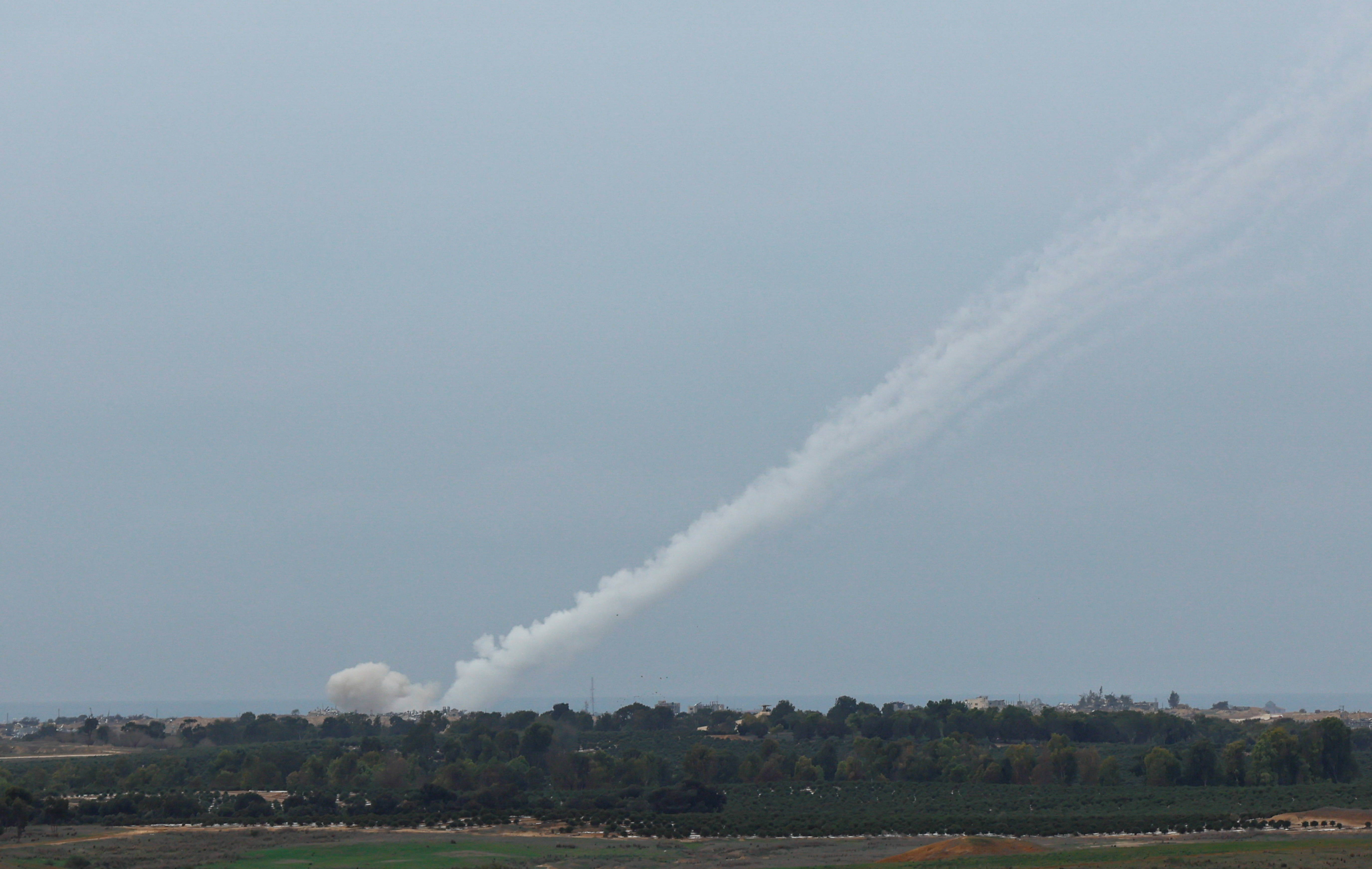
Smoke trails are seen as a salvo of rockets are launched from the Gaza Strip into Israel, as seen from southern Israel
Smoke trails are seen as a salvo of rockets are launched from the Gaza Strip into Israel, as seen from southern Israel, December 21, 2023. REUTERS/Clodagh Kilcoyne

Funding terrorist attacks is a great inducement in support of appealing to Palestinians' sense of nationalism and victimhood. Fatah's campaign is more subtle but it is one of total reclamation of the land and destruction of Israel; Hamas is more upfront about its ambitions, hiding from no outside source its lethal intentions against Israel and Jews living in their ancestral homeland. The savagery of the October 7 incursion into Israel with its planned sadistic rapes, mutilations and mass murder was Hamas showing the world what it is dedicated to: pure terrorism.
 
And show the world it did, in evidence they produced themselves through videos proudly demonstrating their capacity to inflict pain and suffering on the innocent, from babies to the elderly and infirm, from girls and women being repeatedly raped, tortured, mutilated and finally murdered; even dead bodies of old men, of African farm workers, of women are desecrated, driven through the streets of Gaza City, eliciting great whoops of joy at the bodies of dead Israelis, whipping up enthusiasm for striking at the corpses. Incredibly, even the airing of these monstrous atrocities failed to convince the world that Israel's loss is worth mourning.
 
Yet now that Israel is responding, even while Hamas and Palestinian Islamic Jihad continue bombarding Israel with rockets, the world condemns Israel for the deaths of Palestinians. While Israel warns civilians to remove themselves from harm's way, Hamas orders its civilian population to remain in place, and will even shoot to kill those who waver and intend to move to safety. Western media hang on every statistic that the Hamas Health Ministry publishes of Palestinian death numbers attributed to Israeli bombing in Gaza. Wildly inflated numbers to elicit greater sympathy cannot be validated.
 
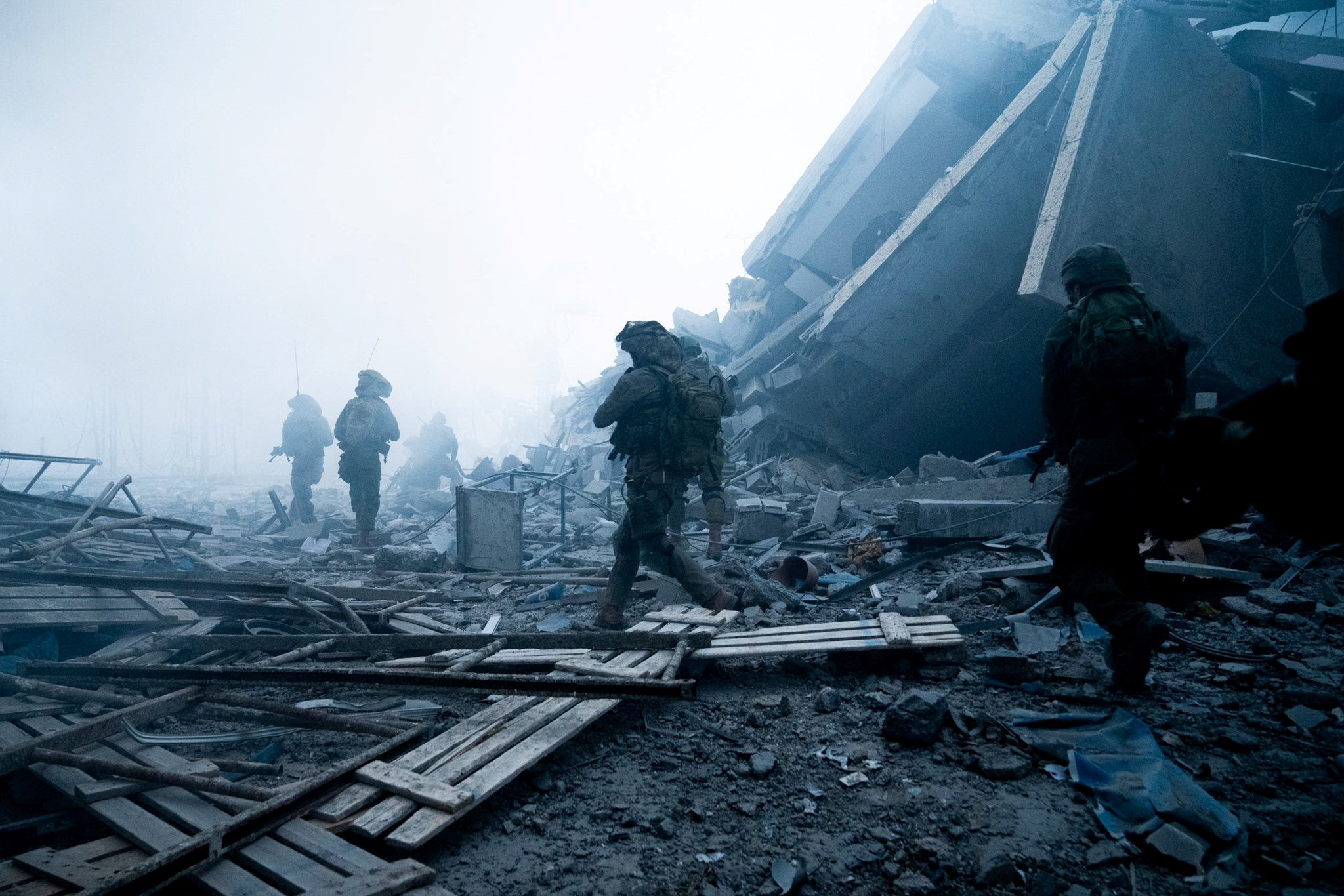
Israeli soldiers operate in the Gaza Strip
Israeli soldiers operate in the Gaza Strip amid the ongoing conflict between Israel and the Palestinian Islamist group Hamas, in this handout picture released on December 21, 2023. Israel Defense Forces/Handout via REUTERS
 
That bombing is strategic and meant to  target Hamas infrastructure, including the vast network of tunnels it has built under the Gaza Strip's cities, towns and 'refugee camps'. The tunnels and their shafts are built into and under mosques, hospitals, UNRWA-operated schools, apartment complexes and ordinary houses. In those tunnels, weapons caches are stored, and Hamas operatives find safe haven when they shoot off rockets from depots placed in crowded civilian areas, inviting a response from the IDF. The greater the number of civilian casualties, the lustier the outcry from the press and Western governments, playing right into Hamas's schemes.

The tunnels have been useful in providing hiding places for some of the hundreds of Israeli children, elderly, women and men that the terrorist groups and ordinary Palestinian civilians have taken  hostage. Each time rockets are aimed at Israel, Palestinians in Gaza and the West Bank cheer and applaud when they reach their goals. Support among the Palestinians, whether in Gaza or the West Bank, is robust, the majority support Hamas and feel the atrocities of October 7 were justified in the name of 'freedom' for Palestinians. 

Qatar, Egypt and the United States have been playing host and interveners between Israel and Hamas in negotiations for temporary ceasefires when prisoners in Israeli jails can be exchanged for hostages. It is in very fact, Hamas terrorist elites that are giving the orders and calling the shots. All of the commanders of the terrorist groups, in the wake of October 7 made themselves very scarce, going into hiding to preserve their lives, leaving their lower-order operatives to battle with the IDF under their instructions.

Their lives are expendable, those of the civilian population are ultra-disposable, while the commanders shield themselves from repercussions of their wholesale slaughter of Israelis and foreign farm workers on October 7. With pressure on Israel to be 'proportionate', and empathy for the plight of the Palestinians brought upon them by their psychopathic leadership Hamas leaders feel emboldened to dictate acceptable strategic variances from combat for access to humanitarian shipments of aid to the embattled Strip.
 
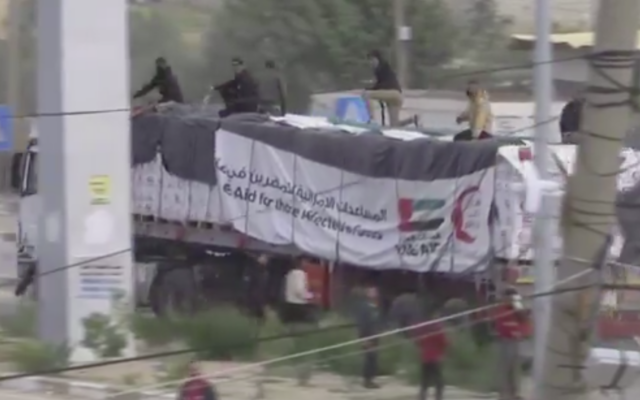
Armed, masked men reportedly affiliated with Hamas can be seen atop trucks carrying humanitarian aid that arrived in the Gaza Strip via Egypt's Rafah crossing, December 17, 2023. (Screenshot, used in accordance with Clause 27a of the Copyright Law)
 
When agreement is secured to open border crossings, another opportunity is presented to terrorist leaders to slip out of the Gaza Strip in an escape from the punishment meted out by Israel's military. At the same time, while tractor-trailers stuffed with needed food, water, medical supplies, oil and gas are brought in to relieve the crisis for civilians to endure the conflict, the trucks and their humanitarian goods are commandeered by Hamas operatives for their own use, once more depriving the civilian population of access to life-saving food and medicine.

Drone footage

Labels: , , , ,

Friday, September 15, 2023

A Disaster of 'Mythic' Proportions, Libya

"The focus of efforts is now on burials, so we don't subject the city to a new disaster."
"The bodies are in the sea water, and under rubble. So we need specialized rescue teams." 
"Cars and dead bodies barged into the house. We opened the doors and the water filled the floor, so we moved to the second floor [and the water continued to rise]."
"[Outside], the corpses were in the hundreds. You open your door and see hundreds; they floated into the buildings from doors, from windows."
Husam Abdel Gawi, 31, Derna rescue volunteer

"There are conflicts in the number ... of deaths, but what matters is that the deaths number in the thousands."
"This disaster is of mythic proportions. A disaster by all measures. Now, the retrieval of the corpses is important, as is burying the copses before they disintegrate ... and cause some environmental issues."
Ahmed Zouiten, Libya representative, World Health Organization

"[Had there been normal public services available in Libya], they could have issued a warning and also the emergency management authorities would have been able to carry out evacuation of the people, and we could have avoided most of the human casualties."
Petteri Taalas, head, UN World Meteorological Organization 
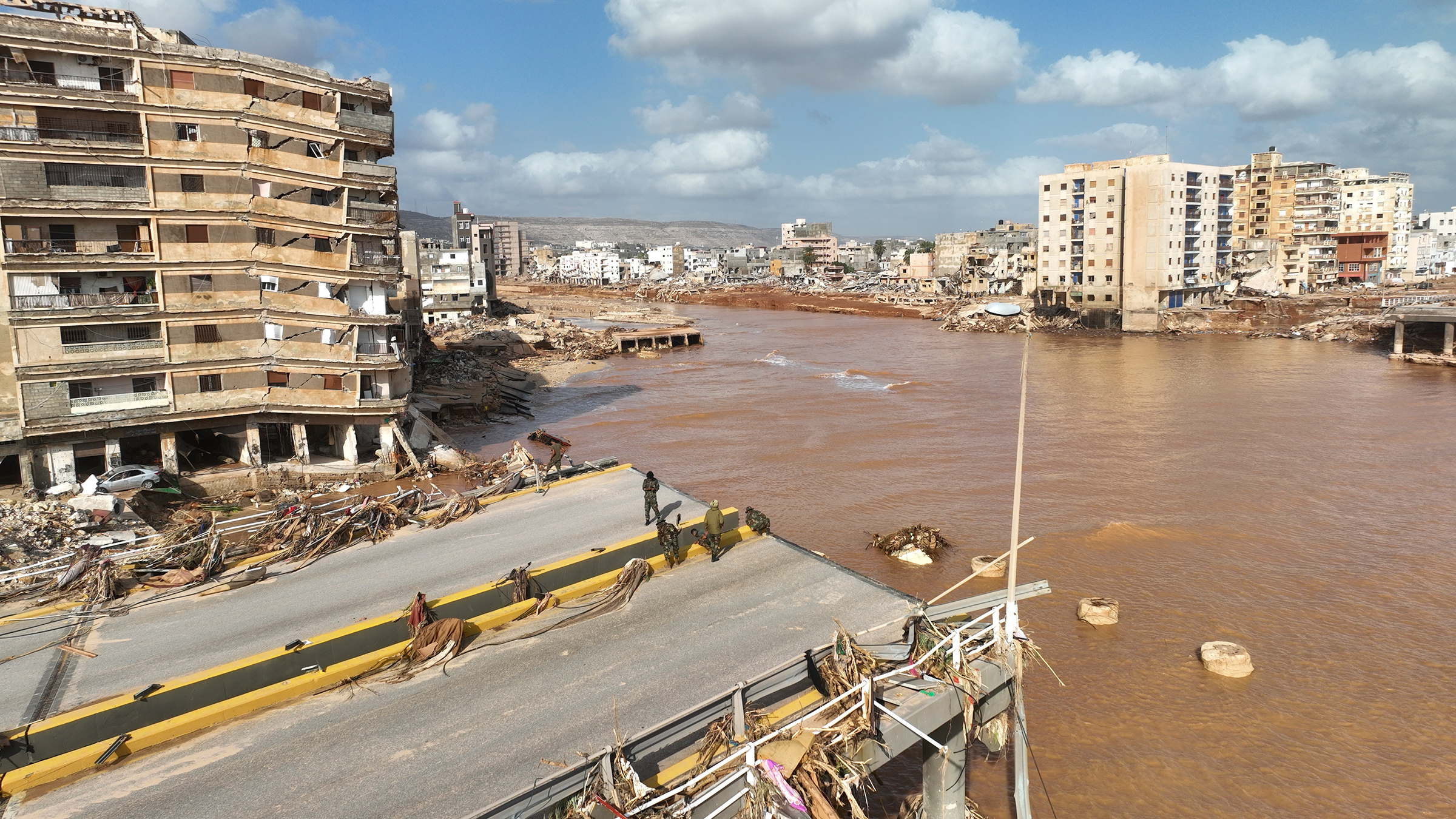
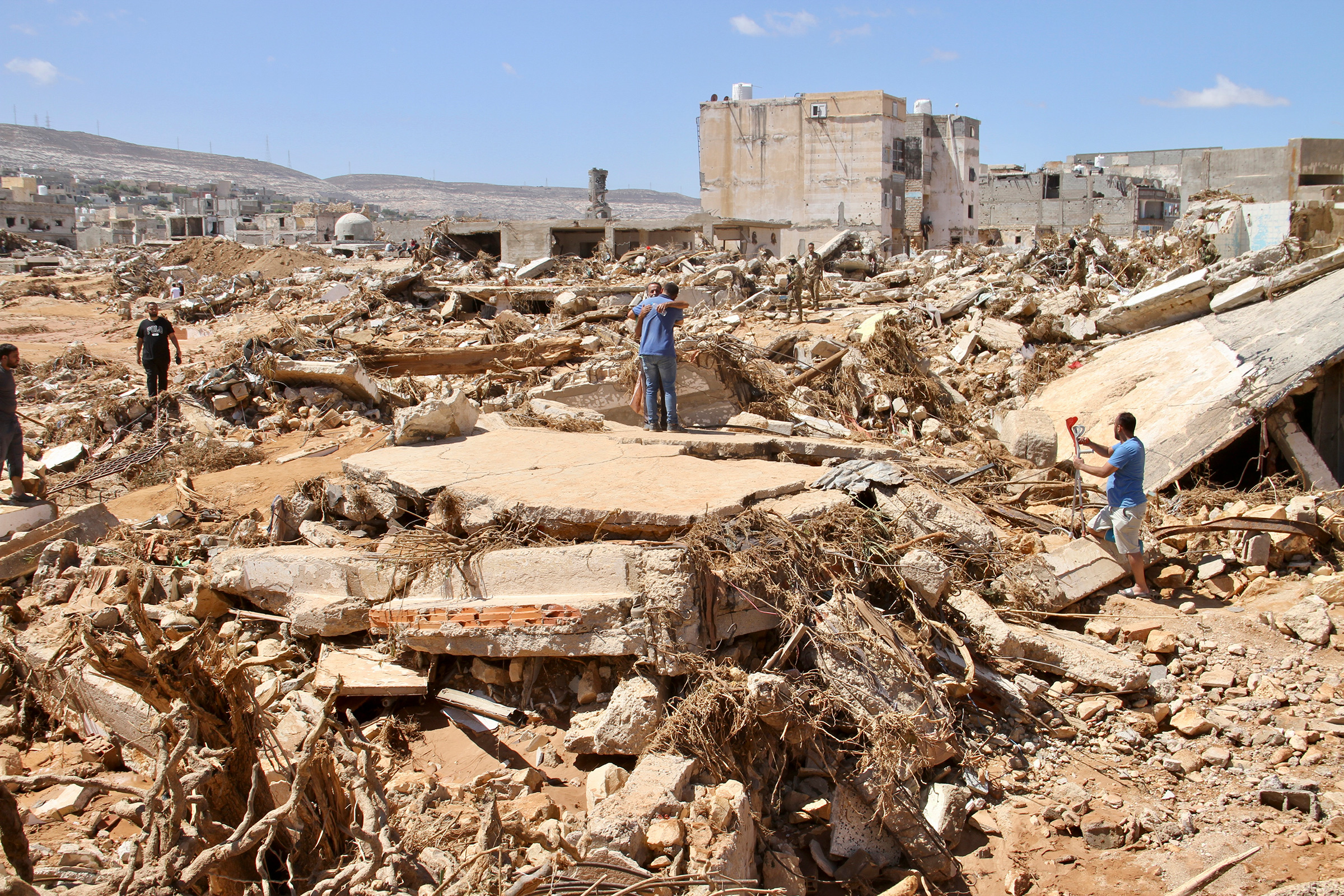
Floodwaters from Storm Daniel are visible in Derna, Libya, on Sept. 12.  (Jamal Alkomaty—AP)
Floodwaters from Storm Daniel are visible in Derna, Libya, on Sept. 12.
Jamal Alkomaty—AP
 
The latest numbers of 20,000 people dead in Libya's flood-devastated east, speaks to the shock of a nation under duress to cope with the tragedy. Search and relief efforts are ongoing in a gigantic effort to try to stem the possibility of an additional disaster striking the area in the wake of the current tragedy caused by Storm Daniel when the coast was pounded, submerging neighbourhoods and drawing numberless residents out to sea, to their death.

Derna, the city hardest hit by the storm was alone bereft of between 18,000 and 20,00 of its population, "based on the number of neighbourhoods destroyed", explained Abdulmenam al-Ghaithi, its mayor. The focus of current efforts lie now on accounting for the additional thousands of people considered to be missing. Teams were scouring the city for dead, in the fear the bodies could pose environmental and health risks as they decompose.

Abdel Gawi pointed out that only two overseas special rescue teams were on site, to date. Men carried bodies to trucks to be transported to areas outside the city where trenches had been dug and the corpses were to be buried in mass graves, in this emergency situation. Outside of Derna, 3,000 bodies had been interred with another 2,000 yet to be buried, while teams of divers comb the sea for additional victims. 

Three regional hospitals are now completely out of service, although several others remain partially operational. According to Yann Fridez, head of the ICRC's Libya delegation, a wave about seven metres in height "wiped out buildings and washed infrastructure into the sea". Humanitarian efforts to reach the flood-hit east have been hindered by seriously flood-degraded roadways. To complicate matters and add another level of danger, unexploded ordnance and abandoned munition stores in Derna pose another threat.
 
People look for survivors in Derna on Sept.13. Search teams are combing streets, wrecked buildings, and even the sea to look for bodies in Derna. (Yousef Murad—AP)
People look for survivors in Derna on Sept.13. Search teams are combing streets, wrecked buildings, and even the sea to look for bodies in Derna. Yousef Murad—AP
 
Had proper early warning services been in place, the scale of the tragedy could have been avoidable. Since there were none, no evacuation orders had been issued prior to the storm striking the area on Sunday night, irrespective of the fact that Storm Daniel had already left a destructive trail in Greece, Turkey and Bulgaria. 

The city of Derna happened to be particularly vulnerable given its geographic placement -- when floodwaters poured down from the hills the city is surrounded by, then burst through two dams, finally washing away a quarter of the inhabited area. Much of it it remains under water. 
 
The landscape, some 135 kilometres outside Derna, was still marked by stagnant floodwaters clogging fields. Dozens of aid trucks and excavators from across the country headed to the affected region even as cars covered in red silt were leaving the flood zone.

Flooding aftermath is seen in Derna, Libya, Thursday, Sept.14, 2023. Search teams are combing streets, wrecked buildings, and even the sea to look for bodies in Derna, where the collapse of two dams unleashed a massive flash flood that killed thousands of people. (AP Photo/Yousef Murad)
Flooding aftermath is seen in Derna, Libya, Thursday, Sept.14, 2023. (AP Photo/Yousef Murad)

Labels: , , , , ,

Saturday, March 05, 2016

When Compassion Becomes Murder

"The torture that they were going through -- seeing their friends die slowly, often a very painful death -- my feeling was that by giving them an option, this was going to give them some peace of mind, knowing that they had the possibility of doing something to take control."
"[Treatments were evolving] but we didn't have the combination drugs that we have now, which have pretty well brought this epidemic under control."
"At the time, physicians were in a very difficult situation. We were ethically obliged not to help our patients at the end stages of their life."
Maurice Genereaux, former Toronto M.D. and surgeon
Dr. Maurice Genereux leaves College Street court in Toronto in 1997 after pleading guilty to assisting the suicide of one HIV patient and the attempted suicide of another.
Postmedia Files   Dr. Maurice Genereux leaves College Street court in Toronto in 1997 after pleading guilty to assisting the suicide of one HIV patient and the attempted suicide of another
"There wasn't much to hang  your hat on in terms of staying alive in the long term. So people prepared to die, psychologically."
"They didn't want to end up the way they saw so many other people die."
John Larsson, social worker, counsellor, AIDS Committee of Toronto

"Just because one had AIDS didn't mean their life was over. He [Dr. Genereux] was described as a Pez dispenser of pills. And I think that kind of lackadaisical attitude of prescribing has to be not allowed."
"The one man who died had his prescription for nine months, and he didn't see Genereux in all that time. It's like, 'Here's your lethal dose of medication and I'll see you, whenever'."
"He wasn't a bad man. He wasn't a bad person. I just think he made some very bad decisions. If you think that there is any possibility of having a regulated scheme of assisted death, it has to be able to exclude cases like this. It has to be able to say, 'This is wrong'."
Dr. Phillip Berger, St.Michael's Hospital, Toronto
Canada is preparing to legalize assisted suicide, under certain conditions for certain people for whom life no longer holds meaning that transcends the pain and suffering they labour under; people at their end-stage of life who have a wish to control the time and place of their final departure. And for Dr. Genereux, who once was charged under Canadian law that made it an offence to aid someone seeking death to achieve it, and spent time in prison, that time hasn't come soon enough.

He is, he declares, pleased "that finally we are permitted to be compassionate at the end stage. It's sort of like an achievement, something that I've felt was needed for a long time and finally it's here. My regret is that I'm not able to practise any longer and enjoy that freedom", he concludes with regret. He would prefer not to linger on his 1998 prosecution and imprisonment at a time before triple-drug medicine changed the landscape of AIDS prognosis.

He asserts that it was his misfortune to be caught, that assisted suicide was not the anomaly he was charged with: "It was common practice among physicians treating AIDS at that time", he said, but when he pleaded guilty to the charges brought against him under Section 241(b) of the Criminal Code, of aiding and abetting suicide, he became persona non grata, abandoned by his colleagues. Their reasoning on the other hand, is that he abandoned his patients' needs at a time when drugs like AZT and protease inhibitors were being used, with the promise of more effective drugs in the near future.

He no longer practices medicine. Before his arrest for assisting suicide by prescribing a lethal dose of Seconal that killed a patient, his license to practise medicine was temporarily suspended for nine months when he was charged with improperly sexually touching six patients. He had already been known to be gay, which gave him insight and a greater compassion for those gay men suffering with AIDS. Five months after he resumed practising, he decided to help two patients to achieve their own deaths, and prescribed barbiturates in a lethal dose.

One of the patients, Mark Jewitt, did attempt to commit suicide but survived and still lives, while the other, Aaron McGinn, died a year later at the age of 31. Both had HIV, but not yet AIDS; neither experienced any real distress or was in danger of imminent death. During his sentencing hearing it was revealed that he had provided Seconal to 16 other patients between the years 1992 and 1996. He was taking up the breech when many doctors would not treat HIV or AIDS patients.

Postmedia files
Postmedia files   Aaron McGinn, who couldn't see himself living with AIDS, committed suicide assisted by Dr. Maurice Genereux
 
The two men to whom he had prescribed a deadly dose of drugs prevaricated for months, prescription in hand, before finally succumbing to their fear of the future. One returned to obtain a fresh prescription; he had mislaid the original during the interval when it had been given him by Dr. Genereux and when he had finally decided to commit suicide. The man who died, Mr. McGinn, had a medical history of drug abuse and depression. The lethal Seconal dose would solve his agony of fear.

It took another nine months before he used the second prescription to obtain that lethal dose of Seconal. When he died, Dr. Genereux arrived at his home, wrote a death certificate stating the cause of death to have been AIDS-related pneumonia, and retrieved the empty Seconal bottle. "I would [in retrospect] have taken more safeguards to protect my licence. I'm not saying that I would not have assisted. But I would have perhaps screened a little bit better, or been more cautious about how I approached it."

Now 69, he operates a bed and breakfast facility in Victoria for gay and bisexual men.

Labels: , , ,

Monday, June 15, 2015

Nepalese Aiding Nepalese

"I didn't know what I was doing. I've never saved a cat, much less a human being. I'm not a relief worker. I'm just a mom from Arlington."
"He was willing to go where others would not. He was willing to land at altitudes -- 13,000, 14,000, 20,000 feet - that others would not. He said, 'If we don't get to them, who will?'"
"I was there, in Nepal, when a second earthquake hit after the first one, and the morale just sank. There was this sense of hopelessness. Subek's death was similar. I paced around the house for two days. I didn't want to do anything."
"I have a master's degree, but I'll wait tables. I need a morning shift. I'm going to do it in memory of Subek. My little brother."
Samisha LaMeyer, Arlington, Massachusetts
Samisha LaMeyer (center), with Pasang Lhamu Sherpa Akita (left) and helicopter pilot Subek Shrestha.
Samisha LaMeyer
Samisha LaMeyer (center), with Pasang Lhamu Sherpa Akita (left) and helicopter pilot Subek Shrestha.

Twenty years ago, Samisha LaMeyer left her home in Kathmandu to become an American citizen. In May she returned to Kathmandu, a loyal Nepalese, and loving daughter to aid her mother who had established a school in the capital of Nepal and who her daughter wanted to see with her own eyes that she was alive and well. Leaving her husband and two daughters behind she left for Kathmandu with 300 pounds of protein bars and other items packed into bags, to take along with her.

She found her mother well. Her mother, Gauri Rana, was sheltering with thousands of others in fields around the school her mother operates for poor students. Knowing her mother would be occupied with looking after things as best she could under the circumstances, Samisha thought of the thousands of Nepalese trapped in out-of-the-way mountain villages, many of which had been destroyed, residents killed and others desperately waiting for subsistence supplies to arrive.

She decided while in Nepal to begin raising funds through her Facebook friends to initiate a method on her own of giving aid where it was most needed. She went to a number of sources looking for helicopters for hire, but found most private helicopter companies charging outrageous sums to make the kind of humanitarian drops she was thinking of. One pilot, Subek Shrestha, was different. He was 28, and a crack pilot, infused with the same sense of needing to respond to the tragedy to aid people.

He had been busy retrieving bodies of the mountains. When he understood what Samisha LaMeyer was intent on doing, he volunteered his services, to return to the mountain villages with rice and supplies. There was an instant rapport between them, and he spoke of the Nepalese woman from the United States as his 'big sister'. She, in return addressed him as little brother: Bhai, to his Didi. And they occupied themselves flying food and supplies to the isolated villages in the mountains.

They formed a triangular team with an experienced climber from Colorado, Pasang Lhamu Sherpa Akita, and with a veteran aid worker, Max Khatri. Subek Shrestha knew from his experiences where the need was great and for three weeks the team worked together to deliver aid to desperate survivors. When Samisha LaMeyer returned to the U.S. and her family after that period of time, she and Subek Shrestha kept in touch by email.

He was making profit from chartered flights, and using that profit to plow back into relief efforts. It cost $2,500 as an hourly rate to hire helicopters. "I would love to fly your helicopter, Didi", responded the  young man, when his friend in Arlington informed him she intended to buy a helicopter of her own. And this was the last message that passed between them. Flying a mission with three doctors from Doctors Without Borders, the helicopter Shrestha was piloting crashed.

All aboard were killed. As a tribute to the young man LaMeyer contacted his family for permission to go immediately back to the work of helping people in Nepal, rather than wait the customary 13 days as a memorial to the dead. Now, she and a network of volunteers have dedicated themselves to evacuating 200 students from a monastery 18,000 feet high up in the mountains where Shrestha had dropped rice.

The monsoons are expected to arrive in the near future, and the removal of the students from the monastery has become an emergency project they have committed themselves to. To raise the kind of money she needs to continue working on aid for the earthquake victims of Nepal, Samisha LaMeyer is determined to work any kind of job that will bring her closer to fulfilling her goal. In memory of her 'little brother'.

Arlington resident and Nepali native Samisha Joshi LaMeyer, at left, delivers supplies to the Gorkha district of Nepal. Courtesy Photo

Labels: , ,

Sunday, June 14, 2015

Striving for Normal

"The children are having nightmares; they're irritable, they cry a lot and want to stay near to their mothers."
"We're also working with the teachers who survived the quake. They're anxious, they need support and they also need to know what to say to the kids."
Anita Querirazza, Italian child psychologist, Nepal
Kathmandu
Tents dot the landscape in Kathmandu following an April 25 earthquake. (Peter Bregg for National Post) - See more at: http://news.nationalpost.com/features/aftershock-heres-how-nepal-is-coping-after-two-earthquakes-left-nearly-9000-dead-16800-injured#sthash.cQBue50T.dpuf
Photo: Peter Bregg -- Tents dot the landscape in Kathmandu after the April 24 earthquake

Nepal suffered two devastating earthquakes between April 25 and May 12, with numerous aftershocks in between. Terrified Nepalese were unable to find peace of mind, fearful of yet other tremors that would wreak further havoc in what has already made their lives a misery of panic and fear. And these are the survivors. A death toll of 9,000 is still being assessed. Hospitals and aid workers from the international community are still coping with the 6,800 injured.

A half-million homes were destroyed and an additional 270,000 homes were damaged. The convulsed earth continues to produce massive landslides that destroy entire villages, make roads impassable and ruin crops. The affected zones continue to experience massive tremors up to 6.8 magnitude on the Richter scale, on a daily basis. Little wonder the population is traumatized, the children in a state of perpetual confusion and fear creeps into their sleep patterns turning them to little-understood nightmares.

The state of emergency that prevails is estimated to extend into two months at the very least, as authorities and their foreign partners attempt to cope with the destruction of the massive earthquakes. Some of the villages in the steep mountain regions have not yet been reached by emergency workers. Landslides have cut off access through roads. Helicopters make their daily flights dropping basic emergency rations of food, water and tarpaulins.
Plan International  distribution centre
People collect rice and tarpaulins from Plan International at a distribution centre in Shikharpur -- Photo Peter Bregg

Of the 75 districts in Nepal, thirty are damaged, and of those fourteen have sustained utterly critical disarray. Two districts, Dolakha and Sindhupalchok, have been the worst affected. The capital has seen dreadful damage but the city remains open to business routine even while it desperately attempts to recover its equilibrium. Parks in Kathmandu are crowded with tarpaulins sheltering people too intimidated by fear to return to their fragile homes; that is, those who still have homes.

New buildings built to modern standards were able to withstand the quake's effects for the most part, while the old structures built of sand and river stones quickly collapsed. There is a need to move ahead to replace them as swiftly as possible so people can move into them with the confidence that they will shelter them safely in the event of further tremors, for when the monsoon season arrives on the near horizon, the tarpaulins will be ineffective at sheltering people.

Already severely damaged mountain roads will become vulnerable to complete washout when the monsoon rains arrive. With that rain will come mosquitoes and then malaria will loom as a threat. If flooding ensues with the rain, given the compromised water system, the threat of cholera will present itself. Nepalese farmers in vulnerable areas must spur on their activities to get their crops in, to rebuild their homes in case roads leading to them become impassable.

The government had assured that schools would reopen toward the end of May. Local authorities are still struggling to be able to open schools that were destroyed, collapsing in the earthquakes, and requiring to be replaced. Their replacements for the immediate future will be temporary until such time as more permanent structures can be built, enabling children to return to school and a scheduled routine in their disrupted lives.

Video thumbnail for Aftershock: Nepal

Labels: , , ,

Tuesday, May 05, 2015

Anything You Can Do . . .

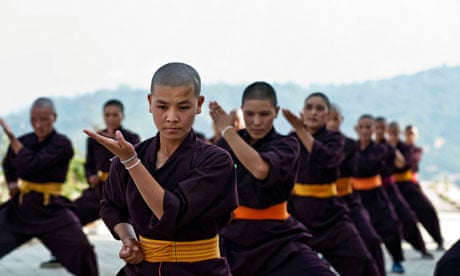
Kung fu nuns
Nuns practising kung fu at the Druk Gawa Khilwa Buddhist nunnery in Ramkot, Nepal. Photograph: Simon De Trey-White/Eyevine

"None of us shrieked in fear or crouched on the floor crying. We moved quickly, dodged falling pieces of the wall and escaped."
"Community duty is also a form of spiritual exercise, and our strong limbs are now trained to work hard and for long hours."
"Kung fu is not meant to attack people or fight with them. It prepares you for enduring difficult situations, like this earthquake. It is also a form of meditation because it helps us concentrate, keep our minds still and body nimble and light."
Jigme Konchok, 21, Buddhist 'kung fu' nun, Kathmandu
Buddhist nuns practise kung fu at Druk Amitabha nunnery in Kathmandu.File Photo: AFP
Buddhist nuns practise kung fu at Druk Amitabha nunnery in Kathmandu.  File Photo: AFP

But the women at this 26-year-old nunnery excel at other occupations viewed as the gender-specific monopoly of masculine skills, particularly in the monastic order. They have learned to do plumbing, electrical fitting, computers, bicycle riding, speak English, and pray just as well as any monk who prides himself on practical and spiritual skills such as these. And with those skills they exit their Druk Amitabha Mountain nunnery to offer their services to the villagers living below.

All the more so since the devastating earthquake that shook the western valley of Kathmandu, inflicting violence on the nunnery just as it did other buildings throughout the area in the Earth's cataclysmic upheaval in Nepal. None of the nuns was crushed, became injured, died as a result of the building's response to the tremblor. Though the windows shattered, staircases collapsed, and doors rattled as walls buckled, the nuns leaped to their own salvation.

And they were inspired by their order and their considerable acquired skills to help in providing aid to victims of the deadly earthquake. Structural damage to their sanctuary was assessed and the nuns determined that their duty lay in looking beyond the nunnery for the moment, to offer assistance to those whom they felt required it far more than they did. And so, every day, wearing their distinctive maroon robes nuns travel to nearby villages to give aid.

They help to remove the rubble from people's shattered homes, to dig up, salvage and return objects to their owners, and to clear trails and pathways. These nuns are living examples that traditional gender roles need not necessarily spell out the manner in which women should tend to womanly chores of a menial nature, leaving to men more overtly masculine tasks, including occupying positions of influence and power.

Before the quake: The Druk Gawa Khilwa nunnery in Kathmandu teaches martial arts and meditation to empower young women
Before the quake: The Druk Gawa Khilwa nunnery in Kathmandu teaches martial arts and meditation to empower young women -- Photo, Mail on Line, India

The 300 nuns have refused invitations for evacuation assistance, to ensure their safety. Their self-confidence and self-reliance leads them to use their energy and their skills to help others. The leader of the Ladakh-Based Drupka order, the 12th Gyalwang Drukpa, stated: "I was expecting the nuns over there to be under trauma. Many people were saying that they should be evacuated but they decided to stay back and help others.
 
"It's raining continuously, earthquakes are repeatedly happening, the walls are falling and none of them can go back to their rooms so they have had to camp in the garden. Despite all these problems, they are willing to help." They are not called the "Kung fu nuns of Kathmandu", after all, for no reason. They began their training years ago, in anticipation of responding as they have, to situations such as this.

They use the ancient Chinese martial art for many reasons, not the least of which is meditation. But they also engage themselves deeply with a sense of obligation, in community work, campaigning as well against toxic waste, and are exponents both in voice and in deed for women's empowerment. They have engaged in walkathons to protest the prevalence of plastic products and the wastefulness of thoughtless everyday life.

They are the "kung fu nuns of Kathmandu".

Labels: , , , ,

Monday, December 23, 2013

We Can't Live Without It

"The amount of food wasted and lost around the world is staggering. This is food that could be used to feed the world's growing population -- as well as those in hunger today."
Dr. Tim Fox, head, Institution of Mechanical engineers, U.K.

"Incongruously, it is in the most 'advanced' and affluent societies where the largest quantities of food are wasted at the consumer end of the chain. Major supermarkets, in meeting consumer expectations, will often reject entire crops of perfectly edible fruits and vegetables at the farm because they do not meet exacting marketing standards."
"Of the quantity that does reach the supermarket shelves, 30% to 50% is thrown away by the final purchaser in the home, often at the direction of conservative 'use by' labelling. Labelling of many foods can actually encourage waste. Many consumers have a poor understanding of 'best before and 'use by' dates, and these dates are generally quite conservative, as they are driven by the retailer's desire to avoid legal action."
"Promotional offers and high-pressure advertising campaigns, including bulk discounts and 'buy one get one free offers encourage shoppers to buy large quantities in excess of their actual needs, which leads to substantial food wastage in the home."
Global Food -- Waste Not Want Not

Consumers like uniform looking fruits and vegetables, with good colour, neither unripe nor too ripe. In the best of all possible worlds nature would heed these instructions and produce all manner of edible jewels grown from rich market soil in a presentation of perfection without a hint of blemish.

Consumers have grown so accustomed in developed economies to picking their way through the offerings, rejecting any that appear substandard in their opinion, that the rejects instruct supermarkets to themselves acquire only the most appealing to take space on their shelves.

The European Union, a huge economic-political market of combined countries, makes an effort to ensure that consumable goods of like quality are available to all its member-countries' consumers. It has enacted legislation with direct reference to the size, shape, weight and appearance of an entire cornucopia of edible goods.
EU Legislation: Quality Standards and Labelling of Fruits and Vegetables:Regulation (EC) 2200/96
Regulations are fully harmonized in the EU. When EU standards do not exist, UN
Economic Commission for Europe (UNECE) or Codex Standards are applicable as
product standards.It has laid down the quality classification and information labeling. Fruits subjected to this regulation are: almonds, apples, apricots, avocadoes, cherries,
citrus fruits, grapes,hazelnuts, kiwis, melons, oranges, papayas, peaches & nectarines, pears, plums,strawberries, walnuts, and watermelons. But bananas, pineapples, mangoes, and lychees not covered by this regulation. Among the vegetables artichokes, asparagus, aubergines, beans, Brussels sprouts, cabbage, carrots, cauliflower, celery, courgettes, cucumbers, garlic, lettuce, curly and escarole, chicory, leeks, mushrooms, onions, peach spinach, sweet peppers, tomatoes, witlo of chicory are subjected to the regulation. Specific standards apply to different fruits and vegetables. Refer Fresh Quality Guide.

2 Commercial Classification “Extra Class”(Applicable to grapes, garlic, tomatoes and some others)* Produce of superior quality (quality characteristics of the variety or commercial type)
* Free of any defects with the exception of slight superficial defects provided do not
affect the general appearance and its quality.
* Maximum 5% by numbers of weight of total produce does not satisfy the
requirements of the class, but meets those of Class I or exceptionally is within the
tolerances of that class.
Class I
* Good quality (well-shaped and coloured, free of marks
* Slight defects may be allowed
* Maximum 10% by numbers of weight of total produce does not satisfy the requirements of the class, but meets those of Class II or exceptionally is within the
tolerances of that class.
Class II
* Sound marketable quality produce (satisfies minimum requirements)
* May presents defects (healed cracks)
* Maximum 10% by number of weight of the total produce does not satisfy the
requirements of the class, nor the minimum requirements with the exception of the product affected by rotting or other deterioration rendering them unfit
for consumption.
Well, that pretty much covers all the picky little details of preferences and allowability, doesn't it? Little wonder that many fruits and vegetables are rejected by wholesalers at the farm gate, that they're left to rot as unfit for human consumption; at least the consumption of members of the European Union. And that fairly well sets the stage for waste. It's a stage that, even without the intervention of mass marketing that the EU indulges in, becomes commonplace enough elsewhere.

There may be no difference in nutritional quality in food that doesn't look as appealing as a well-formed and coloured product may but if our eyes are not satisfied then we take it that our palate will not be, either. And this, needless to say, leads to waste. Researchers claim that almost 30% of vegetable crops are left to rot in the fields, not harvested because they haven't met the physical standards mandated by exporters and grocery stores.

An estimated two billion tonnes of food is wasted annually, as a result of inadequate harvesting practices, poor food storage facilities and transportation, according to the report issued by the Institution of Mechanical Engineers. In developing countries that waste also results at the farm end because of inefficient harvesting techniques and poor transportation, while poor storage results in food being spoiled or infected by rodents. In other instances food simply spills as waste from poorly maintained vehicles.

"The root cause for food waste", according to Martin Gooch, director of the Canadian agri-food think tank Value Chain Management Centre, "is primarily a lack of co-ordination along the food supply chain. There is a lack of co-ordination between producers and processors and between producers and retailers. I think some of the numbers are exaggerated. I certainly accept the figure of 30%, but I would not accept that 50% of food is thrown away", he stated.

He much prefers the figures released by the United Nations in 2011 through a research project of their own, reporting food waste figures of about 1.2 billion tonnes, or 33%. A staggering amount of food left to waste. So cavilling about the difference between 33% or 50% is understandable, but what shouldn't be overlooked in arguing about details is the massive amount of food that 33% represents, and its potential to feed the hungry of the world.

Labels: , , , ,

Sunday, December 01, 2013

Winter looms for Syrian refugees in Iraq

Winter is fast approaching in Iraq’s Kurdistan and as heavy rain threatens to exacerbate an already dire situation for Syrian Kurdish refugees. (Photo courtesy: Nils Henrik) 
 
Winter is fast approaching in Iraq’s Kurdistan and as heavy rain threatens to exacerbate an already dire situation for the region’s 235,000 Syrian Kurdish refugees, local organizations are fighting a battle against time in an attempt to soften the cold blow of winter.

November gave way to colder seasons, as Kawargosk’s 12,400 inhabitants saw their tents and roads flood, following hours of torrential downpour. In a camp riddled with ditches and stagnant water, the more common source of concern is the rain, and its effects on the refugees’ health.

With temperatures dropping to below zero during the coldest months of January and February and the often unabating rain, local organizations like Refugee Integration, Support and Education (RISE) have been planning ways to keep the refugees safe, with the UNHCR tents, from suffering the winter’s battering.

“We are worried that the rain will flood our tents. Our children don’t have warm clothes or shoes for the winter. What the organizations give us is not enough,” said Damascus-born Ghazala.

Ruwayda, a young woman from Qamishli, Syria, said that the clothes provided by the organizations are not appropriate for the winter months and worries that her children will get ill. The mother of two recently took her son to see a doctor in Arbil, where she was given medicinal salt to fight off infections; a weak remedy in the face of winter influenza.

The quick spread of disease and illness among families that live in such close proximity to one another is a reality that has yet to receive substantial support. Many of the refugees agreed that they lack medical help.

“The children need milk, they are not getting their vitamins and this will cause them to become ill,” said Ghazala’s neighbor.

“One box of food a month is not enough,” said Ruwayda as she perched by the stove, boiling water for tea. The conversation fast turned into a debate, as families joined the discussion in an attempt to explain their needs and worries. It became clear that flooding was a prime concern.

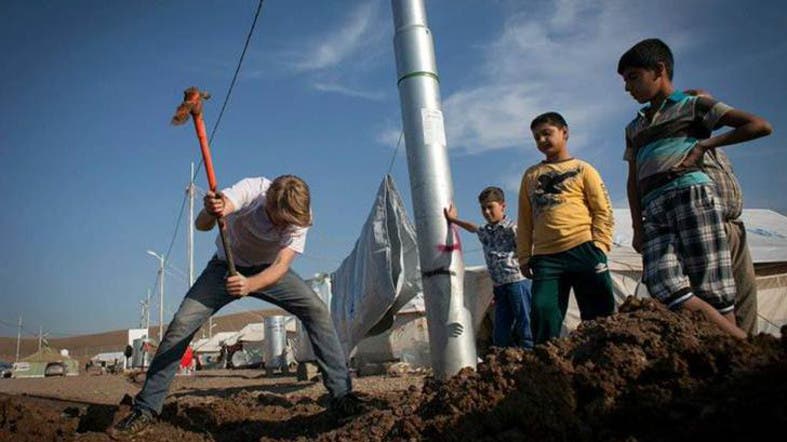
RISE has taken on the mammoth task of assisting in preventing water from swamping the accommodations. The organization has engineered a makeshift drainage system and has employed refugees to assist in the project, in this way alleviating the widespread sense of boredom that often prevails in these camps: “Many of us are like prisoners here because we cannot work,” explained Ghazala’s husband.

Hassina, an elderly and vivacious woman from Hasaka, marveled at the possibility of an efficient drainage plan. “Zor bash,” she said in Kurdish - very good. “We were told that our tents would be fitted with concrete floors, but this never happened,” she said, an approving chorus resonating around her. There is no time left to install the concrete blocks in Kawargosk, and local organizations are quickly having to improvise, often with very little help or expertise. The UNHCR plans to provide plastic sheets as additional flooring, as part of their winterization package; but these are unlikely to prove useful in the event of a flood.

While rain and poor health are the worst of many evils, the kerosene-run stoves are also a source of trouble. That morning one of the tents in Kawargosk caught fire, in a matter of minutes everything had been burnt to ashes, enveloped by a thick column of black smoke. However, no one was injured. “My main concern during the winter is the stoves. We have to use them, but we are afraid to because they run on kerosene. They cause problems, like the one we saw today,” said Ruwayda, in reference to the burnt-down tent. In response to these dangers, the UNHCR has begun a mass information program, advising the refugees on the fire hazards that could result from the use of kerosene stoves.

Purpose built camps like Darashakran provide a safer environment in the winter, through the use of concrete foundations for the tents. But the camp’s capacity is set at 10,000 refugees, meaning that more than 100,000 Syrians in the more makeshift camps will be forced to endure the harsh Kurdish winter with very little protection.

In June, the UNHCR asked for nearly $5 billion to be designated to Syrian refugees. According to an analysis published in September, donations from the international community are $2.7 billion short of the U.N. appeal; this shortage of funds will have grave implications on the overpopulated camps in the coming months.

In an attempt to accommodate the mass influx of Syrian Kurds, the Kurdistan Regional Government (KRG) has also appealed to the international community to increase funds: “The capabilities and the budget that we have are not enough for the large influx. That is why we have been approaching the international community. We have a human and ethnic responsibility towards them,” explained Hemin Hawrami, head of foreign relations for the Kurdistan Democratic Party (KDP).

Buffering the refugee camps has become a race against time, one that should have started months ago. Safe in the knowledge that winter was still far and not a threat to the hundreds of thousands of refugees in the Kurdistan Region, and the millions that are displaced throughout the wider region, many of the organizations overlooked the fast-approaching season.

While it is the first winter that Syrian Kurds based in Kurdistan are facing as refugees, they are aware of the difficulties that will inevitably arise and the dangers they face. This is yet another source of concern for the hundreds of thousands of people who already face dire circumstances.
__________________________
Sofia Barbarani is a London-based freelance writer, with an MA in Middle East and Mediterranean Studies, King's College London.
Last Update: Sunday, 1 December 2013 KSA 15:00 - GMT 12:00

Labels: , , ,

 
()() Follow @rheytah Tweet