Ruminations

Blog dedicated primarily to randomly selected news items; comments reflecting personal perceptions

Wednesday, December 14, 2022

Whiteouts, Fainting, Headache
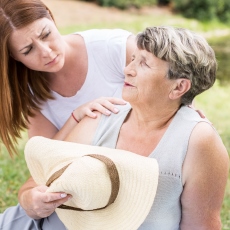
Fainting
 
Either spoken of as a "white out" or a "grey out" , the experience can be fairly unnerving. The eyes we depend on to live in the world we've been born to and move about in and react to, are suddenly threatened. What do you do when you experience a sudden loss of eyesight? Well, you may feel faint, and you would certainly have flash thoughts of serious problems surfacing in the body and its senses we take so much for granted.
"Fainting can be benign when it's related to a sudden stress."
"Standing up too fast, overexerting, becoming dehydrated or taking certain medications can also lead to hypotension -- low blood pressure-- and potentially, a whiteout."
"An underlying heart condition, such as aortic stenosis, could  cause fainting symptoms, including whiteout."
"Transient visual obscurations, also known as TVOs, last seconds. They can appear as flashes of w hite light and cause a loss of vision."
Sarah Thornton, neuro-ophthalmologist, Wills Eye Hospital, Philadelphia

PrimeMed

"TVOs are caused by swelling of the optic nerve and can happen when you change position, say, sanding up quickly." 
"closing one eye is actually what you should do if you have sudden vision loss -- close the eye you think is affected You can cover  your eye, but it's best to close it, so you don't spread out your fingers and obscure anything."
"Then see what you see out of the other eye. If everything looks normal you los vision in the eye you've closed, and you can tell your doctor you lost vision in that single eye.:
"If everything looks weird, you've lost vision in your right eye, too. Knowing this information can help your doctor determine a cause."
Dean M. Cestari, neuro-ophthalmologist, Mass General Brigham Mass Eye and Ear, Boston
Whiteouts, remember those? Back when typewriters were in use, long before computers and keyboards and screens made their appearance. Not exactly ancient history, but a while ago. Whiteout was the name of the white goo in a little glass bottle with a brush stopper that was used to coat a word, a spelling error, or anything else. And it could be typed over, once it had dried. As a correction device it beat using an eraser that would degrade the paper and wear it thin and just mess up all that hard work typing produced.

And then came computers, and everything changed. Errors could be quickly modified, erased, replaced, and whiteout went the way of the Dodo. But that's not quite the whiteout that is being discussed by the medical community when the word is mentioned. In that instance, it's the human eye that suddenly malfunctions spelling either a temporary and fleeting condition that may never again recur, or the signal that something is going wrong with the human body.

Whiteouts are generally benign in nature and transitory. Which doesn't mean they can be ignored. A consultation with a physician is always recommended to ensure that a medical professional can assess the situation and diagnose what its cause was. With recurrent whiteouts it can be extremely useful when their real time duration is taken into account to enable a doctor to be guided toward the correct diagnosis. 

Such a situation calls for attention to details, to note when they occur, their frequency, whether faintness accompanies the event. Fainting can be benign in itself, but if it occurs along with the whiteout, that information too should be conveyed to a doctor. Whiteouts and fainting together can be pointing to a potentially serious condition. Such as arrhythmias, heart failure and atrial fibrillation. A whiteout accompanied by headache may presage the onset of glaucoma.

Typically, whiteouts are not associated with strokes or transient ischemic attacks, according to Dr. Eggenberger of the Jacksonville Mayo Clinic. The most compelling advice for those undergoing such incidents remains the cautionary, 'take notes'. Consult an optometrist or ophthalmologist, or your family physician following a whiteout.

"In general, stroke-type events cause a painless sudden onset, and a pure blackout or loss of vision, often involving the upper or lower half of the visual field in only one eye."
"In contrast, whiteouts typically involve both eyes and begin in a 360-degree peripheral  pattern with a slower progressive constriction toward the centre of  your vision."
Eric R. Eggenberger, ophthalmologist and neurologist, Mayo Clinic, Jacksonville, Florida

Labels: , , ,

Tuesday, November 02, 2021

Surviving Profound Grief

"In the current environment, we are likely to see more people whose grief doesn't lessen with time, and whose intense suffering disrupts their ability to function."
Holly Prigerson, professor of sociology in medicine, Weill Cornell Medical College, New York City

"...For a small but significant group of people, grief doesn't resolve. It is ongoing, pervasive, intense and debilitating. This is what we call prolonged grief disorder [PGD]."
"Research showed that neither antidepressants nor standard depression-focused therapy are very effective for complicated grief. That's why we developed complicated grief treatment."
Katherine Shear professor of psychology, School of Social Work, founding director, Center for Complicated Grief, Columbia University

"People ask us 'Am I going crazy?' all the time, and having PGD recognized will validate their suffering and show them there are others suffering in a similar way."
"Sudden and traumatic deaths, and deaths by suicide, are more likely to lead to complicated grief.:
"If the grieving person is dealing with multiple losses, poor social support, has a lot of stress in their life, or a history of psychological disorders or prior trauma -- those are risk factors, too."
Natalia Skritskaya, clinical psychologist, Center for Complicated Grief, Columbia University
detail of a sculpture of a figure seated with knees pulled to chest
 
With over five million deaths worldwide and growing, the international community has faced an overabundance of human deaths and familial grief in the past two years, thanks to the zoonotic SARS-CoV-2 virus causing COVID-19. With those mounting deaths a corresponding number of bereaved people are suffering irretrievable loss and the mental anguish that accompanies such events. It  hasn't helped that during the pandemic relatives have been barred from being with their dying loved ones, nor that rituals long honoured in mourning the dead, have been suspended.

Dr.Prigerson of the Weill Cornell Medical College has studied the anguish of grief caused by loss of a loved one for three decades, in collaboration with researchers from the U.S., the U.K., the Netherlands and Australia, leading to the decision to include a new disorder in the official major guide of diagnosis in the field of mental health problems. 

The natural reaction to the death of someone who is loved is often brought on by internal or external reminders of the time before that final separation; anniversaries and holiday events are particularly evocative of times past and the loss that occurred through death. Those reactions differ from person to person; everyone grieves in their own way. Some mourners speak incessantly of their loss others become more introspective and removed, mourning silently, and alone.

Most people, as time passes, accept something they have no capacity to prevent, learning to live with the loss. Finding purpose and meaning in life post-bereavement and gradually reintegrating into society, difficult as it is. When after the passage of a year following death of a loved one, the daily intense yearning for their presence or constant, limitless thoughts or memories of the absent one continues, PGD can be diagnosed. 
 
Symptoms required for a diagnosis are: identity confusion, disbelief, avoidance of reminders of the loss, intense emotional pain, difficulty engaging with others and with life, emotional numbness, feeling that life is meaningless, and intense loneliness -- where any three of these symptoms qualify an individual for the diagnosis of PGD. While newly designated as a disorder, these conditions have been documented and investigated for countless years under the descriptive of "complicated grief".

PGD bedevils an estimated one in ten people who have lost someone near and dear, an intimate and loving companion. Many might have wondered whether their sorrow might ever lift. PGD is "neurobiologically and epidemiologically different" even while it shares some symptoms with depression and post-traumatic stress disorder, according to Dr.Prigerson. Those diagnosed with PGD are known to be at higher risk of medical problems, other mental health disorders, disability, hospitalization and suicide.

Professionals in the field harbour the expectation that the classification will assist health-care professionals to identify sufferers of PGD so they can be helped properly. Treatments have been identified and practised since the late 1990s and much earlier. An Australian study found grief-focused cognitive behaviour therapy was helpful, a therapy that included noticing thinking traps to mire the sufferers deeper in grief.

Psychotherapy continues to represent a first-line treatment and antidepressants can be useful in the depression often accompanying complicated brief. As well, grief support groups are highly recommended, where other mourners with similar grief problems recount their struggles and a bond is created of sympathetic trust.

Tea lights with one being lit (iSTock)
"We run a risk of stigmatizing the grieving, reducing their dignity and medicalizing the natural process."
"Some practitioners, especially in primary care after a ten-minute visit, might overuse the new label, over-diagnose and over-prescribe."
Allen Frances, professor and chairman emeritus, Department of Psychiatry and Behavioral Sciences, Duke University School of Medicine

Labels: , , ,

 
()() Follow @rheytah Tweet