Ruminations

Blog dedicated primarily to randomly selected news items; comments reflecting personal perceptions

Thursday, August 31, 2023

Mutating Viruses Finding Their Replication Home In Us

"[This mutated version] has since then probably been circulating in a region of the world with poor viral surveillance and has now been repeatedly exported to other places in the world."
Professor Francois Balloux, Britain 

"Such a high number of mutations is notable [it is similar to the number of mutations that differed between Delta, one of the early strains of the coronavirus, and Omicron]."
"When Omicron hit in the winter of 2021, there was a huge rise in COVID-19 cases because it was so different from the Delta variant, and it evaded immunity from both natural infection and vaccination." "The other concern is that this strain has been picked up in at least six countries, and the cases are unrelated. This suggests that there is some degree of transmission in the community that we’re not detecting that is happening internationally."
Yale Medicine infectious diseases specialist Scott Roberts
https://ysm-res.cloudinary.com/image/upload/ar_16:9,c_fill,dpr_2.0,f_auto,g_faces:auto,q_auto:eco,w_1400/v1/yms/prod/91a1dbb4-5ea7-4553-959d-831e03f63c92
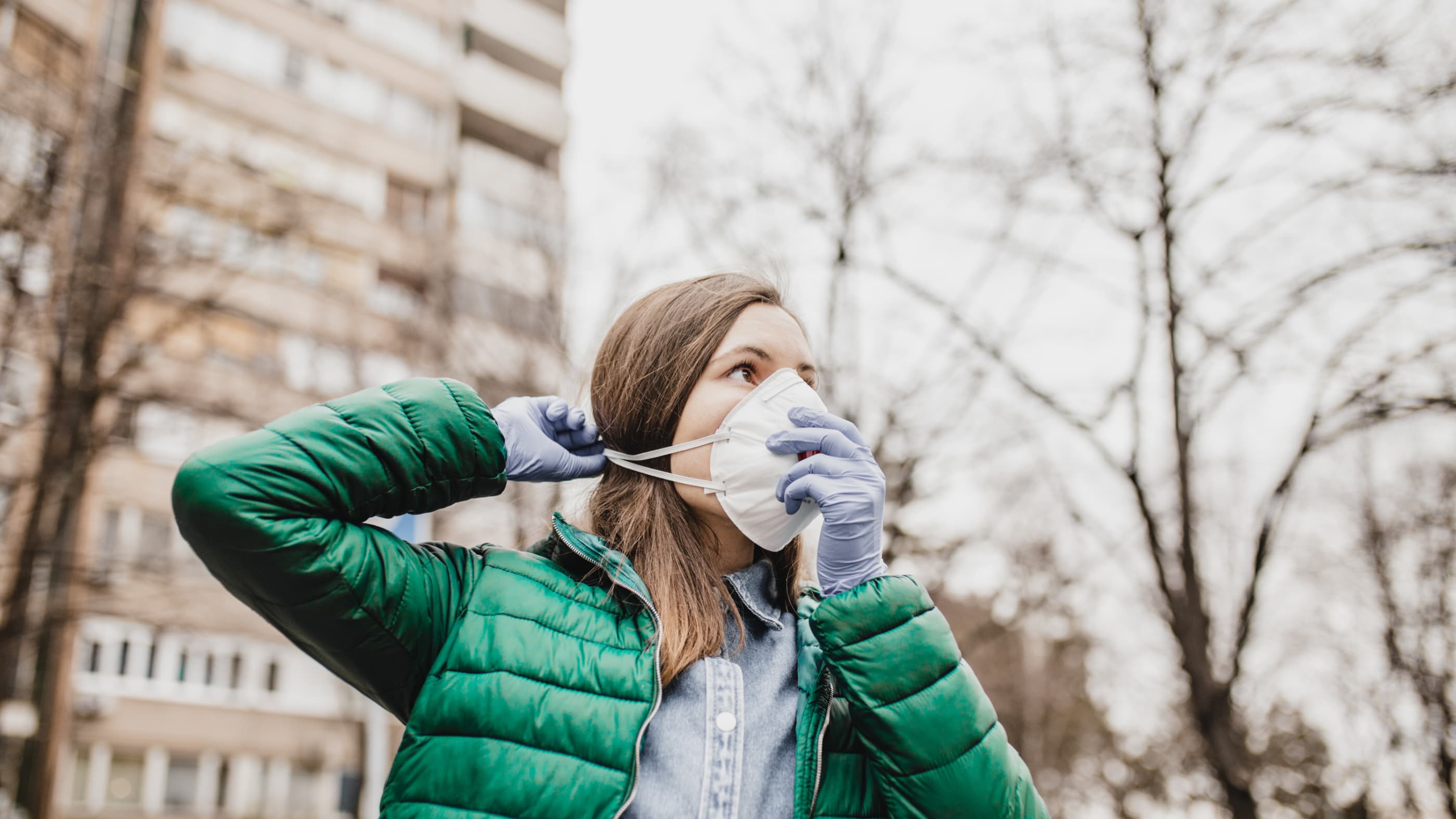
There is some reason for concern that this variant, unofficially nicknamed “Pirola,” has over 30 mutations to its spike protein. The spike protein is how the coronavirus enters human cells. Getty Images

Writing in the British Medical Journal, Francois Balloux, professor of computational systems biology, director of University College London's Genetics Institute, felt the most plausible origin of this new variant known as Pirola was that an individual with an already-compromised immune system had been infected with an Omicron variant for a lengthy period of time and in that year or so the virus had ample opportunity to mutate until eventually the mutated version emerged, and the world community had yet another version of the original SARS-CoV-2 virus. 
 
A totally new-and-improved (from the perspective of the virus) sub-variant of a COVID variant.

And thus, from an expert's point of view, was BA.2.86 ('Pirola'), the new coronavirus variant born, to be inflicted upon the world's unwilling hosts. The fear lingering in the minds of the medical community, visualizing another sweeping series of global lockdowns, is that the Pirola variant having undergone an unusually large number of mutations on the mutated virus's spike proteins -- over 30 altogether it was determined, in comparison to previous common variants -- that it may be super-efficient in evading immune responses of COVID antibodies.

The virus's ease in penetrating  human cells thanks to mutations on its spike proteins is considered a vital replication strategy with the disease onset. With any possible new advantages in the mutated virus more infections and/or a worse disease emerging would take the world back to a Stage 1 scenario -- with COVID-19 overwhelming hospitals with serious infections and renewed high mortality rates, particularly among the elderly.

In the last short while, epidemiological data indicate the rise of hospitalizations and increased outbreak reports -- a general, still slight uptick in cases at a time when a decline in infections and serious illnesses lulled the world into a sense of complacency. Evidence has not yet arisen, however, that Pirola is a transmissibility and virulence threat. For the time being it has been noted that the strain does not appear to cause particularly severe illness.

The U.S. Centers for Disease Control and Prevention stated that: "Based on what CDC knows now, existing tests used to detect and medications used to treat COVID-19 appear to be effective with this variant. At this time, we don't know how well this variant spreads, but we know that it spreads in the same way as other variants." Officially. scientists refer to the new virus as BA.2.86.
https://scx1.b-cdn.net/csz/news/800a/2023/covid-variant-2.jpg
Credit: PixabayCCO Public Domain
"Nobody knows right now, but studies are ongoing. The biggest concern has been the number of mutation differences with BA.2.86. When we went from XBB.1.5 to EG.5, that was maybe one or two mutations, and they were expected. With every respiratory virus, as it spreads from person to person, it evolves gradually over time. But these massive shifts, which we also saw from Delta to Omicron, are worrisome."
"The big question is if BA.2.86 will have the same exponential growth that Omicron did—in terms of case numbers—or if it will die out, which is certainly what everyone hopes."
"Since the original version of SARS-CoV-2, many people have gotten infected, and many have been boosted. However, for many of us, it might have been a year or more since we’ve had a booster, so I would encourage everyone to get the updated shot, which is expected to come out in mid-September."
Yale Medicine infectious diseases specialist Scott Roberts 

Labels: , , ,

Friday, November 26, 2021

Restricted Flights? Because Its Necessary, South Africa

"This new variant of the COVID-19 virus is very worrying. It is the most heavily mutated version of the virus we have seen to date."
"Some of the mutations that are similar to changes we’ve seen in other variants of concern are associated with enhanced transmissibility and with partial resistance to immunity induced by vaccination or natural infection."
Professor Lawrence Young, virologist, Warwick University, Britain
 
"What we do know is there's a significant number of mutations, perhaps double the number of mutations that we have seen in the Delta variant."
"And that would suggest that it may well be more transmissible and the current vaccines that we have may well be less effective." 
British Health Secretary Sajid Javid
Passengers walk past artwork between terminals at IAH George Bush Intercontinental Airport in Houston, Texas. REUTERS/Adrees Latif

The dread likelihood of a more virulent, transmissible, vaccine-avoidance mutation of the SARS-CoV-2 virus that causes COVID-19 emerging at some point in the trajectory of variants mutating from variants was always thought by scientists to be a matter of time, although they also hoped that opportunities for such a mutation to develop might be mitigated by the speed with which pharmaceutical companies developed effective, safe vaccines against COVID. It looks now that among the known 'variants of concern', one is now swiftly spreading that may resemble the dreaded apparition.

A newly identified variant out of South Africa is being watched with rising concern within the global medical community with the fearful trepidation that its properties may result in seeing highly successful vaccines far less effective when countering the new strain. The immediate course of action has been to shut the door of opportunity to the virus in the hope that travel restriction imposed on seven African countries where the new variant has been identified, would stem its course.
 
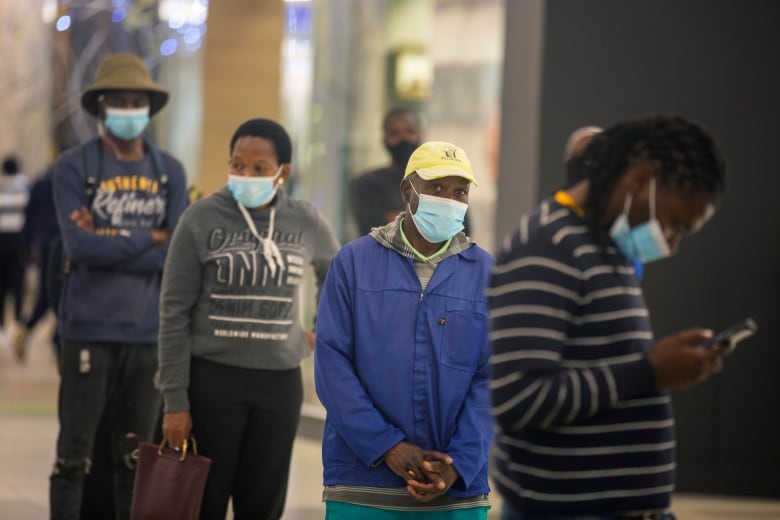
People queue to get vaccinated against COVID-19 at a shopping mall in Johannesburg on Friday. South African scientists doing genomic sequencing said on Tuesday they detected a new coronavirus variant. (Denis Farrell/The Associated Press)
 
Britain has taken immediate steps to temporarily ban flights from South Africa and six other African countries and mandating that returning British travellers from these very destinations go into immediate and strict quarantine. According to the U.K. Health Security Agency, the variant, labelled B.l.l.529 on an interim basis, boasts a spike protein far different to the original coronavirus that the composition of the COVID-19 vaccines are based on.

Leading to the concern that its mutations are likely to be able to evade the immune response generated through prior infection as well as through inoculation with current vaccines. Investigators are awaiting the opportunity to collect additional data, but as a precautionary move reflecting lab studies required to assess the likelihood of greatly reduced vaccine efficacy of the mutations, the travel restrictions were viewed by scientists as a necessary step.

The British government was advised to react without delay, pre-emptively, should the concerns of the variant impact be borne out, regardless of the fact that it could take a matter of weeks-long investigations for all the information required to shine a light of understanding on the new variant's characteristics to be collected and adequately assessed. 
 
Scientists in South Africa announced their detection of the new COVID-19 variant in limited numbers and were involved in efforts to better comprehend its potential implications. The World Health Organization has praised the South African scientists for their quick detection and timely warning to the international community. 

Diagnostic laboratories' early studies of the variant suggest it has increased its presence rapidly in the most populated province of Gauteng, and the expectation is that it may be present in the country's other eight provinces, according to the announcement by the South African scientists. Up to a day previous there was confirmation of the presence of 100 specimens identified as B.l.l.529, in South Africa.
 
Europe and the U.K. imposing travel restrictions against southern Africans because of the emergence of a new coronavirus variant is 'unjustified,' says South African Health Minister Dr. Joe Phaahla. (Jerome Delay/The Associated Press
 
To the present, the variant has also been found in Botswana and Hong Kong; the Hong Kong case a traveller from South Africa. Scientists in South Africa now speculate that up to 90 percent of new cases in Gauteng could be B.l.l.529. "Although the data are limited, our experts are working overtime with all the established surveillance systems to understand the new variant and what the potential implications could be", explained a statement from South Africa's National Institute for Communicable Diseases.

Following Britain's decision to close to flights from the seven African countries, the European Union followed suit, followed closely by the United States and Canada. Israel, which identified a case of the new variant in an Israeli arrival returning from a trip to the African continent, has done likewise. As concern over the presence of the new, threatening variant, India, Japan, Turkey, Switzerland the United Arab Emirates have also taken cautionary measures to impose tougher travel curbs.

Dr. Isaac Bogoch says it's important to understand the new coronavirus variant, and equally important to get people around the world vaccinated. Credit: AP Photo/Tsvangirayi Mukwazh


Labels: , , , , , ,

 
()() Follow @rheytah Tweet