Re-Opening Precipitately? Look at India
"I think the problem is that what we are seeing is that this idea of herd immunity is messy.""Whether we're talking about a single mutant or double mutant or triple mutant, we're seeing quite a few different mutations.""The real question for us is figuring out, as quickly as possible, with India, what does this variant mean? Is there a correlation between B.1.617 and the crisis that they're in right now [does it have enhanced properties?} For Canadians, that's the information we need to know."What does it tell us from our own personal standpoint? It tells us we are still dealing with the same virus.We've got to be vigilant with that stuff if we don't want to see this new variant, or any other variant, transmitting widely through our community. Because once it hits a tipping point, we can't stop it in its tracks."Jason Kindrachuk, virologist, University of Manitoba"[Following the first wave in India the numbers started nose-diving early in the New Year], and everybody started celebrating, declaring success, that 'we're out of the woods'.""And we thought a good proportion of Indians would have gotten naturally infected last year and would have antibodies, and then vaccination started.""And then the Indian government, in its wisdom, opened up in a hurry. No social distancing [as millions attended religious festivals and super-spreader political rallies], masking went down, public health measures were relaxed and testing went down.""And then we started to see the number climb again. You've seen the graph, right? It looks like a rocket going up. I've never seen anything like it."Dr. Madhukar Pai, Canada Research Chair in epidemiology and global health, McGill University
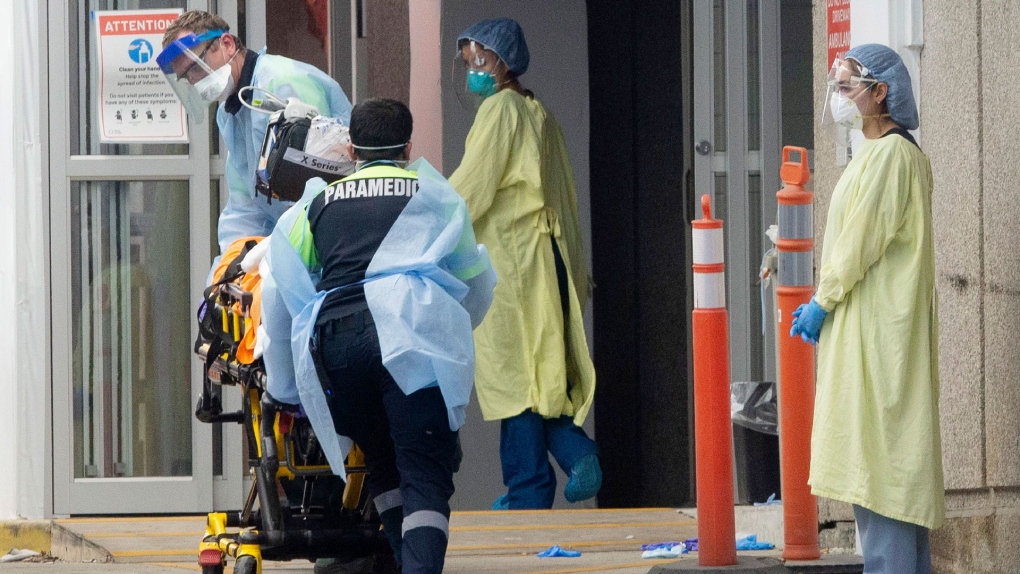 |
| Paramedics wearing protective equipment wheel a patient into the emergency department at Toronto's Mount Sinai Hospital. THE CANADIAN PRESS/Chris Young |
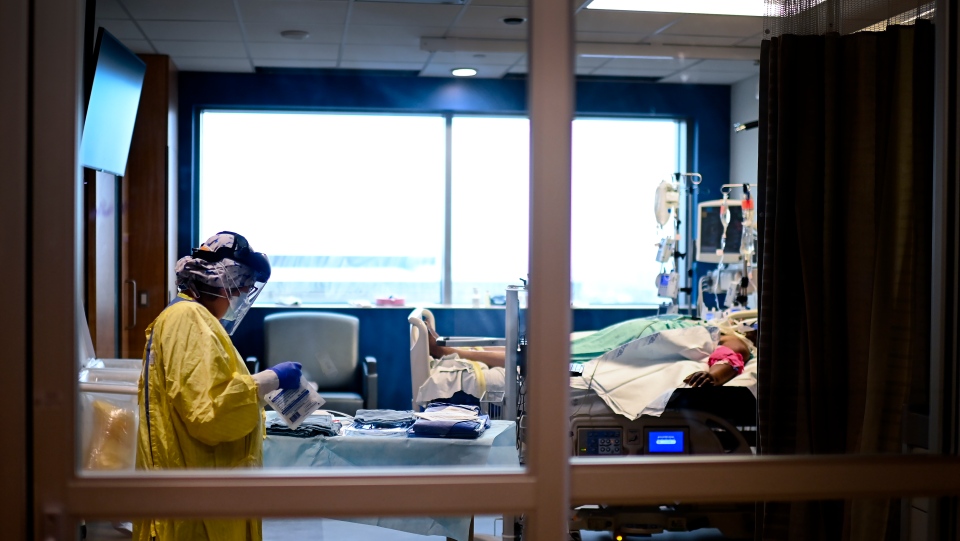
A directive was issued to hospitals in Ontario in April that non-urgent care in the operating room must cease. Surgeons, nurses and anesthetists should be prepared to redeploy to the COVID wards and the ICU. Triage meetings have become regular events to discuss which of the cases presenting must be sent to the operating room and which patient appears on the brink of permanent or irreparable harm, and that person must then wait -- 'declined'. This is called the reality response to a desperate situation.
India's catastrophic COVID-19 wave has brought with it a dire situation with doctors sending out SOS messages pleading for oxygen. It is where opportunistic variants are now beginning to spread widely in Canada, causing great alarm, but in comparison to the situation in India, a mere ripple as opposed to that nation's riptide of illness. On a number of recent consecutive days India has posted unbelievably huge single daily COVID caseloads such as 332,730 cases and 2,263 deaths. Daily. Mind-boggling.
New Delhi, the nation's capital, is riddled through with COVID cases and they continue to rise. "If we open up everything, give up on public health and not vaccinate rapidly the new variants can be devastating", warned Dr. Madhukar Pai of McGill University. It is as yet unknown whether India's growing caseload owes to new infections or how much reinfection is involved. Studies out of Manaus in Brazil suggest that up to half the population in some of India's largest cities had been infected previously in the first wave, resulting in a fairly high immunity in the population.
Only now has Canada officially closed the air corridor for a month for direct-passenger flights from India and Pakistan to enter Canada. Too late, unfortunately, to prevent a new 'double mutant' from arriving. The B.1.617 variant has already been identified in British Columbia, Quebec and Alberta. "Variants of concern" now account for over half of confirmed COVID-19 infections in Canada, Friday's new modelling confirm.
In the Greater Toronto Area patient transfers are increasing, COVID patients being sent to other, less-crowded hospitals in Ontario to relieve some Toronto hospitals briefly, before even more patients arrive, as anticipated. Pregnant women are now being over-represented in Toronto hospitals with COVID, populating ICUs, requiring emergency C-sections. A new phenomenon has arisen where an average of two people a day die at home, becoming critically ill so suddenly there is no opportunity for them to arrive at a hospital.
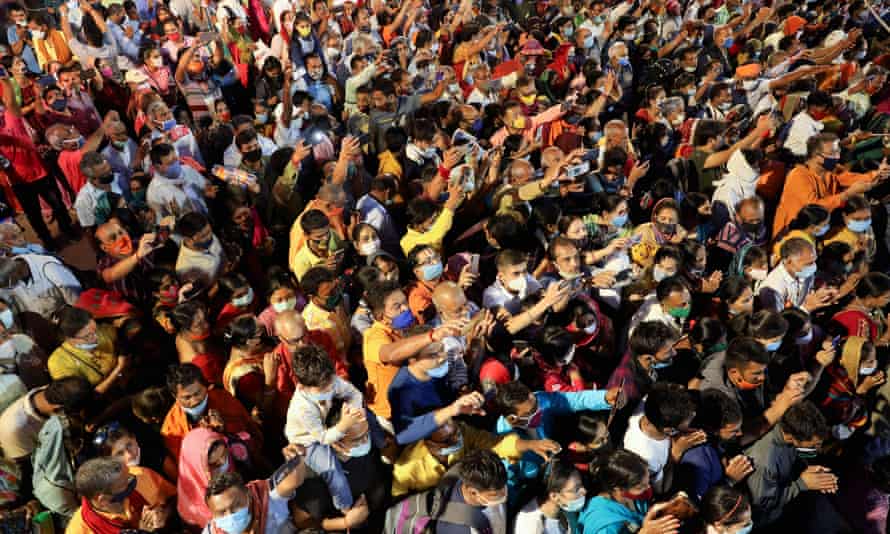 |
| Despite the Covid-19 surge, crowds have been allowed to gather for Kumbh Mela in Haridwar, India. Photograph: Anushree Fadnavis/Reuters |
Word of a "triple mutant" virus detected now in India has turned the heads of virologists and infectious disease specialists. There is speculation, but no hard data available, about how these variants behave together, or on the background of other mutations. The variants all carry an alphanumeric soup of mutations, some more threatening than others. B.1.617 is imbued with several mutations shared by other variants shown to have a measure of antigenic escape; in other words the capacity of a virus to evade its host's immune system.
The situation is so grave it is imperative that vaccinations be sped up by all necessary means. Complicated by the reality that vaccines are in short supply, thanks to the incompetence of the federal government that chose early on to do business with China, until that fell through and vaccines had to be sourced elsewhere, late in the game, through more infinitely reliable venues. Masking, distancing and all other infection prevention control measures continue to be in mind of everyone in an effort to control as much as possible, the trajectory of the coronavirus surge.
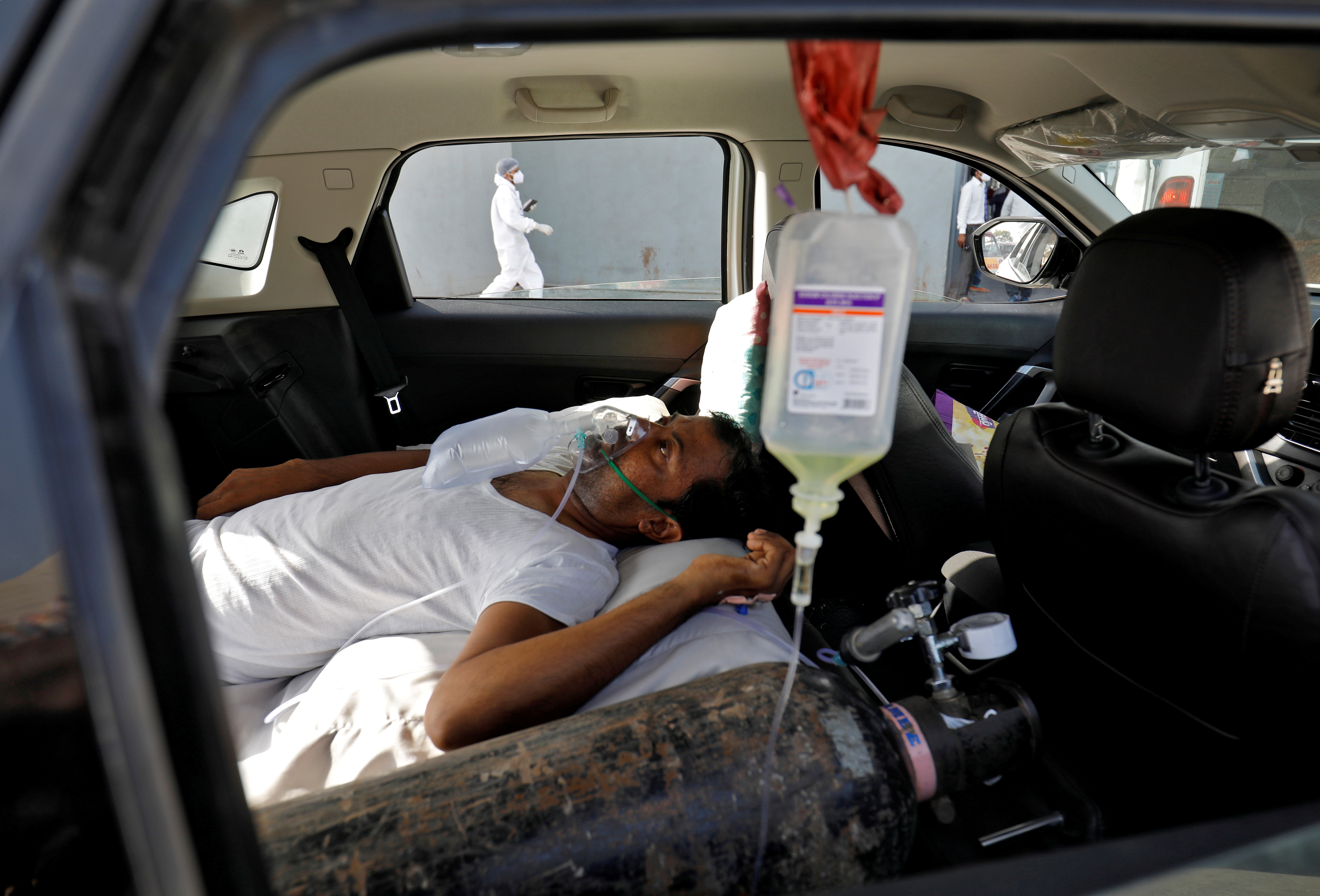 |
| A patient with breathing problems is seen inside a car while waiting to enter a COVID-19 hospital for treatment Reuters |
Deaths are known to be under-reported in India, with infections likelier to reflect three million per day, than the official tallies. Space to cremate people is no longer so readily accommodated; there are simply too many to deal with. The vaccination programs are not proceeding as speedily as they should. Vaccine production in India has run into difficulties with the emergence of a scarcity of supplies for which they have turned to the U.S. to expedite the materials needed, held there in greater abundance. India is no longer releasing vaccines outside their interior emergency, and the U.S. is reluctant to release materials they may themselves need. A deadly spiral.
Entire families are becoming ill, the young being infected along with all others in India, and similar reports are beginning to come out of Ontario, with entire families arriving at hospitals with COVID. People in their 30s or 20s in intensive care. Natural acquired immunity may not be adequate in protecting from the new variants, Dr. Pai worries. "But we really need to see this as a global problem. If you have fires raging in India, or Brazil, or somewhere else next month, we will never get out of these pandemic cycles."
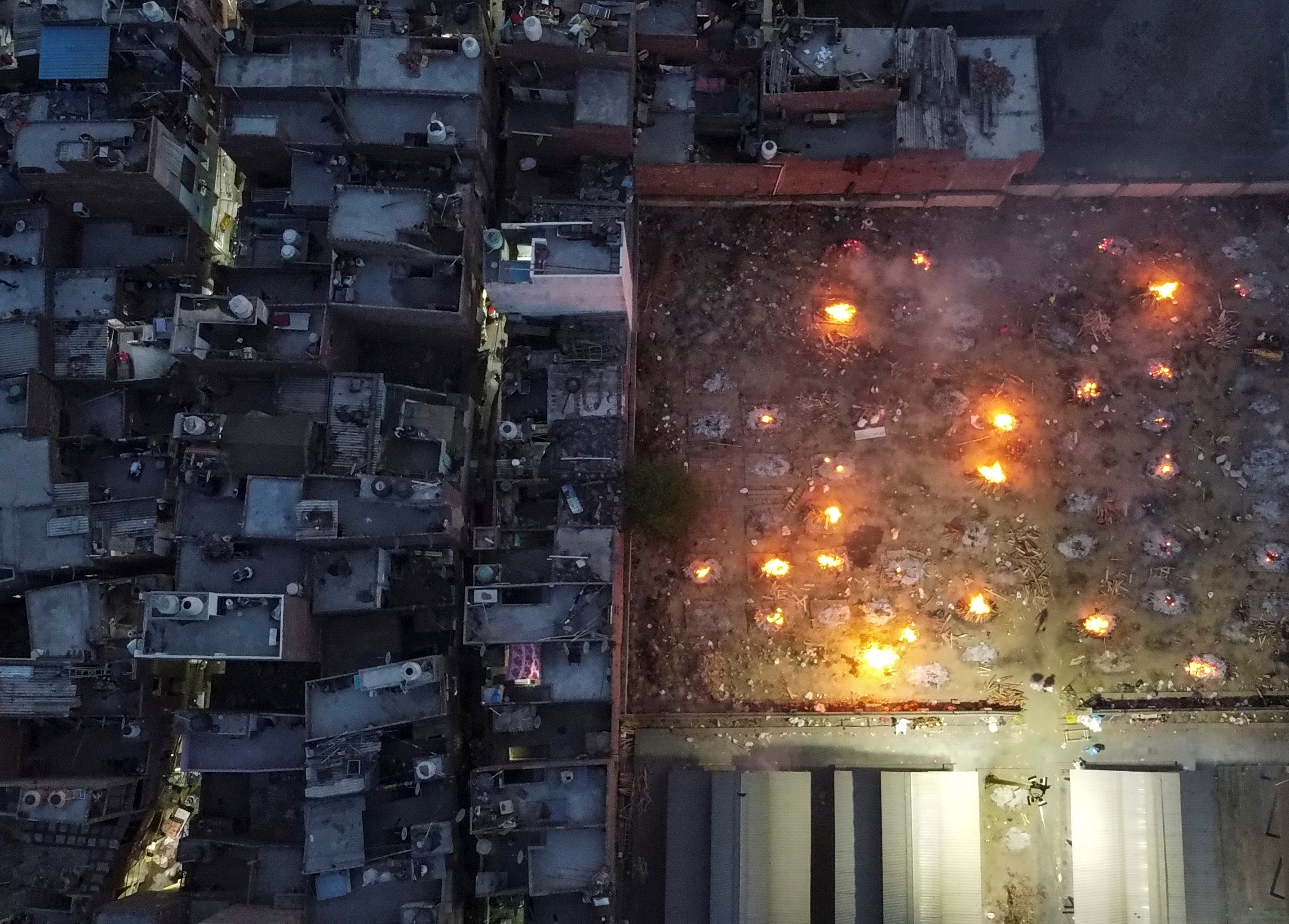 |
| A mass cremation of victims who died due to the coronavirus disease (COVID-19), is seen at a crematorium ground in New Delhi Reuters |
Labels: Catastrophic COVID Wave, COVID-19, Emergency, India, Mutant Strains, Ontario Hospitals
posted by Pieface @ 8:19 PM
0 comments