Ruminations

Blog dedicated primarily to randomly selected news items; comments reflecting personal perceptions

Wednesday, January 28, 2026

Striking a Familiar Zoonotic Pathogen Chord

Medics wearing masks and hair nets wait to screen airline passengers.
International arrivals at Suvarnabhumi International Airport in Bangkok face extra screenings following the outbreak in India. (Suvarnabhumi Airport Office /Handout via Reuters)

"Nipah virus (NiV) is a member of the Henipavirus genus of the Paramyxoviridae family and is a zoonotic virus with a high case fatality rate. Our knowledge of the geographic distribution of NiV and the disease it causes, mode of pathogen transmission, and clinical manifestations of infection, have evolved over time."
"The first recognized human infection was in the Malaysian village of Kampung Sungai Nipah in 1998, initiating a deadly outbreak that lasted through 1999. Smaller sporadic outbreaks have since recurred nearly annually within South Asia with case fatality rates reaching greater than 90%."
National Library of Medicine...National Center for Biotechnology Information 
https://cdn.who.int/media/images/default-source/health-topics/nipah-virus/black-flying-foxes-hanging-in-tree-min.tmb-1920v.jpg?sfvrsn=99dedc73_1
Black flying fox bats ... World Health Organization
 
  • Nipah virus infection in humans causes a range of clinical presentations, from asymptomatic infection (subclinical) to acute respiratory infection and fatal encephalitis.
  • The case fatality rate is estimated at 40% to 75%. This rate can vary by outbreak depending on local capabilities for epidemiological surveillance and clinical management.
  • Nipah virus can be transmitted to humans from animals (such as bats or pigs), or contaminated foods and can also be transmitted directly from human-to-human.
  • Fruit bats of the Pteropodidae family are the natural host of Nipah virus.
  • There is no treatment or vaccine available for either people or animals. The primary treatment for humans is supportive care.
  • The 2018 annual review of the WHO R&D Blueprint list of priority diseases indicates that there is an urgent need for accelerated research and development for the Nipah virus. WHO 
Confirmation of an outbreak of Nipah virus in West Bengal, India, led to southwest Asia airports placed on alert. Checkpoints for passengers from West Bengal were implemented by Thailand on Sunday, while Taiwan's Centers for Disease Control announced that it planned to list the disease as a Category 5 threat. The Indian Ministry of Health confirmed two cases of the zoonotic infection, with 200 close contacts being monitored and tested. 
 
Nipah has a fatality rate of 40 to 70 percent, according to the Centers for Disease control and Prevention. No vaccine has yet been produced against the virus and there is no cure for Nipah virus. Outbreaks of Nipah occur annually in South Asia, while more broadly global awareness of the virus remains low. Transmitted to people from animals, the virus can be contracted from direct contact with infected animals, primarily flying fox bats and pigs.
Four people in white protective suits push a patient on a stretcher through an indoor area
Nipah virus has a fatality rate in humans of up to 75 per cent. (Reuters: CK Thanseer)
 
Fruit contaminated by these animals can be a source of infection for the unsuspecting. Raw date palm juice produced with sap contaminated by fruit  bats has been linked to outbreaks in Bangladesh. The virus, once it makes the leap from a contaminated animal's tissues or secretions, can readily spread person-to-person through close physical contact.
A man in protective goggles and a mask holds a bat in his hands
Scientists in Bangladesh have previously caught bats to test them for the virus. (Reuters: Mohammad Ponir Hossain, file)
 
A major outbreak among pig farmers in 1999 Malaysia killed over a hundred people, and this was the world's introduction to the presence of the virus,  highly contagious among pigs. Nipah outbreaks occur almost annually in Asia, most frequently in Bangladesh and India. A 'predictable season pattern' has emerged as routine outbreaks in Bangladesh between December and April, a research paper published in the Journal of Infection and Public Health established.
 
That research linked the pattern to peak harvesting season for raw date palm sap, a cultural delicacy and tradition, where fruit bats frequently live among date trees. The Philippines, Singapore and Malaysia have also been host to outbreaks. "This represents a return of Nipah to this area after a long gap, which is concerning from a surveillance standpoint", pointed out Lauren Sauer, director, Special Pathogen Research Network at University of Nebraska Medical Center.
 
🦠 What is Nipah Virus? Nipah Virus is a rare but serious ...
Within days of infection symptoms including fever, headache, cough, muscle pain and difficulty breathing emerge. Patients may experience neurological symptoms such as  brain swelling as the infection progresses. Patients who survive brain swelling (encephalitis or brain inflammation) can recover but still face a future life of consequences including seizure disorders.
 
No licensed treatments exist for Nipah, nor are there any available vaccines.  
 
In 2018 the World Health Organization  marked Nipah as a priority pathogen urgently requiring accelerated research and development particular to the virus. 
  

Labels: , , , , , , , , , , ,

Sunday, December 28, 2025

India's Winters of Discontent

"Imagine the impact of that on a baby’s lungs. Children are forced to go to school in these circumstances, and even masks aren’t recommended for kids below 12."         "We are literally killing our kids."                                                                                     "Our life expectancies are reduced by 5, 10 years, but the government is doing nothing about it. [Three-year-olds at her clinic struggle with a] cough that never goes away."                                                                                                                                           Dr. Vandana Prasad, New Delhi pediatrician 
 
"I want to tell Delhi’s citizens that the government has installed anti-smog guns on high-rise buildings, done dust mitigation with water sprinklers, we are monitoring ongoing constructions."
"[However], ten years of damage [presumably by the previous government] cannot be undone in 7 months."
Environment Minister Manjinder Singh Sirsa  
 
"Effective cloud seeding requires specific cloud conditions, which are generally absent during Delhi’s cold and dry winter months."
"Even if suitable clouds were present, the dry atmospheric layer beneath them could cause any developed precipitation to evaporate before reaching the surface."
Indian Meteorological Department   
https://media.cnn.com/api/v1/images/stellar/prod/gettyimages-2244377161.jpg?c=16x9&q=w_2000,c_fill/f_avif
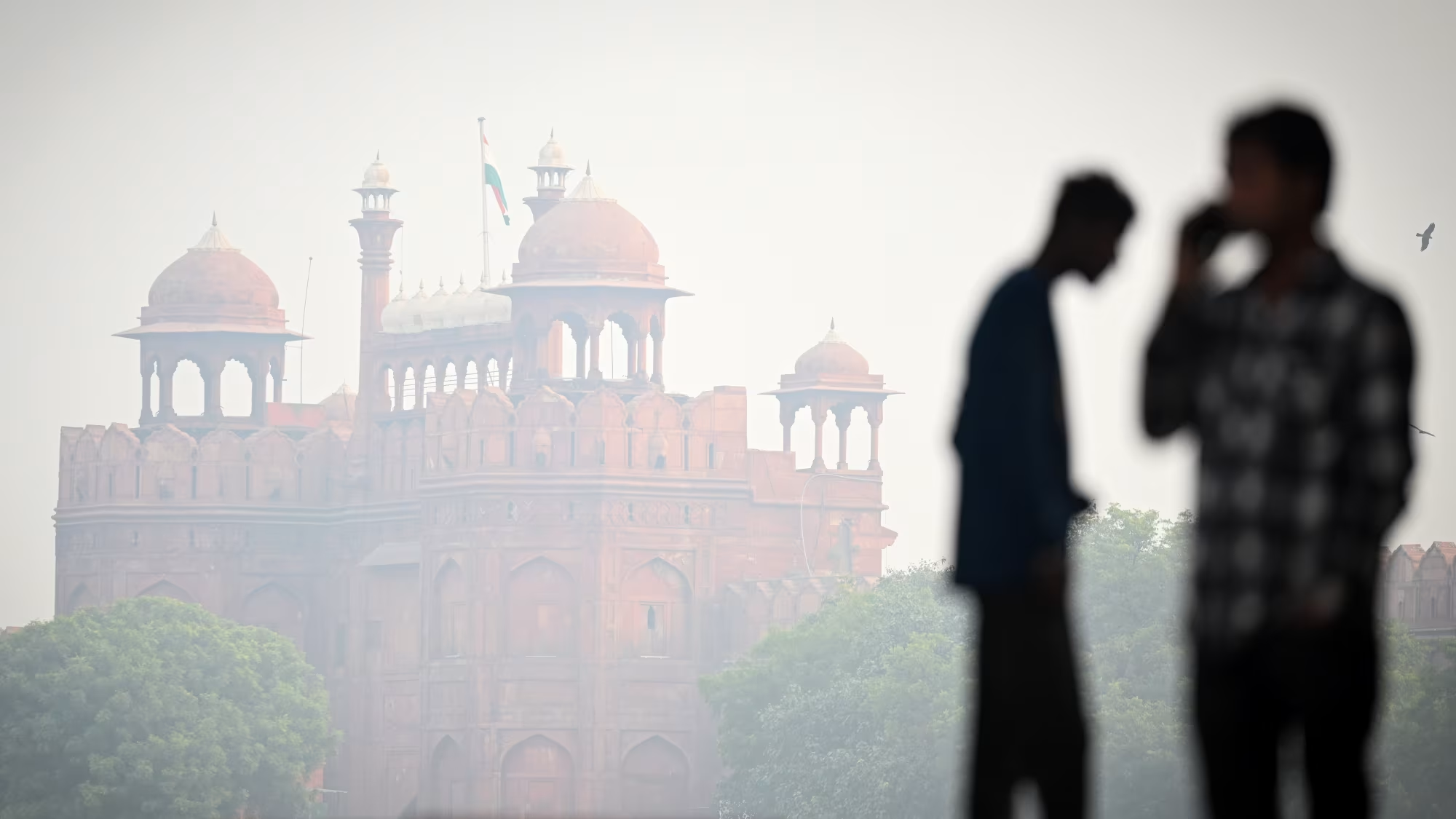
Smog around Delhi's famous Red Fort   Reuters
 
Public health research groups in India publish statistics to the effect that air pollution may be linked to over 17,000 deaths in 2023 in New Delhi, representing about 15 percent of the city's fatalities in that year. Long-term exposure to air pollution, according to a recent study, may contribute up to 1.5 million deaths annually in the country. When winter arrives after months of stifling 40C summer heat, the cold brings no weather relief to New Delhi. Hundreds of millions of people in India suffer through three long months of suffocating air pollution. 
 
New Delhi has gained the deserved reputation in the past several decades of being one of the most polluted major cities worldwide, wrapped in a dull fog of haze, the toxic odour of smog that burns the throat, suffuses lungs and stings the eyes. Pollution levels in India's capital city are like few others on Earth, each winter bringing anew a health crisis to the 30 million residents of the city. Pollution levels that repeatedly and frighteningly exceed the upper limits of the government's air quality index, becoming excessively health-hazardous when it is over a hundred times what global health authorities agree is safe.  
 
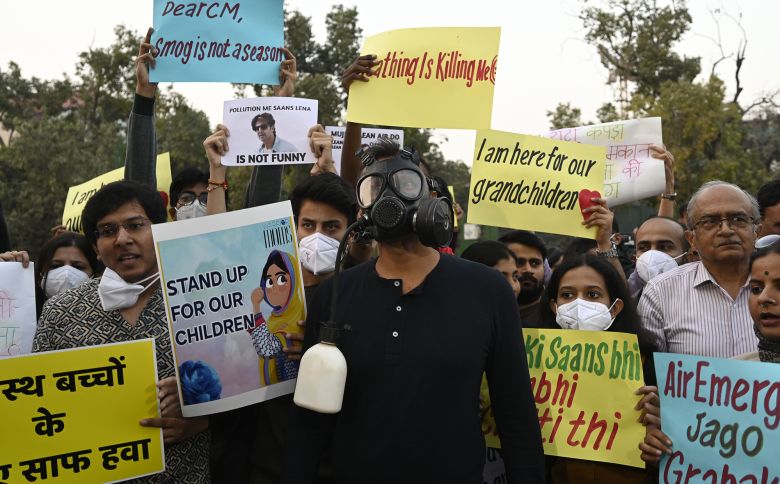
Protesters gathered near India Gate in New Delhi on November 9 to urge the government to act over rising air pollution.
 
And for this first time, fed-up and  fearful Delhi residents have launched protests to deliver a message to their government that the situation is unsustainable. That no citizens anywhere should have to live with a menace threatening their health and longevity. The breath-strangling smog forces people to remain indoors; windows closed shut with tape and air purifiers for those that can afford them, humming its tune of reassurance. The worst smog conditions are mornings, with slight clearing in early afternoon, when people break out of their homes in a mad dash to run errands before the resumption of the heavy, cloistering smog.
 
Those residents that of necessity can afford it, install pressurized clean air systems to create a sealed bubble in their apartments, with some people going so far as to carry with them wherever they go portable air quality monitors measuring particulate matter levels. Most people, however, simply cannot afford luxuries like that, with millions living in substandard  housing, where open vents cannot be sealed. They have little choice but to face the outdoors to earn a living.
 
The wall of the Himalayas prevent polluted air from dispersing, compounding an already serious condition resulting from colder, heavier winter air unable to cope  with construction site dust, and the exhaust of millions of Delhi cars making the haze ever denser. And then there is the traditional seasonal burning of crop residue in states nearby, choking the air with fine particulate matter, invading lungs and raising risks of heart disease, lung cancer, strokes and other threats to human health.
 
The government responds to the yearly winter crisis with sprinklers and water guns in the hope of bringing particulates to ground level where road sweepers go into action, along with dust-control measures for construction sites. A number of emergency response plans contribute their not-entirely-successful methods of tackling the staggering level of polluted air. Yet despite the danger posed by New Delhi's air pollution, citizen concerns first list jobs, inflation, economic growth and coping with soaring prices for consumer goods. Environmental concerns limp in at the very last. 
 
High-rise buildings under construction cloaked in heavy smog pollution on October 29, 2025 in Noida, outskirts of New Delhi, India.
 

Labels: , , , , ,

Monday, August 18, 2025

When Allies Fall Out

"Sections of the Indian foreign policy community feel 'betrayed' by the Donald Trump administration, which has found unexpected affection for Rawalpindi, raised a host of tough demands on trade, and threatened additional tariffs on India because of its BRICS membership and continued purchase of Russian oil."
"It is, perhaps, a small consolation that India is not alone. America’s neighbours and largest trading partners [Mexico and Canada] and its longstanding allies in Europe and Asia have even more reasons to feel betrayed."
C. Raja Mohan, Indian Express
 
"[There will be] very pragmatic strategic recalibrations [by New Delhi to protect its interests]."
"[India's growing economy allows its leaders breathing room, bit it is still a moment of] deep introspection [for the country]."
"We have to draw our lessons from that and really focus on the national priorities and what we need to do to become strong and more influential."
Nirupama Rao, former Indian ambassador to Beijing and Washington 
 
"In the dim-lit antechambers of global power, India stands as both witness and architect to a world on the edge of multipolar chaos."
"The tectonic plates of international order are shifting, and New Delhi – long a master of strategic ambiguity – now finds itself the subject of a more perilous experiment in global pressure with Washington brandishing the threat of sweeping tariffs and secondary sanctions."
"Republican Senator Lindsey Graham’s bill – stipulating 500% tariffs on countries buying Russian oil to curb Moscow’s aggression against Ukraine – puts India’s time-honoured doctrine of ‘strategic autonomy’ to its severest test."
"NATO Secretary General Mark Rutte’s subsequent warning to India of being hit ‘very hard’ by secondary sanctions if it continues to trade with Russia only underlines the gravity of the challenge."
Vinay Kaura, Royal United Services Institute  
Sunday Guardian

India, the world's most populous democracy, knows what it feels like to be caught between a rock and a hard place. And right now, the walls of that hard place are steadily albeit slowly moving inward to trap India, giving it due cause for concern and certainly cause to look about carefully in considering its options. Options which in and of themselves complicate an already complex situation, making it extremely difficult to make critical decisions. For any decisions made will come with ready-made headaches at a time when India would prefer to focus on its strengthening economic situation as a potential to nudge China aside as the world's premier producer of hard goods on the world stage.

On the one hand, New Delhi's growing power as a world-class producer capable of overturning China's current status as the globe's producing colossus, has seen Beijing's attention also swivelled to that likelihood so there is a certain level of tension to add to the belligerent territorial claims of the two giants over border issues and the high plateau Himalaya in particular. Rivalry of this calibre makes for uneasy neighbours.

But it is not only China and its penchant for territorial aggression that makes its neighours nervous; in India's case there is another neighbour with whom relations are fraught with tension; the ill will that emanates from Pakistan toward India is best seen in their fractious relations over Kashmir, a tinderbox of unresolved claims leading to occasional vociferous accusations and culminating in indecisive, violent clashes.
 
India's sterling relations with the United States, arguably still the world's dominant superpower, have recently taken a turn for the worse. Although in President Donald Trump's first administration no issues erupted that would rock a congenial relationship between the two countries had surfaced, the second Trump administration has roiled all of America's trade partners to a significant degree, threatening to upend world trade, causing no end of turmoil in stock markets and the suddenly wobbling global economy. 
 
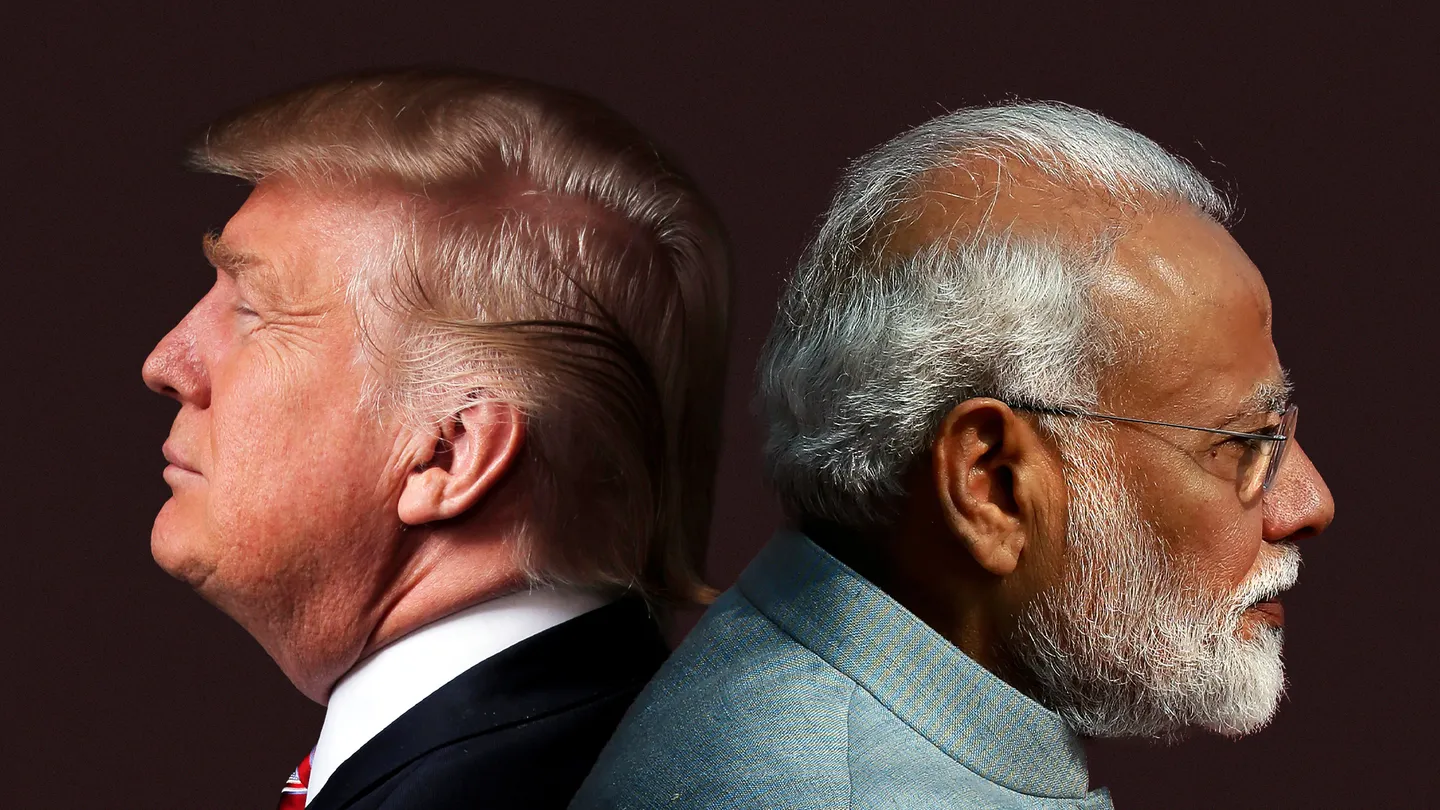
When that calm and friendly relationship between India and the U.S. erupted suddenly into an antagonistic trade issue, it was not only India, but all of the U.S.'s normally reliable Western-democratic allies finding themselves staring down the barrel of a targeted trade tariff of staggering proportions. The Trump administration levying a whopping 50 percent tariff on Indian goods as punishment for Russian oil contracts by New Deli and Moscow stunned Prime Minister Narendra Modi.
 
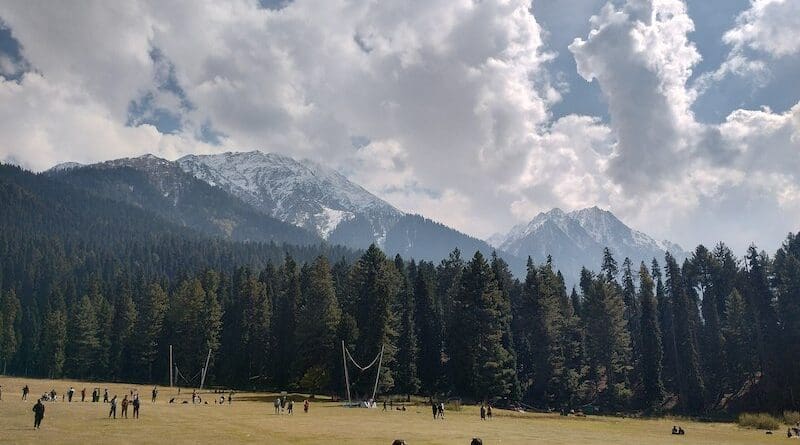
Baisaran Valley, near Pahalgam, Jammu and Kashmir, India. Photo Credit: Hellohappy, Wikipedia Commons
 
And when Donald Trump recognized Pakistan on an equal footing during a standoff between India and Pakistan over a conflict that began when Hindu tourists in Kashmir were attacked and killed by Pakistani terrorists whom New Deli identified as linked to the Pakistani military, India was taken aback, insulted and incredulous that this could occur, when even Trump himself has acknowledged that Pakistan harboured and sponsored terrorists in their midst -- with India in mind.
 
Donald Trump took credit for smoothing over the rankled hostility between the two neighbours, even as India took credit for its superior military having gained the advantage over Pakistan that led to a ceasefire. That Narendra Modi took exception to Trump's declaration as a premier peacemaker whose overtures had succeeded in arranging the ceasefire and his subsequent declaration of India having been responsible in view of its military success over Pakistan did not endear him to his erstwhile ally.
 
The diplomatic distance that ensued, made the imposition of steep tariffs inevitable as Mr. Modi has opened up to Vladimir Putin of Russia, both vowing to deepen "the India-Russia Special and Privileged Strategic Partnership" -- a red flag to a raging bull. With India facing a situation where rivals like China and the United States hemming in India's ambitions on the economic and diplomatic front, uncertainty reigns, forcing India to recommit to its doctrine of "strategic autonomy"; a situation similar to what Israel, an ally of India, is facing for entirely different reasons.
 
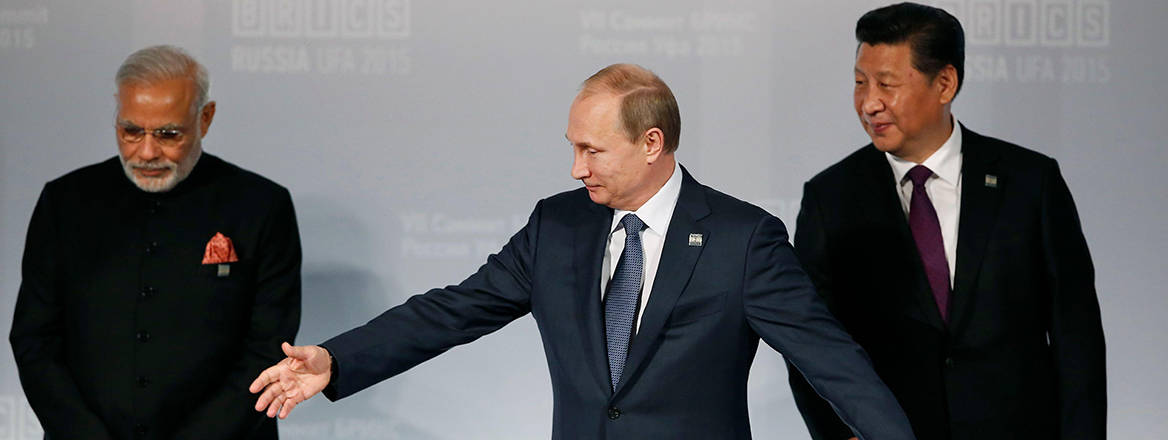
Russian President Vladimir Putin, welcomes Indian Prime Minister Narendra Modi and Chinese President Xi Jinping prior to a signing ceremony at the BRICS Summit in Ufa, Russia, Thursday, July 9, 2015.
Royal United Services Institute, U.K.

Labels: , , , , , , ,

Saturday, June 21, 2025

Canadian Khalistani Threat to India

Canada Modi Protest
"[A small number of Khalistani extremists] continue to use Canada as a base for the promotion, fundraising or planning of violence primarily in India." 
"[A situation which served, in turn, to draw the attention of India and fuelled Indian foreign interference actions in Canada]."
"[India is outlined as one of the] main perpetrators [of foreign interference and espionage."
"[Links between the Government of India and the 2023 murder of Sikh activist Hardeep Singh Nijjar represents a significant escalation in India’s repression efforts against the Khalistan movement and a clear intent to target individuals in North America."
"[Canada] must remain vigilant about continued foreign interference conducted by the Government of India, not only within ethnic, religious and cultural communities but also in Canada’s political system."
Canadian Security Intelligence Services (CSIS) 2024 report 
 
CSIS observes and diagnoses the situation it has called out from the perspective of incomplete or selective data, bypassing the provocations that a small, vocal, violent and conspiratorial group within the overall Canadian Sikh population represents in plotting against India on Canadian soil, hoping to incite an insurrection against Indian rule of its Sikh population by fulminating against India and demanding that the Indian government assent to fracturing its territorial integrity by gifting a portion of the Punjab to Indian Sikhs as a sovereign homeland, to be called Khalistan.
 
This, at a juncture when the issue has fairly well dissipated in India itself; its Sikh population no longer interested in separating from India, and reflected in its largest expatriate community located in Canada where most Canadian Sikhs have no interest in calling for a geographic separation between Sikhs and Hindus. 
https://www.orfonline.org/public/uploads/posts/image/650eb104f3fa0.png
Relations between India and Canada have been strained ever since Justin Trudeau became Prime Minister.  If the India-Canada bilateral readouts after the brief meeting on the sidelines of the G20 Summit in New Delhi reflected a relationship that’s destined to head the Pakistan way, then the diplomatic war that has been declared by Trudeau and joined by India has ended all pretense of normal ties and reduced Canada to the status of a new Pakistan. Observer Research Foundation
 
The deadliest terrorist attack in Canadian history took place forty years ago when ferociously anti-India Sikhs in Canada plotted an act of aviation catastrophe, and succeeded in blowing up an Air India passenger jet, killing 329 people on board, 268 of whom were Canadian citizens. An act of terrorism that the RCMP is still investigating, although it is well known and acknowledged that a particularly virulent Khalistani radical group was responsible for masterminding the attack and acting on it.
 
Enquiries and trials that eventually took place failed to lead to establishing guilt, leaving the perpetrators to walk away, free men. Since then the perpetrators of that appalling lethal attack have never been called to account. An outcome that failed to impress India favourably. Much less the fact that the government of Canada has failed India's requests to surrender to their authorities Canadian Sikhs who have been found guilty of major crimes in India.
 
The extremist Khalistani movement remains hale and hearty in Canada which has chosen to harbour them rather than condemn their actions and ongoing incitements to violence against India. In their parades, the Khalistanis take pride in venerating those among them infamous for violent lethal acts against Hindi India. They mock the assassination of former Indian Prime Minister Indira Gandhi by one of her Sikh bodyguards, and desecrate her image, just as they hang India's current Prime Narendra Modi in effigy. 
 
https://static01.nyt.com/images/2024/10/31/multimedia/31india-sikhs-flhk/31india-sikhs-flhk-superJumbo.jpg?quality=75&auto=webp
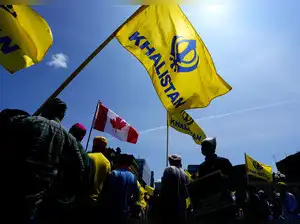
Khalistan flags last year in Surrey, British Columbia. India has repeatedly accused Khalistan-related activists in countries like Canada of sponsoring gang warfare, drug trafficking and extortion in India.  Credit...Jackie Dives for The New York Times
 
In 2023 the U.K. government commissioned a review that revealed Khalistani activists exploited government ignorance, threatened and intimidated Sikhs, indoctrinated youth and solicited funds from Sikh temples to further their extremist agenda. No such revelatory actions have been taken in Canada. Instead the government has no reaction to the Khalistani penchant for extolling the heroics of the terrorists among them and the vicious vilification of India's majority Hindu population and their government.
 
India's concerns and overtures to the Canadian government have availed it nothing. Instead, the federal government continues to equate the extreme fringe Khalistanis with the majority Sikh population in Canada who have nothing whatever to do with them and who have no interest whatever in espousing for a Sikh Khalistani homeland. All this, in the Liberal government-of-the-day courting an ethnic bloc vote.  
 
CSIS in fact revealed that Pakistan's Inter-Services Intelligence spy agency aided and made use of the Khalistan movement in its own bid to destabilize India. 
 
India maintains that Pakistan's involvement of protecting, funding and training the Khalistanis, enabled the group to emerge into a transnational criminal enterprise. In British Columbia Khalistani terrorists murdered some of its prominent Sikh critics. Former British Columbia Premier Ujjal Dosanjh himself was mercilessly beaten by Khalistanis, furious that a Sikh-Canadian from a place of political prominence, attacked them as human-rights violators.
 
Peel Regional Police recently dismantled a major narco-terrorism network in the Greater Toronto Area linked to suspected Khalistan sympathizers. Proceeds from the illicit drug trade were involved in financing anti-India activities in Canada; protests, referendums and the acquisition of weapons among them. Moreover, Khalistan sympathizers are believed to have forged links to Islamist terror groups in the Middle East and South Asia. Linked in a common purpose of anti-Israel, anti-India sensibilities.
 
https://images.timesnownews.com/thumb/msid-151880047,thumbsize-40838,width-1280,height-720,resizemode-75/151880047.jpg
Out of the nine arrested, seven are Canadian citizens of Indian origin. A huge narco-terror network with links to Khalistan sympathizers has been busted by police in Canada.
"Some Canadians participate in legitimate and peaceful campaigning to support the Khalistan movement," the CSIS report goes on to say. "Non-violent advocacy for an independent state of Khalistan is not considered extremism. Only a small group of individuals are considered Khalistani extremists because they continue to use Canada as a base for the promotion, fundraising or planning of violence primarily in India. While there were no CBKE-related attacks in Canada in 2024, ongoing involvement in v ..

"Some Canadians participate in legitimate and peaceful campaigning to support the Khalistan movement," the CSIS report goes on to say. "Non-violent advocacy for an independent state of Khalistan is not considered extremism. Only a small group of individuals are considered Khalistani extremists because they continue to use Canada as a base for the promotion, fundraising or planning of violence primarily in India. While there were no CBKE-related attacks in Canada in 2024, ongoing involvement in v ..

Prime Minister Modi and his core
ministers and advisers are keen to build India’s global
influence and counter any activity they consider as
‘anti-India,’ at home or abroad, in the name of domestic
stability and prosperity. With that considered, there is
a long history of India arguing that Canada is a haven
for ‘anti-India’ activity, with the separatist Khalistan
movement being a particular focus of India’s concern,
which is rooted in the aftermath of the 1985 Air India
bombing and subsequent terrorist activity in India.
                      CSIS 2024 Report

Labels: , , ,

Sunday, June 09, 2024

The Inevitability of Real Star Wars

"We must protect our space capabilities while also being able to deny an adversary the hostile use of its space capabilities."
"Because if we do not have space, we lose."
"[By 2026 the intention is to have] substantial on-orbit capabilities that allows us to compete in full-spectrum operations."
General Chance Saltzman, chief, space operations. U.S. Space Force
https://live-production.wcms.abc-cdn.net.au/fe56586efd7c3e901137f0f068e52d0f?impolicy=wcms_crop_resize&cropH=1080&cropW=1920&xPos=0&yPos=209&width=862&height=485
Space is becoming an increasingly contested domain and more countries are preparing for war there.()
 
In the conviction that China and Russia are achieving advances at a rapid rate on space-based operations that would inevitability present a growing threat to American military ground assets as well as orbiting American satellites, the United States is feverishly involving itself in an expansion of its capability to fight a potential war in space. Officials at the U.S. Defense Department obliquely but increasingly acknowledge the initiative is there, and on track as a major shift in American military operations, in the anticipation that space will inevitably become a battleground for supremacy. 

It is, in fact, a reprise of the historical U.S. hysteria that surrounded the secret, high-impact research at Los Alamos when Robert Oppenheimer was given his Army orders to develop an Atomic bomb. Convinced that the Soviet Union had its research on atomic weaponry well underway, the U.S. military under President Roosevelt's administration, then Truman's presidency, pursued the goal of discovery and even played with the idea of unleashing an atomic weapon as an experimental thrust in Germany figuring a million or so civilians were expendable to their program to present a show of implacable force.
 
Saner heads prevailed and the tentative initiative was shelved, since it was clear at that point that the Second World War Allies were prevailing, and war was certain to end shortly. Yet the urge to display the power of their newfound weapon's awesome might was irresistible to those who made the final decision to bomb Japan and demonstrate at Hiroshima and Nagasaki that the United States wasn't merely playing around -- even though it was known that Japan was on the verge of surrender. 

At the present time, while the American military is in pursuit of space domination in competition with Russia and China with their own similar aspirations, their plans are in the realm of classified information. The U.S. military is in search of a new generation of ground- and space-based communication tools to enable it to defend their satellite network from attack and/or to disrupt or disable enemy spacecraft in orbit.
 
https://i.insider.com/64747cfc3be3b50019f72bdf?width=1300&format=jpeg&auto=webp
The Soyuz TMA-19M rocket launching into space from Baikonur, Kazakhstan in 2015. NASA/Joel Kowsky via Getty Images
 
Through the U.S. director of national intelligence's recent unclassified assessment and American defense officials' confidence that Russia and China have tested or deployed systems like ground-based high-energy lasers, anti-satellite missiles or maneuverable satellites with the potential for their use in disrupting American space assets helped to propel the initiatives. Reports have emerged that Russia may be in the development stages of a space-based nuclear weapon capable of wiping out satellites.

It is, however, China's expanding fleet of military space tools that grips American military interest. China has proven its capabilities in space with its first-ever landing on the far side of the moon and related geological sampling. "China has fielded a number of space capabilities designed to target our forces", U.S. Air Force Secretary Frank Kendall claims. China tripled its network of intelligence, surveillance and reconnaissance satellites since 2018, according to General Stephen N. Whiting who oversees Space Command. 
 
Responsible for the use of space assets in defense of the U.S., General Whiting  described the Chinese satellites as a "kill web over the Pacific Ocean to find, fix, track and, yes, target United States and allied military capabilities". Charges that both Russia and China deny. They are concerned that it is the United States driving the militarization of space.

Both Russia and China urged the United Nations Security Council "to prevent for all time the placement of weapons in outer space". A failed precaution. After the U.S. itself sought a resolution reiterating that nuclear weapons not be deployed in space, John Plumb, assistant secretary of defense for space policy characterized the Russia/China proposal as "hypocritical because both Russia and China are deploying weapons."

The American solution? Pursuit of what American officials call "responsible counterspace campaigning", avoiding confirmation that the United States has plans to place weapons in space. The U.S. has also committed to the avoidance of creating massive debris fields in space resulting, should an explosive device or missile be used to blow up an enemy satellite. Such missiles have been tested by the U.S., China, India and Russia, but the U.S. vowed it would not again conduct such anti-satellite tests.

Some of the American concerns seem somewhat misplaced given that it possesses ground-based systems that allow the jamming of radio signals, disrupting the ability of an enemy to communicate with its satellites. The modernization of these systems, long in use, is also taking place. There has never been confirmation by the United States that it is in possession of space-based weapons. The Defense Department has a crewless space plane (the secretive X-37B), used on seven missions which speculation has it could be designed as a weapons platform.

On the drawing board is a new generation of military satellites that can manoeuvre, be refueled while in space or have a robotic arm that could grasp an enemy satellite. Two private companies have been awarded contracts to launch two specialized spacecraft, one acting as a mock enemy, the other equipped with cameras to observe the threat it could pose. No weapons will be present on the intercept satellite, though it has a cargo hold capable of carrying weapons. 
"By no means do we want to see war extend into space."
"But if it does, we have to be prepared to fight and win."
Lieutenant General DeAnna M. Burt, deputy chief, space operations
https://images.axios.com/R3kVqcRi0pP5LL-Cp74lN_LHXqE=/1920x1080/smart/2017/12/15/1513301411295.jpg?w=1920
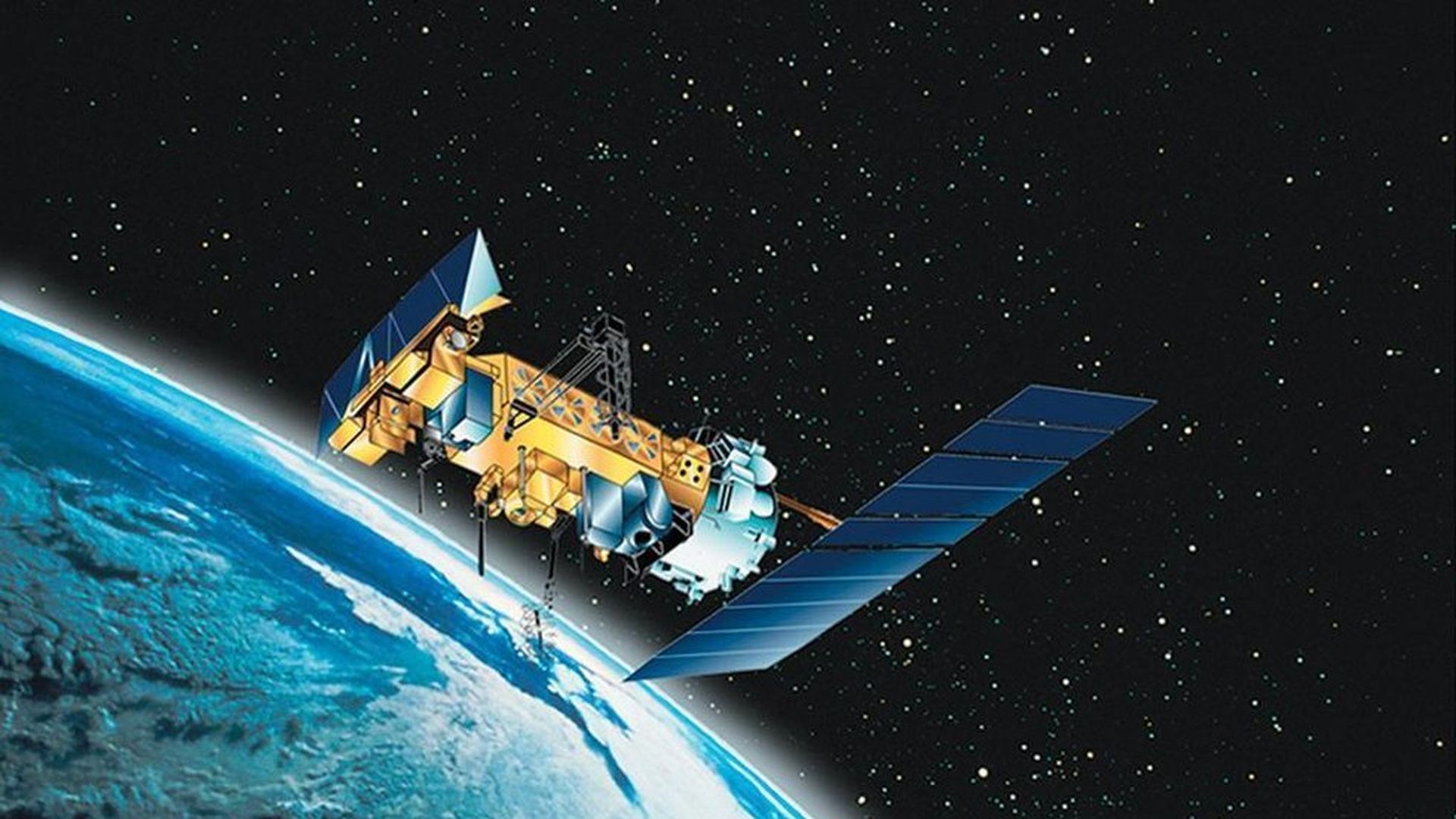
NOAA Photo Library via Flickr CC

Labels: , , , , , ,

Saturday, May 06, 2023

New Omicron Variant Arcturus

"If you've been infected before, it's able to escape some of those antibodies and immune cells that you've developed."
"But it's not like something we saw with Omicron [Alpha, then Delta, then Omicron]."
"[Omicron reinfected everyone all at once], producing this really big wave."
"I think that becomes less and less likely as there is more immunity in the population."
Dr. Jesse Shapiro, genomic evolutionary biologist, McGill University
Woman in mask at train station
The new Arcturus Omicron subvariant of Covid-19, which is spreading in Australia, has been categorized as low risk by the World Health Organization. Photograph: Jules Ingall/Getty Images

In India, the new Omicron strain appears to have been associated with conjunctivitis (pink eye), a condition commonly causing redness and inflammation of the conjunctiva, the thin layer of tissue that covers the eye. And mostly affecting children. Itchiness and watery eyes are among the symptoms, including a sticky coating on the eyelashes if an allergy is involved. 
 
"Arcturus" is now the variant of interest that has been the cause of a surge of COVID-19 in India. Its infection has a tendency to feature fevers and to cause itchy, watery eyes, so that it can easily be confused with seasonal allergies. It is not otherwise "particularly wild or shocking", according to Dr. Shapiro of McGill University.
 
Its emergence has been recognized as a new, likely more infectious COVID agent, even as the World Health Organization formally placed COVID-19's designation as a world health emergency as an issue of the past. SARS-CoV-2-induced deaths, hospitalizations and ICU admissions have all been in steep decline for over a year, in an atmosphere of global high population-level immunity resulting from vaccinations and infections as well as a combination of both.

"With great hope, I declare COVID-19 over as a global health emergency", announced WHO director-general Dr. Tedros Adhanom Ghebreyesus, on Friday. "In practical terms, the decision changes little", noted The New York Times in the recognition that most countries have long since removed public health restrictions.

Health experts, however, agree that while the world can sigh with relief that normalcy can return, they remind us all that though the dangers associated with the pandemic's wild spread have been reduced, the global spread of this virus is not over and likely never will be, since SARS-CoV-2 is still evolving. Formally known as XBB.1.16, the Arcturus variant, an Omicron descendant, is becoming ascendant in its rapid spread in Ontario and elsewhere throughout Canada.

This variant represents a recombinant of two different BA.2 strains. "It is an Omicron", with all the same major Omicron mutations, along with several more thrown in of interest, thought to aid it in evading immunity, explained Dr. Shapiro. There is research that suggests it could be more infectious and marginally more immune-evasive than previous virus iterations.
"The upward trend of cases warrants public health experts to remind the community on protective measures against the spread of disease."
"It is concerning that there are so many Omicron subvariants circulating in our communities, but it [should] be part of our daily routine to wear masks and practice safe distancing when one of the subvariants pick up steam." 
Bernadette Boden-Albala, MPH, director, founding dean, University of California Irvine’s Program in Public Health
 
"The global risk assessment for XBB.1.16 is low as compared to XBB.1.5 and the other currently circulating variants. No changes in severity have been reported in countries where XBB.1.16 are reported to be circulating."
"In India and Indonesia, there has been a slight increase in [hospital] bed occupancy numbers. However, the levels are much lower than seen in previous variant waves."
World Health Organization
A medical technician administers a COVID-19 in New York
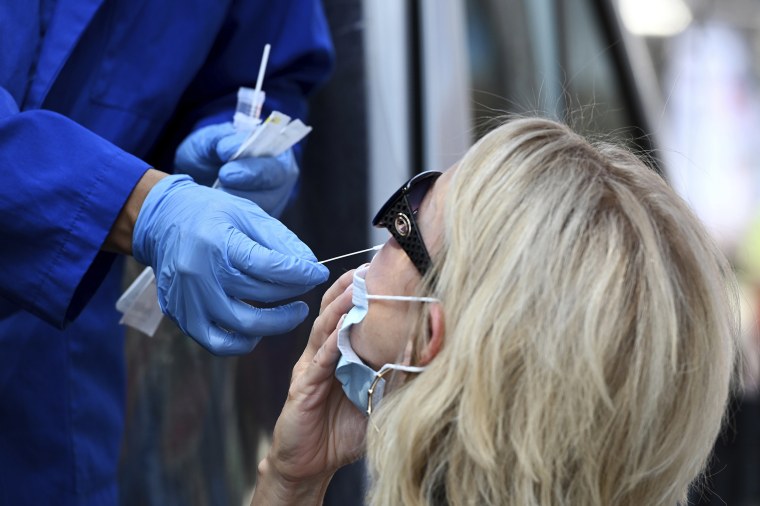
A medical technician administers a Covid test in New York.  Anthony Behar / Sipa via AP file


Labels: , , , , ,

Tuesday, January 17, 2023

Another Migrant Tragedy

"The agents told them that stormy cold weather conditions were ideal cover to cross into the U.S. undetected. They said it was their best opportunity and last chance to cross into the United States or return to India or stay back in Canada."
"'You have to walk in -35 degree Celsius to evade arrest by Canadian or U.S. security agents. Follow the lights of an American gas station because you will find no navigation available in the dark and extreme weather'."
Indian police official
 
"The victims were taken to Toronto in Canada and later to Vancouver. The agents then dumped them at Winnipeg in Manitoba province, leaving them to cross over to the U.S. on their own."
"[The migrants were] forced [to] walk in the snow [to cross the border]."
"There are deputy agents, main agents in India. The crossing agents in Canada and the U.S. help with legal and other assistance."
"The two wanted accused are agents from Canada and the United States."
Deputy Commissioner of Police Chaitanya Mandlik
Jagdish Patel, left; son Dharmik; wife Vaishali and daughter Vihangi are shown in this family photo released to the media at the time of their death in January 2022. Two men in India have now been charged with acting as immigration agents, culpable homicide, human trafficking and criminal conspiracy, in relation to the deaths of the Patels. (Vaishali Patel/Facebook)
 
It was a year ago that the bodies frozen in the snow on frigid winter terrain were found. They had set out with a larger group of an additional eleven people hoping to make the passage on foot from Manitoba during blizzard conditions. In the dark of night and white-out blizzard conditions, feeling the misery of -34degree Centigrade probing relentlessly through their winter parkas and boots, they became disoriented and separated from the larger group. They were a father, mother and two children, ages three and eleven.

Of the larger group of eleven, seven made their way to safety. After walking through these abysmal conditions for over eleven hours, the seven were apprehended by U.S. Border Patrol officers. The cause of death for Jagdish Patel, 39, his wife Vaishaliben Patel, 37, their daughter Vihangi, and three-year-old son Dharmik was ascribed to exposure to extreme cold. These were people originally from western India, the state of Gujarat, and they knew little about survival in Arctic conditions.

Theirs is a preventable tragedy. There have been others caught out in foul winter weather in isolated terrain who have suffered from frostbite, to the extent of losing limbs, in their determination to reach a desired destination. This family lost everything. The trend to illegal migration, to enter a country, pass through its borders surreptitiously rather than undergoing the lengthy process of legal immigration is on the rise everywhere. 
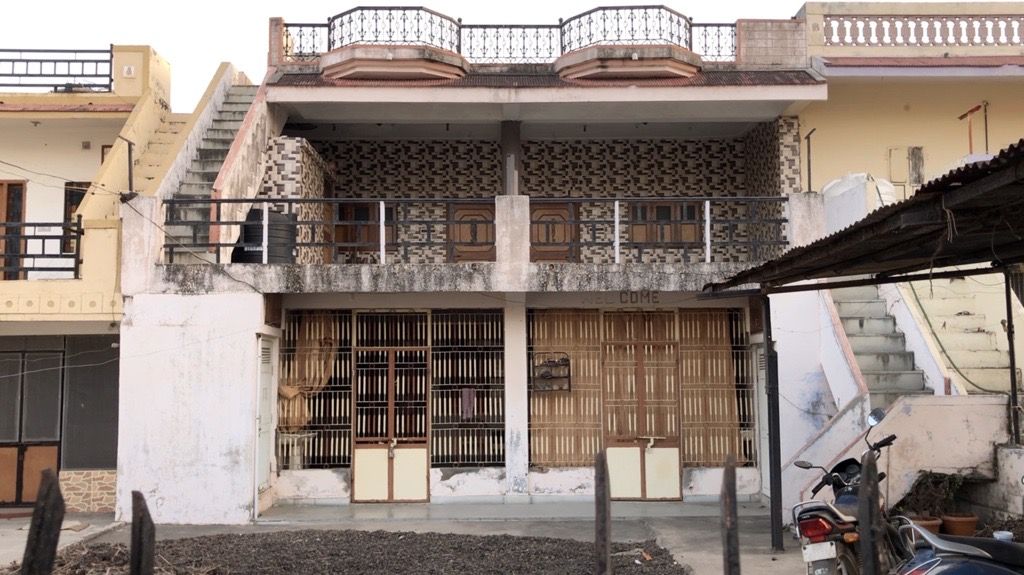
The Patels' home
Patel family home in India
 
Elsewhere, the crossings themselves are so fraught with danger -- usually those undertaken by sea passage on inadequate vessels holding too many hopeful migrants -- the carnage of drowning deaths is pitifully large. There are opportunistic migrants, and there are people desperate to escape endemic poverty, discrimination, local violence, drugs, and conflict.Usually refugees listed with the United Nations have a fairly good chance of being accepted by Western democratic nations.

The aspiration to join a wealthy country for the imagined promises of future stability, acceptance, wealth, a good education for children and access to universal health services has its draw on people who believe that other countries' residents enjoy a superior, material and political way of life. The family of four that perished on a cold stormy winter night walking across the border form Canada into the United States chose a risky way of achieving their goal.

They were prepared to pay handsomely for the services of people smugglers, never imagining that they would be paying for a horrible trial that would end in the deaths of their two vulnerable children and themselves under dreadful circustances. Now, India has arrested two of four human traffickers they name as 'agents' who acted as seasoned enablers for unlawful entry across a country's borders, with the intention of living on an underground economy, or declaring themselves refugees to await an official government decision on acceptance or rejection of their claim.
 
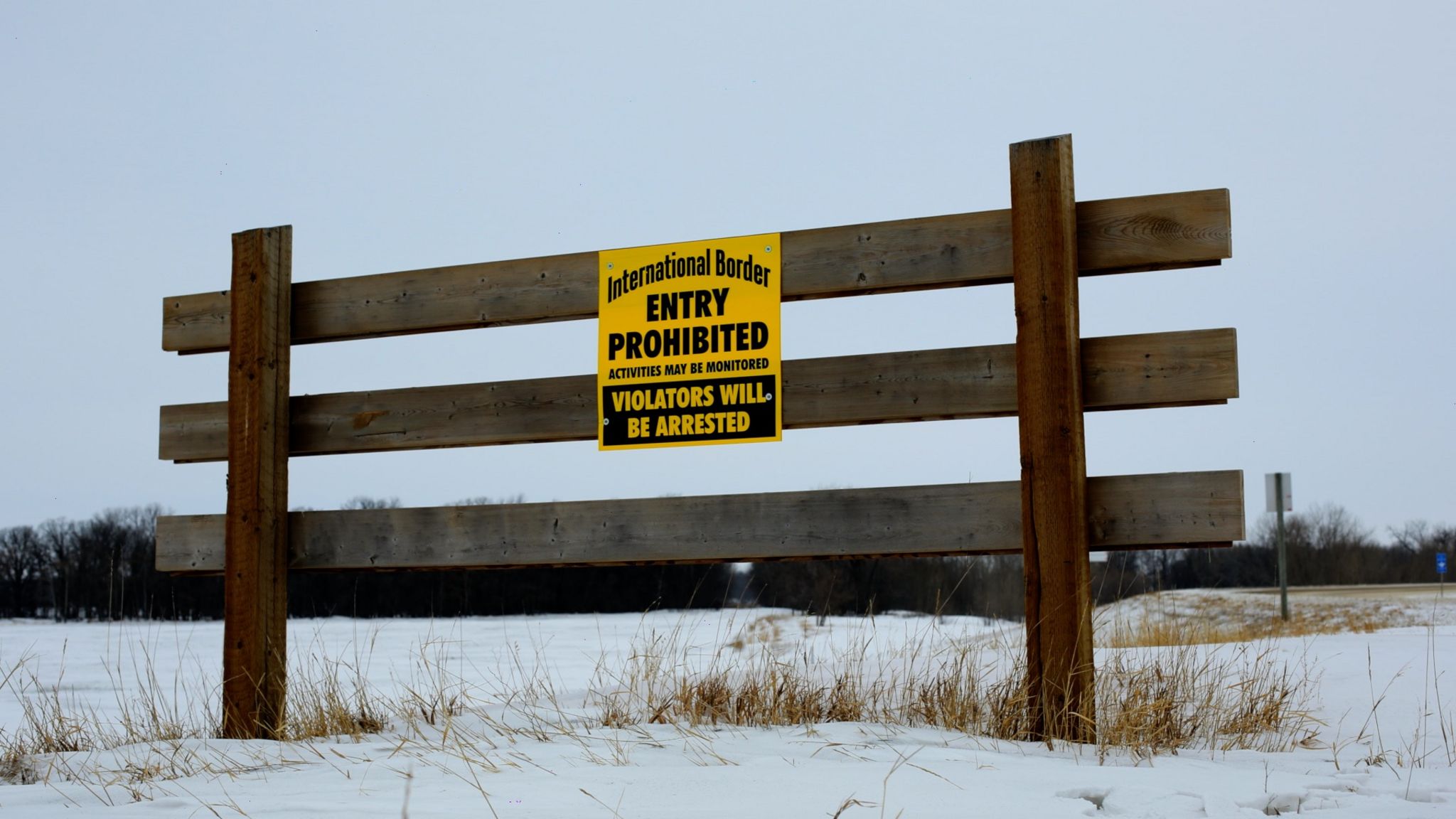
"Entry prohibited" sign
 
The Patel family was reported to have been reluctant to cross the border under such extreme weather conditions, but that they succumbed to the assurances of the 'agents' looking after their aspirational welfare. Two of the smugglers were arrested and charged with culpable homicide, although four in total are suspected to have formed an illegal immigration network recruiting citizens of India who are able to pay the toll demanded to smuggle them into the United States.

The other two suspects forming the gang of four have been identified as one in Canada and another in the United States; 'crossing agents'. They were to be paid some $10,000 per person for smuggling these people to their destination of choice. So these were not people trying to escape poverty, but rather people from the world's largest democracy, hoping to enter the United States illegally to make a new life for themselves there; their rationale for that choice is unclear.

The group of illegal migrants a year ago in the care of organized smugglers had the benefit of being given identical cold weather clothing consisting of new winter coats with fur-trimmed hoods, gloves, ski masks and insulated rubber boots. The alleged driver assigned to pick the migrants up on their entry to Minnesota was arrested soon after the discovery of the bodies of the Patel family. His case is yet to be heard in court while authorities in the U.S. continue to investigate the human smuggling ring.

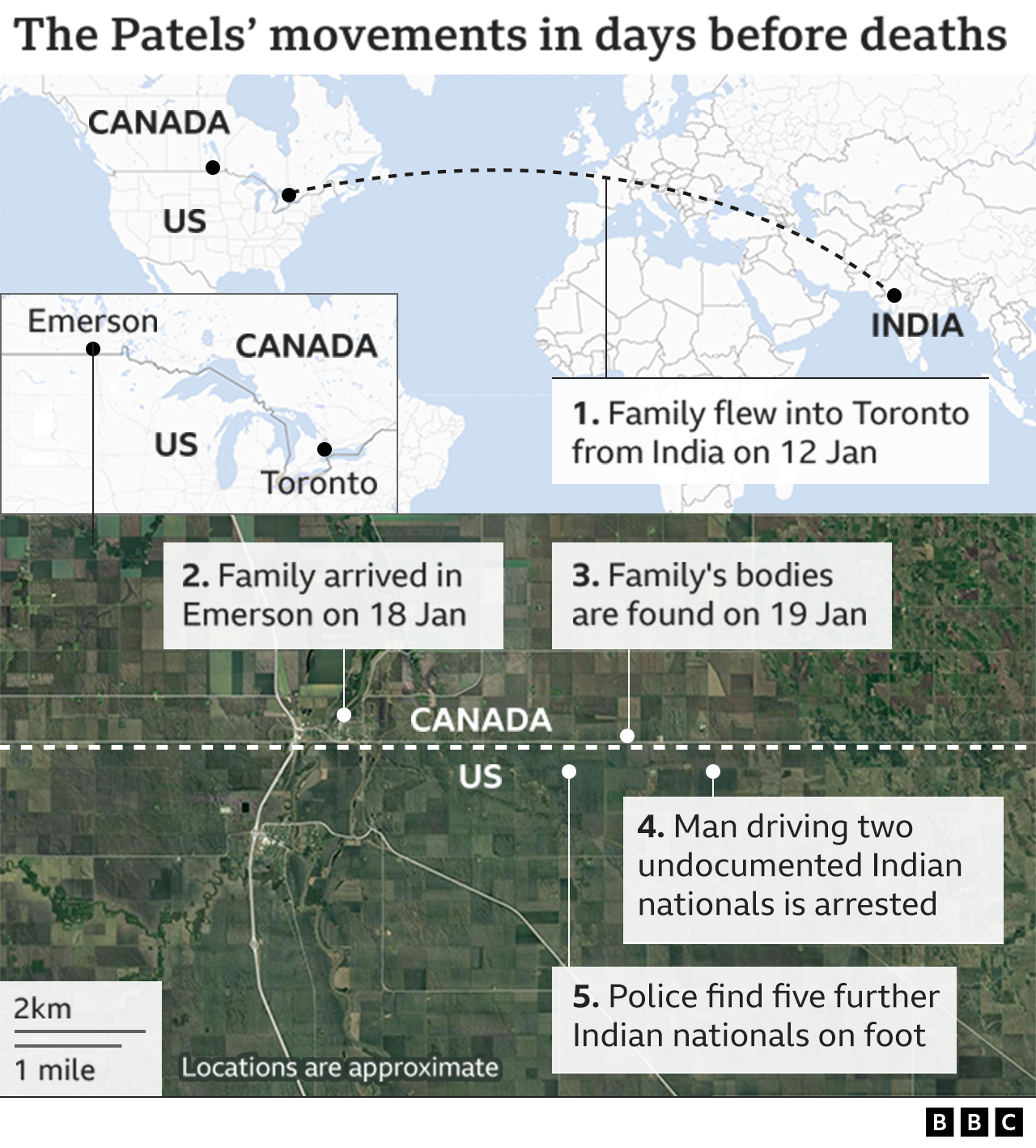
A map of the Patels' journey from India to Canada

Labels: , , , , ,

Sunday, May 01, 2022

Indian Summers -- Nothing to Envy

 Youtube video thumbnail
"We are seeing increasing incidents of fires in various places -- in jungles, important buildings and in hospitals -- in the past few days."
Indian Prime Minister Narendra Modi
 
"Rarely it happens that nearly the whole country -- is reeling under [a] heat wave."
"[The heat was] unbearable [with Mumbai temperatures hitting 37C on Wednesday]."
Arpita Mondal, Hydroclimatologist, Indian Institute of Technology Bombay
 
"Poor people have fewer resources to cool down as well as fewer options to stay inside, away from the heat." 
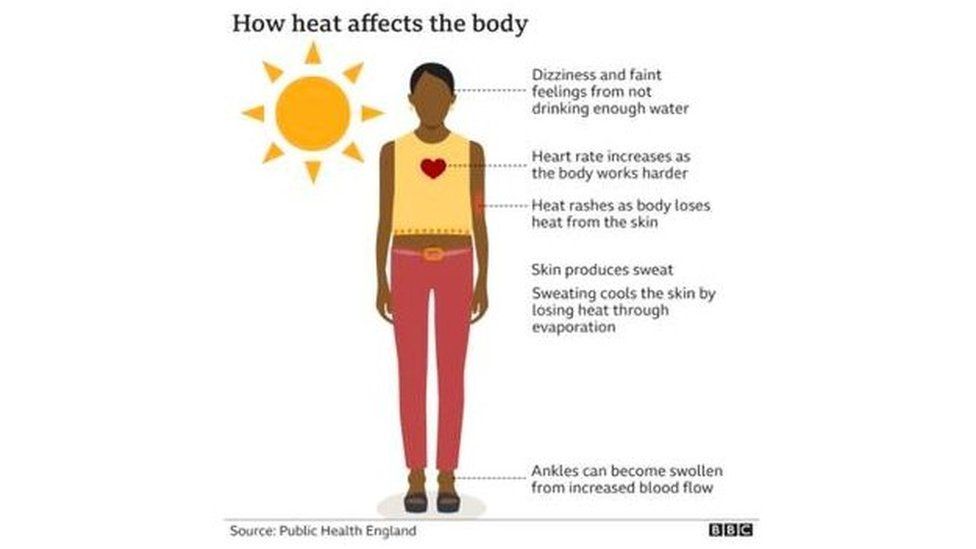
"Heatwaves can have serious health consequences. If temperatures are high even at night, the body doesn't get a chance to recuperate, increasing the possibility of illnesses and higher medical bills." 
"Our buildings are made in such a way that they trap heat instead of ensuring ventilation. There is so much innovation internationally that we can learn from."  
"We are doing some things right but it's time to up our game - because we have to live with the heat."
Dr Chandni Singh, senior researcher, Indian Institute for Human Settlements
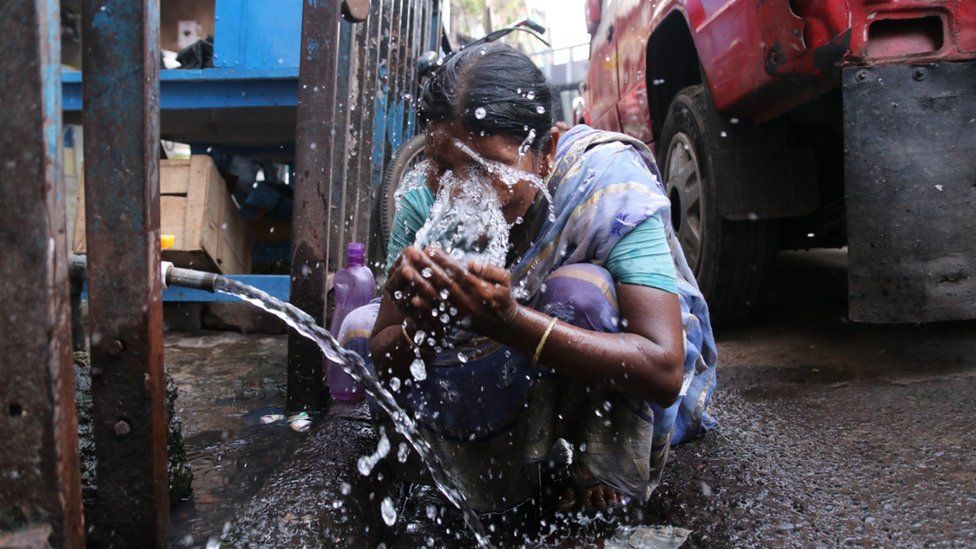
A woman splashes water on her face to get relief from extreme heat during hot weather, Kolkata
Summer began early this year in India   Getty Images

Climate change is being cited as causing a heat-wave phenomenon that might have been expected to recur once in every fifty years, to update it to occurring far more frequently, in India. "But now it is a much more common event — we can expect such high temperatures about once in every four years", warned Friederike Otto, a climate scientist at the Imperial College of London.
 
"Temperatures are rising rapidly in the country, and rising much earlier than usual", confirmed India's Prime Minister Narendra Modi. According to a report published by the medical journal The Lancet in 2021, this new extreme heat vulnerability for India increased by 15 percent in the last two decades. India ranks among the top five countries where its elderly and the indigent poor face the greatest exposure to extreme heat conditions. Both India and Brazil share the distinction of having the highest heat-related mortality world-wide. 
 
The impact is wide-spread. India's farmers in Punjab state, northern India, saw crops shrivel in a spring that was unusually cool, a condition that abruptly transitioned to relentless heat. Agricultural yield has been hard hit. Traditionally, Punjab is recognized as the 'grain bowl' of India. Farmers are bracing for a 25 percent reduction in their incomes, through reduced agricultural sales of crops that have failed to come to market.

The vast stocks of grain that India had to rely upon in times of shortages exceeding its domestic needs as a buffer against the spectre of famine have been seriously reduced since the pandemic. Strained by government distribution of free grain to around 800 million people, representing food-vulnerable people such as migrant workers, during the era of the pandemic. "We are no longer with that kind of a surplus . . . with exports now picking up, there would be a lot of pressure on the domestic availability of wheat", said Devinder Sharma, an agriculture policy expert in northern Chandigarh city.

A heat wave so intense that temperatures have soared up to 45C in New Delhi. A heat wave so hot that spontaneous combustion is taking place in vast garbage dumps. The toxic air in the capital, known as the globe's most polluted, further exacerbated at the very same time that India is attempting to cope with its most serious electricity shortage in over six years.

An early summer heat wave has swept across India bringing temperatures over 40 C for more than a billion people. The country endured the hottest March on record this year  CBC/Still from video

Large areas of both India and Pakistan have been swept through with the brooding, intense heat, following hard on the hottest March since the India Meteorological Department began record-keeping 122 years ago. Six districts in West Bengal were recorded with five degrees above normal; the lack of rain in the state capital of Kolkata making the situation even more intensely unbearable.
 
Health scientists point to the fact that over a billion people are at risk of health impacts from the extreme heat, with temperatures in New Delhi forecast to remain around 44C into Sunday. When the heat recedes it will be only temporary since what will follow will be peak summer heat until June when cooling monsoon rains arrive. 

Indian officials described landfill fires caused by spontaneous combustion, with calls to fire departments rising at this time of year typically, but in the present situation over 140 a day have increased from an average of 60 to 70, according to the director of fire services in New Delhi. At the Bhalswa landfill site rising above the north-western ridge of the city, firefighters struggled to extinguish a blaze the fumes of which forced a school located nearby to close. 

The increased electricity demand -- the fastest pace in almost four decades -- went hand-in-hand with the heat wave and an increase in economic activity. A fuel supply crisis is worsening a shortage of trains transporting coal. Millions of blue-collar workers, construction and farm labourers and factory workers are at great risk, thanks to the unprecedented heat.

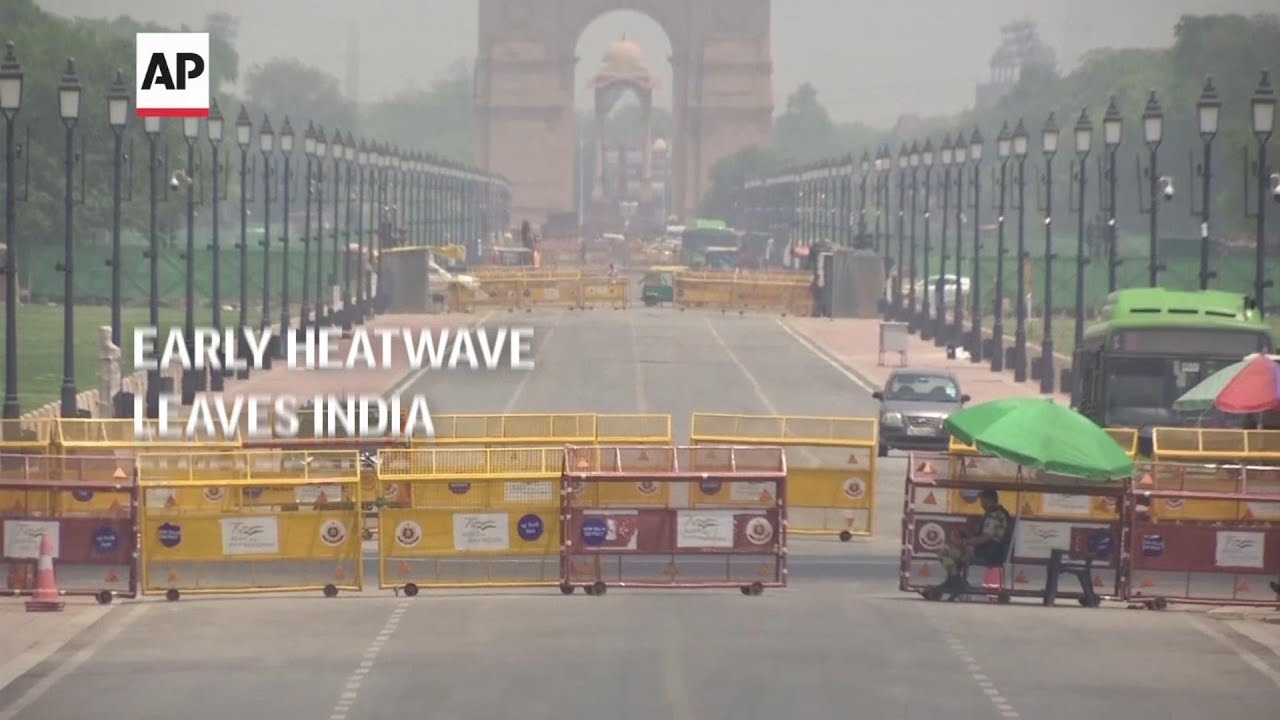
Heatwave
 

Labels: , , ,

Wednesday, September 29, 2021

Whatever It Takes : Rajasthan Eligibility Examination for Teachers

"We were aware of the possibility of cheating -- but we thought it would be a question of [an exam] leak or someone would use the internet, which is why it was restricted in many cities."
"In one case, we caught a student teacher after the exam and had to take him to a doctor to identify and remove the Bluetooth device from his ear."
"...This was a totally new modus operandi. [They] are getting so tech savvy."
"The slippers had a sim card and the candidates had a tiny Bluetooth bug implanted in their ears. In one case, we had to take a doctor's intervention to find the bug as it was so deeply implanted."
Priti Chandra, police official, Bikaner, India
The sole of a typical flip flop is opened to expose the hidden Bluetooth device.
Photo AFP/Getty Images
 
India has an immense population of 1.3 billion people. So it shouldn't be surprising that there were 1.6 million applicants taking the government examinations for student-teachers in Rajasthan state on Sunday. Among that number of potential future teachers was a group of 25 enterprising students who planned on passing the exam with flying colours, securing their coveted teaching posts in the country. All it took was money, no need to study and know their subjects thoroughly enough to have confidence in their own ability to learn and to absorb the required information convincingly enough to pass the qualifying exam.
 
Unfortunately, the students who had bought into a fraudulent new scheme, and who bought the items they would need to acquire the teaching certificates they planned on receiving, underestimated the keen observational intelligence of those involved in holding and administering the tests. They soon enough realized that their purchase of an innovative bit of technology would avail them nothing but failure and possibly jail time.
 
Those administering the exam, fully aware of the problem that cheating has been in the past, prepared for it this time around by authorizing a temporary cut to mobile internet access. Someone with an astute eye happened to notice that a group of people appeared to be behaving strangely while outside the exam hall on Saturday evening. In all likelihood testing the reception for the Bluetooth devices meant to accompany them into the exam chamber the following day.
 
They had paid out $8,142 each to acquire a pair of flip-flops. Not just any kind of footwear, but of a type that was truly unique, with receiving devices slipped into the sole of the shoes, enabling receipt of calls meant to be sent wirelessly to tiny receivers resting in the ears of the student teachers. Accomplices on the outside were to call the aspiring teachers' flip-flops to dictate correct answers. 

At least twenty-five students were found to have bought the wired flip-flops, according to investigators. Information that was shared with several other districts alerting them to the situation before the start of the exams, led many testing centres in the state to have students taking the exam remove their footwear beforehand. 

In India a handsome living can be earned by professionals hired to impersonate others, taking exams in their place, or stealing, or illegally procuring exam papers, then reselling them. A country of opportunities is also one of innovative illegality. It's not that such government jobs pay well. They are coveted for the extras that come with them; employment security and benefits such as lifelong pensions.


Labels: , ,

Friday, June 25, 2021

Sobering Runaway COVID: Variants of Variants

"WHO is tracking this variant as part of the Delta variant, as we are doing for other Variants of Concern with additional mutations."
"For the moment, this variant does not seem to be common, currently accounting for only a small fraction of the Delta sequences ..."
"Delta and other circulating Variants of Concern remain a higher public health risk as they have demonstrated increases in transmission."
World Health Organization  
 
"All lineages of the Delta variant are variants of concern [so there is nothing unusual in labelling Delta Plus as such]." 
"We do not have any indicators as of now to show that Delta Plus should be causing any public health worry or panic. We are not seeing anything worrisome yet."
"We are tracking it carefully, and strengthening all public health measures."
Dr Anurag Agarwal, director,  Delhi-based CSIR-Institute of Genomics and Integrative Biology
India second wave
The Delta strain was said to be responsible for the deadly second wave of infections   Reuters

"There is no data yet to support the variant of concern claim," 
"You need biological and clinical information in order to consider whether it is truly a variant of concern."
"You need to study a few hundred patients who are sick with this condition and variant and find out whether they are at greater risk of greater disease than the ancestral variant." 
Dr, Gagandeep Kang, virologist, Fellow of the Royal Society of London
 
"We don't have much reason to believe this is any more dangerous than the original Delta."  
"Delta Plus might have a slight advantage at infecting and spreading between people who were previously infected earlier during the pandemic or who have weak or incomplete vaccine immunity." 
"I would keep calm. I don't think India or anyone else in the world has released or accumulated enough data to distinguish the risk from the so-called Delta Plus as being more dangerous or concerning than the original Delta variant."
Dr Jeremy Kamil, virologist, Louisiana State University Health Sciences Center, Shreveport
The ongoing complexities and mysteries of SARS-CoV-2. India announced several days ago that it has identified roughly 40 cases of the Delta coronavirus variant that first emerged in India and this variant now carries a mutation appearing to make it even more readily transmissible than the already-more-transmissible Delta strain. It is the Delta strain that has caused a good deal of anxiety in Britain, identified as causing a new wave, and prompting the U.K. to hold off its promised re-opening. In Canada the Delta strain resulted in health authorities speeding up vaccinations in an attempt to head off the eruption of another COVID wave.

There is always the danger of mutations occurring with viruses, pushing health authorities to accelerate inoculation programs before the emergence of a mutation that turns out to be not only more transmissible but even significantly deadlier than the original. In the case of COVID 19, anything more deadly than the original is a nightmare to be avoided at all costs. In India the appearance of the new Delta variant has seen states in the country being cautioned of the urgent requirement to increase their testing.

Delta Plus was reported for the first time in a Public Health England bulletin issued on 11 June. Identified as a sub-lineage of the Delta variant which first emerged in India, Delta Plus has inherited the spike protein mutation called K417N, found as well in the Beta variant first identified in South Africa. The concern among some scientists is that the mutation along with other features of the Delta variant could ensure it is considerably more transmissible than the parent mutant.

"The mutation K417N has been of interest as it is present in the Beta variant (B.1.351 lineage) which was reported to have immune invasion property", stated India's health ministry. The K417N was known -- according to top Indian virologist Shahid Jameel -- to reduce the effectiveness of a number of therapeutic monoclonal antibodies. Resistance to vaccines, in other words, a potential horror story that might leave the world without the hope of vanquishing the pandemic through the miracle medium of anti-COVID vaccines.

To date, the Delta variant has been identified as having appeared in eleven countries altogether; Britain (36), Canada (1), India (40), Japan (15), Nepal (3), Poland (9), Portugal (22), Russia (1), Switzerland (18), Turkey (1), and the United States (83). Around 40 cases of the variant, according to India, have been observed in the states of Maharashtra, Kerala and Madhya Pradesh, with "no significant increase in prevalence". A sample taken on April 5 represents the earliest case identified in India.

On April 26, Britain sequenced its first five cases; contacts of individuals who had travelled from or transited through Nepal and Turkey. Among the U.K and Indian cases no deaths have as yet been reported. In India and throughout the globe, studies are being initiated to test vaccine effectiveness against the mutation. Regions where the Delta variant has been found "may need to enhance their public health response by focusing on surveillance, enhanced testing, quick contact-tracing and priority vaccination".

In India, the concern is obviously that Delta Plus may inflict yet another infection wave, at a time when it has so recently emerged from the world's worst surge in cases. At the present time, some 5.5 percent of Indians have been fully vaccinated, with 18 percent having received at least one dose. Vaccinations have been accelerated to the point where up to six million people are being vaccinated daily. One of the issues of concern is vaccine availability.
 
"It is most likely capable of dodging immunities", was the opinion of Shahid Jameel, virologist and director of the Trivedi School of Biosciences at Ashoka University in Sonipat, India. "That is because it carries all symptoms of the original Delta variant and also from its partner Beta variant."
 
Checking on a Covid-19 patient at a hospital in Mumbai, India, this month.
  Credit...Rajanish Kakade/Associated Press


Labels: , , , , ,

 
()() Follow @rheytah Tweet