Ruminations

Blog dedicated primarily to randomly selected news items; comments reflecting personal perceptions

Friday, September 01, 2023

Biological Inheritance ... Genetic Survival

"I will never know for sure how many children I have."
"It was hard to look my biological daughter in the eye and tell her I wasn’t her dad."
"Am I a parent? Maybe sometimes from the child’s perspective? I don’t know."
"It’s not for me to say, but it certainly feels like parenting every once in a while."
Dylan Stone-Miller, 32, software engineer, sperm donor, Atlanta, Georgia
 
"There are moments when it feels intrusive with Dylan. It’s about us figuring out what boundaries are, as well as him figuring out his boundaries." 
"I don’t want Harper [her daughter] to feel like she can call him anything. He is not her dad. Period. If she were to say that in front of us, we would straight up say, 'Dylan is not your dad. He will never be your dad. You don’t have a dad. You have a donor'." 
"We came on the scene when he was going through hard times. Being with the children gave him a renewed sense of purpose."  
"As we get to know him more, we all feel more comfortable. But my sense is he is going to feel more entitled, which can be problematic. We need to keep enough walls up to protect our girls and our family, but to make them permeable enough that he can come in." 
Alicia Bowes, mother of toddler born of Stone-Miller's sperm
Man who fathered 96 kids resigns from work to track them all down
Featured Image Credit: @‌DonorDylan/Instagram

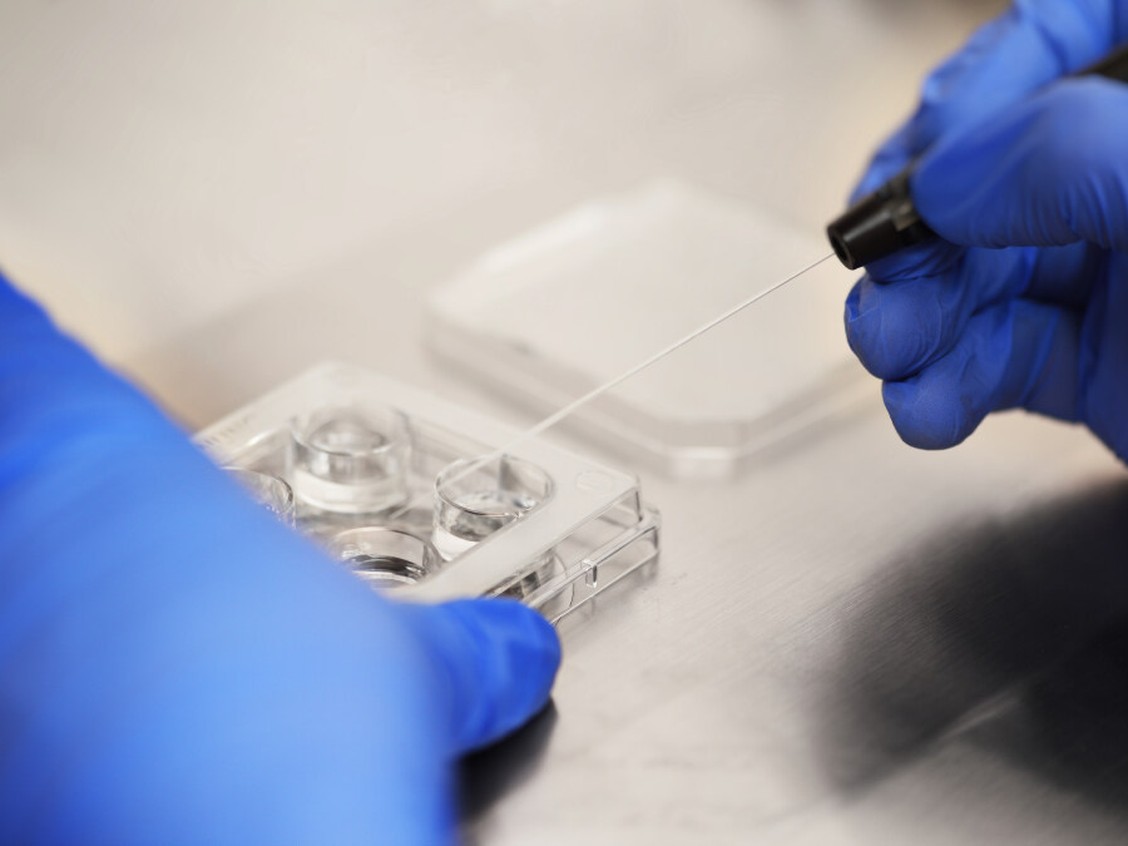
 There is no national limit in the United States on the number of children a sperm donor can father. A limit of 25 children per donor in a population of 800,000 is a guideline offered by the American Society for Reproductive Medicine. Rules are similar in Canada; a maximum of 25 offspring per 800,000 population from a single donor. The difference between Canada and the U.S., however, is that in the U.S. donors are financially compensated.

Under the Assisted Human Reproduction Act, in Canada buying or selling reproductive materials, inclusive of sperm, is illegal. Donors can be compensated for any expenses they may rack up in the process, however. Canada's official position of not paying for sperm is cited as the reason low sperm donations are the norm in Canada; thus the need to buy donated sperm from American sperm banks.

In Canada, the cost of a single IVF cycle can range from $7,000 to over $15,000; with no guarantee of success. Infertility, defined as an inability to conceive after a year, affects roughly eight percent of the population in Canada, according to The Royal Commission for New Reproductive Technology. There are those who argue Canada should legally restrict the number of children born from a single donor.

The obvious reason is genetic concentration which could lead to potential health issues. Critically, the risk of inadvertent incest between biological siblings. Spain and Belgium have a limit of six pregnancies per donor, leading some experts to recommend that Canada follow suit. Limiting the number of children born of a single donor is also linked to privacy of donors' identity protection.

In Atlanta-resident Stone-Miller's case Xytex, the sperm donor company he dealt with was given permission by him for his identity to be revealed to any of his biological children once they reached 18 years of age. Stone-Miller was a college student when he first began donating his sperm in exchange for $100 each visit with sperm bank Xytex. Initially he needed money to pay his lawyer when he was charged with underage consumption of alcohol.
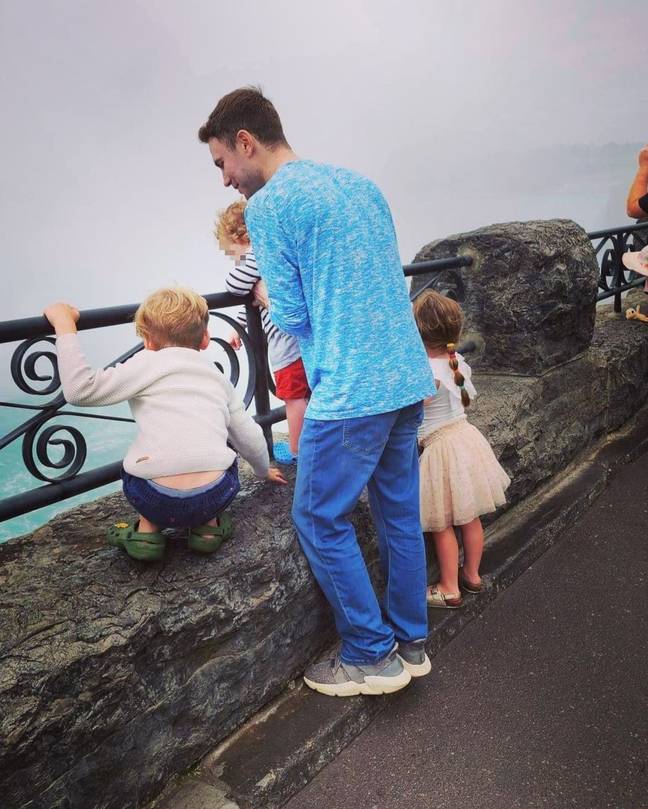
He has met 25 of his biological children so far. Credit: Instagram/@donordylan

For the next six years he continued to donate his sperm. At age 32 he decided to leave his job and travel. The purpose was to meet with as many of his 96 biological offspring as might be possible. To the present, he has met 25 of those children. In 2020 he received a Facebook message from one of two mothers to a toddler, one of Stone-Miller's biological children: "I really hope you don't feel violated in any way, but it's Canadian Thanksgiving and I wanted to tell you how grateful my family is to you."

That contact began his journey of discovery and introduction to some of the astounding number of children he had fathered. It was at this time that his marriage dissolved. And he asked Bowes whether he might join a Facebook group she started that was named after his sperm bank ID. It was his donor file details that enabled Bowes to track him down to begin with. He had informed Bowes of his interest in meeting his biological children, mostly American, and 20 parents responded.

To this point he has visited with Bowes and her family twice in Edmonton, seeing her two daughters who are his biological children. He actually maintains a spreadsheet with the names of his biological children along with their birthdays and when he had last seen or spoken with them. His quest to see and know something of his biological children has not been without its complications, with boundaries having to be set reflecting the unusual nature of the situation.

But he planned a road trip for the specific purpose of meeting as many of his 96 biological children as circumstances would allow him to. And he's on his journey of discovery.
https://smartcdn.gprod.postmedia.digital/nationalpost/wp-content/uploads/2023/08/4220_x411_3c06_9.jpeg?quality=90&strip=all&w=1128&h=846&type=webp&sig=AvS-qeGMBLpVT-Rbkx_7-Q

Labels: , , , ,

Wednesday, February 15, 2023

Fated

"When  you come from a loving family and something like this comes, it destroys you. He [adoptive father] was my giant."
"How can something like that happen?"
"That really made me really torn. It tears something out of your body. It rips your heart out. This is your family."
“How do you have the wrong baby and give it to the parent? What happened at that time? It’s something I will never be able to explain. Obviously, it was a big, careless mistake.”
“I have met already some of my sisters and brothers. I need to get my identity back. I need to prove who I am.”
“I call him my brother [Beauvais]. Even though we are not brothers, we are brothers in a way.”
Edward Ambrose, 67, Winnipeg, Manitoba
An elderly man holds up two picture frames to the camera.
Edward Ambrose holds up two picture frames. The picture in his left hand is a wedding photo of his 'bonded parents,' as he calls them. The pictures in his right hand are of his biological parents, who he never got to meet. (Gary Solilak/CBC)
 
"[It was a difficult childhood -- living with his siblings in a historically Metis community on the shores of Lake Manitoba -- but] seemed normal to us."
"All of a sudden I realized I'm not Native. That really upset me."
“The hardest time in my life, I think, is when I had to phone my two sisters … and tell them that I was not really their brother,"
“I felt as if something was taken away from me. I guess I fought for the right to be native. Whenever anyone teased me about it, I would fight them when I was a kid, and I was kind of proud to say I was native. And you don’t understand it until it’s taken away from you suddenly."
Richard Beauvais, 67, Sechelt, British Columbia
It's an old story, one that takes people by surprise, angers and upsets them, leaving them feeling that their world has turned inside out and they hardly know how to respond. Some do with dismay and bitterness, disbelief and self-pitying anguish. Some take it in stride, others are traumatized and forever changed. Their verities altered, they are no longer, they feel, who they thought they were. This happened to two men whose both sets of parents lived in Manitoba.

Their mothers gave birth to them at a municipally owned and operated hospital equipped with eight beds and cribs and four bassinets. The Arborg Medical Nursing Unit was located within the area now administered by the Interlake-Eastern Regional Health Authority itself under the control and direction of the Manitoba Department of Health. But in 1956 when the men were born, the provincial health department was not responsible for the hospital.

And it was there that the babies were given into the care of the wrong families. Each set of parents took  home with them babies not their biological own, but a stranger's who just happened to give birth at the same time in the same nursing centre. And it is only now that each of those men discovered that switch that threatens the stability of their lives. One, Edward Ambrose, lives in Winnipeg, the other, Richard Beauvais in Sechelt, British Columbia, their sense of identity suspended.

Born June 28, 1955, neither man suspected they had been switched at birth. They had no reason at all to investigate the time and place they were born and whether their parents actually were their parents. Beauvais was recently given an at-home ancestry kit as a gift. When it was returned he was identified as having Ukrainian and Jewish genetic origins. This man who had been raised Metis, who had always believed himself Indigenous. As a youth he knew racism, and he was also sent to a residential day school.

He puzzled over the genetic results, discussed the situation with some of his relatives, then set it aside as an anomaly, inexplicable and of no real significance. And then Ambrose's sister made use of an at-home ancestry kit. Curiosity drives people to want to know about their distant past. To discover unexpected links. And she did. Her results revealed a brother living in British Columbia and she reached out. It just happened to be Beauvais.

Soon Ambrose's sister and Beauvais discovered that both men had been born the same day in the same small hospital. Ambrose was nonplussed and disbelieving. He and his sister decided on further testing, hoping to ease his mind. The conclusion was that further tests indicated they were not, after all, biological siblings. Had the two men not been switched, their life paths would have been completely different.

Beauvais explained that his father died while comparatively young leaving his mother to struggle to raise three children, himself and two siblings, in Saint Laurent, Manitoba. He recalls the difficulties of an impoverished childhood, scrubbing about in the local dump to find anything edible. He recalls being picked on by others and bullied because he was an Indigenous child. In time he and his siblings were taken into care.

Then came various foster homes until a family adopted him and that family represented his safe haven; their support was invaluable and continues to the present. He moved to British Columbia and became a commercial fisherman. He married and children followed. Pride in his Metis roots was shattered when he learned he was not Metis, leaving in his mind a profound sense of loss. He was loathe to tell his sisters that what they had believed all their lives just was not reality; they were not biologically related. 
 
Ambrose's story is fairly similar. His memories revolve around growing up in a farming community south of Arborg. His mother died in 1953 when he was 9 years of age, followed by his father's death when he was 12. He was placed with various relatives, and finally with a foster family that adopted him. As an adult, he married, became a father and lived his life. Now, he says, he's trying to explore the good that can come from the truth about his parentage.

A man and a woman stand together on a dock at the edge of water, with mountains in the background.
Richard Beauvais, seen here with his wife, Sonja, says it was a shock to learn he was not Métis. (Submitted by Richard Beauvais)

Labels: , , , ,

 
()() Follow @rheytah Tweet