Blog dedicated primarily to randomly selected news items; comments reflecting personal perceptions
Friday, July 19, 2024
Courting Controversy for Publicity
"[The running shoe was designed more than 50 yeas ago and was] worn in sport and culture around the world."
"We are conscious that connections have been made to tragic historical events -- though these are completely unintentional -- and we apologize for any upset or distress caused."
"As a result we are revising the remainder of the campaign. We believe in sport as a unifying force around the world and will continue our efforts to champion diversity and equality in everything we do."
Adidas spokesperson
"Thoughtless actions like this only embolden Israel haters and anti-Semites ahead of the Paris Olympics scheduled to start next week with an Israeli delegation that has already been repeatedly threatened with violence."
Sacha Roytman, CEO, Combat Antisemitism Movement
Adidas advert featuring Bella Hadid Adidas
"How can a company say they hate Jews without saying they hate Jews I wonder..." X
"First Kanye and now another antisemite to celebrate the Munich Massacre? You hate Jews and learned nothing..." X
"This is not a mistake, it's by design..." X
"At the 1972 Olympic Games in Munich, 11 Israelis were murdered and
taken hostage by Palestinian terrorist group Black September."
"For Adidas to pick a vocal anti-Israel model to recall this dark
Olympics is either a massive oversight or intentionally inflammatory.
Neither is acceptable."
American Jewish Committee
A sport shoe first launched at the 1972 Munich Olympics is being re-released by German sportswear company Adidas. Its advertising campaign for the new release has earned the company an avalanche of criticism, mostly from Jewish groups, but also from the state of Israel itself, citing the company's insensitivity -- whether inadvertent or deliberate, to draw attention to its campaign -- as egregious.
The company advertisement, released on Jul 15 read: "First unveiled in 1972, the introduction of the SL72 sneaker was the spark plug that initiated a paradigm shift in the realm of running shoes." Grandiose language for a running shoe, and totally inexcusable in its context of signing a contract with a Palestinian-American supermodel, notorious for her antisemitic opposition to Israel.
Dazed and Confused Magazine posted on X its take on the launch: "First introduced as a runners' shoe for the 1972 Olympic games in Munich", which brought swift responses from social media users concerned over the choice of individual contracted with to represent the campaign lead. Since October 7, Bella Hadad has been seen to speak out about Palestinian rights. Jewish advocacy groups such as Stand With Us, accuse her of antisemitism.
That she has shared Instagram posts carrying misinformation relating to the Israel-Hamas War has not endeared her to Jewish and Israel advocacy groups. Following the release of four Israeli hostages from Gaza, she shared a post, since deleted, that hostage Almog Meir Jan had been given a birthday cake by his captors. In fact, it was later confirmed that he and others had been abused and were malnourished.

Gotham GC Images
Comments through social media from critics of the company's choice lead for the relaunching of the SL72 sneaker overwhelmed the company. The Munich Massacre that took place at the 1972 Olympics occurred when eight Black September terrorists infiltrated the Olympic village, taking11 Israeli athletes and coaches hostage. All eleven Israelis, as well as a German policeman were ultimately murdered by the terrorists.
Ahead of this summer's Paris Olympic Games, a small memorial ceremony has been planned to honour the Israeli victims of Palestinian terrorism. It is only too ironic that the Adidas advertising campaign for the shoe that dated to the Munich Massacre was to be led by a Palestinian-American whose politics align with those of the terrorists who committed mass murder, then and now.
In the end, under a steady barrage of criticism, Adidas made the decision to part business company with the supermodel; whether mission accomplished or genuinely regretting their lack of attention to vital details.
"We have before, and will continue to present works that may be critical of Israel and show support for Palestinians."
"However, what we cannot do is question the right of Israel to exist at all, implicitly or explicitly."
Kerry King, executive director, Contemporary Jewish Museum, San Francisco
"We dared to hope that maybe this was a sea change moment."
"Maybe the CJM [Contemporary Jewish Museum] would be the first mainstream Jewish museum to take a stand against the genocide of Palestinians through the display of our artworks."
"However, this was not the case."
California Jewish Artists for Palestine
"I felt removing my work wasn't going to further goals toward ending a war, and it was a net positive to have Jewish voices being heard, creating community and support."
Kim Kyne Cohen, artist
"I thought the open call could be very fraught."
"I still was interested in being within a conversation about Jewish identity and this war, and if it was possible to feel comfortable in a Jewish-designated space as an artist."
Amy Trachtenberg, artist
Ava Sayaka Rosen, Arielle Tonkin, and collaborators, "Morocco to
the Bay: A diasporic Prayerformance" (2023) (photo by M. Fields, all
images courtesy the artists)
An art exhibition that opened in June at San Fancisco's Contemporary Jewish Museum faced some controversy over its invitation to Jewish artists to submit their work for a new show. Over 500 Jewish-identifying artists in California responded by submitting their artworks to appear in the prestigious venue willing to showcase their art. It was anticipated by the curators that the response to their open call during a time when the Jewish community was split over Israel's response in Gaza to the October 7 attacks perpetrated by Hamas that they would face a certain level of controversy
Even so, the reality of the situation that did arise, caught them unprepared. While some pieces of art were apolitical, others indicated support for Israel, while yet others did so for Palestinians. Israel's military response in Gaza in response to the sadistic savagery meted out to Israeli civilians on October 7, an ideological choice of interpretation took the curators aback in the ferocity of the art-infused statements rejecting the Israeli operations.
Steph Kudisch, “nisht keyn tsedek, nisht keyn sholem” (2023), linocut on muslin, 9 x 10 inches
Of the close to 300 submissions, some 70 of the artworks were selected for the exhibition. Following the selection process, seven of the artists retracted their artwork in April in the wake of discussions with the museum, when the artists insisted on control of the presentation of their works as well as institutional divestment by the museum from companies doing business with Israel and the additional demand that Israel itself be boycotted.
What has resulted is six wall spaces intentionally left free of art. Preserved in a blank state "to honour the perspectives that would have been shared through these artworks and to authentically reflect the struggle for dialogue that is illustrated by the artists' decisions to withdraw." Left intact and on display is 63 works of art representing the work of 47 artists.
Courtesy the artist.
Georgina Reskala, Horas Transparentes, 2022
California Jewish Artists for Palestine members submitted their pro-Palestinian artworks in response to the open call in the belief they would be rejected -- for the greater purpose of "bring[ing] visibility to anti-zionist Jewish artists in California", according to the group's reasoning. Five of the collective's artists' works were accepted, however, one of which was "nisht keyn tsedek, nisht keyn shalom", a lino-cut holding Yiddish and English phrases for "no justice, no peace".
Several of the collective's demands were rejected by the Contemporary Jewish Museum, leading those members to condemn the museum even though the dissenting artists were informed by the museum's executive director that the requests "were not feasible". Those artists who remained in the show defended their decisions to remain. That it was preferable to remain visible even though their message was diluted.
"[The ICRC] is aware of social media posts allegedly made from a personal account of an ICC staff member."
"All ICRC staff members agree to and are bound by a code of conduct and we are now investigating this matter thoroughly in line with our procedures, values, and principles."
"The ICRC confirms that we do not have an office in Montreal, nor is the individual alleged to have made these posts working for the ICRC in Canada."
Jessica Moussan, spokesperson, International Committee of the Red Cross
"The volume and severity of Mr. Abid's posts that justify the October 7 massacre, portray Hamas as beloved by its tortured hostages, and falsely accuse Israel of 'genocide', not to mention his marching with a Palestinian flag in a march organized by antisemitic groups, are such that his continued employment casts a shadow upon the ICRC as a whole."
"We are calling on the ICRC to take swift and decisive action and protect the integrity of their humanitarian mission."
Hillel Neuer, executive director, UN Watch
As a senior staff member of the International Committee of the Red Cross, it would not have been lost on Haythem Abid that by flouting the neutrality rules of the international organization he works for as head of its Algeria office and director of the Libya sub-delegation, his actions would be soiling the vaunted reputation of the venerable group. Much less that his position as a senior employee would be vulnerable to dismissal for a breach of contract of that degree.
"F--k neutral s--t, today being neutral is taking a side", he wrote on October 18, eleven days following the Hamas massacre of 1,200 Israeli civilians. His Facebook post was noted by UN Watch that tasks itself with monitoring the United Nations along with other non-governmental organizations. UN Watch took screen shots of Abid's social media posts. He speaks of Israel's determination to destroy Hamas's terrorist network as "terrorism" in and of itself. And despite his employment with the ICRC, he participates in anti-Israel protests.
"Neutrality" is described on the ICRC website as one of its seven fundamental principles. Not that in the past during historical events of great global destabilization, as during World War II, the ICRC was found to have chosen to abandon neutrality itself when its senior executives saw fit to supply Nazi elite senior figures and combatants with papers enabling them to go abroad into safety from arrest and appearances at the Nuremberg Trials. And nor did the ICRC particularly distinguish itself more latterly by failing to manage to oversee the plight of Israeli hostages in Gaza.
The name of the Facebook account the UN Watch investigation cites lists an Ethan Abid, although the account makes use of the same photograph as appears on the LinkedIn account of Haythem Abid. The photograph shows Abid's face quite clearly, while he poses before an ICRC plane. And employment with the ICRC failed to deter this senior employee from making a number of social media posts since the October 7 attack that are 'anti-Israel', a euphemism for hatefully violent accusations.
"There are moments when it feels intrusive with Dylan. It’s about us figuring out what boundaries are, as well as him figuring out his boundaries."
"I don’t want Harper [her daughter] to feel like she can call him anything. He
is not her dad. Period. If she were to say that in front of us, we
would straight up say, 'Dylan is not your dad. He will never be your
dad. You don’t have a dad. You have a donor'."
"We came on the scene when he was going
through hard times. Being with the children gave him a
renewed sense of purpose."
"As we
get to know him more, we all feel more comfortable. But my sense is he
is going to feel more entitled, which can be problematic. We need to
keep enough walls up to protect our girls and our family, but to make
them permeable enough that he can come in."
Alicia Bowes, mother of toddler born of Stone-Miller's sperm
Featured Image Credit: @DonorDylan/Instagram
There is no national limit in the United States on the number of children a sperm donor can father. A limit of 25 children per donor in a population of 800,000 is a guideline offered by the American Society for Reproductive Medicine. Rules are similar in Canada; a maximum of 25 offspring per 800,000 population from a single donor. The difference between Canada and the U.S., however, is that in the U.S. donors are financially compensated.
Under the Assisted Human Reproduction Act, in Canada buying or selling reproductive materials, inclusive of sperm, is illegal. Donors can be compensated for any expenses they may rack up in the process, however. Canada's official position of not paying for sperm is cited as the reason low sperm donations are the norm in Canada; thus the need to buy donated sperm from American sperm banks.
In Canada, the cost of a single IVF cycle can range from $7,000 to over $15,000; with no guarantee of success. Infertility, defined as an inability to conceive after a year, affects roughly eight percent of the population in Canada, according to The Royal Commission for New Reproductive Technology. There are those who argue Canada should legally restrict the number of children born from a single donor.
The obvious reason is genetic concentration which could lead to potential health issues. Critically, the risk of inadvertent incest between biological siblings. Spain and Belgium have a limit of six pregnancies per donor, leading some experts to recommend that Canada follow suit. Limiting the number of children born of a single donor is also linked to privacy of donors' identity protection.
In Atlanta-resident Stone-Miller's case Xytex, the sperm donor company he dealt with was given permission by him for his identity to be revealed to any of his biological children once they reached 18 years of age. Stone-Miller was a college student when he first began donating his sperm in exchange for $100 each visit with sperm bank Xytex. Initially he needed money to pay his lawyer when he was charged with underage consumption of alcohol.
He has met 25 of his biological children so far. Credit: Instagram/@donordylan
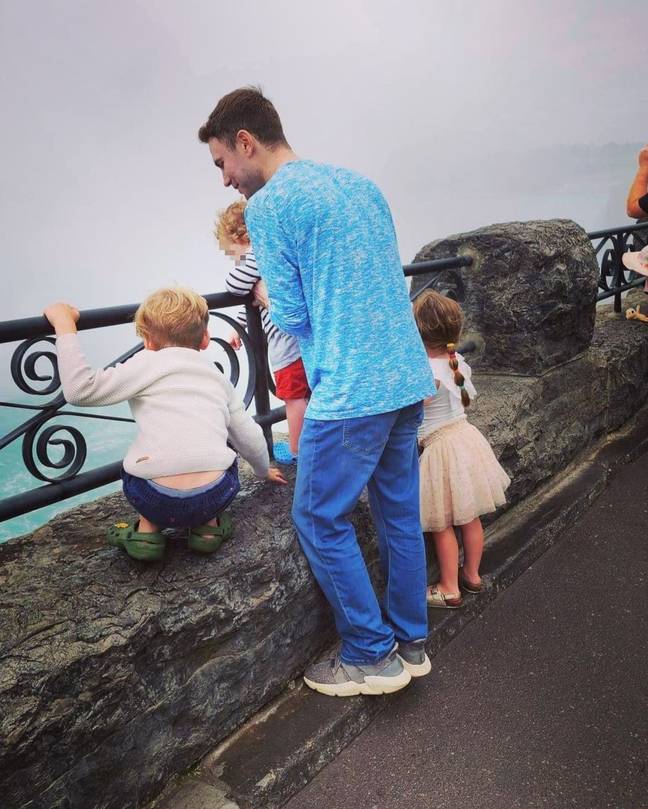
For the next six years he continued to donate his sperm. At age 32 he decided to leave his job and travel. The purpose was to meet with as many of his 96 biological offspring as might be possible. To the present, he has met 25 of those children. In 2020 he received a Facebook message from one of two mothers to a toddler, one of Stone-Miller's biological children: "I really hope you don't feel violated in any way, but it's Canadian Thanksgiving and I wanted to tell you how grateful my family is to you."
That contact began his journey of discovery and introduction to some of the astounding number of children he had fathered. It was at this time that his marriage dissolved. And he asked Bowes whether he might join a Facebook group she started that was named after his sperm bank ID. It was his donor file details that enabled Bowes to track him down to begin with. He had informed Bowes of his interest in meeting his biological children, mostly American, and 20 parents responded.
To this point he has visited with Bowes and her family twice in Edmonton, seeing her two daughters who are his biological children. He actually maintains a spreadsheet with the names of his biological children along with their birthdays and when he had last seen or spoken with them. His quest to see and know something of his biological children has not been without its complications, with boundaries having to be set reflecting the unusual nature of the situation.
But he planned a road trip for the specific purpose of meeting as many of his 96 biological children as circumstances would allow him to. And he's on his journey of discovery.
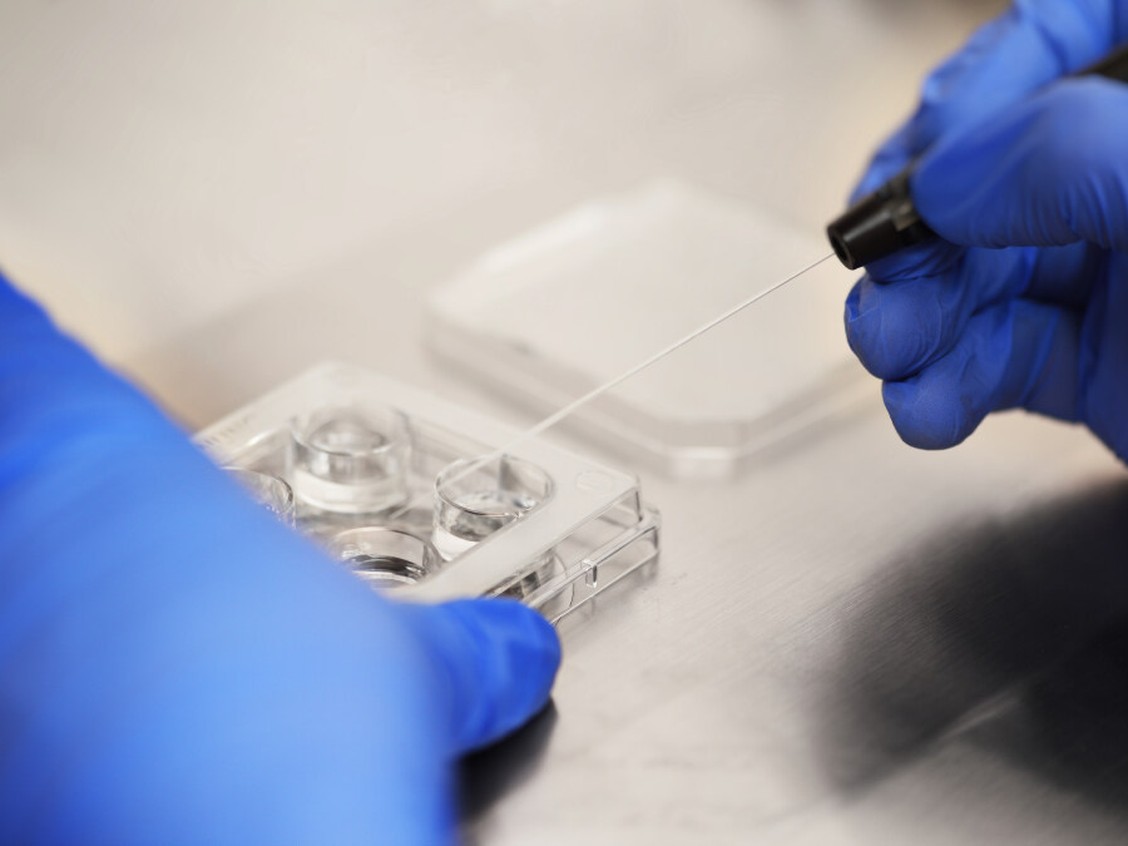
The process of artificial insemination of an egg in an IVF clinic.Photo by Getty
"I made a decision at the time after she kept trying to climb into the work truck that I couldn't just leave her there."
"After the second time she tried to get in, I looked up across the
road, I just happened to glance over there — and halfway across the
ditch, maybe like 50 yards, there was a black bear standing there."
"I just couldn't do it, in my heart. People can say
all they want. I know as outdoorsmen, we talk about predator control. …
Black bears are the No. 1 predator for those calves. So I just thought,
'Well, I can't take care of the predator, but I guess maybe I can try
and help out this little calf.'"
"The officers [Conservation Officers] will typically just dispatch the animal. As I wasn't OK with that I tried to find someone to take care of her until we could figure out a better plan."
"The CO service was absolutely awesome and it was not only a relief but a real experience seeing that they too had some compassion. Thank you to them for that."
"Did I do all the right things[?] Did I say all the right stuff[?] Likely not ... but I do know that whatever anyone else thinks the calf's mom was not there. The bear was."
"I did what I felt was the right thing."
British Columbia resident Mark Skage
Mark Skage says he rescued a baby moose from a bear on the side of the
highway north of Fort Nelson, B.C. but was fired for breaking the
company's wildlife protocols. (Submitted by Mark Skage)
Mark Skage is a man who worked for an Edmonton head-quartered supplier of fuel, lubricants and bulk tanks. While he was driving his work truck north of Fort Nelson, British Columbia, he recounts having seen a black bear stalking the "few-days-old baby cow calf moose". Its mother, he said, was nowhere in sight. The calf was at the side of the highway, wandering about and was close to being hit by passing vehicles. Which led this man to stop. The "just waiting" bear informed him that the calf was in deep trouble.
He opened the passenger-side door of the work truck owned by AFD Petroleum Inc., and the calf made its way into the passenger side, seating itself on the floor next to the driver. Which was, apparently, how they were situated, next to one another for the next five and a half hours as Mr. Skage drove toward Fort Nelson, looking for help for the calf. "Her and I kind of bonded on the ride home. I mean, shucks, we had, like, 5½ hours in the pickup truck together."
Mark Skage
was driving near Fort Nelson, B.C., when he saw a black bear approaching
a moose calf, so he wrangled the moose into his truck and drove it five
hours to safety. Still from Video
"Instead of reporting the situation to a conservation officer and
allowing the authorities to handle the rescue and relocation of the
moose, the individual made the independent decision to transport an uninjured moose calf, a wild animal, in the front seat of his company vehicle for many hours."
"This not only put the employee and other road users at risk but also potentially caused distress and harm to the moose."
"The only actions which put the animal in danger were those of Mr.
Skage. Not only did he put himself and other road users at risk by
capturing and transporting this animal but also caused distress and
potential harm to the moose, having failed to contact conservation
authorities at any point."
AFD president Dale Reimer
Mr. Skage evidently alerted AFD about the incident, along with the province's Conservation Officer Service. His decision-making and subsequent actions in conveying the calf to town out of the wilderness forest abraded the company's wildlife protocols. AFD Petroleum stated its awareness of the incident and that their employee breached the company's protocols on interactions with wildlife. And so, he was fired from the company.
For his part, Mr. Skage says that if there any fines that might be imposed as a result of the incident, he is prepared to pay them. An online petition was gathering signatures calling for his employment reinstatement. In a Facebook post Mr. Skage felt like "a big weight" was off his chest when the calf he named Misty had been placed at the Rimrock Wildlife Rehabilitation Centre, in Dawson Creek, B.C.
Twice over the course of the long drive, he said, the calf had attempted to clamber to his side of the truck. When he placed his hand on her chest she "calmed down again and we carried on".
Mark Skage says he rescued the baby moose, seen here looking out the truck window, from a bear. (Submitted by Mark Skage)
Move Over, Ladies, the Trans Community is Entitled
"I didn’t quite understand why that was uncomfortable because I didn’t
know I was trans at the time. I still thought I was a guy. Finding a ladies' gym was something that seemed
really exciting, and now that I’m out, I understand why I was
uncomfortable at the other place.”
"[I was just] extremely devastated [by the experience and felt very uncomfortable in the past working out around] a bunch of really buff guys at the university gym."
"I got a call…basically saying, ‘Sorry, we
made a mistake, you’re not actually allowed to be here, but you’re more
than welcome to use the co-ed facility."
"I just hung up, because I mean, I was extremely devastated, there’s really no other word for it."
"[A]ll it takes is education. Once you understand trans women are women,
trans men are men, non-binary people are who they say they are, it’s as
simple as that. If you still feel uncomfortable
after that, that’s on you, it’s not on me. I am who I am, it’s as simple
as that. I just look different. That’s all."
"It was important to me to be in a place
that would be, like, explicitly accepting, like, 'You are a woman,
you're allowed to be here'."
"One of the trainers greeted me, and she
was extremely kind. She could tell I was trans right away and said I
would be welcome there, and explicitly said I would be safe as well,
even hugged me."
Transgender woman Brigid Klyne-Simpson
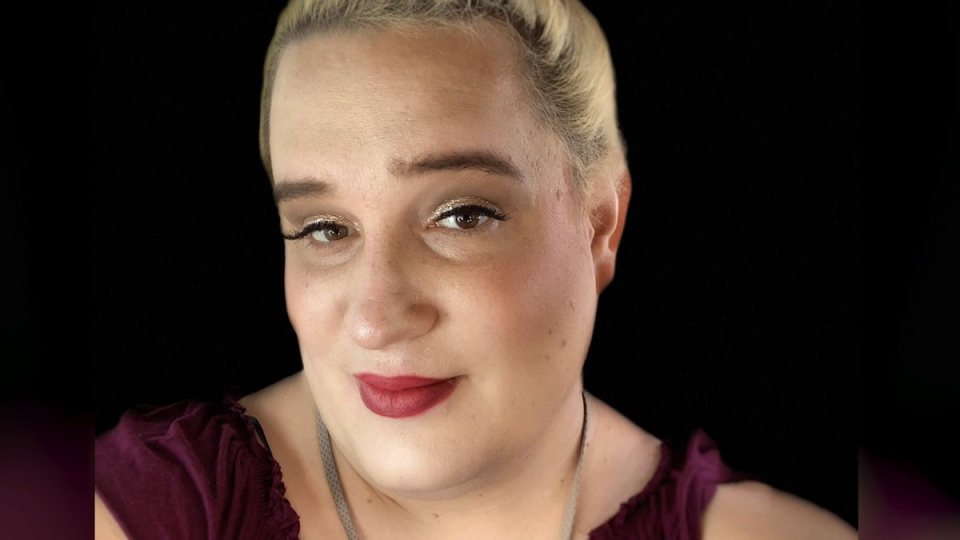
Brigid Klyne-Simpson
"We already have transgender people here, and all sorts of people, we’re
not discriminatory at all."
"We’ve got staff that’s
minorities, so, we’re not saying there’s no solutions, we’re looking for
a solution and we’re not discriminatory people."
"So now you pick the comfort of the male
who identifies as a woman … and anybody can go in there saying, 'OK, I
identify as a woman, and I want to be able to go in there.' And so, do
we pick the comfort of the transgender person, who may not be as
comfortable with the co-ed gym, but at least that's an alternative, or
do we pick the comfort of the young girls working out there that might
not feel comfortable?"
Dale Nagra, owner, Bodyworks Fitness, Parksville, Vancouver Island, British Columbia
Peculiar events have been occurring throughout Canada of late; a shop teacher at Oakville-Trafalgar High School showing up for classes in outrageously outsize breast prosthetics with protruding nipples, wearing tight, sheer tee-shirts and the controversy that erupted from that episode when the school board and the school principal refused to react to the provocation. High schools can exercise their authority in mandating an 'appropriate' dress code for students, yet doing so for teaching staff seemed just too frightfully interfering, with the threat of being denounced as 'transphobic' should the teacher be admonished at his/her unprofessionalism.
In an earlier case, a man identifying as a transwoman appealed to the B.C. Human Rights Commission when an aesthetician refused a Brazil wax job demanded. The Commission ruled against the complainant, stating that a man identifying as a woman who was equipped with male genitals could not expect a cosmetic service that the complainant, Jessica Yanik demanded as a paying client."... human rights legislation does not require a service provider to wax
a type of genitals they are not trained for and have not consented to
wax."
Jessica Yaniv filed human rights complaints against a number of B.C.
home salons, alleging she was discriminated against when they refused to
provide waxing services.
In the latest social travesty transwoman Klyne-Simpson is offended that the gym in question has a policy of accepting trans clients, but has rules and regulations that maintain such clients not be permitted entry to sole-female areas of the gym, where privacy for female clients is a matter of discretion respecting their gender, not their chosen identity. Having been rebuffed, in his/her wish to join the born female gym clients, Klyne-Simpson is musing about taking the gym to the B.C. Human Rights Tribunal.
It would seem the Tribunal has a reputation of upholding many such complaints, encouraging British Columbians to file complaints where they are "denied services" related to "gender identity or expression". The B.C. Human Rights Code could serve to empower the Tribunal to order the Bodyworks gym to reverse its privacy-for-women policy and provide compensation to the complainant "for injury to dignity, feelings and self-respect".
"Trans people deserve to feel safe, welcome & affirmed for who they are. Trans women are women -- period", stated B.C. parliamentary secretary for gender equality, Kelli Paddon. Canada is the first jurisdiction in the world to commit to certifying transgender status through casual "self-identifiction". In 2018, B.C. changed its rules so that residents could request birth certificates, driver's licences and other documents from the province to identify their gender with a nonbinary "X".
"Each individual knows their own gender best, and today, I am proud that our government is recognizing this by taking landmark action", Grace Lore, then-parliamentary secretary for gender equity, Grace Lore, announced in 2018. Now, any British Columbian over age 12 can legally change to any gender by simply submitting a three-page form known as the Application for Change of Gender Designation.
Has no one noticed? Dignity and respect for self-identifying male-to-female transgender individuals, while unfortunately dignity and respect for women whose gender at birth was female, see theirs rapidly eroding, with born-males moving into their territory, invading their privacy and competing both for attention and recognition competing against women in the sports field. In asserting the legality of human rights in support of transwomen, the human rights of all women is abrogated.
Canada is home to some of the world’s first jurisdictions to certify transgender status through a lens of “self-identification.”Photo by Getty Images
Juvenile COVID Infections, Vulnerability to Diabetes
"It 's been pretty clear for over a year now that COVID ... was probably associated with something like a doubling of diabetes risk in little kids."
"The effect pops up over and over again, and at this point the appropriate thing to do is assume it's real and act accordingly, rather than say 'We need more evidence'."
"[This is particularly so given the cost of diabetes both in medical expenses and harm done those with the condition]."
Dr. David Fisman, epidemiologist, University of Toronto Dalla Lama School of Public Health
"[People under 18 who had been infected by the novel coronavirus] were more likely to receive a new diabetes diagnosis more than 30 days after infection than those without COVID-19."
U.S. Centers for Disease Control and Prevention study
"If one goes to a pediatric emergency room today, and there's a 16-year-old child who comes in with an elevated blood sugar, one would have to be cautious about immediately saying this person has Type 1 versus Type 2 diabetes."
"There's more and more Type 2 diabetes that's starting to become evident in our adolescent and even in younger children, which is tragic. Thirty or 40 years ago, a 16-year-old, that would be Type 1 diabetes until proven otherwise."
"There's uncertainty around whether COVID-19 increases the risk for Type 1 diabetes. I don't think the data supports that right now. But I think the data does support an increase in Type 2 diabetes associated with the pandemic, probably not from the virus but probably from all of these other issues ... the weight gain, the stress, lack of exercise, etcetera."
Dr. Daniel Drucker, senior investigator, Lunenfeld-Tanenbaum Research Institute, Mount Sinai Hospital, Toronto
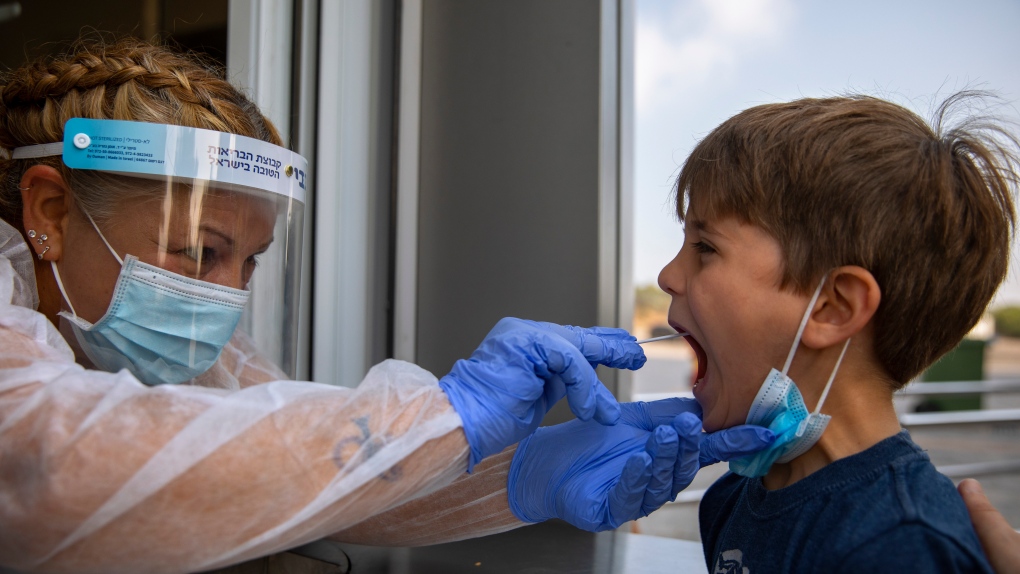
A health worker collects a swab sample from a kid to test for COVID-19,
at a coronavirus testing center, in Tel Aviv, Israel, Monday, Aug. 9,
2021. (AP Photo/Oded Balilty)
Toronto-based Manulife Financial, a Canadian insurance giant, released data appearing to indicate an increase in diabetes among young people. This represents a trend that some studies and medical experts attribute to the novel coronavirus, SARS-CoV-2 that causes COVID-19. According to their data individuals under age 44 accounted for 19 percent of diabetes claims and that number is on the rise in Canada, an increase from 2019''s 13 percent. That number was not broken down to distinguish Type 1 from Type 2 diabetes.
Type 1, once called Juvenile Diabetes, results from a genetic disposition for the pancreas to stop producing insulin without which a patient would waste away and die and did before 1921 before Banting and Best discovered insulin and revolutionized a treatment for the still-incurable autoimmune disease. Type 2 diabetes means being insulin-dependent and a lifetime of self-administering insulin injections. Type 2, once called Adult-onset Diabetes is when the body no longer makes productive use of the insulin released by the pancreas and is considered more of a lifestyle disease; overweight and sedentary. Treatment usually consists of medication and a therapeutic lifestyle change.
The Centres for Disease Control January study used two U.S. medical claims databases covering March 2020 to June 2021 to find that other respiratory infections were not associated with increased risk of diabetes, postulating that the novel coronavirus might affect pancreatic cells with the potential to prod people with existing pre-diabetes conditions into full-fledged diabetes. Another study in March using international data found a moderate incidence increase of diabetes in individuals between ages 19 and 30 who contracted a COVID-19 infection.
Debate within the medical community questions whether the rise in diagnoses reflect delays in treatment during lockdowns and other issues such as whether children in control groups thought to have been free from COVID-19 infection actually had previously been infected and were asymptomatic. According to Dr. Drucker, skeptical about the conclusions implicating the virus in diabetes onset, additional questions are issues such as rising obesity levels and more sedentary lifestyles during lockdowns leading to young people acquiring Type 2 diabetes.
Another area of research is the interplay between the mental and physical health of people in leading to diabetes onset. Nearly half of adult Americans gained weight during the pandemic and depression and anxiety symptoms rising, reflect predictors of weight gain leading to diabetes onset. According to the Canadian Institute of Actuaries tracking the pandemic experiences of over a dozen life insurers, COVID-related insurance claims across the country accounted for 13 percent of total claims in 2020.
Drs. Shivani Misra and Linda DiMeglio of Imperial College London and Indiana Univ4rsity respectively, summed up the challenge of tackling the complex factors at play during the pandemic, published in the December issue of the journal Diabetes. They wrote of the difficulty involved in reaching "rapid, clear answers" regarding a potential link between COVID-19 and rising rates of blood-sugar disorders.
CIDRAP
"Given the interplay of multiple factors influencing diabetes diagnosis and incidence during the pandemic, although the data remains of interest and are critical to follow, it is unlikely that we will have crystal clear answers soon."
"Unsurprisingly, studies attempting to analyze this association have provided conflicting results."
Shivani Misra, clinical senior lecturer in diabetes and endocrinology, Imperial College London
Linda A. DiMeglio, professor of pediatric endocrinology, Indiana University
"The BMIs [body mass index] do get fairly high, but our complications remain reasonable. I don't think it's a reason to turn people away [from knee joint replacement]."
"All the cartilage is completely gone [with end-stage degenerated joints]. Even a lay person looking at this joint [with the eroded bone, inflammation, red tissue, scar tissue] if it was open would say, 'Wow, that looks painful."
"...Unless you've had this [degenerative joint disease] or seen people like this, you can't even imagine."
"Obviously if you're putting more load through that joint, it gets worn and torn sooner."
Dr.Harman Chaudhry, orthopedic surgeon, Sunnybrook Holland Orthopedic and Arthritic Centre
"The best marker of adiposity will have the strongest association with mortality."
"We need to shift the way we're thinking about fat away from sheer quantity toward distribution, which seems more physiologically relevant."
Guillaume Pare, professor of pathology and molecular medicine, McMaster University
"[It's not often the case that people accumulate fat in one place and not the other; either the hips or the waist.] The two go together."
"The simple message should be not to accumulate too much fat, wherever it goes."
Keith Frayn, emeritus professor of human metabolism, University of Oxford
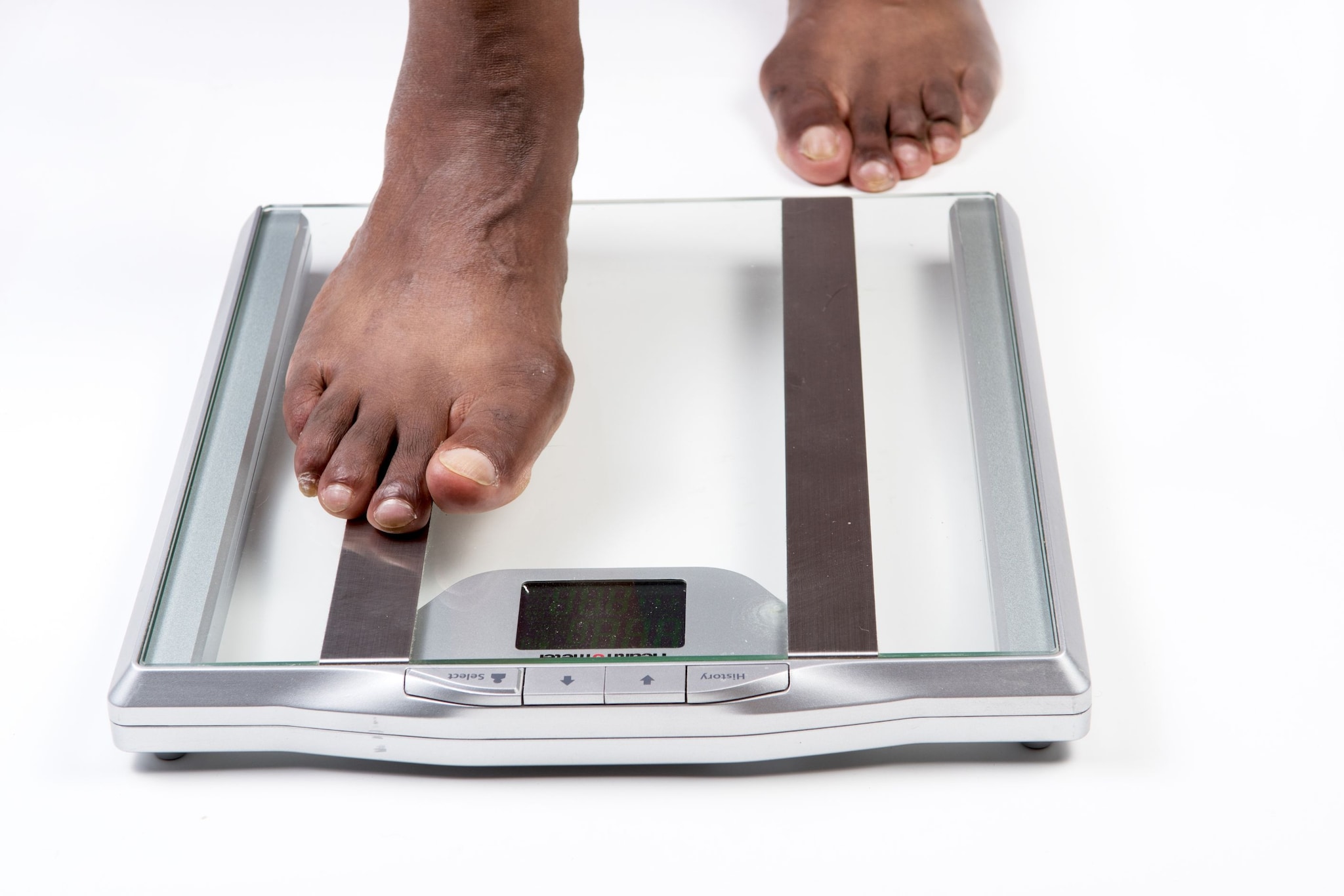
When it comes to health, one measurement doesn't tell the whole story.iStock (2); Everyday Health
The ratio of weight to height has been used by doctors, insurance companies, statisticians and the World Health Organization for a half century as a guide in assessing overweight and obesity. Its viability as a tool to fully comprehend overweight and obese people's health score is now coming under scrutiny, with some health professionals damning it as inaccurate and misleading, recommending it is past time to put it to rest and use an alternate measurement scale.
Some argue that the BMI was formulated as a measurement of weightedness based on white males of European descent, making it an inappropriate tool as a generalized system for other racial and ethnic groups. Its use to arbitrarily disqualify heavier physiques from joint replacement, along with other life-altering 'elective' surgeries is increasingly being questioned.
"BMI has now become the organizing principle of a massively sprawling surveillance system and the default tool in society's arsenal in the 'war on obesity'", two Harvard academics wrote in MedPage Today."And the consequences are dangerous", they concluded. Missed diagnoses occurring when doctors inadvertently assume the person's complaints or symptoms are merely a reflection of weight and the indiscriminate recording of an individual's BMI which can be totally irrelevant.
The BMI measurement of acquired fat fails to account for bone or muscle or frame size, while overestimating a fat condition. Nor does it consider the deposition of where the fat is located. Where it is now well known that belly fat is more harmful than fat accumulated around hips, Waist-to-hip ratio, according to a McMaster University professor, is superior to and should replace the BMI.
A massive meta-analysis involving over ten million people enrolled in a total of 239 studies across four continents --Asia, Australia and New Zealand, Europe and North America -- found overweight and obesity defined by the BMI associated with higher rates of death from any cause, including coronary heart disease, stroke and cancer in each global region studied; results published in the Lancet.
Critics point out that one size does not fit all; the BMI does not represent an optimal measurement of adiposity (fat); the formula in their opinion is scientifically illogical "There is no physiological reason to square a person's height" argued British mathematician Keith Devlin. The waist is crucially ignored in the formula at a time when it is cautioned that visceral fat that wraps about internal abdominal organs is particularly unhealthy, raising the risk of Type 2 diabetes and heart disease.
Waist to hip ratio (WHR) is now promoted as a more reliable prediction of an early death. An analysis by Dr. Guillaume Pare and former student Irfan Khan was produced an abstract at a European diabetes conference finding waist-hip ratio more reliably predicts early death than BMI. Mortality risk, they found, was lowest for those with the lowest WHR, rising steadily with increasing WHR.
Waist circumference divided by hip circumference, according to the World Health Organization, means a healthy WHR is 0,.9 or lower for men, 0.85 of less for women. A 2015 study of 40,000 Americans found nearly half classed as overweight according to their BMI, with 29 percent classed as obese and 15 percent with severe obesity were cardio-metabolically healthy; risk of diabetes and heart disease low, based on markers such as cholesterol, blood glucose and blood pressure. Over 30 percent of normal weight subjects were metabolically unhealthy.
Two of the world's largest groups of bariatric surgeons published new guidelines recently, the first in 30 years, calling for expanding eligibility for weight loss surgery to reconfigure the gut and digestive system controlling how many calories people can consume at any given time, and absorb. New standards are less restrictive, yet based still on BMI rather than factors such as fatty liver disease or high cholesterol.
Complex surgery is required in replacing knees and hips in people with severe obesity where potential complications require a risk-benefit discussion. People are unable to straighten their legs, bend their knees, experience trouble in and out of cars; pain disturbs their sleep leaving them depressed and with mood changes from lack of sleep. Surgery can make the difference between a normal life and being in a wheelchair. Yet patients are turned down for surgery, dismissed with a recommendation that they lose weight to qualify for surgery.
Keeping School Environments Safe in the United States
"Arming teachers doesn't make kids safer."
"In fact, it increases the chances that a teacher's gun will fall into the wrong hands or discharge unintentionally."
Shannon Watts, founder, Moms Demand Action
"Without serious training, teachers would not be able to successfully use the guns to stop school shootings."
"I certainly would refuse to be responsible for a weapon in school,"
"Asking teachers to take on the role of cops would change the dynamic between students and teachers in a harmful way."
"In
general, adding guns to our society does not decrease gun violence, but
instead increases the chance of accidents and unintentional deaths."
Bronx Science history teacher Michelle Sagalchik
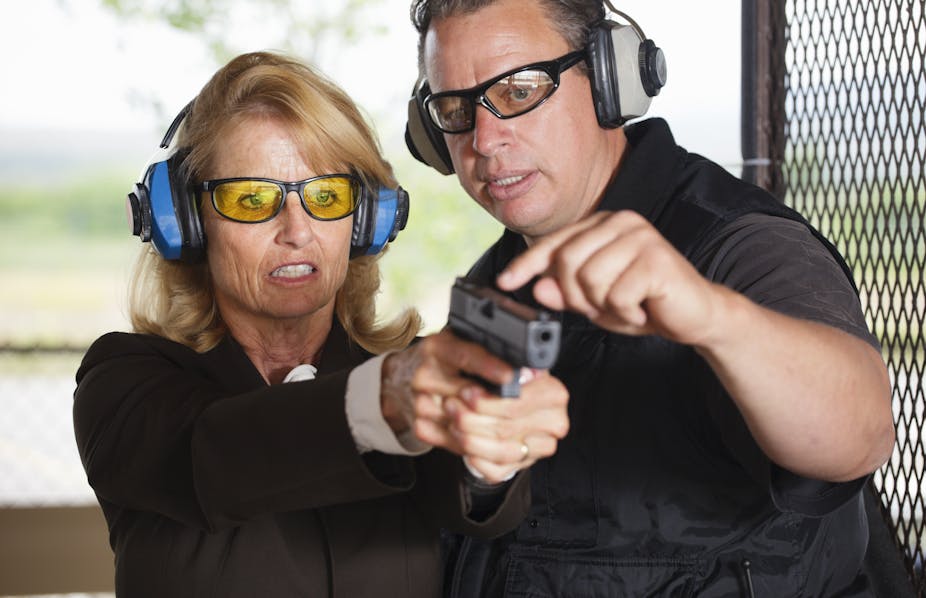
Even trained police officers often miss their target during gunfights.
RichLegg / Getty Images
In a move born of desperation following a series of mass shootings at schools in the United States there is a growing movement in support of allowing teachers and other school employees to carry guns. It is a potential 'solution' that has been promoted by Republicans and gun-rights advocates who claim the strategy allows schools and their employees to gain a fighting chance of avoiding catastrophe should armed attacks occur. At the present time there are 29 states allowing individuals beside police or security officials to carry arms on school grounds.
Survey data from 2018, the last year where statistics were available, an estimated 2.6 percent of American public schools housed faculty that are armed. It is logical to assume that since then the count has expanded. Democrats, on the other hand, fiercely oppose the strategy. Joining them are police groups, teachers' unions and gun control advocates, who feel that concealed carry programs in schools have the potential to create more risk for all those involved.
Polling in the past has indicated the vast majority of teaching staff have no wish to be armed. In Ohio a new law has drawn controversy, requiring no more than 24 hours of training coupled with eight hours of recertification yearly. "That, to us, is just outrageous", commented director of government affairs for the Fraternal Order of Police of Ohio, Michael Weinman.
Research has seen little evidence that school employees carrying guns is effective. On the other hand, arming school employees saw slight majority appeal among parents and adults, in recent polls. Laws vary by state but often do not specifically address how teachers must carry or store guns. And that can be problematical, as in one instance two first-graders in Ohio came across a gun when an employee in a concealed carry program left the firearm in an unlocked case close by her desk.
And nor is that a particularly rare occasion. Students have also discovered guns left on buses, and in school bathrooms, according to reports in the news.
"We thought, 'That's peculiar'. Then we sat on that data for two years. We did everything we could to make it go away and we couldn't make it go away no matter how you analyze the data."
"The bottom line is, if low sodium is not helpful and may even increase the risk, it's better to focus on the overall quality of the diet."
"Reduce processed foods and focus on eating more fruits and vegetables and more potassium-containing foods -- an all-around wellness diet."
Professor Andrew Mente, epidemiology professor, McMaster University, Hamilton
Crystals of table, kosher, and pickling salt (AP / Nati Harnik)
In reflection of conventional wisdom respecting the place of salt in a diet therapy meant for people with high blood pressure, the World Health Organization recommends consumption of less than two grams of sodium (five grams of salt) daily. The Mayo Clinic and Health Canada along with other health bodies suggest no more than 2.3 grams (about a teaspoon of salt) daily. In Canada, a report issued in 2017 by Health Canada assessed the average intake per person of salt in the country to be 2.8 grams.
Studies like the Harvard University-led TOHP trial in the United States in late 1980s and early 1990s underpin such recommendations from within the international health community. In that study some 4,500 people were divided into groups receiving either general healthy lifestyle advice or alternately weekly group and individual counselling in reducing sodium intake. Leading to the conclusion that those who received salt-reduction assistance were 25 percent less likely to suffer strokes, heart attacks and other cardiovascular events in years to follow.
Other controlled studies reached like conclusions; that as people absorb less sodium, a reduction in hypertension resulted, according to a recent paper. And then in 2009 Dr.Salim Yusuf of the Population Health Research Institute (PHRI) of McMaster University and Hamilton Health Sciences published research and commentaries that suggested heart health did not improve with sharp salt reduction intake. To state that consternation, condemnation and confusion and controversy resulted is to understate the impact of this reversal of popular medical wisdom.
Dr.Yusuf and his team of researchers made the decision to study the issue relating to two studies they ran focused on testing blood pressure drugs. A sidebar sodium study enrolled about 28,000 people from 40 countries. The participants, all at risk of cardiovascular disease, had their intake of sodium measured through interpreting secretions of the mineral in urine samples. What this study revealed shocked the scientists when they found that as sodium levels fell the rate of heart-and-stroke-related illness did initially fall, then rose again, with sodium intake amounts lower than three grams daily.
High blood pressure leads to heart attacks, strokes and death. Hypertension is considered the world's leading cause of mortality, and sodium considered the culprit in up to 30 percent of cases. The greater the sodium intake, the greater the retention of water in the body, to wash it away. This increases the pressure of blood being pushed through arteries and veins. Not only did cutting sodium below a certain point not lead to improved cardiovascular health, lower levels it turned out, might in fact increase risk of disease.
After the results were published in some of the world's foremost medical journals, and the McMaster University research team led by Dr.Yusuf, a highly respected researcher, were castigated for their unacceptable findings, they followed up with a parallel study of 102,000 subjects from 17 countries in another McMaster-led international research project called PURE. Published in the high profile New England Journal of Medicine, the results for the second study were similar to the earlier ones.
Their conclusion led them to argue the earlier evidence, like the TOHP trials, did not indicate that the standard sodium diet-reduction to the recommended level had any effect on improving health outcomes. Their critics focused on what they found to be a flaw in the methodology of the study where the gold-standard method is to collect all urine someone produces in a 24-hour period to test for secreted sodium and repeat it on non-consecutive days, whereas the McMaster-led trial performed a single fasting (spot sample) of urine early morning.
"It's tough and it's tedious so people try to cut a lot of corners (24-hour sampling). With a single-spot sample] stuies are much easier to do, much less complex -- and give you the wrong answers", pointed out Dr.Norman Campbell of University of Calgary. "They're making inaccurate and false statements and misleading statements and misinterpretations and they're not correcting things that are obviously flawed. this is a global aggravation for people who are trying to improve the health of their populations."
Dr.Mente, on the other hand, speaks of the advice to maintain sodium intake no higher than four or five grams daily, and not to be concerned about cutting it much below three grams. He also pointed out that their sodium studies were subjected to intense peer review pre-publication, where prominent journals assign vetting to half a dozen scientist-reviewers and two statisticians to vouch for accuracy.
Dr.Yusuf comments that the science is in flux and the research he and his team conducted has aided in altering the sodium-hypertension paradigm; that their critics are unwilling to consider that health and research understandings have undergone an alteration. He and his colleagues' study results have come under scrutiny with charges of bias resulting from study funders such as health charities and drug companies.
"[Campbell's] enthusiasm for this as a crusader, you have to admire it."
"But at the same time, all scientific debate has to be based on respect, it has to be based on openness."
"It has to be based on entertaining different viewpoints."
Dr.Martin O'Donnell, professor of medicine, National University of Ireland, Galway, McMaster group collaborator
Relying
on the conventional scientific wisdom, the World Health Organization
recommends consuming less than two grams of sodium — five grams of salt —
a day. Health Canada, the Mayo Clinic and other health bodies suggest
no more each day than 2.3 grams, about a teaspoon of salt.Photo by Getty
"A new controversial study claims that in most cases, consuming salt
will not increase health risks. The study published on August 9 in The Lancet,
a scientific journal, followed 94 000 people between the ages of 35 and
70 across 18 countries to determine whether salt intake truly does
increase the risk of cardiovascular disease and stroke (1), an accepted
belief. Monitoring subjects over an average span of eight years,
interestingly, it was found that the risk only increases if the average
sodium intake is greater than 5 g per day ― the equivalents of 2.5
teaspoons of salt."
"The research was led by Prof Salim Yusuf of the Population Health
Research Institute (PHRI) of McMaster University and Hamilton Health
Sciences in collaboration with colleagues from 21 different countries,
including Canada, Argentina, Bangladesh, Brazil, Chile, China, Columbia,
India, Iran, Malaysia, occupied Palestinian territory, Pakistan,
Philippines, Poland, Saudi Arabia, South Africa, Sweden, Tanzania,
Turkey, United Arab Emirates, and Zimbabwe."
"Salt-reduction enthusiasts argue that campaigns in the UK, Japan, and
elsewhere over the past several years have led to a reduction in salt
intake and consequently, a reduction in overall average blood pressure
of the population. However, our bodies require essential nutrients like
sodium to function, therefore, completely removing salt from our diets
may be just as damaging as too much. But the question remains, how much
is too much?"
"While we have been advocates of death by Medical Assistance in situations where there is a terminal diagnosis or death is imminent, we had no idea that Canada's laws leave considerable room for interpretation by activist doctors."
"It's unacceptable -- it took a year to get treatment but it could only take four days to die."
Alicia and Christie Duncan, British Columbia
"Canadian law, in all its majesty, has allowed both the rich as well as the poor to kill themselves if they are too poor to continue living with dignity."
"What it will not do is spend money to allow them to live instead of killing themselves."
"[Canada] Euthanizing its poor."
Yuan Yi Zhu, researcher, Oxford University
"It was an easy fix."
"She just needed to be helped to find a suitable place to live, where there wasn't smoke wafting through the vents."
Dr.Riina Bray, medical director, Environmental Health Clinic, Women's College Hospital, Toronto
In March 2023, Canada will become one of the few
nations in the world allowing medical aid in dying, or MAID, for people
whose sole underlying condition is depression, bipolar disorder,
personality disorders, schizophrenia, PTSD or any other mental
affliction.Photo by Getty Images
Too many patients stuffed into the Canadian health care system, vexing patients with time-consuming need for close attention, distraction-demanding, prescribed therapies that don't work, exhausting the medical community of patience, so if they're agreeable to suggestion, the solution is at hand -- that wonderful time-saving six-year-old final therapy; MAID -- the ingenious, money-saving, staff-rescuing, hospital bed-freeing answer to the problem -- Medical Assistance in Dying. Dignified, accepted, wholesome and final.
The Parliamentary Budget Officer cranked up the numbers, and there are millions in savings by simply releasing people from life and getting on with the due care and treatment of others far less troublesome and amenable to recovery, leaving the hospital system, recovered from a transitory, or a treatment-responsive condition. Through the simple enough expedient of using a perfectly legal, patient-accepting device to free up resources and get on with the business of 'healing' those whose conditions are amenable to improvement.
Evidently, Donna Duncan, a nurse in Abbotsford, B.C. wasn't one of those; her condition was exacerbated by having to wait a prolonged period of time for access to treatment for her deteriorating physical and mental condition at age 51, thanks to an unfortunate vehicular accident.Being treated at an Abbotsford clinic for her too-long-ignored mental condition, her daughters Christie and Alicia were informed their mother had agreed to undergo medically assisted death to solve her physical and mental decline.
Unable to stop the scheduled death, they contacted police on an issue of medical malpractise, when nurse practitioners at the clinic approved their mother's request for medically assisted death in the absence of adequately assessing her mental state. Another individual in British Columbia, Alan Nichols was severely mentally ill, and euthanized at Chilliwack General Hospital. A severe psychiatric episode moved his family to admit him to hospital under the Mental Health Act. Little did they imagine they were committing him to death.
His family received a call from the hospital informing them their brother had consented to a doctor-assisted death. "They killed our brother", Wayne Nichols stated flatly. It is being revealed that some people struggling to make scarce financial ends meet have taken to appointments to end their lives as a reflection of their inability to find proper housing or medical care. In Ontario a 51-year-old woman sought and was given MAID when she was unable to secure affordable housing to accommodate her multiple severe chemical sensitivities.
In another instance a disabled woman who applied for medically assisted death on the grounds she was overwhelmed by the cost of food and lodging, had her wish granted. "I have no other reason to want to apply for assisted suicide, other than I simply cannot afford to keep on living", she stated. For each additional patient that seeks euthanization that is approved, a cost-benefit accrues to the Canadian health-care system.
"[The 6,465 medically assisted deaths scheduled for 2021 was poised to save $109.2 million in] end of life costs." "Expanding access to MAID will result in a net reduction in health-care costs for the provincial governments."
2020 report, Parliamentary Budget Office
In ten months' time a new legal regime will come into law to vastly expand the criteria under which patients can be approved for doctor-assisted death. This will override the current legislation reserved strictly to allow euthanasia only to those whose death is seen to be "reasonably foreseeable". In March of 2023 Bill C-y is set to expand medically assisted dying to Canadians with no terminal diseases and it will include those whose sole underlying condition is a mental illness.
"I think there’s going to be lots of uncertainty about how to apply this
in March 2023."
"My hope is that psychiatrists will move cautiously and carefully to
make sure MAID is not being used as something instead of equitable
access to good care."
Dr. Grainne Neilson, past president,
Canadian Psychiatric Association, Halifax forensic psychiatrist
"We don’t understand the fundamental underlying biology causing most major mental illnesses."
"We
identify them through the clustering of various symptoms. We try to
target treatments as best we can. But the reality is, we don’t
understand what’s going on, on a fundamental biological level, unlike
with the vast majority of these other predicable conditions."
"There’s
no doubt that mental illnesses lead to grievous suffering, as grievous,
even more grievous in some cases than other illnesses. It’s the irremediability part that our framework also requires and that
scientifically cannot be met. That we cannot do. That’s the problem."
Dr. Sonu Gaind, physician chair, MAID team, chief of psychiatry, Humber River Hospital, Toronto, where he’s chief of psychiatry.