Ruminations

Blog dedicated primarily to randomly selected news items; comments reflecting personal perceptions

Tuesday, June 13, 2023

Ancestral Knowledge Rising to the Occasion

"First of all, the wish to maintain their lives.The second one, they are Indigenous people, so they have immunity to so many hazards inside the jungle. And third one, they know the jungle."
"[The children's background meant they knew] how to survive in the jungle, how to eat, how to drink, stay against the hostile jungle and how to protect from the rain, because 16 hours a day it’s only rain."
"The minors were already very weak. And surely their strength was only enough to breathe or reach a small fruit to feed themselves or drink a drop of water in the jungle." 
"This wasn't a search for a needle in a haystack, it was a tiny flea in a vast carpet, because they kept moving."
Gen. Pedro Sanchez, search leader, Colombian military
 
"Finding enough high-quality food, building shelters and keeping away from harm’s way for 40 days and nights in a remote area of the Colombian Amazon would challenge most adult Westerners ... never mind three children younger than 13 carrying an 11-month old baby."
"Some 100 years ago, that body of knowledge was very vigorous, but there were no aircraft one could crash in the jungle; 100 years into the future, there may be even more efficient aircraft but very little of that knowledge will be left."
Carlos Peres, University of East Anglia, England
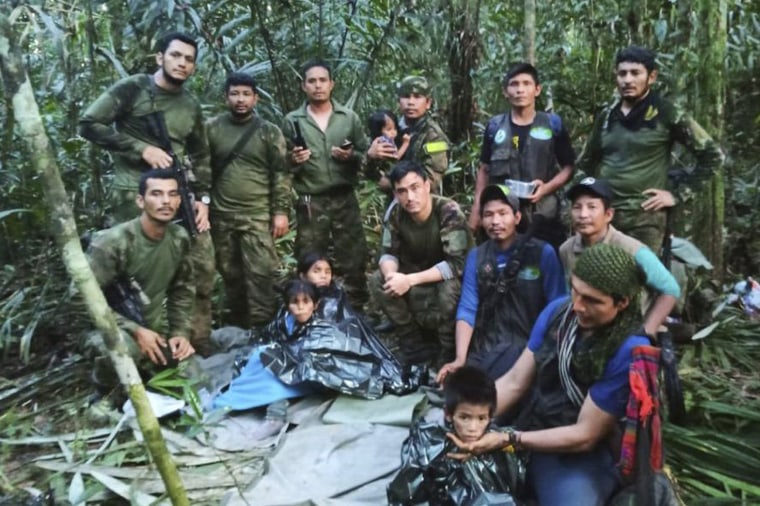
Colombian President Gustavo Petro said Friday that authorities found alive the four children who survived a small plane crash 40 days ago and had been the subject of an intense search in the Amazon jungle.
The four children were discovered in the Solano jungle Friday. Colombian Armed Forces Press Office / via AP
"[The children were lost] in a very dark, very dense jungle, where the largest trees in the region are."
"The same mother, who became a spirit after the [plane crash] accident, protected them."
"And only now is she going to start resting."
Indigenous expert Alex Rufino
Colombians were magnetically, emotionally glued to their news services, hoping for over a month to hear that four young children survived the unbelievable ordeal of being in a plane crash in the heart of the Colombian jungle. The Cessna 206 aircraft carrying them with their mother, had crashed on May 1st into the Amazon, killing their mother, the pilot and an Indigenous leader.

The children, aged 13, nine, four and 11 months were on their own. After they were found, the oldest child, Lesley, informed their rescuers that their mother had lived for four days beyond the crash. And that before she died, she instructed her children to leave the crash site, to search for help. These vulnerable children were left to fend for themselves "in an area teeming with snakes, jaguars and mosquitoes", in the words of news media.

But these were Indigenous children, accustomed to hearing about and learning about nature and survival. Lesley had knowledge of which fruits in the wild were to be eaten safely, and which to avoid. She was capable of looking after an infant. Her grandmother is an Indigenous elder, and the family often played "survival" games. This is the background exposure that helped this 13-year-old girl to guide her younger siblings to survival.
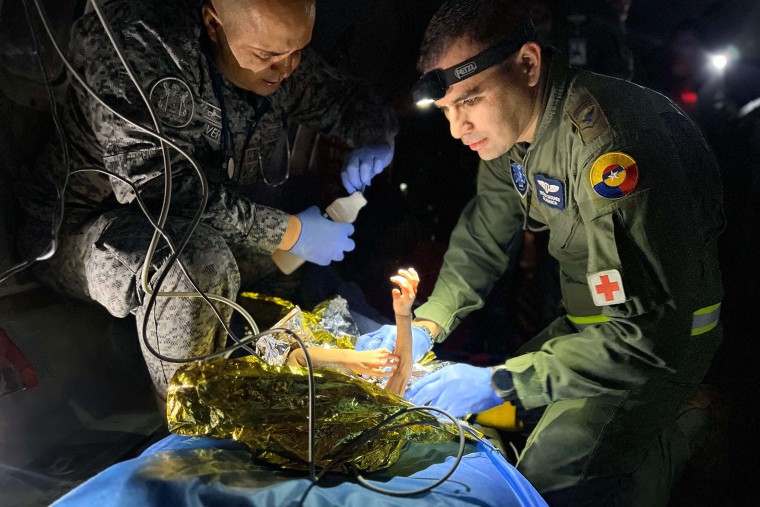
 
Colombia Plane Crash Children Survivors
Members of the Colombian army check one of the four Indigenous children Friday.  Colombian Air Force / AFP - Getty Images
On Friday, fully 40 days following the light plane crash that sent them nose-first into dense Amazon jungle, coming face-to-face finally with their rescuers, Lesley's first words, as she encountered the relieved men while carrying her infant brother were "I'm hungry". She was, without doubt, beyond hungry, the children were almost skeletal, weak and likely verging on the physical inability to continue carrying on, on their own.

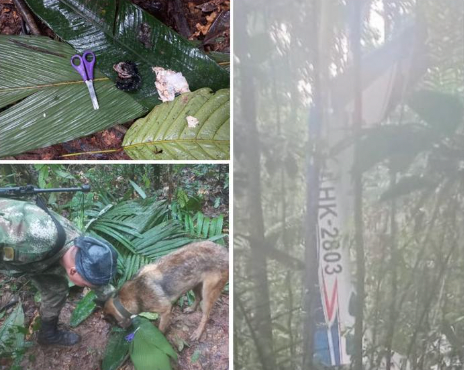
The searchers came across clues informing them that the children were there, in the vast green confines of the jungle, still alive they hoped, when they discovered fruit seemingly with human tooth marks, footprints, a baby bottle, diapers, and the loyal services of a trained rescue dog who led rescuers eventually to the lost children. There were several hundred volunteers from local Indigenous groups in the search party comprised of 150 military troops.

They had gone through an area of over 30 square kilometres in their frantic search, hoping to give good news to a nation gripped in fear and suspense. When the children were found, one of Magdalena Mucutuy's sons told the rescuers: "My mum is dead", as he rose from where he was found, resting on the ground. The children were taken to a military hospital in Bogota to be treated for malnutrition. Their recovery and removal aided by being winched out of the jungle and helicoptered to hospital.
 
Army radios crackled "miracle, miracle, miracle, miracle", code that all four were found alive, on Friday evening. The children are members of the Huitoto Indigenous group who are taught to hunt, to fish and to gather the fruits of the earth from an early age. A bag of cassava flour had been on the plane, that the children ate while searching for help, along with seeds and avocado-like fruits from the
Bacaba palm tree, rich in oil. 

The Colombian military had dropped ten thousand leaflets printed in Spanish and the Huitoto script, with survival tips. Boxes of food were also dropped in hopes the children might come across them. Broadcast messages from helicopters flying over the area, from the children's grandmother, reassured them that rescue teams were searching for them. 

There was constant exposure to heavy rainstorms, and there was speculation of armed groups active in the jungle. The children had erected a small shelter from a tarpaulin. "They always stayed near the river, and she (Lesley) carried a small soda bottle which she used to (fill with and) carry water", an Indigenous man among the search team that found the children explained. Indigenous experts feel the  children's survival is accounted for as a result of their ancestral knowledge, their "spiritual connection with nature".

It was in fact, a rescue dog that found the children; Wilson, a six-year-old Belgian Shepherd who had tracked the four siblings after running away from his handlers. The dog stayed with the children for several days, then unaccountably moved off and was again lost. It was his tracks that helped to lead the search parties to the children. Now that the children have been found, the search for Wilson's whereabouts continues.
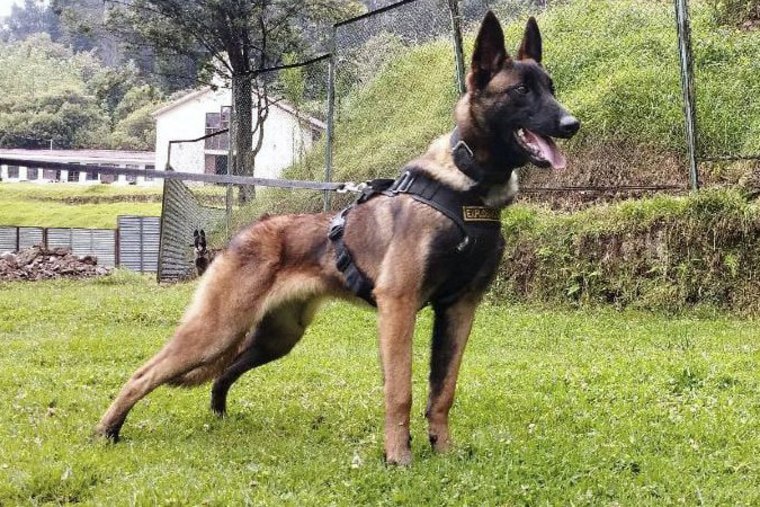
 
Colombia Children Plane Crash Wilson Dog
Wilson the Belgian shepherd who took part in the rescue operation.   AFP - Getty Images
 

Labels: , , , ,

Friday, May 19, 2023

Why . The . Mystery?

"After arduous searching by our military, we have found alive the four children who went missing after a plane crash in Guaviare. A joy for the country."
"I have decided to delete the tweet because the information provided by [the government’s child welfare agency, ICBF] could not be confirmed. I apologize for the confusion."
"The Military Forces and the indigenous communities will continue in their tireless search to give the country the news it is waiting for."
"At this time there is no other priority other than moving forward with the search until you find them. Children’s lives are the most important thing."
Colombian President Gustavo Petro
 
"Information was received from the area assuring contact was made with the four children who were part of the group transported on the aircraft. This report stated that they had been found alive and in good health."
"However, the military forces have not yet been able to establish official contact due to adverse weather conditions and difficult terrain. "
"[Authorities have not been able to] corroborate the information received by the ICBF from various sources."
Colombian child welfare agency statement
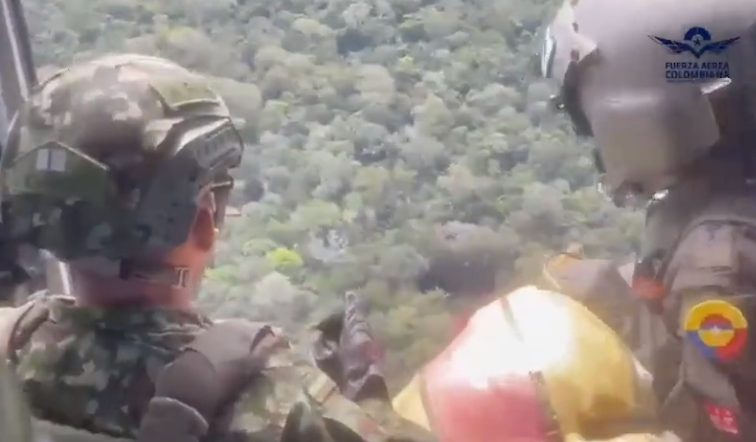
<p>The Colombian Air Force has escalated searche efforrs  </p>

The Colombian Air Force has escalated search efforts  (Fuerza Aerea Colombiana)

On Wednesday, the President of Colombia celebrated news that the four children whose mother had perished in a plane crash in a remote jungle area in Colombia's Amazon Basin, had been found, after a ten-day search. Information he said was relayed to him was that an Indigenous Colombian tribe living in isolation in the region had found and were caring for the four children, and that once contact had been made it was arranged to transport the children by sea in a speedboat to Bogota to be reunited with their father.

A day later, the Colombian President had deleted his Wednesday tweet of joyful affirmation the children were safe and en route. Now, the director of the country's child welfare arm informed the media that the children are safe, but communication via satellite had been lost. Teams had been sent to three key areas by the ICBF where they believe the children are to be found, and, said ICBF director Astrid Caceres, she is "very confident" they would be found soon.
 
From a journalist came word that area indigenous communities conveyed the information that the children are in a speedboat with no means of communication, but expected to arrive in a rural area where they could be taken into safe custody. This all began weeks ago, when the plane the children were being flown in from a jungle location to San Jose del Guaviare, a major city in Columbia's Amazon rainforest, experienced engine problems and crashed.

Aboard were the four children, with their mother, the pilot and co-pilot. All the adults died in the crash, but the children were presumed to have survived. In the search that ensued items belonging to the children were discovered and it seemed obvious the children had left the scene of the crash, intending to find help. A search party discovered the plane and the bodies of the three adults at the crash site. A 17-day search commenced involving over 100 soldiers, sniffer dogs and three helicopters.

Although the president made haste to assure his nation that the children were safe and would soon be turned over to the state child welfare authorities, then presumably reunited with their father, the army failed to confirm that the children were safe, which lead to confusion with respect to the president's 'good news' announcement.

According to the owner of the crashed aircraft, Avianline Charters, one of its pilots involved in searching the area was informed the children had been found, and were "being transported by boat down river and they were all alive". At the same time the caution was given that there was a risk to the children safely reaching haven given thunderstorms taking place in the area, that would affect the seaworthiness of the craft they were in.

The group of children, from 11-month-old Cristin Neriman Ranoque Mucutoy, on up to four-year-old Tien Noiel Ronoque Mucutuy, nine-year-old Soleiny Mucutuy, and big brother of thirteen Lesly Mucutuy, the oldest must have had his young wits about him to guide his younger siblings away from the crash site in search of help. But their very wandering about in the jungle created its own problems, making it extremely difficult for rescue groups to discover their whereabouts.

At one point, a rescue helicopter played a message on loudspeakers from the children's grandmother, who asked them to stop moving about, to enable the rescuers to find them. These are themselves children of aboriginal backgrounds, taught some basic elements of self-preservation in wilderness areas, amidst speculation with respect to how they were able to survive. Authorities believe the children clambered out of the wreckage to begin to move through the jungle to find help.

Once search efforts revealed a "shelter built in an improvised way with sticks and branches", assumed to have been the work of the children, the army's search efforts intensified, believing there were survivors to be found. A baby's drinking bottle and partially consumed fruit was found, along with scissors, shoes and hair ties lying among branches on the jungle floor.

The downed aircraft's pilot had reported back to base that he was experiencing problems with the engines, and a few moments later the plane disappeared from radar, according to the Colombian disaster response body. Heavy rainfall, along with giant trees growing up to 130 feet in height conspired to make the search, dubbed Operation Hope, even more of a challenge. There are few roads in such remote regions of Colombia, and access via the river is difficult, leaving air transport as the reliable choice.

The Indigenous Huitoto community develops skills in hunting, fishing and gathering, and the children are descended from that community, known for living in harmony with the remote jungle, and dependent on their singular exposure to self-reliance in such settings, which authorities speculate, may very well be the case with the four children. 
 
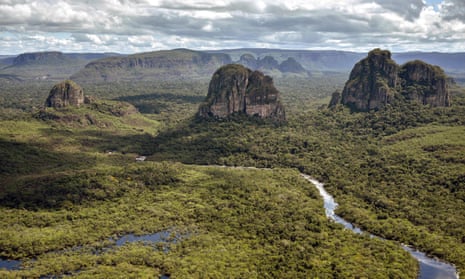
The Serrania de Chiribiquete national park in the Amazonian jungle departments of Caqueta and Guaviare, Colombia.
The Serrania de Chiribiquete national park in the Amazonian jungle departments of Caqueta and Guaviare, Colombia. Four children survived over two weeks in dense rainforest after their plane crashed. Photograph: Guillermo Legaria/AFP/Getty Images


Labels: , , , , ,

 
()() Follow @rheytah Tweet