Ruminations

Blog dedicated primarily to randomly selected news items; comments reflecting personal perceptions

Friday, May 16, 2025

Moving Ahead with CRISPR Therapy

"This is the first step toward the use of gene editing therapies to treat a wide variety of rare genetic disorders for which there are currently no definitive medical treatments."
"As we get better and better at making these therapies and shorten the time frame even more, economies of scale will kick in and I would expect the costs to come down."
"Think of it like a GPS signal. You can change where the GPS is going depending on what specific sequence of genes you want to change."
"We want each and every patient to have the potential to experience the same results we saw in this first patient, and we hope that other academic investigators will replicate this method for many rare diseases and give many patients a fair shot at living a healthy life."
"The promise of gene therapy that we’ve heard about for decades is coming to fruition, and it’s going to utterly transform the way we approach medicine."
Dr. Kiran Musunuru, gene editing expert, University of Pennsylvania 
 
"Years and years of progress in gene editing and collaboration between researchers and clinicians made this moment possible, and while KJ is just one patient, we hope he is the first of many to benefit from a methodology that can be scaled to fit an individual patient’s needs."
"While KJ will need to be monitored carefully for the rest of his life, our initial findings are quite promising." 
Rebecca Ahrens-Nicklas, MD, PhD, director, Gene Therapy for Inherited Metabolic Disorders Frontier Program (GTIMD), Children’s Hospital of Philadelphia
https://www.chop.edu/sites/default/files/styles/landscape_167_5x3_1280x768_2x/public/2025-05/25-CHST-2545A7-MPR-CHOP-Stories-KJ-Patient-Story-chop.edu-2C.jpg?itok=OeiLU3az
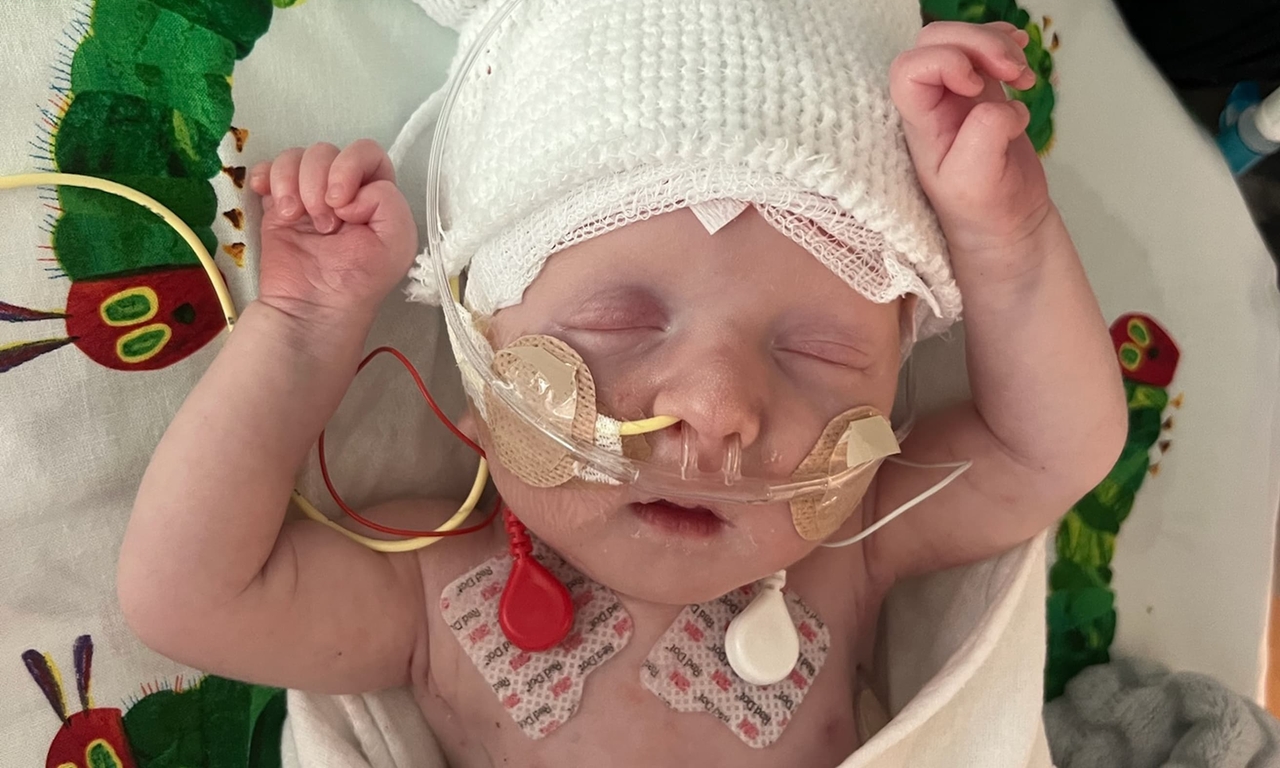
KJ was only days old when he was diagnosed with a rare metabolic disorder and transferred to Children's Hospital of Philadelphia where doctors were actively researching new cell and gene therapies.
 
"[We weighed] all the options, asking all the questions for either the liver transplant, which is invasive, or something that's never been done before."
"We prayed, we talked to people, we gathered information, and we eventually decided that this was the way we were going to go."
"[Considering his poor prognosis earlier], any time we see even the smallest milestone that he's meeting -- like a little wave or rolling over -- that's a big moment for us."
"We would do anything for our kids, so with KJ, we wanted to figure out how we were going to support him and how we were going to get him to the point where he can do all the things a normal kid should be able to do."
"We thought it was our responsibility to help our child, so when the doctors came to us with their idea, we put our trust in them in the hopes that it could help not just KJ but other families in our position."
Kyle and Nicole Muldoon, parents of infant KJ Muldoon
https://www.chop.edu/sites/default/files/styles/landscape_167_5x3_1280x768_2x/public/2025-05/25-CHST-2566Y0-MPR-N%20of%201%20Gene%20Editing%20ASGCT%20KJ%20CPS1%20Press%20Release-3.jpg?itok=QCp8qAfn
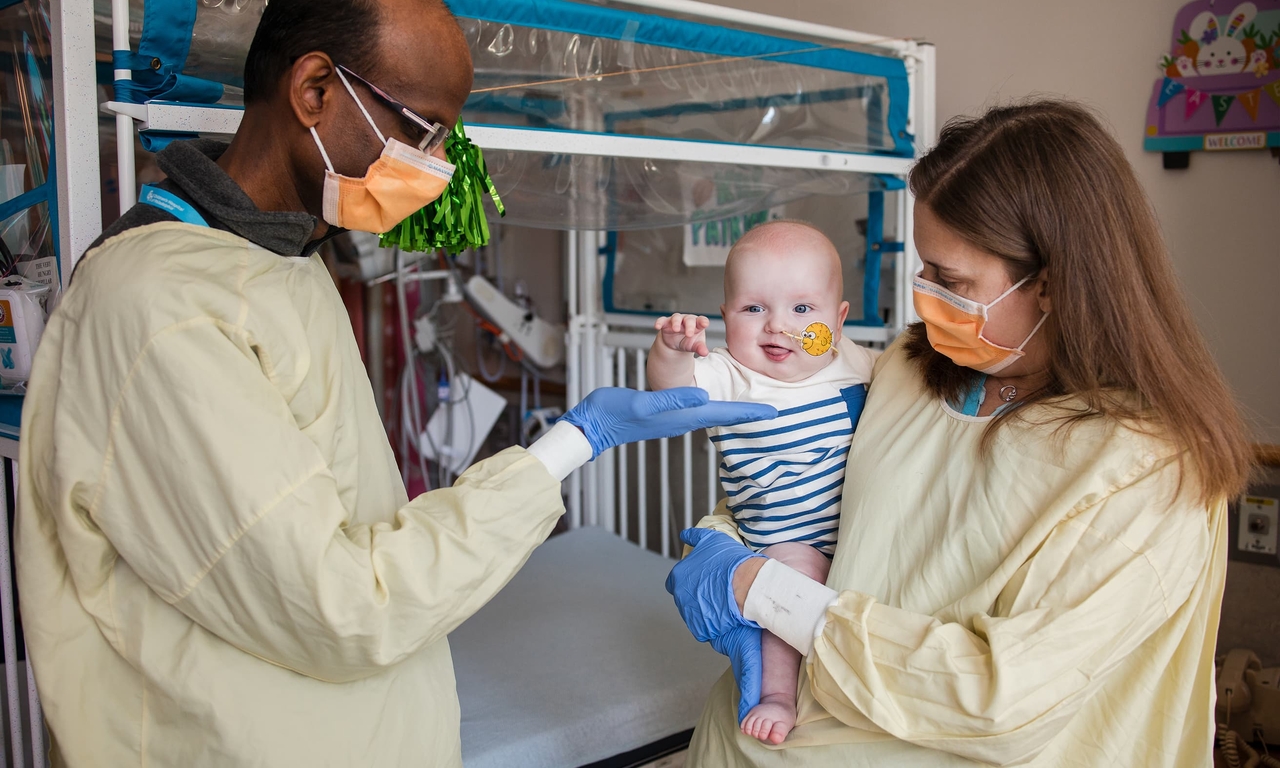
Kiran Musunru, MD, PhD, MPH, ML, MRA, (left) and Rebecca Ahrens-Nicklas, MD, PhD, (right) led the group of researchers from CHOP and Penn who developed a personalized treatment for baby KJ.

A new study has been published, describing by researchers an experimental therapy highlighting a baby born with a rare and dangerous genetic disease who is now growing and thriving following a gene editing treatment designed specifically for him. The study was published in the New England Journal of Medicine. The child is among the first ever to be treated successfully with a custom therapy meant to correct a tiny, critical error on his genetic code, one that kills fifty percent of affected infants. 

It is the hope of doctors that some day in the near future emerging technology can help millions of people whose conditions are rare -- often referred to as 'orphan' conditions -- as genetic medicine advances. The era awaits when similar personalized treatments become available for individuals afflicted with rare conditions. The baby, identified as KJ Muldoon of Clifton Heights, Pennsylvania represents one of some 350 million individuals worldwide with mostly genetically inherited rare diseases. 

Infant KJ was diagnosed soon after his birth with severe CPS1 deficiency which according to experts affects about one in a million babies who lack an enzyme required to help remove ammonia from their body. Their condition can lead to the ammonia building up in their blood to become toxic. For some, a liver transplant is an option. For baby KJ, once his parents had agreed, the team at Children's Hospital of Philadelphia and Penn Medicine created an individualized therapy to correct the child's faulty gene.
 
CRISPR, the gene editing tool representing a huge step forward in understanding nature's architectural designs of human biology, led to researchers using a technique to flip the mutated DNA 'letter' -- known as a base -- to its correct version. "Base editing" reduces risk of unintended genetic changes. KJ received his initial IV infusion in February, when the gene editing therapy was delivered through tiny fatty droplets named lipid nanoparticles, absorbed by liver cells. 
 
March and April saw follow-up doses, the therapy enabling KJ to consume food more normally. He was able to recover well from illnesses such as colds which can exacerbate symptoms of CPS1. Now 9-1/2 months old, the infant currently requires reduced medication. The hope of the researchers involved is that what they learn from treating KJ will assist in more fully understanding other rare disease patient condiions. 
 
Generally, more common disorders are targeted by expensive-to-develop gene therapies afflicting much greater numbers of people. For simple financial reasons a greater number of patients equate with greater sales, the profits of which can help with development costs and generate greater profit. Sickle cell disease, a blood disorder that affects millions of people globally saw the first CRISPR therapy approved by the U.S. Food and Drug administration.   
"Once someone comes with a breakthrough like this, it will take no time [for other teams to apply the lessons and move forward]."
"There are barriers, but I predict that they are going to be crossed in the next five to ten years."
"Then the whole field will move as a block because we're pretty much ready." 
Carlos Moraes, neurology professor, University of Miami
https://www.chop.edu/sites/default/files/styles/landscape_150_3x2_1100x733_1x/public/2025-05/25-CHST-2545A7-MPR-CHOP-Stories-KJ-Patient-Story-chop.edu-5_1.webp?itok=J7Ok75hi
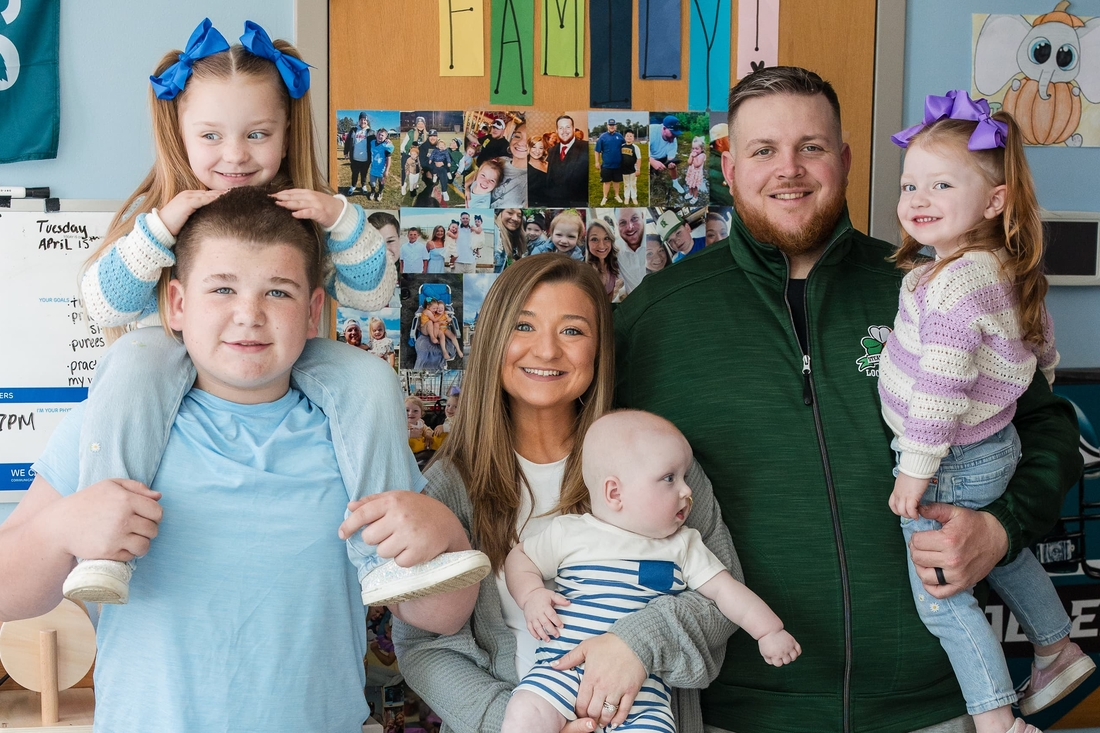
KJ's parents, Kyle and Nicole, and his three siblings are looking forward to welcoming him home after a first-of-its-kind personalized gene editing therapy at CHOP.  Children's Hospital of Philadelphia

Labels: , , ,

Monday, April 07, 2025

No, Really -- There's a Cure For That

"[There is a] treasure trove of medicine that could be used for so many other diseases."
"We just didn't have a systematic way of looking at it. It's essentially almost silly not to try this, because these drugs are already approved."
"Other laboratory discovery techniques have already put drug repurposing on the map."
"A.I. just puts rocket boosters on that."
Dr. Donald C. Lo, scientific lead at Remedi4All
 
"This is one example of A.I. that we don't have to fear, that we can be really excited about."
"This one's going to help a lot of people."
Dr. Grant Mitchell, an Every Cure co-founder
 
"Essentially we ran a query that said, 'Show us every proposed treatment there has ever been in the history of medicine for nausea'."
"[The alcohol] popped to the top of our list. It worked instantly."
"If you comb through enough drugs, you eventually find the side effect you're looking for And then that becomes the main effect."
Dr. Matt Might, professor, University of Alabama, Birmingham 
 
"Rare-disease research is challenging for a number of reasons. One problem is clear just in its name: With a rare disease, there are fewer patients for clinical trials, and there’s typically less funding and awareness. There’s also less work that has been done to date, so there’s less to build upon. Science is all about building upon previous work to get the answers you need."
"Sometimes there’s data that suggests that an existing drug might work for another disease. But because over 80% of approved drugs are already generic, there’s no profit incentive for drug companies to find new uses for them."
"Rare-disease researchers face major challenges. But they also have great opportunities to make a lot of progress."
Dr. David Fajgenbaum, American immunologist, author, and co-founder and President of the Castleman Disease Collaborative Network (CDCN)
https://www.aamc.org/sites/default/files/styles/scale_and_crop_1200_x_666/public/aamc_news_-_david_fajgenbaum_and_team.jpg?itok=o9LbupCs

David Fajgenbaum, MD, MBA, with cofounders of Every Cure, which uses artificial intelligence to determine whether existing medications could work as treatments for diseases that have none. Photo courtesy of Every Cure

When he was 25 years old and in medical school, Dr. David Fajgenbaum had been diagnosed with Castleman disease, a rare subtype of a disorder, a condition that led to an immune system reaction so severe he was placed in an emergency intensive care unit. There is no treatment for Castleman disease, among its victims some fail to respond to any available treatments, Dr. Fajgenbaum among them. He took the initiative on his own behalf, spending weeks testing his own blood, reading medical literature, attempting unconventional treatments.
 
"I didn't have a billion dollars and ten years to create some new drug from scratch", he later explained. Eventually he found a generic medication typically scripted for kidney donation recipients in rejection prevention. The medication, sirolimus, has enabled his Castleman disease  to remain in remission for over a decade. And Dr. Fajgenbaum became a professor at the University of Pennsylvania, intrigued with the potential of other drugs with unknown usefulness in orphan diseases.
 
Among other things, his laboratory found a novel cancer drug to help another Castleman patient, a laborious process for which his team had to examine "one drug and one disease at a time". Finally, Dr. Fajgenbaum established Every Cure, a non-profit determined to make use of machine learning, enabling the comparison of thousands of drugs and diseases in instant succession. The lab's platform compares about 4,000 drugs against 18,500 diseases.
 
Scores based on the likelihood efficacy for each disease are then rated in predictions, with researchers combing through the data to find promising ideas -- following which lab tests can proceed, or alternately connecting with doctors interested in trying the drugs on their patients, unresponsive to other treatments.
Every Cure was funded by $100 million in commitments from the TED Audacious project and the Advanced Research Projects Agency for Health, an agency of the U.S. federal health department.
 
A drug formulated to work with Parkinson's patients was able to help patients with a neurological condition to finally move and to speak. Dr. Might pointed out that many drugs are capable of performing more than one function; additional features occasionally are characterized as side effects. 
 
A cautionary note came from Dr. Marinka Zitnik, associate professor at Harvard Medical School who studies computer science applications for use in medical research. No model is infallible, she cautioned. Artificial Intelligence can on occasion make predictions "based on evidence that isn't sufficiently strong". 
 
An aggressive drug treatment combination suggested by Dr. Fajgenbaum's model concerned hematologist/oncologist Dr. Wayne Gao, who was troubled that the suggested treatment might even kill a young man in Washington State whom he was set to treat, battling a rare blood disorder that left him with an enlarged heart and failing kidneys.
 
The 37-year-old felt hopeless. "I gave up. I just thought the end was inevitable", he admitted. But he and his girlfriend knew of the work of Dr. Fajgenbaum and contacted him in Philadelphia. The following day Dr. Fajgenbaum responded suggesting an unconventional combination of  chemotherapy, immunotherapy and steroids which had never before been tested as a treatment for the young man's blood disorder ,POEMS syndrome.
 
Dr. Gao, who treated the young man, felt that since no other treatments were available to consider, he felt finally that "someone had to be the first to try", despite his initial misgivings. And so he did. The young man is now healthy, able to resume his life as it was prior to the disease onset and its disastrous consequences. He had since put on weight, lost while he was in dire failing health. And now he feels "just fine".  

https://images.squarespace-cdn.com/content/v1/677632b73bf4495468246e2e/1735856782890-S623MITHF7UKUVQECSI3/4.png?format=500w

Labels: , ,

 
()() Follow @rheytah Tweet