Ruminations

Blog dedicated primarily to randomly selected news items; comments reflecting personal perceptions

Tuesday, April 20, 2021

Post-COVID, as the World Economy Turns to 'Normal'

"It's very easy after a gruelling year or more to feel really relieved that things are back on track."
"But a lot of the effects that we see historically are often for decades and are not easily addressed."
Vellore Arthi, University of California, Irvine

"Getting back to the pre-COVID standard will take time."
"The aftermath of COVID isn't going to reverse for a lot of countries. Far from it."
Carmen Reinhard, chief economist, World Bank

"Innovation supports higher productivity growth, and new investment raises living standards."
"Key too are strategies to keep and train workers to take advantage of the higher productivity opportunities."
Catherine Mann, chief economist, Citigroup Inc.

"There's genuine uncertainty over how much people's behaviour in terms of consumption patterns changes as a result of this crisis."
"If people go back to eating in restaurants, doing leisure travel, working out in gyms then a lot of those industries will revive."
"But it's also possible that people's tastes just genuinely change, in which case there is going to be transitionally more unemployment and there's no good government fix for that."
Adam Posen, president, Peterson Institute for International Economies
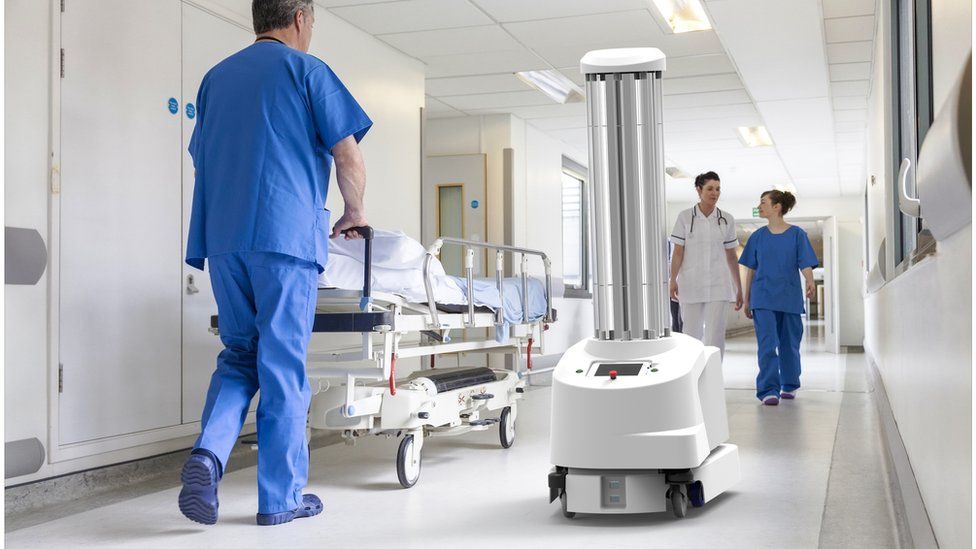
cleaning robots in a hospital hallway
UVD-Robots, which makes cleaning robots for hospitals, has had hundreds of new orders since Covid-19 broke out    UVD Robots
 
Economists taking a long view of the world economic situation looking to a COVID-free future entertain doubts of the kind of universal recovery that will take shape across the globe. A whopping $26-trillion of crisis support linked with the presence of COVID vaccines managed, to the surprise of many, to fuel a quicker recovery than had been anticipated. That, in the face of another reality, that the legacy of education in abeyance, job disappearances, crippling debt levels and greater inequalities hobbling ethnic groups, genders, generations and geographies strikes a discordant note.

The first half of the equation will benefit advanced economies, the second half will burden the poorest nations. Last year, the overall decline in gross domestic product represented the largest descent since the Great Depression. According to the calculations of the International Labour Organization, 255 million workers lost their full-time employment. The global middle class, according to research at the Pew Research Centre, shrank for the first time, since the 1990s.

A scorecard of 31 metrics across 162 nations devised by Oxford Economics Ltd, emphasizes how unevenly the costs will fall with the Philippines, Peru, Colombia and Spain representing economies most vulnerable to long-term struggles. Those countries most likely to emerge with considerably less scarring have been identified as Australia, Japan, Norway, Germany and Switzerland. Economies less affected by the coronavirus this year and beyond will not be affected as deeply.

Greater suffering will be experienced by low-income countries and emerging markets, in contrast to the 2008/9 recession when it was the rich nations that bore the brunt of the global recession. Supported by trillions of dollars in stimulus, projections indicate little residual scarring for the world's largest economy, as a result of the pandemic, with U.S. GDP forecasted to be larger than projected from before the emergence of COVID-19, according to the International Monetary Fund.
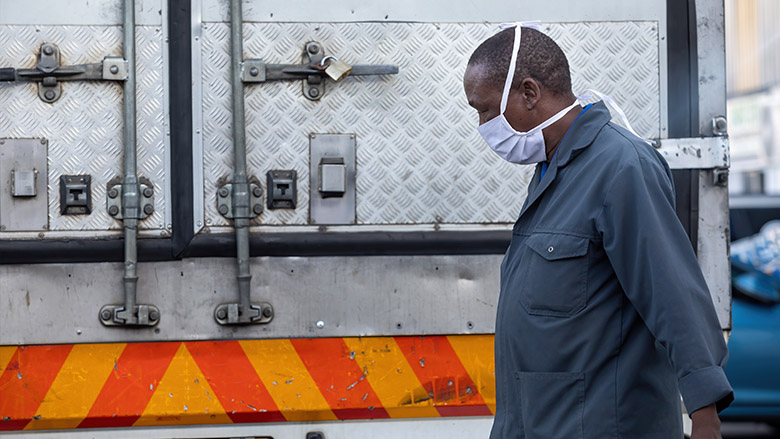
 
A Worker in Sub-Saharan Africa standing near a truck is seen wearing a mask
A worker wears a mask in Sub-Saharan Africa. © Lucian Coman/Shutterstock 
 
"A decade of global growth disappointments" is on the horizon -- warned the World Bank in its January report -- should corrective action not be taken. Global output, it estimated, was on course to be 5 percent lower by 2025 than its pre-pandemic trend. Countries quick to control the virus warn of the uneven road that lies to the future. As an example, New Zealand's economy contracted in the last three months of 2020, caused by the absence of foreign tourists. The country that consistently topped Bloomberg's COVID resiliency rankings now faces the prospect of a double-dip recession.

The use of robots has been accelerated by the crisis, in both manufacturing and in the services industry, reflecting the need for both workers and customers to be protected from the spread of the SARS-CoV-2 virus. Looking ahead to a revival in productivity growth spurred on by the prospect of greater robotic usage, in the process millions of jobs are on the line. The question of whether new ones will be created in the changeover, a blank slate.

In eight of the world's largest economies, over 100 million people may be faced with a need by 2030 to change their occupations ... and those most likely to suffer from gaps in their skill levels are identified as the less educated, women, ethnic minorities and the young.  Skills tend to atrophy, in a process known as hysteresis, the longer people are out of the workforce.
"A lot of those jobs are gone forever."
"Low-wage job in marginal companies or marginal sectors are gone as the companies have gone bankrupt or the sectors have been hollowed out."
"A lot of the more-adaptive companies will have filled the void, but with fewer workers."
Eric Robertson, global head of research, Standard Chartered PLC
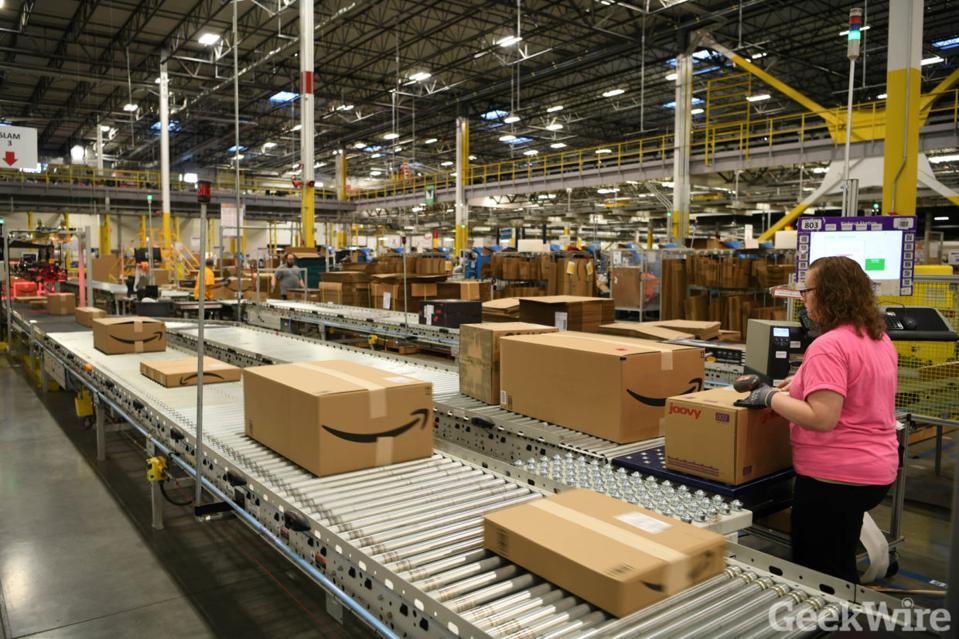
COVID-19 will accelerate robots that keep workers safe and deliver better products faster

Labels: , , , ,

Sunday, May 03, 2020

Eating Out Automatically

"It is very early days to tell what will happen with coronavirus."
"But we are seeing a lot of interest in how our technology can be used to manage food waste, cross contamination, and offer a hands-off approach to handling food."
"The biggest challenge is that food is non-linear. An Amazon or Tesla can use robots to pick up a particular thing on an assembly line. Food it not like that. You have to have flexibility and mimic what a human can do."
Barney Wragg, co-foundiner, Karakuri, robotic food preparation startup, London
Photo by Albert Law for Eater

"[It is] fast-tracking emerging tech."
"Food-prep robots are still in the novelty phase. People go to restaurants because of the human chef. Personal service is often embedded in the dining experience."
"But again, coronavirus is helping to change these attitudes. I can see robots eventually taking over for fast-food workers in large-scale food prep environments the same way that robots took over for assembly line workers in factories"
"When we come out of this, the public will at least be more aware of robotic options, even if they don't immediately accept them."
Victoria Petrock, analyst, eMarketer

"I've been hesitant to order food with what is  happening with coronavirus."
"Covid can live on some surfaces for several hours."
Jeffrey Ng, chief science officer, Founders Factory
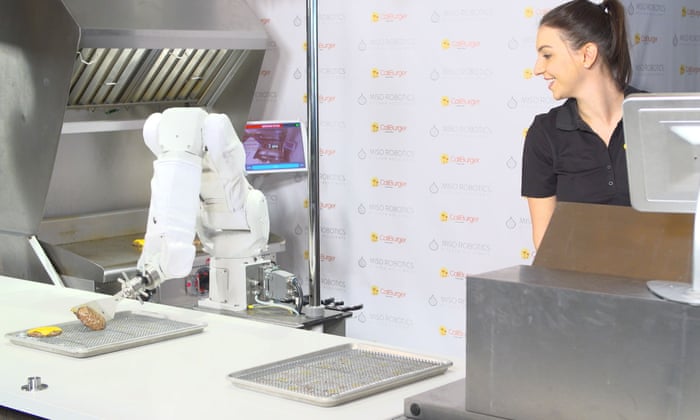
Flippy, a robot cook that works at Caliburger in Pasadena. Photograph: Miso Robotics

Samsung has featured robot cooks at technology shows, rolling them out to impress crowds. They have not yet, however, become a feature  in kitchens, but that might possibly be on the cusp of change, given the sudden presence of a viral threat and the highlighted need to practise not merely fundamental safe food handling, but energetically enhanced food safety practices.

While little evidence exists that the novel coronavirus can be spread through preparation of food providing it is handled according to standard hygiene standards for food and thoroughly cooked, there are some in the industry who believe reluctance of the public to eat food handled by strangers might just represent the accelerant needed for the uptake of automation.

In the interests of reducing human contact with food once it is cooked, the use of a robot at the point of service would make good sense. Staff waste management shortfalls could be improved with the use of automation. Using robot and artificial intelligence can result in better monitoring of how much food is required at any given time, according to Karakurt.

This restaurant is powered by robot chefs

Staff time can be freed up with the use of robotic servers taking the place of humans. A number of food technology startups are leveraging robotics. A burger-flipping robot named Flippy, from Miso Robotics has been used in California to prepare hamburgers. Briggo, a robot barista, brews coffee orders on a smartphone instead of waiting for a human. True, most of the technology is still at the experimental stage.

At the present time, the reality is that for now such robots are not yet advanced sufficiently to fully take the role of a literal iron chef. Karakurt has built a working food-picking robot for sweets or ice cream and is now developing its DK-One, a robot designed to prepare up to 360 custom meals hourly, using 48 ingredients.

Retail delivery drone sales have increased and will hit 44,000 by next year. Such drones are already delivering food supplies in China. "We have seen a huge increase in demand. Our robots can play a valuable role (as elderly/vulnerable) customers can get their food and groceries straight to their door", explained Henry Harris-Burland of Starship Robotics.

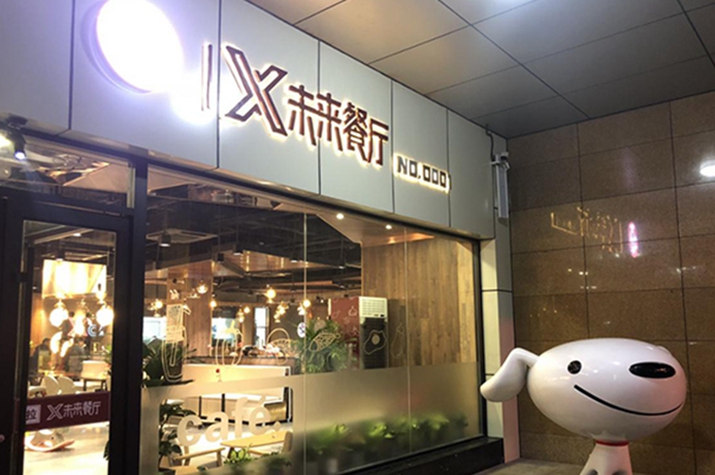
Robots are replacing waiters in the food sector in some areas of the Far East, where in Shanghai and Hong Kong, robot waiters trundle hotel corridors to service people forced into total isolation as a result of symptoms linked to the coronavirus.

X Future Restaurant (PEOPLE'S DAILY)

Labels: , , ,

Sunday, February 03, 2019

The Farm Revolution

"They eat when they want, lie down when they want and feed when they want."
"And a happier cow produces more milk and better milk."
Christine Grady, general manager, Rivendale Farms

"You come away with a tremendous respect for farmers, and that the work is hard and complex."
"The key is getting the right mix of art and science."
Thomas Tull, entrepreneur, tech ventures investor, film producer
Rivendale Farms in Bulger.
Pam Panchak/Post-Gazette


Just outside Bulger, Pennsylvania the 150 cows at Rivendale Farms are fitted with collars to monitor their movement, eating and rumination patterns and when they are milked there is no human hand involved, but rather robotic machines, not particularly new in itself, but upgraded, modernized, fully automatic. The milking machines used at the farm come with a steep price tag: $200,000 for each. They're part of the process, alongside the automated feeding system, without which the milking barn at this farm would have at least five workers, not the one currently employed there to oversee production.

Rivendale Farm is part of a new movement in farming, a similar move seen in all other methods of production where high-tech equipment is introduced and fewer human hands are required. Some deplore this, others celebrate it as the wave of the future. In some European countries up to thirty percent of cows are machine-milked; in the U.S. the share is still roughly two percent, according to Mathew Haan of Pennsylvania State University. The differential can be explained by programs supporting milk prices in Europe along with higher labour costs which combined encourage automation investment.

Investment is the word. In point of fact Rivendale Farm is an investment as much as an experiment for its owner, a wealthy man who has placed several million of his billions into modernizing Rivendale. Thomas Tull envisions his farm becoming totally self-sustained by 2020. What this investor and farm owner foresees for its future, experts recognize as a trend among small farmers purposing to raise healthy food and livestock with less reliance on fertilizer, fossil fuel and processed feed.
Rivendale Farms uses new technology in its operations, including a feed robot for its cows.   Credit Ross Mantle for The New York Times

Farms in the U.S. have joined another trend; consolidation, where smaller farms have been bought out and combined to make for bigger and sometimes very large acreage devoted to farm production on steroids, as it were. Rivendale's pasture land, crops and woods take up 70 hectares where the average size farm in the U.S. now being 180 hectares with over half of the agricultural value produced by a limited fraction of very large farms, averaging 1,080 hectares. These very large farms are highly mechanized; smaller farms are now joining that trend in their own way.

Rivendale's dairy barn is void of people, devoted only to the presence of its cows. In place of farm workers in the dairy farm there is the automated feed system and three robotic milking machines. Milked four times daily compared with the conventional twice a day when milking is done by hand, the Jersey cows have readily adjusted to the difference, producing 14 percent more milk than the breed's average production, and with a higher protein and butterfat content.

Close by the dairy barn is a greenhouse where kale, arugula and baby carrots thrive by automation where temperature, humidity and sunlight exposure are controlled by sensors and retractable metallic screens. Small robots are in the planning stages to roam about the three hectares of vegetable crops for the purpose of plucking weeds and identifying the presence of disease. Drones, satellite imagery, soil sensors and supercomputers are all deployed to assist in food production now, mostly at big industrial farms, but they're moving increasingly into small farm production.

The milk, eggs and produce from Rivendale Farms, which spans 175 acres, are sold to selected local restaurants and hotels.    CreditRoss Mantle for The New York Times


Labels: , , ,

 
()() Follow @rheytah Tweet