Ruminations

Blog dedicated primarily to randomly selected news items; comments reflecting personal perceptions

Tuesday, April 20, 2021

Post-COVID, as the World Economy Turns to 'Normal'

"It's very easy after a gruelling year or more to feel really relieved that things are back on track."
"But a lot of the effects that we see historically are often for decades and are not easily addressed."
Vellore Arthi, University of California, Irvine

"Getting back to the pre-COVID standard will take time."
"The aftermath of COVID isn't going to reverse for a lot of countries. Far from it."
Carmen Reinhard, chief economist, World Bank

"Innovation supports higher productivity growth, and new investment raises living standards."
"Key too are strategies to keep and train workers to take advantage of the higher productivity opportunities."
Catherine Mann, chief economist, Citigroup Inc.

"There's genuine uncertainty over how much people's behaviour in terms of consumption patterns changes as a result of this crisis."
"If people go back to eating in restaurants, doing leisure travel, working out in gyms then a lot of those industries will revive."
"But it's also possible that people's tastes just genuinely change, in which case there is going to be transitionally more unemployment and there's no good government fix for that."
Adam Posen, president, Peterson Institute for International Economies
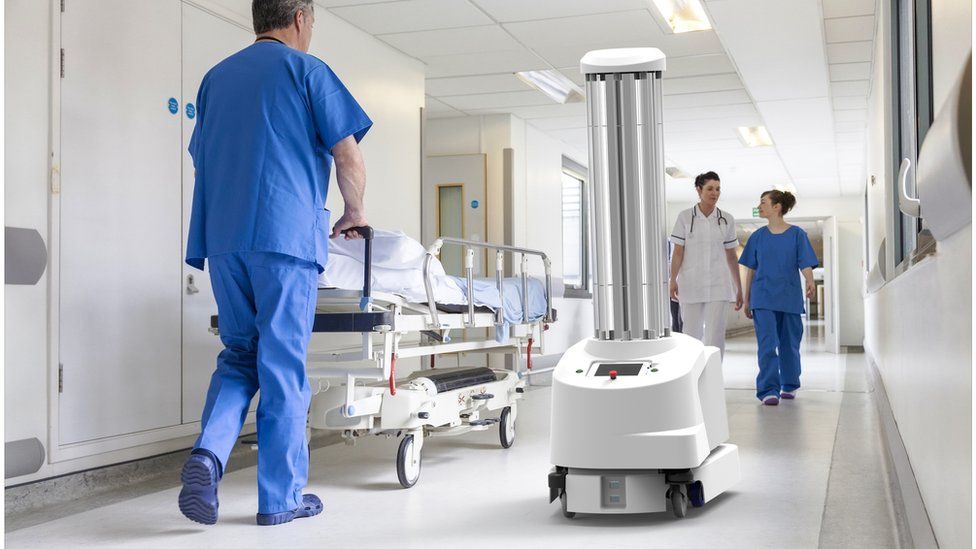
cleaning robots in a hospital hallway
UVD-Robots, which makes cleaning robots for hospitals, has had hundreds of new orders since Covid-19 broke out    UVD Robots
 
Economists taking a long view of the world economic situation looking to a COVID-free future entertain doubts of the kind of universal recovery that will take shape across the globe. A whopping $26-trillion of crisis support linked with the presence of COVID vaccines managed, to the surprise of many, to fuel a quicker recovery than had been anticipated. That, in the face of another reality, that the legacy of education in abeyance, job disappearances, crippling debt levels and greater inequalities hobbling ethnic groups, genders, generations and geographies strikes a discordant note.

The first half of the equation will benefit advanced economies, the second half will burden the poorest nations. Last year, the overall decline in gross domestic product represented the largest descent since the Great Depression. According to the calculations of the International Labour Organization, 255 million workers lost their full-time employment. The global middle class, according to research at the Pew Research Centre, shrank for the first time, since the 1990s.

A scorecard of 31 metrics across 162 nations devised by Oxford Economics Ltd, emphasizes how unevenly the costs will fall with the Philippines, Peru, Colombia and Spain representing economies most vulnerable to long-term struggles. Those countries most likely to emerge with considerably less scarring have been identified as Australia, Japan, Norway, Germany and Switzerland. Economies less affected by the coronavirus this year and beyond will not be affected as deeply.

Greater suffering will be experienced by low-income countries and emerging markets, in contrast to the 2008/9 recession when it was the rich nations that bore the brunt of the global recession. Supported by trillions of dollars in stimulus, projections indicate little residual scarring for the world's largest economy, as a result of the pandemic, with U.S. GDP forecasted to be larger than projected from before the emergence of COVID-19, according to the International Monetary Fund.
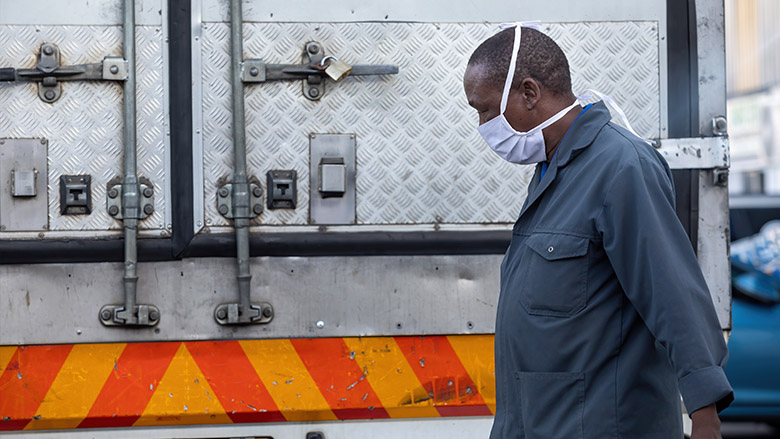
 
A Worker in Sub-Saharan Africa standing near a truck is seen wearing a mask
A worker wears a mask in Sub-Saharan Africa. © Lucian Coman/Shutterstock 
 
"A decade of global growth disappointments" is on the horizon -- warned the World Bank in its January report -- should corrective action not be taken. Global output, it estimated, was on course to be 5 percent lower by 2025 than its pre-pandemic trend. Countries quick to control the virus warn of the uneven road that lies to the future. As an example, New Zealand's economy contracted in the last three months of 2020, caused by the absence of foreign tourists. The country that consistently topped Bloomberg's COVID resiliency rankings now faces the prospect of a double-dip recession.

The use of robots has been accelerated by the crisis, in both manufacturing and in the services industry, reflecting the need for both workers and customers to be protected from the spread of the SARS-CoV-2 virus. Looking ahead to a revival in productivity growth spurred on by the prospect of greater robotic usage, in the process millions of jobs are on the line. The question of whether new ones will be created in the changeover, a blank slate.

In eight of the world's largest economies, over 100 million people may be faced with a need by 2030 to change their occupations ... and those most likely to suffer from gaps in their skill levels are identified as the less educated, women, ethnic minorities and the young.  Skills tend to atrophy, in a process known as hysteresis, the longer people are out of the workforce.
"A lot of those jobs are gone forever."
"Low-wage job in marginal companies or marginal sectors are gone as the companies have gone bankrupt or the sectors have been hollowed out."
"A lot of the more-adaptive companies will have filled the void, but with fewer workers."
Eric Robertson, global head of research, Standard Chartered PLC
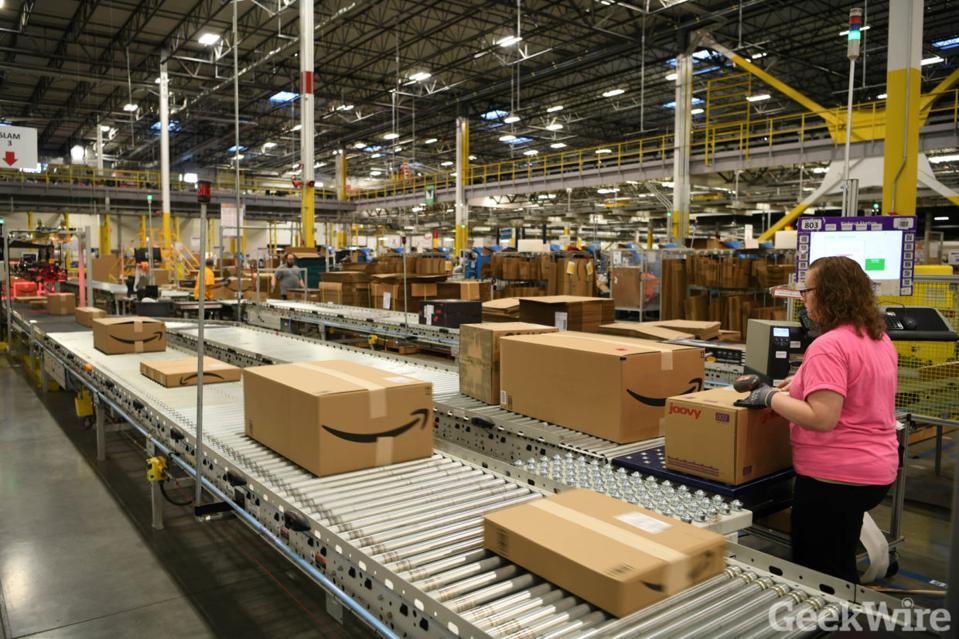
COVID-19 will accelerate robots that keep workers safe and deliver better products faster

Labels: , , , ,

Tuesday, September 01, 2020

Virtual Flight to Exotic Locales

"I often go overseas on business, but I haven't been to Italy."                                   "I got a sense of actually seeing things there."                                                   Japanese businessman 

"[The world's] first virtual aviation facility [an innovative entertainment concept made for the times we're at a time of closed borders, social isolation and face masks.]"                                                                                                                             First Air public relations

"[Passengers are] able to overlook the magnificent scenery of Taiwan's east coastline [from a lower-than-normal altitude]."                                                             "The on-board meal a selection of seafood chirashi-sushi rice designed by Michelin-starred chef Motoke Nakamura."                                                                    EVA Air, Taiwan


inflight service First Airlines

Leaving for a foreign destination at a time of global pandemic. Virtual travel. Safe and entertaining. That's what is on offer at First Airlines in the Ikebukuro neighbourhood of Tokyo. Although the virtual airline went into business several years before the onset of the SARS-CoV-2 virus causing COVID-19, its time has come. International travel for leisure and recreation is a tourism pleasure no longer recommended during this coronavirus epidemic.

Curious about what other places are like, take your pick from such destinations as Paris, Hawaii, New Zealand, Rome, New York, California or Helsinki. Good choices, great places to visit and you can do it without any personal risk. At a price that cannot be beat for value. $60 will gain you a reservation for the travel choice you want to commit to. 

Customers take VR flight experiences at First Airlines in Tokyo
A flight attendant at a check-in desk, First Airlines REUTERS/Kim Kyung-Hoon

And the concept is available elsewhere, too. There's the Taiwanese carrier EVA Air. You'll pay a little more to enjoy their popular Hello Kitty-themed travel treat, about $180. But so much less than an actual airline ticket setting off in the usual manner for foreign destinations. You get to 'go' virtually, to see places that are now, however temporarily, off limits to tourism.

"In flight" meals are appealing as is the first-class "lounge" and first-class seat with ample room on an Airbus; the closest most wanna-be passengers will come to the real thing for a while to come yet. All the details of flight from departure screens in the lounge to flight attendants skillfully pantomiming the real thing carrying out safety protocols for the two-hour 'flight' experience.

First off, the "official boarding pass" for the destination of choice, drink service and a four-course culinary treat designed for the discriminating traveller by top chefs. How about Manhattan clam chowder and cheesecake for the Manhattan trip. Poke and minestrone for the Hawaii and Rome destinations respectively.

Flights "depart" on schedule five days a week. But act fast to make your reservations because they're a hot ticket right now. 

Customers take VR flight experiences at First Airlines in Tokyo
Customers in flight seats take their photos at First Airlines, that provides VR flight experiences, including 360-degree tours of cities and meals, amid the coronavirus disease (COVID-19) pandemic in Tokyo, Japan August 12, 2020. REUTERS/Kim Kyung-Hoon

Labels: , , , ,

Friday, January 31, 2020

Brave New World Ahead

"We live in the most extraordinary time in history. The next ten years will see more changes than occurred in the past one hundred years."
"In 1920, we could only find four innovations; the first commercial radio station, the handheld hair dryer; the Band Aid; and traffic lights. By contrast, last year saw tens of thousands of technological and scientific breakthroughs."
"As more people have access to technology, more problems can be solved and the more capital is available to find those solutions."
"To be clear, there will still be terrorism, war, and murder. Dictatorships and disease won't go away. But the world will quietly continue to get better."
Peter Diamandis, entrepreneur, M.D., aeronautical engineer, founder XPRIZE Foundation
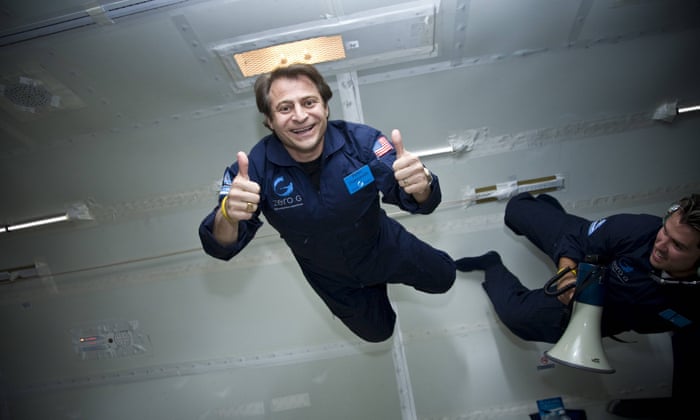
Peter Diamandis on a weightless flight launched by his Zero Gravity Corporation: ‘Every powerful technology is used for good and for bad.’ Photograph: XPrize/Steve Boxall

We have it then on the impressive authority of this man that the world we inhabit is on the cusp of accelerated innovation so profound it will leave our heads spinning. After all, this is a man who invents, innovates, creates, reasons, researches, and envisions no end to humankind's stretch into a remarkable future. He is engrossed with the fields of Human Longevity, Planetary Resources, Space Adventures and biotech Celularity, founder of Singularity University. He is no cerebral slouch.

One of the artificial neurons in its protective casing on a fingertip © University of Bath/PA
Artificial neuron in its protective casing on a fingertip © University of Bath/PA

He is as well, as might be expected, a writer, his latest book just released, The Future is Faster Than You Think, a careful inspection of how the reinvention of the world will progress through innovative technology, industry after industry, with historical comparisons, leading to an aura of complete optimism that a better world lies just over the horizon of transformative goods, devices, services, business models and human behaviour.

But not, sadly that much a change in human behaviour, such that we can serenely contemplate an end of strife and any diminishing of pathological capital offences against humanity. On the other hand, people in developed countries will be graced with savings of time and funding as when, for example it began with the invention of the Google search engine, of iPhones and massive data storage capacity; time and money better used to invest in other innovations.
geralt / Pixabay

The science world has moved forward in great leaps and bounds to the present where the cost of sequencing the genome was $100 million in 2001, whereas it now can be done for a mere $100; before that the prototype computer of today took up an entire room, and today's computers are the size of a human hand with infinitely more capability and storage and communicability. Today's technologically advanced cameras, the advances of storage, facial recognition, telephones, laptops, and artificial intelligence; all great leaps forward.

Blockchain technology supported by crowdfunding that raises billions for research and development; brain enhancement techniques boosting concentration and memory to accelerate research outcomes. Before long, consumers will be enabled to play, learn and shop through headsets, glasses or implants and robots and appliances will recognize our faces and voices and preferences. Voice commands on the cusp of replacing typing.

https://i.connatix.com/s3/connatix-uploads/a6a05457-4248-46bd-a615-6f42d6fd1a73/1.jpg?mode=crop&width=856&height=481

Artificial intelligence will be smarter than the human brain, according to the co-founder of Singularity University who gives that advance to 2029. This innovation will ensure intelligent collaborative tools are available for workers, professionals, analysts and leaders so they can discover smarter solutions to challenges before them. Renewable energy enhancements, batteries and local power grids to accelerate with lower costs and higher performance, globally.

The tourism potential of space travel and the prospect of space colonization lies ahead. Food production, superior education, shopping variations and ideas in real estate all to change profoundly. The dark side of the optimistic view is that technology will not always remain securely in control of responsible agents. New problems can arise when the wrong hands grasp the potentials for global disruption inherent in new technologies, neutral in themselves, dangerous when manipulated that way.

Future technology: 22 ideas about to change our world
Science Focus

Labels: , , , , ,

Sunday, July 21, 2019

Acutely Environmental or Supremely Opportunistic?

"Cemeteries are really expensive and really terrible, and basically I just knew there had to be something better."
"We're trying to redesign the entire end-of-life experience."
"Some people want a tree that is totally isolated, and some people really want to be around people and be part of a fairy ring."
"The idea is to use cemetery law in the same way that protects normal cemeteries. Our focus is to go and find the most beautiful land in the area around a city … and then we’re protecting that land."
Sandy Gibson, chief executive, Better Place Forests, Santa Cruz, California
Forest Clearing Scene (1).jpg
(Better Place Forests)

"They just go at night, scatter grandma, have a cup of champagne, and every day they drive by that park they know grandma is there."
"Why would they pay $20,000 to go to a memorial grove when they can scatter at any little park they want to for free?"
John O'Connor, Menlo Park Funerals

"She's about 60 years old [evergreen: madrone, with dark red bark], and I'm 63."
"Looking at her growth pattern you can see things have been hard at times because she's kind of curved, but she made it to the top to get to the sunlight."
Debra Lee, retired administrative assistant, San Jose, California
In the Santa Cruz forest, people can reserve memorial trees where their ashes can be spread after they die. (Better Place Forests)
Environmental consciousness has never been so vibrant. Not a day goes by when the public is not reminded of our stewardship of a planet that we have abused for far too long. People are urged to consider their actions through the lens of personal responsibility to nature, to our natural environment and the pollution we spew throughout our daily lives in energy use and exploiting natural resources. Society in general has become extremely conscious of the fragility of our geology and our environment. Extreme weather events have helped to focus the collective mind.

And now there's a fairly new start-up in -- where else? -- California, that promises to help people when they die to nourish the land. Traditional burials and cemeteries use land in conventional ways long accepted -- so long in fact, that archaeologists have discovered places where bodies have been perfectly preserved long past their thousand-year-old burials. So interment and memorial markers do not only reflect social traditions of hundreds, but of thousands of years. Often, when construction is halted in the middle of cities it is because the dig has unearthed unknown burial sites of antiquity.

There is now a forest south of Silicon Valley advertising their services for a more environmentally astute burial. A forest in Point Arena, south of Mendocino California, as well as another California location in Santa Cruz, has been developed where trees can be 'adopted' as one's final resting place if one thinks of 'dust returning to dust'. The idea is that people are invited to visit the forest as a kind of pre-arrangement, to select a tree that appeals to them and arrange for their ashes to be laid around that tree.

The company is not in the cremation business; the deceased would first have to be cremated, and the ashes brought to the forest to complete 'burial'. After which a plaque is installed similar to a gravestone in concept, identifying the individual whose remains are linked to the tree. The tree is considered the 'forever' home of the buried ashes; should a tree die, it would be replaced. The cost? from $3,000 up to $30,000, depending on the prestige of the tree, though an entry-level $970-communal tree burial is also available.

A trench is dug at the tree's roots -- measuring 90-by-60 centimeters -- the soil mixed with the ashes and with water. The soil is kept moist to enable bacteria to break down the remains. Some people choose to have their ashes mixed with that of their pets. Remember those ancient Egyptian tombs where slaves and animals were buried with their owners? The difference then was that it was in anticipation of renewing life after death and being reunited in the new life with those buried in continued service to the principal.

For an additional fee a digital memorial video can be made, so visitors can view a digital portrait of the deceased. The cemetery-forest competes with traditional funeral and plot burials that run in price from $15,000 to $20,000 in the area. So price comparison advantages the new concept, as well as the allure of the tranquility of a mature forest as the setting for one's final 'resting place'.

In the Santa Cruz forest there are around six thousand trees awaiting adoption. Various coloured ribbons are wrapped about them. Potential clients stroll about in the forest, assessing the qualities of the trees they view and ultimately find one that appeals to them. There is a ceremonial cutting of the ribbon when a customer selects the tree they plan to spend eternity with.

Forest sky
Better Place Forests

Labels: , , , ,

Tuesday, July 04, 2017

Seeking Miraculous Recoveries

"Stem cells have to be controlled to act exactly the way you want them to act. And that's why the research takes time."
"It is simply wrong for these clinics to take a proof of concept and run with it."
Ubaka Ogbogu, health law professor, University of Alberta

"I believe medical progress is not just limited to the laboratory and randomized double-blind trials. A lot of progress starts in the clinic, dealing with patients. You see something works, you see something has merit, and then it's usually the scientists that seem to catch up later."
"[Injections performed at Regenervate are comprised of] minimally manipulated [tissue derived from patients' own bodies. Any regulating effort to crack down would represent] regulation for the sake of regulation."
Dr. Douglas Stoddar, medical director, Regenervate

"There's a need for understanding what's going on here, and there's a need for regulation."
Dr. David Hart, orthopedic surgery professor, University of Calgary
Stem cell research Getty Images
There has been an appearance of clinics in Canada's large cities eager to provide treatment that falls into the realm of unproven and still experimental though it holds out the promise of opening a wholly new area of vital health treatments whose use seen to be premature, given the possibility of things going awry. Yet there are those people at their wit's end over their state of debilitation from conditions such as arthritis who seek out this kind of treatment despite its unauthorized conditions, who are willing to pay handsomely for the opportunity to improve their physical well-being.

Stem cell treatment has been available for years in Mexico, China, or Arizona, and medical practitioners who respect the process of introducing new treatments after successful experimentation, human trials and government approval, view the medical tourism that leads to access in stem-cell transplants as of dubious value. But it is its potential value that has inspired Canadians, among other nationals, to seek out the treatment in the hopes it will result in improved mobility and freedom from pain and discomfort.

Regenervate is the name given to a number of branches of the clinic in operation in Canada, which have initiated injections of stem cells lately to meet the growing demand. There are many other clinics, and their presence and treatment methodology has raised questions, on a medical hypothesis holding out future promise being used routinely before its full value is proven, and discounting concerns over possible complications. Arthritis is now being increasingly treated in clinics in Ontario and Alberta; along with joint injuries, disc problems and skin conditions.

Stem cells are derived from fat tissue or bone marrow from the patient him/herself. Stem cells are capable of "differentiating" or transforming into other types of cell allowing them to grow or to "regenerate" tissue that has been damaged through the onset of disease or by injuries suffered. Hundreds of researchers in Canada have been engaged in examining stem-cell treatments for all manner of conditions, from heart problems to severed spinal cords.

The problem is that it remains a concept yet to be proven to be fully effective and safe. Studied in a laboratory environment or in human trials, few treatments have yet been definitively proven to be effective by the techniques of science, let alone approved by regulators such as Health Canada. In the United States, three women became blind as a result of receiving stem-cell injections in their eyes. Others in the United States have developed bony masses or tumours at injection sites.

While some experts in the field feel that the procedures available at clinics such as Regenervate that focus on joint pain are relatively safe in all likelihood, they do express reservations that stem cells have the capability of developing into the wrong type of tissue, possibly in the wrong place in the body, and care must be taken with their use as a result. Fees at Regenervate range from $750 to $3,900, according to Dr. Stoddard, who is himself confident of the method's effectiveness and safety.

He cites the observation that at his clinic some 80 percent of patients report they suffer less pain, stiffness and weakness within several months of receiving their first stem-cell injections. As far as Health Canada is concerned, the greater number of stem-cell therapies represent the use of a 'drug' requiring official authorization following a clinical trial, or should alternately undergo the process of a new drug submission.

In the United States, the U.S. Food and Drug Administration is pursuing the hundreds of clinics in operation there offering stem-cell treatments. Health Canada "will take action based on the risk posed to the general public" states Eric Morrissette, department spokesman. He points out that one treatment has been approved, where bone marrow transplants to treat cancer instead attack the patient's body, and so the stem-cell treatment is designed to combat "graft-versus-host disease".

Labels: , , , ,

Sunday, February 17, 2013

Surviving Stark Adversity

"While we were searching for him early on, he might have been walking away from us. Usually, by the third day, you're lucky if you find someone alive. All the creeks are dry at the moment. That country out there is very unforgiving. There are snakes and wild pigs and dingoes. If you are weak and lying down, they will get you. We were all saying, 'We have to find him today. We have to find him today'."
William Morris, commander, local emergency services, Australian outback

Sam Woodhead, eighteen years of age, from Britain and temporarily in Australia, went out for a run. He was, after all, young and well-conditioned and a health fanatic. Living at Upshot Station, an isolated farming property, known for its harsh geology and dreadful heat. He was lost in the Australian Outback throughout three days of 40-degree-C temperatures.

He did what many a child has done living anywhere in North America in isolated communities; went for a run, with the intention of returning fairly expeditiously. Except for the fact that he was unable to distinguish identifiable environmental characteristics that would aid him in retracing his steps to return to the place where he'd set off.

After his ordeal, wandering about roughly ten kilometres from the farm he set out from for a full ten days without food or water, he was understandably weak and dehydrated, and confused. Perhaps if he had been with someone else it might have helped; two minds are always better than one for devising strategies that might have aided survival.

He'd had a litre of water with him as he set out for his run and that lasted for his first hour out in that remote heated wilderness. He survived, his rescuers said, by drinking saline solution meant for his contact lenses. How much saline solution can he have had with him? If he'd been able to somehow snare a bird, a snake, a wild pig, he would have been able to survive. Fortunately for him he managed to survive anyway.

The excellent physical condition he was in before his trial is being attributed to his survival, though he lost quite a bit of weight. Ten days, however, isn't two months in the searing cold of the winter Andes where nothing lives to be snared and eaten in desperation. And while there was abundant frozen water there when a Uruguayan plane transporting 45 people, part of whom represented a youthful rugby team crashed, eating snow for rehydration cools core body temperature at a time when the body is urgently attempting to maintain it.

There was a roar of the engines and the plane vibrated as the Fairchild tried to climb again; it rose a little but then there came a deafening crash as the right wing hit the side of the mountain. Immediately it broke off, somersaulted over the fuselage, and cut off the tail. Out into the icy air fell the steward, the navigator ... followed by three of the boys still strapped to their seats. A moment later the left wing broke away and a blade of the propeller ripped into the fuselage before falling to the ground. 
Inside what remained of the fuselage there were screams of terror and cries for help. Without either wings or tail, the plane hurtled toward the jagged mountain, but instead of being smashed to pieces against a wall of rock it landed on its belly in a steep valley and slid like a toboggan on the sloping surface of deep snow.
The speed at which it hit the ground was around 200 knots, yet it did not disintegrate. Two more boys were sucked out the back of the plane; the rest remained in the fuselage as it careered down the mountain, but the force of deceleration caused the seats to break loose from their mountings and move forward, crushing the bodies of those caught between them and smashing the partition which separated the passenger cabin from the forward luggage area. While the freezing air of the Andes rushed into the decompressed cabin and those passengers who still had their wits about them waited for the impact of the fuselage against the rock, it was the metal and plastic of the seats which injured them.
Of the original 45 people aboard the plane en route to Chile for a rugby match, sixteen mostly teens survived. 72 days after the crash that took the lives of a quarter of the passengers, and a subsequent avalanche that smothered another eight to death, two of the survivors managed despite their feeble physical and mental condition, to clamber their way toward a green valley in Chile, out of the cordilleras where they had been imprisoned for over two months.

Their fine physical condition prior to their dreadful ordeal is considered to be the reason of their survival, along with luck and their good fortune that a handful among them were courageous and inventive, taking the initiative to bring order out of chaos and retain life out of a situation leading to certain death.

Eighteen-year-old Sam Woodhead experienced his ordeal in searing heat in the Australian outback, the survivors of the 1972 Uruguayan plane crash in the Andes managed to survive in conditions inimical to any form of biological life.

The tinguiririca volcano seen from the Tinguiririca River valley

Labels: , , , , ,

Thursday, January 31, 2013

Finally, a Website That Shows You Every Cat Video Posted on Vine

Vine cats
Aww.

Screenshot / Vinecats.com


I don't know what the Internet has been doing for the past seven days, but in a nigh-inexplicable lapse, it took from last Thursday all the way to today for someone to launch a website dedicated solely to pulling in all of the cat videos posted by users of Twitter's new video app, Vine.

Credit goes to photographer and designer Andrew Emond for making Vinecats.com a reality at long last. In an email to me, he was humble about the achievement, noting that he just created the site "for a bit of a laugh." But as everyone knows, "a bit of a laugh" is in fact the Internet's highest and noblest purpose, and cat videos its purest expression.

The site comes with a disclaimer alerting visitors that the cat videos are pulled in from Vine automatically in real-time, which means pretty much anything could show up there, up to and including the Internet's other all-consuming obsession. So be warned: "We take no responsibility for non-cat imagery or videos that are less than purr-fect.

Labels: , , ,

Tuesday, January 22, 2013

The Blind Hiker

How one man used technology to conquer the 2,000-mile Appalachian Trail.

Mike Hanson
Mike Hanson, blind hiker, on the Appalachian Trail
Photo by Gary Steffens.

The Appalachian Trail spans more than 2,000 miles across 14 states, traversing woodlands and peaks from Springer Mountain in Georgia to Mount Katahdin in Maine. It is one of the world’s longest continuous footpaths, and each year thousands of individuals attempt to hike the entire thing.

For any thru-hiker, making the trek is an accomplishment (fewer than 25 percent successfully complete the journey). But that’s especially true if you’re blind. Which is why it’s so impressive that Minneapolis-based attorney Mike Hanson set out along the Appalachian Trail in the spring of 2010. Using only a GPS device and trekking poles, the visually impaired Hanson plotted and completed the majority of the Appalachian Trail without outside assistance, making an important point about the power of technology and the independence of those without sight.

Born in Madison, Wis., Hanson has been blind since birth. When he was born prematurely, doctors gave him a high concentration of oxygen, which damaged his retinas. Despite his impairment, Hanson is an avid outdoorsman. As a child, his father’s stories about pheasant hunting in rural South Dakota inspired him to seek out wilderness. Later on, Hanson became a president of Capable Partners, a program designed to help visually impaired individuals partake in hunting and fishing by providing them with seeing partners as aides.

These experiences motivated him to pursue a long-distance hike, and the AT seemed like a fitting goal. Many other visually impaired individuals have completed similar journeys—among them Bill Irwin, who hiked the AT with a guide dog—but few have employed GPS systems. Hanson firmly believes that technology has the potential to change the way that the visually impaired interact with the world, and he suspected that using GPS to complete a big-ticket hike would help him prove his point. For years, though, the technology was both too expensive and too limited in its capabilities, which meant Hanson had to put his plans on hold.

Finally, in 2006, he noticed an increasing “availability of GPS that you can use without sight.” Using his Nokia N82 cellphone, Hanson downloaded a Loadstone GPS system, which is a free, open-source application specifically designed to facilitate the mobility of blind and visually impaired persons. The Loadstone GPS system allows its users to search for points of interest in an area—such as grocery stores, schools, and office buildings—and store those sites along with labels for future use. With the addition of screen reader technology, the Loadstone program can then provide oral instructions, letting a user know when to turn and when a destination is nearby, all with the help of clock-face directions. This data can later be shared online with other users, leading to a crowdsourced database of sites. Unlike, say, your iPhone’s navigation system, the Loadstone program does not have extensive existing data points; however, the Loadstone program allows visually impaired users to create their own personalized databases at a low cost.

Mike Hanson on the Appalachian Trail
Photo by Gary Steffens.

For his hike of the Appalachian Trail, however, Hanson needed more detailed maps than crowdsourcing could provide. Hanson gathered data from the Appalachian Trail Conservancy and other sources and converted the information to the Loadstone GPS format on his phone. Hanson then used tools on the Loadstone website—such as a route planner function—to generate checkpoints along the trail. These locations—created by entering geographical coordinates into the route planner—included things like campsites, trailheads, and water sources. Most importantly, the Loadstone tools allowed Hanson to store oral instructions along with each point, which would be necessary on the trail.

Over the course of the next few years, Hanson continued to update his GPS device while pushing himself into top physical shape. In true sports montage fashion, Hanson did everything from hiking to lifting weights to walking on a stair climber with a backpack. In 2007, Hanson flew to Shenandoah National Park for a week and hiked part of the AT in order to test his Loadstone system. The majority of his data proved to be accurate, and each major point was within approximately 20 feet of the GPS estimation. The test run also showed Hanson that he would need a GPS receiver with longer battery life. Hanson replaced the receiver—moving from a six-hour battery to a 32-hour battery—and began to make final preparations for his hike.
 
On March 6, 2010, Hanson began his journey in Georgia, followed closely by Gary Steffens, a filmmaker who decided to document the trek. The two carried 40- to 50-pound backpacks filled with all of the necessary materials, including first aid kits, tents, maps, and food. For the majority of the trip, Hanson combined the use of his GPS with the employment of trekking poles. At each checkpoint, Hanson would listen to his GPS and gauge the distance and direction to the next site. Then, intermittently along the trail, Hanson could verify his position and maintain the correct orientation. While the GPS kept Hanson on track in a macro sense, his trekking poles alerted him to smaller details, such as obstacles and turns in the trail. Hanson’s sense of hearing allowed him to locate water, campgrounds, and other important sites that were not indicated on his maps.

Blind hiker Mike Hanson customized his own GPS technology to help him on his trek
Photo by Gary Steffens.

Occasionally, dangerous weather and terrain proved challenging. Before Hanson even set foot on the trail, a late spring blizzard blanketed the AT with snow, making it difficult for Hanson to be sure he was on the right path. Later, on Blood Mountain in Georgia, Hanson explained, the men “faced heavy rain, strong winds, and slopes we had to slide down.”

Although these setbacks slowed his pace—and forced him to skip a few sections of the trail—Hanson remained steady and, in early October, he began hiking the summit of Mount Katahdin in Maine, the final hurdle of the AT thru-hike. With the help of two Maine residents he met that day, Rita and Bain Pollard, Hanson found good foot- and hand-holds along the Hunt Trail up Katahdin. On Oct. 2, 2010, Hanson and his companions reached the top, the pinnacle of seven months and 1,700 miles of hard work.

Reflecting upon the demanding trip, Hanson chooses to focus on its broad implications rather than its personal significance. Although Hanson has found success in a variety of roles—most recently as an attorney—he recognizes that many people are unaware of the tools and tactics that can allow blind people to accomplish a variety of tasks. According to the American Foundation for the Blind, 70 percent of legally blind individuals and 55 percent of visually impaired individuals are unemployed. Hanson wants to inspire these individuals to pursue grander goals, and he believes that “with the right technology, one can do quite a few things.”

Blind hiker Mike Hanson on the Appalachian Trail
Photo by Gary Steffens.

Unfortunately, although a lot of good technology exists, Hanson explains that there is a “gap between what is available cost-effectively … and what potential employers know about.” Many employers are wary of hiring visually impaired individuals because they are unfamiliar with their condition and may be misinformed about the cost of the technologies required to address it. Even worse, many visually impaired individuals are themselves unaware of the newest technologies.

Hanson is determined to address these issues, and hopes that his hike can help demonstrate the possibilities. He has written a book, and is in the process of developing new GPS technology with his business partner, Harlan Jacobs. Through their company, Wayfinder Angels Corporation, the two are working to improve upon current products while also raising awareness about tech aids in general.
As he plans his next adventure on the Pacific Crest Trail, Hanson reminds us to never “give up on an idea because you don’t know how to make it happen right now. Give it time … and just keep paying attention to what is going on in terms of technology in the world around you. Maybe not today, maybe not tomorrow, but at some point you’ll figure out a way to make it happen.”

Labels: , , , , , , ,

Tuesday, January 08, 2013

CES 2013: Canadian researchers team up with Intel and Plastic Logic to create ‘paper tablet’

Matt Hartley | Jan 7, 2013 10:51 AM ET | Last Updated: Jan 7, 2013 6:03 PM ET
More from Matt Hartley | @thehartley
Supplied
Supplied The PaperTab is a paper-thin tablet computer developed by researchers at Queen's University in Kingston, Ont., in collaboration with Plastic Logic and Intel Labs. 
 
LAS VEGAS • Researchers at Queen’s University have helped to design a flexible paper computer which will be officially unveiled at the International CES here on Tuesday.

The device, known as the PaperTab tablet, was created as a joint project between the Human Media Lab at Queen’s University, Intel Labs and the United Kingdom technology firm Plastic Logic.
According to a release, the 10.7-inch PaperTab is designed to feel just like a sheet of paper, featuring an interactive, and flexible, high resolution touchscreen display.
While tablets today are designed to make use of several applications on a single display, the PaperTab is designed to work with multiple other PaperTabs, each running one application at a time. Users can operate 10 or more of the interactive displays, transferring information between the devices as a way of managing documents.

“Using several PaperTabs makes it much easier to work with multiple documents,” Roel Vertegaal, director of the Queen’s University Human Media Lab, said in a statement. “Within five to 10 years, most computers, from ultra-notebooks, to tablets, will look and feel just like these sheets of printed colour paper.”

Users would be able to transfer a photo between two PaperTab devices by tapping one of the PaperTabs to the other. The same could be used to attach a document from one PaperTab to another PaperTab that had an open email screen. Users can then send the email by either placing the PaperTab in a physical outbox or by bending the top corner of the display.

As well, two PaperTabs placed side by side would enable a user to view a larger picture stretched across both screens. According to a joint statement from the Queen’s researchers and Plastic Logic, the idea is that the PaperTab is designed to emulate the “natural handling of multiple sheets of paper.” For example, when reading a PDF documents, users would simply bend the corner of the device in order to turn the page.

Each PaperTab can store and display thousands of paper documents. The devices keep track of their location relative to one another, so that when one PaperTab is placed out of reaching distance, it displays a thumbnail view of its documents. When a user picks it up, it would launch a full screen view.

“We are actively exploring disruptive user experiences,” Ryan Brotman, a research scientist at Intel said in a statement. “The ‘PaperTab’ project, developed by the Human Media Lab at Queen’s University and Plastic Logic, demonstrates innovative interactions powered by Intel Core processors that could potentially delight tablet users in the future.”

Plastic Logic and the Queen’s University Human Media Lab will be on hand at CES in Las Vegas on Tuesday to officially unveil the PaperTab.

Labels: , , ,

 
()() Follow @rheytah Tweet