Ruminations

Blog dedicated primarily to randomly selected news items; comments reflecting personal perceptions

Wednesday, May 07, 2025

Preventing, Diagnosing and Managing Heart Disease
heart AdobeStock_63916383
Stock Image
"[Prior to the 1950s and '60s, a diagnosis of heart failure was considered terminal.] It used to be like Stage 4 cancer. It was a terminal condition with no options."
"While we've made tremendous progress in preventing, diagnosing, and managing heart disease, the rise in heart failure cases highlights the urgent need for continued awareness, education, and action."
"At the Canadian Heart Failure Society, we remain committed to informing Canadians about the warning signs of heart disease to help save lives." 
"[Now], we have patients who live very active, almost normal lives."
Dr. Justin Ezekowitz, president, Canadian Heart Failure Society
 
Innovations in medical treatment and management of heart failure continue to improve steadily. Many patients diagnosed with heart failure continue to live active lives while being treated and monitored. Some patients are severely affected, while others live active, normal lifestyles. Even so, a diagnosis of heart failure is acknowledged as leading to shorter life expectancy. That life expectancy gap is being diminished, allowing for a longer life extension, with the emergence of new therapies.
 
Early diagnosis and treatment -- pointed out Dr. Ezekowitz -- are vital for good outcomes. It is crucial in attaining that end, that people understand the disease, its limitations and trajectory and how best o live their lives as active, knowledgeable members of society. Ideally, routine screening for heart failure; a procedure that can be readily accomplished with a blood test, is one of the goals of the Heart Failure Society.
 
Currently over 800,000 Canadians have been diagnosed and live with the cardiovascular disease, a once-dire condition that is growing in prevalence. This year alone, according to research and statistics, 120,000 Canadians are expected to be diagnosed. The public should also be aware of warning symptoms such as deep fatigue and shortness of breath; cues that something might conceivably be straining the body's resources. 

Heart failure is diagnosed when it has been determined that the heart no longer pumps the amount of blood the human body requires to function properly. Heart failure can result from damage to the heart muscle from a previous, undetected heart attack, from the rigours imposed upon the body by diabetes, and by hypertension, or other heart conditions. Reducing the likelihood of heart problems is a goal for informed individuals to take steps in reducing risk factors.
 
Smoking cessation, high cholesterol and  high blood pressure remedial therapies, incorporating physical activities into the course of a day and rejecting a sedentary lifestyle, all represent an individual's commitment to their own health outcomes. Aging populations, rising diabetes cases and hypertension and the fact that more individuals now survive heart attacks all contribute to a rise in heart failure diagnoses, emphasized Dr. Ezekowitz. 

Heart & Stroke

Labels: , , , , ,

Monday, August 07, 2023

Stiff Person Syndrome

"When I call her and she's busy, I speak to my sister Linda who lives with her and tells me that's she's working hard."
"I honestly think that she mostly needs to rest. She always goes above and beyond, she always tries to be the best and top of her game."
"At one point, your heart and your body are trying to tell you something. It's important to listen to it."
[Performing] is innate to her, she's disciplined in every area of her life ... We can't find any medicine that works, but having hope is important."
"[Celine is] listening to the top researchers in the field of the rare disease [stiff person syndrome, but has not yet found a treatment that works]."
Claudette Dion
Stiff person syndrome: Treatment, symptoms and outlook
National Institute of Neurological Disorders and Stroke
"I was going to the doctor's every week with different things each time, for example, one week my left leg wouldn't go where I wanted it to go."
"I'd take my son Chris into the playground and start holding his hand. I'd be OK to get to the classroom, but coming back out, it just seemed as if the playground was about a thousand times bigger than it really was. I'd have to find someone I knew -- one of the mums or dads -- and walk with them. It is such a cruel condition."
"The neurological specialist I was referred to said, 'This looks like stiff-man syndrome, but don't worry, it won't be that, it's far too rare and I've never seen a case of it."
"[When it turned out to be just that], he said, 'Your condition will get worse until you're in spasm all the time, when you'll have to stay in bed, and then you'll die."
"My specialist has since tried me on several different medications and I know that some others benefit from Intravenous Immunoglobulin Therapy [a mixture of antibodies used to treat several health conditions], but the only one that works for me is diazepam."
"You don't die of it, you die from complications that arise from it. And to be honest, it's horrid. It really is horrid. For the majority of people with it who are bedbound, it's just a really horrible way to live."
Liz Blows, former nurse, head, Stiff Man Syndrome Support Group, East Yorkshire, England
Singer Celine Dion was recently diagnosed with the rare condition known as Stiff Person Syndrome (SPS), a rare neurological disorder that can lead to muscular rigidity. A devastating and frightening diagnosis, but when the singer made a public announcement that she is suffering from SPS, and could no longer make performing commitments, those suffering from the syndrome benefited in the sense that the condition has come into the public sphere.

Someone suffering with stiff person syndrome.
Yale Medicine
This condition is so rare that one in a million people are diagnosed with it, a condition not very well understood, characterized by fluctuating muscle rigidity in the trunk and limbs, along with a heightened sensitivity to stimuli like sound, touch and emotional distress, any of which can set off muscle spasms, according to the National Institute for Neurological Disorders. Sufferers can be reluctant to leave their homes, fearful of noise sensitivity. They may experience falls frequently and develop abnormal postures while living with chronic pain and little recourse to effective treatment.

The group operated by Liz Blows who has been afflicted with SDS for 25 years, has 959 members; a global membership, mostly however from the U.K. She had spent a week in hospital where other conditions were ruled out, which led the neurologist who initially took her on as a patient to reluctantly conclude that she had contracted stiff person syndrome, the first such patient ever in his practice.

The syndrome first presented itself in 1956, in the United States, with a grim prognosis. Treatment remains varied, aimed at slowing the condition's progression, rather than attempting a cure. People afflicted with SPS eventually learn to live with the symptoms, varying immensely from individual to individual. In her investigation of what was known 25 years ago about the condition, Liz Blows discovered the first line of treatment was Diazepam, a version of Valium from the benzodiazepine family. It acts as an anxiolytic, commonly used for seizures, muscle spasm and anxiety.
 
a middle-aged woman sitting on a bed with her hand on her back revealing pain
Stiff-person syndrome is an autoimmune disorder of the nervous system, often resulting in progressive, severe muscle stiffness and spasms of the lower extremities and back. It also can affect other body regions.  Mayo Clinic

Types of stiff person syndrome

There are several different subtypes or classifications for SPS, including:

  • Classic SPS: This is the most common form. It’s associated with GAD (glutamic acid decarboxylase) antibodies, though studies have reported other antibody associations.
  • SPS variants: There are several variants of SPS that can involve specific parts of your body or involve more prominent incoordination (ataxia).
  • Progressive encephalomyelitis with rigidity and myoclonus (PERM): PERM is a more severe variant of SPS causing decreased consciousness, eye movement issues, ataxia and autonomic dysfunction. PERM commonly requires management in a hospital due to autonomic dysfunction.

Labels: , , ,

Monday, April 03, 2023

Creativity can have its Dizzyingly Exacting Price

"[While vertigo can be caused by mild strokes and Meniere's disease -- a condition affecting the inner ear -- these are] vanishingly rare."
"The most common causes are either crystals in the inner-ear coming loose, or a response to trauma."
"You get displaced calcium crystals called otoconia in the inner-ear, which makes you feel incredibly spinny-dizzy. We often see that in people who've had a bash on the head or sometimes in people who do lots of Pilates. It also becomes more common as you get older."
"It's essentially a response by the brain to an injury-- emotional, mental or physical -- and it could be a severe illness, untreated migraines, BPPV, inner-ear problems, or even just getting some really bad news."
"It's the brain trying to cope with a disturbance by installing a 'software update', but it's a bad program that doesn't work."
Paul Montgomery, consultant ear, nose and throat surgeon
https://www.telegraph.co.uk/content/dam/health-fitness/2023/03/17/TELEMMGLPICT000328940672_trans_NvBQzQNjv4Bqy81pHNlW26k7kWS-Prb1CvA6hDsX4eDN9gfMVGHPdkQ.jpeg?imwidth=960
Singer George Ezra this week called off gigs in London and Leeds after doctors diagnosed him with ‘acute vertigo’ Credit: Getty
 
It's not at all hard to imagine that feeling dizzy continually pretty much puts the sufferer out of commission. If  you cannot think, move with confidence, perform any given tasks much less appear confidently before an audience, you're not in charge, a chronic condition takes over. This is what vertigo does; causes people who suffer from it to experience episodes of intense dizziness, enough so that it leaves the indelible impression that the world itself is in a spin.

Surprisingly, vertigo is considered to be a relatively common condition, with slightly more women affected than men. During their lifetimes, about 40 percent of people will experience some measure of vertigo from a variety of causes.The two most common diagnoses are benign positional paroxysmal vertigo (BPPV), and persistent postural perceptual dizziness (PPPD). Of the two the former is easier to rectify. 

Vertigo - The Lancet
The Lancet
A simple manipulation called Epley's Manoeuvre is used to realign the inner-ear crystals. "Most doctors can perform it and it'll fix the vertigo either instantly or within a few days", remarked Dr.Montgomery. The more complex version, on the other hand, PPPD, is likelier to be triggered by stress or trauma. People frequently begin experiencing vertigo following a significant life change like becoming a parent, retiring, or facing an intimate relationship dissolution.

Sufferers can be caused by the condition to feel as though they're constantly unsteady, as though they're swaying, or drunk. A situation which, if left untreated can last for weeks, months and even years.
"You become hyper-vigilant and hyper-visual, with your eyes searching for threats. The brain suddenly starts to use the eyes to control your muscles, but your eyes are not good judges of whether you're standing straight, so suddenly you start to sway."
"TV and computer screens are a nightmare because they spin and turn a lot. I often see patients who can't stand going down supermarket aisles because there's too much going past their eyes at once, or who are perfectly happy driving at 30 m.p.h. but as soon as they go over that they feel dizzy. They're dependent on their eyes to make them feel steady and secure. When the visual environment starts to turn and change rather quickly, it's too much for the brain -- it can't cope with it."
Paul Montgomery


In this type of vertigo, the human body does not make use of the eyes informing whether we're standing straight; instead there is reliance on imperceptible signals from necks, joints and inner-ears. When there is a threatening feeling, a fight-or-flight mode can be activated by an autonomic response. People inflicted with this type of condition describe a feeling of helplessness with their eyes wobbling or vibrating. Feelings that can be equated with the world in spin-mode.

The more-entrenched form of vertigo exhibits a classic component tending to be triggered by a "visual environment which is too complicated".  This response is locked in with stress, becoming a vicious cycle. "Often the primary cause -- the bad infection or the emotional trauma settles down but you're left with this bad adaptation where you're swaying, which re-triggers your fear and flight reflex".
 
This explains why people often experience vertigo following a big life change. PPPD typically is diagnosed in creative people. Such people may be more predisposed to anxiety, capable of activating the fight-or-flight response resulting in PPPD. 
"[PPPD is typically diagnosed in creative people.] It tends to occur in people who think a lot: writers, artists, painters, chief executives.:
"People who live in an abstract, front-of-brain world, who tend to be rather bright. Essentially, those who are prone to overthinking."
"My own pet theory is that the modern mind doesn't switch off enough. With social media, our phones, Netflix -- we're on all of the time and it's not good for you."
"An overactive brain is made worse by people who are over-activating the front of their brain."
Paul Montgomery
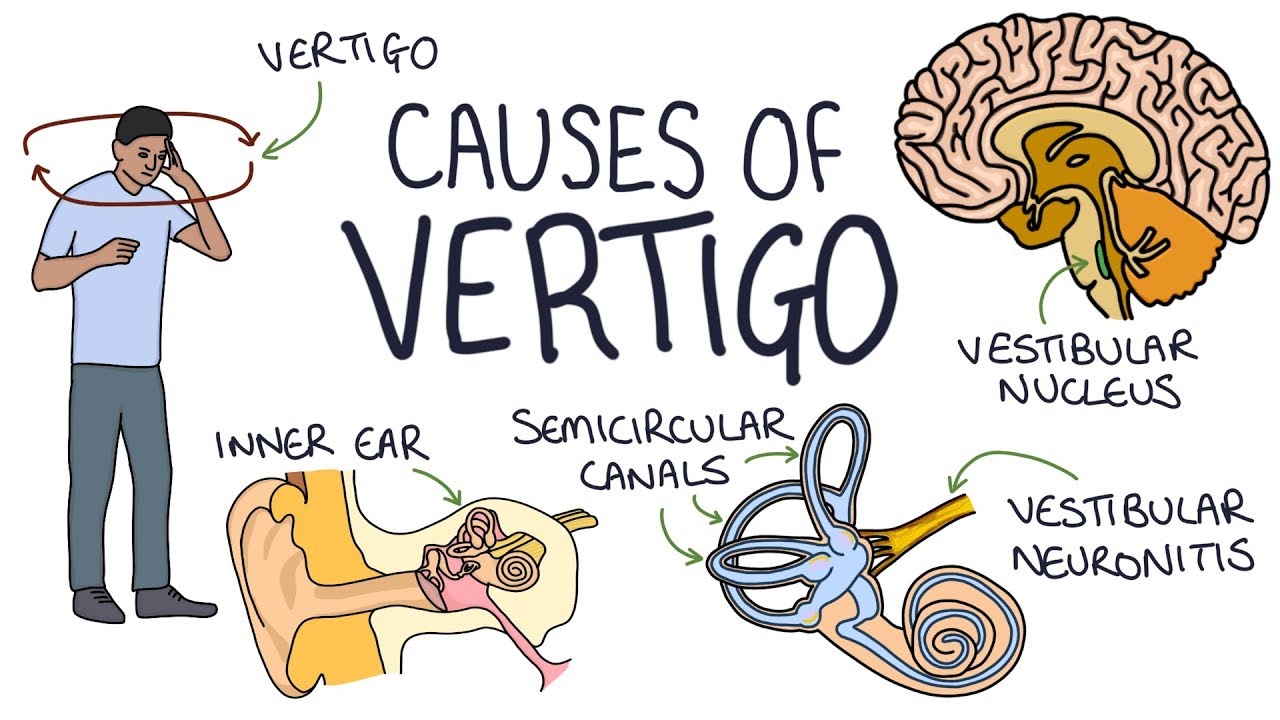
Understanding the Causes of Vertigo

Labels: , , ,

Tuesday, March 28, 2023

The Neurological Abyss of Frontotemporal Dementia

"I was reminded that all of us are at risk for spending our final epoch lost in a neurological swamp."
"What is remarkable about the swamp that we call FTD is that it's a somewhat rare and unusual type of dementia."
"If the disease follows its typical path, that will probably include slowly disconnecting and progressively losing emotional judgment and control as well as losing a reasonable understanding of what or why any of it is happening."
"[Some sufferers lose] verbal fluency [They experience problems speaking properly and speech can become slurred]."
Michael Merzenich, neuroscientist, professor emeritus, University of California, San Francisco

"The vast majority of patients have no insights into the changes that are happening with their behaviour or their personality."
"And in sporadic FTD. the only sort of environmental or life history risk factor that's been identified so far is concussion or traumatic brain injury."
"We see pretty relentless progression of the loss of connections in the brain, the loss of synapses, the loss of neurons."
"There's a fair bit of variability between people and their rates of decline. But over time, judgement, decision-making, memory even, and certainly language deficits get worse"
"FTD, in any of its forms, is devastating for patients and just as devastating for partners and caregivers."
Dr/ Elizabeth Finger, neurologist, St.Joseph's Health Care London / associate professor in clinical neurological sciences, Western University
FTD is the short form for frontotemporal dementia, a condition which is mostly related to losing control of emotions, not so much about a declining memory. Depending on which part of the brain is affected, symptoms vary, but include frequently a profound loss of inhibition and empathy, and its symptoms become more serious as time wears on. 

Of the various types of dementia that generally arise with old age, FTD is different from Alzheimer's. The condition is, in fact, a collection of disorders, considered the second-most common -- early onset neurodegenerative dementia -- tending to strike people a decade earlier than Alzheimer's, "So, people in their 50s to early 60s", says Dr. Finger. And unlike Alzheimer's whose early signs are often memory-linked, with FTD classically, the first changes affect behaviour, personality, judgment and decision-making, while some variants of FTD affect language.

A photo of Bruce Willis
MedPage Today
 
This condition was suddenly highlighted when it was revealed several years ago ago that the actor Bruce Willis is suffering from FTD, arousing the interest of the public. It puts a familiar face out of films, action films that fascinated people when he portrayed an intelligent, muscular action-oriented hero-role bad boy. The message some people may have received from the news was that if this athletic figure could suffer a neurological injury to his brain, anyone could. And they could, in fact.

There is a genetic, inheritable component, but there is also a much larger component that represents haphazard selection. Some 40 percent of cases are felt to be of hereditary extraction in susceptibility to the disease; at least one family member with another neurodegenerative disease, not necessarily FTD. The balance, 60 percent on the other hand, are considered to be not of genetic origin, but arising sporadically.

A concussion could conceivably explain the origin of some cases, but most of those with FTD have never had the experience of a concussion "and the majority of people with a concusion don't get FTD", says Dr. Finger. FTD is most often most severe in the frontal and temporal lobes of the brain; a condition that can begin on one side or the other but over time both sides of the brain tend to become affected. In the sense that parts of the brain shrink, or atrophy.

Image showing the frontotemporal region of the brainHow a person's symptoms or decline will manifest is unpredictable. just as what the symptoms will become like six months on, a year later, are unknowable. Generally social norms and social graces become affected; people are seen to make comments to family, friends or strangers that are inappropriate, rude or overtly personal. "Verbal fluency" becomes a loss for some patients, experiencing problems in speech. "In terms of apathy, patients lose interest in work, in hobbies they used to spend a lot of time on", Dr. Finger added.

 
In time disinterest in the family becomes obvious or in friends whose welfare at one time the patient was deeply engrossed in. The patient gravitates emotionally to an inward cycle, concerned solely for their own welfare "and not really able to consider other people's perspectives anymore or consider their emotional needs". With no awareness of what is occurring, patients become insistent that nothing has changed. "They can't understand why anyone is concerned."

No cure has been found for the condition, nor a therapeutic path to slowing its progression. Behavioural changes and language problems with the use of some strategies may help. Oxytocin, a hormone that operates on a signalling molecule in the brain of men and women is being tested by  Dr. Finger and her colleagues in the hope it might influence social behaviour.

"It kind of got a reputation as being pro-social, even a maternal kind of hormone", improving pair bonding and grooming and nesting behaviours when tested in both sexes of laboratory animal models. Whether it might be capable of offering help in the restoration of some empathy deficits with FTD in humans is the experimental goal. A randomized, placebo-controlled trial involving under a hundred patients is in the wrap-up stages.

Bruce Willis attends the UK premiere of 'A Good Day To Die Hard' at The Empire Leicester Square on February 7, 2013 in London, England
Bruce Willis in London at the 2013 premiere of A Good Day to Die Hard - the fifth film of the Die Hard franchise   Getty Images

Labels: , , , ,

 
()() Follow @rheytah Tweet