Ruminations

Blog dedicated primarily to randomly selected news items; comments reflecting personal perceptions

Wednesday, May 07, 2025

Preventing, Diagnosing and Managing Heart Disease

heart AdobeStock_63916383
Stock Image
"[Prior to the 1950s and '60s, a diagnosis of heart failure was considered terminal.] It used to be like Stage 4 cancer. It was a terminal condition with no options."
"While we've made tremendous progress in preventing, diagnosing, and managing heart disease, the rise in heart failure cases highlights the urgent need for continued awareness, education, and action."
"At the Canadian Heart Failure Society, we remain committed to informing Canadians about the warning signs of heart disease to help save lives." 
"[Now], we have patients who live very active, almost normal lives."
Dr. Justin Ezekowitz, president, Canadian Heart Failure Society
 
Innovations in medical treatment and management of heart failure continue to improve steadily. Many patients diagnosed with heart failure continue to live active lives while being treated and monitored. Some patients are severely affected, while others live active, normal lifestyles. Even so, a diagnosis of heart failure is acknowledged as leading to shorter life expectancy. That life expectancy gap is being diminished, allowing for a longer life extension, with the emergence of new therapies.
 
Early diagnosis and treatment -- pointed out Dr. Ezekowitz -- are vital for good outcomes. It is crucial in attaining that end, that people understand the disease, its limitations and trajectory and how best o live their lives as active, knowledgeable members of society. Ideally, routine screening for heart failure; a procedure that can be readily accomplished with a blood test, is one of the goals of the Heart Failure Society.
 
Currently over 800,000 Canadians have been diagnosed and live with the cardiovascular disease, a once-dire condition that is growing in prevalence. This year alone, according to research and statistics, 120,000 Canadians are expected to be diagnosed. The public should also be aware of warning symptoms such as deep fatigue and shortness of breath; cues that something might conceivably be straining the body's resources. 

Heart failure is diagnosed when it has been determined that the heart no longer pumps the amount of blood the human body requires to function properly. Heart failure can result from damage to the heart muscle from a previous, undetected heart attack, from the rigours imposed upon the body by diabetes, and by hypertension, or other heart conditions. Reducing the likelihood of heart problems is a goal for informed individuals to take steps in reducing risk factors.
 
Smoking cessation, high cholesterol and  high blood pressure remedial therapies, incorporating physical activities into the course of a day and rejecting a sedentary lifestyle, all represent an individual's commitment to their own health outcomes. Aging populations, rising diabetes cases and hypertension and the fact that more individuals now survive heart attacks all contribute to a rise in heart failure diagnoses, emphasized Dr. Ezekowitz. 

Heart & Stroke

Labels: , , , , ,

Saturday, March 25, 2023

Tuberculosis, the Global Bacterial Killer

"The infectious disease that killed the most people last year is one we've heard almost nothing about: tuberculosis."
"In 2022, it likely claimed 1.4-million lives, more than the total toll of COVID. And yet, in rich countries, where virtually nobody dies from tuberculosis any longer, attention has moved on."
"Even in poor countries, where the wealthier can afford treatment, it is often the poorest, most disconnected and disadvantaged that suffer from this disease."
Bjorn Lomborg, Copenhagen Consensus think tank
 
 
"Tuberculosis, or TB, is a bacterial infection that can spread through the air. It is most often found in the lungs, but can exist in any organ in your body. When a person coughs or sneezes, they can transmit so-called “active” TB. However, many people are also infected with an inactive form of TB, known as latent TB. The bacillus that causes the disease is called Mycobacterium tuberculosis (M.tb). M.tb's unique cell wall, which has a waxy coating primarily composed of mycolic acids, allows the bacillus to lie dormant for many years. The body's immune system may restrain the disease, but it does not destroy it. While some people with this latent infection will never develop active TB, five to 10 percent of carriers will become sick in their lifetime."
TB Alliance
Close to a quarter of all people in the world carry the tuberculosis bacterium. Every tenth person in wealthy Europe and the United States carries the bacteria. Well-nourished people who are financially comfortable will not develop tuberculosis. For those less fortunate it remains a risk that the bacteria they carry will develop into full-blown tuberculosis. This is what defines tuberculosis as a disease linked to hunger and poverty. 

Over ten million people annually develop tuberculosis worldwide. Owing to a lack of resources, about six million only were diagnosed in 2021. Fifty percent of those undiagnosed and untreated will die. Those whom tuberculosis does not kill will go on communicating the infection to others. Five to fifteen people can potentially be infected by one actively infected individual through close contact over the space of a year.

The six million who do become diagnosed and who undergo treatment must take medication for up to six months. Since the medication clears the more immediate symptoms of tuberculosis such as fevers and weight loss in a number of weeks, many undergoing treatment will simply drop out long before the prescribed six months of treatment has elapsed.

Once treatment is foregone too early, the chance that the disease can be communicated to others increases The surviving tuberculosis bacteria, at the same time, is then more likely to develop drug resistance, leading the next treatment to require 18 to 24 months to succeed and at the same time be much costlier to pursue.
"Common symptoms of active lung TB are cough with sputum and blood at times, chest pains, weakness, weight loss, fever and night sweats. WHO recommends the use of rapid molecular diagnostic tests as the initial diagnostic test in all persons with signs and symptoms of TB as they have high diagnostic accuracy and will lead to major improvements in the early detection of TB and drug-resistant TB. Rapid tests recommended by WHO are the Xpert MTB/RIF Ultra and Truenat assays."
World Health Organization (WHO)
Scaling up interventions to achieve global tuberculosis ...

"It's possible to diagnose many more people and ensure most TB patients stay on their medication. Our new study shows this can be achieved for an additional $6.2 billion annually, less than what the world has already promised: in 2018, the UN pledged to increase funding by $7.8 billion annually by 2022. Disappointingly, spending since 2018 has actually declined."
"The additional $6.2 billion annually can deliver diagnosis, care and prevention that will achieve the world's tuberculosis promises. It would ensure at least 95 percent of people with tuberculosis will receive a diagnosis. It can provide simple ways to make sure people complete their six months of medication."
"The extra resources will mean that high-risk, vulnerable populations will be able to access periodic screening Over the coming decades, 50-million people will access appropriate treatment and 35-million people will have access to preventive treatment."
Bjorn Lomborg

Labels: , , , , ,

Wednesday, November 30, 2022

Diagnosing Lyme Disease

"There still remains a critical unmet need, as this disease so often goes undiagnosed or misdiagnosed."
"A diagnostic for Lyme disease may not be a panacea but could represent meaningful progress toward a more reliable diagnosis and, as a result, potentially better management of this disease."
Avi Ma'ayan, director, Mount Sinai Center for Bionformatics, New York
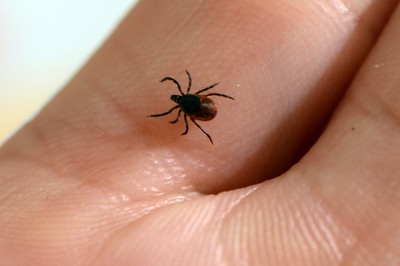
Lyme disease tick
Published in Cell Reports Medicine, researchers explain their method of success in pinpointing a specific set of genes activated in people with long-term Lyme disease. Close to 20 percent of patients diagnosed with Lyme disease suffer from symptoms on a long-term basis.
 
Research that led to the discovery of a significant biomarker was conduced by scientists from the Icahn School of Medicine at Mount Sinai in New York, and the Johns Hopkins University School of Medicine. The expectation now, is that a genetic test would be an improvement on current FDA-approved tests to identify antibodies, tests that can take weeks to emerge.
 
According to the researchers involved int he study, their identification of biomarkers could make early diagnosis of Lyme disease more accurate and quicker. Potentially leading to more effective treatment of the estimated 476,000 individuals in the United States alone who are diagnosed with and treated for the tick-borne illness.
 
Symptoms of Lyme disease can include fatigue, brain fog and pain, for people who have been treated with antibiotics. For the study, the researchers compared data with RNA sequenced from 72 patients with acute Lyme disease -- early symptoms such as a rash or facial paralysis -- alongside 44 control subjects not infected.
 
Differences in gene expression in those with acute and chronic Lyme disease became apparent. The list was further pared down by researchers, in comparing the gene expression of those with Lyme disease with that observed in patients with other infectious diseases. AI machine learning was then made use of to shorten the list even further.
 
The research team feel confident they have identified 35 biomarkers that distinguish people with either type of Lyme disease from those not infected with the disease. The plan is to use the biomarkers to develop a diagnostic test. Such a genetic rest would represent an improvement over current tests.
 
Earlier in the year several of the researchers from Johns Hopkins published a study in tandem with scientists from the University of California at San Francisco with the announcement they had developed a panel of 31 biomarkers, allowing them to accurately identify Lyme disease in 95.2 percent of presenting patients.
 
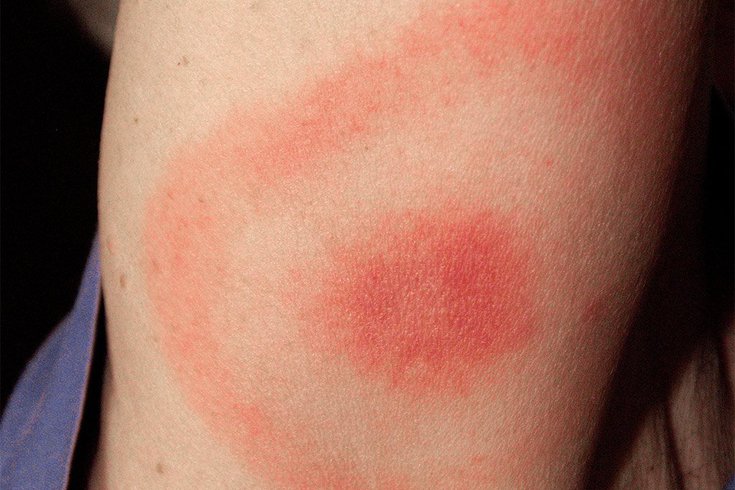
Diagnosing Lyme disease
Diagnosing Lyme disease remains a challenge, but the discovery of a set of 35 biomarkers may enable scientists to develop a better test for the tick-borne illness. James Gathany/CDC


Labels: , , ,

Wednesday, October 12, 2022

Canine-Human Diagnosis and Comfort

"[The findings provide] deeper knowledge of the human-dog relationship and adds to our understanding of how dogs perceive and interact with human psychological states."
"[Earlier research with the use of sniffer dogs and human biological samples involved mostly detecting illness]; they can smell other parts of the human experience [however]."
"[The study results] provide firm evidence that odour is also a component that dogs can pick up on."
Clara Wilson, study author, doctoral student, school of psychology, Queen's University Belfast 

"I think this work helps confirm that dogs can be savvy in reading our emotional states, and this study in particular shows that this could be done through scent cues."
"The results seem to reinforce what a lot of owners feel; that their dog can be quite sensitive to their emotional state."
Nathaniel Hall, director, Canine Olfaction Research and Education Laboratory, Texas Tech University
The dogs, including Minnie, were presented with samples from 36 people who gave sweat and breath samples before and after doing a fast-paced arithmetic task.
The dogs, including Minnie, were presented with samples from 36 people who gave sweat and breath samples before and after doing a fast-paced arithmetic task. Courtesy Queen’s University Belfast
"Spes ignored everyone else and immediately went to the crying young woman to see her."
"She loves people, so it was not surprising but in this case it was clear that this woman was the only person she wanted to see."
Victoria Allen, Goochland, Virginia, dog owner
The experience was recounted by Victoria Allan of her dog Spes when they were at a beach, and she and Spes came upon a scene of a group of  young people. One of the group was a young woman who was obviously upset and weeping. Her dog responded to the presence of an upset woman by directly approaching her. It seemed that the dog was sensitive to the woman's distress, meaning to comfort her. The study cited a number of such conclusion-affirmative occurrences interpreted by the dog owners as proof of a dog's sensitivity to people's state of mind.

Such anecdotal stories are common to many, if not most, people with companion dogs. That in their close personal experience with their dogs it became obvious to them that their dogs were aware of and sensitive to the state of mind of their owners. Particularly when something might happen to upset their emotional equilibrium. Of course, tone of voice in addressing a dog, body language that the dog assesses, informs a dog when he's being reproached.

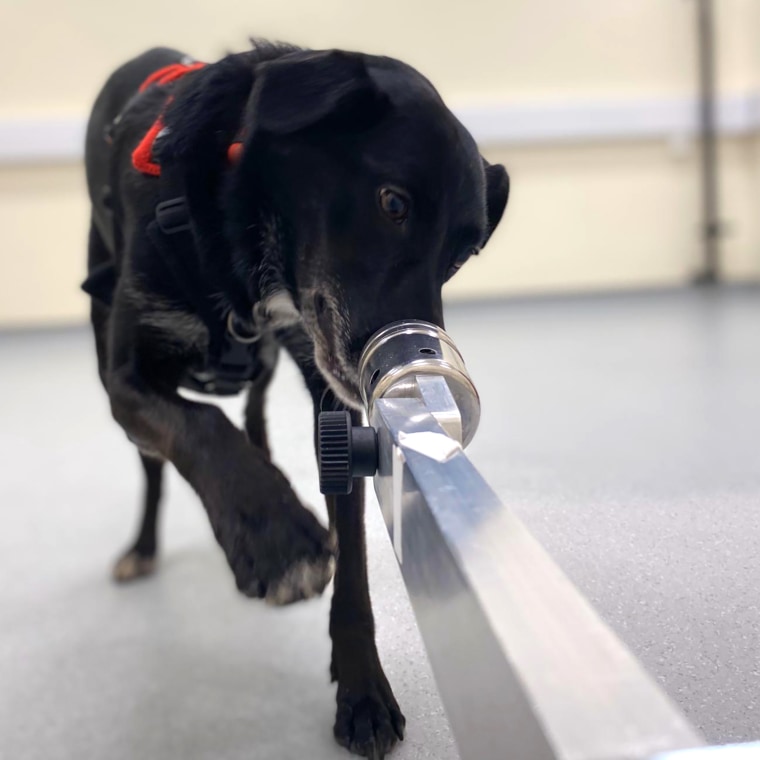
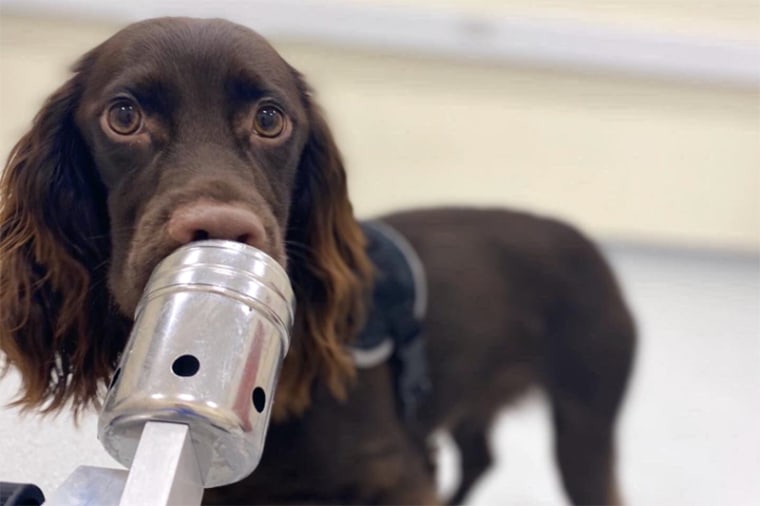
The study in question, however, appears to affirm that dogs' intensely deep and discriminating sense of smell may be their primary tool for assessing emotional state of mind in humans. It is well enough known that dogs' exceptional sense of small has turned them into working dogs, trained to sniff out any number of things, from the presence of contraband drugs or ammunition, and of course, the scent of infections from chronic diseases before medical science itself can detect them. 
 
Changes in the odour of breath or perspiration can guide dogs to detect with a high degree of accuracy chemical odours exuded by people when they feel under psychological, emotional stress. A growing body of research expresses evidence related to dog behaviour; how dogs view things, react, and use their extraordinary olfactory sense in interacting with people. Their ability to produce relief for people suffering anxiety attacks and symptoms of depression are well known. Leading to their use as buffers against emotional upsets. 

Dogs giving attention to individuals and situations are known to assess such details as signals people send reflecting their moods; body language, type of voice changes, or quality of breathing, all symptoms weighed by dogs striving to make sense of what they see, hear and smell, with their hyper-acute senses. While the study focused on the acuity of a dog's sense of smell, it made no attempt to determine whether dogs could identify human emotions; recognize whether people were feeling happy, sad, angry or fearful. Only that stress was being experienced as could be measured by increasing heart rate and blood pressure.

New research adds stress to the list of things dogs like Ruby, seen here, can detect in their owners, including nondiabetic seizures and cancer.
New research adds stress to the list of things dogs like Ruby, seen here, can detect in their owners, including nondiabetic seizures and cancer.    Courtesy Queen’s University Belfast
"The dogs can differentiate something about human odours in stressed vs non-stressed states, but not necessarily that they know anything about how a person is feeling, or what it means when the humans are stressed."
"They might -- but we just don't know that from this study."
Evan MacLean, director, Arizona Canine Cognition Center, University of Arizona

Labels: , , , ,

Saturday, March 06, 2021

Teaching Physicians Empathetic Overtures

"We’ve been working with healthcare organizations for several years, but the pandemic has created really specific challenges that technology is helping to solve. It’s no longer safe or practicable to have 30 medics in a room with an actor, honing their clinical soft-skills. With our virtual patient technology, we’ve created an extremely realistic and repeatable experience that can provide feedback in real time. This means clinicians and students can continue to learn valuable skills."
"Right now, communication with patients can be very difficult. There’s a lot of PPE involved and patients are often on their own. Having healthcare staff who are skilled in handling these situations can therefore make a huge difference to that patient’s experience."
"Complaints can happen anywhere, but in health care, they're amplified tenfold because you're doing things like breaking bad news or explaining a diagnosis to a patient who may not have medical understanding." 
Dr.Alex Young, orthopedic surgeon, Bristol, U.K.
 
"We've been using Virti's technology in our intensive care unit to help train staff who have been drafted in to deal with COVID-19 demand."
"The videos which we have created and uploaded are being accessed on the Virti platform by nursing staff, physiotherapists and Operational Department Practitioners [ODPs] to orient them in the new environment and reduce their anxiety. The tech has helped us to reach a large audience and deliver formerly labour-intensive training and teaching which is now impossible with social distancing."
"In the future, West Suffolk will consider applying Virti tech to other areas of hospital practice."
Tom Woollard, West Suffolk Hospital Clinical Skills and Simulation Tutor
Virti, COVID-19, AI, workforce, medical training, NHS
The Virti technology is intended to be used remotely to minimize in-person training during the pandemic.  Courtesy: Virti
"I was looking for kind of some professional development stuff to keep me occupied [during a COVID-related interregnum of unemployment]."
"After suddenly having a few months off, it's easy to get a little rusty."
"[Those in-person scenarios -- where actors are employed to help in communication training, pretending to be ill -- can] feel a bit forced; fake patients] feel much more authentic than somebody making it up as they go along."
Dr.Jack Boulter, musculoskeletal podiatrist, Exeter, England
In the medical profession physicians are renowned for their perceived lack of empathy, of any kind of human interest in the patients they are faced daily, beyond reacting with them as 'cases', to be diagnosed, treated, prescribing medications, or referring them onward to other medical practitioners. Communication skills tinctured with social and personal niceties are not their bailiwick. Understandable, since they're focused on health and medicine in general, not individual patients in particular, and sometimes it's difficult to put the two together.

So difficult, that it's largely bypassed and over time begins to appear from physician to patient, somewhat like an attitude of psychological retreat and indifference. Of course if a doctor became psychologically involved and too empathetic to a patient's health plight they run the risk of becoming too emotionally involved, rendering them incapable of unaffected professionalism. In earlier times when doctors were generally regarded by the non-medical public as elevated beings whose knowledge was capable of lifting patients out of sickness -- demi-gods as it were -- this wasn't an issue.

We live in less formal times now, where physicians are generally viewed through the informal lens of just being like anyone else but with the addition of a medical background; to be relied upon to be certain, but with the further expectation that they will treat their patients with the consideration of feeling along with the diagnosis, expressed in a tone and language readily absorbed. Person-to-person in point of fact, in today's relaxed social atmosphere of a levelled social platform.

Busy professionals as they are, in a demanding job that requires them to diagnose symptoms, look after back-to-back patient presentations, fill out medical records; absorb long and exhausting work hours, in an atmosphere of grave responsibility where an error can lead to a costly lawsuit, this additional lack of attention to doctor-patient relationships is hardly surprising. A distance born partially of over-stimulated tasking. There has been a lash-back however, with studies indicating that people feel ignored, leaving a doctor-patient interaction frustrated and lacking reassurance.

 
Virti
Courtesy, Virti
 
At a time when the global pandemic's demands has the health community searching for ways to better communicate even as they become deeply involved in trying to completely understand the damage that
SARS-CoV-2 inflicts on its victims, it is understood that people are looking not only for treatment but for comforting communication. Dr.Young involved himself in seeking a solution to the problem through technological innovation with the assistance of artificial intelligence. 

His startup, Virti, now supplies "virtual patients" so hospitals and their personnel can be taught to improve their communication interactions with patients. A number of alternatives are available with software that can be employed on a smartphone or computer, but with greater immersion, virtual reality headsets can be used for training sessions. Once completed, doctors are given scores based on their reactions to the training; questions asked the AI; accuracy of diagnosis resulting, speed in concluding the test assignment.

The Health Education Center at University of Texas Medical Branch, Galveston, tutors future clinicians on communication and reasoning skills through the company's Virti technology. Cedars-Sinai Medical Center in Los Angles became another client, and then decided to invest in Virti to help the startup assign a sales team and improve its analytical software. Cedars-Sinai medics are trained on coronavirus-related processes through the Virti software. When clinicians ask the animated human to describe its symptoms, the AI generates a relevant response.

There is another role -- for virtual patients in dealing with implicit bias occurring when staff reaches unconscious assumptions -- addressed by the company by enabling hospitals to customize the patient's skin colour, age, height or sex. Digital faces reflect photographs of various actors and other professionals with up to 60 variations available. With Virti, the need by communications training in health care to rely on actors to play the patients' role has been replaced.


Labels: , , , ,

 
()() Follow @rheytah Tweet