Ruminations

Blog dedicated primarily to randomly selected news items; comments reflecting personal perceptions

Thursday, April 02, 2026

Trump, Excoriating U.S. 'Allies'

"You'll have to start learning how to fight for yourself, the U.S.A. won't n e there to help you anymore, just like you weren't there for us."
"Iran has been, essentially, decimated. The hard part is done."
"Go get  your own oil!"
"[Paris has been] VERY UNHELPFUL]. The U.S.A. will REMEMBER!!!"
"We’ve been there automatically, including Ukraine. Ukraine wasn’t our problem. It was a test, and we were there for them, and we would always have been there for them. They weren’t there for us."
"All of those countries that can’t get jet fuel because of the Strait of Hormuz, like the United Kingdom, which refused to get involved in the decapitation of Iran, I have a suggestion for you: Number 1, buy from the U.S., we have plenty, and Number 2, build up some delayed courage, go to the Strait, and just TAKE IT”."
"I’ve long said that, you know, I wonder whether or not NATO would ever be there for us. So … this was a great test, because we don’t need them, but they should have been there."
U.S. President Donald J. Trump
https://www.thedailybeast.com/resizer/v2/K5KS2W5L45A4JNL6OR5LUAHCQI.JPG?auth=ffde8817218f541eef32308836e222c7fc2c8ac856e38fe3e2bfe1660fdf402e&width=1440&height=1004
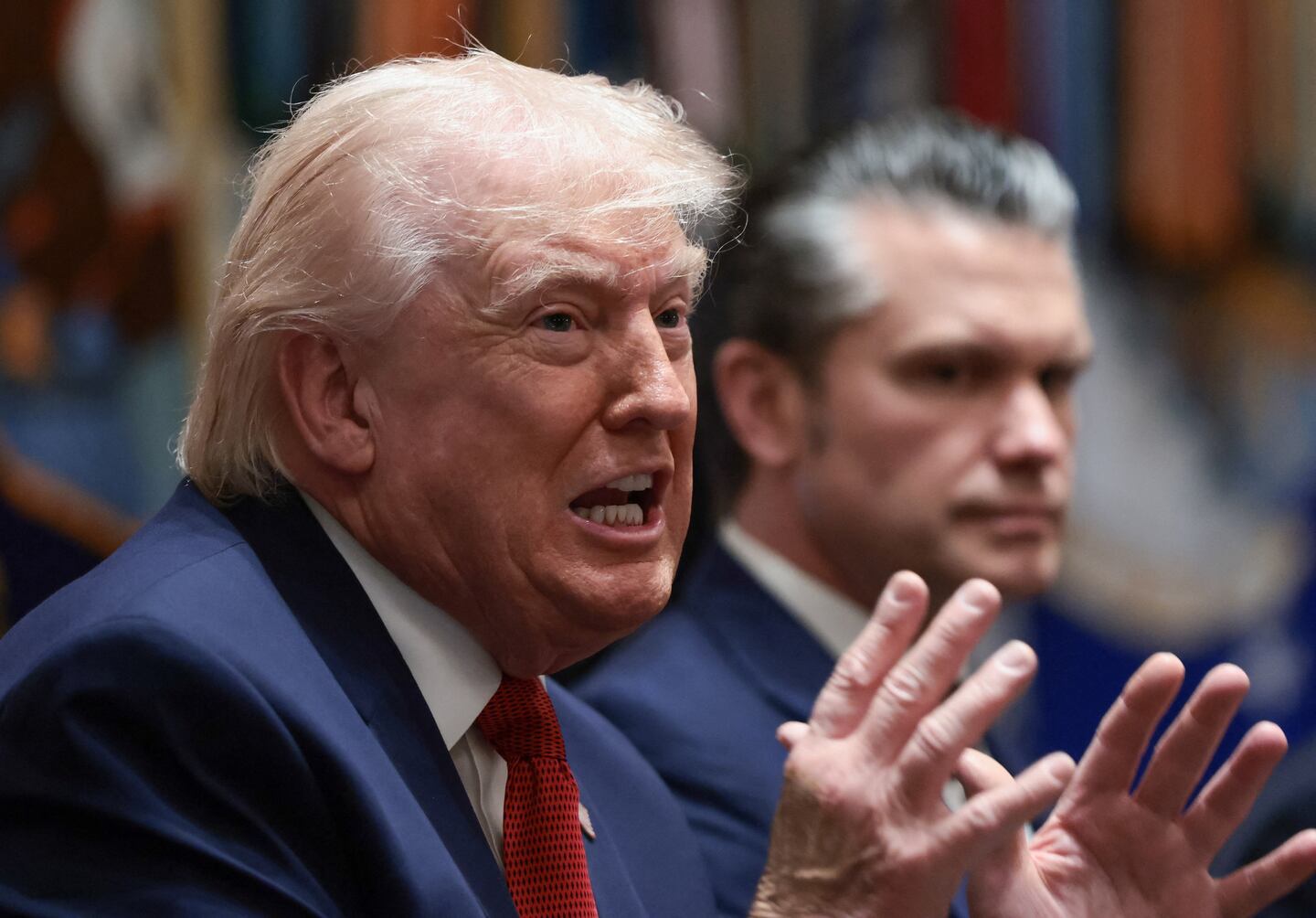
Donald Trump has also called NATO countries that do not help with the war in Iran "cowards." Evelyn Hockstein/REUTERS
 
"I hope that amid the emotions surrounding the President of the United States today, a moment of calm will come."
"And why? Because there is no NATO without the United States, and it is in our interest that this calm comes."
"But there is also no American power without NATO."
Polish Defense Minister Wladyslaw Kosiniak-Kamysz 
https://www.reuters.com/resizer/v2/6VNZZMO6CRJJ3G7AGD7B7N6W3U.jpg?auth=ce471fba128412505d459bc8e38d5acbbc1afa1df3da776fc344ad4e822e9e53&width=960&quality=80
Cargo ships in the Gulf, near the Strait of Hormuz, as seen from northern Ras al-Khaimah, near the border with Oman?s Musandam governance, amid the U.S.-Israeli conflict with Iran, in United Arab Emirates, March 11, 2026. REUTERS/Stringer
 
Frustration with allies  unwilling to commit themselves through the NATO military alliance in support of the U.S. conflict in Iran, has hit boiling point with President Trump who is now telling his erstwhile allies to "go get  your own oil" in respect to the closure of the Strait of Hormuz by Iran, has sent energy prices soaring. 
 
Following U.S. strikes hitting Isfahan, the central Iranian city, leading to Tehran attacking a fully loaded Kuwaiti oil tanker in the Persian Gulf, Mr. Trump's precarious patience appears to have hit its limit. A month after the start of the aerial bombardment by the U.S. and Israel, the intensity of strikes on either side has not levelled off and major disruptions have erupted to the global supply of oil and natural gas, reflected by panicked global markets.
 
Earlier, Mr. Trump  shared footage of the massive attack on Isfahan, home to one of three nuclear enrichment sites that was attacked last June by U.S. strikes, where it is suspected that much of Iran's highly enriched uranium was stored. It seems evident that no agency foretold the extent of Iran's stranglehold on the Strait of Hormuz, with its catastrophic results to world shipping, much less the Iranian leadership's decision to attack its neighbours' energy infrastructure.
 
The roiling of world markets and the strait-closing effect on many basic goods such as fertilizer normally shipped across the world, has had its effect on the American president who directed responsibility at the United Kingdom and France for refusing to enter a war for which no clear endgame could be deduced, a war they were never consulted on, nor an alert given that it would be forthcoming. 

 
https://nationaltoday.com/wp-content/uploads/not-wordpress/2026/03/69cb37cf795ba.jpg
The U.S. attack on an Iranian ammunition depot in Isfahan raises tensions and the risk of further military escalation in the region. Los Angeles Today
 
France  permitted the U.S. Air Force use of the Isteres base in southern France once it received guarantees that planes landing there would not be carrying out strikes in Iran. Europe's loudest critic of the war, Spain stated it chose to close its airspace along with its joint U.S.-Spain airbases for any planes involved in the conflict. As for Italy, an official confirmed that U.S. military assets were refused use of the Sigonella airbase in Sicily for any operation with links to the offensive in Iran. 
 
American bombers were intending to land at the Italian base prior to continuing on toward the Middle East. However, affirmed Italy's Defence Minister Guido Crosetto, Italy would still allow the US. use of its bases; no cooling of relations between the two countries has resulted over the Iran conflict.
 
The world is now on notice that should a ceasefire not be "shortly" reached and the strait reopened, the U.S. was prepared to broaden its offensive, and that would include attacking the Iranian oil export hub on Kharg Island. 
 
https://www.reuters.com/resizer/v2/NB5JSYDZQZICZEQI6W3PU2YAOI.jpg?auth=b794af94d9519a0de03e8d8e92d9db35b8396c2e944f2107c80835dd27527ed9&width=960&quality=80
Luojiashan tanker sits anchored in Muscat, amid the U.S.-Israeli conflict with Iran, in Muscat, Oman, March 7, 2026. REUTERS/Benoit Tessier
"We don't want to have to do more militarily than we have to."
"But I didn't mean it flippantly when I said, in the meantime, we'll negotiate with bombs."
U.S. Defense Secretary Pete Hegseth 

Labels: , , , , , , ,

Wednesday, October 15, 2025

All Together Now ... In a Union of Like Minds ...

 
 https://www.amnesty.org/en/wp-content/uploads/2025/05/250103-1468x710.jpg
 
"For us, it is important that the Commission recognizes that Belgium already has a disproportionate burden."
"[The federal government has decided that it will contribute to the solidarity mechanism only with] financial means, because our reception centres are full."
"[Belgium is ready to pay] on condition that everyone else also takes responsibility."
"Solidarity and responsibility go hand in hand; every country must apply the Dublin rules."
Anneleen Van Bossuyt, Minister for Asylum and Migration of Belgium  
The 27-member European Union is staring down a Christmas deadline on agreement for the relocation of, at minimum, 30,000 asylum seekers on a 'fair' allocation system meant to be voluntary, to guarantee a level of relief for front-line countries which have received the lion's share of migrants as a result of geographic placement. Tuesday saw interior ministers gathering from the EU's member-nations in Luxembourg to begin negotiated talks on the 'solidarity mechanism' representing a key platform of migration reform that saw adoption in 2024, and meant to enter fully into force this year.
 
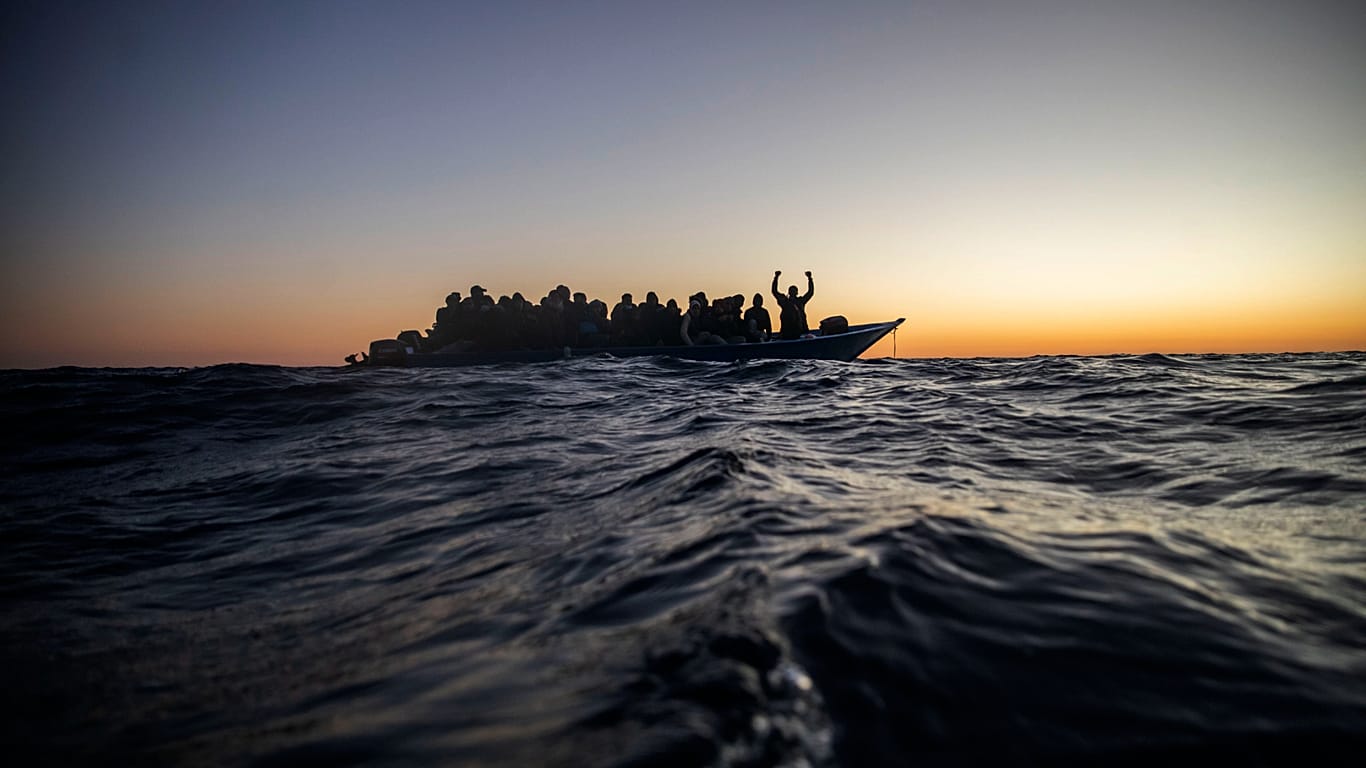
Frontline countries like Greece and Italy are groaning at their seams, overburdened by the humanitarian intake of asylum seekers washing up on their Mediterranean shores. The pact represented by the 'solidarity mechanism' is meant to ease the pressure on them, requiring other member states either to accept asylum seekers or to obligate themselves to the tune of 20,000 euros each person  in support of the strain that Greece and Italy's find themselves in by involuntarily accommodating so many arrivals.  
 
https://images.euronews.com/articles/stories/09/51/02/63/1366x768_cmsv2_a512f1c5-446e-5a8a-b074-a409b0b2d626-9510263.jpg
AP Photo
 
Unsurprisingly, the plan has been hobbled by  resistance from some EU nations. Prior to Tuesday's meeting, Poland let it be known that it had no intention of accepting relocated asylum seekers in any number. That unaccommodating position is one echoed by Austria, Belgium and Sweden. "This is going to be a painful discussion", one European diplomat stated, leaving no alternative but to reach a final decision by the end of the year.
 
The new solidarity mechanism, once in place, is meant to apply to at least 30,000 asylum seekers each and every year. The European Commission was on the cusp of publishing a list of countries deemed under "migratory pressure", the list  compiled and comprised based on irregular arrivals and population size criteria. With the list finding agreement among members, negotiations will go forward on how many people each member state is willing to absorb or relocate -- alternatively -- how much financial aid will be offered instead. 
 
No one expects immediate agreement, anticipating a number of rounds of talks will be held to build consensus before a final agreement is accepted. In the wake of heavy pushback from a number of heavyweight capitals including Germany, Brussels has asked for an additional "couple of days" to enable it to refine its methodology. "It's not easy because it's the first time" the system is being tested, remarked Magnus Brunner, EU commissioner: "We're discussing that throughout the day".  
 
https://www.eunews.it/wp-content/uploads/2016/07/Rimpatri-migranti.jpg
Still from video   eunews
 
 Parallel discussions saw ministers debating how to improve the return of migrants with rejected asylum claims. Only about 20 percent of those ordered to leave the EU are actually returned, currently. Measures that would allow states to open "return hubs" outside EU borders to process rejected asylum seekers, alongside tougher rules for migrants refusing to leave have been proposed, yet even so, divisions have a tendency to persist.
 
There is a growing anti-immigrant sentiment throughout Europe, making the issue politically fraught. And pressure mounts from critics insisting that a harder line must be developed that goes beyond the humanitarian impulse to offer haven to those who have undertaken long and perilous journeys in hopes of reaching Europe, given the outsized influx of migrants gaining Europe's shores in the last decade.  
 
https://img2.chinadaily.com.cn/images/202510/16/68f04585a310f735017eecea.jpeg
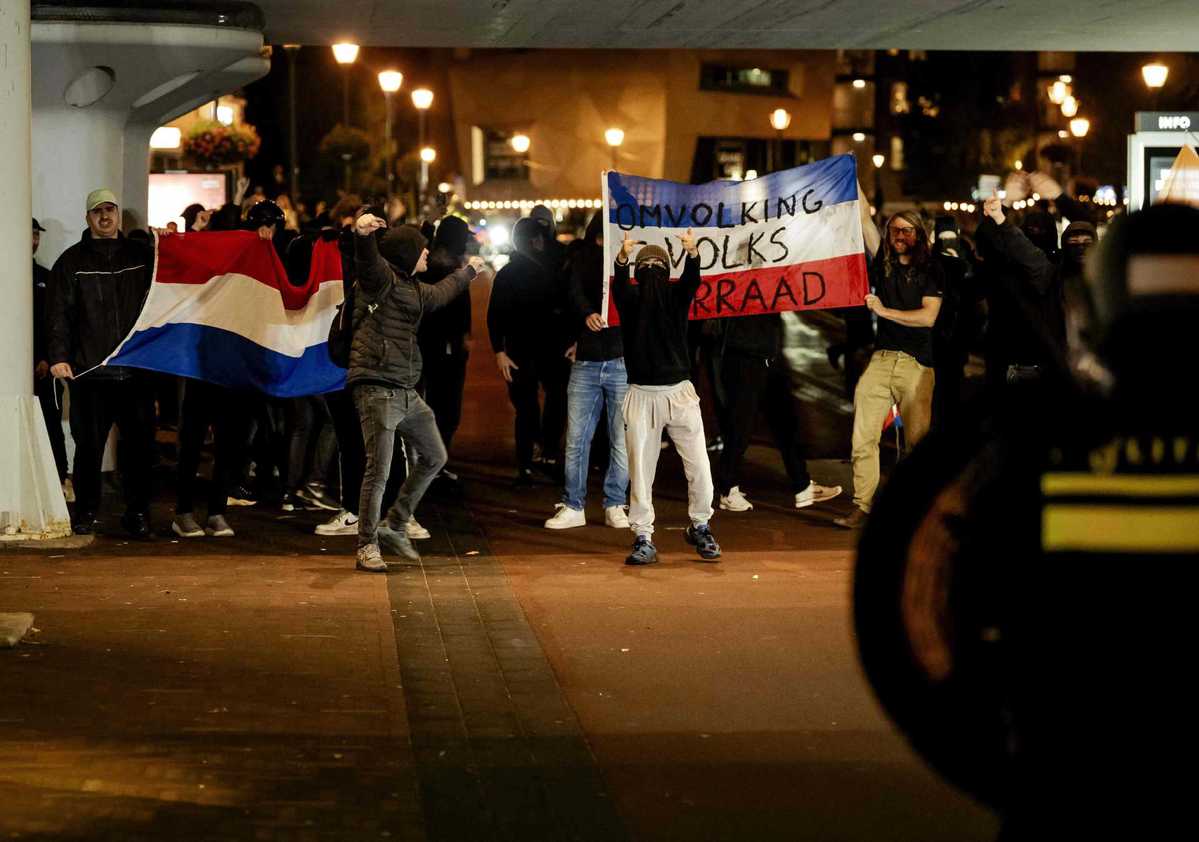
People wave Dutch flags as they confront riot police during a second demonstration outside the Houten town hall against the city project to welcome a center for asylum seekers in Utrecht Province, Netherlands, reported on Oct 15. [Photo/Agencies]


Labels: , , , , , ,

Sunday, December 01, 2024

Yet Another Migrant Tragedy

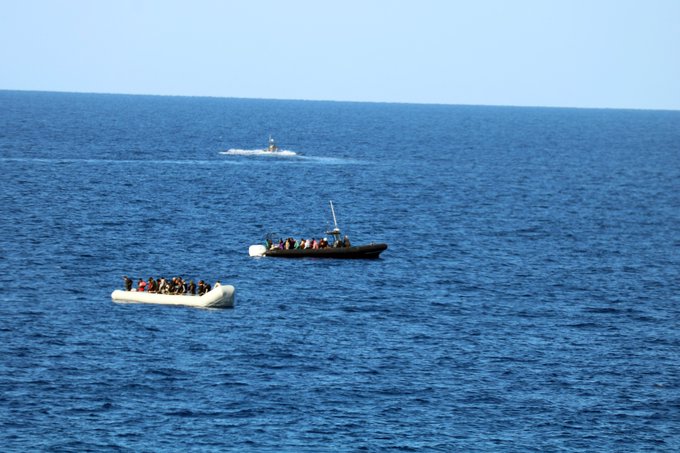
"Many people were on an overcrowded rubber dinghy that was deflating, and they were threatened by armed men, who fired shots.''
"They lived the horror of being separated from their wives and daughters, who were taken away." 
Maria Eliana Tunno, psychologist, Doctors Without Borders

"MSF team witnessed another tragedy this morning while arriving to rescue people in distress on a deflating rubber boat, with armed men on a fast boat in their close vicinity."
"Survivors reported that 29 women and children had been intercepted at gunpoint before our arrival."
"Survivors are anxious and deeply concerned about the fate of their female and underage relatives, who were beaten and taken at gunpoint and will once more face the cycle of violence, detention, abuse and extortion."
MSF social media post
https://pbs.twimg.com/media/GdfGVCIXYAESSXb?format=jpg&name=small
Photo: MSF
 
Over 62,000 migrants so far this year have arrived by sea to Italy. Large as that number appears, it is a large drop from the over 152,000 migrants who made the perilous journey over the same period in 2023.
Despite the hardships and the danger, let alone the news that trickles back to them of the disastrous outcomes that many migrants like themselves have experienced, the migrants seem determined to take their chances and they continue leaving their places of origin on the chance their futures will be assured.
 
So far this  year, 2,124 migrants have died in the attempt they committed to,  in making the crossing this year over the Central Mediterranean, according to reports from the United Nations. One such group recently, engaged in their effort to make a new life for themselves elsewhere than Eritrea, Yemen and Ethiopia were exposed to and became victims of armed marauders. Armed men in two speedboats abducted women and children and no one has any idea what has become of them. 

They were with their families when their overloaded rubber dinghy with a total of 112 migrants began deflating just off the Libyan coast, their debarkation point. Although their passage through Libya comes with the very real danger of abuse and violence, and even death, a kind of mass social psychosis appears to convince  would-be migrants that their efforts will be rewarded, that they will be immune from the dreadful experiences of others before them. 
 
They feel compelled to make the effort, and only they know why; or perhaps they really don't. In this instance dozens of men and boys who were aboard the dingy as it deflated leaped into the sea, according to Doctors Without Borders. The Geo Barents, the MSF ship, arrived on scene in international waters where they rescued 83 men and unaccompanied minors, 70 of whom were plucked to safety from the sea.

The people with Medicines sans Frontieres noted two speedboats, both of which claimed to belong to the Libyan Coast Guard, nearby. Some of the rescued men later informed MSF personnel that shots had been fired from the speedboats, although no one had been shot or injured. One of the speedboats had taken 24 women and four children aboard, informing those with the Geo Barents their intention to hand them over following the rescue of the men.

That speedboat, however sped away, according to MSF spokesman Maurizio Debbane. It had not been established who the armed men actually were, and what happened to the abducted women and children has not been established. An appeal went out from MSF to local authorities and organizations to help in the urgency to reunite the families, in the knowledge that Libya is not a safe environment for them, noting that the episode they had witnessed placed people "in danger, the lives of many people, and separated entire families".

According to Ms.Tunno, the rescued men and boys were "very tired, desperate and under shock". Many of them had experienced abuse and inhumane treatment while in Libya.

https://pbs.twimg.com/media/GdfGVCGWkAAjJVI?format=jpg&name=small
Photo: MSF

Labels: , , , , ,

Tuesday, February 28, 2023

Forbid Them and They Will Come

"These tragedies are the result of the tragic collateral damages of Italian and European policies, protecting borders and reducing safe and regular passage to Europe."
Maco Bertotto, director of programs, MSF (Medicines sans Frontiers)

"Desperation can never justify travelling in conditions that endanger the lives of their children."
Italian InteriorMinister Matteo Plantedosi   
 
"It is inhumane to exchange the lives of men, women and children for the price of the 'ticket' they paid in the false perspective of a safe journey,"
"The government is committed to preventing departures, and with them the unfolding of these tragedies, and will continue to do so."
Italian Prime Minister Giorgia Meloni 
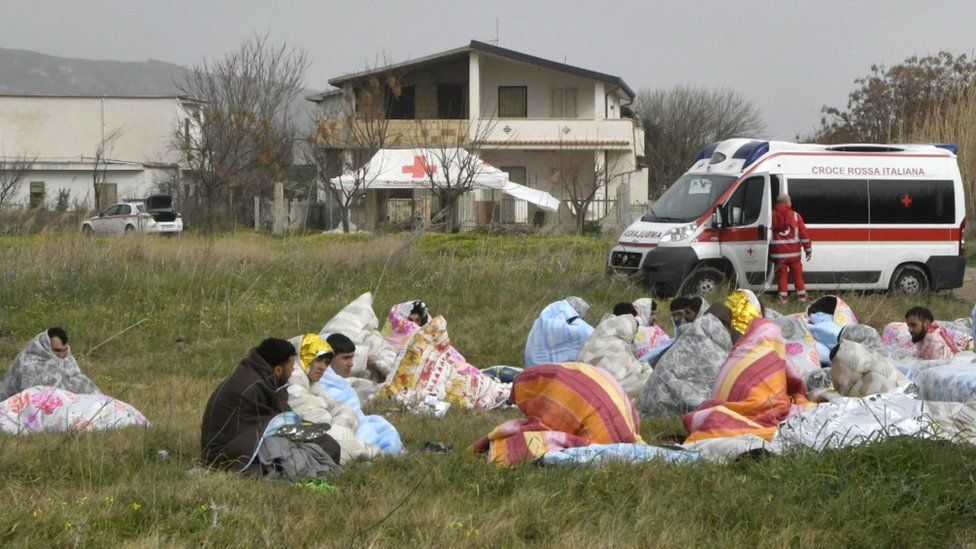
Survivors of a shipwreck off the coast of Calabria huddle in blankets
Dozens of people managed to survive the boat's sinking   EPA

The latest migrant tragedy, a colossal loss of lives that may eventually tally well over a hundred in number of those who drowned is once again in the news. These are people gambling with their lives who assure themselves that the chances of their dying along with their family members are slight, reasoning that hundreds of thousands have made similar trips in the last decade and lived to flourish finding new lives in Europe. These are migrants from Afghanistan, Pakistan, Iraq, Iran and Syria, Muslims attempting to escape the smothering poverty, violence and political-sectarian tribal antipathies of their culture and fellow Muslims.

People ardent in their religious conviction, quick to repeat that Islam is a religion of peace, one that enjoins its faithful to brotherly reception of other Muslims. Yet in these theocracies, dictatorships, tyrannies  and oil Sheikdoms Islam is practised as a governing control over peoples' lives, offering little in compensation for their constricted lives of bondage to governing bodies that make use of Islam as a torture chamber of the mind and body..

Those who prefer to escape the confines of their native lands and strike out for distant lands offering a future for themselves and their families as free and equal citizens envision a kinder world of opportunities attainable through the expedient of a dangerous undertaking, dependent on the professional paid assistance of human traffickers, seasoned in the enterprise of teaching migrants how to evade authorities and how to manipulate the public feelings of compassion to their advantage.

Bodies of the drowned are being recovered from the Mediterranean a day after a wood sailboat with a maximum of 50 spaces, where 200 people were on board taxing the craft to the limit in an unruly, storm-tossed sea. When the wooden ship hit shoals it collapsed and broke apart and passengers, inclusive of children, had little chance of survival. According to Pakistan's Prime Minister Sharif, over two dozen aboard were his citizens.
 

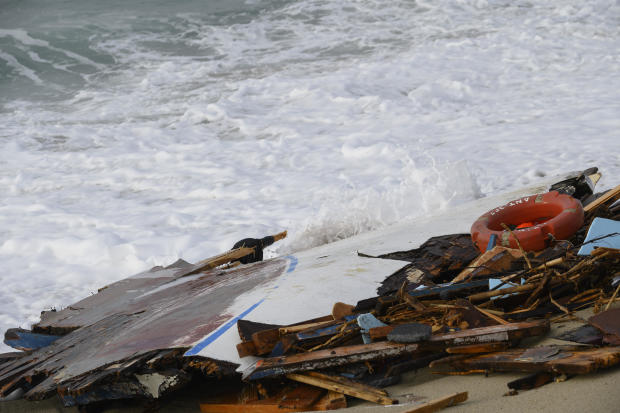
Rescuers recover a body at a beach near Cutro, southern Italy, after a migrant boat broke apart in rough seas, Sunday, Feb. 26, 2023. Rescue officials say dozens of migrants have died after their boat broke apart off southern Italy. Giuseppe Pipita/AP

Bodies were washed ashore adjacent to where their vessel sank near a seaside resort on the eastern coast of Calabria as the storm that destroyed the boat began to calm. In the nearby town of Crotone dozens of coffins were spaced in a sports hall prior to a funeral, with local people leaving flowers and candles, showing their respect for the dead. According to local authorities 80 survived the disaster of the 180 to 200 people who boarded the vessel as it left from Turkey.

Italy's current government is one where the elected leader campaigned on a promise to put a stop to he work of migrant rescue groups. Italy has been besieged over the years by hundreds of thousands of migrants reaching its islands and mainland shorelines in flight from conflict and endemic poverty. Central Americans, Haitians and Africans along with Arabs from the Middle East have flooded in similar numbers overland to reach Mexico, planning to cross into the United States where a similar ingress flow of migrants is occurring.

Since 2014 over 20,000 deaths have been registered by the United Nations Missing Migrants Project, in the central Mediterranean. 220 of those migrants died making the crossing in 2023 alone. Most of the boats setting out for Europe crowded with migrants who have paid handsomely for the privilege to flirt with death in their determination to reach Europe, depart from North Africa, but Turkey has seen an increasing number of departures in the past number of years; 15,000 in 2022.

The Calabria boat wreckage after departure from the Turkish port of Izmir occurred following an initial effort to reach the vessel before bad weather intervened. But the rescue effort failed and what is left is retrieval of all the missing, presumed to have drowned, the sea gradually giving up their bodies. Italian authorities have arrested three men, suspects of human smuggling who survived the collapsed boat.

Irregular migrant ship sinks off in Italy
The wreckage of a ship that was carrying migrants is seen on the beach as search and rescue operations continue in Crotone, Italy February 27, 2023. Valeria Ferraro/Anadolu Agency/Getty

Labels: , , , , , ,

Friday, July 30, 2021

A Mixed Tale of COVID Response

Staff help people at Toronto Western Hospital at a vaccination clinic in March. The hospital is part of the University Health Network, which will soon mandate that all unvaccinated staff participate in frequent COVID-19 testing to ensure patient safety.
University Health Network vaccination clinic for medical staff.  The Star


"Health-care workers in general should be vaccinated to protect themselves, their family and their patients."
"We know that COVID-19 vaccines are safe and effective, and we're seeing that across Ontario. They keep numbers coming down, and we're seeing improvements in terms of hospital capacity, ICU capacity."
"I think it's important to understand that we have flu vaccine campaigns and many flu vaccine protocols."
"It's institution-specific, but the vast majority of the [places] where I've worked do have a mandated policy for flu vaccines."
"I think anything that increases hesitancy or makes people more reluctant to pursue vaccinations should always be thought of as a potential side effect for any policy measure."
Dr.Adam Kassam, president, Ontario Medical Association
Humber River Hospital ER physician Dr. Tasleem Nimjee describes what the COVID-19 vaccine will mean for the health-care workers who’ve been on the front lines of the pandemic    CBC
"I believe it is not unreasonable that when you choose to work in health care, like any profession that includes certain bonafide occupational requirements, that you acknowledge that you will take vaccinations and tests that are required."
Isobel Mackenzie, Seniors Advocate, British Columbia

"When it comes to our health-care workers, I think it's really important that they're protected, not just for them and their families but also for the people that they treat. We don't want to have a situation where unvaccinated health-care workers are falling ill and then transmitting the virus to people they're treating."
"We're all human. I think the reasons behind people being uncertain about getting the vaccine have shifted. People are still influenced by family and culture. If you've been raised where your parents or grandparents may not necessarily believe in certain kinds of medications or vaccines, that can still influence people, even when they're science-literate and have that education."
Dr. Krishana Sankar, biologist, science communicator, COVID-19 Resources Canada
Personal support worker Michael Gellizeau gets a dose of COVID-19 vaccine from nurse practitioner Victoria Pierri at a clinic put on by the University Health Network in Toronto. (Evan Mitsui/CBC)
 
Many within the sphere of Canadian public health fully applaud the news that several countries now require their health-care workers to be vaccinated against COVID. Some epidemiologists and advocates don't hesitate to urge Canadian authorities to adopt similar measures in Canada -- while others feel concerned over mandatory shots' messages and how they will be received by their target audience.

In the U.S. the Department of Veterans Affairs was the first federal agency in the country to require employees be vaccinated. That has now been extended to all federal employees in the U.S. Greece and France both announced they will require working doctors, nurses and other professionals in the field of medicine to be vaccinated. Italy was ahead of the game with a similar mandate announced in April. In hours following the announcement, vaccination appointments increased in France.

Greece options unpaid suspension from work for any who fail to be inoculated against COVID, as health-care professionals. Quebec now requires oncologists to be vaccinated or to take three COVID tests every week, following a deadly outbreak in a Sherbrooke hospital cancer ward. In Ontario, staff at long-term care homes are required to be vaccinated or to have proof of medical exemptions. 

The largest hospital network in Ontario -- the University Health Network in Toronto -- states that any staff refusing vaccination must undergo mandatory and frequent testing. The province, however, still hesitates to ensure that vaccinations are picked up by health workers by enacting mandatory provisions. The majority of young adults contracting COVID-19 in the past three months in Ontario were unvaccinated.

Dr.Sankar is among several volunteers operating a twice-weekly Zoom call to listen to people with concerns about the COVID vaccine, responding to their questions. Anyone may use the service, despite that when it opened in January it was geared specifically to people working in long-term care homes. It seems puzzling that people exposed to science education through their profession would hesitate to become vaccinated, even though they have experienced harrowing episodes of sick and dying patients infected with the SARS-CoV-2 virus.

"It's a complete slap to the face. I'm really just so confused why we're removing the only safety net we have left in place to protect everybody", stated Dr.Shazma Mithani who works at the Royal Alexandra Hospital emergency room in Edmonton, Alberta. She is responding to the news from the province that close contacts of confirmed COVID cases are no longer obligated to isolate, and from mid-August onward isolation requirements will be lifted even for those who test positive for the virus. Masks will no longer be required anywhere.

In Alberta, all COVID-19 testing centres are to close by the end of August, changes announced by the province's chief medical officer of health, Dr.Deena Hinshaw. This, despite a surge in Alberta's COVID-19 daily case rates. The province's rate of immunization lags far behind the average in Canada as a whole, despite announcing 233 new cases on Thursday, 188 of them linked to the Delta variant.
"I guess we're back to personal responsibility, where if you're not vaccinated, you need to be willing to suffer the price, and if you can't be vaccinated or if you can't have a good response to vaccine due to comorbidities or medication, well that's too bad, you live in Alberta."
"It's hard to believe Hinshaw's saying this, that this is like any other respiratory virus, when it's nothing like the other respiratory viruses that are around. Any way you look at it, it just doesn't make any sense."
Dr.Alain Tremblay, Pulmonologist, University of Calgary
And then, there is Sydney, Australia's most populous city, where despite an extended lockdown since an outbreak of the  highly infectious Delta variant, 239 new locally acquired coronavirus cases were counted over a 24-hour period. "We can only assume that things are likely to get worse before they get better given the quantity of people infectious in the community", stated Premier Gladys Berejiklian, New South Wales state, where Sydney is the capital.

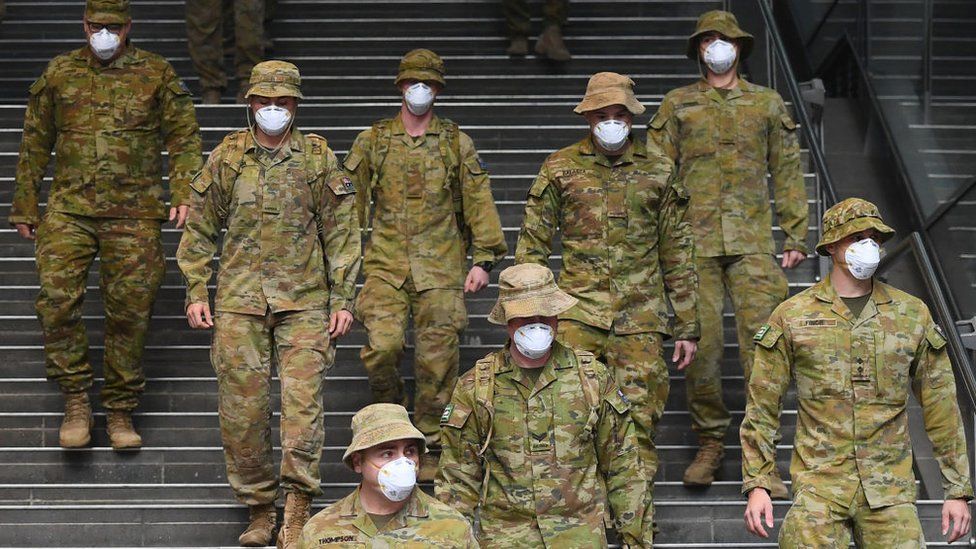
The situation in Sydney is considered so desperate that the Australian military has been called on to help enforce a new lockdown in the city of six million residents. New curbs are set to be imposed on the southwestern and western areas of the city where most COVID-19 cases are found. Residents of those areas must wear masks outdoors and are warned to remain within five km of their homes. New South Wales police had requested 300 military personnel to assist in enforcing lockdown orders.

Australian Defence Force soldiers walk through the city during Melbourne's lockdown last year.
The army was also used to help enforce a lockdown in Melbourne last year   Getty Images

Labels: , , , , , ,

Monday, June 14, 2021

And No One Noticed, Until ....

"These were works of great value that were just hanging on the walls of the corridors or rooms in Rai’s buildings, without any alarm system."
"....And so anyone could just walk in and take them."
Giuseppe Scarpa, journalist covering the investigation
Rai tower is pictured in Eastern Milano
Rai chiefs discovered the pieces were stolen when, a few months ago, a painting fell off the wall in an office. Photograph: Miguel Medina/AFP via Getty Images

It is fairly common practise for national art galleries in possession of some of the world's great artistic masterpieces to 'loan out' some of their artwork to hang on the walls of federal government buildings. Most art galleries lack the wall space to hang all their acquisitions in limited gallery spaces where the public is invited to view the nation's artistic treasures. So a hefty balance of the art possessed by those galleries -- the property of the nation's population in actual fact since most acquisitions are acquired with public (tax) money -- sit in storage in the basements of the national galleries or in auxiliary buildings. Some never to see the light of day, others hung on a rotation basis, all considered valuable and an integral part of any nation's art collection.
 
In Italy it has now been revealed that a large segment of the public art hanging in offices of the country's public broadcaster, Rai, have gone AWOL. No fewer than 120 paintings, etchings sculptures and tapestries are missing, some having been replaced with fakes. Italian police, skilled in searching out stolen art, have reached the conclusion that the thefts have taken place over the years at the hands of disaffected employees, who perhaps don't view their purloining of the nation's art treasures  as criminal, but at their disposal, bred of familiarity with their presence at a workplace.
 
Italians pay for these  works of art in a special way -- required to buy yearly television licenses that work out to about $130. The national public broadcaster is, of course funded by taxpayers to begin with as are most public museums and art galleries the world over, who take justifiable pride in their carefully amassed collections. Evidently, Rai, under the Ministry of Economy and Finance is in debt to the tune of $775 million. 
 

Italy artwork Photograph:( Reuters )

The il Messaggero  newspaper reported the "Sacking of Rai" in March, when officials at the Rome headquarters of the broadcaster became aware of the thefts when a painting held to be the work of Ottone Rosai a Florentine artist, fell off the wall. Its frame was smashed and it was realized that the painting it held was not authentic but a copy of the original. The theft was traced to a former Rai employer, retired. That employee admitted he had taken the painting in the 1970s and sold it for a few hundred euros. The time frame protects the former employer from prosecution under Italy's statite of limitations.
 
A survey of the art works in the collection at Rai came up with a startling revelation; missing were 120 works of art; paintings and sculptures among them. Artworks were held to have mysteriously vanished from bureaus of the broadcaster elsewhere in Italy other than Rome. Works by Giorgio De Chirico and Renato Guttuso, Amadeo Modigliani, Claude Monet, Alfred Sisley, simply 'disappeared' from Rai offices. Some just absent and no one has any idea where they are, some taken and replaced by copies of the originals. 

Most thefts, speculated investigators, occurred following a 1995 exhibition of Rai's Puglia collection which raised awareness in the public arena and elsewhere of the very existence of the collection, on display and quite unprotected in the corridors, hallways and offices of Rai's various locations. "We are tracing a series of disappearances that do seem to be targeted", stated Rai executive Nicola Sinisi.

The total value of the absent works of art is estimated at about $30 million, according to Italian art critic Vittorio Sgarbi, who had been quoted by the Adnkronos news agency. The heritage fraud squad of Italy's Carabinieri police, experienced in investigating art theft, and considered to be among the top art crime detectives in the world, is carrying out this sensitive investigation, in hopes of being able to reunite the artwork with its rightful owners.\, the people of Italy.

The Carabinieri police heritage fraud squad had successfully concluded working as part of a huge international operation tracking down 1,635 pieces of illegally trafficked art work.
 
A Carabinieri police officer in Rome
The investigation is being carried about by the art fraud squad of Italy’s Carabinieri police, considered among the top art crime detectives in the world Credit: Baris Seckin/Anadolu Agency


Labels: , , , ,

Tuesday, May 11, 2021

Beer Belly and COVID-19 Morbidity

"Abdominal obesity might predict a high chest X-ray severity score better than general obesity in hospitalized patients with COVID-19."
"Therefore, in hospital, patients with abdominal obesity should be monitored closely."
IRCCS Policlinico San Donato, Italy report
 
"Studies that have examined the relationship between abdominal fat and cardiovascular outcomes confirm that visceral fat is a clear health hazard,"   
"Reaching a target of 150 minutes a week of physical activity, particularly aerobic physical activity, may be enough to help reduce abdominal fat."
"This decrease in abdominal fat without weight loss may be related to increasing fat-free mass [or muscle mass] with aerobic exercise,"
Dr. Tiffany Powell-Wiley, chief, social determinants of obesity and cardiovascular risk laboratory, National Institutes of Health, Bethesda, Maryland.
 
"As BMI rises above normal, the likelihood of a positive SARS-CoV-2 test result increases, even when adjusted for a number of patient variables."
"Furthermore, some of the comorbidities associated with obesity appear to either be associated with an increased risk of infection or to be protective."
Research study, Chaim Sheba Medical Centre, Israel
 
"These were otherwise healthy, hard-working people. Their major risk factor for getting this sick was obesity."
MaryEllen Antkowiak, critical care physician, intensive care unit, University of Vermont Medical Center
"We didn’t understand early on what a major risk factor obesity was. … It’s not until more recently that we’ve realized the devastating impact of obesity, particularly in younger people." 
"[That] may be one reason for the devastating impact of COVID-19 in the United States, where 40% of adults are obese."
Dr.Anne Dixon, physician-scientist , obesity and lung disease, University of Vermont 

Many very sick COVID-19 patients, like some in this Brazilian intensive care unit, have obesity.   Gustavo Basso/NurPhoto/Getty Images

A number of studies linking obesity with higher rates of COVID-19 infections and more serious outcomes have been published since the SARS-CoV-2 pandemic invaded the international community causing untold infections in the millions worldwide and a staggering number of deaths, leaving hospitals and medical staff scrambling to be able to serve the needs of seriously ill COVID patients requiring specialized emergency care in ICUs worldwide.

At the European Congress on Obesity held recently, a number of presenters spoke of their studies examining high BMI and more specifically a high concentration of belly fat and its relationship to higher rates of infection with the COVID pathogen, as well as poorer outcomes from those infections.
Among them were a study from Italy and another from Israel. Italy is well known to have been the European poster child of a nation assailed by wide COVID transmission.

Italy's emergency was looked upon by other countries as a worst-case-scenario they prayed could be averted in their own countries. The prospect of having to decide, as was forced upon the medical community in Italy by circumstances beyond their control, to have to make life-or-death decisions over which patients with serious COVID symptoms might survive if given scarce oxygen, and which among them might not -- given age and underlying medical conditions, to be denied supplemental oxygen -- horrified the world.

The study out of Italy concluded that beer bellies are associated with a whopping 75 percent elevated risk of developing serious COVID, with scientists urging that close monitoring be instituted for COVID patients with extreme abdominal fat. It was found that general body fat, measured by body mass index, seemed not to be linked to worse severity, unlike excess fat accumulated in the belly area.

The health records of 215 patients hospitalized with COVID were examined by Italian doctors, measuring the patients' BMI and waist circumference against chest X-rays (CXR) which they scored on a scale of zero to 18 for infection severity. Those with abdominal obesity gained a significantly higher X-ray score, with an average of 9, than did those without high abdominal fat, who were given an average of six.

Dr Francesco Tursi, who suffered from the COVID-19, works at Codogno hospital, Italy

 When patients' BMI was examined -- representing the traditional method of determining whether an individual is overweight -- the scientists found that chances of a high X-ray score between those who were obese, overweight and that of a healthy weight, were identical. While patients with abdominal obesity were at a 75 percent increased risk of a higher CXR severity score.

What was also seen was that bronchial asthma increased risk of a high CXR severity score by 73 percent. When the realization hit British Prime Minister Boris Johnson last year that his weight might have been a huge contributing factor to his having experienced severe COVID, he made a pledge to turn the government's attention to educating and influencing the British public to resist becoming obese. 

It was, in fact, increasing levels of obesity identified as having been a major cause of the high death toll in the United Kingdom from the onslaught of the pandemic.


Labels: , , , , , , ,

Saturday, June 20, 2020

COVID Mutation: Positive, Negative, Unknown

"I am not saying it's [COVID-19] gone away -- the message isn't to declare victory, or say that we have this beaten. But it's fair to say that the experience with the virus is changing."
"[People in this region -- 40 hospitals across western and central Pennsylvania, New York State and Maryland] don't seem to have the same level of sickness as a few weeks ago."
"It's just a general, crude observation. Perhaps we're better at treating patients."
"This particular virus doesn't look like it's changing a lot. But it's a possibility to think about. There are probably six different factors at play and we won't understand all of this. This is a virus that no one knew anything about eight months ago."
Dr.Donald Yealy, chief, emergency medicine, University of Pittsburgh Medical Centre

"We ourselves have seen the D614G gene in sequences of our own. So it's here."
"What's hard to tease out is, when you do see changes -- you might see anywhere between half a dozen and a dozen changes in any given virus -- is to really understand what the significance is."
"[The virus that finally reached us in Canada] would have been passed so many more times in humans than it did at the beginning of the outbreak [in Wuhan]. We have a lot of blind spots as far as the genome goes."
Dr.Samira Mubareka, medical microbiologist, Toronto Sunnybrook Hospital

"We have to make sure that whatever statements we make are backed up by good, hard science, so it's reproducible."
"Because the downside is really bad if you mislead the public to think that the virus is no longer as potent as it once was. People will of course relax their vigilance and succumb to a disease they probably could have avoided."
David Kelvin, immunologist, Dalhousie University

"I'll just be honest and upfront. We don't know. We just don't know if it's weakening."
"We don't have data on this; we haven't tested this. But who knows, maybe the coronaviruses that cause mild cold-like symptoms could have been lethal in human populations many, many years ago."
The virus and the host learned to co-adapt."
Arinjay Banerjee, Institute of Infectious Diseases, McMaster University
While there are some subtle genetic changes in COVID-19 around the world, none have resulted in differences in the way the virus spreads or the type of disease it causes, the WHO has said. AAMIR QURESHI/AFP via Getty Images

Wishing won't make it so; the world has been horribly overwhelmed by the dramatic, sudden incursion of a global threat to human health and longevity, and everyone, from government, the medical/health community, and the ordinary person on the street, entertains hope that it will depart as suddenly (and mysteriously) as it arrived. Leaving us to pick up the pieces of a word turned upside- down and inside-out. Eight million people who were infected to various degrees before stabilization and perhaps left with unknown after-effects; almost a half-million dead of its effects, the world economy in tatters, and confidence in the future shaken to the essential core.

So when anecdotal 'evidence' of a possible change for the better in the effects of the SARS-CoV-2 virus brings a wave of fresh air and hope for an end to this universal nightmare through the auspices of a handful of doctors in northern Italy claiming the virus causing COVID-19 seems to be less affective, no longer appears to be the "biological bomb" it appeared when it first raged onto the world stage the public grasps it for relief. And then the medical chief of a $21 billion health complex spanning a range of hospitals in a handful of U.S. states held a press briefing stating the impression that COVID cases latterly seen appear less severe than those of a mere few weeks earlier.

Dr. Yealy explained that viral pandemics are complicated, volatile, dynamic, they come and they go, they wax and they wane. A multitude of factors could be involved; and he was not attributing the observations "solely or even predominantly" to the outcome of possible mutations. Yet, at a time when the world in the West, while expressing relief that the lockdown that was imposed is gradually being lifted, are being informed that it is too early to lift all restrictions, and that an anticipated second wave may be on the horizon, the balloon of hope is gently pricked and deflated.

Dr.Yealy spoke of observations in a particular part of the United States. No such lifting of the effects of the virus have been in evidence in Canada, on the other hand. So even while Dr.Yealy claims that people in the region he represents "don't seem to have the same level of sickness as a few weeks ago", Canadian doctors respond that nothing of the sort has been seen in Canda; no evidence of lost potency: "In short, no", Dr.Alan Drummond representing the Canadian Association of Emergency Physicians remarked.

"In the last ten days, we still put five patients on extracorporeal life support, the most extreme support that we have for people who are failing mechanical ventilation", explained Dr.Niall Ferguson, who has observed no sign of "weakening" or a lesser need of Toronto General Hospital's life support program known as ECMO, of the most severe cases of COVID received for extraordinary efforts at resuscitation.

Scientists at Scripps Research in Florida this week reported in a pre-print paper that a genetic mutation seen in the virus now circulating through Europe and the U.S., no increases of "infectivity" of a significant nature have been seen. The D614G mutation quadrupled the number of spikes on the virus, used to grab onto human cells, making them more effective in breaking into them and infecting them, and then begin the massive reproduction of new viruses that will be shed, looking for additional human interiors to nurture and continue breeding the virus.
Coffee is served in the Caffe Peru bar in Rome, Wednesday, where a large plexiglass division was mounted over the counter to protect bartenders and customers from Covid-19 as they enjoy their drinks. (AP Photo/Andrew Medichini)

Over 40,000 genomic sequences have been uploaded to websites that are publicly available and scientists scour the genetic codes to read the 30,000 chemical letters searching for changes, then comparing sequences from other countries. Some subtle alterations have been seen, but none have yet resulted in differences in the manner in which the virus spreads, much less the type of disease it causes, according to the World Health Organization.

On entering a host, a virus replicates by the thousands and RNA viruses like the novel coronavirus are capable of accumulating small, random mutations, a result of the molecular protocol used by the virus to copy itself sometimes going awry. "It makes errors, and sometimes if those errors benefit the virus they'll be selected for -- they'll persist and get passed on and on because there is some kind of fitness advantage", explained Dr.Mubareka.

On occasion less potent versions of a virus emerge, however. Arizona State University researchers found a single sample missing a piece of its genome where 81 of the letters were missing, after sampling nasal swab samples from 382 COVID-positive patients. In 2003 the SARS outbreak saw a similar mutation, one that scientists believe was the causal effect of a much less severe disease emerging, later in the outbreak.

Patients suffering from the coronavirus disease (COVID-19) are seen in the intensive care unit at the Papa Giovanni XXIII hospital in Bergamo, Italy, May 12, 2020.
Intensive care unit, Papa Giovanni XXIII Hospital, Bergamo, Italy

Dr. Banerjee of McMaster University explained that ideally a pathogen is a clever virus, one that learns to coexcist with its host "because if a host dies, if the individual dies, the virus dies with it". A virus has every reason to protect its own survival by ensuring its presence in a  human body doesn't result in that human body expiring, and with its death its own aspirations to continue replicating and spreading is destroyed. Its purpose is to make the leap from the infected to the uninfected; spreading its replicated version to the next victim, and thus sustain the virus population.

A patient is carried on a stretcher from a nursing home to a hospital, as the spread of the coronavirus disease (COVID-19) continues, in Rome, Italy, May 2, 2020.
Rome, Italy, May 2, 2020: Patient carried from LTC home to hospital
"[Italy has suffered some of the world's worst death tolls from COVID-19, but fewer people are now admitted to hospital in comparison to three months earlier; while in some regions] even the patients that are admitted, especially in emergency, are less severe."
"They have fever, some respiratory symptoms. They have cough. But even in similar ages, they don't have the same aggressive picture they had three months ago."
"I am not suggesting not to use the masks, or not to wash the hands or not stay one metre away from the other."
"I am just giving the clinical impression, and the clinical impression is the disease is different. I am more optimistic than I was three months ago."
Dr.Matteo Bassetti, director, infectious disease clinic, San Martino Hospital, Genoa, Italy

"In reality, the virus clinically no longer exists in Italy,"
"The swabs that were performed over the last ten days showed a viral load in quantitative terms that was absolutely infinitesimal compared to the ones carried out a month or two months ago."
Alberto Zangrillo, head, San Raffaele Hospital, Milan, northern region of Lombardy

Labels: , , , , , , ,

Saturday, May 16, 2020

The Louvre, The World's Premier Showplace of Antiquity

"If our victorious armies penetrate into Italy, then the seizure of the Apollo Belvedere and the Farnese Hercules would be the most brilliant conquest."
"It is Greece that decorated Rome: but should the masterpieces of the Greek republics adorn a country of slaves?"
"The French Republic ought to be their ultimate resting place."
Abbe Gregoire, Catholic priest, revolutionist, 1794

"Belvedere of the Vatican where, for three centuries, it won the admiration of the Universe."
"Thereupon a hero, guided by victory, came to remove it and to place it forever beside the banks of the Seine."
Louvre label for the Apollo Belvedere
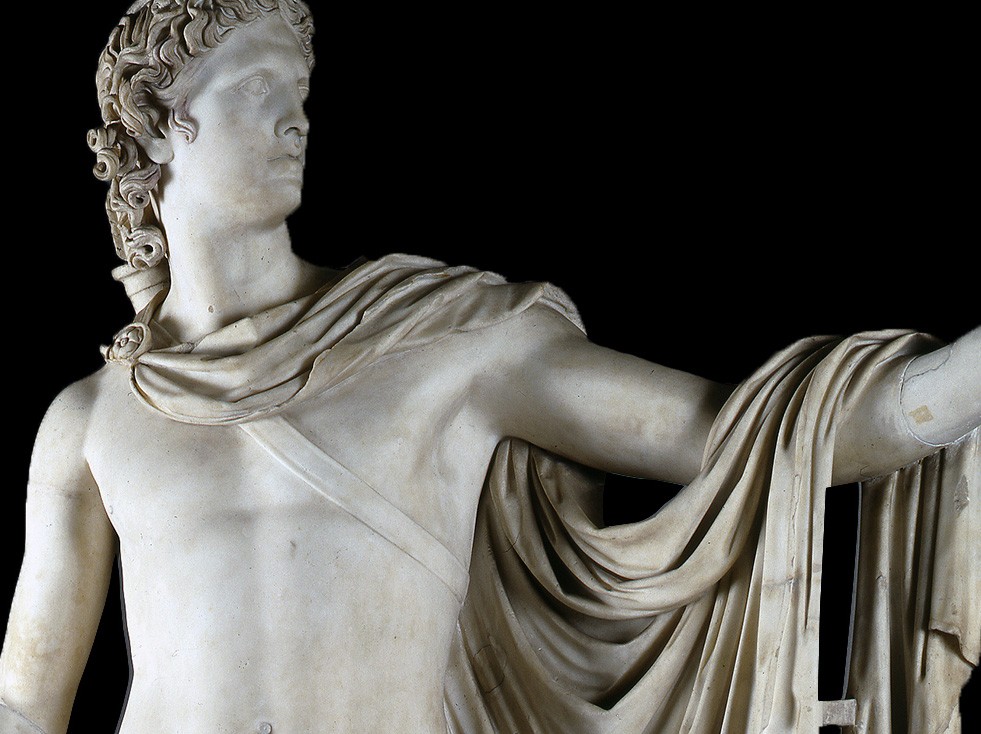
Belvedere Apollo

The Louvre, that repository of some of the world's most priceless art treasures, a treasure-house extraordinaire, the pride of Paris and the wonder of the world where an assemblage of the world's most renowned painters' and sculptures' masterworks hang  and sit resplendently on gallery walls and pedestals where visitors view each in awe of the transcendent artistry of genius that depicted the sacred art of Christianity. The building itself absent additions, is a masterpiece of Renaissance architecture that borrows from Greek and Roman architecture, the ultimate in sublime classical design structure.

Can a whisper of shame blemish that grand structure, its administration, its heritage value, its remarkable collections, its reputation as the leading museum of antiquity and art gallery of universal distinction in the world? Yes, evidently it can, for there are such whispers, well grounded in history.
In the 1790s, the Louvre was already assuming its imperious role as the depository of the world's most elegant, famous and priceless artefacts. It employed a very special art-collection agency to do its bidding.

Over 13,000 works of art in revolutionary France were taken into possession on behalf of the Republic, from the ownership estates of 93 French aristocrats. Labels on those pieces of timeless art reflect the temper of the times: saisie revolutionnaire ... revolutionary confiscation. Looting, in another vernacular of the culture of the pillage of righteous victory. Just as the French army overran Europe, looting everywhere, returning with treasures from abroad to be placed where the Republic thought it belonged; the galleries of the Louvre.

The Immaculate Conception of the Venerables by Bartolomé Esteban Murillo, circa 1678, looted from Seville by Marshal Soult in 1810. Returned to Spain in 1941, it resides in the Prado Museum in Madrid.
Immaculate Conception of the Venerables, Bartolomé Esteban Murillo, 1678

As Napoleon's army marched across Europe, advanced into Egypt and the Levant, grand seizures were the order of the times. A novel way to acquire art treasures, but one well recognized over the centuries as conquering armies brought home confiscated loot from the vanquished enemy. "Liberty commands us to confiscate the remains of [Rome's] splendour. It is for us that time has preserved them ... Only we can appreciate them", wrote neoclassical painter, Jean-Baptiste Wicar.

The Grande Armee of Napoleon Bonaparte looted at will in Veneto, in Venice, in Rome, where the Apollo Belvedere, the Laocoon, the Capitoline Brutus and more were to become the property of France since though artists of Italian heritage may have created these works, Italy clearly didn't deserve to hold them in perpetuity as proud symbols of its artistic heritage.

When, in 1815, Napoleon found his defeat at Waterloo, over 5,000 paintings, sculptures and objets d'art sized since 1794, were soon restored to their rightful owners. Still, some of that priceless art was considered to be too fragile to be returned though needless to say this had not been a consideration when they were taken originally to be transferred to French ownership. Veronese's The Wedding Feast at Cana, Giotto's Saint Francis Receiving the Stigmata and Fra Angelico's Coronation of the Virgin remained in the Louvre.

The Tiber, part of the Papal collection confiscated by Napoleon in 1797, was considered too big to move in 1815, and thus remains in the Louvre

There was great reluctance from the Republic to return the Laocoon, the Apollo Belvedere and Raphael's Transfiguration to the Vatican, since it considered that technically through the 1797 Treaty of Tolentino negotiating the surrender to France of the Papal States, they had been 'legally' acquired, leading the pope to send the sculptor Antonio Canova, aided by English and Austrian soldiers to retrieve them.

At the Louvre's 1817 reopening, the bitter sight of galleries with empty spaces, stung. The French novelist Stendhal, claimed the Italians "stole from us what we had won by treaty".

The Wedding Feast at Cana by Paolo Veronese, 1563, plundered by Napoleon’s troops from the church of San Giorgio Maggiore in Venice in 1797, remains in the Louvre in Paris
The Wedding Feast at Cana by Paolo Veronese, 1563, plundered by Napoleon’s troops from the church of San Giorgio Maggiore in Venice in 1797, remains in the Louvre in Paris.

Labels: , , , , , ,

Wednesday, November 20, 2019

Venice, World Heritage Site

"We are used to flooding and we know how to deal with it, but my generation has never seen anything like this."
"When I was a kid, it was normal to have an acqua alta [high tide] of 1.1 metres. But now it's normal to experience 1.3, 1.4 metres."
"Sooner or later people's resilience will run out. About ninety percent of my classmates from school have left because living here is a battle."
Alexandro Guggia, 42, Castello District, Venice

"We have to keep going."
"Many people are abandoning Venice and if these dramatic floods continue, you fear that it will one day turn into some sort of legend, like Atlantis."
Chiara Tonello, Venice
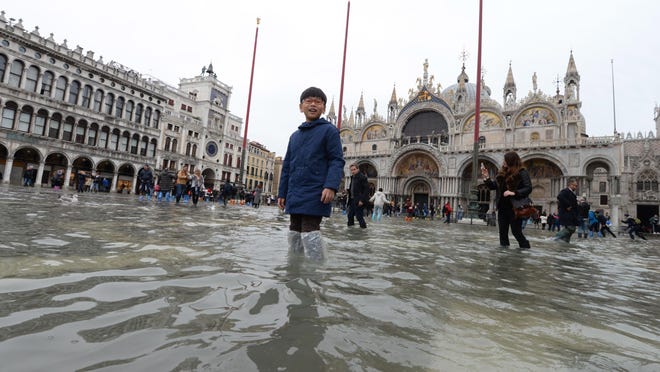
San Marco square remains covered in flood water days after the second highest tide since 1966 on November 15, 2019 in Venice, Italy.
San Marco Square remains covered in flood waters days after the second highest tide since 1966 on November 15, 2019, in Venice, Italy.  Getty Images

The 1.87-metre flood inundating Venice on Wednesday last damaged the Byzantine basilica of St.Mark's, while swamping St.Mark's Square and left a tide's-worth of debris in the narrow alleyways leading off the square in the murky brown sludge that crept its way into shops, hotels and homes. But that wasn't the end of it, there was no relief in sight as two days later flood warning sirens once again gave notice that another high tide arrived to raise the lagoon's level 1.6 metres, leaving the city to cope once again with its new underwater emergency and Venetians had little option but to make their way through the flooded alleyways in rubber boots.

Women wade through water in Venice on Nov. 13, 2019. The high-water mark hit about 74 inches on Nov. 12, meaning more than 85% of the city was flooded.
The high-water mark hit about 74 inches on Nov. 12, over  85% of the city was flooded.
Luca Bruno, AP

Desperate shopkeepers and restaurateurs made use of mobile pumps in an effort to free their establishments from the floodwaters. Venetians are accustomed to living uncertainly in this most beautiful of heritage cities, like none other. Tourism brings millions of people to the city annually and cruise ships value it as a destination, frustrating residents even as their presence generates badly needed income to help pay for potential solutions to flooding issues. Rising sea levels have played havoc with the city, and many of its residents have fled the pressures of stress.

In the 1950s, Venice had a population of 175,000 fortunate residents. By 2000 that population base was reduced to 65,000 and the ongoing trickle of those leaving the city for good has further eroded its population numbers to its current 52,000 inhabitants. As morale of the people living there is eclipsed by ongoing flooding whose inundation levels continue to grow, people increasingly see no future for themselves in Venice. "We've seen a lot more flooding in recent years. It's the frequency that is concerning", Paolo Brandolisio, a maker of wooden oars to equip the 450 gondoliers who ply the canals of Venice, explains.

Water starts rising again in Venice, northern Italy on Nov. 16, 2019. High tidal waters returned to Venice on Saturday, four days after the city experienced its worst flooding in more than 50 years.
Andrea Merola, EPA-EFE

His oar-making workshop has been flooded time and again. In this latest super-flood he was able to rescue his power lathe and electric belt saw last Friday when his workshop was thigh-deep in water. He lost the use of his wood supplies along with other tools that the floodwaters swamped in his shop and they were unsalvageable. Despite the tribulations owing to increased flooding, the regional government of Veneto rejected measures meant to ward off climate change. And then its historic offices located on the Grand Canal were themselves under flood water, shortly afterward.

Tourists take pictures in a flooded St. Mark's Square.
Luca Bruno, AP

Majority right-wing parties had rejected the climate action plan. "It's rather ironic that the council chamber was flooded two minutes after the majority parties rejected our proposals", ventured Andrea Zanoni, a member of the centre-Left Democratic Party, leaving a senior League member to dismiss any criticism reminding critics that the regional government had set aside 965 million euros ($1.4 billion) in the past three years to address air pollution and climate change problems.

"This is Venice's last hope. I think we should be able to manage our own affairs. We should be separate. It's logical. And it's the only way out of our current situation", stressed Matteo Secchi, president of Venessia.com, a campaign group urging Venetians to vote in favour of a referendum on Venice having a dedicated city council, away from the mainland currently administered as Veneto. "A mayor looking after just Venice would have more time to dedicate to the things that really matter to the city", remarked Jane da Mosto, British head of We Are Here Venice think tank.
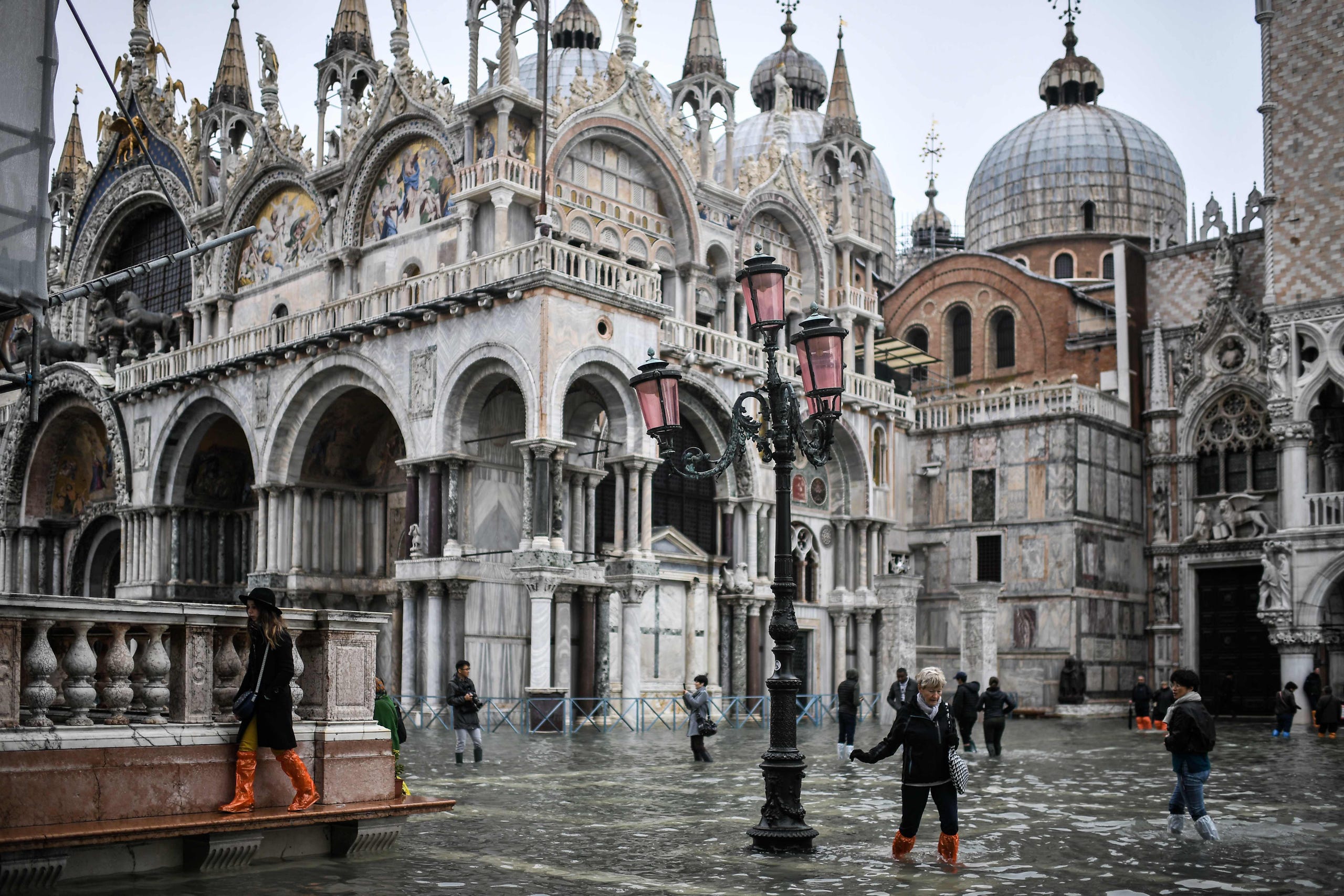
Pedestrians walk across the flooded St. Mark's Square past St. Mark's Basilica.
Marco Bertorello, AFP via Getty Images

Labels: , , , ,

 
()() Follow @rheytah Tweet