Ruminations

Blog dedicated primarily to randomly selected news items; comments reflecting personal perceptions

Monday, July 13, 2026

China's Love for 'Harmony' and Dread of 'Splitism

"It [Beijing's new 'ethnic unity' law] risks deepening restrictions on freedoms of language, education, practice of religion, culture, expression and assembly [of minorities in China]."
"[Eight human rights experts stated that the law could have] serious implications for Tibetans, Uyghurs and Mongolians]."
Volker Turk,  United Nations High Commissioner for Human Rights
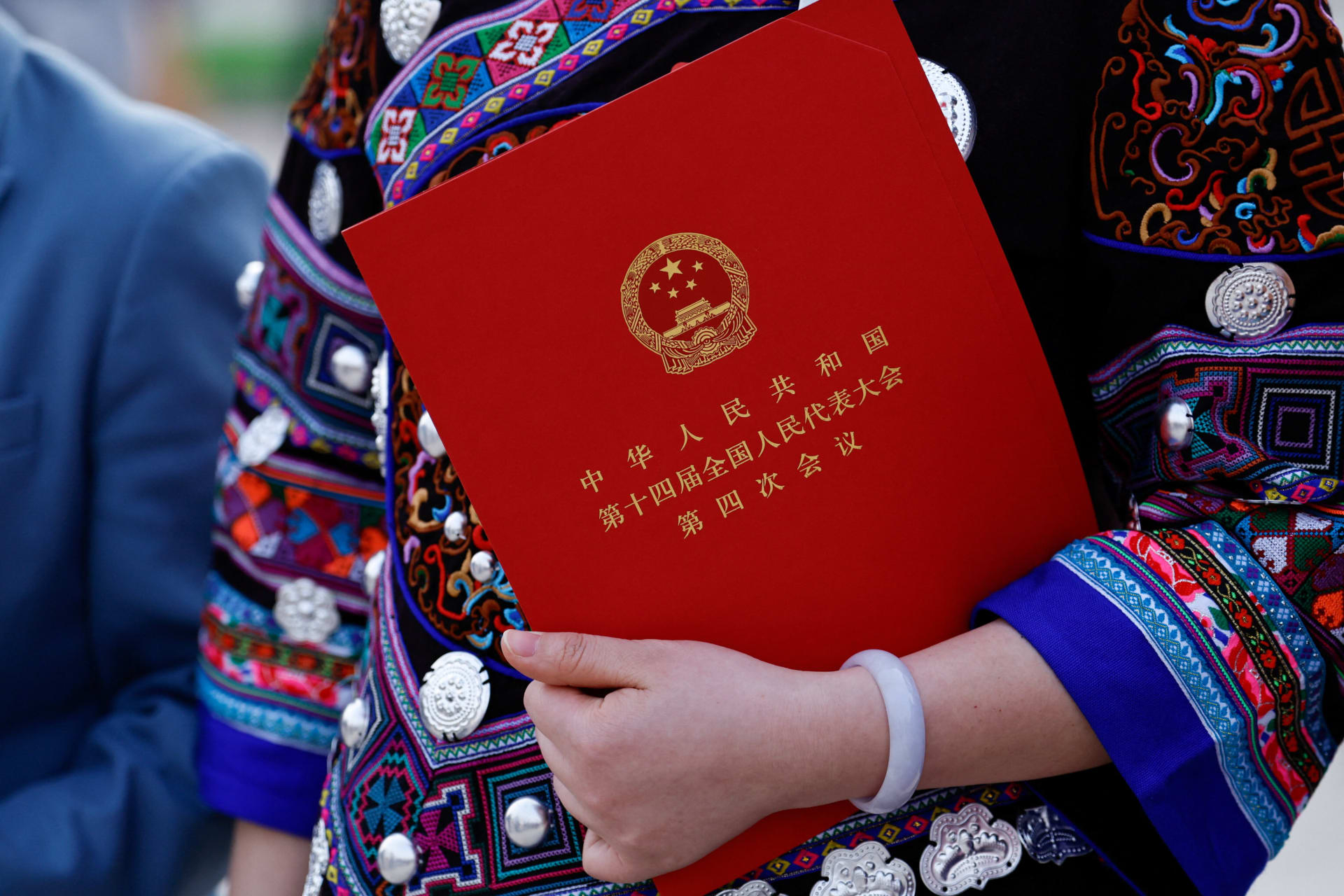
https://assets.cfr.org/images/t_cfr_3_2/f_auto/w_1920/v1774557490/2026-03-12T091549Z_1536925380_RC2V2KA7ME2Y_RTRMADP_3_CHINA-PARLIAMENT-ETHNICLAW/2026-03-12T091549Z_1536925380_RC2V2KA7ME2Y_RTRMADP_3_CHINA-PARLIAMENT-ETHNICLAW.jpg
A delegate in ethnic minority costume holds a document following the closing session of the National People’s Congress (NPC) at the Great Hall of the People in Beijing, China March 12, 2026. REUTERS/Tingshu Wang
 
"This new law is the culmination of a policy trajectory that has been building for over a decade, dating back to the 2014 Central Ethnic Work Conference. Under Xi, Beijing is steering away from the post-1949 legal framework of nominal ethnic autonomy (albeit under tight Party control) imported from the Soviet Union. In its place, officials have steadily been pivoting towards what scholars have termed “second-generation ethnic policies”—an aggressive assimilationist approach that emphasizes a common Chinese national identity over accommodation of ethnic differences. Provincial and municipal authorities across China have enacted a wave of local “ethnic unity and progress” regulations in recent years, such as those in Xinjiang (2015) or Inner Mongolia (2021). The new national legislation elevates this approach to the level of a national statute governing all of China."
"The new law’s core concept is captured in the term zhulao (铸牢) – to “forge” or “cast” metal – and its instruction that “forging the communal consciousness of the Chinese nation” is core to the Party’s ethnic policies.  As James Leibold has pointed out, this phrasing reflects a hardening of Beijing’s political line under Xi Jinping – explicitly written into the Party’s Charter at the 19th Party Congress in 2017 – aimed at “melting” subnational and ethnic identities into a shared collective one."
Council on Foreign Relations  
China is in the throes of a wide-ranging propaganda campaign in the promotion and defence of its new "ethnic unity" law, a prime target of critics who contend that this law will continue to add to undermining the rights of Tibetans, Uyghurs and other minorities in the vast country where Han Chinese predominate. With this new law Beijing has granted itself sweeping powers in pursuit of groups and individuals living overseas viewed by the Chinese Communist Party as undermining national unity. It is these groups, claims Beijing that incite ethnic division, and not China's strict totalitarian laws.
 
Beijing watchers have been alerted to the potential of Chinese authorities seeking to accuse activists living abroad of crimes that would merit Beijing authorities' intimidation of those it suspects, to force them to repatriate to China with the knowledge that their family members back in China will become vulnerable to 'special notice' that could degenerate into arrest. Alternatively those who are suspect would become subject to extradition requests back to China, of the host country.
 
China's vice minister of justice, Hu Weilie, blames criticism of its new unity law legislation on "distorted interpretations" by Western media. The law, he emphasized, effective from July 1 is "legitimate, legal, necessary", fully in line with international norms. Guo Jiakun, a spokesmen for China's Foreign Ministry, singled out the United States and European Union for "maliciously slandering" China's policies. 
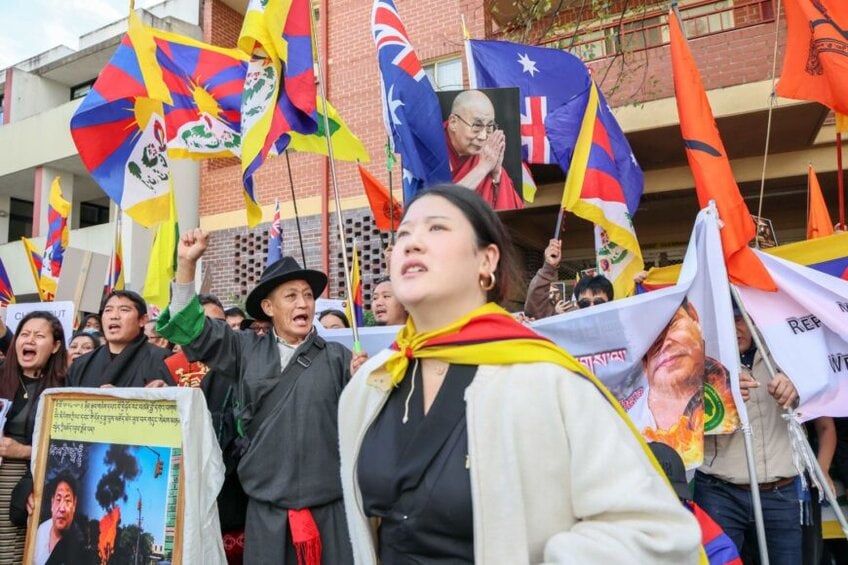
 
https://cdn.shortpixel.ai/spai/w_848+q_glossy+ret_img+to_auto/www.article19.org/wp-content/uploads/2026/07/Tibetans-protest-ethnic-unity-law-Reuters-MT1SIPA000CFCOS8-870x580.jpg
Free Tibet protest against China’s Ethnic Unity law and in honour of activist Pawo Lobga Rangzen, Chinese Consulate General, Camperdown, Australia, 8 July 2026. Credit: Alexandra Buxbaum/Sipa USA
 
The Chinese Communist Party under the leadership of President Xi Jinping has become increasingly sensitive to any criticism regarding treatment of ethnic minorities. The imposition of heavy crackdowns on such groups, targeting Tibetans in particular, to erode the influence of the Dalai Lama in Tibet and the Uyghurs, a Muslim Turkic minority in Xinjiang province, should be immune, according to Beijing from foreign interference.
 
According to Chinese government authorities, the new legislation will protect the traditions of all of the 56 officially recognized ethnic groups in China. While in point of fact, assimilation is the goal the new law is meant to achieve, for the minority groups to be swallowed whole into the culture of the majority Han Chinese. The state-operated Global Times published an editorial accusing "some Western countries and media outlets" of maligning China's ethnic policies. These reactions from outside sources "amount to nothing more than one-sided rhetoric"
 
Restrictions on the use of Mongolian in local schools in Inner Mongolia prompted widespread protests in 2020. With this new legislation, any acts that "undermine ethnic unity or create ethnic divisions" among Chinese people inside or outside of China and requires all of Chinese society to participate in the mission of ethnic integration are banned. Mandarin Chinese is mandated as the sole language of school instructions as well as in official communication. Parents are ordered by the legislation to "educate and guide children to love the Chinese Communist Party"
 
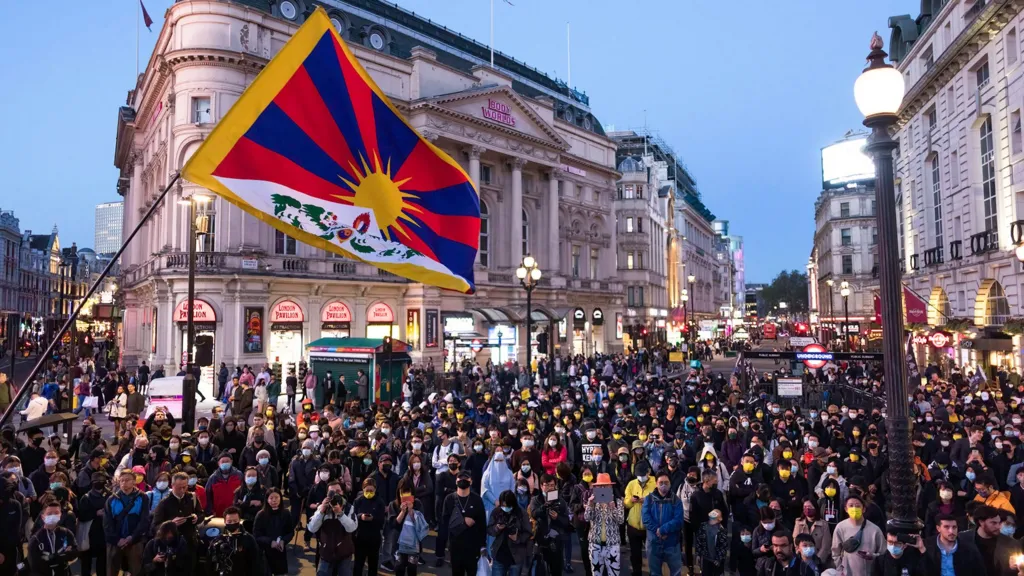
https://ichef.bbci.co.uk/news/1024/cpsprodpb/402f/live/a86f4bf0-74a8-11f1-8e1d-bbbb1017d210.jpg.webp
Protesters in London's Piccadilly Circus gather in support of Tibet   Getty Images
 

Labels: , , , , , ,

Wednesday, December 06, 2023

China's Harmonious Relations With Its Citizens

"This is textbook United Front Work."
"Using these root-seeking camps to cultivate the next generation of pro-CCP [Chinese Communist Party] supporters and conditioning them to the CCP's political agenda." 
James Leibold, professor/expert on Xinjiang, La Trobe University, Australia

"[The trip represents a] long-term investment [by China, using young people to cultivate a positive image of the CCP and one of its most controversial files]."
"Showing a friendly and smiling face in China has been the primary job of the United Front and its affiliated organizations."
This sort of trip is a trap, in fact, to give an organized tour with organized destinations and limited engagement."
Mehmet Tohti, head, Uyghur Rights Advocacy Project

"[The XPCC Public Security Bureau acts as a government, bureau of prisons, media empire and sprawling corporate holding company in Xinjiang. It is] involved in a pervasive program of egregious rights violations [against the Uyghurs, from extrajudicial imprisonment to social engineering and forced labour]."
"From cradle to grave Uyghur people are subjected to centrally directed indoctrination delivered by the XPCC."
Sheffield Hallam University, U.K. report
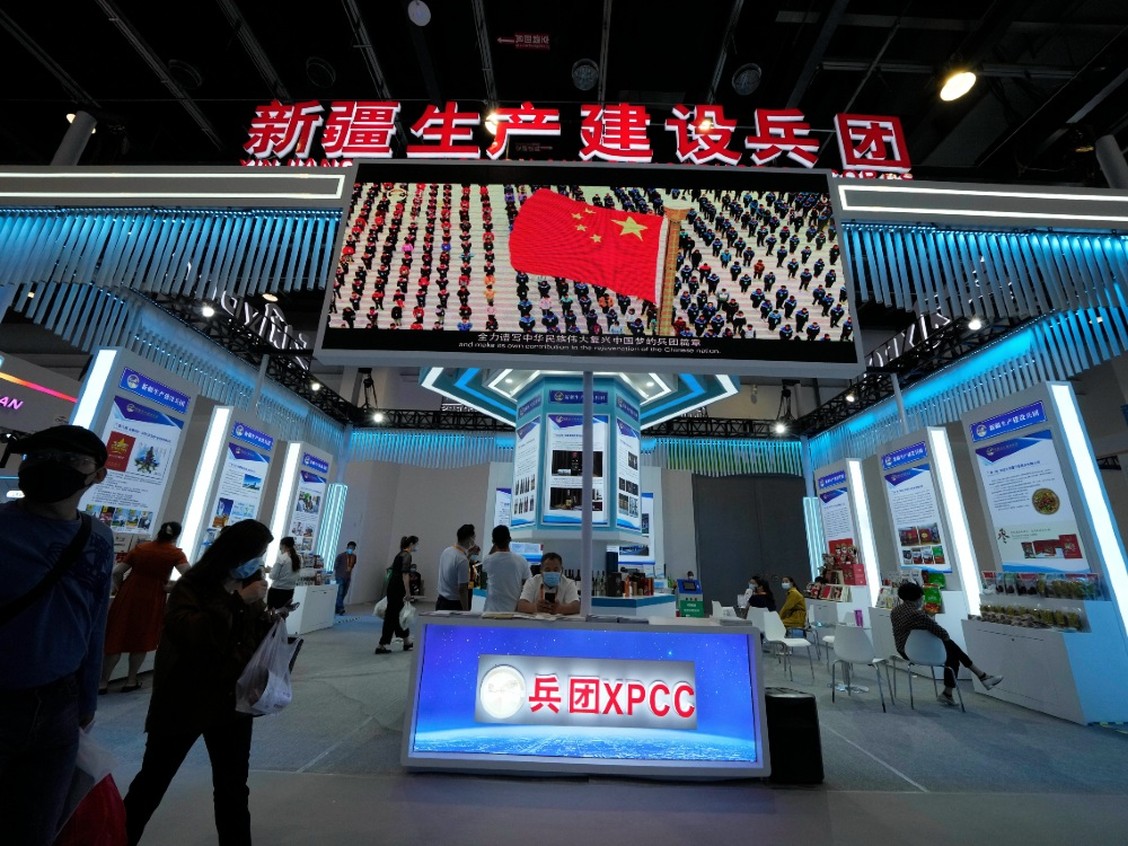
https://smartcdn.gprod.postmedia.digital/nationalpost/wp-content/uploads/2023/12/XPCC-1.jpg?quality=90&strip=all&w=1128&type=webp&sig=cqaB5mMSLHRLOhS1lDbWlA
Visitors pass a booth for the Xinjiang Production and Construction Corps at the China International Fair for Trade in Services in Beijing, Sept. 1, 2022. Photo by Ng Han Guan/AP
 
The government of Canada imposed sanctions on the Xinjiang Production and Construction Corps (XPCC) in March of 2021 after accusing it of "gross and systematic human rights violations". The Corps, in its combined role as paramilitary force, local government and business conglomerate is seen as complicit in arbitrary detention of over a million Uyghur people, involved in forced labour and forced sterilization.

That failed to stop a group of young Canadians for whom the XPCC recently acted as guide through he very region where such abuses are commonplace enough to be government policy. Twenty young Chinese Canadians went off on a "roots-seeking" trip this past summer on a ten-day trip organized by the Corps and a branch of China's influence-peddling United Front Work Department. 
 
At the conclusion of their sojourn, an official with the United Front urged the children to "tell the true, beautiful and colourful stories of Xinjiang and the Xinjiang Corps", another United Front division reported online. The trip exemplified the lengths to which Beijing will go to spread its influence globally to alter the Xinjiang Uyghur Autonomous Region narrative, in the face of documentation of harsh repression in the region.
 
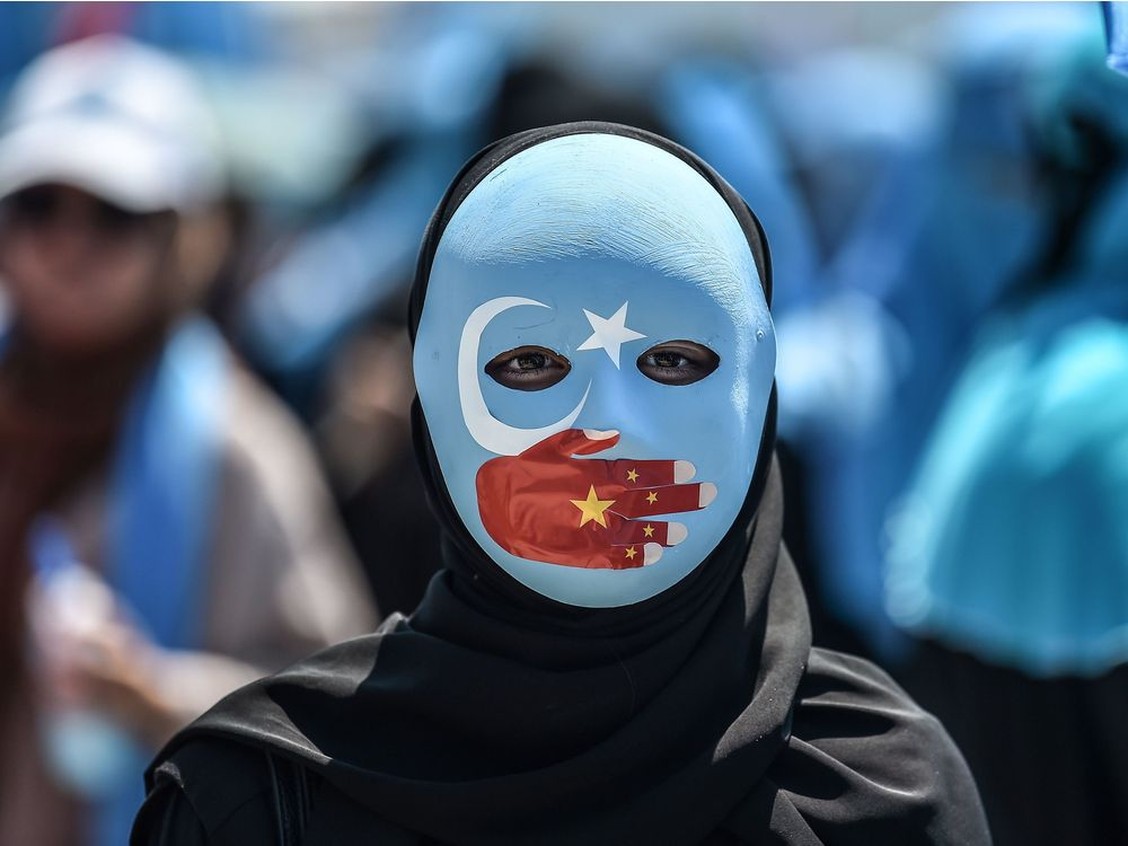
https://smartcdn.gprod.postmedia.digital/ottawacitizen/wp-content/uploads/2019/08/afp_1768eq-1.jpg?quality=90&strip=all&w=1128&h=846&type=webp&sig=Lr_ETsd5w8ATuNhoEtBQTw
The All-China Federation of Returned Overseas Chinese featured the story with accompanying photographs of the trip participants who appear in their early teens, posing in bucolic rural settings, at a dairy plant and in front of the "reclamation museum" of the XPCC. According to the article, "The campers were eager and enthusiastic, pushing the atmosphere of the closing ceremony to a climax".

The tour, according to the association's website, left the children with "a deeper understanding of China"; that as a result "their horizons have been broadened". No one can conceivably argue with that; ethnic Chinese young people having the opportunity to return to the country of their parents' and grandparents' birth, able to view a world quite different from their own in Canada. Whether as a result of that trip they will cant their impressions in favour of the CCP's repressive policies is another story.

Beijing has flooded Xinjiang, a mostly Muslim area, with Han Chinese with a view to tilting the majority status in China's favour, much as they did with Tibet, forcing their sovereignty over that once-Buddhist nation. Beijing seeks 'harmony' among its various inhabitants and total acceptance of the dominant Han Chinese rule. While in Xinjiang, the young visitors to China were introduced to Kazakh herdsmen, resettled in a "beautiful ethnic new village", according to the published article, and "felt the brilliant achievements of the cause of ethnic unity".

The usual Chinese hyperbole. The new show village reminiscent of what dictatorial regimes do, to demonstrate to critics that matters are not really as fraught as their detractors claim. Nazi Germany had invited the Red Cross to a camp where Jews were shown to be living peacefully, before the full force of its savage move to destroy Europe's Jews became full-blown in news outside of the Axis and occupied Nazi countries.

A Chinese knock-off version of Russia's USSR with totalitarian Moscow sending its octopus arms to embrace and strangle its neighbours, ransacking their autonomy as satellites orbiting Russia in a dominating constellation of captured and emasculated quasi nation-states content to be ruled by Stalin's iron hand.

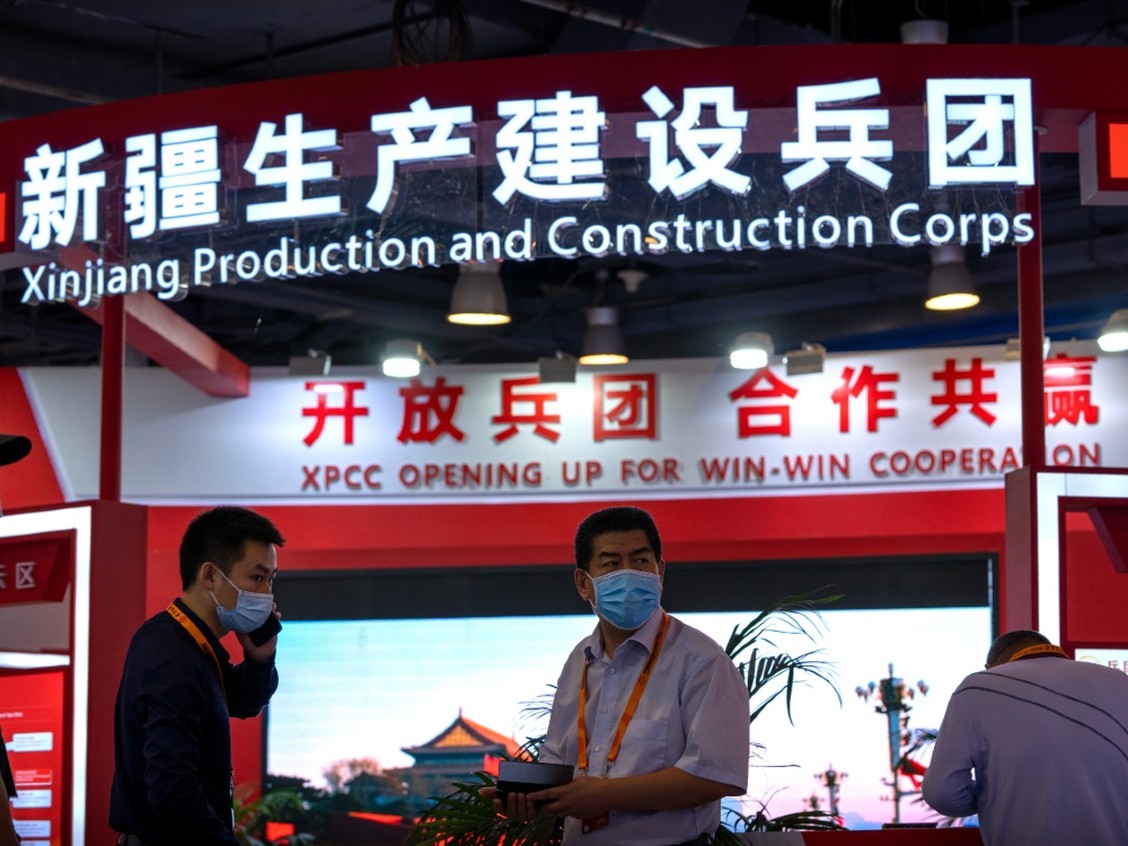
https://smartcdn.gprod.postmedia.digital/nationalpost/wp-content/uploads/2023/12/XPCC-2.jpg?quality=90&strip=all&w=1128&h=846&type=webp&sig=6fyC_7KZ06HyIvT6Fpq0OQ

Labels: , , , , ,

 
()() Follow @rheytah Tweet