Ruminations

Blog dedicated primarily to randomly selected news items; comments reflecting personal perceptions

Friday, October 16, 2020

The Hollow Thump of Justice

"If he were alive today, the Toronto Police Service would arrest Calvin Hoover for the murder of Christine Jessop."
"There are no winners in this announcement. There is no reason to celebrate. It does, however, allow us to take a major step forward in our efforts to bring justice to Christine's family."
"I'm probably one of the few around that was still here when that murder was being investigated. I can assure you that there is a great sense of relief, and it's not just in the policing profession."
"I mean, this has impacted the entire judiciary and the legal system ... I think we are all genuinely relieved that the person actually responsible for this has finally been identified."
Acting Chief of Police Jim Ramer, Toronto
Christine Jessop in an undated photo provided to police by her family. (Submitted by Toronto Police Service)
"It's not that we start with Calvin Hoover. What we do is we start with an unidentified semen stain that has a DNA profile to it. This is submitted to a lab and from that profile they build out a potential familial lineage."
"And It's from that lineage that the investigators then work downwards to be able to try to identify potential persons of interest."
Superintendent Peter Code, Toronto Police Service
Morin tried twice, convicted, later acquitted. Moe Doiron/CP 
"I am relieved for Christine's mother, Janet, and her family, and hope this will give them some peace of mind. They have been through a dreadful ordeal since they lost Christine in 1984. I am grateful that the Toronto police stayed on the case and have now finally solved it."
"When DNA exonerated me in January, 1995, I was sure that one day DNA would reveal the real killer and now it has."
Wrongly convicted, Guy Paul Morin

One of the most infamous miscarriages of justice in Canadian history occurred when Guy Paul Morin was found guilty of murder of nine-year-old Christine Jessop. Long after the fact, a public inquiry into his two trials discovered that both investigators and prosecutors relied on specious science, fabricating jailhouse informants and a subpar police investigation. In their determined zeal to name a suspect a murderer and 'solve' the horrendous murder, they sent an innocent man to prison for 18 months.
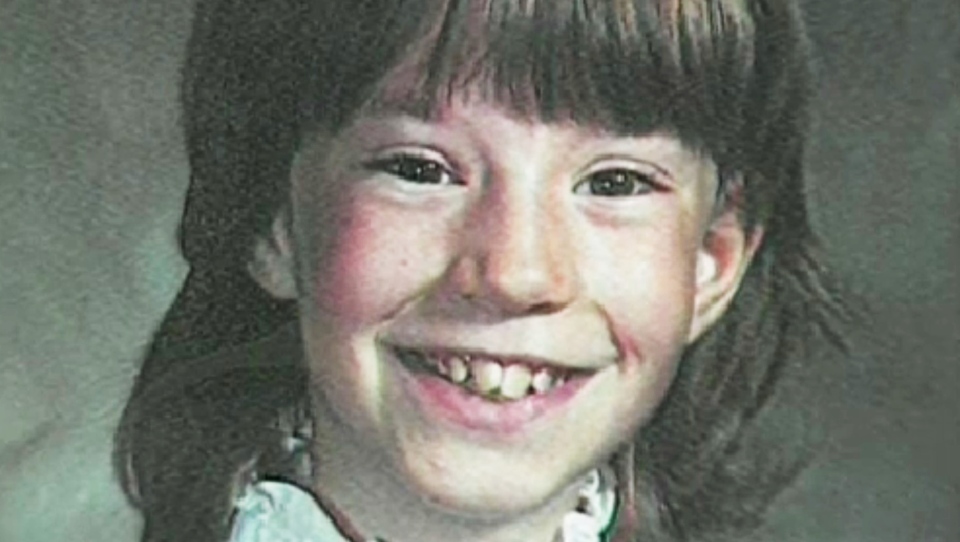
Christine Jessop
Christine Jessop
On an afternoon in early October of 1984, Christine Jessop returned home from school, she left her backpack on the kitchen counter, and this is what her mother and brother found when they arrived home from a dental appointment, expecting to see an absent Christine. Photographs of the child were posted everywhere in the province. Eventually her body was discovered on New Year's Eve, 50 kilometres from her home. The little girl had been stabbed to death. Traces of semen were discovered in her underwear.

It took many years, but finally DNA extracted from that semen proved that Guy Paul Morin, languishing in prison was not the murderer, and he was exonerated as having been wrongly convicted. He was compensated for the loss of a year-and-a-half of his life and loss of dignity to the tune of $1.2M.
This is as good an example as any why Canada long ago abolished the death penalty. On Thursday, that same DNA evidence taken from the semen sample from the little girl's underwear, led the Toronto Police Service to the real killer. And on Thursday, at an online press conference, the identity of the man  was revealed; Calvin Hoover of Toronto.
 
In 1984, Hoover was 28 years of age when he murdered the nine-year-old Christine. A known linkage has not yet been revealed, but police indicate that Hoover's wife may have worked alongside Christine's father. Cold case homicide detectives identified him with the use of a relatively new technique called genetic genealogy. He will never face justice for abducting, raping and stabbing a child to death, due to the fact that in 2015 he committed suicide. 
 
The DNA sample in the possession of Toronto police was sent to an American laboratory and received results that gave investigators the opportunity to build two genetic family trees of potential suspects. Eventually the search was narrowed to a single name. And the murderer's identity was revealed. A man with a previous criminal record not of relevance to the investigation, but as it happened the province's Centre of Forensic Sciences possessed a sample of Hoover's blood enabling detectives to match the DNA sample to the blood, concluding the investigation.

Detectives next met with Christine Jessop's mother to inform her of their findings, and that information was also given to Guy Paul Morin whom DNA evidence cleared in 1995 after he had spent 18 months in prison for a crime he did not commit and for which he claimed innocence.
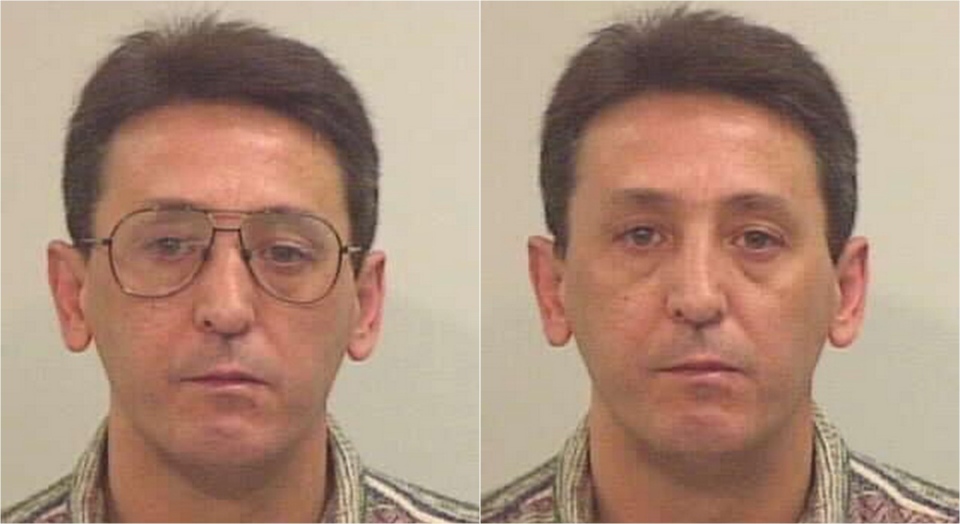
Calvin Hoover
Calvin Hoover

Labels: , , ,

Friday, November 23, 2018

Researching the Genesis of Cancer

"This is quite a fundamental piece of biology that we were unaware of."
"These mutant clones colonize more than half of your esophagus by middle age. It was eye-opening for me."
"It [helping harmless clones to outcompete the bad ones] opens up new avenues [in fighting cancer]. I think knowledge is always a weapon."
"We have found that genetic mutations associated with cancer are widespread in normal tissues, revealing how our own cells mutate, compete and evolve to colonize our tissues as we age. Given the importance of these mutations to cancer, it is remarkable that we have been unaware of the extent of this phenomenon until now."
"While the work sheds light on early cancer development, it also raises many questions about how these mutations may contribute to aging and other diseases, opening interesting avenues for future research."
Dr. Inigo Martincorena, geneticist, Wellcome Sanger Institute, Cambridge, England 
The image above shows a summary representation of what 1cm2 of normal oesophagus looks like in the 9 individuals, sorted by age. We see large differences in burden, clone sizes and even preference to mutate certain genes across patients. Dr. Inigo Martincorena

New research by a team headed by Inigo Martincorena has come up with some unexpected results, basically that cells in healthy people carry more mutations than ever thought and these include mutations in a large portion of cells felt to represent the primary drivers of cancer which incite some cells to grow faster than others, the hallmark of cancerous cells as they run amok, growing and replicating faster than the body's immune system can detect and target them. That being so, the puzzle is that despite this recognition cancers are not more common among any given population.

The reason that these mutations were not picked up and studied is simply that the tools to examine DNA were too crude. Dr. Martincorena and other researchers gradually developed new methods enabling them to detect rare mutations as DNA sequencing became more sophisticated. As they uncovered the presence of these mutations it occurred that they might also be found to be present and hidden in healthy cells. Starting with the body's largest organ, the skin, where cells are daily assaulted by the ultraviolet rays of the sun known to trigger mutations, this is where they began.

Scientists collected skin from cosmetic surgeries in eyelids in a 2015 study, gently prying away the top layers of cells (epithelial cells) from the underlying tissue. DNA from healthy epithelial cells were were isolated, then researchers sequenced 74 genes recognized as playing a role in the development of cancer. In these healthy skin cells mutations common in cancer genes were discovered with one of every four epithelial cells carrying a mutation on a cancer-linked gene, expediting the cell's growth.

Researchers speculated that this situation was peculiar to skin alone and that it was likelier that within the body where ultraviolet rays were unable to penetrate, healthy cells without key mutations such as those found in the skin would be far more likely to be present.  But when the same74 cancer-related genes in esophagus tissue were found albeit more gradual to develop in the esophagus than in skin, it became obvious this was not the case. Given time the rogue cells spread across the esophagus to form colonies of mutant cells, identified as clones.

Clones exhibit one of cancer's hallmarks; rapid growth, though they are not themselves cancerous. Ordinary aging it seems, leads to the rise of mutations leading to further speculation that their presence may represent an intrinsic physiological change related to growing old. According to Scott Kennedy, a cancer biologist at University of Washington, the study raises questions surrounding efforts to detect cancer at its earliest stages. "Just because someone has mutations associated with cancer doesn't mean actually they have a malignancy", he explained.

The conundrum facing researchers is that, given the plenitude of cancer mutations within healthy people, why is it then that cancer does not present more frequently than it does? And the answer may well be that a healthy body may be akin to an ecosystem where clones with variant mutations may arise, compete for space and resources and thus maintain a balance, none of them able to surmount the influence of the others.

That being the case, Dr. Martincorena muses, fighting cancer may one day become invested in a therapeutic response where aiding harmless clones to outcompete the bad ones becomes the first line of defence against cancer onset.

Twitter.png
Approximate number of driver mutations needed to cause cancer by area of the body   Wellcome Sanger Insstitute


Labels: , , , ,

 
()() Follow @rheytah Tweet