Ruminations

Blog dedicated primarily to randomly selected news items; comments reflecting personal perceptions

Monday, April 28, 2025

Famine in Sudan: Where Is The Organization of Islamic Cooperation?!

"I think we're in dire straits here in Sudan."
"Severe acute malnutrition happens over time. It's where kids don't get enough nutrients…They're unable to fight infections like normal."
"They're unable to utilize nutrition like normal…And the majority of children who have severe acute malnutrition end up getting an infection and dying from it." 
"There was no food [his grandmother, Neamat Abubaker, told us]. At times nothing at all, not even water."
Dr. Mohammed Fadlalla, Al-Buluk Children's Hospital, Omdurman
 
"It was ground-breaking [ a channel for direct funding]."
"The only time that USAID had ever done this was with the White Helmets [humanitarian group] in Syria." 
"[Most of the kitchens had closed. Some are trying to get food on credit from local fishermen and farmers, but very soon] we expect to see a lot of people starving."
"I think we can shore up [the emergency kitchens]. But the reality is that [private donations] are going to have to do even more now, because even if humanitarian assistance resumes, it's never going to be what it was."
"These volunteers were challenging us to work differently, and we were responding. [They are] exhausted, traumatized and underfunded [and] we were scaling up to help them".
Andrea Tracy, a former USAID official, now with Mutual Aid Sudan Coalition fund
https://assets2.cbsnewsstatic.com/hub/i/r/2025/02/06/65a698d1-941a-4da3-87d3-c1c733a4e322/thumbnail/620x384/beb18733956ab9125e8f3fe78d98de67/sudan-famine-dr-fadlala.jpg?v=8e9dede207b29c97b32974c53e32aabc
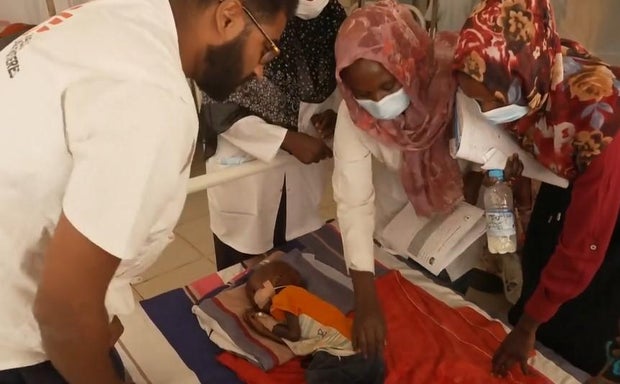
Dr. Mohammad Fadlala (left) a Cincinnati native volunteering in war-torn Sudan with the Doctors Without Borders charity, is seen treating a severely malnourished child at the Al-Buluk Children's Hospital in Omdurman, in late January 2025.   CBS News

 President Trump's decision to slash the funding available through USAID, has stark consequences in many areas of the world. None more than in countries of majority Muslim rule, where constant outbreaks of conflict impact the populations. In Sudan, the conflict is Muslim versus Muslim; the Sudanese military fighting a revolt by its former partner, once known as the horse-mounted Janjaweed Arab militias that aided the former government of Sudan in its conflict with the pastoral people of Darfur. That was a war spurred by herders using the land for pasturage, and farmers farming the land.
 
The former Janjaweed has now become the Rapid Support Forces, comprised of Islamist fundamentalists often described and for good reason, as terrorist brigades. The civil war that ensued with the Sudanese military and the Rapid Support Forces challenging one another for supremacy is a brutal, no-holds-barred conflict, and once again the people of Darfur are faced with potential genocide. Now, in Sudan, 25 million people have been internally displaced. Over half of the population now faces acute hunger.
 
In its third year, the war is considered by the United Nations to be the world's worst humanitarian crisis and aid groups agree as famine spreads throughout the land. In Darfur alone, 400,000 people were made homeless, hundreds killed as the paramilitary terrorists raid camps for displaced people. The U.S. provided $830 million last year in emergency aid to help 4.4 million Sudanese; more aid than any other nation has provided. Since the dismantling of the U.S. Agency for International Development, Khartoum's devastation was completed.
 
https://ichef.bbci.co.uk/news/1024/cpsprodpb/6c9b/live/1dc67c40-f299-11ef-a3b6-f159204ba42b.jpg.webp
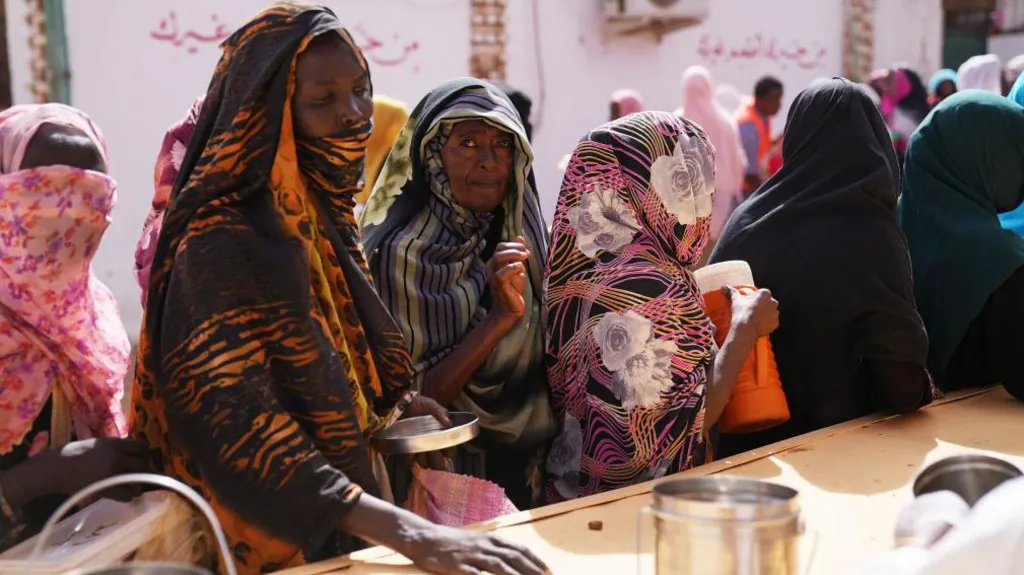
The community kitchens, like this one photographed in December, have provided a vital lifeline for many  Getty Images
 
Over 300 soup kitchens operated by Emergency Response Rooms, a network of volunteer aid workers closed. Leaving 600,000 Sudanese living in famine conditions, another eight million "on the cliff edge". According to the Trump administration, lifesaving aid is exempt from cuts. A State Department spokesperson relayed the information that four million people in Sudan, and 3.8 million refugees in neighbouring countries are given aid by the U.S. 

The question begs to be asked. Yes, the situation is horrible, dreadful, mind-numbing conditions for any population. Yet these conditions are increasingly common in many Muslim-majority countries where incapable and uncaring administrations exploit their vulnerable citizens, and focus on conflict, not civilized governance. Why is it in very particular the obligation of the West and most particularly, the United States to ensure that humanitarian aid flows to these desperate people whose governments ignore their needs and in fact, place them in these life-threatening situations?
 
Where in heaven's name is the Organization of Islamic Cooperation? A compendium of Muslim countries formed to support one another through their common Islamic roots. Surely they could organize missions, including military forces to intervene when their member-nations impose such conditions on their populations? The national collective wealth of the group alone is staggering, and why is some of that wealth not used to give humanitarian assistance to those of their member states badly in need of it? Why is it the West, democratic nations of the world, that these miserable countries at war depend on, and not their religious cohorts? 

https://api.time.com/wp-content/uploads/2025/02/trump-usaid-sudan-emergency-response-rooms.jpg?quality=85&w=1920
Tigrayan refugees collect food rations from USAID at Hamdeyat Transition Center near the Sudan-Ethiopia border in Eastern Sudan on Mar. 24, 2021. After Sudan was plunged into its own intramural war, the U.S. Agency for International Development supplied food to the grassroots self-help effort known as Emergency Response Rooms. In January, President Donald Trump ordered the aid stopped. Nariman El-Mofty—AP


Labels: , , , , , , ,

Monday, June 10, 2024

Destroying Sudan in the Name of Total Islamist Conquest

"Thousands of people have been killed since fighting erupted just over a year ago between the Sudanese Army and the Rapid Support Forces, a powerful paramilitary group that is the latest iteration of the janjaweed [devils on horseback], which was central to the ethnic cleansing in Darfur in the 2000s. The R.S.F. helped to crack down on pro-democracy demonstrations in 2019 and, with its general Mohamed Hamdan ... was part of a power-sharing regime that fell apart in April."
"Now it is at war with its former partners in government, and the Sudanese people have become collateral damage. A report from Human Rights Watch in May detailed the R.S.F.'s ethnic-cleansing campaign against the Masalit and other non-Arab people in West Darfur."
"There have been other reports of summary executions, torture and rape. Across the country more than 11 million people have been displaced. Homes have been occupied and looted. Museums have been targeted and their contents probably sold, destroyed or just taken."
"And yet the international community still stands by. Attention is rarely paid to Sudan, and much of what I read reduces the conflict to a power struggle between two generals or a migration problem for Europe. Perhaps this is why R.S.F. fighters feel so free to broadcast their crimes on social media."
Dena Ibrahim, Sudanese national in self-exile abroad
SUDAN-CONFLICT
Objects are scattered in the yard of house in Omdurman, central Sudan, May 30, 2024, that was damaged amid fighting in the civil war that has raged for more than a year between the regular military and the paramilitary Rapid Support Forces. AFP/Getty
 
In this barbaric version of a civil war in Sudan, civilian deaths and the aura of terrorism are not  unfamiliar to those who had previously suffered both at the hands of the military and its accomplice in violent persecution now known as the Rapid Support Forces. Back when the black farming community of Darfur was targeted by the Arab-led government of Omar al-Bashir and his horsed henchmen the conflict arose from tensions between agriculturalists and herders competing for scarce land resources.

Now the new war that is tearing the country apart is one of dominance by a fundamentalist Islamism that spurns any government direction toward democracy for its people. Across the country people have been dispossessed of their land holdings, of their homes, of their ability to earn a living, while scarce basic necessities of life including famine sit heavily on the land. Homes are being pillaged, their owners moving on hoping to survive the marauders who loot anything of value.
 
Hospitals have been destroyed, millions of people are facing the threat of dislocation and death. In the year-old war between the Sudanese military and the transformed janjaweed, an estimated 2.5 million people are said to be in danger of starvation. Half the population of fifty million people are in dire need of humanitarian assistance. Non-Arab communities are the targets of the dominant Arab half of the population, finding common cause with the Rapid Support Forces.
 
https://dims.apnews.com/dims4/default/fbe9680/2147483647/strip/true/crop/3000x1999+0+126/resize/980x653!/format/webp/quality/90/?url=https%3A%2F%2Fassets.apnews.com%2F2e%2Fe6%2Fd19204950b9799b959a889911e84%2F1cb08aff25434571b22e642b68d9d67b
Residents displaced from a surge of violent attacks squat on blankets and in hastily made tents in the village of Masteri in west Darfur. Paramilitary forces and their allied militias fighting to take power in Sudan carried out widespread ethnic killings and rapes while taking control of much of western Darfur that may amount to war crimes and crimes against humanity. (Mustafa Younes via AP, File)
 
A country that was finally on its way to achieving a measure of democracy for its people, has been set back on its heels, its ancient heritage in tatters as R.S.F. fighters loot the country's museums, opening ancient caskets with their 3,000-year-old corpses, The Sudanese National Museum rebuilt with aid by UNESCO and the National Corporation for Antiquities and Museums, home to artifacts such as steles of ancient warrior queens and 13th-century Christian frescoes has been looted of its historic treasure. 
 
University libraries and archives have been ransacked and torched. Summary executions complete a picture of violent chaos. Over 14,000 Sudanese have died in this year of civil war. Its brutality has some similarities to the still-ongoing conflict in Syria where the regime of Bashar al-Assad continues to target his Sunni Syrian population, some 400,000 of whom have been killed. An ongoing civil war that Russian warplanes aid the Alawite regime with in exchange for a Russian deep sea port. Russia awaits the same opportunity with Sudan.
 
Over ten million Sudanese have been internally displaced. Another two million have fled to neighbouring countries for haven. Charges of war crimes and crimes against humanity are once again being seen in Darfur. Crimes of sexual violence have become an integral part of the conflict, victimizing women and children. A main hospital in Darfur was looted, its closure forced, according to an international humanitarian group. 
 
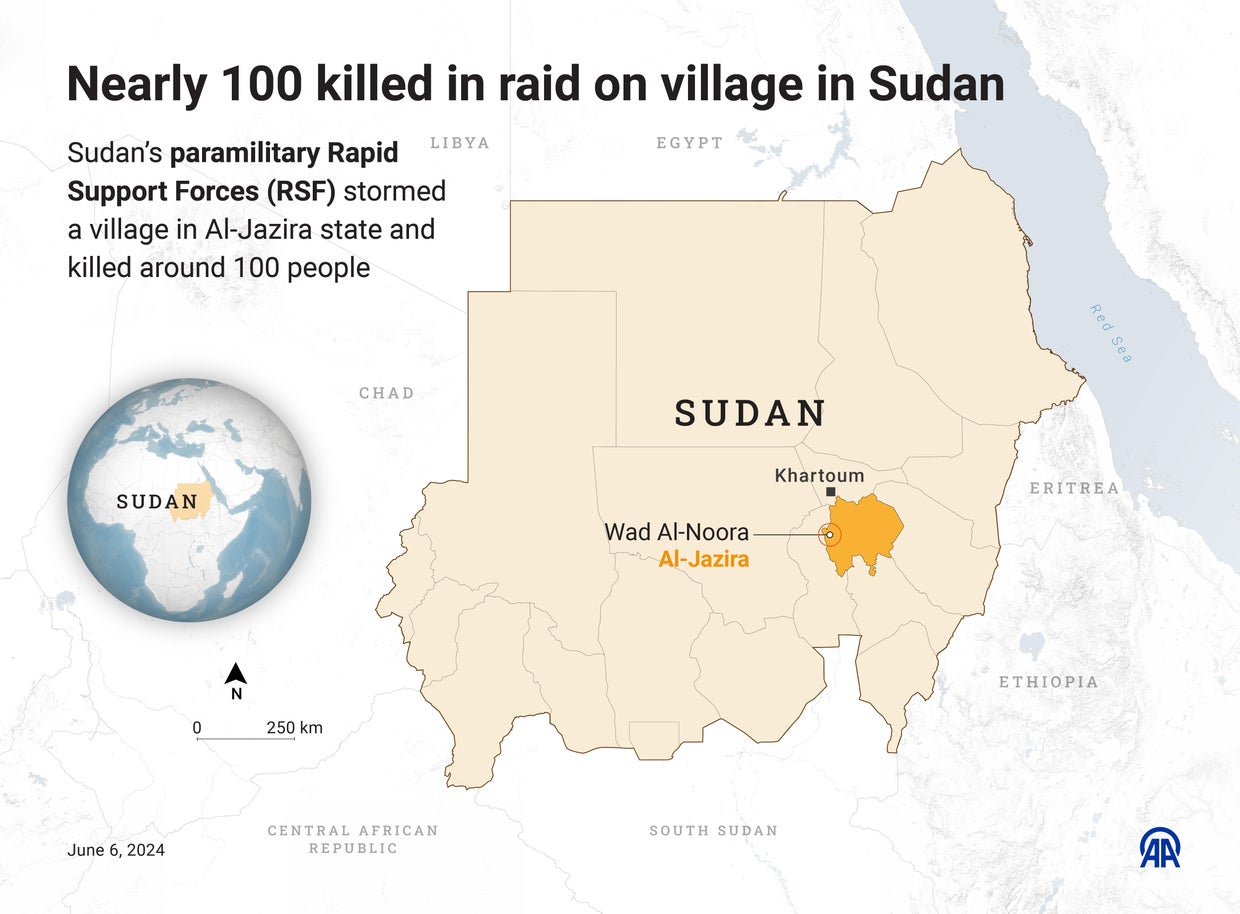
According to Doctors Without Borders, South Hospital in al-Fasher, the capital city of North Darfur province was attacked by the Rapid Support Forces on Sunday, which opened fire on medical staff and patients. Local media published images showing abandoned wards and corridors, patient beds and medical equipment damaged, blood staining the floors. The Military fought the RSF and forced their withdrawal from the hospital.https://assets2.cbsnewsstatic.com/hub/i/r/2024/06/07/f61d50b0-aed2-419e-b62f-921a82750985/thumbnail/1240x914/0725737d19c1205d22bf150066d51234/sudan-map-wad-al-noora-2155635057.jpg?v=e6a7e661b3d1c604b3ae2bec0d66302a
 

Labels: , , ,

 
()() Follow @rheytah Tweet