Ruminations

Blog dedicated primarily to randomly selected news items; comments reflecting personal perceptions

Friday, April 12, 2024

Singing From a Different Hymnal

"Media Relations officers were asked to ensure that internal notifications were flagged and shared with provincial headquarters prior to things being issued so that additional notifications could be completed."
"No one has been restricted from addressing matters in their jurisdiction and pre-existing Media Relations protocols have not changed."
"[In fact, the guidance indicated that we] commit to be available to review and ensure timely feedback as it is not our intention on delaying communication efforts."
Staff Sgt.Kris Clark, senior media relations officer, Royal Canadian Mounted Police E Division statement

"Organized crime groups are actively involved in the redistribution of safe supply and prescription drugs."
"It might mean how we regulate our safe supply might need a sober second glance."
Cpl. Jennifer Cooper, RCMP Prince George detachment
The front of a pharmacy, with text reading 'Third Avenue IDA Pharmacy'.
RCMP have arrested a suspect who was accused of standing outside the IDA pharmacy in Prince George and trading illicit drugs for safe supply prescription pills. (Andrew Kurjata/CBC)

A leaked memo emerged where Mounties in British Columbia have been instructed to step carefully around "hot button issues", in the wake of RCMP in British Columbia continually reporting the phenomena of government-distributed "safer supply" opioids showing up in drug busts. "It is very clear we are in a pre-election time period and the topic of 'public safety' is very much an issue that governments and voters are discussing", the email of March 11 from HQ of E Division, B.C. branch of the RCMP reads.

Thus the 150 detachments in the province of the RCMP were instructed not to directly address such potentially controversial issues. Best practice henceforth would be rout enquiries from journalists and government communications staff through to central headquarters for response. Drug seizures and drug decriminalization to be considered on a list of "hot button issues". Controversies continue to erupt related to the province's commitment to "safer supply", at the same time that it has decriminalized simple possession of illicit drugs.

At the turn of the year, provincial RCMP detachments had reported seizures of black-market hydromorphone tablets initially distributed by the government of British Columbia ostensibly representing a safer supply. Consequentially, in northeastern B.C., RCMP with the Prince George division reported hydromorphone tablets seized, along with various street drugs like cocaine and methamphetamine and prescription drugs  such as painkiller and anti-convulsant gabapentin.
 
A police seizure showing money and drugs on a table.
Prince George RCMP seized prescription drugs, suspected methamphetamine and fentanyl and a small amount of cash from the suspect's residence after a 10-day surveillance operation. (Prince George RCMP)

Police in Campbell River on Vancouver Island, a month earlier reported seizure of 3,500 hydromorphone pills identifying them as having been diverted into the black market by "a well-organized drug trafficking operation". Reports that appeared to contradict the consistent claim of authorities in British Columbia that "diversion" did not present as a major problem; alternately that it wasn't occurring, to begin with.

British Columbia boasted becoming the world's first jurisdiction to launch the Safer Opioid Supply program in 2020, a plan to dispense prescribed recreational opioids, in the form of hydromorphone pills; an alternative to addicts relying on the "toxic illegal drug supply". Interviews with over a dozen addiction-medicine specialists in May 2023 by investigative journalist Adam Zivo, for the National Post, concluded that addicts routinely obtain safer supply, then turn around to provide it for cash to the black market.

The obvious result was that the "toxic illegal drug supply" was in fact being subsidized by the illegal funding resulting from reselling safer supply. The black market was flooded with inexpensive hydromorphone. A search of the  website reddit by Adam Zivo resulted in the appearance of dozens of posts boasting diverted "dillies" for sale. B.C. chief coroner Lisa Lapointe, herself an enthusiastic advocate for safer supply, publicly declared in June of 2023 that it was "not true" that diversion was taking place, but was the result of "increasingly polarized rhetoric that is not informed by evidence"
 
RCMP coincidentally in British Columbia promulgated an official statement authorized by its assistant commissioner that there "is currently no evidence to support a widespread diversion of safer supply drugs in the illicit market in B.C. or Canada", the very day the "hot button issues" memorandum had been sent out. "We've increased awareness to our police officers in order to better identify cases where safer supply drugs may be present within their investigations", the assistant commissioner clarified. 
 
https://i.cbc.ca/1.6831678.1683159536!/cumulusImage/httpImage/image.jpg_gen/derivatives/16x9_780/overdose-statue.jpg
A statue commemorating people who have died of drug overdoses is pictured at Seaforth Peace Park in Vancouver on in April 2022. B.C implemented a safer supply program in 2020 in an attempt to address the toxic drug crisis in the province. (Ben Nelms/CBC)
"Someone comes out of a pharmacy with their prescribed safe supply, and is met head on with a drug dealer offering them illicit drugs in exchange for those drugs to be then distributed into the community."
"It's pretty evident this is exactly how this problem has become a problem in British Columbia."
Elenore Sturko, ex-RCMP officer, currently B.C. United opposition critic for mental health and addiction

Labels: , , , , ,

Thursday, April 11, 2024

That Critical Health Profession

"[Open drug use and weapons have become] a widespread issue of significant magnitude [in British Columbia hospitals]."
"[These problems rose to spiralling heights once drugs were decriminalized last year by the British Columbia government.]"
"Before, there would be behaviours that just wouldn't be tolerated, whereas now because of decriminalization, it is being tolerated."
Adriane Gear, president, B.C. Nurses Union
 
"[Patients should be allowed to use illicit substances in their rooms; staff should refrain from calling security or the RCMP to check patients' belongings, or to remove personal items] even if there is a knife or something considered as a weapon under four inches long." 
B.C. Northern Health Authority memo to hospital health workers

"[While non-smoking policies exist, they are simply not being enforced and nurses are fearful of reporting drug exposure and violence because] when they have reported, nothing has changed."
Laura Martin, Victoria General Hospital nurse, union steward
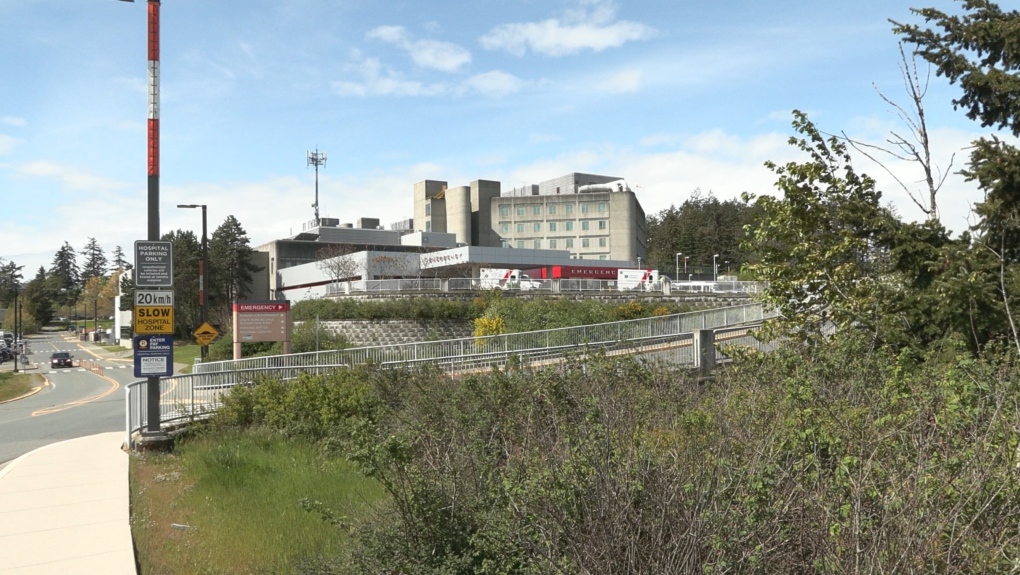
https://bc.ctvnews.ca/content/dam/ctvnews/en/images/2024/4/10/victoria-general-hospital-1-6841448-1712769963867.jpg
Victoria General Hospital where the BC Nurses union have reported exposure to harmful illicit drugs used by patients  -- CTV News 
 
British Columbia's Health Minister Adrian Dix speaks of the memo -- compelling nurses in the province to have a blind eye to illicit drug, alcohol and tobacco use by patients in hospitals where they serve the 'public interest' in providing health care to a wide variety of provincial residents -- as being 'outdated'. Troubled patients, mong whom are drug addicts and alcoholics and individuals with criminal records for whom the law doesn't apply as stringently in a curtsy to their ancestry, as it would to most residents. Patients from a wide strata of society; those who observe the social contract and those that flout it.

Yet though the memorandum to hospital staff which he negates and refers to as having been poorly written, continues to authorize hospital staff to tolerate drugs and weapons at their workplaces. Nurses publicly describe having to walk through thick plumes of smoke, toxic with fentanyl while open smoking of drugs by patients is tolerated. One nurse cites having been warned of the potential of having been contaminated by drugs exposed to at her workplace; she should avoid thoughts of breastfeeding her baby. Despite this reality the provincial Health Minister claims drug use and weapons are prohibited in hospitals.

As for non-smoking hospital policies, they exist, but are not enforced since nurses hesitate to report infractions. Lily, a nurse of long experience, describes elderly patients sharing rooms with a number of meth addicts constantly filling the air with toxic fumes in a hospital that exhibits reluctance to usher drug users out of the facilities. This, despite that some addicts in fits of psychosis or withdrawal "beat the s--t" out of elderly and disabled patients.

This nurse testifies as having been informed by hospital administrators that as long as patients behaved politely, forbore from issuing threats, it was fine for them to possess knives.  Furthermore, drug abusers at the hospital where Lily works, routinely molest nurses, grabbing at their breasts, subjecting them to sexually inappropriate comments. When nurses complain they are rewarded with "absolutely zero" support.

"We're losing health-care professionals", she said. This, in a country that is notoriously short of hospital staff. During the COVID epidemic many nurses working under duress at long overtime periods, taking up the slack for those who contracted the coronavirus themselves, decided the quality of their lives had suffered along with that of their families to a degree they could no longer commit to nursing. Now, with the pampering of addicts and petty criminals in the hospital system where 'critical race theory' and DEI have their impact, young nurses are re-thinking the profession they thought would be their preferred life-work.

https://bc.ctvnews.ca/content/dam/ctvnews/en/images/2024/4/10/victoria-general-hospital-1-6841448-1712769963867.jpg
A 2023 WorkSafeBC investigation of Vancouver Island hospitals including Victoria General Hospital found “several symptomatic worker exposures to illicit substances.” Health Minister Adrian Dix Monday announced a task force to help help create province-wide standards in response to rising reports of illicit substances being used in hospitals. (Black Press Media)
"[Drug-addicted patients openly smoke meth and fentanyl in their rooms] every day [patients inject heroin or become drunk, no consequences while dealers traffic illicit substances in the hospital hallways] right in front of everyone."
"We're told that these are their belongings -- all the drugs they have in their rooms. And if we touch anything we can be charged with theft. It's insanity."
"[Nurses are expected to provide harm-reduction services to patients, including pouring alcohol, preparing patients' meth and crack pipes.] We've been told to give them whatever they want. So they'll come and ask for 20 pipes -- because they go out on the street and sell them.  Everyone knows [patients resell their free drug paraphernalia and nurses cannot withhold supplies]."
"I've been threatened with my life. We've absolutely lost control. They threaten us and we're expected to coddle them and kiss their ass."
Lily (pseudonym), Vancouver Island nurse


Labels: , , ,

 
()() Follow @rheytah Tweet