Ruminations

Blog dedicated primarily to randomly selected news items; comments reflecting personal perceptions

Thursday, September 21, 2023

Cognitive Dementia In Household Pets

"We all know that Alzheimer's disease and other dementias are among the most common conditions humans can encounter as they age."
"What people don't realize is that our pets -- dogs and cats -- can get it too, and it's probably also very common."
"We are also trying to understand when dogs who are healthy agers become dogs afflicted by dementia."
Stephanie McGrath, associate professor of neurology, College of Veterinary Medicine and Biomedical Sciences, Colorado State University 

"This is highly, highly under-reported. Owners need to realize signs might be mild or subtle ..."
"Teach your dogs a few new commands and reward them [enrich their environment]."
"Give them brain enrichment toys. Put treats in toys that roll around, so they have to find them."
"Keep up their social interaction, either with other pets or humans, and play with them." 
Gary Landsberg, veterinary behaviourist, veterinary scientific director, CanCog animal health research organization
Pet Hospice Providers
"With cats, there is excessive vocalization and disorientation and changes in interaction with humans or other animals, such as hissing and swatting."
"Some cats are up all night and vocalizing. They go outside the litter box, or can't find it."
Starr Cameron, clinical associate professor, small animal neurology, Madison School of Veterinary Medicine, University of Wisconsin
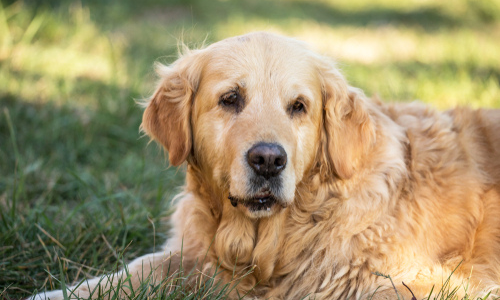
Senior Dog — Niles, OH — Animal Medical Care Center & Cat Hospital
"Dogs are good natural models. They can develop deficits similar to humans."
"Also, they can be studied more easily because they have shorter life spans than humans and can show subtle signs as early as age seven."
"these insights can help in learning more about the disease in humans."
"Regardless, exercise is good for everything, so it's safe advice that giving your dog exercise would be good on a lot of levels."
Evan MacLean, director, Arizona Canine Cognition Center, University of Arizona
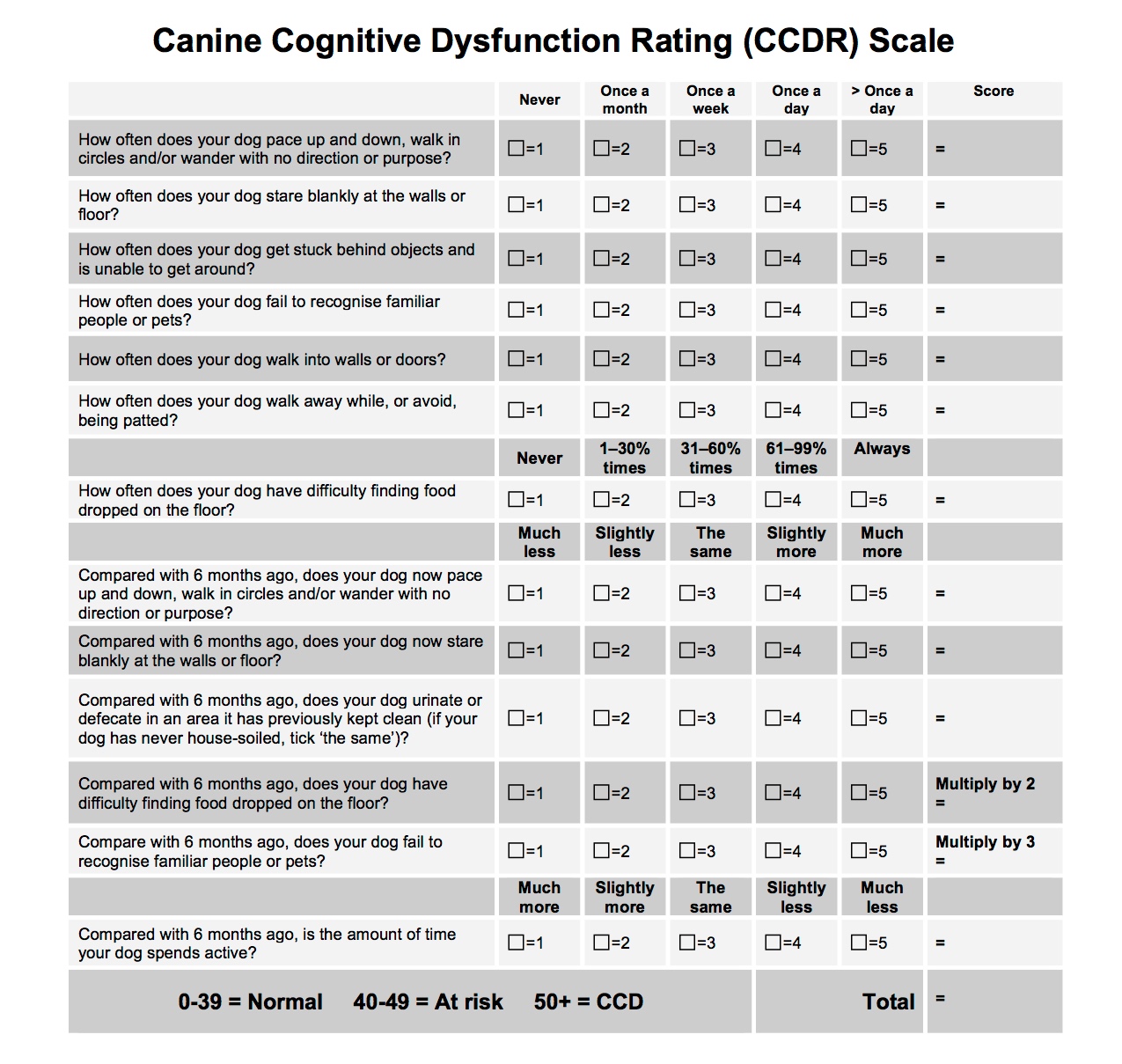
According to one study, estimates range from 14 to 35 percent of the pet dog population aged eight and older that tend to succumb to dementia. Close to one third of cats of age 11 to 14, and 50 percent of cats 15 years of age and older are affected by dementia, numbers that many experts believe to be under-counted. Signs of dementia in household pets may include:
  • Confusion and disorientation;
  • Forgetting routines such as house training or use of a litter box;
  • Changes in sleep-wake cycles;
  • Among cats, an increase in vocalization; more crying or howling
Some health conditions, among them arthritic pain, cancer, hearing or vision loss, hypertension and chronic kidney disease can produce symptoms mimicking dementia in pets. Existing physical ailments and dementia can occur concurrently. Pet dementia is coming under the study microscope for the purpose of giving coping aid to humans, enabling them to manage their companion animals' condition. As well, the hope is that whatever is discovered about deteriorating brain health in animals may lead to better understanding of human dementia.

Post-death  brain tissue from pets is being analyzed by researchers, with one study comparing samples from dogs who had dementia with those who were spared, for a better understanding of "how the dog brain ages", explained Dr. McGrath, conducting the study. Blood and spinal fluid samples are also being studied to understand whether animals and humans with dementia share similar specific proteins or biomarkers indicative of cognitive decline.
https://images.squarespace-cdn.com/content/v1/5b9d7475ee17598034564bb6/1552493179067-RWLLJYSI1RA43TMONL16/CCDR-scale-revised.jpg?format=2500w
 
Research has discovered evidence of beta-amyloid plaques and tau tangles in aging dogs' and cats' brains. A hallmark of human Alzheimer's disease is an abnormal build-up of both these naturally-occurring proteins, which can disrupt nerve cell function. Those who suspect cognitive decline in a pet are encouraged to consult their veterinarian to make certain that other medical conditions can be ruled out. Medication, supplements, diet or other interventions may be prescribed for their usefulness in coping.

Reducing stress is advised, with the use of special stress-reducing plug-in diffusers, available for both canines and felines. Certain foods may be advised to support brain health. Improving a pet's environment through the complications of emerging dementia can include putting down a yoga mat or area rug on a slippery floor to enable better traction. Ramps can be usefully put in place to avoid having to leap or to climb steps.

Whether cognitive decline can be prevented in pets, is unknown. Experts believe that just as it does in humans with dementia, exercise may be of help.

https://www.washingtonpost.com/wp-apps/imrs.php?src=https://arc-anglerfish-washpost-prod-washpost.s3.amazonaws.com/public/PAPNSRO6VRARXJNGJ5WMPKT2BM.jpg&w=916
Illustration by George Wyleso
"[Keep pets on a routine, as] they may have trouble coping with changes."
"This is typically a chronic slowly progressive disease, with lots we can do"
"There is no reason why a pet with cognitive dysfunction can't enjoy a good quality of life for some years."
Margaret Gruen, associate professor, behavioral medicine, College of Veterinary Medicine, North Carolina State University

Labels: , , , , ,

Sunday, September 05, 2021

How COVID Responses Impact Feline Health

Matted Cat Hair: How to Handle It
"We have seen a rise in blocked bladders in male cats and cystitis in male and female cats during the lockdowns and coming out of lockdown."
"Blocked bladder is a life-threatening condition and if you notice your male cat straining to urinate or not urinating or urinating in strange places around the house or blood being present, then contact your vets as soon as possible."
Debbie James, veterinary nurse, Vet's Klinic, Swindon, England
Worldwide, people are stressed with the necessity to change the ordinariness of their lifetime habits, taking everything casually, following the methods they've always relied upon before a life-threatening virus suddenly swooped down purportedly from a live animal market in Wuhan, China, to change human behaviour into life-protection mode. Lockdowns, mask-wearing, avoidance of personal contact, strained relations, loneliness, a new kind of privation have all helped to protect people from infection, but has also frayed nervous sensibilities.

Evidently other creatures are also being affected by a change in human lifestyles where people have been convinced by health authorities that the ultimate protection is prolonged sequestration in their homes. Cats too, living in households where suddenly the quiet and peace of a day when all human inhabitants are absent at work or at school, have seen changed routines as people remain indoors to disturb the peace and serenity that their household cats have so long been accustomed to enjoying, welcoming the presence of human residents for a mere proportion of the day, under normal circumstances.

Life-threatening illnesses are descending on domestic cats, according to a warning from veterinarians as an additional fallout effect of the global coronavirus pandemic. There has developed a steep rise in conditions such as blocked bladders among cats, blamed by experts on upheavals to daily routines as people occupied their homes full-time during lockdowns.
"It would appear that some cats may have become more stressed in their home, during the pandemic."
"Changes to a cat's routine always has the potential to cause stress as they are creatures of habit."
"As well as this, 'safe' or 'quiet' places that a cat could have escaped to in the home previously may have been re-purposed as a home office."
Daniel Cummings, Cats Protection behaviour officer, feline welfare agency, Britain
 
The sudden presence of boisterous children at home instead of being at school during lockdowns has particularly stressed cats. Including unfamiliar sounds and activities suddenly swamping the household with everyone at home and banging about. Owners, according to the Cats Protection charity, should be alert to symptoms of chronic stress or depression in cats.
 
Cats that appear to be more withdrawn, their haircoats less healthy in appearance, changes to eating, drinking and toilet patterns, as well as new habits of pacing or restlessness and exhibitions of abnormal behaviours. Cat stress-reduction techniques such as placing new hiding areas in the home, avoiding handling the cats more than usual, making use of pheromone diffusers; maintaining home routine as predictably as possible, under the circumstances. 

"Some may enjoy human companionship and time with people more than others", advised clinical animal behaviourist Sarah Tapsell. The key is to introduce household routine changes more gradually, particularly on returning full-time to the office; giving due consideration that less sociable cats may become agitated by abrupt alterations in their humans' working patterns.

A cat peering around a corner.

Labels: , , , ,

 
()() Follow @rheytah Tweet