Ruminations

Blog dedicated primarily to randomly selected news items; comments reflecting personal perceptions

Thursday, September 21, 2023

Cognitive Dementia In Household Pets

"We all know that Alzheimer's disease and other dementias are among the most common conditions humans can encounter as they age."
"What people don't realize is that our pets -- dogs and cats -- can get it too, and it's probably also very common."
"We are also trying to understand when dogs who are healthy agers become dogs afflicted by dementia."
Stephanie McGrath, associate professor of neurology, College of Veterinary Medicine and Biomedical Sciences, Colorado State University 

"This is highly, highly under-reported. Owners need to realize signs might be mild or subtle ..."
"Teach your dogs a few new commands and reward them [enrich their environment]."
"Give them brain enrichment toys. Put treats in toys that roll around, so they have to find them."
"Keep up their social interaction, either with other pets or humans, and play with them." 
Gary Landsberg, veterinary behaviourist, veterinary scientific director, CanCog animal health research organization
Pet Hospice Providers
"With cats, there is excessive vocalization and disorientation and changes in interaction with humans or other animals, such as hissing and swatting."
"Some cats are up all night and vocalizing. They go outside the litter box, or can't find it."
Starr Cameron, clinical associate professor, small animal neurology, Madison School of Veterinary Medicine, University of Wisconsin
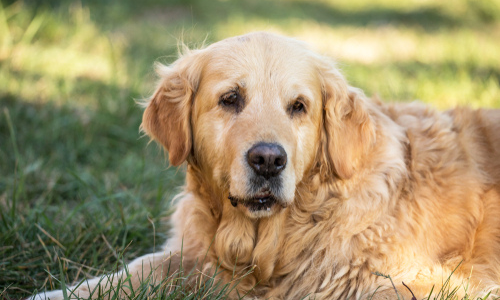
Senior Dog — Niles, OH — Animal Medical Care Center & Cat Hospital
"Dogs are good natural models. They can develop deficits similar to humans."
"Also, they can be studied more easily because they have shorter life spans than humans and can show subtle signs as early as age seven."
"these insights can help in learning more about the disease in humans."
"Regardless, exercise is good for everything, so it's safe advice that giving your dog exercise would be good on a lot of levels."
Evan MacLean, director, Arizona Canine Cognition Center, University of Arizona
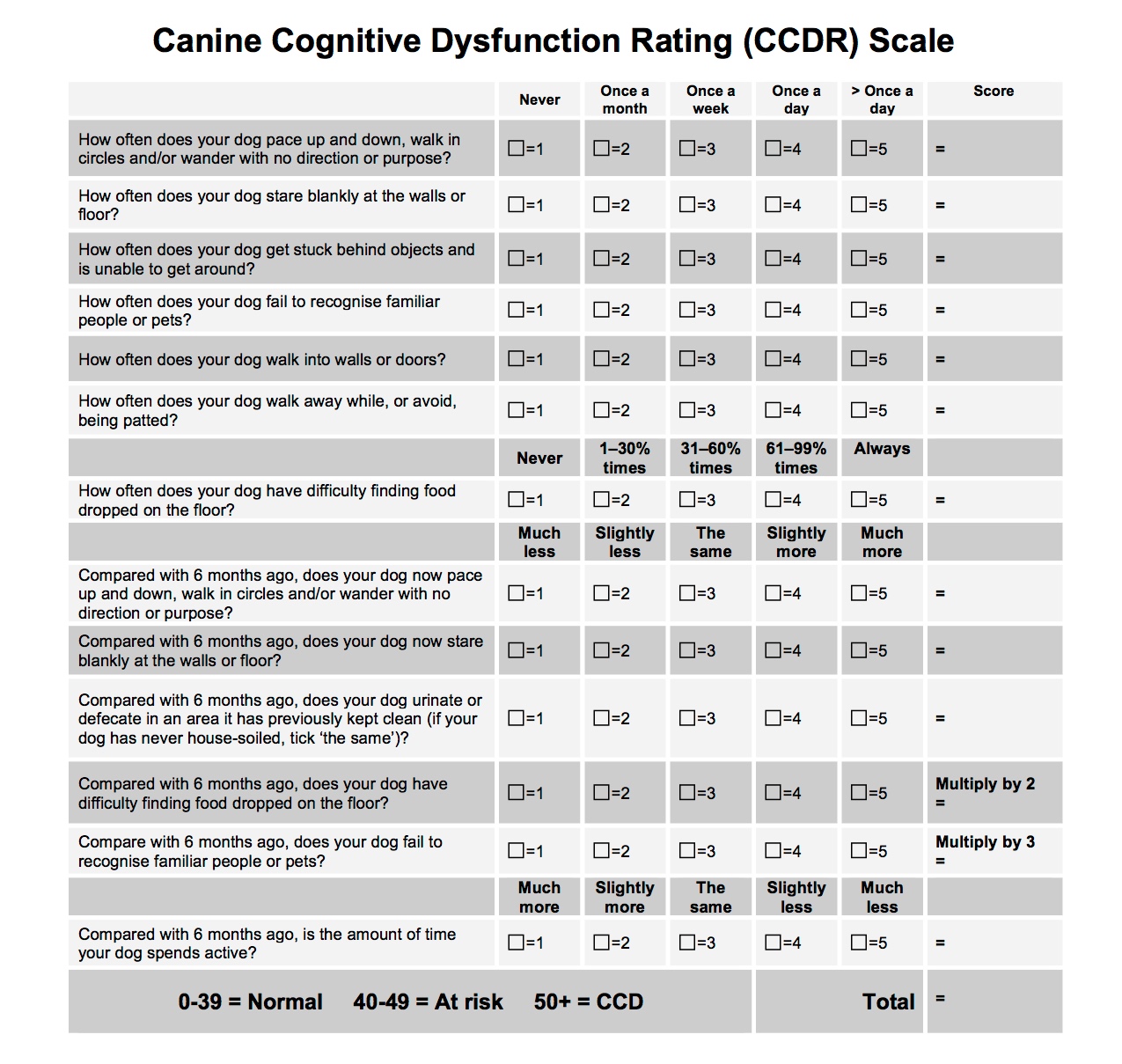
According to one study, estimates range from 14 to 35 percent of the pet dog population aged eight and older that tend to succumb to dementia. Close to one third of cats of age 11 to 14, and 50 percent of cats 15 years of age and older are affected by dementia, numbers that many experts believe to be under-counted. Signs of dementia in household pets may include:
  • Confusion and disorientation;
  • Forgetting routines such as house training or use of a litter box;
  • Changes in sleep-wake cycles;
  • Among cats, an increase in vocalization; more crying or howling
Some health conditions, among them arthritic pain, cancer, hearing or vision loss, hypertension and chronic kidney disease can produce symptoms mimicking dementia in pets. Existing physical ailments and dementia can occur concurrently. Pet dementia is coming under the study microscope for the purpose of giving coping aid to humans, enabling them to manage their companion animals' condition. As well, the hope is that whatever is discovered about deteriorating brain health in animals may lead to better understanding of human dementia.

Post-death  brain tissue from pets is being analyzed by researchers, with one study comparing samples from dogs who had dementia with those who were spared, for a better understanding of "how the dog brain ages", explained Dr. McGrath, conducting the study. Blood and spinal fluid samples are also being studied to understand whether animals and humans with dementia share similar specific proteins or biomarkers indicative of cognitive decline.
https://images.squarespace-cdn.com/content/v1/5b9d7475ee17598034564bb6/1552493179067-RWLLJYSI1RA43TMONL16/CCDR-scale-revised.jpg?format=2500w
 
Research has discovered evidence of beta-amyloid plaques and tau tangles in aging dogs' and cats' brains. A hallmark of human Alzheimer's disease is an abnormal build-up of both these naturally-occurring proteins, which can disrupt nerve cell function. Those who suspect cognitive decline in a pet are encouraged to consult their veterinarian to make certain that other medical conditions can be ruled out. Medication, supplements, diet or other interventions may be prescribed for their usefulness in coping.

Reducing stress is advised, with the use of special stress-reducing plug-in diffusers, available for both canines and felines. Certain foods may be advised to support brain health. Improving a pet's environment through the complications of emerging dementia can include putting down a yoga mat or area rug on a slippery floor to enable better traction. Ramps can be usefully put in place to avoid having to leap or to climb steps.

Whether cognitive decline can be prevented in pets, is unknown. Experts believe that just as it does in humans with dementia, exercise may be of help.

https://www.washingtonpost.com/wp-apps/imrs.php?src=https://arc-anglerfish-washpost-prod-washpost.s3.amazonaws.com/public/PAPNSRO6VRARXJNGJ5WMPKT2BM.jpg&w=916
Illustration by George Wyleso
"[Keep pets on a routine, as] they may have trouble coping with changes."
"This is typically a chronic slowly progressive disease, with lots we can do"
"There is no reason why a pet with cognitive dysfunction can't enjoy a good quality of life for some years."
Margaret Gruen, associate professor, behavioral medicine, College of Veterinary Medicine, North Carolina State University

Labels: , , , , ,

Thursday, March 19, 2020

Dogs' Residual Ancestral Traits

"The dog rhinarium (naked and often moist skin on the nose-tip) is prominent and richly innervated, suggesting a sensory function. Compared to nose-tips of herbivorous artio- and perissodactyla, carnivoran rhinaria are considerably colder. We hypothesized that this coldness makes the dog rhinarium particularly sensitive to radiating heat. We trained three dogs to distinguish between two distant objects based on radiating heat; the neutral object was about ambient temperature, the warm object was about the same surface temperature as a furry mammal. In addition, we employed functional magnetic resonance imaging on 13 awake dogs, comparing the responses to heat stimuli of about the same temperatures as in the behavioural experiment. The warm stimulus elicited increased neural response in the left somatosensory association cortex. Our results demonstrate a hitherto undiscovered sensory modality in a carnivoran species."
Abstract, Dogs can sense weak thermal radiation, Scientific Reports

figure1
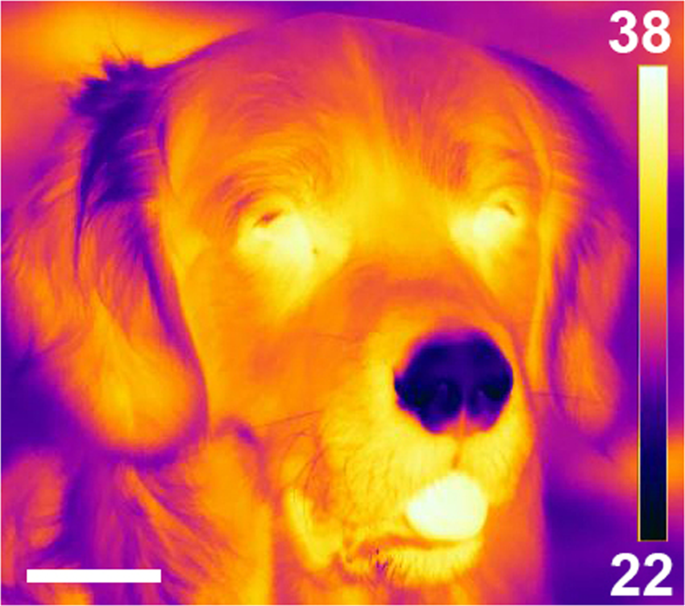
Thermograph of a dog in the shade at 27 °C ambient temperature. The colour scale on the right is in °C and can be used to read out approximate temperatures. Note the warm tongue and the cold rhinarium (hairless nose tip). Scale bar: 50 mm.

"Dogs are able to sense the thermal radiation coming from warm bodies or weak thermal radiation and they can also direct their behaviour according to this signal."
"We tested whether we can find an area in the brain that shows higher activity if they are exposed to a warmer than to a colder object."
Anna Balint, study lead author

"It is possible that other [carnivores] possess a similar infrared sense and that adds a new chapter to the story of prey-predator relationships."
"Predator hunting strategies have to be re-evaluated and the biology of prey animals has to be revisited with body heat sensing predators in mind."
Ronald Kroger, sensory scientist, Lund University
A dog rests on the floor.
Shutterstock

According to newly-published research in Scientific Reports, a journal published by Nature Research, scientists at Sweden's Lund University in collaboration with Hungary's Eotvos Lorand University found the naked, wet skin surface at the tip of a dog's nose -- full of nerve endings -- has the capacity to act as an infrared sensor.

Brain scans indicated increased brain activity when dogs were shown objects that were warmer than their surroundings. Golden retrievers and Border collies were among the dog breeds tested in this study. To test their theory that dogs' noses have not only an olfactory purpose, but also a capability to sense the presence of warm objects when prey is near, the researchers trained three pet dogs to choose between a warm and an ambient-temperature object.

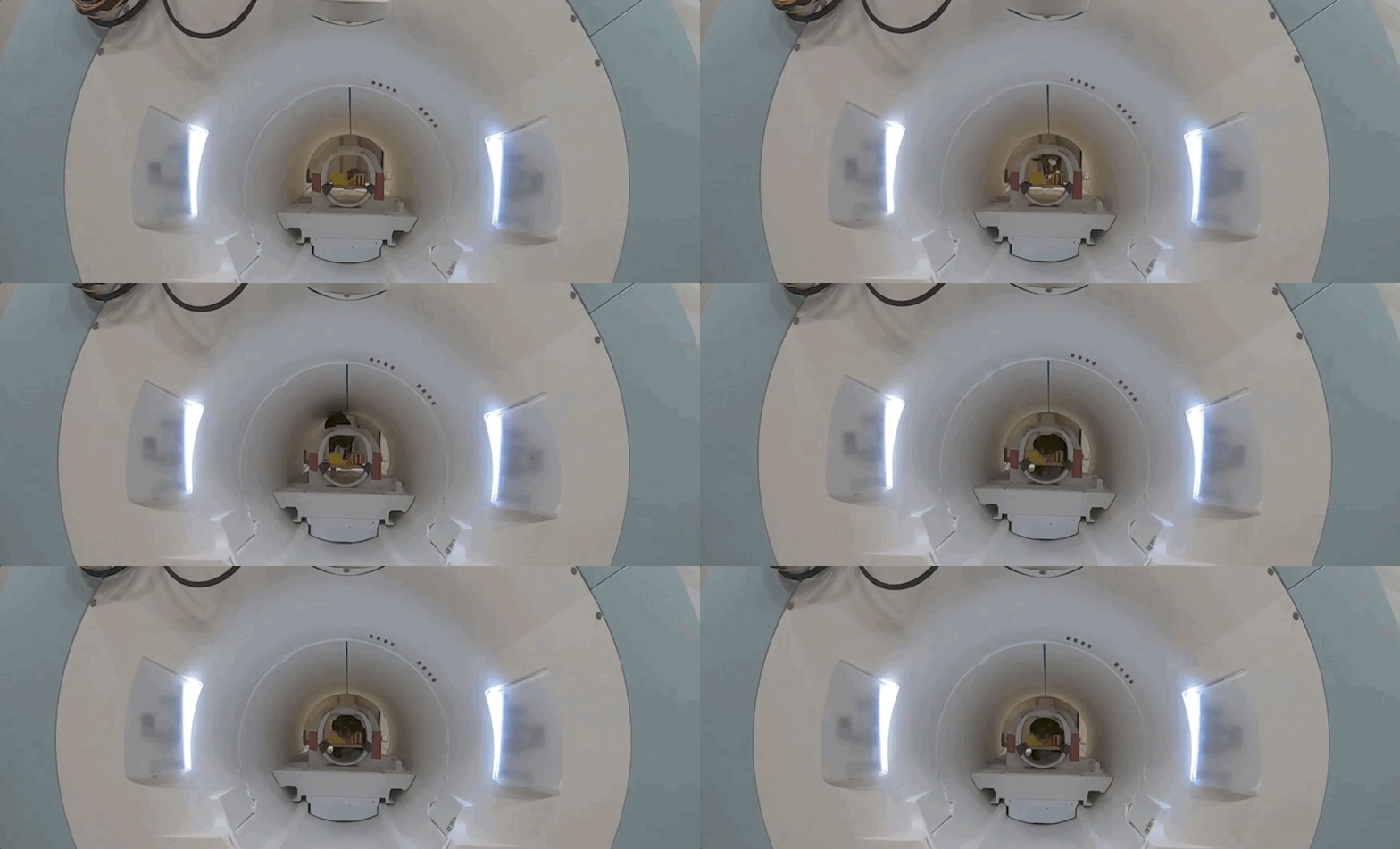
Where the dogs were unable to see or smell the difference between the two placed 1.6 meters' distant from them, after training the dogs were tested in double-blind experiments which led to all three dogs detecting the objects that emitted weak thermal radiation. The researchers followed up by scanning the brains of 13 pet dogs of different breeds in a functional magnetic resonance imaging (MRI) scanner.

Within the scanner the dogs were presented with objects emitting neutral or weak thermal radiation. It was found that the left somatosensory cortex in dogs' brains delivering inputs from the nose, turned out to be more responsive to the warm thermal stimulus than to the neutral one. Which led the scientists to identify a cluster of 14 voxels (JD pixels) in the region of the dogs' left hemispheres, while no such clusters were found in the right, and none in any part of the dogs' brains in response to the neutral stimulus.

The two experiments in tandem demonstrated that dogs, like vampire bats, are capable of sensing weak hot spots; that a specific brain region becomes activated by this infrared radiation. The scientists feel that dogs likely inherited this trait from their ancestral gray wolf connection who may have used it during hunts to sniff out warm bodies.
"The study is consistent with other research that describes the combined dog nose and brain as a sophisticated platform for processing a broad range of signals."
"[It is doubtful however], that the dog rhinarium can distinguish patterns of hot and cold objects at a distance [suggesting dogs’ thermal detection skills may not be useful for long distance hunting. “[T]hat needs further study.”
Gary Settles, emeritus professor of mechanical engineering, Pennsylvania State University, University Park
An infrared photo of a golden retriever in a functional magnetic resonance imaging scanner reveals the cold temperature of a dog’s nose versus its glowing, warm body.
Anna Bálint

Labels: , , , ,

Friday, December 27, 2019

I'll Have Two of Those and Five of Those...Woof!

"Our work not only shows that dogs use a similar part of their brain to process numbers of objects as humans do -- it shows that they don't need to be trained to do it."
Gregory Berns, neuroscientist, Emory University, Atlanta

"We went right to the source, observing the dogs' brains, to get a direct understanding of what their neurons were doing when the dogs viewed varying quantities of dots. That allowed us to bypass weaknesses of previous behavioural studies of dogs and some other species."
"Part of the reason that we [humans] are able to do calculus and algebra is because we have this fundamental ability for numerosity that we share with other animals."
"I'm interested in learning how we evolved that higher math ability and how these skills develop over time in individuals, starting with basic numerosity in infancy."
Lauren Aulet, psychologist, Emory University, Atlanta, Georgia
Emory neuroscientist Gregory Berns is researching how dogs think and view the world.   Kay Hinton

In an effort to determine whether the ability of canines' ability to detect amounts, numbers, through training or whether that ability was innate, Emory University scientists set about to solve the riddle. How can dogs know that they've been given a smaller treat than what they've been accustomed to? Why is it that they appear to have the capacity to determine that their bowl isn't as full at meal time as it generally tends to be? It is known that they have the capacity to process numbers, somewhat similar to how humans do, according to a Science Magazine report.

A recent report published in Biology Letters reflecting a later study from Emory University in Atlanta set out to solve the riddle, leading the researchers to believe that dogs certainly take notice when less food is placed in their bowls. They cannot count, but they detect differences in quantity. This has been named "approximate number system", known for some time that animals can differentiate quantity. The article in Science made it clear that earlier studies in research into animal numeracy made us of trained animals as their study subjects.

A canine mathematician waiting to go for a walk. Getty Images

What the Emory University study set out to do was settle the question: animal evolution or trained brain function? Dr. Berns who led the study along with colleagues undertook to recruit representatives of eleven different dog breeds for his examination whether there was an ingrained sensitivity to numbers in a certain part of canine brains. The dogs were placed in a functional magnetic resonance imagine scanner (fMRI) and strapped into place their heads resting on a block, to focus on a group of light grey dots on a black background.

The grey dots changed in number every 300 milliseconds and with those changes the researchers were able to note activity in a region of the canine brain called the parietotemporal cortex, known as the parieta cortex in the brains of humans, which function of the brain aids humans in the processing of changing numbers. Of the 11 dogs, eight passed the scanning test, their brain activity demonstrating a behaviour pattern similar to that of the human brain, while three dogs failed to pass the test, which Dr. Berns felt might be linked to breed.

dog-treat.
Getty Images

Understanding how dogs are able to detect changes in quantity might represent a breakthrough of some significance, stated Dr. Aulet, who participated in the study. There is an expectation that the research results will at some future date, offer scientists deeper insights into matters such as how brain abnormalities could be treated.

"It further increases our confidence that [these representations of quantity in the brain] are ancient and widespread among species", concluded Michael Beran, a psychologist at Georgia State University, speaking of the study as compelling and exciting.

main article image
Emory University, YouTube

Labels: , , , ,

Wednesday, November 27, 2019

Unusually Rare, and Unfortunate

"He had been touched and licked, but not bitten or injured, by his dog, his only pet, in previous weeks."
"Pet owners with banal, for instance flu-like, symptoms should urgently seek medical advice when symptoms are unusual."
Paper produced by doctors from the Red Cross Hospital, Bremen, Germany

"[The type of bacterium, capnocytophaga canimorsus, is] completely normal flora of a dog's mouth and usually doesn't cause any sort of significant disease."
"However, in the wrong place, at the wrong time, in the wrong patient ... it can lead to severe infections -- but very, very rarely."
Dr. Stephen Cole, lecturer, veterinary microbiology, University of Pennsylvania School of Veterinary Medicine

Many studies show the health benefits of dog ownership. Dogs not only provide comfort and companionship, but several studies have found that dogs decrease stress and promote relaxation. Dogs have positive impacts on nearly all life stages. They influence social, emotional, and cognitive development in children, promote an active lifestyle, and have even been able to detect oncoming epileptic seizures or the presence of certain cancers. But for all the positive benefits of keeping dogs, pet owners should be aware that dogs can carry germs that make people sick.
Although germs from dogs rarely spread to people, they might cause a variety of illnesses, ranging from minor skin infections to serious disease. To protect yourself and your family from getting sick:
  • Seek routine veterinary care for your pet and
  • Always wash your hands and the hands of children with running water and soap after contact with dogs, their stool, and their food.
By providing your pet with routine veterinary care and some simple health tips, you are less likely to get sick from touching, petting, or owning dogs.
Centers for Disease Control and Prevention (CDC)

He was 63 years old, a German dog owner living in Bremen, and circumstances conspired to rob him of future years, a hugely unusual occurrence, when the man's dog transferred to him through a simple 'lick' that most dog owners interpret as a 'kiss', a common bacterium that most dogs carry. The bacterium transfer rarely results in an infection, but this time it did, on steroids. The man had severe symptoms usually associated with flu, along with laboured breathing, round skin spots like rashes from bleeding capillaries.


When he was admitted to hospital doctors found a stable heartbeat, but an internal temperature of 39C. Because of his laboured breathing an inadequate supply of oxygen reached his tissues, and his kidneys failed to produce urine. Everything about the man's presentation puzzled the doctors who suspected bacteria, but the puzzle continued with a lack of open wounds and no sign of meningitis. By his fourth  hospital day a blood test revealed the presence of bacteria commonly found in healthy dogs' saliva, transmitted most commonly through bites.

Details of the man's experience, and his rapid deterioration despite all that medical science could offer in a modern, well-equipped and highly professionally-staffed hospital were published in the European Journal of Case Reports in Internal Medicine.  It became clear to doctors that the man had severe kidney injury and a deterioration of muscle tissue resulting from kidney failure, as well as a lactic acid buildup in his bloodstream.

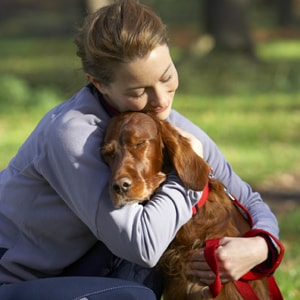
Woman hugging a dog

Transferred to an intensive care unit, diagnosed with severe sepsis with skin death and blood clotting, he was treated with antibiotics but his condition continued to grow graver in the following 30 hours. By then doctors were able to diagnose brain disease, paralysis-caused intestinal blockage, blood clotting and kidney failure, all destroying his body. On entering cardiac arrest he was resuscitated, intubated, placed on a breathing machine, and treated for low blood pressure.

Doctors added another antibiotic and an anti-fungal treatment to his regimen following a test that indicated C.canimorsus infection, while some symptoms waned and others became more compromised, and in the end, no amount or type of treatment worked to save the man's life. All his extremities had gangrene; a CT scan showed severe brain swelling caused by lack of oxygen. He lived for 16 agonizing days following his hospital admission.

Researchers caution the public that C.canimorsus infections are blessedly rare, typified by a range of symptoms. And that most people who have contracted severe or fatal infections from the bacteria did so as a result of having had immune, spleen or alcohol abuse issues. Soberingly, this patient's medical history lacked any such conditions.
"The Capnocytophaga canimorsus bacteria is well known to infectious disease specialists as being part of the normal bacterial population that exists in the mouth of dogs, but not in cats or humans."
"Dogs represent a 'peculiar ecological niche for this bacterium [but it] doesn’t cause illness in dogs, and it usually doesn’t cause illnesses in anyone else, either."
"[On occasion, dog bites can be] complicated by this bacteria, but even then it’s rare. This case in unusual in the extreme. This man’s ‘best friend’ was simply being friendly, doing what thousands of other dogs do every day, slurping or licking their masters on their noses, mouths, and lips—it happens all the time."
"[There’s nothing wrong with immunodeficient people having dogs, they] just shouldn’t get that intimate with them."
William Schaffner, infectious diseases specialist, Vanderbilt University Medical Center, Nashville, Tennessee

Labels: , , ,

 
()() Follow @rheytah Tweet