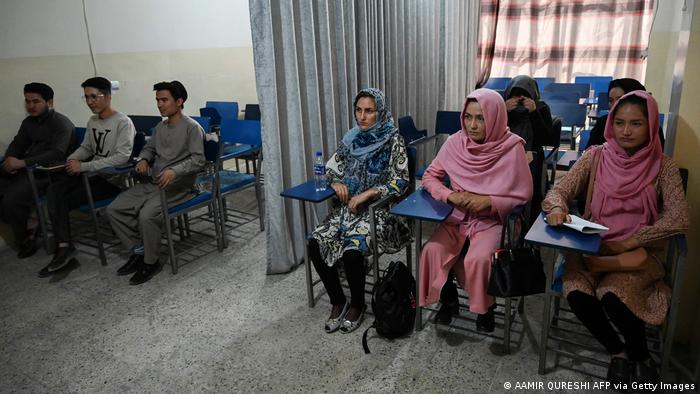
The Sad Social Plight of Afghanistan's Women
"Our analysis shows that by 2026, the impact of leaving 1.1 million girls out of school and 100,000 women out of university correlates to an increase in early child-bearing by 45 percent and an increase in maternal mortality by up to 50 percent."Alison Davidian, Country Representative, UN Women in Afghanistan"Women like us, who fought against the Taliban and their ideology, need to be in safety.""The Taliban shut down and destroyed everything I had in my facility [small farm where she kept animals as an animal-rights activist]. They're also against keeping pets. ""With such routine [being virtually a prisoner in her own house] life becomes meaningless as you cannot do what you want outside your home.""There were days I couldn't get out of bed [deep in depression]."Negin, former UNICEF worker from Mazar-e-Sharif, Afghanistan
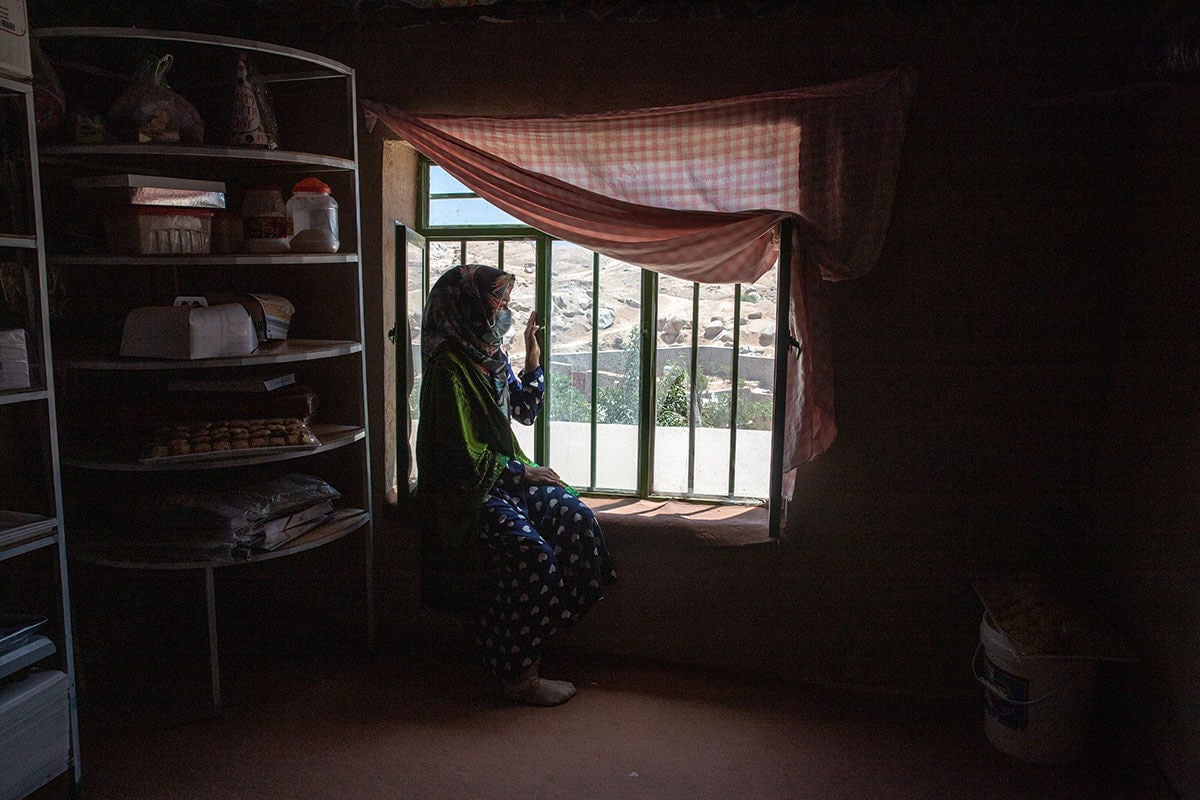 |
| A 31-year-old woman sits by the window. She used to be an entrepreneur before the Taliban takeover. Photo: UN Women/Sayed Habib Bidell. |
Up
to four years ago, under the auspices of the U.S.-led international
forces that dispelled Taliban rule and searched for the leader of
al-Qaeda, Osama bin Laden, the eminence grise behind the deadly New
York/Washington/Pennsylvania aerial suicide attacks of September 11,
2001, Afghanistan had its re-introduction to democracy and women were
freed of the restrictive talons of the Taliban imposed upon them since
1989 following the Soviet Union's departure from Afghanistan after its
failed invasion.
In
the presence of the Western coalition -- the twenty years from 2001 to
2021 introduced the war-torn country to sweeping social and economic
changes. Afghans become involved in sports which both genders
participated in, as well as music concerts with male and female singers.
Cafes and restaurants served both men and women, after the Taliban
years when women were not seen in public, confined to their homes, and
permitted outside fully covered only in the company of male relatives.
Women
could not be treated by male doctors, nor could they attend hospitals
meant for men only. Female surgeons in women-only hospitals served in
operating room surgical procedures fully garbed in burqas.Women wee
lashed in public squares, stoned in sports stadiums and punished for
lack of adherence should they refuse to wear the hijab.
In
contrast to the situation that prevailed under the U.S.-led coalition,
when four million girls were enrolled in school from Grades 1 to 12 in
the years 2002 to 2021. There were over 80,000 female teachers in over
18,000 schools while 100,000 Afghan women attended universities. The
Afghan parliament had 63 elected female MPs, fully one-third of the
total legislators; female journalists and media workers challenged
male-dominated officialdom. Women served as cabinet ministers, mayors,
governors of provinces, while women also operated small businesses,
unlike the Taliban years when women were not permitted to work outside
of their homes.
Until
the Taliban succeeded on August 15, 2021 when the Afghan capital Kabul
was captured by the resurgent Taliban. Ashraf Ghani, president of the
Republic of Afghanistan, backed by the Western coalition fled to the
United Arab Emirates and the nation was in chaos, as the United States
withdrew all its troops and diplomatic officials in a 'peace deal' with
the Taliban, and the allied nations under UN auspices departed, along
with the U.S., leaving the country's population in the hands of the
Taliban once again.
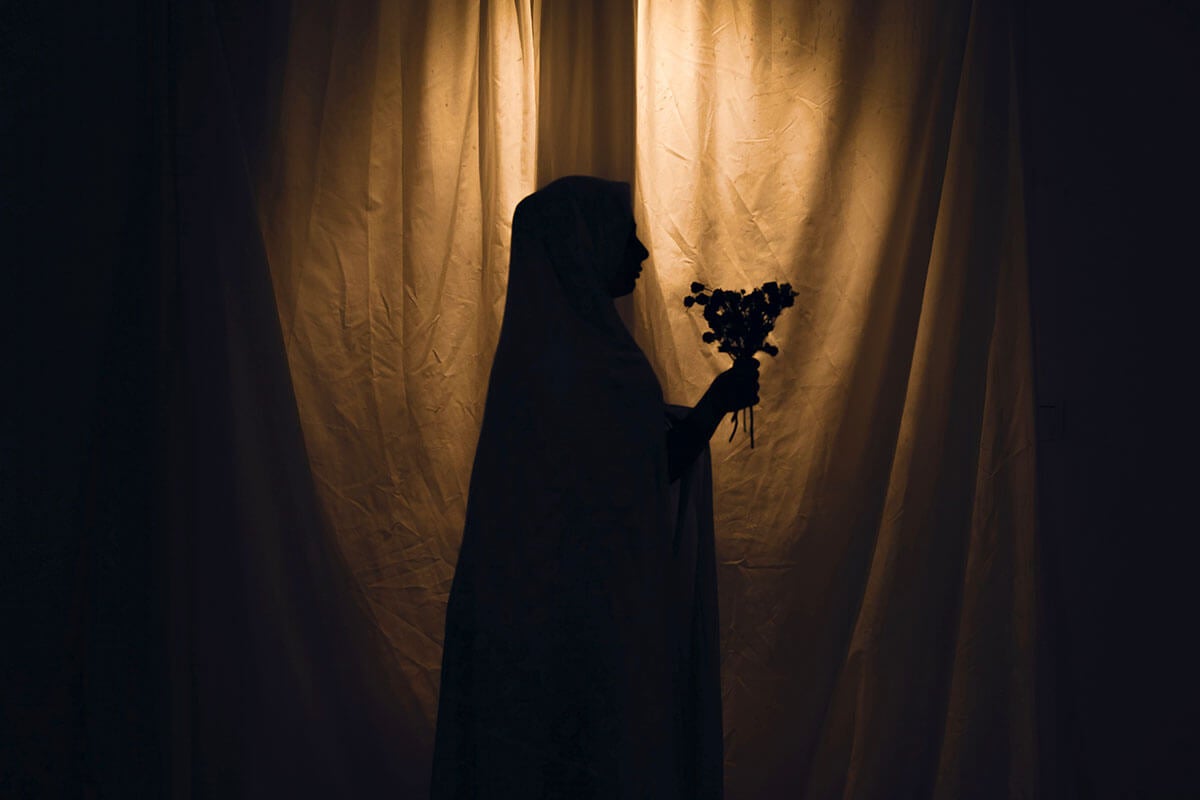 |
| Many Afghan women and girls are forced into unwanted marriages. Photo: UN Women/Sayed Habib Bidell. |
"I cried out loud when I got engaged. I felt helpless and found myself in a situation where I had no say in my decisions. I was in my second year of university, studying law and political science, and I aspired to work in the judicial system to protect women’s rights in our country. Unfortunately, my dreams were shattered after the return of the Taliban.""Many of my friends have faced similar fates, giving up their hopes and marrying against their will. For all girls who have been unable to complete their education, marriage is not a choice but a forced reality."Mahnaz, from Farah, former university student
Although
the Taliban leadership promised the West, in a bid for acceptance and
badly needed investment by the West in economically starved Afghanistan,
for international investment, and recognition by global bodies, that
women's rights would be observed, that the rights of minority groups in
Afghanistan would be protected, they soon returned to the former
strictures imposed upon women and girls where both could be punished for
not adhering to the Taliban's dress code.
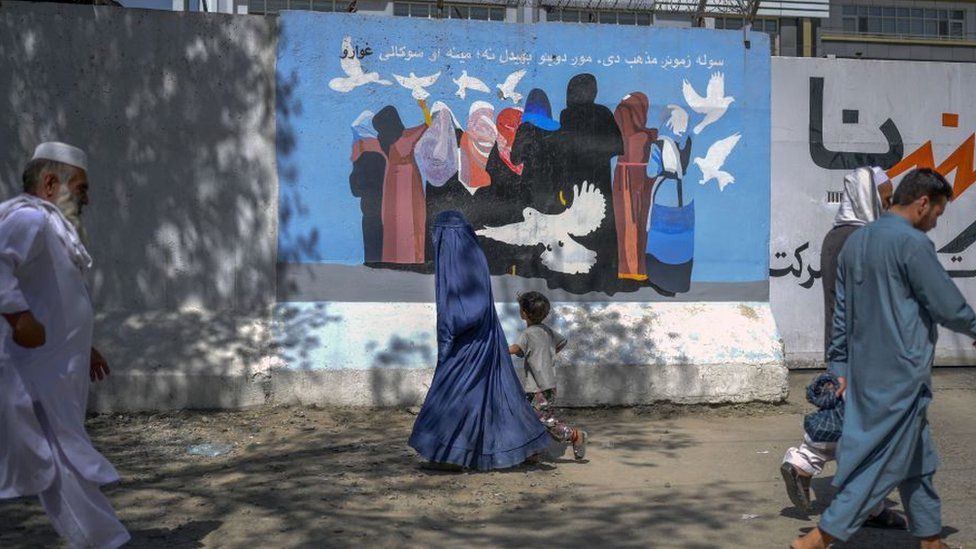
Once
again afghan women could appear in public only covered from head to toe
by all-enveloping burqas which also covered their faces. Beyond Grade
6, girls could no longer attend school, and university education for
women was banned. No offices and workplaces could accept female
employees. Women are banned from public places, parks, and nor may they
travel long distances in the absence of a male guardian. Medical
training as nurses or midwives no longer is permitted.
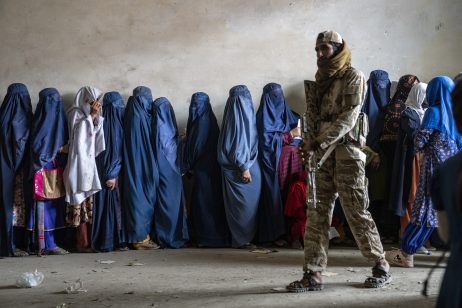 |
| Ebrahim Naroozi, AP |
"Several times I was thinking of committing suicide because there was no hope and future for me. Women cannot laugh with one another in public. Women cannot go to parks. Women cannot work and study. Do you see hope for yourself?" Of course not, and it makes you think of ending your life.""Whenever she sees a Talib, she [her twelve-year-old daughter] is scared of them. That's why she always stays at home and cannot go out. She is depressed all the time.""Whenever she sees girls going to school and living freely in the West [watching television or on social media], she asks me 'Why don't I have such a life and freedom?' Her question stabs my heart like a dagger.""The most painful part is that I can't do anything for her.""In exchange for a peace deal with the Taliban, the world traded Afghan women and their future."Negin, Afghan woman, Mazar-e-Sharif, Afghanistan
Labels: Afghanistan, Female Education, Female Work Force, Strict Impositions, Taliban Rule
posted by Pieface @ 9:06 PM
0 comments