Ruminations

Blog dedicated primarily to randomly selected news items; comments reflecting personal perceptions

Friday, November 18, 2022

Ethical Food Production Alternatives

“Advancements in cell culture technology are enabling food developers to use animal cells obtained from livestock, poultry, and seafood in the production of food, with these products expected to be ready for the U.S. market in the near future,”
“The FDA’s goal is to support innovation in food technologies while always maintaining as our first priority the safety of the foods available to U.S. consumers.”
Dr. Robert M. Califf, FDA commissioner of food and drugs -- Susan T. Mayne, director, FDA Center for Food Safety and Applied Nutrition
 
"We will see this as the day the food system really started changing."
"The U.S. is the first meaningful market that has approved this -- this is seismic and ground-breaking."
"It will have to be case by case, certainly for the first few. It won't be boilerplate approval."
Costa Yiannoulis, managing partner, Synthesis Capital (food technology fund)
A knife and fork cutting a piece of lab-grown chicken meat on a dinner plate with greens and bruschetta.
UPSIDE Foods’ cultivated chicken made from growing animal cells.
Terry Chea/AP Photo
"[Our cultivated chicken] is one step closer to being on tables everywhere."
"UPSIDE has received our ‘No Questions Letter’ from the FDA."
"They’ve accepted our conclusion that our cultivated chicken is safe to eat."
"These products are not vegan, vegetarian or plant-based – they are real meat, made without the animal."
Upside Foods founder and CEO Uma Valeti
 A California startup is jubilant that the U.S. Food and Drug Administration approved as safe for human consumption a lab-grown meat product they have produced. In so doing giving its blessing for products derived from animal cells, with no requirement that a living animal be slaughtered. Should production go as planned, the way will be opened for other similar start-ups to commit in the production of lab-grown meats, to introduce them to grocery stores and restaurants in the United States.

There is, in fact, no shortage of major food companies interested in making their own cultivated meat debut to the public. Singapore, as it happens, is as  yet the only country where such products are produced and legally sold to consumers. The entrepreneurial floodgates have been opened by Wednesday's FDA's announcement that Emeryville-based Upside Foods' new product is safe to eat.

Formerly known as Memphis Meats, Upside Foods harvests cells from animal tissue to grow edible flesh under controlled conditions in bioreactors. Its output, says the company, is indistinguishable from meat grown conventionally. These alternatives to traditional animal agriculture are viewed as a mitigation measure in view of climate change. The big question is how enthusiastic a reception the public will give these new foods, whether the ethics involved will be compelling or off-putting.

The industry producing meat alternatives derived from vegetable sources, while initially making a big public relations splash, and now available in supermarkets everywhere, finds itself in the quandary of disappointed expectations. The products have failed to enjoy the wide popularity it was assumed they would attain, and some manufacturers are struggling to surmount public indifference. Simulated-meat product popularity simply failed to materialize.
 
The same technology that Upside is using is transferable to other animal species and each new product must be approved by federal regulators before each can go on the market. On approval from the Agriculture Department, the estimate is that months would be needed before the product could appear on the market. Other cultivated meat startups have sought regulatory approval for years. The current approval may speed up the process.
 
There are currently over 151 companies on six continents eager to kick-start their own cultivated-meat product. This may be an introduction to a wave of the future in suitable, ethically-derived food products. Whether these products can be produced on the scale required to feed populations will be an issue for the future to answer.
Cultured chicken made by Upside Foods is shown.
Cultured chicken made by Upside Foods is shown. Photo: UPSIDE Foods


Labels: , , ,

Wednesday, December 04, 2019

Marketplace: Service in a Food Kit

"[Canada's largest grocery retailer is staffing a new] meals solutions [division to] span across business."
"At 4 p.m. most days, the vast majority of Canadians don't know what they're having for dinner. We believe we are uniquely capable of helping them solve that problem."
Catherine Thomas, spokesperson, Loblaw

"Our vision is to create an inspiring portfolio of easy and nutritious meal solutions for consumers."
"You'll measure your success with KPI's that include adoption, conversion & retention. You will use data every single day to uncover meaningful insights that inform your experimentation strategy and ultimately, your product roadmap."
"[Marketing directors will develop the] graphics, photography, personality, tone [of the new brand]."
"[The position] requires close collaboration and influence of senior leadership teams within Loblaw to ensure strategic alignment."
Loblaw job positions, new 'meals solutions' division
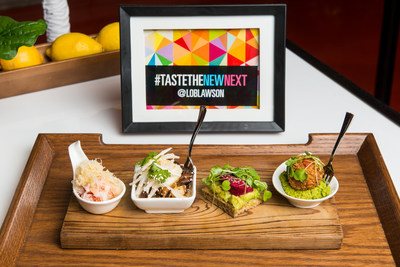
Loblaw 2018 Canadian Food Trends encourage home chefs to be creative in the kitchen and discover new family favourites. More protein for breakfast, improving our gut health, reducing our sugar consumption and being creative with leftovers are just a few examples of what we will be doing with food in 2018. (CNW Group/Loblaw Companies Limited)
"Goodfood has built a strong brand and a complete online meal solutions and grocery platform. Fewer than four percent of Canadian households are receiving meal solutions delivered directly to their home and there is a significant opportunity to grow that number in the coming years."
"Technology is driving an increased convergence of consumers' need for convenience and health with the trends in various food industry segments."
"[This change in behaviour is rapidly pushing the grocery retain market online, making it] ripe for disruption."
Jonathan Ferrari, CEO, Goodfood Market
Ah, consumer marketing and opening up new trends to boost the bottom line. Loblaw, facing growing pressure from food marketing giants Amazon and Walmart which dominate the American online and brick-and-mortar grocery markets is responding to what it regards as an opportunity to open Canada up to large-scale at-home meal catering. Not that there isn't any number of small-scale entrepreneurs who have already entered that market niche in Canada's large cities. Now though, the Big Boys want some of the action of a growing, profitable trend.

Ingredients for Thai coconut curry pasta. Photo: Arti Patel

In just about every state in the U.S., Walmart provides grocery pick-up and delivery, with its 23 percent share of the American grocery business; some 2.5 times greater than its closest rival. This is a trend that is beginning to burgeon, with an estimated 17 percent of American shoppers admitting they have ordered groceries online from Walmart in a growing e-commerce trend. Amazon on the other hand, has experimented with pairing its online services with a physical presence; buying the Whole Foods grocery chain, launching its own branded grocery shop.

Neither has yet moved aggressively into the Canadian market though they have invested in Canadian expansions, with Walmart debuting a "scan-and-go" app in the checkout process, as well expanding its online grocery-delivery service, partnering with Instacart. Both Walmart and Amazon offer meal kits in the U.S. but neither has launched such offerings yet in Canada, and Loblaw sees its opening to get to the head of the line.


Loblaw operates over 2,300 supermarkets, with reported earnings of $36.5 billion this year alone so far. It is operating a meal kit pilot project at the present time under the President's Choice Brand, with PC Chef meal kits appearing in thirteen stores in the Greater Toronto Area, inclusive of Loblaws, Real Canadian Superstore, Shoppers Drug Mart and a No Frills location. PC Express, its grocery pickup service is available there, as well.

The meal kit business is fast becoming the quickest-developing food sector in Canada, according to market research conducted by the NPD Group; roughly doubled since 2014, to top $400 million in the next year, with the company reporting 13 percent of Canadians using meal kits and growing with 42 percent indicating interest in trying out food kits. The PC Chef kits have pre-measured and sometimes pre-prepared ingredients, along with a recipe card. People have the impression they've prepared a convenient, nutritious, good-tasting meal. A riff off the old standbys of frozen meal kits.

Blue Apron launched the meal kit industry in the U.S. but mismanagement, continued operational... [+] issues and defecting customers have taken a toll on the company. Photo Credit: Bloomberg Finance LP
© 2017 Bloomberg Finance LP

"We've solved dinner so you don't have to" goes the advertising slogan for the line that includes eight meal offerings. A vegetable Pad Thai, a chicken Souvlaki platter, among others. There are other domestic providers that Loblaw and eventually Amazon and Walmart will compete against. Such as Goodfood, Blue Apron, HelloFresh and Plated, international specialists that have brought their services to Canada, offering delivery services as well as pre-prepared meals.

Goodfood Market, based in Montreal, became one of the first of the domestic food preparers to nationally establish its services and now has a base of 200,000 Canadians coast to coast to whom it delivers over a million meals monthly. According to Goodfood Market, an estimation of $2 billion in sales reflects the ready-to-cook marketplace.

Chef’s Plate

Company website: chefsplate.com
Reviewer: Arti Patel
Price: $8.99 to $12.95 per serving. Based on four recipes and two servings, $79.92 for the classic plan, $143.84 for the family plan, $103.60 for the 15-minute plan and $79.92 for the vegetarian plan.
Recipe options: Vegetarian
Meal plans: Classic, family, 15-minute and vegetarian with no commitment plans.
Availability: British Columbia, Alberta, Saskatchewan, Manitoba, Ontario, Quebec, New Brunswick, Nova Scotia, and Prince Edward Island.

Labels: , , , , ,

 
()() Follow @rheytah Tweet