Ruminations

Blog dedicated primarily to randomly selected news items; comments reflecting personal perceptions

Wednesday, July 21, 2021

Chronic Wasting Disease

"I would say this question [whether the wasting disease afflicting deer could infect humans] was answered with 'yes'."
"The more we did, the more we could confirm the macaques [laboratory experimental monkeys] were infected."
Hermann Schaetzl, veterinary scientists, University of Calgary

"It's easy to go down a doomsday scenario but I don't think we're there yet."
"I think it's low-risk."
Dr.Keith Lehman, provincial veterinarian, Alberta  
 
"I was shocked when we first learned of the results. It's absolutely confirmative that this happened — you could give macaques a prion disease through oral consumption of contaminated meat."  
"[For] many people with a spinal cord syndrome, it wouldn't even occur to the treating neurologist that this could be a prion disease. It's going to take some education and alertness to even think of the diagnosis." 
"I hear the alarm bells going off."  
"I would have expected a human case to emerge in the U.S. before Canada. But on the weight of evidence, I think it's not only not impossible, it's kind of expected at this point."
Neil Cashman, prion expert, University of British Columbia 
New research on chronic wasting disease has raised new fears about whether the illness could infect humans. (Radio-Canada)

Decades ago the world was horrified when an outbreak of variant Creutzfeldt-Jakob disease saw people dying horrible deaths in the United Kingdom, linked to the consumption of infected internal organs from cattle finding their way into animal feedlots, butchered animals for human consumption then passing on the disease that causes degenerative brain wasting as a result of proteins called prions that were abnormally shaped. Once infected, deterioration was swift and deadly, a horrendous scenario.

Now, a spread of a fatal wildlife disease in Alberta and Saskatchewan is infecting deer across a wide area of the Canadian Prairies. Research about to be published on Chronic Wasting Disease highlights fears over whether the illness could end up crossing the species barrier and infect humans. A recent report from the Canadian Agri-Food Policy Institute advising the federal government on agriculture policy resulted from a study of Professor Schaetzl's research.

The Institute had concluded that the spread of the disease over the past decade is a dire threat to Western Canada's agriculture, wildlife and food security. Quite apart from, but connected to concerns over transmission to humans. "It's continuing to increase in its spread and the speed of its spread", the Institute's strategy officer, Ted Bilyea, stated.

"The southern range [of caribou] is pretty much the northern range for our survey. If [prions] pass through that, then we have a genuine food security problem for our northern people." Dr.Bilyea is referring to hunters, susceptible to contracting the disease in the closeness of their proximity to infected animals, mostly First Nations hunters. "We don't have any buffer zone. It's not a very pleasant idea, but this is not a very pleasant topic."
 
Chronic Wasting Disease is a prion disease which deer, elk and caribou, in both wild and farmed populations in Canada, the U.S., and more recently in South Korea and Scandinavia are susceptible to; highly contagious between hoofed animals. It is spread through saliva, animal carcasses and fecal matter. Soil and vegetation in areas where infected animals have died can be contaminated with it. The pathogen can survive up to a decade in an area. Data indicates potential transmission to cats, pigs, sheep, cows and rodents.
 
It attacks the nervous system of afflicted animals and its presence is always fatal, the morbid illness is excruciating but fairly swiftly concluded in death. Misshapen prions cause the wasting disease, quite similar to Creutzfeldt-Jakob in humans; the prions are able to persist in the environment and to transfer their disease-causing shape to healthy proteins. 
 
An experiment that was conducted on macaque monkeys -- as the closest animal genetically to humans -- in 2006 by German scientists fed macaques with meat from contaminated animals. With the knowledge that the disease can take years to develop the monkeys were not tested until two years ago with the first tests being ambiguous. It soon enough became clear, however, that the monkeys had developed low-level infections.
 
Dr.Schaetzl had been involved in the confirmatory tests, and although his work is in the process of peer-review before publication it was presented in conferences, subsequently widely discussed among experts in the disease. According to Dr.Cashman of the University of British Columbia, a leading prion expert, his opinion is that people could already be suffering from a human form of chronic wasting disease.
 
Deer and elk farmers are required in Saskatchewan and Alberta to test every animal on their farms that dies, including those that are slaughtered, in an effort to ensure that tainted meat is kept out of the food supply. Although theoretically domesticated cattle could be contaminated by wild animals with the disease, no cases of this occurring have yet been recognized.

A portrait of a beautiful male elk during the late autumn season in the backcountry of British Columbia. Mount Assiniboine Provincial Park.

Labels: , , , , ,

Monday, June 08, 2020

Safeguarding the COVID-Struck Food Supply

"We've had people contact us for our hogs from Colorado, western Nebraska, way up in South Dakota, and we tell them 'Listen, there are other hog farmers like us. Go talk to your local guy and help them out, we're not the only ones hurting."
"We're either going to get on top of this or we're going to lose."
Shelly Pinkleman, hog farmer, Nebraska
"[Changing the model], it helped keep the company alive."
"I'm not saying it's as much as before, there's still an after-shock, but we're adjusting better and better."
Alexandere Aubin, Gaspor Farms, Saint Jerome, Quebec
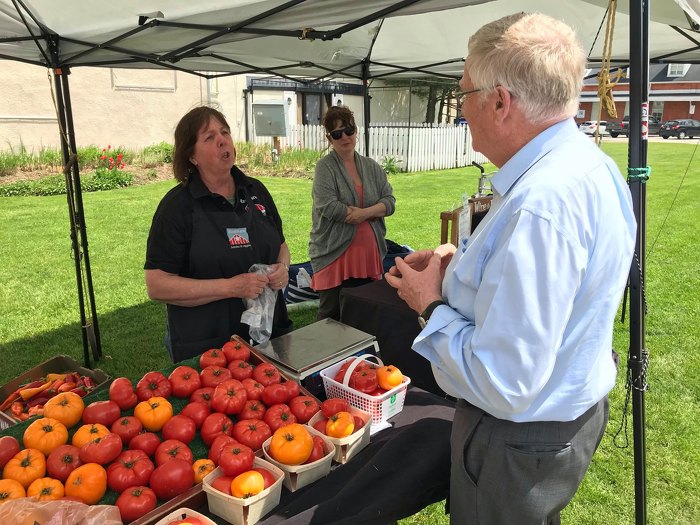
Ernie Hardeman, Minister of Agriculture, Food and Rural Affairs visits the Woodstock Farmers’ Market and talks with vendors from RedBarn Berries & Veggies about the importance of direct sales opportunities.
RedBarn Berries & Veggies
"I tried selling papaya in nearby areas but nobody was willing to buy [with people concerned over virus transmission in hand-to-hand sales]."
"[An estimate of thousands in rupees lost from his papaya crop this year, equal to the profit seen from the crop last year]."
Vinod Patidar, fruit and soybean farmer, Madhya Prades, India
India's Ninjacart buys directly from farmers to sell to retailers and restaurants. According to co-founder Vasudevan Chinnathambi, producers look for multiple channels to enable connection with customers, leading the company to add 120 farmers to its platform, with a "huge backlog" of other farmers hoping to join, in the face of India's coronavirus lockdown restrictions.
Hard times call for flexibility and innovation; both beat hand-wringing, deploring a situation no one could have anticipated and no one knows the final outcome of. Two months ago when Quebec went into lockdown Gaspor Farms saw their market do an overnight meltdown. As a family business, 95 percent of its milk-fed piglet products went to high-end restaurants. The lockdown forced them to look elsewhere for new customers and they began to offer boxes of assorted sausages, ribs and ham direct to consumers. 
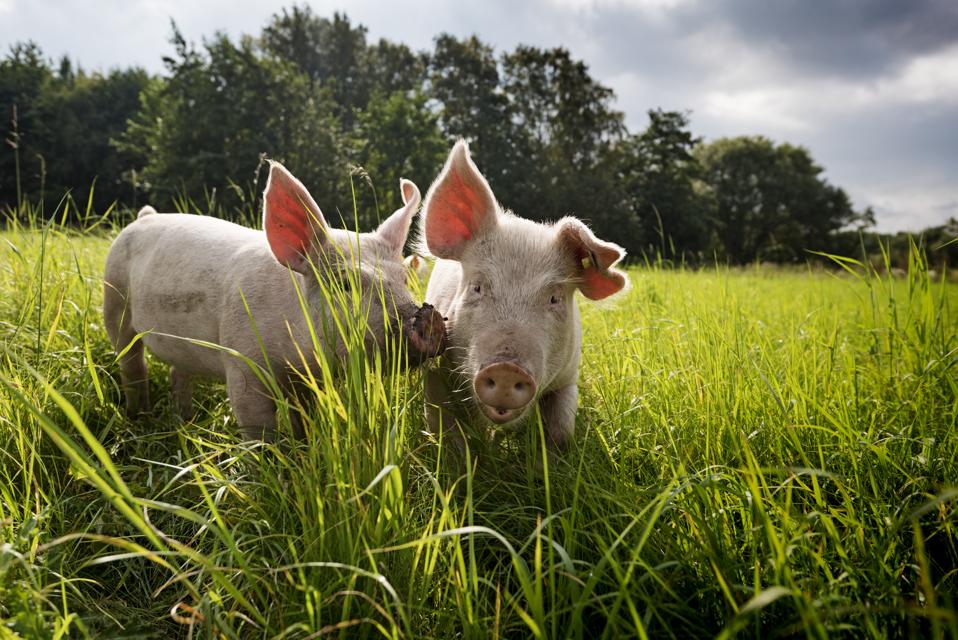
Young Outdoor Raised Organic Pigs
Getty
In May, Gaspor Farms sold 300 to 400 boxes weekly, inspired to begin working on a new e-commerce platform. But as Vinod Patidar in the central Indian state of Madhya Pradesh discovered, the search for new buyers can be an aggravating bust. Mr. Patidar planted four acres of papayas, but unable to sell them he plowed close to half of his crop into the ground, the rest he's attempting to sell directly to consumers, but customers are frustratingly wary. 
Farmers across the globe have been left with unsold food as a result of broken supply chains which could never have been anticipated until the arrival of the SARS-CoV-2 pandemic. Clint and Shelly Pinkelman, faced with the choice of euthanizing pigs they couldn't sell or feeding them with no sale and profit possible under the reliable old system, have chosen to sell their wares directly to consumers. 
Their usual buyer was the closed-down Smjthfield Foods Inc. But through connections linking friends and family, spots were booked at meat processors that handle individual animals. Half of their 600 market-ready hogs have now been sold and many brought in above-market prices. Watermelon growers in India loaded up tractors to sell their fruit in nearby villages, while wholesalers in the U.K. have taken to redirecting supplies meant for restaurants, as roadside stands in Florida are now selling blueberries producers are unable to ship out to their usual customers.
Farmers markets throughout the spring and summer can often be crowded social gatherings, though close to 160,000 farmers rely on sales at nearly 9,000 farmers markets nationally. While some farmers markets have been allowed to remain open so far this spring, challenges combatting COVID-19 could limit both vendors and customers. The Windmill Farm and Craft Market operates in the Finger Lakes region of New York State. (DTN file photo by Chris Clayton)
Windmill Farm  Finger Lakes, New York State. (photo by Chris Clayton)
The novel coronavirus and the immediate response to place everything on hold with focusing on managing the viral threat  had resulted in snarled transportation, labour difficulties, restaurant closures and plant shutdowns, forcing farmers to smash eggs, dump milk and cull hogs. Direct-to-consumer sales is time-consuming and limited in its reach, but it's an aid to creating another avenue for people to have access to food when grocery stores struggle to keep their shelves well stocked.
Online start-ups have been featuring online marketplaces helping to connect growers directly to buyers, and producers are now waiting, anxious to buy onto the lists, relaxed restrictions or not. Because this is a situation, simply put, where no one knows what comes next; whether opening will result in renewed infection rates, giving the virus the opportunity to mount a second and perhaps more severe wave of infections, or whether the virus will weaken, die out and everything return to normal.
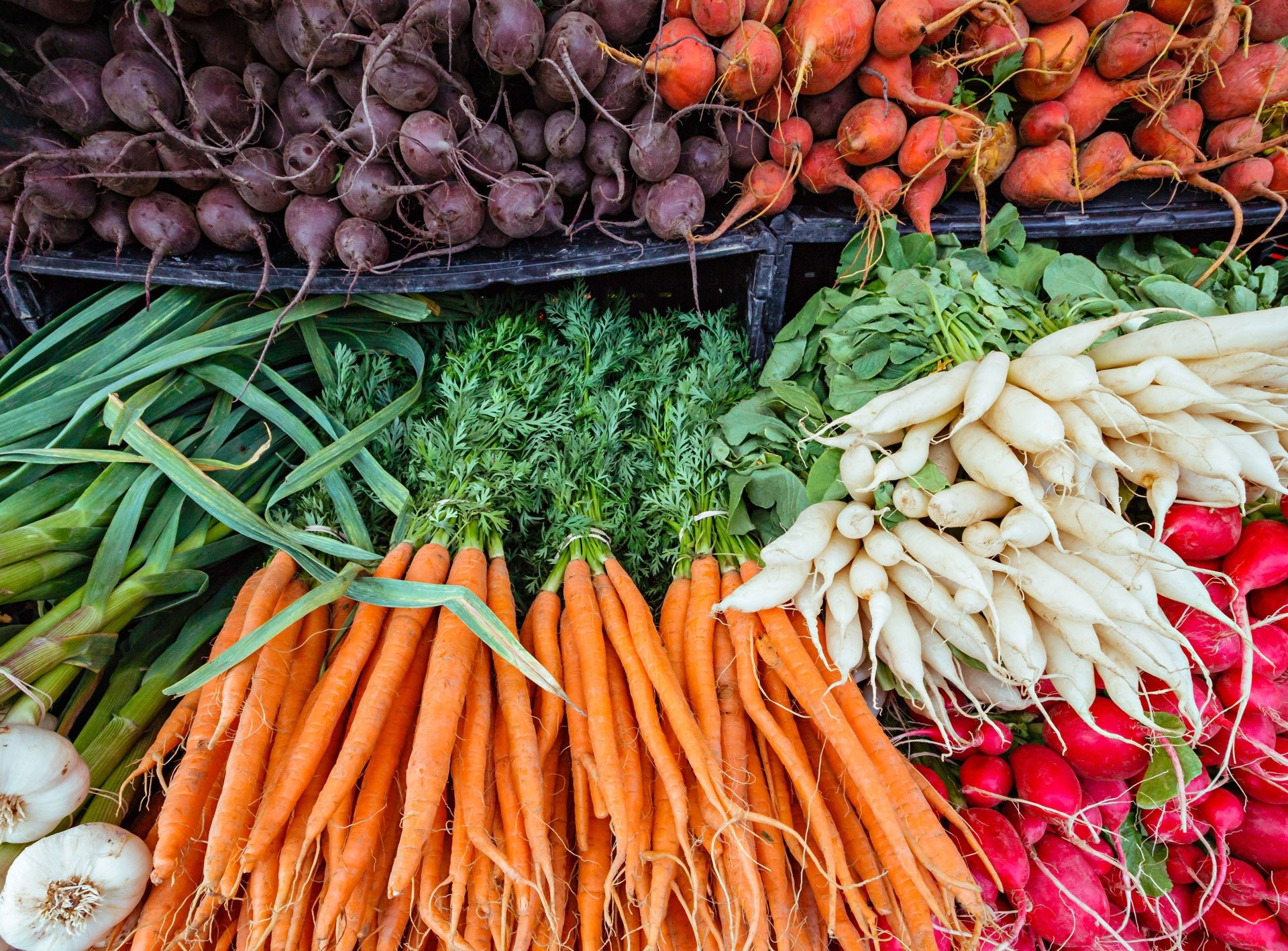
Fresh organic root vegetables at a local farmers market

Experts in agriculture forecast that these new selling innovations will remain, once plants are back in normal operation and grocery shelves are completely stocked. Consumers, having faced the trauma of dwindling food stocks and empty grocery shelves, are now more cautious and curious about where their food comes from, many among them willing to commit to direct-to-consumer services by farmers prepared to deliver individual, varied vegetable boxes on a weekly basis through the harvest season.

Labels: , ,

 
()() Follow @rheytah Tweet