Ruminations

Blog dedicated primarily to randomly selected news items; comments reflecting personal perceptions

Thursday, June 12, 2025

Insulting the Canadian Sikh Khalistani Groups

"Carney's decision is not merely a diplomatic miscalculation."
"It is a direct insult to the Sikh community and a grave threat to the integrity of Canada's institutions."
"[Members of Parliament must speak out about the invitation to Indian Prime Minister Narendra Modi and] reafirm commitment to holding Indian officials accountable for interference and violence in Canada."
"[The decision to host Modi is] reprehensible."
"It sends an unequivocally clear message: the safety, dignity and rights of Sikhs in Canada are expendable." 
World Sikh Organization/ British Columbia Gurdwaras Council / Sikh Federation / Ontario Gurdwaras Committee/ Quebec Sikh Council 
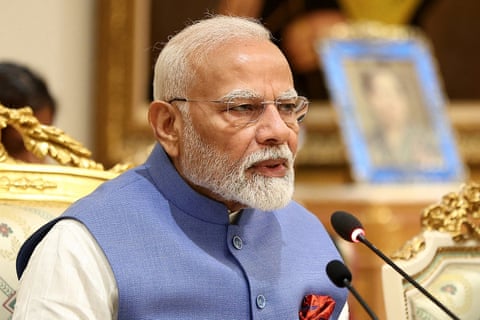
a man speaks into a microphone
Narendra Modi speaks in Bandar Seri Begawan, Brunei, last year. Photograph: Dean Kassim/AFP via Getty Images
 
Interference in New Delhi's affairs and violence perpetrated against India by radical Canadian Sikh groups and individuals created the largest, most deadly act of terrorism ever plotted and carried out within Canada in a deadly scheme that succeeded in killing Canadian citizens who happened to be Hindus in June of 1982, in the infamous Air India Flight 182 when 329 people on board, including 268 Canadian citizens, 27 British citizens, and 22 Indian citizens were blown up along with their aircraft. 
 
Sikh militants in Canada have continuously agitated for a breakaway state of their own in the Punjab, they refer to as Khalistan. Before and after the ghastly tragedy these radical Sikh Canadians have been involved in violence of one kind or another, including public demonstrations celebrating the assassination death of former Indian Prime Minister Indira Gandhi at the hands of her Sikh bodyguards. They have, as committed Khalistanis, defaced images of Indian Prime Minister Modi, at their protests, and hanged him in effigy. 
 
https://www.hindustantimes.com/ht-img/img/2023/06/08/550x309/indira_1686220471937_1686220472107.jpg
Parade float depicting Indira Gandhi's assassination at an event organized by pro-Khalistani supporters in Brampton city of Canada. (Screengrab from video tweeted by @BalrajDeol4)
 
So much for 'interference' in other countries, that they now bitterly accuse India being guilty of, in Canada. The government of Canada has never attempted to stifle these protests, including conferences where Khalistani terrorists are celebrated as heroes. The agitation committed by Sikh Canadian extremist groups is responsible for demonizing by default, Hindu-Canadians whose citizenship in Canada equals in number (about 800,000) that of the Sikhs, and whose activities go a long way to creating sectarian-tribal stress and alienation, threatening national security.
 
https://www.hindustantimes.com/ht-img/img/2024/06/10/550x309/The--punishment--posters-displayed-during-a-parade_1718009808436.jpg
The “punishment” posters displayed during a parade in Brampton -- Hindustan Times 
 
An invitation went out from the current Liberal government of Prime Minister Mark Carney addressed to the Indian Prime Minister, to attend the G7 leaders' summit to take place in Kananaskis, Alberta, June 15 to 17, under understandably tight security arrangements. Members of the G7 are Canada, the U.S., U.K., France, Japan, Germany and Italy. It is not unusual for the rotating leader of the G7 summits -- usually with the tacit agreement of the other members -- to invite leaders of other countries to attend. For this summit, Mexico's President Sheinbaum, India's Prime Minister, and Saudi Arabian Crown Prince Mohammed bin Salmon were invited to attend.
 
The major Canadian Sikh organizations sent an open letter to the Liberal government of their outrage over the invitation extended to Prime Minister Modi. Canada's previous prime minister, Justin Trudeau standing in Parliament, had released a publicity and diplomatic bombshell in accusing Mr. Modi's government of involvement in the murder of a British Columbia Sikh involved in the Khalistani movement who was agitating for a 'vote' to take place on the matter of a Khalistani state.

 
https://akm-img-a-in.tosshub.com/indiatoday/images/story/202505/canada-khalistan-050638451-16x9_0.jpg?VersionId=g4qBjfuC_qULrneSabOdIJarLj8QPvR6&size=690:388
The parade included a large truck with a mock-up of a jail that had effigies of PM Modi, Home Minister Amit Shah, and External Affairs Minister S Jaishankar. The parade took place in Toronto.
 
The letter of outrage was sent to 23 Members of Parliament with various Canadian political parties across Ontario, British Columbia and Alberta representing ridings with sizeable Sikh populations. According to Statistics Canada, Canada has the second-largest Sikh population outside of India.  
"What kind of a message does this send to us, that our lives are expendable for the sake of trade or economic ties."
"[There has been] outrage [across the Sikh community]. It feels as though this is adding injury to insult." 
"Many [of the MPs who received the letter are expected to attend meetings to discuss the issue]." 
Moninder Singh, national spokesman, Sikh Federation  
The Khalistani referendum organizer and activist Hardeep Singh Nijjar had been shot to death by assassins outside a gurdwara in June of 2023. As far as Indian authority was concerned, Mr. Nijjar was a terrorist, a prominent activist in the Khalistan movement. Four Indian nationals have been charged and will stand trial for his murder. India is piqued with Canada for allowing Sikh extremists to thrive in Canada, obviously interfering in Indian politics and occasionally with deadly results. Asking Canada, nation-to-nation to extradite Canadian Sikhs found guilty in India of terrorism has been fruitless.
 
https://i.ytimg.com/vi/YX8Bpy26-qE/maxresdefault.jpg?v=681883ae 
 
The reality is that it is expatriate Sikhs in Canada, Britain and elsewhere who continually agitate against India, calling for a Khalistan state. In India itself, Sikhs are fairly disinterested. They may once have been allies in the move to rally for a state of their own, but in present-day India, most Sikhs seem more than comfortable considering themselves to be members of the Indian state, and have no interest in pushing the government to grant a partition of India. 
 
https://www.hindustantimes.com/ht-img/img/2024/05/06/550x309/Kolkata--Peoples-from-the-Sikh-community-stage-a-p_1715014864935.jpg
Kolkata: Peoples from the Sikh community stage a protest against BJP leader Suvendu Adhikari after he allegedly called a Sikh IPS officer 'Khalistani', outside BJP office, in Kolkata, Wednesday, Feb. 21, 2024. (PTI Photo)(PTI02_21_2024_000237B) (PTI)
 

Labels: , , , , , ,

Friday, June 06, 2025

Far Reaching Consequences in Air Quality From Canadian Wildfires

https://www.ctvnews.ca/resizer/v2/QVD62FH6MRGUFHHMBHLHHJQI4Y.png?auth=b2a28004f09139fff52987be801292dc377f1790dfbec36664f6778f7241792c&width=1440&height=810
A smoky haze continues to linger over Ottawa on Friday afternoon.  (Westin Camera)
 
"We have these massive fires going on out west in Manitoba, in Saskatchewan, and all this smoke is being lofted high up into the atmosphere and then you have the jet stream, the strong winds higher up in the atmosphere blowing it over to Ontario."
"Even if you’re not smelling it at the ground, you’re probably noticing the sky is a bit of milky colour, kind of a white colour, this is all smoke that’s just been blown over from these massive prairie fires." 
Environment Canada meteorologist Crawford Luke
 
"Things like asthma, cough, headaches — we know that over time [smoke exposure] can increase your risk of things like respiratory infections. It can also increase your risk for long-term disease like lung cancer if you have high exposure."
"Clean air quality is definitely becoming more of an awareness concern because we are experiencing more wildfire seasons that are increasing. They’re longer, they start earlier, they get worse. We’re noticing a lot more air quality alerts."
"Check the air quality and if it’s over five, six, seven, that’s when you need to pay attention. That means air quality could be bad, even if the sky looks clear." 
"This affects the youth, seniors, as well as people with lung disease, heart disease. Anyone with a lowered immune system tends to be considered higher risk. They would be the ones we’d want them to watch the alert a little bit earlier."
Jamie Happy, health promotion coordinator, Alberta Lung
 
"The particle air pollution event is the result of extensive wildfires in central and Western Canada."
"Wind patterns are forecasted to transport plumes of smoke from these fires across much of New England and New Hampshire."
New Hampshire Department of Environmental Services 
https://i.cbc.ca/1.7554388.1749245549!/cantoImage/httpImage/image.jpg_gen/derivatives/original_1180/ottawa-gatineau-weather-wildfires-2025-smoke-downtown-parliament.jpg?im=Resize%3D1180
A skateboarder cruises down Rideau Street in Ottawa on Friday as drifting smoke from wildfires in Western Canada shrouded the city. (Gabrielle Huston/CBC)
 
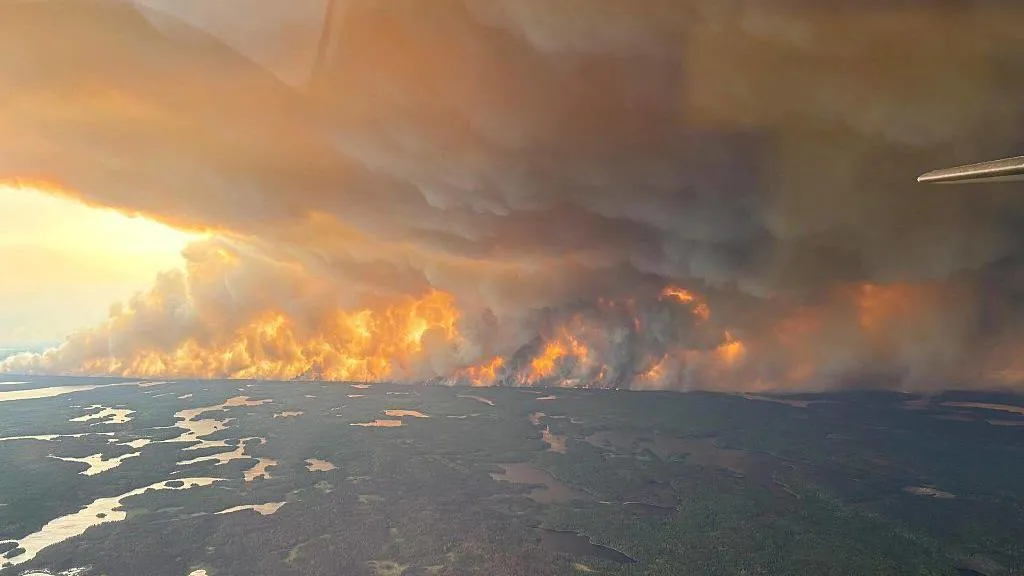
Hundreds of wildfires are burning across Canada, many of them out of control with flames sending plumes of smoke skyward, resulting in unhealthy air wafting off with the prevailing winds, reaching distant places. The more gigantic of the blazes deliver thick smoke spreading southward into the United States and far across the Atlantic Ocean to the United Kingdom. 
 
Fires in British Columbia, Alberta, Saskatchewan, Manitoba, from Western Canada, as well as northern Ontario in central Canada burning out of control. Some of the fires range between 100,000 to 300,000 hectares. Fire season in Canada is earlier than usual this year. And this year more of the fires are considered to be man-made; fewer have resulted from lightning strikes and excessively dry conditions along with warmer temperatures than usual. 
 
These early-appearing wildfires have already consumed vast tracts of land and forest, in comparison to the long-term average with about a normal half year's worth of land at this early stage already scorched.  
 
https://static01.nyt.com/images/2025/06/04/multimedia/31int-canada-wildfires-explainer-hmlz/31int-canada-wildfires-explainer-hmlz-superJumbo.jpg?quality=75&auto=webp
A photo released by the government of the Canadian province of Manitoba shows wildfires burning last week in Flin Flon, Manitoba.   Credit...Government of Manitoba
 
Three provinces have evacuated over 25,000 people altogether, whose habitation is in the line of fire. In Manitoba alone 17,000 of the evacuations have left people stranded away from their homes in fire-vulnerable towns and villages. In Alberta roughly 1,300 people were forced to relocate, as well as some 8,000 people affected by the need to evacuate in Saskatchewan.
 
The largest of two fires in Manitoba scorched 189,834 hectares on the border with Ontario, about 100 km northeast of Winnipeg. On the border with Saskatchewan several fires around Flin Flon are responsible for most of the evacuations there, where this fire season has been recognized as the worst in decades. The fires burn largely in rural forest, threatening communities nearby that remain under evacuation orders, among 20 towns forced from homes in the province. 
 
Smoke that crossed the Atlantic Ocean is blowing over the United Kingdom, contained in a thin, high-altitude layer not expected to seriously affect air quality. "No impacts expected as it remains at height, but could lead to some striking sunsets and sunrises", advised Georgie Myers of the UK's Met Office.  
 
https://static01.nyt.com/images/2025/06/06/multimedia/06int-canada-wildfires-explainer02sub-photo-kzgt/06int-canada-wildfires-explainer02sub-photo-kzgt-superJumbo.jpg?quality=75&auto=webp
Members of the Royal Canadian Air Force help evacuees board an aircraft in Norway House, Manitoba, on June 3.   Credit...David Lipnowski/The Canadian Press, via Associated Press
 
Smoke, carried by the river of air in the sky known as the jet stream, ended up south as far as the coastal Southeast United States where skies turned hazy as far south as northern Florida. The Midwest saw smoke particularly thick with  high temperatures held down several degrees, irrespective of sunshine. Visibility dropped as low as a kilometre or so in North Dakota as smoke drifted groundwise. 
 
Parts of British Columbia to Ontario south of Hudson Bay, saw air quality alerts warn populations. Environment Canada warns residents in harder-hit areas of northern Alberta, Saskatchewan and Manitoba to limit outside time and cancel or reschedule outdoor events. Much of Minnesota, Wisconsin and close locations are under a code orange alert. 
 
The Canadian wildfires have already early in this season burned about half of the average major fire seasons up to 2023 and 2024, translating to over 1.1 million hectares this year so far.  Seasonal wildfire burns saw a yearly average of 2.1 million hectares as opposed the 2023 historic season when 17.3 million hectares were scorched.  
 
https://static01.nyt.com/images/2025/05/31/multimedia/31int-canada-wildfires-explainer03-photo-wzlc/31int-canada-wildfires-explainer03-photo-wzlc-superJumbo.jpg?quality=75&auto=webp
A photo from the Manitoba Royal Canadian Mounted Police shows firefighting efforts in northern Manitoba, in May.   Credit...The Canadian Press, via Associated Press


Labels: , , , , , ,

Friday, May 30, 2025

Manitoba's Raging Wildfires

https://i.cbc.ca/1.7547196.1748638965!/fileImage/httpImage/image.jpg_gen/derivatives/16x9_1180/wildfires-in-manitoba.jpg?im=Resize%3D780
A wildfire burns near Sherridon on May 27. Several out-control blazes have forced the evacuation of thousands of people in northern Manitoba this week. (Government of Manitoba)
"We could see [the fire] very well throughout the night. The night before, the wind was in our favour ... but then we were told that the wind was going to change on Wednesday, and it did."
"We could see [the fire] perfectly. Red [skies] and lots of black smoke."
"Some of the residents, like my kids, live right off the perimeter, which is only one-and-a-half kilometres from the fire."
"[First responders] were going door to door, telling them to get out."
Rob Burroughs, resident of Flin Flon, Manitoba
 
"Pray for Flin Flon, pray for Pimicikamak, pray for Mathias Colomb, pray for Cross Lake, pray for everybody in Manitoba who's out of their homes right now."
"As we head into the weekend, pray for rain. We haven't seen rain in the forecast yet. That could really help — sustained rainfall, in particular."
"But in the absence of that, the past few days have been very challenging, and that may continue."
"We cannot thank other jurisdictions enough, [other provinces and territories — now also being bolstered by 100 more firefighters and 25 logistics managers from the U.S]."
"It really does just underline how serious this situation is." 
Manitoba Premier Wab Kinew
 
"I hear … there's choppers now, that smoke has engulfed the airport." 
"We're getting desperate now. It's getting rougher. We're going to be heading for the lake … shortly if nothing turns out, if nothing puts the flame out."
Chief Gordie Bear, Pukatawagan Cree Nation 
https://i.cbc.ca/1.7547832.1748577329!/fileImage/httpImage/image.jpg_gen/derivatives/16x9_1180/pukatawagan-evacuees.jpg?im=Resize%3D780
Evacuees from Pukatawagan Cree Nation arrive at the Brandon Municipal Airport Thursday night. Thousands of residents were stranded in Pukatawagan, also known as Mathias Colomb, after the nearby fire shut down its airport at around 6:30 p.m. CT, the First Nation's chief said. (Chelsea Kemp/CBC)
 
Cars lined bumper to bumper with Flin Flon residents evacuating to Winnipeg for shelter from the wildfires threatening their homes were in for a long drive. From the highway, the frightening sight of the wildfires accompanied their journey as Winnipeg awaited the thousands of evacuees during Manitoba's province-wide state of emergency.
 
Flin Flon residents were informed they had to leave their homes and go south with their essentials, by Wednesday night. Even before the evacuation orders were disseminated, hospital patients had been sent out of the city where fires have forced 17,000 residents from their homes in remote communities and First Nations. Some 6,000 people were dispatched from Flin Flon alone. 
 
Advance emergency preparations had been made to house evacuees at a Winnipeg arena while others would be housed at larger facilities like recreation centres and soccer fields. According to Manitoba's premier, this is the province's largest exodus of this nature in living memory. The military has been called upon to assist evacuation flights to Winnipeg.  
 
https://ichef.bbci.co.uk/news/1024/cpsprodpb/1dcb/live/8c0bfc20-3dc6-11f0-88f5-8142f8bee856.jpg.webp
A fire is currently closing in on the city boundaries of Flin Flon, a community of some 5,000 people  Government of Manitoba Handout
 
Nearby Creighton, Saskatchewan was involved in the Flin Flon fire on Monday when it crossed the boundary, then exploded in volume as crews struggled to contain it Tuesday. A drone in nearby flight kept water bombers grounded at a critical time in attempting to manage the runaway fire. Upward of 1,200 residents were informed they had to leave the town. Wildfire officials informed Creighton Mayor Bruce Fidler that flames could move in by Thursday, cutting off road access.
 
"We declared a state of emergency and put out a mandatory evacuation so that we can get as many people out of the area as possible, to be safe and before the roads become impassable", explained the Creighton mayor. Wildfires have forced thousands of residents from Manitoba to Alberta from their homes in the heated summer atmosphere prevailing. Advancing wildfires forced evacuation of residents from the town of Lynn Lake northwest of Winnipeg.
 
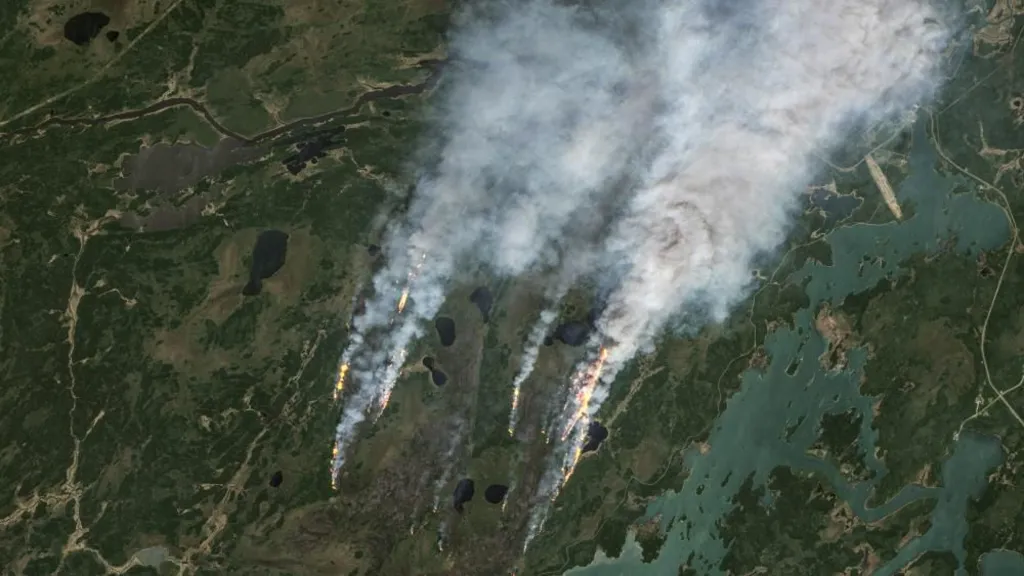
According to the Wednesday count, 22 active wildfires were ablaze in Manitoba where 102 fires this year have marked the province's growing vulnerability to more extreme weather conditions where the 20-year annual average has been 77. Firefighters from New Brunswick, Alberta, British Columbia and Prince Edward Island were relocated to give assistance in Manitoba. Three First Nations in northern Saskatchewan declared a joint state of emergency where thousands have been forced from their communities amidst escalating wildfires. 
 
https://ichef.bbci.co.uk/news/1024/cpsprodpb/35e8/live/e1b17740-3d99-11f0-bace-e1270fc31f5e.jpg.webp
Smoke rises from wildfires in Manitoba, Canada   Copernicus Sentinel-2/Reuters
 
They report that there are "critical shortages" of firefighting resources, personnel and air support, a joint statement by the Lac La Ronge Indian Band, Peter Ballantyne Cree Nation and Montreal Cree Nation and Montreal Lake Cree Nation advised. 1,300 residents of Swan Hills, north-central Alberta, were ordered on Monday to leave ahead of an advancing fire whipped by raging winds.  
 
https://i.cbc.ca/ais/2316649e-d01b-4850-8109-af8f11bb80e2,1748635867283/full/max/0/default.jpg?im=Crop%2Crect%3D%280%2C0%2C1920%2C1080%29%3BResize%3D620
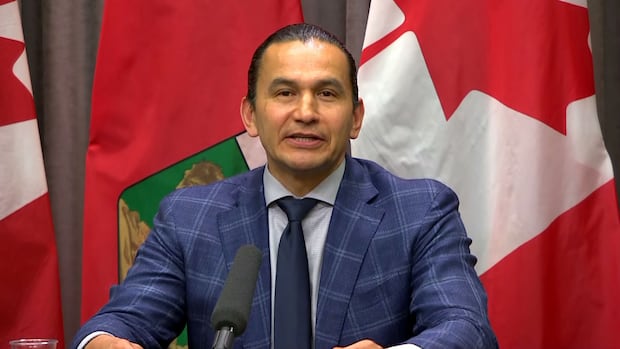
Premier Wab Kinew updates on wildfires.
"Everyone who is working on your behalf is working together, and ... we are making important progress to move Manitobans to safety, to push back the wildfires and to ensure that people will be able to return to their homes and the lives that we're so proud of here in this province."
"I think the most important thing for Manitobans to understand is that we need to be calm. The situation can be very concerning, can be very emotional."
Manitoba Premier Wab Kinew
 
https://dht7q8fif4gks.cloudfront.net/2025-05/2025_05_wildfire_water_LacduBonnetEmergencyManagementFBpage_0.jpg
(Photo Credit: Facebook.com/lacdubonnetemergencymanagement)
 

Labels: , , , , ,

Saturday, April 19, 2025

Alberta's Compassionate Intervention Act

"Those who suffer from addiction suffer from an illness, and that illness is treatable and recovery is possible."
"Not only is it possible, it is probable, if we build those pathways. And this Compassionate Intervention Act is just one of the tools and pathways that we will have in the province to help those individuals."
"Is there some constitutional right to 187 overdoses? Causing death on the street and personal carnage within your own life, leading to death and public disorder as well?" 
"I say there's not. But if the opinion of our legislature and the court disagrees, we'll have to address that when it comes there."
Dan Williams, Minister of Mental Health an Addiction, Alberta
https://i.cbc.ca/1.7511056.1744754920!/fileImage/httpImage/image.jpeg_gen/derivatives/16x9_1180/danielle-smith-dan-williams-announce-bill-53.jpeg?im=Resize%3D780
Alberta Premier Danielle Smith announces Bill 53, the Compassionate Intervention Act, as Mental Health and Addiction Minister Dan Williams looks on. (Emilio Avalos/RadioCanada)

The Alberta provincial government is poised to become the first province in Canada to legislate that drug addicts can be forced into treatment, to be held in secure facilities for up to three months at a time; alternately mandating that they complete six months of treatment in the community. Bill 53 was introduced this week by Alberta's Minister of Public Health and Addictions; should it become law, adult family members, guardians, health-care professionals and law enforcement agents could compel addicts into treatment. 

Those toward whom this law is aimed would be severe addicts for whom other treatment options have failed. "In our downtown cores, there are visible effects on every street, with individuals who have lost the ability to make healthy decisions, actively putting their lives at risk and causing fear and harm in the broader community", added Alberta Premier Danielle Smith.
 
https://smartcdn.gprod.postmedia.digital/calgaryherald/wp-content/uploads/2025/03/20250320014_safe-streets_police_transit_bylaw_calgary_jw014_294519134.jpg?quality=90&strip=all&w=564&h=423&type=webp&sig=UQKikF485zpL9I4u_Ihu4A
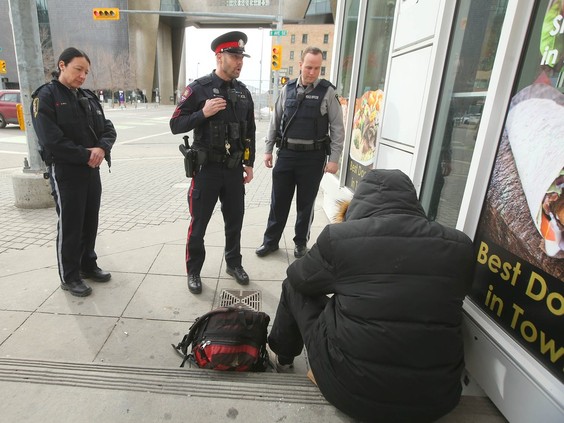
Community Safety Insp Susan Wall, Calgary Police acting Staff Sgt Derek Klassen and Transit public safety Acting Deputy Chief Michael Pratt speak to vulnerable citizen following a press interview in East Village in Calgary. The man was asked to move along because the business was attempting to open. Jim Wells/Postmedia

Opium overdose killed 2,283 people out of a total of 1,414 who died from drug poisoning last year. Addictions issues come at a cost to the province of $7 billion annually for health care, lost productivity and justice-system costs. Marshall Smith, the premier's former chief of staff, a former addict himself, originated the idea of mandatory treatment. To place an individual into mandatory treatment, an application would have to be made, reviewed, and a lawyer sitting on an independent commission would be tasked with determining whether that individual is eligible for a 72-hour detention for assessment. 

The case would be reviewed by a three-member commission team comprised of a lawyer, a physician and a member of the public, once an individual has been apprehended by police. The commission decision would be subject to judicial review of the consensus decision. Legal counsel for the prospective patient would be present at the assessment. To be committed to treatment, a detained adult would be identified as likely to cause harm to themselves or others within a reasonable length of time. Those under age 18 would be exempted from the 'reasonable time' guideline.
 
Only a small segment of the population would be eligible for compassionate intervention, in recognition that the severity of addiction is a qualifying metric. An example might be individuals who visited hospital emergency departments for substance use on over ten occasions. Individualized treatment plans would be reviewed every six weeks for those remanded to treatment, and patients could be transferred between community care plans and secure facilities as required. They would be unable to refuse medical treatment, during this period.
 
https://smartcdn.gprod.postmedia.digital/calgaryherald/wp-content/uploads/2025/03/homeless-encampments.jpg?quality=90&strip=all&w=564&type=webp&sig=d11Fq5NZkUfSqiSW0KsIXg
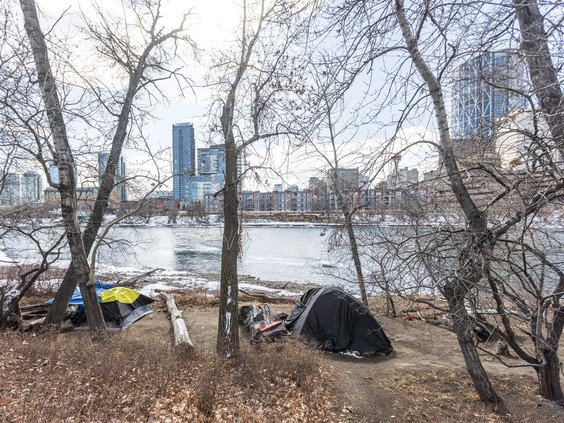
A homeless encampment photographed on the north bank of the Bow River in Calgary. Brent Calver/Postmedia


Labels: , , , ,

Sunday, August 25, 2024

"Safe" Injection Sites?

"Here are the so-called experts in the [federal] government telling us the best thing for us to do is to hand out high-powered pharmaceutical opioids to the drug addicts, that are two to five times more powerful than the drugs they get on the street."
"Make it pure pharmaceutical grade and somehow this is better?"
"There's nothing compassionate about leaving somebody intermittently homeless in minus -40 weather, speedballing methamphetamine with fentanyl, and saying that we're just going to let that person sort this out because it's about free choice."
"You can't build a system out of thin air. It is a huge culture shift. Even the creation of Recovery Alberta -- it's in the name, 'recovery' -- we're changing the way we're thinking about mental health and addiction from its fundamental assumptions for the past 25 years."
Alberta Mental Health and Addiction Minister, Dan Williams
 
"Our first priority must always be protecting our communities, especially when it comes to the most innocent and vulnerable."
"People are not going to die. They are going to get access to services. I do not call watching people inject an illicit drug, health care in the province of Ontario."
"We need to do better and we can do better."
Ontario Health Minister Sylvia Jones 
https://i.cbc.ca/1.7132648.1709646003!/fileImage/httpImage/image.jpg_gen/derivatives/16x9_780/somerset-west-community-health-centre-march-2024.jpg
The supervised drug consumption site run by Somerset West Community Health Centre in Ottawa will be forced to shut down in March. It may apply to become one of the province's new 'HART hubs,' part of the Ontario government's shift away from harm reduction. (Sam Konnert/CBC)
 
Ontario is now moving toward 'doing better' by heeding the cries of residents who decry the operation of 'safe injection sites' in neighbourhoods that have been affected by rising crime reflecting these operations and in particular the placement of many of these sites in close proximity to schools. There is also the considerable dysfunction of their presence attracting illicit drug dealers to the area of the sites to conduct business. And then, the undeniable reality of site 'clients' trading their 'free drugs' on the street for more potent drugs to give them a desired high, thus increasing the availability of drugs on the street.

Supervised consumption sites situated within 200 metres of schools and childcare centres are now being closed down by the Ontario government. This shift in policy will see ten of 17 supervised consumption sites cross-province being shut down. The health minister explained that parents concerned for the safety of their children around these consumption sites has motivated the government to finally act. Citing the increase by 146 percent of violent crime near one particular site.

Not unexpectedtly this announcement took consumption and treatment services personnel by outraged surprise. It took them little time to respond with the warning that the move would inevitably lead to greater numbers of deaths by overdose. Alongside the closure of these sites the government announced prohibition of any new supervised consumption sites from opening, let alone further participation in federal funding for safer supply initiatives. 

A twin announcement of a $378-million investment in 19 new homelessness and addiction recovery treatment hubs to provide primary care; mental health services; addiction care support; social services and employment support; shelter and transition beds; supportive housing; and other supplies and services, including naloxone, failed to impress critics of the wholesale government 'safe supply' restructuring initiative.
"We are gravely concerned that the decision to defund and close consumption and treatment services will have devastating consequences for our community."
"Our services save lives by providing a safe space. That is what consumption and treatment services were designed to do, to reverse overdoses and prevent deaths and connect people to the services they need. Consumption and treatment services are a cornerstone of harm reduction."
Suzanne Obiorah, executive director, Somerset West Community Health Centre, Ottawa

"The announced steps mean unsafe communities, more deaths, overwhelmed emergency services and spiking health-care costs, and leave nurses wondering who the government is trying to serve."
Doris Grinspun, head, Registered Nurses Association of Ontario
The answer to that is quite simply; the government serves all. The placement of the 'harm reduction sites' that are scheduled to close, has been harmful to the communities they are contained in. Violent crime has risen exponentially, so has property damage and theft, drug paraphernalia litters the streets, and fears for the welfare of area children abound. Proximity to schools sees drug users verbally abusing schoolchildren. Inveterate drug users also threaten nearby residents with physical harm. These people too are deserving of the government's concerns.

The Province of Alberta is addressing very similar issues and has dedicated its health system to addressing the issue of mental health, homelessness and drug addiction in a more thoughtful manner. Their Canadian Centre of Recovery Excellence will research best practices, analyze data and ensure that evidence-based recommendations for "recovery-oriented systems of care" are undertaken. Their online portal tracks EMS responses, emergency room visits, overdose reversals and deaths.

And nor is this new direction confined to these two provinces alone; the Quebec government has decided to meet demands of the residents of Montreal where a housing project catering to unhoused people with addiction or mental health issues located across from an elementary school, including a supervised drug-use site has locals and parents fed up with its presence. Open drug use and aggressive behaviour are but two of the issues involved at Maison Benoit Labre.

https://i.cbc.ca/1.6956383.1693830488!/fileImage/httpImage/image.png_gen/derivatives/original_1180/supervised-inhalation-site-monreal.png
Maison Benoît Labre provides services for people experiencing homelessness in the Saint-Henri neighbourhood. (Christinne Muschi/The Canadian Press)

Labels: , , , , , , ,

Saturday, July 16, 2022

The Principle of Preservation

"The proposition that treating physicians exercising clinical judgment would be subject to the charter would result in medical chaos with patients seeking endless judicial review of clinical treatment decisions."
"If the plaintiff is successful [in her application], the result would be to create two classes of organ recipients, one for the applicant and another for all other recipients who voluntarily complied with all of the surgical preconditions. this would result in unfairness to the other recipients."
Court of Queen's Bench Justice Paul Belzil, Edmonton, Alberta
 
"[I] ought to have the choice about what goes into my body."
"A life-saving treatment cannot be denied to me because I chose not to take an experimental treatment for a condition -- COVID-19 -- which I do not have and which I may never have."
Annette Lewis, 57, transplant patient
 
"[Transplant patients who receive a COVID vaccination after the procedure show] significantly less immunologic response to COVID-19 vaccinations and therefore less protection when vaccinated post-transplant."
"[One cohort of patients unable to receive a pre-transplant COVID vaccine and later caught the virus suffered a 40 percent mortality rate]."
Group statement of six doctors named in the Lewis lawsuit
An Alberta judge ruled Tuesday that it's not unconstitutional to deny an organ transplant to a woman who refuses to get the COVID-19 vaccine. (Frederic J. Brown/AFP/Getty Images)
 
In 2019 the Edmonton woman was diagnosed with a life-altering condition, with one of her internal organs (unnamed for privacy purposes) failing, making it imperative to prolong her life, that she be placed on an urgent transplant list. Annette Lewis attended the transplant program at her local hospital and was upgraded to the highest priority wait-list for an urgent transplant procedure. In March of 2021 doctors informed  the woman she would require a COVID vaccine prior to undergoing surgery.

Because she adamantly refused to be inoculated against COVID, Ms.Lewis's transplant surgery was put off until such time that she might change her mind. This did not happen. She chose instead to take Alberta Health Services and the six doctors involved in her medical treatment to court for their decision to be overturned, allowing her the transplant without being vaccinated. Despite that Ms.Lewis, having undergone all preconditions for surgery including a round of prescription medications including a repeat of close to a dozen childhood vaccinations, she steadfastly refused to be vaccinated against SARS-CoV-2.

Taking the vaccine, she said, "offends her conscience". Circumstances which the presiding justice spoke of as "very sad", but rejected the purpose that Ms.Lewis had assigned to the court; to rule against the six doctors and Alberta Health Services. Alberta Health Services along with the doctors responded that organ transplant patients are at greater risk of dying from COVID-19, as a result of the immune-suppressing drugs needed in prevention of a patient's body rejecting the transplanted organ.
 
Beyond which, the doctors noted the transplant program heeds a moral duty that donors, their loved ones and other transplant recipients, have confidence that scarce organs are allocated in a manner to ensure the most success of short- and long-term survival. A wait-list mortality rate of 20 percent is attached to the program that Ms.Lewis joined; in other words, one in five patients die while awaiting transplant.
 
During a hearing before Justice Belzil delivered his verdict turning down Ms.Lewis's application, lawyers for Alberta Health Services made use of expert evidence from doctors with Johns Hopkins University and Toronto's Ajmera Transplant Centre, along with that of Michael Houghton, University of Alberta's Nobel-prize-winning virologist and vaccinologist. Ms.Lewis made use of two anti-vaccine personalities associated with the anti-mandate Canadian COVID Care Alliance.

Alberta judge rules doctors ok to drop unvaxxed patient from transplant waitlist
"[It is a question of whether physicians, who are legally] independent contractors [directly liable to their patients, are] free to decide which expert opinions they accept in exercising their clinical judgment."
"In order for the medical system to function properly, treating physicians who are providing clinical advice, must be free to do so and are not governed by the charter but rather by the standard of care which is owed to every patient."
"It is beyond dispute that the applicant is the sole arbiter of what goes into her body."
"I do not accept however, that her beliefs and desire to protect her bodily integrity entitle her to impact the rights of other patients or the integrity of the [transplant program] generally."
Justice Paul Belzil

Labels: , , ,

Sunday, October 03, 2021

Addressing the Vaccine-Hesitant

"It's a good vaccine. But it's not an mRNA vaccine, and we have approved it."
"It's not a bad idea, as long as  you have an honest conversation with people about what the risks and benefits are, and one of the risks, of course, is a pretty severe blood-clotting event."
"If it would get more people vaccinated, and people can make an informed decision, I think it would be really wise to have an alternative, if people wanted it."
Dr.Isaac Bogoch, infectious diseases specialist, Toronto

"Your body doesn't have the cellular machinery to reverse from RNA to DNA. It's kind of like speculating you can flap your arms and fly without feathers."
"[All vaccines authorized in Canada are] really, really good. Humans are made of twisted timbers. [Some say the technology is] too new [though researchers worked on it since the 2003 SARS-1 outbreak]."
"There's always an excuse for hesitation that can be built around any technology. I just see this as the latest in that long history."
Dr. Amir Attaran, professor of law and health policy, University of Ottawa
 (Dirk Waem/BELGA/AFP via Getty Images)
A desperate solution is sought to an impasse between health authorities and the millions of Canadians still uncertain, along with hard-core anti-vaxxers who refuse to be inoculated against COVID-19 imperilling plans to vaccinate sufficient numbers of eligible people to produce the hoped-for 'herd-effect' that would neutralize the menace of contagion by SARS-CoV-2 causing COVID. Those in government who rely on the professional advice of medical experts see agreement that the one-shot Johnson & Johnson vaccine might fill part of the vacuum.

In Saskatchewan and Alberta, the two western provinces of Canada with the lowest vaccine uptake rate and the commensurately higher infection rate hope is that in offering the Janssen single-shot those who are hesitant might be convinced to being vaccinated. The J&J vaccine is a viral vector like AstraZeneca. The National Advisory Committee on Immunization had advised in May that Pfizer and Moderna represented preferred vaccines in view of a rare risk of a blood-clotting disorder.

Following that, thousands of AZ appointments were never met, attributed to news reports of its potential side effects. March saw authorization of the Janssen vaccine and months later the government of Canada announced its donation of ten million unused doses to low-income countries in view of plentiful supplies of Pfizer and Moderna with little demand for any other vaccine. Offering the J&J single-shot vaccine is a gamble, with uncertainty over how many people will express interest in "a vaccine but not an mRNA" vaccine.

Johnson&Johnson, however, recently recommended a booster shot, in other words a second dose, to increase antibody levels. Blood-clotting potential in these vaccines is a concern. Thrombosis with thrombocytopenia syndrome causes unusual blood clotting and low platelet levels in blood which increase risk of strokes or heart attacks. U.S. data reveal an estimated one in 300,000 people vaccinated with Janssen's COVID vaccine have the potential to develop TTS in comparison to one in 100,000 with AstraZeneca.

mRNA vaccines on the other hand, are not seen to risk TTS events. Which hasn't stopped misinformation that mRNA vaccines have the potential to modify DNA, permanently altering people's attributes, including causing sterility in women. That Pfizer and Moderna make use of genetically engineered messenger RNA instructing body cells in producing spike protein that SARS-CoV-02 uses to latch onto and invade cells makes people suspicious of its supposed intrusion into other areas of cell integrity.

J&J has been used in the U.S. to vaccinate 15 million Americans, where the largest concerns motivating the unvaccinated to become inoculated against COVID have been, understandably, rising hospitalization rates and death rates, according to the Kaiser Family Foundation. According to Health Canada -- of 15,090 reports of adverse events after vaccination representing 0.029 percent of all doses administered, 4,288 (0.008 percent of all administered doses) were rated to be serious complications.

Some Albertans are demanding access to the Johnson & Johnson vaccine for faster access to full immunity - particularly now the province has adopted an opt-in vaccine passport system. (Christophe Gateau/dpa/The Associated Press)

Labels: , , , , , ,

Friday, October 01, 2021

"A Crisis of the Unvaccinated"

"I think burnout and trauma looks like dreaming about those deaths or seeing those faces [of former patients who died]."
"When I heard 34 deaths [in Alberta, Wednesday], that's what triggered it. I heard, oh my goodness, so many deaths. Now I'm remembering every -- every-- story that I could remember." 
"What bothers us -- or torments us, I guess -- is that these patients often are alone, and nobody should die alone. But it's also difficult that we have the volume that we have -- you can't be with every single patient."
"I think more and more physicians, particularly, and health-care workers are speaking about how they're feeling, how exhausted they're feeling, and there's some comfort in that -- misery likes company."
"You feel better that you're not the only one going through it."
Dr.Neeja Bakshi, internal medicine ward, Royal Alexandra Hospital, Edmonton, Alberta

"What's become really clear is it's really the people, the workforce, that becomes a critical issue."
"It's been tough on morale and people are tired, lots of people are off, being burnt out, and such and it's put a lot of demand on the people that are here."
Dr.Paul Boucher, intensive care, president, Alberta Medical Association

"By the time they come in to us they're so sick that they just can't focus on anything other than just trying to stay alive. This one is hitting us hard and fast every time we turn around and we can barely keep up with the patients."
"Right up to the point where we're saying 'Listen, we're getting to the point where we're going to have to put a breathing tube into you', they're denying that they have COVID." 
"Part of that denial is what's bringing them in so sick in the first place, because they've spent so much time at home trying to ignore the fact they're sick."
Carlene Cooke, emergency room nurse, Royal Alexandra Hospital, Edmonton
 
"Every time there's been a wave, the ICU becomes increasingly more involved."
"Pretty much anybody, when  you come to ICU, you're scared. That's a bad day. So they're unhappy."
"The families, they're fearful, too, no matter what the situation is, and it's made worse by the fact they can't visit."
Dr.Erika MacIntyre, Edmonton Zone Medical Staff Association president, intensivist and respirologist, Misericordia hospital, Edmonton 
A staff member works in an Alberta hospital ICU during the COVID-19 pandemic. On Wednesday, there were 1,084 people being treated for COVID in hospital, 268 of whom were in intensive care beds. (AHS)
 
Of all of Canada's provinces, Alberta is facing the most extreme episodes of hospitalization and deaths due to the Delta variant of COVID, and the fact that it has the highest rate of vaccine rejection among its population, particularly in rural areas. Anti-vaxxer pushback against government and medical authorities' efforts to convince Albertans that the contagion will ebb only when enough people are vaccinated fall on deaf ears. And these are the very people, most vulnerable in the province, who are clogging the health-care system.

A shocking 34 COVID patients died on Wednesday alone, in Alberta representing the  highest death toll due to the SARS-CoV-2 virus since the pandemic began, to take place within a 24-hour stretch. The internal medicine ward at the Royal Alexandra Hospital is where patients are admitted for treatment when they're not yet sufficiently ill to be transferred to the intensive care unit. The former is where patients are told to lay on their stomach, to heave deep breaths, to walk if they can manage it, in an effort to assist the body fighting off the disease.

There are 1,084 people in Alberta Hospitals, according to provincial statics, 268 of whom are now fighting for their lives in intensive care units. The total number of active cases stands at 20,306 in the province where its premier, Jason Kenney speaks of it as a "crisis of the unvaccinated". Seriously ill patients unable to be accommodated in COVID-crammed hospitals have been air-lifted elsewhere, to other provinces willing to take them because their hospitals are in a less parlous state.

Hospitals in Alberta with cases rising since mid-August, are on the verge of implementing a triage protocol which would lead to doctors having to determine who would receive hospital treatment and who would be turned away in a situation where, over the past two weeks, case  rates are escalating in rural areas and among school-age children. Modelling predicts that cases will peak some time around mid-October, leaving hospitals expecting at least another two weeks of continuing pressure on their services.

The crisis is multi-faceted given the reality of a space crisis with patients requiring beds, ventilators, oxygen. Multiple patients are placed together per room doctors and nurses applying their skills in cramped spaces checking on patients keeping up with increasing rates of vital signs reflecting the unpredictability of the virus. All that being a given, the crisis's real and most serious shortage is medical personnel. Morale among medical staff is low, and there are fears that the strain will lead ultimately to people leaving their jobs and their profession.

What strikes doctors on the front lines is not quite only the number of increasing mortalities, but that this is an illness that is preventable, and those who succumb to it without taking the most basic of precautions -- inoculation -- present at hospital seriously ill. And then there is the crux of the problem; misinformation absorbed by people refusing vaccines, demanding instead alternative treatments such as ivermectin, the anti-parasitic many are led to believe represents an effective COVID treatment.
"The ones that are really gung-ho about sometimes refusing intubation, demanding ivermectin, for example, and really not accepting the diagnosis of COVID, those are very, very rare circumstances, but because they're so extreme they're really the ones that stand out."
"You can see the emotional drain that everybody has been facing. The physical exhaustion of managing these patients, managing the current environment in terms of ongoing staff shortages, and people working harder than they normally would be working."
Dr.Shazma Mithani, intensive care unit, Royal Alexandra Hospital, Edmonton
Bernie Cook was hesitant to get the vaccine when he caught COVID. His sickness gave him first-hand experience through one of Alberta's crowded ICUs. Now he's warning others to take action to avoid the same fate.   CBC

Labels: , , ,

Wednesday, July 21, 2021

Chronic Wasting Disease

"I would say this question [whether the wasting disease afflicting deer could infect humans] was answered with 'yes'."
"The more we did, the more we could confirm the macaques [laboratory experimental monkeys] were infected."
Hermann Schaetzl, veterinary scientists, University of Calgary

"It's easy to go down a doomsday scenario but I don't think we're there yet."
"I think it's low-risk."
Dr.Keith Lehman, provincial veterinarian, Alberta  
 
"I was shocked when we first learned of the results. It's absolutely confirmative that this happened — you could give macaques a prion disease through oral consumption of contaminated meat."  
"[For] many people with a spinal cord syndrome, it wouldn't even occur to the treating neurologist that this could be a prion disease. It's going to take some education and alertness to even think of the diagnosis." 
"I hear the alarm bells going off."  
"I would have expected a human case to emerge in the U.S. before Canada. But on the weight of evidence, I think it's not only not impossible, it's kind of expected at this point."
Neil Cashman, prion expert, University of British Columbia 
New research on chronic wasting disease has raised new fears about whether the illness could infect humans. (Radio-Canada)

Decades ago the world was horrified when an outbreak of variant Creutzfeldt-Jakob disease saw people dying horrible deaths in the United Kingdom, linked to the consumption of infected internal organs from cattle finding their way into animal feedlots, butchered animals for human consumption then passing on the disease that causes degenerative brain wasting as a result of proteins called prions that were abnormally shaped. Once infected, deterioration was swift and deadly, a horrendous scenario.

Now, a spread of a fatal wildlife disease in Alberta and Saskatchewan is infecting deer across a wide area of the Canadian Prairies. Research about to be published on Chronic Wasting Disease highlights fears over whether the illness could end up crossing the species barrier and infect humans. A recent report from the Canadian Agri-Food Policy Institute advising the federal government on agriculture policy resulted from a study of Professor Schaetzl's research.

The Institute had concluded that the spread of the disease over the past decade is a dire threat to Western Canada's agriculture, wildlife and food security. Quite apart from, but connected to concerns over transmission to humans. "It's continuing to increase in its spread and the speed of its spread", the Institute's strategy officer, Ted Bilyea, stated.

"The southern range [of caribou] is pretty much the northern range for our survey. If [prions] pass through that, then we have a genuine food security problem for our northern people." Dr.Bilyea is referring to hunters, susceptible to contracting the disease in the closeness of their proximity to infected animals, mostly First Nations hunters. "We don't have any buffer zone. It's not a very pleasant idea, but this is not a very pleasant topic."
 
Chronic Wasting Disease is a prion disease which deer, elk and caribou, in both wild and farmed populations in Canada, the U.S., and more recently in South Korea and Scandinavia are susceptible to; highly contagious between hoofed animals. It is spread through saliva, animal carcasses and fecal matter. Soil and vegetation in areas where infected animals have died can be contaminated with it. The pathogen can survive up to a decade in an area. Data indicates potential transmission to cats, pigs, sheep, cows and rodents.
 
It attacks the nervous system of afflicted animals and its presence is always fatal, the morbid illness is excruciating but fairly swiftly concluded in death. Misshapen prions cause the wasting disease, quite similar to Creutzfeldt-Jakob in humans; the prions are able to persist in the environment and to transfer their disease-causing shape to healthy proteins. 
 
An experiment that was conducted on macaque monkeys -- as the closest animal genetically to humans -- in 2006 by German scientists fed macaques with meat from contaminated animals. With the knowledge that the disease can take years to develop the monkeys were not tested until two years ago with the first tests being ambiguous. It soon enough became clear, however, that the monkeys had developed low-level infections.
 
Dr.Schaetzl had been involved in the confirmatory tests, and although his work is in the process of peer-review before publication it was presented in conferences, subsequently widely discussed among experts in the disease. According to Dr.Cashman of the University of British Columbia, a leading prion expert, his opinion is that people could already be suffering from a human form of chronic wasting disease.
 
Deer and elk farmers are required in Saskatchewan and Alberta to test every animal on their farms that dies, including those that are slaughtered, in an effort to ensure that tainted meat is kept out of the food supply. Although theoretically domesticated cattle could be contaminated by wild animals with the disease, no cases of this occurring have yet been recognized.

A portrait of a beautiful male elk during the late autumn season in the backcountry of British Columbia. Mount Assiniboine Provincial Park.

Labels: , , , , ,

Tuesday, October 13, 2020

The Tragedy of Canada's COVID Long-Term Care and Retirement Homes

"[Residents were gasping for air, their oxygen level had plummeted, they clearly had COVID-19 and were dying] and no one was there to provide the proper care, or look after them."
"I'll just be very open with you. It's still something I think about every day. It haunts me. I wish I could have done more."
"If we think back to those early days in February and March, what we were all worried about was a scenario like Italy and New York. A lot of the focus was on protecting acute care -- acute care hospitals, making sure we had enough ventilators. Some of those fears are coming back, and rightfully so. But we also have to do all we can to protect long-term care."
"These homes are not on separate islands."
"We know from the first wave it was health workers who unknowingly spread the virus."
Dr.Amit Arya, palliative care doctor, University of Toronto, McMaster University

"It's unsurprising to me, sadly, that we're having outbreaks in long-term care homes."
"[...The second wave began around the beginning of September] And since that time we've continued to accumulate two to three long-term care homes a day that are going into outbreak. Because who works in long-term care homes? They're people who don't live in long-term care homes. They come from the community where the transmission is high, and they are going to become infected themselves by living in the community and unknowingly import the virus [into care homes]."
"What happened in the spring was truly a humanitarian crisis. If we do not create emergency response plans that include things like this, the same level of catastrophe will happen again."
Dr.Nathan Stall, geriatrician, Sinai Health System, University Health Network, Toronto
Toronto’s Seven Oaks long-term care home, which was hit hard by a COVID-19 outbreak affecting residents and staff, is pictured on April 9. Deaths in long-term care represented more than 70 per cent of all COVID-19 deaths in Quebec, Ontario and Alberta. (Evan Tsuyoshi Mitsui/CBC)
 
What happened in the spring is what Dr.Amit Arya, who was part of a long-term rapid action response team dispatched into homes when they were in desperate straits came face to face with: residents ill, unprepared care workers, insufficient PPE, not enough workers to look after the most basic needs of the ill, the elderly, the infirm who went unattended, unfed, unwashed, thoroughly neglected, all too many of whom ended up dying. When the rapid action response teams entered those homes they sometimes found residents dead in their beds.

With a second wave of COVID-19 hitting provinces like Ontario, Quebec and Alberta in particular, Dr.Arya has horrible visions of similar scenes becoming a reality once again. In the spring when case numbers at homes and deaths were revealed to a horrified public, governments vowed to protect the vulnerable with new legislation, new hiring, new regulations. That was then, this is now. COVID is shifting from high case numbers in the young age 20 to 39 group that revealed itself over the summer to an increasing number of cases in older people.

Dr.Theresa Tam, chief public health officer of Canada has warned of a growing number of outbreaks in long-term care: "While these outbreaks involve a smaller number of cases than in April and May, we know that spread in these facilities often leads to death". Over 9,100 Canadians died in the spring, and outbreaks in long-term care and retirement homes represented fully 75 percent of all such deaths in the country.

Active outbreaks have been identified more latterly in 58 long-term care homes in Ontario alone, and in the past month 40 COVID-19 deaths. The Red Cross has been dispatched into seven homes in the Ottawa area to aid: "assess and stabilize the situation", in the words of federal Public Safety Minister Bill Blair. At the Millwoods Shepherd's Care Centre in Edmonton, 53 residents and 27 staff have tested positive, while seven residents have died.

Quebec, New Brunswick, British Columbia and Alberta have all reported outbreaks in their long-term care homes. An interim report from Ontario's patient ombudsman reflected reports of COVID positive staff forced to attend their work stations with staffing shortages making it beyond difficult to provide even the most basic care -- yet again, in a reflection of the spring situation. According to medical experts, Ontario and Quebec reduced the curve in the spring, containing community spread, while isolating the infection in understaffed, ill-prepared, long-term care homes.
 
 
Over 840 outbreaks took place at that time, the situation becoming so dire that members of the Canadian military were asked to attend nursing homes where they discovered residents were unwashed, dehydrated and occasionally, dead. Dozens of studies and advocates had given fair warning for decades of just such a once-in-a-lifetime pandemic, but to no avail. No governments anywhere were prepared for the eventual arrival of a global pandemic, all were taken by surprise when the SARS-CoV-2 virus causing COVID-19 made its appearance, bolting out of China.

British Columbia stands out for its foresight where a system of full-time work was promoted with standardized wages and sick leave for health workers limited to a single home. At the second week of September Ontario reported 1,827 resident deaths from COVID-19 in long-term care homes, in comparison to 156 deaths in B.C. homes where multiple-resident shared rooms were uncommon, but not in Ontario where shared rooms are standard.

Countries that implemented additional long-term care precautions at the same time as standard stay-at-home orders had fewer long-term care infections and deaths, says Tracy Johnson, CIHI's director of health systems analysis and emerging issues. (Evan Mitsui/CBC)

Labels: , , , , , ,

 
()() Follow @rheytah Tweet