Ruminations

Blog dedicated primarily to randomly selected news items; comments reflecting personal perceptions

Tuesday, March 16, 2021

SARS-CpV-2 Mutant Strains Emerging Threat

"We don't want this 55 percent number to scare people into thinking 'this is a big risk for me', [unless people are elderly or otherwise very sick]."
"[...It is seemingly deadlier], and that really does add up over an entire population."
"Over the course of 2020, treatments for COVID-19 had improved so much -- the survival rate by the end of summer was twice as good as the beginning of the pandemic."
"And yet we've had this huge burden of death since B.l.l.7 arose."
"It's still very high for an infectious disease, and we're talking about millions of people getting infected. It's not just something you can ignore."
"...The virus replicates to larger numbers within the person. [Evidence exists that people shed virus for longer periods, so it could be that treatments don't work as well against the variants]. But it's still not really super-clear."
Nicholas Davies, epidemiologist, London School of Hygiene & Tropical Medicine
A doctor speaks with a patient on Monday during a demonstration of a mass vaccination clinic in Cobourg, Ont.
A paper published in the journal Nature presents the latest findings where researchers estimate the variant technically known as B.1.1.7 more generally called the U.K. strain, averages out to be 55 percent more deadly than the original, early versions of the SARS-CoV-2 virus causing COVID-19. Based on an analysis of over a million people testing positive for COVID-19 in Britain in the period from September 2020 to February 2021, researchers compared death rates between people who had B.l.l.7 infections and others infected by earlier strains.

Those infected with the variant turned out to be between 39 and 72 percent likelier to die from the effects of the mutant COVID strain. Bearing in mind the absolute risk of death is relatively low but increasing from 0.6 to 0.9 percent for 55- to 68-year-old men. Evidence already existed that the variant is more contagious; between 43 and 90 percent more transmissible, according to earlier work by Dr.Davis and his colleagues.

The B.l.l.7 variant spread from the county of Kent in southeast England in early October of 2020 to London, then swiftly on to the rest of the United Kingdom by the end of December. At present, the variant accounts for over 99 percent of COVID-19 infections in the U.K. resulting in as many COVID-linked deaths -- roughly 42,000 in the first two months of the current year -- as had occurred in the first eight months of the pandemic onset.

Last week the same variant, according to scientists' warnings appeared poised to drive a third surge of infections in Ontario. A reality signalled by hospitalizations and ICU admissions increasing. The new 'variants of concern' accounted for 49 percent of confirmed cases in Ontario. Another British study based on the same data as the Nature paper but from the perspective of an alternate statistical method estimated that the B.l.l.7 strain could be 32 percent to 104 percent more deadly than previous variants in circulation.

It was found that the death risk in the "largely unvaccinated population" averaged out to 64 percent. Variants sch as the U.K. model along with others in Brazil and South Africa "highlights the capacity of SARS-CoV-2 to rapidly evolve new phenotypic variants, with mutants that evade vaccines being a real possibility" wrote the authors of the second study, published in the British Medical Journal. All vaccines tested against B.l.l.7 have proven to be effective against COVID-19.

Some scientists warn that the variants are capable of sparking a third surge of COVID-19 in a mere matter of days, in Ontario. A total of 3,302 people across Canada tested positive for "variants of concern" while the vast majority of 3,031 were susceptible to the U.K. strain. Florida, California and Texas are also seeing the spread of the variant. People seek comfort in pointing out that individual risk is low and point to the fact that infections are more severe with higher viral loads.

Masked pedestrians during a surge in coronavirus cases in the San Francisco Bay area in December 2020. A new study suggests a prevalent viral variant there may be more transmissible and lethal.   AP Photo/Jeff Chiu

Labels: , , , , ,

Friday, February 12, 2021

Assessing COVID Variants in Potentials for Oncoming Waves

"No matter how the virus changes, it needs us to be close enough to each other and to have interactions to let it jump between us." 
"If we don't give the virus those opportunities, it simply can't spread no matter what variant it is."
Emma Hodcroft, virologist, University of Basel, Switzerland
 
"B.1.1.7 was first sequenced in the UK on 20 September. It caught the attention of scientists on 8 December, when they were looking for reasons for the surge of cases in south-east England."
"B.1.1.7 has 23 mutations compared with the original SARS-CoV-2 virus first discovered in Wuhan, China. Seventeen lead to changes in viral proteins. Many of these mutations have been found before and their overall number isn't unusual, but this combination is unique."
Michael LePage, News & Technology
 
"[All this is bad news because it means tougher measures are needed]. Without effective control policies, rapid surges are predicted and the burden in the first six months of 2021 may be greater than what was seen in 2020."
Nick Davies, London School of Hygiene & Tropical Medicine
 
"This variant is more fit, or it works better. Naturally, there's going to be more of it and it's going to be transmissible more easily and grow more readily and then kind of take over, so to speak, the population of viruses."
"These new variants can still be detected with our current methods of detection, so that's one thing that should be reassuring. We can still detect these variants just like we've been able to detect the original strain." 
Dr. Daniel Rhoads, microbiologist, Cleveland Clinic
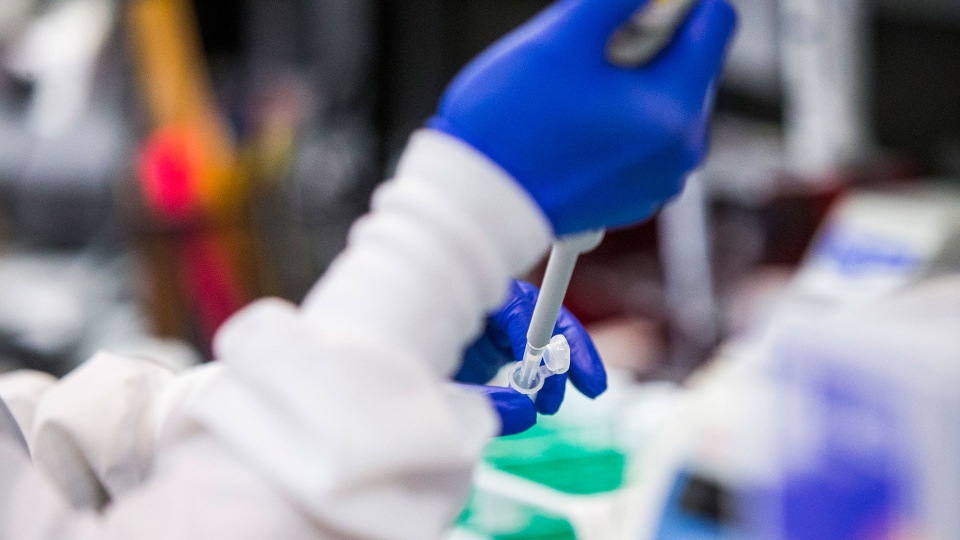
COVID-19 lab
The microbiology lab at the Health Sciences Centre in Winnipeg on Tuesday, Dec. 8, 2020. THE CANADIAN PRESS/Mikaela MacKenzie

The world has been in flux for a year and counting, since the entry of the SARS-CoV-2 virus causing     COVID-19 has disrupted everything conceivable about human life; health and safety, the world economy, mass employment, production, travel, the ability of health care systems globally to keep pace with the waves of infection, the state of people's general well-being in mental health, and more. Now that vaccines are in production and distribution to inoculate populations begin, nations vie against one another to acquire them.
 
And then, what? Back to square one when we think we're finally getting to the point where virus control is possible and life can return to approximating normal? Variants. Medical science knows all about mutations in viruses; they happen all the time. Variants so innocuously benign there is little difference from the controlled original and alternately, mutations causing variants of a type that is more infectious, more threateningly lethal, less readily controlled by the vaccines in circulation.
 
Variants that spread so rapidly they become the dominant strain, the successor to the original which begins to decelerate, making room for a more disturbingly efficient and deadly strain. And we start all over again. And until and unless vaccines are in widespread use, such that the pathogen begins its retreat, other mutations are assured, hundreds of them, most of no account, though occasionally several will emerge constituting yet another threat.
 
The U.K. variant has infiltrated 70 countries so far, from its original emergence in a county close to London, in the fall of 2020. In Canada, a long-term care home in Ontario experienced an outbreak infecting all 129 residents and 105 staff in January. Over half of the residents died of its effects. That is lethal efficiency. Its presence is steadily growing. When Britain instituted a lockdown in December because of its variant, many other countries banned travel to and from the United Kingdom. It is always too late.
 
Laboratory technicians wearing protective equipment work on the genome sequencing of the SARS-CoV-2 virus and its variants at the Pasteur Institute in Paris on Jan. 21. (Christophe Archambault/AFP/Getty Images)

The U.K. variant, B117 was initially identified as being up to 70 percent more transmissible in comparison to other minor variants, owing to its enhanced capacity to bind easily to human cells. At first it was thought not to be any more lethal than the original. Continuing studies led to preliminary findings from January suggesting that higher occurrences of death do indeed afflict people infected with the strain. Professor of mathematical modelling of infectious diseases, John Edmunds of the London School of Hygiene and Tropical Medicine said of the findings that they were "statistically significant", to be taken seriously. 
 
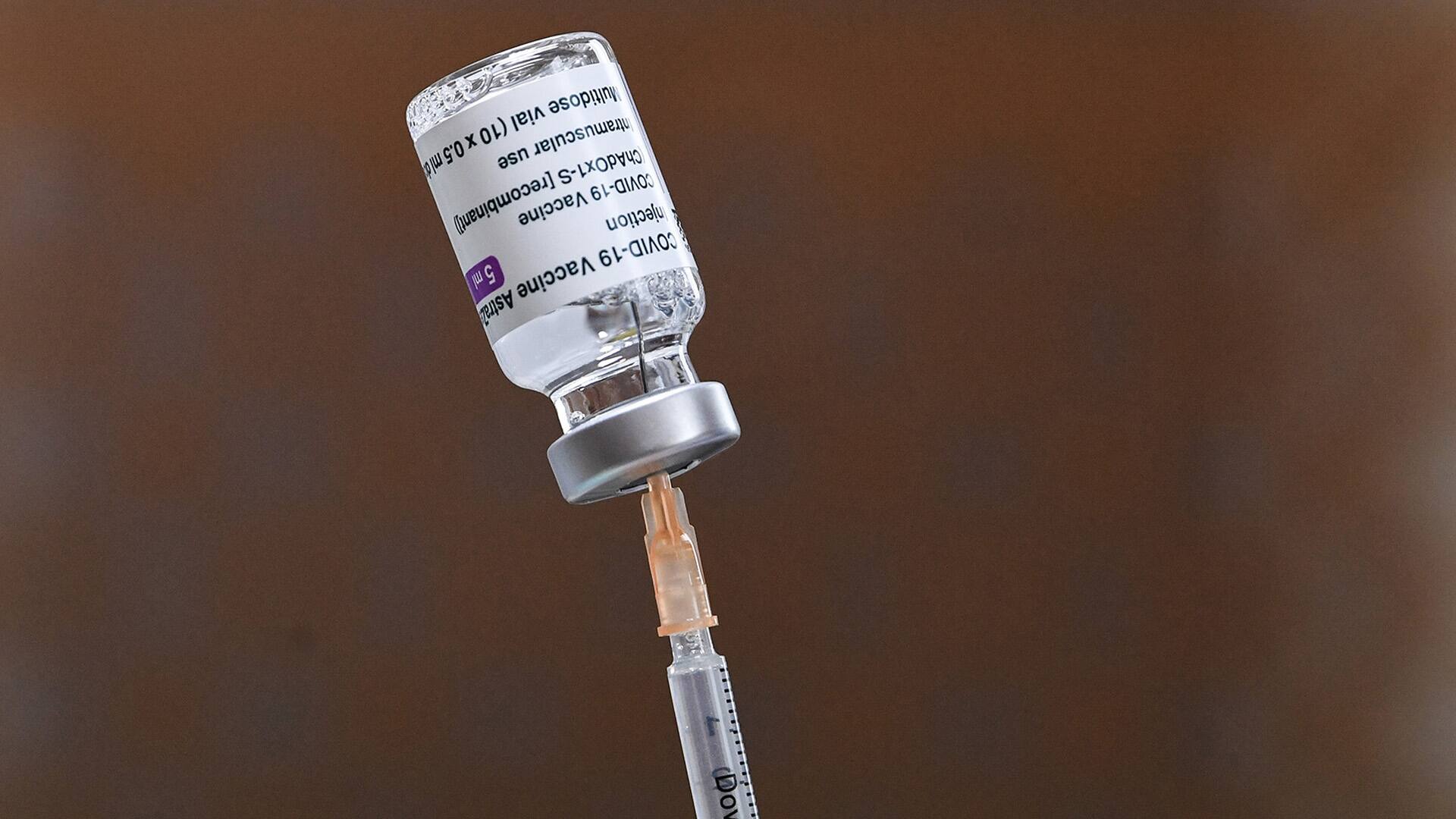
South Africa halted rollout of AstraZeneca COVID vaccine
The South African variant (B1351) detected in October 1,000 km south of Johannesburg, spread to other coastal areas of South Africa, now accounting for over 90 percent of cases in the country. It too has spread, discovered to have appeared in over 30 countries. Similar to the U.K. variant in being more transmissible; up to 50 percent, but no evidence has yet arisen that it may be more deadly than its original. It does, however, contain mutations reducing the ability of antibodies (vaccines) to bind to the virus to make them less effective.
 
Because this mutant strain weakens the body's natural immune response making people vulnerable to re-infection, South Africa interrupted its rollout of the AstraZeneca vaccine once data indicated it gave only minimal protection against mild infection. Both Novavax and Johnson & Johnson vaccines are also indicative of reduced protection against the South African strain.
 
The third threatening variant has arisen in Brazil making its debut in of all places, Haneda airport, Japan when four travellers from Brazil tested positive for the variant. The Brazilian state of Amazonas in the northwest of the country, bordering Peru, Colombia and Venezuela has become a hotbed of the P1 Brazil variant. It, in turn, is similar to the South Africa variant in that its mutations impact the body's immune system response making it possible that someone who has recovered from COVID-19 is susceptible to re-infection with the Brazil variant.
 
In Manaus, Amazonas' largest city -- population two million -- 42 percent of specimens tested positive for the virus in late December. Its rapid spread is a matter of concern for scientists. Whereas the U.K. variant appeared to have taken three months to become dominant in Britain, all it took was a month for the Brazil variant to become dominant in Manaus, a region already hard hit by the original virus in April, and where scientists anticipated the population would certainly reach herd immunity ... before the advent of the variant. Moreover, since it shares identical mutations as the South Africa variant, protection from vaccines may not be reflected at a similar level of the original virus.


Labels: , , , , , ,

 
()() Follow @rheytah Tweet