Nature Knows Best
"A lot of experts believe the epidemic of allergies we're having is related to the gut microbiome being in a much worse state than it was 30 years ago for the average child."
"Every parent really ought to know about this."
"So there is this window where you can really mess it up with things like antibiotics, but also when it will really benefit from good foods and probiotics."
"Along with the beneficial chemicals in breast milk, babies also pick up microbes from the mother's skin that they won't get from a sterilized bottle."
Tim Spector, professor of genetic epidemiology, King's College London
"All babies born by caesarean, particularly elective, will effectively receive a slug of antibiotics because the advice is to give them to the mother prophylactically to reduce the risk of wound infection, and they cross the placenta."
"A mother may not always know or recall whether she was given them. I don't think there is a clear enough discussion with mothers about whether they want to prioritize the certain risk of an infection that could be treated later, or the uncertain long-term risk their baby might be more prone to asthma or other allergic conditions."
Dr. Nigel Field, researcher, University College London
"You can't change what's happened in the past. My boys were born by caesarean and had more antibiotics than I would have wanted thanks to various infections. Breastfeeding is undeniably better for their microbiome, but it's hard. You have to be realistic and not beat yourself up. Remember, stress is also bad for the gut."
"We know that for a healthy microbiome, the key thing is a diverse diet with lots of plant-based foods."
"Parents tend to be busy, on a budget, with fussy eaters. So rather than restricting anything, I think, 'What can I add that's easy and tasty'?"
Hanna Doyle, author of The G Plan Diet: 'parents should focus on positive steps'

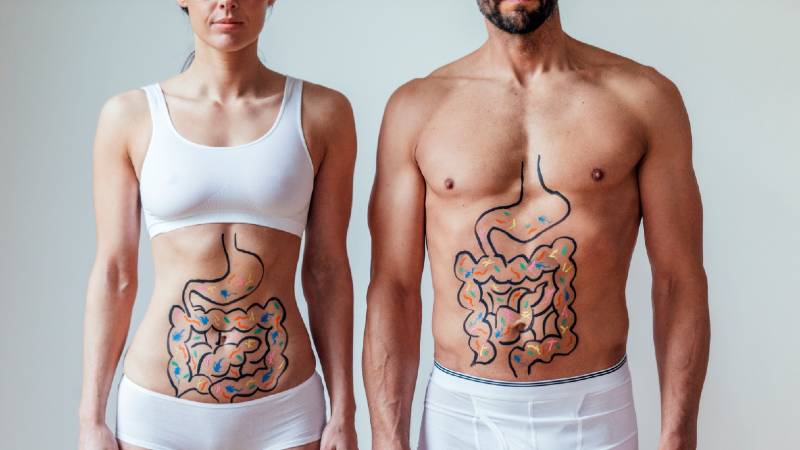
The human gut is a vessel comprised of 100 trillion microbes that live within that organ, called the microbiome and over the last ten years science has discovered just how vital the gut is in controlling our immune system, even our mood, not just our digestion alone. That healthy-microbiome gut has immense importance in our lives. If the microbiome are not well-balanced and in a healthy condition it can trigger depression, diabetes, asthma, even cancer, let alone obesity or anorexia, pointing out just how influential the gut's microbiome is, dubbed "the second brain" by some researchers.
Children, according to new scientific investigation, are particularly sensitive to external influences, crucial to their long-range risk of disease. Researchers are pointing to the rise in caesarean sections, the continued reliance on antibiotics and their over-prescription, overt cleanliness along with a diet heavy on processed foods as leading to a grim distortion of the microbes in children's guts, a situation that drives health problems. According to The Diet Myth, authored by Dr. Spector, a child's microbiome is flexible up to the age of four or five. Past that age, the microbiome begins to reflect an adult's, becoming more difficult to alter.
 |
Caesarean birth prevents important bacterial
functions from being passed on. This change impacts immune stimulations
during the first days of life and may explain why caesarean-born
children suffer more frequently from chronic immune disorders. Credit: Linda Wampach / University of Luxembourg
|
When a child is born, their system is exposed to bacteria. Studies have shown that children born through caesarean section come away with different microbiomes whose composition may raise their risk of problematical health conditions. Scientists recently reported that children born by C-section become likelier to be obese by age five, and become asthmatic by age twelve. Experts in the field hypothesize that the first bacteria these babies have exposure to are from their mother's epidermis and the outside environment rather than those existing in the vagina, resulting in a decreased optimum start in life.
The antibiotics normally administered following a C-section procedure are considered necessary but inspire concerns that the drugs may impact profoundly on a child's microbiome, perhaps also raising the risk of resistance. The Baby Biome Study follows 3,500 mothers and babies in Britain, mapping the links between children's gut bacteria and health outcomes. Dr. Nigel Field, a researcher with University College London whose study it is, believes that parents should be proffered more information relating to the potential pros and cons of antibiotic use.
Interest is growing in the idea of giving probiotics to babies with the intention of replacing missing beneficial bugs, although evidence is yet to be convincing with respect to its success. Seeding, where microbes from a mother's vagina are swabbed and transferred to her newborn soon after a caesarean delivery is gaining momentum yet experts warn against the practise since enough research to produce data is not yet in hand with respect to unknown risks. On the other hand, breastfeeding is universally acknowledged as a safe and effective way to launch "good" bacteria.
Published last year, an American study found that babies exclusively or mostly breastfed gained microbiota similar to their mothers'. Advice abounds on how mothers can take steps to boost their babies' microbiota, such as not to sterilize everything a baby will come in contact with since some exposure to dirt can help to develop a stronger immune system. Allowing infants to pick things off the floor and to play with animals, another, allied piece of advice. "You could be doing them more harm by always washing their hands", stresses Dr. Spector.
"We need to move away from the idea of antibiotics having no down side. There's definitely evidence you're increasing the risk of them having more allergies and getting fatter. If you can get your children used to the tastes of yogurt and kefir that's very useful. It's a natural probiotic ... and is probably safer and better."
Aside from fermented foods and drinks to increase the diversity of microbes, fibre, fruit and vegetables are recognized for their utility in acquiring a healthy got. Other naturally probiotic foods encouraging the growth of good bacteria will include onions, garlic, asparagus, artichokes, lettuce, green bananas. While the additives in junk food can kill good bacteria.

Labels: Antibiotics, Caesarean Section, Health, Microbiota, Probiotics, Research, Science
posted by Pieface @ 6:23 PM
0 comments