Agreeably Disagreeing
"These are what I would call early data in terms of a vaccine effectiveness or studies.""And the indications are that there's a good level of protection after just one dose."Dr.Howard Njoo, deputy chief public health officer, Canada"With such a highly proactive first dose, the benefits derived from a scarce supply of vaccine could be maximized by deferring second doses until all priority group members are offered at least one dose.""[Administration of the second dose a month after the first provided] little added benefit in the short term.""Given the current vaccine shortage, postponement of the second dose is a matter of national security that, if ignored, will certainly result in thousands of COVID-19–related hospitalizations and deaths this winter in the United States.""Even before the second dose, BNT162b2 was highly efficacious, with a vaccine efficacy of 92.6%, a finding similar to the first-dose efficacy of 92.1% reported for the mRNA-1273 vaccine (Moderna).""With such a highly protective first dose, the benefits derived from a scarce supply of vaccine could be maximized by deferring second doses until all priority group members are offered at least one dose."Letter published in New England Journal of Medicine
"The second vaccine dose is likely to be very important for duration of protection and, at an appropriate dose interval, may further increase vaccine efficacy.""In the short term, the additional increase of vaccine efficacy from the second dose is likely to be modest."U.K. medical officer of health

"There are different reasons why multiple doses may be needed. For many vaccines, such as hepatitis B vaccine, multiple doses are needed to produce long-lasting immune protection. In this case, the first dose ‘primes’ the immune system by provoking an initial response to the antigens contained in the vaccine.""Subsequent doses ‘boost’ the immune response by activating immune cells created after the first dose to produce stronger, longer-lasting protection.""For some COVID-19 vaccines, an important reason for multiple doses is to increase the strength of antibody response.""It is not clear how well a single dose of any two-dose COVID-19 vaccine may prevent infection with emerging variants."Dr. Tom Frieden, former director, US Centers for Disease Control and Prevention
 |
| Healthcare workers test teachers and school workers for the coronavirus disease (COVID-19) at the La Rural exposition centre before the reopening of schools, in Buenos Aires, Argentina February 9, 2021. REUTERS/Matias Baglietto/File Photo |
Evidence has now focused on a potential relief mechanism whereby the number of people for whom doses of the Pfizer-BioNTech vaccine can be extended safely, by-passing -- perhaps temporarily until vaccines become more readily available -- the recommendations by the manufacturer for a two-dose regimen for maximum efficacy. Canada's chief public health officer spoke of the data two Canadian doctors presented in the New England Journal of Medicine. Their argument for the use of one shot per individual in the face of a shortage of medication is, he stated, compelling.
Canada may now consider re-allocating scarce vaccine doses to reflect the recommendation made by Dr.Danuta Skowronski of the British Columbia Centre for Disease Control and her colleague from the Institut national de sante publique du Quebec, Dr.Gason De Serres whose claim was based on the very documents that Pfizer submitted to the U.S. Food and Drug Administration. The researchers point out that if the number of cases of COVID-19 reported by Pfizer and BioNTech are measured following one dose yet before a second dose is administered, people receiving the sole first dose were seen to be 92 percent less likely to contract COVID than the placebo group.
According to original data submitted by the pharmaceutical duo, one dose endowed roughly 52 percent protection while two doses, one following on the other for the complete protocol, rendered 94.5 percent protection. However, the doctors point out that the protection level had been measured from the very time the vaccine was given, instead of waiting two weeks for the immune system to respond to the vaccine.
 |
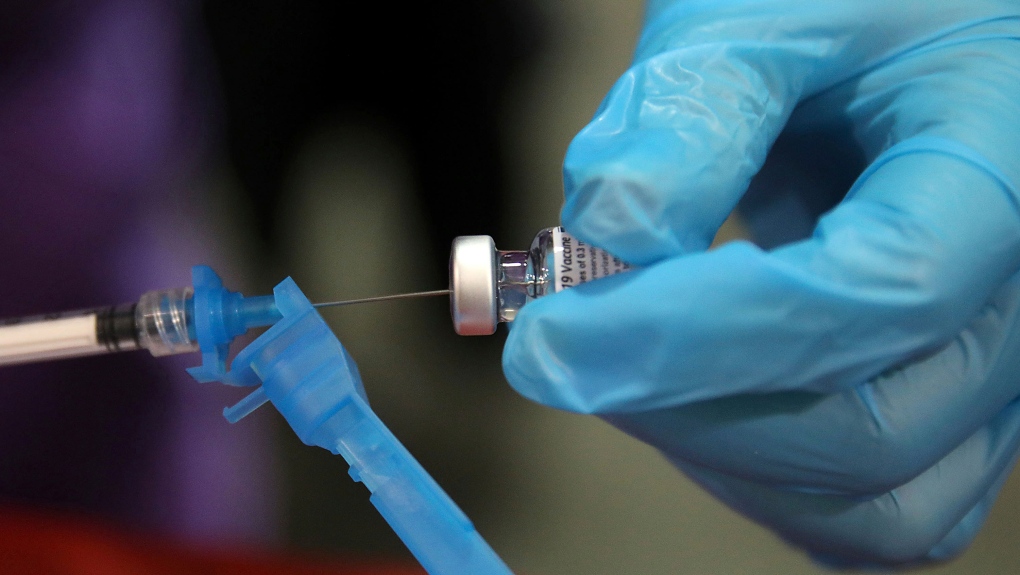
| A vial of the Pfizer/BioNTech COVID-19 vaccine Reuters |
The two doctors noted limited information is available respecting how long that protection may last with a single dose, but that they infer that the second dose following so quickly on the first is not short-term beneficial, leaving people in the vulnerable group without first doses "completely unprotected". In other words, given the shortage of vaccines available to inoculate all people in designated vulnerable groups, it makes tolerable good sense to make the vaccines go a little further by vaccinating as many people as possible with the initial dose, conferring on them an ample level of protection.
Pfizer, understandably, given their research findings feels caution should be exercised in adjusting the dosage schedule, admitting that whatever decision is reached by local authorities with respect to implementing a variant protocol becomes their responsibility. An advisory committee of federal and provincial public health officials in Canada heard directly from the two doctors presenting their findings, and as a result, in Canada, a "very live and ongoing" discussion is taking place.
Furthermore, early reports from provincial health authorities appear to validate the recommendations on one-dose vaccination, with reduced evidence of COVID-19 in long-term care homes where most residents in Canada now have been inoculated with at least the initial dose. At least one dose so far has been given out to over 990,000 people in Canada, with an aim to vaccinate three million individuals with two full doses by March 31; a number that could be accelerated by reducing the Pfizer-BioNTech vaccine temporarily to a single dose.
"Our data show substantial early reductions in SARS-CoV-2 infection and symptomatic COVID-19 rates following first vaccine dose administration.""Early reductions of COVID-19 rates provide support of delaying the second dose in countries facing vaccine shortages and scarce resources, so as to allow higher population coverage with a single dose."Dr. Eyal Leshem and colleagues, Sheba Medical Center,Tel Aviv, Israel
 |
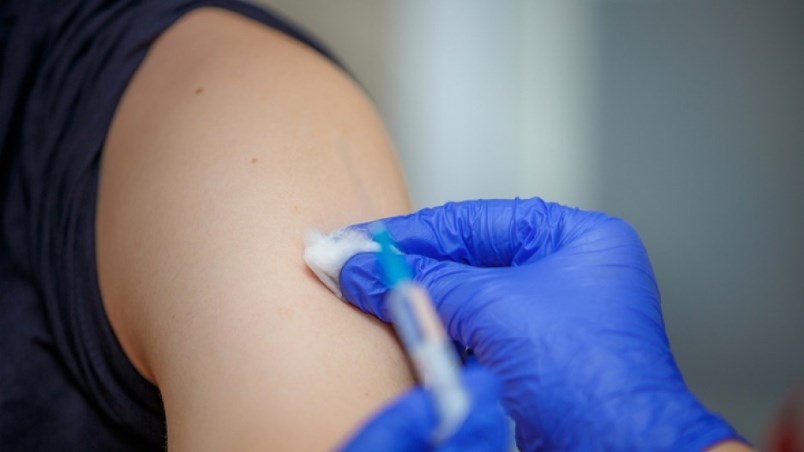
| Two letters to major medical journals this week provide fuel for the argument that in these times of scarce coronavirus vaccine, people can skip their second doses, immediately doubling the supply for others. (Stephen Maturen/Getty Images) |
Labels: Inoculating Vulnerable Populations, Pfizer-BioNTech Vaccine, Scarce Vaccine Supply, Single Dose Recommendation
posted by Pieface @ 7:56 PM
0 comments