Ruminations

Blog dedicated primarily to randomly selected news items; comments reflecting personal perceptions

Friday, March 02, 2018

Liar, Liar, Pants on Fire

"Your nose doesn't look big. It's the selfie. It's distorting."
"You look great, I'm looking right at you...A selfie is not accurate."
Boris Paskhover, facial plastic and reconstructive surgeon, Rutgers University

Portrait A is taken at 12 inches; portrait B is taken at 60 inches. Credit: Boris Paskhover
"Despite the ease with which selfies are taken, the short distance from the camera causes a distortion of the face owing to projection, most notably an increase in nasal dimension."
"Importantly, this distortion does not accurately reflect the three-dimensional appearance of the nose."
"[Taken at12 inches in distance] selfies increase nasal size by 30 percent in males and 29 percent in females. [Whereas a normal portrait distance of five feet from the camera results in] essentially no difference in perceived [nose] size."
Study: Nasal Distortion in Short-Distance Photographs: The Selfie Effect
Imagine, if you will, a plastic surgeon -- many of them, in fact -- imbued with such a professional ethic that they went out of their way to attempt to prove to people convinced that they have an oversize proboscis that their conviction was in reality a perception foisted on them through an explicable distortion. That taking self-portraits with an iphone camera or any digital camera will result in the nose appearing to have much greater prominence in the centre of their face than a reflection of reality.

People so convinced of the ungainly look of their facial features dominated by an overbearing nose that they insist they must undergo plastic surgery to right the wrong that careless nature imposed upon them. Social media selfies are so ubiquitous and so revealing of the presence of a cartoonish-in--appearance semblance as to make people feel self-conscious about their appearance, inciting them to take radical steps to correct the situation through surgery, of all things.

When it's so much easier and certainly more effective to stop taking those stupid close-range selfies.

And when a doctor to whom you've gone to arrange that surgery to reduce the size of the nose you've been endowed with -- and whose proportions you should be familiar with by now, but have been convinced otherwise by selfies -- assures you that your nose is perfectly normal and suited in size to the dimensions of your face, you won't believe him. So, that attitude set Dr. Paskhover on a trajectory to research the issue. "There's got to be a way to prove it", he prodded himself.

What Dr. Paskhover experienced, when patients kept coming to him complaining of exaggerated nose sizes, turns out to be an experience familiar to many plastic surgeons. Roughly half of whom had patients wanting surgery "for improved selfies and pictures on social media platforms". So Dr. Paskhover and a number of his colleagues set out to prove that reconstructive surgery was not required for a phenomenon that distorted image, through iphone photos whose results they characterize as "fun-house mirrors".

As well, they pointed out that exaggerated filters on apps such as Snapchat functioned in such a manner as to lend a cartoonish appearance to a selfie. Leaving people with a distinct feeling of dislike for their looks, prompting concerns in the medical profession about dysmorphia, a pathological dislike of one's appearance. A dysfunction that could prove extremely injurious to one's self-regard in a social media-distorted environment.


Planning to measure the effect of the appearance of increased nasal dimensions in selfies, the researchers modelled the face as a grouping of parallel planes, choosing "bizygomatic breadth" as a fixed reference reflecting the distance between the cheekbones allowing them to draw up a formula to measure the apparent width of the nose as the camera achieved distance from the face.

At an infinite distance the camera would reflect no distortion; at 12 inches in distance the selfies reflected distinct increases in nasal size, while a normal portrait distance of five feet from the camera produced "essentially no difference in perceived size". Similar to what accrues, pointed out Dr. Paskhover, when looking in a mirror.

And nor is the nose the only facial feature to appear larger since a side-on selfie could amplify the appearance of the ear; a shot from below, the chin, or a shot from above, the forehead. "It's whatever is closer to the camera", pointed out Dr. Paskhover, reasonably. However, since most selfies are taken face-on, it is noses that appear most prominent and, as it happens, the easiest target for plastic surgery.

"Don't focus on your phone, relax", he advises.
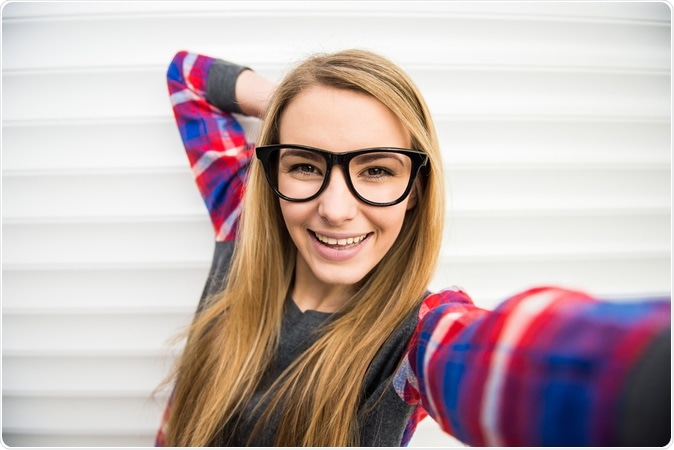
Image Credit: VGstockstudio / Shutterstock


Labels: , , ,

Tuesday, July 25, 2017

Acquiring Lifeskills, Prioritizing Needs

"Theoretically what we think is that buying time protects people from the negative effects of time stress in daily life. When feeling pressed for time, that seems to take a bit of a toll on people's day-to-day happiness."
"It's not what comes to mind to people as a way to increase their happiness and the rates at which people are engaging in this type of expenditure are surprisingly low."
"People who don't feel like they're rolling in dough may feel like that's a frivolous way to spend money but what our research is showing is that even if you don't have tons of money, using money to get rid of your disliked tasks may be a pretty smart decision."
"People may feel like I can do this so I should do this, and so I hope our research helps to break through that perhaps misguided cultural assumption."
Elizabeth Dunn, psychology professor, University of British Columbia

While most of us don't have digs as fancy as the Royal Yacht Britannia in Edinburgh, seen in this 2012 file photo, new happiness research finds that even people of moderate means would be wise to allocate a small amount of their budget to time-saving services that free them of disliked chores.
While most of us don't have digs as fancy as the Royal Yacht Britannia in Edinburgh, seen in this 2012 file photo, new happiness research finds that even people of moderate means would be wise to allocate a small amount of their budget to time-saving services that free them of disliked chores. (David Moir/Reuters)

A study was undertaken in Vancouver out of the University of British Columbia, headed by psychology professor Elizabeth Dunn. In the experimental study sixty people who formed the nucleus of the study were given $40 and advised that the money should be used to access anything they wanted to spend it on as long as it was a material object that they thought they might like. When the test subjects reported back they indicated they had bought items such as wine, clothing and board games.

That led to the researchers posing the question to their study group to enable them to judge the level of happiness that resulted from those people buying the things they had chosen to spend their study-accessed funds on. For the second weekend, once again the participants were given $40 to spend as they saw fit, only this time they were expected, they were informed, to use the money to achieve time-saving.

As an example, to take a taxi rather than using public transit, or arranging to have someone cut their grass rather than do it themselves, and in another instance use the services of a boy in the neighbourhood to run errands. That done, the researchers compared the group's stated level of happiness that followed both spending activities, week one and week two, with their different emphasis and targets.

The researchers discovered that people appeared to be much happier buying themselves 'time', rather than objects. Reportedly, two percent of the group only, claimed they would use money to buy things that would give them more time for themselves. Professor Dunn reached the conclusion that even those with ample disposable income preferred not to pay others to perform tasks, to save themselves time.

On The Money Happiness and Time
Researchers surveyed 6,000 people in Canada, the U.S. and Europe found that those who doled out cash to save them time on things such as the meal delivery service seen in this 2014 file photo, were happier than those who don't. (Matthew Mead/Associated Press)
Those who were able to afford to have their groceries delivered continued to go out to the supermarket to shop regardless, or continued parking their cars themselves rather than making use of valet parking. That same study made a survey of 850 millionaires in the Netherlands, only to discover that close to half preferred not to spend money outsourcing their most disagreeable tasks.

A survey of 6,000 people in Canada, the United States and Europe indicated that those whose financial situation was healthy and could see benefit accruing from spending discretionary income ridding themselves of dreaded chores still preferred not to. People who do spend money as a time-saving device spend typically $80 to $100 monthly, according to Professor Dunn, adding that even $40 is capable of opening up some spare time.

Professor Dunn's study team's reason that people have an aversion to paying for giving themselves extra time in that they harbour a feeling of guilt for spending funds unnecessarily, since they feel they could do these chores themselves. The team plans a follow-up study hoping to come to a better understanding of why people prefer not to spend money to buy time. Age, gender, ethnicity and other issues could be identified as drivers for that reasoning.

Possibly, it might be an issue of self-respect? That people understand that having certain life skills is a measure of their capability of looking after themselves responsibly? What Professor Dunn and her colleagues are actually engaging in is validation of present-day society's penchant for farming out aspects of their lives that they view as inconvenient, certain responsibilities that hinder their plans, for example.

And, as good an example as any is that children are now commonly farmed out to others for their care and nurturance, depending on non-family members to raise them at critical times in their young lives, rather than their parents, busy with their own lives, absent their children. This study in fact applauds such choices. As it gives a tacit approval rating to failing to acquire the requisite skills and understanding as a parent to fulfill parental obligations to their dependent children.

Another such measure is the extent to which people will not bother learning how to prepare basic, nutritional meals for themselves, vastly preferring to believe that such commonplace tasks central to human existence are too difficult, too much of a nuisance, too interfering in their freedom to disport themselves as they wish, rather than to feel obligated to their own needs, to fulfill them in the most basic of ways, such as meal preparation.

So spending disposable income, or ensuring that whatever money is available is earmarked for fast foods, convenience and pre-prepared foods, or eating out, rather than becoming familiar with simple and wholesome meal preparations. The assumptions that this research team reached simply reflect what they wanted to find to fit their theory.

 What they discovered is that some people recognize they should acquire the skills and discipline to be self-sufficient in these measurable ways if for no other reason than mere self-respect. And they find this somewhat wanting in their estimation, expressing the hope that their research leading to their theories will give people the justification to surrender their agency to others rather than be wholly responsible to and for themselves.


Labels: , , , ,

 
()() Follow @rheytah Tweet