Ruminations

Blog dedicated primarily to randomly selected news items; comments reflecting personal perceptions

Wednesday, August 09, 2023

The Social Dilemma of Face Blindness : Prosopagnosia
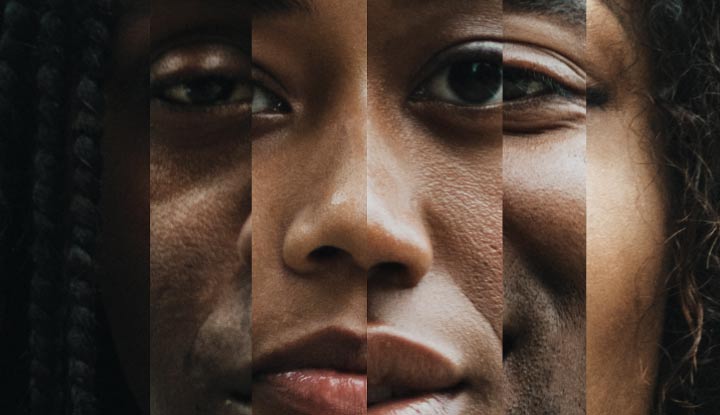
Face blindness disrupts how the brain processes faces. That can make it hard to recognize and remember people by sight.
"face blindness" affects facial memory
"Expanding the diagnosis is important, because knowing that you have real objective evidence of prosopagnosia, even a mild form, can help you take steps to reduce its negative impacts on daily life."
"[These impacts lead to] social distress and embarrassment. [Recognizing someone is a social signal, indicating that] you are important to me."
"[Prosopagnosia can be] a consequence of age-related cognitive decline; research in 2017 found that children born underweight became poor at recognizing faces when they grew older]."
Joseph DeGutis, HMS associate professor of psychiatry, VA Boston 
"If two of us wore the same colour [sweater] at dinner, she would get completely confused. Or if she went into a shop and I waited outside for her, she'd come out and have no idea which one was me. [She can't recognize her own reflection; only when she smiles] she can see a small chip in her tooth that helps her know it must be her."
"Her family tend to wear something unusual that identifies them -- her husband wore an unusual necklace."
Catherine Loveday, lecturer in cognitive neuroscience, University of Westminster
"[Although there's no cure or clinically proven treatment, there are] compensatory strategies [anyone can adopt.]."
"Pay more attention to how people smell, or walk, or to other bodily signals that aren't related to the face, which might help you recognize who you've interacted with."
"If you're meeting someone for the first time, it might be better to mention it early on, rather than cause offence by forgetting later down the line. Most people are interested and responsive."
"Making a concerted effort to try to learn faces by using facial imagery on social media before or after you meet someone might help. An 'I'm not very good with faces -- let me know what you'll be wearing' is a roundabout way of 'scaffolding' interaction without saying 'I have this condition'."
Punit Shah, associate professor of psychology, University of Bath
Dr. Shah is the creator of the 'prosopagnosia index' which uses a questionnaire asking volunteers the extent to which they agree or disagree with twenty statements, such as "I often mistake people I have met before for strangers", used for diagnosis in conjunction with computerized face recognition. According to Dr. Shah, whether we have prosopagnosia or not, facial recognition is a spectrum -- at one end the "super recognizers" able to instantly recall a person's face.

Following are those who might struggle to place a name with the face of an office colleague outside the work environment. And at the other hand, according to Dr. Shah, are people with extreme prosopagnosia "who can't recognize themselves in photographs". There are two variations of prosopagnosia, he explains; an "acquired" form that occurs resulting from a brain injury that damages the fusiform gyrus, the area of the brain that deals with facial processing. "That's relatively rare", he says.

The "developmental" form is more common, causing "atypical activity" in the fusiform gyrus and is "naturally occurring". Sufferers, in fact,may not be aware of their affliction until reaching adulthood, if at all. Prosopagnosia is often hereditary, with a link to autism, and likely to manifest while in childhood. A study undertaken in 2020 found prosopagnosia occurs in over 36 percent of autistic adults without any intellectual disability. A recent study from Dartmouth College, New Hampshire, on a woman known only as "Annie", found face blindness may in fact, affect sufferers of long COVID.

A February study published in the journal Cortex pointed to millions of people having prosopagnosia and being completely unaware that there is such a condition, at all. A condition that was thought at one time to affect between two and 2.5 percent of the global population. Researchers at Harvard Medical School and the VA Boston Healthcare System who administered an online questionnaire and tests to 3,341 individuals found prosopagnosia might in actual fact affect up to one in 33 people.

Dr. Loveday, lecturer in cognitive neuroscience, speaks of severe consequences of the condition. People suffering from the condition seem not to struggle with the recognition of objects in the way they do with faces. "I can't grasp a face, and yet I come from such a design/esthetic point of view", commented Brad Pitt, bemused at himself being a sufferer. The 59-year-old actor commented that prosopagnosia leads "so many people [to] hate me because they think I'm disrespecting them".
 
Face blindness test: Do you have the same condition as Brad Pitt? |  Express.co.uk
Daily Express
 

Labels: , , ,

Saturday, March 06, 2021

Teaching Physicians Empathetic Overtures

"We’ve been working with healthcare organizations for several years, but the pandemic has created really specific challenges that technology is helping to solve. It’s no longer safe or practicable to have 30 medics in a room with an actor, honing their clinical soft-skills. With our virtual patient technology, we’ve created an extremely realistic and repeatable experience that can provide feedback in real time. This means clinicians and students can continue to learn valuable skills."
"Right now, communication with patients can be very difficult. There’s a lot of PPE involved and patients are often on their own. Having healthcare staff who are skilled in handling these situations can therefore make a huge difference to that patient’s experience."
"Complaints can happen anywhere, but in health care, they're amplified tenfold because you're doing things like breaking bad news or explaining a diagnosis to a patient who may not have medical understanding." 
Dr.Alex Young, orthopedic surgeon, Bristol, U.K.
 
"We've been using Virti's technology in our intensive care unit to help train staff who have been drafted in to deal with COVID-19 demand."
"The videos which we have created and uploaded are being accessed on the Virti platform by nursing staff, physiotherapists and Operational Department Practitioners [ODPs] to orient them in the new environment and reduce their anxiety. The tech has helped us to reach a large audience and deliver formerly labour-intensive training and teaching which is now impossible with social distancing."
"In the future, West Suffolk will consider applying Virti tech to other areas of hospital practice."
Tom Woollard, West Suffolk Hospital Clinical Skills and Simulation Tutor
Virti, COVID-19, AI, workforce, medical training, NHS
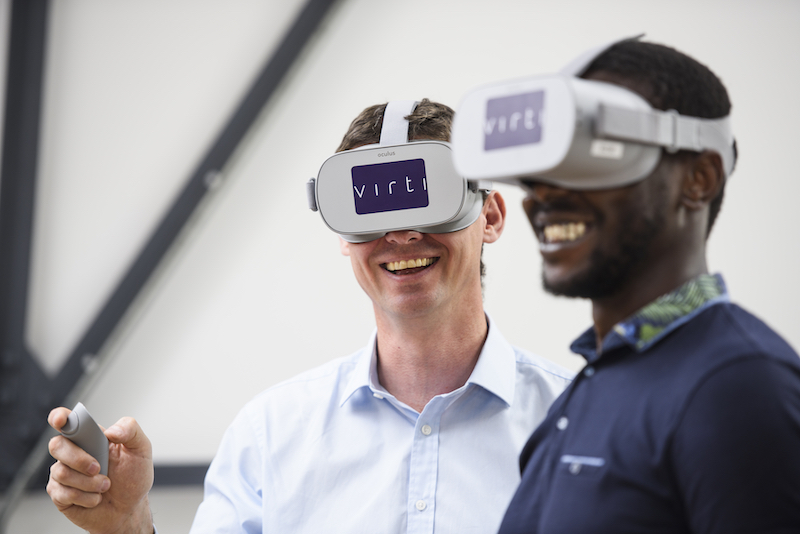
The Virti technology is intended to be used remotely to minimize in-person training during the pandemic.  Courtesy: Virti
"I was looking for kind of some professional development stuff to keep me occupied [during a COVID-related interregnum of unemployment]."
"After suddenly having a few months off, it's easy to get a little rusty."
"[Those in-person scenarios -- where actors are employed to help in communication training, pretending to be ill -- can] feel a bit forced; fake patients] feel much more authentic than somebody making it up as they go along."
Dr.Jack Boulter, musculoskeletal podiatrist, Exeter, England
In the medical profession physicians are renowned for their perceived lack of empathy, of any kind of human interest in the patients they are faced daily, beyond reacting with them as 'cases', to be diagnosed, treated, prescribing medications, or referring them onward to other medical practitioners. Communication skills tinctured with social and personal niceties are not their bailiwick. Understandable, since they're focused on health and medicine in general, not individual patients in particular, and sometimes it's difficult to put the two together.

So difficult, that it's largely bypassed and over time begins to appear from physician to patient, somewhat like an attitude of psychological retreat and indifference. Of course if a doctor became psychologically involved and too empathetic to a patient's health plight they run the risk of becoming too emotionally involved, rendering them incapable of unaffected professionalism. In earlier times when doctors were generally regarded by the non-medical public as elevated beings whose knowledge was capable of lifting patients out of sickness -- demi-gods as it were -- this wasn't an issue.

We live in less formal times now, where physicians are generally viewed through the informal lens of just being like anyone else but with the addition of a medical background; to be relied upon to be certain, but with the further expectation that they will treat their patients with the consideration of feeling along with the diagnosis, expressed in a tone and language readily absorbed. Person-to-person in point of fact, in today's relaxed social atmosphere of a levelled social platform.

Busy professionals as they are, in a demanding job that requires them to diagnose symptoms, look after back-to-back patient presentations, fill out medical records; absorb long and exhausting work hours, in an atmosphere of grave responsibility where an error can lead to a costly lawsuit, this additional lack of attention to doctor-patient relationships is hardly surprising. A distance born partially of over-stimulated tasking. There has been a lash-back however, with studies indicating that people feel ignored, leaving a doctor-patient interaction frustrated and lacking reassurance.
 
Virti
Courtesy, Virti
 
At a time when the global pandemic's demands has the health community searching for ways to better communicate even as they become deeply involved in trying to completely understand the damage that
SARS-CoV-2 inflicts on its victims, it is understood that people are looking not only for treatment but for comforting communication. Dr.Young involved himself in seeking a solution to the problem through technological innovation with the assistance of artificial intelligence. 

His startup, Virti, now supplies "virtual patients" so hospitals and their personnel can be taught to improve their communication interactions with patients. A number of alternatives are available with software that can be employed on a smartphone or computer, but with greater immersion, virtual reality headsets can be used for training sessions. Once completed, doctors are given scores based on their reactions to the training; questions asked the AI; accuracy of diagnosis resulting, speed in concluding the test assignment.

The Health Education Center at University of Texas Medical Branch, Galveston, tutors future clinicians on communication and reasoning skills through the company's Virti technology. Cedars-Sinai Medical Center in Los Angles became another client, and then decided to invest in Virti to help the startup assign a sales team and improve its analytical software. Cedars-Sinai medics are trained on coronavirus-related processes through the Virti software. When clinicians ask the animated human to describe its symptoms, the AI generates a relevant response.

There is another role -- for virtual patients in dealing with implicit bias occurring when staff reaches unconscious assumptions -- addressed by the company by enabling hospitals to customize the patient's skin colour, age, height or sex. Digital faces reflect photographs of various actors and other professionals with up to 60 variations available. With Virti, the need by communications training in health care to rely on actors to play the patients' role has been replaced.


Labels: , , , ,

 
()() Follow @rheytah Tweet