Ruminations

Blog dedicated primarily to randomly selected news items; comments reflecting personal perceptions

Friday, December 25, 2020

A New, Practical Pandemic Workforce Alternative

"It is tempting to believe that major cities will return to their pre-pandemic glory and that COVID-19 is nothing more than an anomaly. Cities will undoubtedly remain the economic and cultural hubs, but in the post-pandemic world, they might not regain the allure they have enjoyed in the past."
"It was not long ago that Detroit was one of the most prosperous towns in the U.S. and was known for its industriousness and innovation. Over time, Detroit and the automotive industry lost their competitive edge, and the Motor City first began losing prominence and ultimately faced bankruptcy prospects."
"The critical question is what cities can offer to attract talent, businesses and investments, if technology is making geography increasingly irrelevant."
Murtaza Haider, professor of Real Estate Management, Ryerson University, Stephen Moranis, real estate industry veteran, Financial Post 
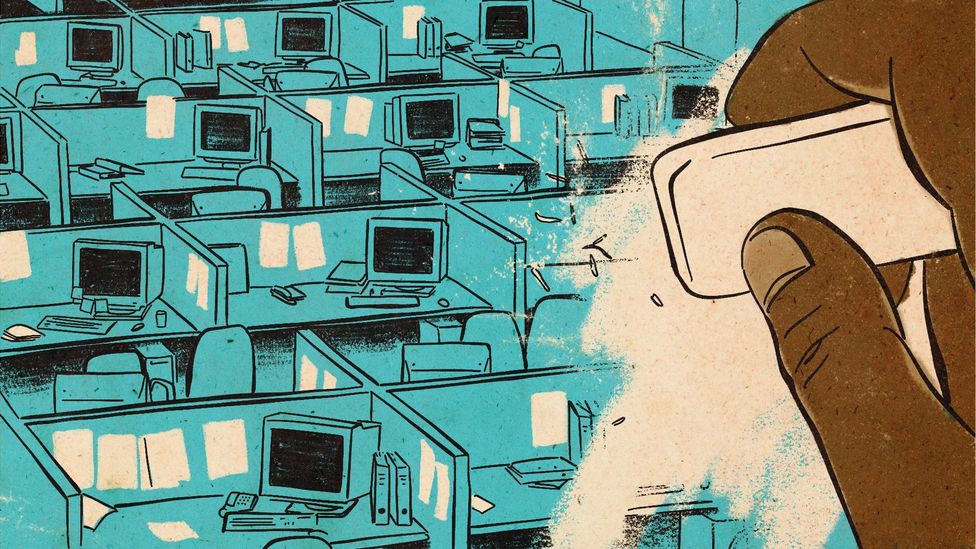
The future of physical office spaces, and how we'll use them, hangs in the balance as we slowly march toward a post-pandemic world

Our urban landscape is changing. Once again. There was a time when prosperous middle-class people couldn't wait to leave urban centres to relocate to the suburbs where there was green spaces, larger homes and lots with gardens to raise a family, available at lesser cost than in the cities. Leaving the urban core to the lower middle class wedded to traditional city living and the larger class who remained where they were, who couldn't afford to move, mired in poverty.

And then came a reversal with the trend moving toward urban renewal and gentrification bringing a return to city living, when the poor found themselves pushed out of the downtown core unable to pay the new higher rentals, to the outskirts or to become homeless. There is nothing static about human movement geared toward benefiting those who are financially flexible enough to better their prospects by taking advantage of every new trend that appears over the horizon.

Now it appears that the global pandemic in less than a year has once again upended the social structure of urban life. Not that some corporations hadn't already decided to experiment with large parts of their workforce working remotely, reducing the need for costly real estate where workplaces could be shared among a half-dozen people who might physically appear from time to time before retreating once again to a remote workplace in their home.

The separation of work and home has dissolved, with one's home playing first fiddle to one's employment. In the process juggling responsibilities to one's private life inclusive of child care and time away from the work environment, even when it's your own home, complicating life for the employed and reducing operating costs for the employer. 

Remote working has become the norm, aside from workers in the retail industry and those working manual jobs that keep them directly in the workplace, along with factory workers struggling to observe distancing in difficult, tight physical spaces. There is increasing comfort between employers and their workforce within the tech-enabled work environment, however, where lines between home and office have been irrevocably blurred.

The test runs previously embarked upon, have been accelerated by the exigencies of exercising caution and care when at all possible during the pandemic. Company executive elite are paid to enhance the bottom line and that is done through many innovative means, and now that includes reducing real estate imprint. With the use of artificial intelligence over 4,750 earnings calls, Bloomberg LP was able to research that one in 8 corporate executives contemplate a reduction in spatial footprint.

Many are spending more time than ever inside their homes, as remote work, distance learning and social distancing shape the workweeks of many families

Plans are afoot and have advanced toward slashing office space, branch or outlet closures while taking steps to renegotiate rents  in a rental marketplace where there are now large empty gaps and building owners are anxious to make deals to retain renters in their commercial properties.  The decline in  demand for office and retail real estate has seen an opposite effect in warehousing properties, along with commercial spaces linked to retain logistics.

Online purchasing by the social distancing public consumer has boomed in lock step with a decline in in-person shopping, enhancing the need for warehouses and logistics hubs, now with more demand than in the past, leading to expanding services. Amazon Canada for example is building two new 'fulfilment' centres, in Hamilton and Ajax along with five more delivery stations throughout Ontario for a total of 16 logistic centres in Canada.

Technology adoption has been accelerated with new tech advancing in terms of months, seeing technology sales on the rise. Large technology firms are not now expanding their real estate empires. Pinterest Inc. recently paid a penalty to withdraw from its 490,000 square-foot lease in San Francisco, of $90 million to achieve its release. With Silicon Valley speedily adapting itself to remote workplaces, employers too are no longer harnessed to expensive-to-rent apartments in town.

Median rents for studio apartments in San Francisco have been reduced by 35 percent from the previous year and rental markets in cities like Boston and New York, known for their sky-high rental costs are now softening. New York and other cities now vaguely resemble ghost towns where hundreds of millions of office space rentals have been emptied of their client-base. Storefronts have been boarded up throughout the city, including parts of Manhattan.

Analysts are studying how affected the urban core of ciies have been, losing their competitive advantaqge by the growing reality of teleworking, cloud computing and video-conferencing with the long-term impact of remote working extending beyond the methods by which employees have adapted to a changed work practice where companies now can hire workers anywhere in the world with no requirement of relocating to expensive cities.
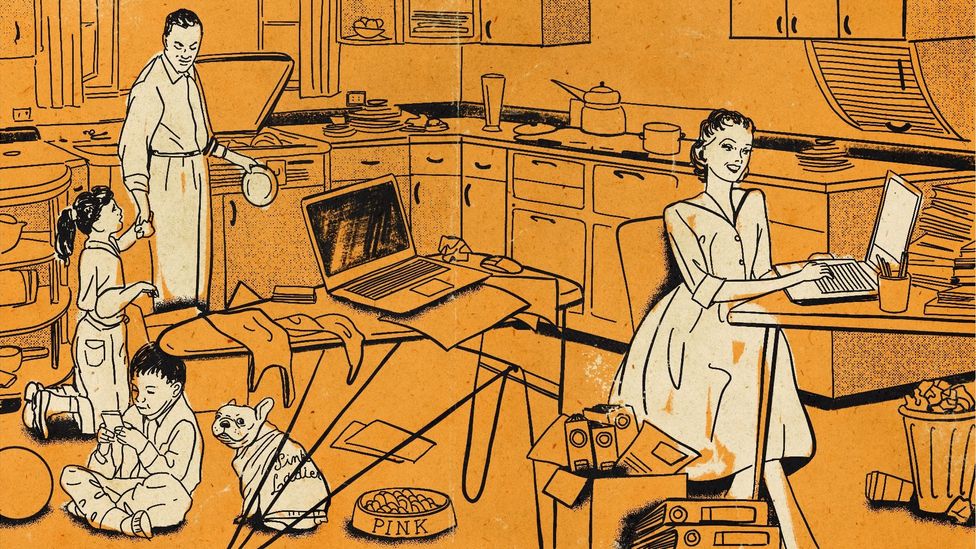
Long-term remote work has completely reshaped the 9-to-5 and blurred the lines between home and office

Labels: , , , ,

Thursday, August 13, 2020

Mixed Experiences, Mixed Reaction

"We are home working alongside our kids, in unsuitable spaces, with no choice and no in-office days. This will create a productivity disaster for firms."               "Everyone assumes I would be gushing over the global rollout of working from home. Unfortunately not."                                                                              "Working from home with your children is a productivity disaster. My 4-year-old regularly bursts into the room hoping to find me in a playful mood shouting 'doodoo!' – her nickname for me – in the middle of conference calls."              "Many people I have been interviewing are now working in their bedrooms or shared common rooms, with noise from their partners, family or roommates."         "I fear this collapse in office face time will lead to a slump in innovation. The new ideas we are losing today could show up as fewer new products in 2021 and beyond, lowering long-run growth."                                                                     "They [study volunteers] reported feeling isolated, lonely and depressed at home. So, I fear an extended period of working from home will not only kill office productivity but is building a mental health crisis."                                             "Phone calls make collaboration harder. You don’t know if anyone is really paying attention. In one conference call I was on, I thought the background noise I was hearing was actually a vacuum cleaner. When I asked ‘is somebody vacuuming', the sound mysteriously stopped. While a video call could seem intrusive, it is essential for ensuring the attendees are paying as much attention as they would in a physical meeting."                                                                                                      Nicholas Bloom, senior fellow, Stanford Institute for Economic Policy Research (SIEPR) 

https://images.theconversation.com/files/253605/original/file-20190114-43535-i3yz5h.jpg?ixlib=rb-1.1.0&q=45&auto=format&w=1356&h=668&fit=crop

An Angus Reid Institute poll tended to conclude that circumstances involved in working from home lead to those questioned falling into the category of plus-or-minus satisfaction. Of people living alone, seven percent felt work productivity has been miserable, working from home. Those people working from home with spouse and children present saw 17 percent stating productivity has been minimized. Close to 30 percent of Canadians, as  result of the pandemic, work from home. 

For many people working from home -- which before the pandemic must have seemed to many the perfect way to balance work and home life -- now that it has become a reality, seems stifling, never ending, with continually incoming business emails and meetings intruding into what was meant to be personal time, once sacred against interference. A huge study of the globe's new, coronavirus-enforced work habits indicates that the average workday for those working from home is an hour longer than it once was, working at a normal work site.

There has been a realized increase of eight percent of emails into inboxes after business hours, leaving the average worker to deal with after-hours email on an increasing basis. On the other hand, even so, polls indicate that Canadian workers remain fairly pleased to be working from home, as discovered by a recent Angus Reid Institute poll which found 87 percent of workers in Canada described working from home as "really great" or "OK". Of those polled, a mere 13 percent felt the experience was dreadful.

By those in the know, it is assumed that the greater satisfaction is due in large part to less time spent in meetings than what was occasioned at a workplace, balancing out the longer working hours. Even as the average worker is now participating in about one additional meeting daily than previously and meetings tend to include on average two more people than before, the length of time these meetings consume has decreased.

 Getty Images

Meetings tend now to be around 12 minutes shorter in duration than they had been prior to the lockdown so that the average length of time spent in those meetings daily has been reduced by ten minutes. There appears to be no particular reason to account for the shorter duration of meetings, but researchers referred to a previous study finding workers struggle to stay engaged in virtual meetings compared to in-person meetings.

Data from digital communications software used globally was analyzed in a working paper released by the National Bureau of Economic Research in the United States. Because the aggregated data is anonymized the question of whether people are working longer days or just taking advantage of flexible hours while working from home went unanswered. "It is unclear if this increase in average workday span represents a benefit or a drawback to employee well-being."

A New Study Reveals Why Working From Home Makes Employees More Productive
Getty Images

Researchers found that in the first week of the lockdown, a flurry of emails internally and externally were unleashed by workers. Emails continued to be sent in high numbers through the first four weeks of the lockdown, then tended to descend to pre-lockdown levels, though the number of recipients for each email has continued to be higher than normal, even when volume returned to normal levels.


Labels: , ,

Thursday, January 23, 2020

Ricocheting Tweets of Impulse

"What kind of multi billion dollar company gifts it's (sic) Canadian employees barbecue sauce as a holiday gift? Yet the USA employees stuff their face with an actual holiday gift box!"
In previous years, Mehaidli complained, Fastenal doled out gift boxes filled with candy, beef jerky, cookies and M&Ms. 
"We always really appreciated that [When previous years' gifts contained candy, beef jerky, cookies and M&Ms]. I work really hard. We get pushed really hard to reach our sales goals. I felt I gave this company so much and I felt really disrespected when I was given barbecue sauce as a holiday gift."
"Well, it’s always kind of good to hear someone admit they’re wrong, or somewhat wrong. It definitely could’ve been handled a different way."
"I’d been with the company for six-and-a-half years and I’d never been written up once."
"There was nothing, no one had seen it, [his complaining tweet on his anonymous account with not one follower] no one liked it, no one commented. It was just a dead tweet floating around Twitter."
"The company has already admitted to wrongful dismissal. They said this could’ve been handled in a different way."
"I wouldn’t say it’s regret … I let my emotions get the best of me at first. That’s all I’ve got to say."
Hussien Mehaidli, former Fastenal Co. Canada employee, Burnaby, B.C.
Hussien Mehaidli
Hussien Mehaidli, a 27-year-old from Burnaby, B.C., said he was fired from his job after complaining over Twitter about a bottle of barbecue sauce given to him as a holiday gift.
"I am not going to deny it. We did terminate an employee."
"Calmer heads didn’t prevail over this. Nobody reached out to me to say, ‘Really? I am getting fired over a tweet?’ It’s an incredibly unfortunate event."
Fastenal CEO Dan Florness

"[The response to the article was] a little shocking [with some readers falsely accusing them of being involved in the employee’s firing]."
"Most everything has been positive defending the company. Except for a few people who didn’t read the article."
"And that’s what concerns us the most. We had nothing to do with what transpired with the gentleman. And if people would just take the time to read the article: we just sold the product."
Gary Lalonde, owner, Get Sauced

Ah, social media and that twitchy Twitter trigger-finger. It's come back to haunt the 27-year-old branch manager of Fastenal Canada, a branch of Minnesota-based Fastenal Co. who was outraged at Christmas when Canadian employees were given a grill scraper and a bottle of barbecue sauce as their Christmas gift, when they had been accustomed to a grab-bag of edible goodies which they knew the American employees were gifted with. Both the Canadian and Mexican branch employees were out of luck; grill scraper and barbecue sauce it was.

The company explained in its defense over the issue of the varied gifts to its employees that as a result of customs concerns they found it easier this year to just supply each branch with equal funding and let the managers decide what they would buy to dole out to their employees. Who might have thought that as a result some would be offended and wreak their frustration by posting a complaint on Twitter?

The astonishing thing is that this man's Twitter account is rather moribund; it is anonymous, it has no followers and even fewer to view the tweet; no one 'liked' it, and it was speedily deleted by the man who after a few  hours of airing his disgust 'sobered up'.

But someone saw it. 'Someone'? The employer, that's who. The Twitter account boasted no picture of its owner and he hadn't identified himself on it as an employee of the company. Someone at head office, however, tracked his feed when he bought World Wrestling Entertainment tickets at his workstation, and identified the employee in question. The result of which was that he was summarily let go.

He's now more than ever aggrieved over the 'unfairness' of it all. The company is not exactly delighted that an employee they fired is now preparing to sue them for unlawful dismissal. And the manufacturer of the sauce is uber-annoyed that they and their product have been dragged into a social media frenzy of people taking 'sides', pleading that they had nothing to do with the contretemps that has embroiled them.

Is calling your employer the Grinch on Twitter dismissal-worthy? Mike Blake/Reuters
Had the company head simply called the errant employee in to discuss the situation, to express the company's disappointment and dissatisfaction with his choice of protest in a very public forum and reached an agreement with the employee that it was an unwise performance and one that wouldn't be repeated, no blow-up on social media would have occurred. Now that embarrassment to the company resulted in a firing over a briefly-posted tweet, and an impending lawsuit looms, the publicity surrounding the company is far more injurious to its reputation than the mere tweet might have been.

As for the employee himself, he has done himself few favours. On the one hand, he believes he was a loyal and hard-working employee of a company that failed to appreciate his efforts -- he later discovered that irrespective of what the gifts given out for Christmas were comprised of to the company's U.S., Canadian and Mexican employees, the cost was equal for all; $27, leading him to express his pique, which cost him his employment.

But his rash action in posting the tweet, and his latest action in putting together a lawsuit to bring the company to account for his firing over such a slight error in judgement, will certainly fail to impress future employers when Mr. Mehaidli goes out into the employment market to peddle his talents in the workforce. Interestingly enough, Canadian arbitrators have confirmed in the past that disparaging  your superiors and company on Facebook is cause for discharge from employment.

CEO of company that fired employee over tweet admits ‘overreaction’
Fastenal in Winona, Minn. recently fired a Canadian employee after his tweet complained about the company’s Christmas gift

Labels: , , , , ,

 
()() Follow @rheytah Tweet