MAID At Your Service in Canada
"To force people who are already in unjust social circumstances to have to wait until those social circumstances improve, or for the possibility of public charity that sometimes but unreliably occurs when particularly distressing cases become public is unacceptable.""A harm reduction approach acknowledges that the recommended solution is necessarily an imperfect one; a 'lesser evil' between two or more less than ideal options."Essay, Journal of Medical Ethics"One way of responding to these cases [permissive assisted death regime] is, 'Well, clearly then, medical aid in dying should not be available to them [those living without the medical or disability supports they require, driven to choose MAID, without true voluntary, informed consent]."We just don't think the fact that social conditions are contributing to make their lives intolerable means that they don't have the wherewithal to make that choice.""People can make their own determination about whether their lives are worth living, and we should respect that."[The public] may be shocked to realize that some people's lives become intolerable to them -- not simply because of their health condition, but because of something that, as Canadians, we have the power to change."Bioethicist Amy Mullin, professor of philosophy, University of Toronto"All options on the table are really tragic and sad.""But the least harmful way forward is to allow people who are competent to make decisions to have access to this choice, even if it's a terrible one."Kayla Wiebe, PhD candidate in philosophy, University of Toronto
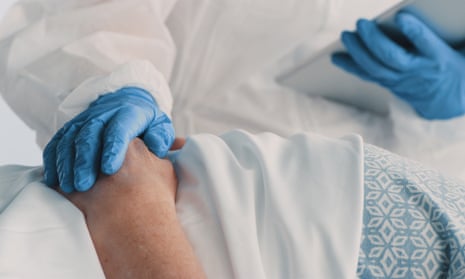 |
| 'You have to meet rigorous eligibility criteria. And being poor and not having a home, or a home that is suitable for you, does not make you eligible.’ Photograph: Marco VDM/Getty Images |
A new paper produced by two University of Toronto bioethicists argues that allowing Canadians with non-terminal conditions to choose a doctor-assisted death following a failed search for better housing or proper medical care may be 'deeply tragic' but it would still be wrong to deny medical assistance in dying (MAID) to people who are driven mostly by poverty or unjust conditions; people who not only might, but have explicitly said they would prefer not to die.
There was a story seen on CTV of a 51-year-old woman with multiple chemical sensitivities who chose MAID after what she described as a failed search for an affordable apartment in Toronto where the afflicting odour of smoke or chemical cleaners would not bedevil her condition. In another instance, a 37-year-old Vancouver women made an appearance in a pro-euthanasia film who opted for doctor-assisted death after failing to receive adequate medical care for Ehlers-Danlos Syndrome, a rare, painful condition of fragile connective tissue throughout the body.
Medical Assistance in Dying was originally restricted to people whose death was considered to be reasonably foreseeable, then expanded in 2021 to include those not at imminent risk of dying, but with an illness, disability or disease causing enduring suffering intolerable to their quality of life.
The paper in question that the professor of bioethics and her post-graduate student co-wrote was meant to address the question of whether someone facing an injustice -- like inability to acquire affordable housing -- could be recognized for a reason to deny them a request for assisted suicide. The co-authors point out their feeling that the absence of better social supports is "abhorrent", in and of itself constituting a deep injustice.
A new poll ascertained that while most Canadians support euthanasia for "grievous and irremediable" medical conditions, opinions tend to be more nuanced with assisted suicide for other reasons. An online survey by Research Co. revealed that half those questioned would agree to permit adults due to an inability to receive medical assistance to apply for medical assistance in dying. Less than three out of ten would support the expansion of assisted dying to include homelessness or poverty.
Refusing access to MAID, the two academics contend, "amounts to perpetuating their suffering, hoping that this will ultimately lead to a better, more 'just' world." They consider their recommendation as representing a harm reduction argument, that "the least harmful way forward is to allow MAID to be available."
The services proposed as an alternative to MAID, they argue, such as access to long-term care, palliative care and even basic care, is deteriorating following the COVID pandemic. The growing inability to access all services people require results in people believing their lives are intolerable yet they would be met with statements such as: "Well, sorry, we haven't made these social changes yet, but you're not going to have access" to MAID.
MAID proponents once claimed no one was choosing MAID as a result of poverty or a lack of social or medical support, points out Yuan Yi Zhu, Canadian research fellow at Harris Manchester College, University of Oxford. "It is more than tragic: it is a moral stain on our country, for which future generations will have to atone."
MAID deaths have grown in number from just over 1,000 in 2015 when assisted dying in Canada was legalized, to 31,644 in total by the end of 2021.
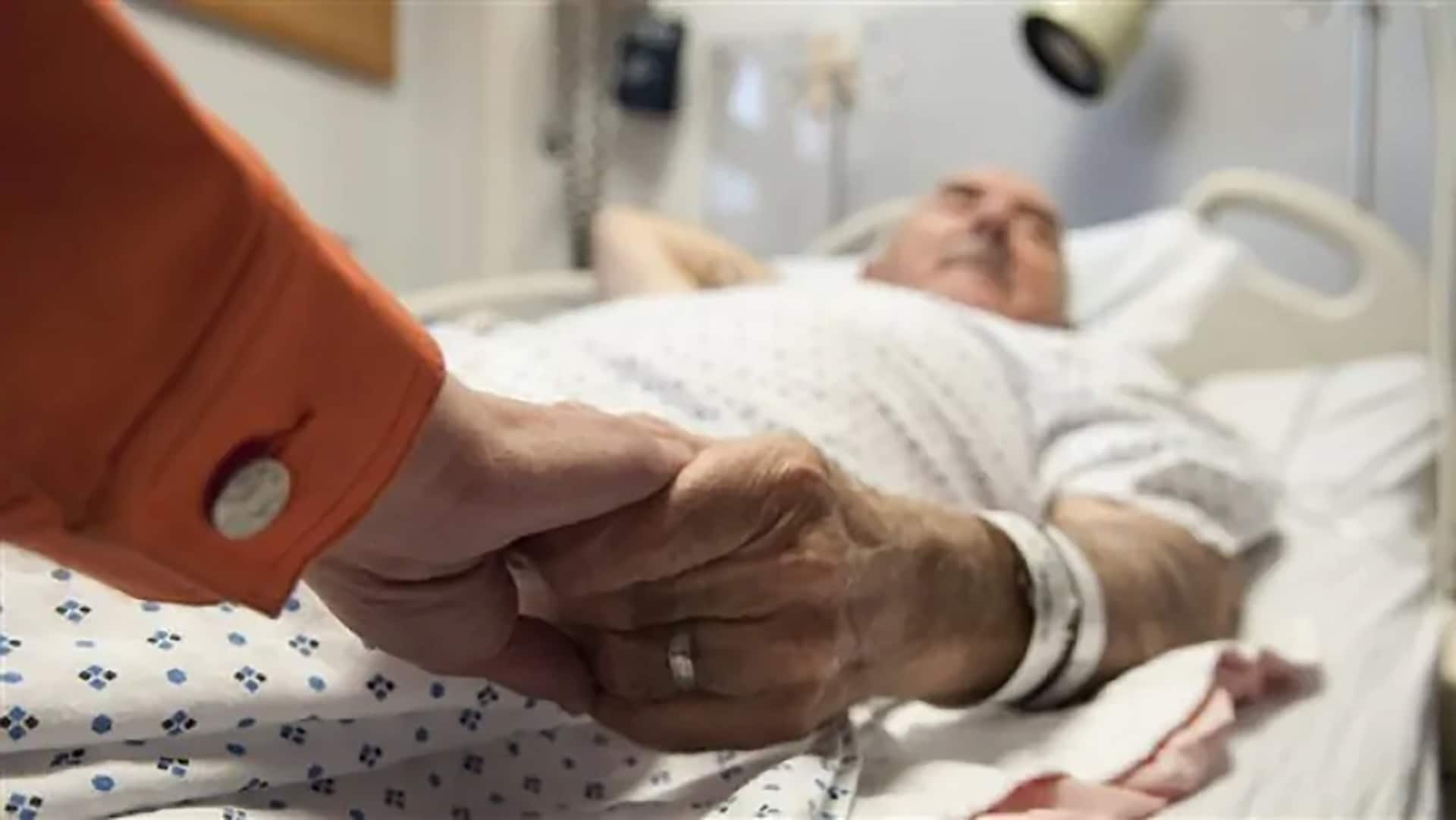 |
| The Senate
has passed Bill C-7, which expands access to medical assistance in
dying, including, eventually, to people suffering solely from mental
illnesses. CBC |
Labels: Bioethicists, End-of-Life, Injustice, Medical Assistance in Dying, Pain, Poverty, Suffering
posted by Pieface @ 8:23 PM
0 comments