Ruminations

Blog dedicated primarily to randomly selected news items; comments reflecting personal perceptions

Wednesday, August 16, 2023

Quebec, Assisted Suicide Capital of the World

"We're now no longer dealing with an exceptional treatment, but a treatment that is very frequent." "[Quebec is on track to complete the year with 7% of all deaths recorded as doctor-assisted] That's more than anywhere else in the world: 4.5 times more than Switzerland, three times more than Belgium, more than the Netherlands. It's two times more than Ontario."
"We see, more and more, that the cases receiving medical aid in dying are approaching the limits of the law. It's no longer just terminal cancer, there are all kinds of illnesses -- and that's very good, but it requires a lot of rigour from doctors to ensure they stay within the limits of the law."
"Medical aid in dying is not there to replace natural death."
"It's very easy to go from palliative care to medical aid in dying."
Dr. Michael Bureau, head, Commission sur les soins de fin de vie
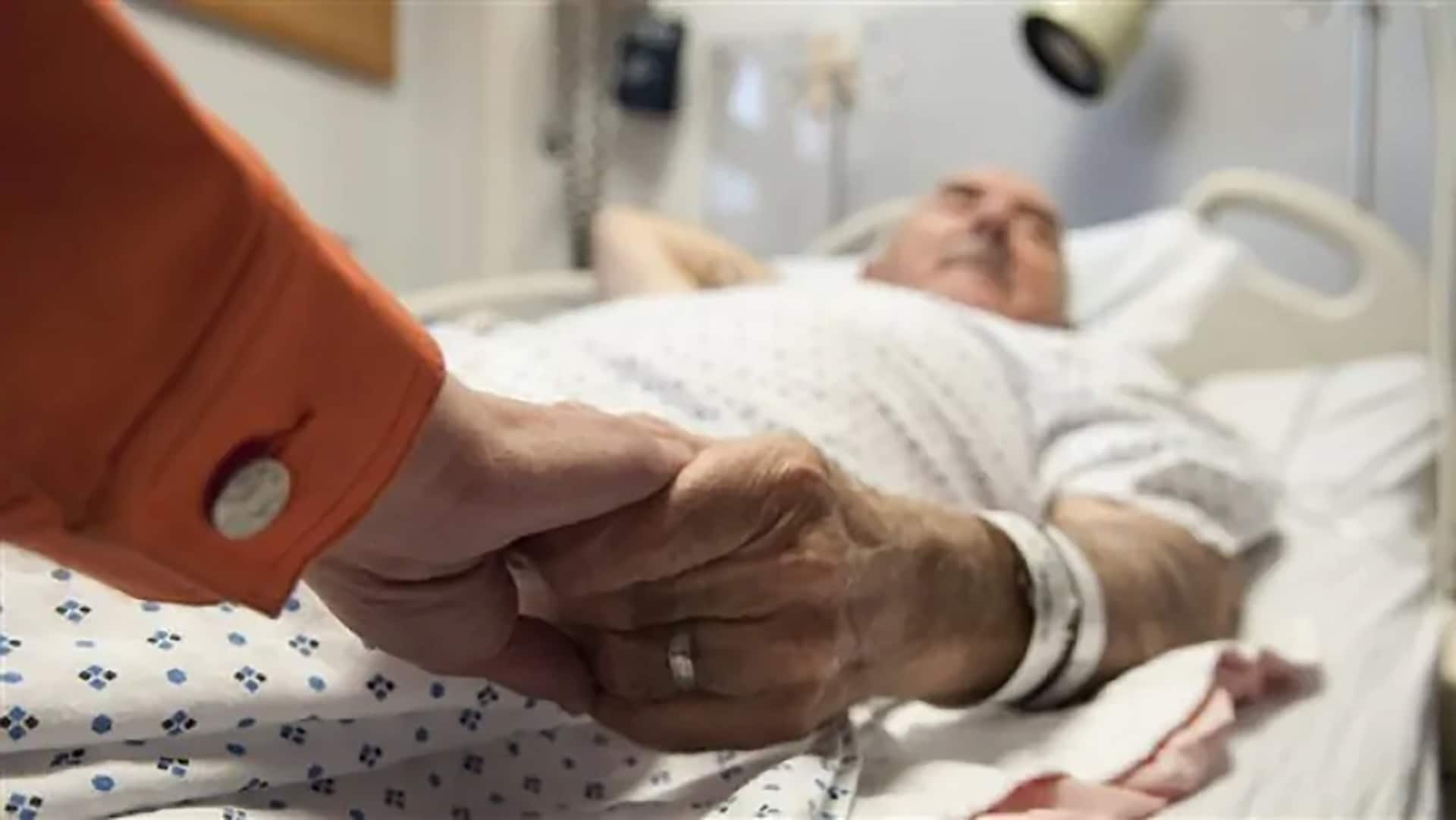
https://i.cbc.ca/1.3668510.1592977008!/fileImage/httpImage/image.jpg_gen/derivatives/16x9_780/medical-aid-in-dying.jpg
Quebec is at the global forefront of medical aid in dying, with a higher proportion of people choosing the procedure in the province than anywhere else on earth. (Radio-Canada)

The enactment of a federal law permitting end-of-life medical assistance in committing suicide was an issue receiving mixed results in Canada. Some felt it was timely and needed, that when people deeply felt it was time for them to leave life due to extenuating medical conditions causing unendurable pain the humane thing for any caring society to do was to help these souls expedite themselves to freedom from pain, at their choice. 
 
Others raised concerns that once this setting aside of the prohibition against assisted suicide became law, there would be an inevitable loosening of guidelines, opening this new social service to an even greater number of people not facing end-of-life issues. Indeed, there have been 'updates' to the original legislation, loosening some of the strictures against assisted suicide being used indiscriminately by the medical profession and society in general.
 
Medical Assistance in Dying (MAID) as it is practised in Canada now, has resulted in Canada overtaking all other developed countries that permit assistance in accomplishing suicide, surpassing them in numbers and in the looseness of those whose medical conditions and even social status fails the original categories of permissible suicide assistance. Scheduled for the future is the acceptance of requests from people suffering mental illness. And later still, adolescents considered mature enough to make that decision for themselves.

Now, the head of the independent body monitoring assisted suicide in Quebec has publicly stated his concerns that doctor-assisted deaths -- that the original legislation made clear were to be viewed as a last resort -- when all else fails, has fallen by the wayside. MAID, it appears, is no longer viewed as an exceptional procedure to be undertaken on behalf of people suffering unbearably, and approaching the end of their lives.
 
https://smartcdn.gprod.postmedia.digital/nationalpost/wp-content/uploads/2023/08/0608-na-maid.jpg?quality=90&strip=all&w=1128&h=846&type=webp&sig=liBpWecLa_-mF8zCOYfJjw
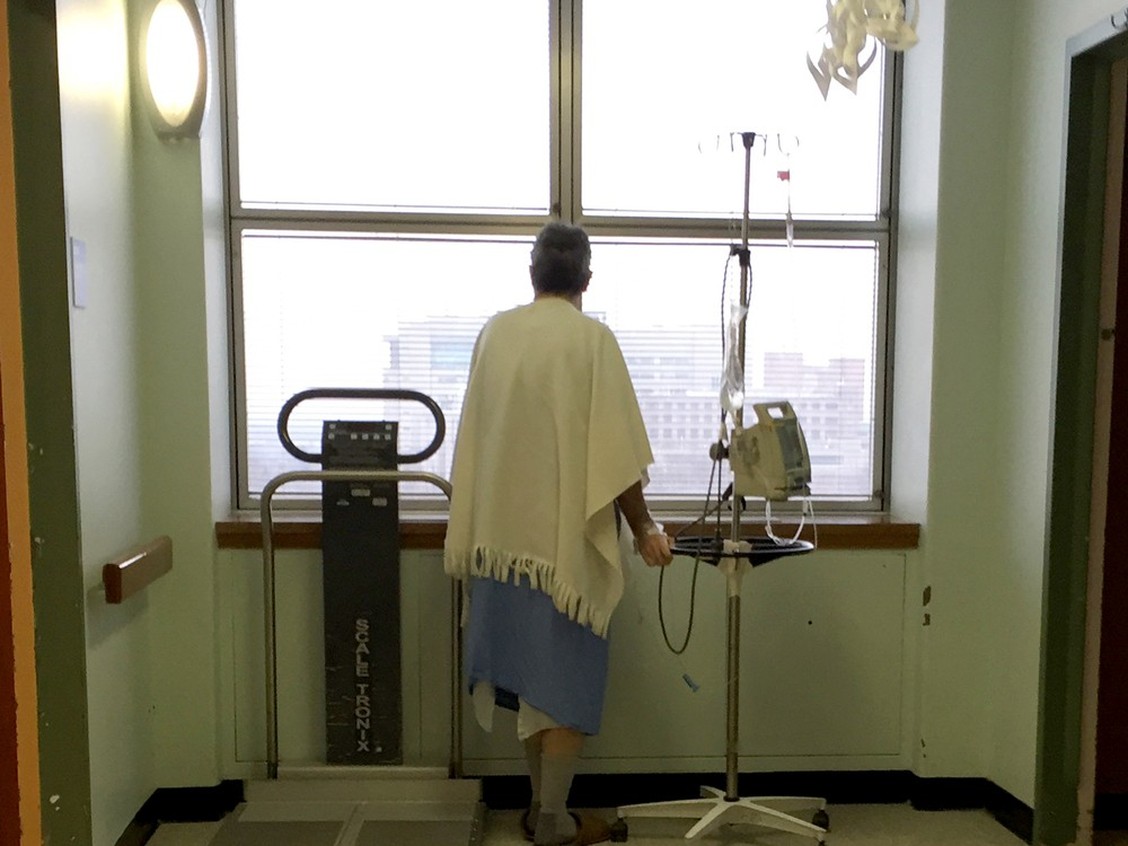
A patient looks out a window at the palliative care unit at St Mary's Hospital Centre in Montreal   Photo by Phil Carpenter /Montreal Gazette
 
The commission that Dr. Bureau heads, earlier in the month forwarded a reminder memorandum to the province's medical practitioners, that it is only those patients with a serious, incurable disease, suffering and who have experienced an irreversible decline in their condition, who are deemed to be eligible to receive MAID. The procedure must be approved independently by two doctors; there should be no 'shopping' for a favourable second opinion.

He has noted, he stated, an increase in the occurrence of cases violating Quebec's end-of-life legislation. In the previous annual report, covering a period between spring of 2021 and spring 2022, 15 of 3,663 doctor-assisted deaths in Quebec failed to respect the letter of the law. Problematic cases included the administering of MAID to an individual with an expired provincial health insurance card; rather than continue to rely on provincial health coverage that had expired, the patient chose death.

Patients in another six cases were found not admissible for the procedure, while in another three cases, patients were in a condition of health that led to their inability to give consent. These are cases reported to the provincial college of physicians, College des medecins du Quebec. An emailed response had the college confirming that none of the 15 cases were referred to its internal disciplinary tribunal; additional negligence. Not was data available whether disciplinary measures may have been taken toward doctors violating MAID rules.

A concern was expressed by Dr. Bureau that doctors find themselves in awkward situations with elderly patients, ready to die, but whose health problems are not sufficiently serious to qualify them for MAID. Doctor-assisted deaths, according to Health Canada's most recent annual report on the subject, accounted for 3.3 percent in 2021 of deaths in Canada. Quebec had the highest rate of MAID deaths country-wide, their number was 4.7 percent that year, and numbers have steadily continued to rise.
https://montreal.ctvnews.ca/content/dam/ctvnews/en/images/2023/8/15/concerns-about-overusing-maid-1-6520011-1692116472155.jpg
Concerns about over-using MAID in Quebec


Labels: , , , ,

Friday, May 12, 2023

MAID At Your Service in Canada

"To force people who are already in unjust social circumstances to have to wait until those social circumstances improve, or for the possibility of public charity that sometimes but unreliably occurs when particularly distressing cases become public is unacceptable."
"A harm reduction approach acknowledges that the recommended solution is necessarily an imperfect one; a 'lesser evil' between two or more less than ideal options."
Essay, Journal of Medical Ethics
 
"One way of responding to these cases [permissive assisted death regime] is, 'Well, clearly then, medical aid in dying should not be available to them [those living without the medical or disability supports they require, driven to choose MAID, without true voluntary, informed consent].
"We just don't think the fact that social conditions are contributing to make their lives intolerable means that they don't have the wherewithal to make that choice."
"People can make their own determination about whether their lives are worth living, and we should respect that."
[The public] may be shocked to realize that some people's lives become intolerable to them -- not simply because of their health condition, but because of something that, as Canadians, we have the power to change."
Bioethicist Amy Mullin, professor of philosophy, University of Toronto 

"All options on the table are really tragic and sad."
"But the least harmful way forward is to allow people who are competent to make decisions to have access to this choice, even if it's a terrible one."
Kayla Wiebe, PhD candidate in philosophy, University of Toronto
Shot of a doctor using a digital tablet while caring for her senior patient
'You have to meet rigorous eligibility criteria. And being poor and not having a home, or a home that is suitable for you, does not make you eligible.’ Photograph: Marco VDM/Getty Images
 
A new paper produced by two University of Toronto bioethicists argues that allowing Canadians with non-terminal conditions to choose a doctor-assisted death following a failed search for better housing or proper medical care may be 'deeply tragic' but it would still be wrong to deny medical assistance in dying (MAID) to people who are driven mostly by poverty or unjust conditions; people who not only might, but have explicitly said they would prefer not to die.

There was a story seen on CTV of a 51-year-old woman with multiple chemical sensitivities who chose MAID after what she described as a failed search for an affordable apartment in Toronto where the afflicting odour of smoke or chemical cleaners would not bedevil her condition. In another instance, a 37-year-old Vancouver women made an appearance in a pro-euthanasia film who opted for doctor-assisted death after failing to receive adequate medical care for Ehlers-Danlos Syndrome, a rare, painful condition of fragile connective tissue throughout the body.

Medical Assistance in Dying was originally restricted to people whose death was considered to be reasonably foreseeable, then expanded in 2021 to include those not at imminent risk of dying, but with an illness, disability or disease causing enduring suffering intolerable to their quality of life. 

The paper in question that the professor of bioethics and her post-graduate student co-wrote was meant to address the question of whether someone facing an injustice -- like inability to acquire affordable housing -- could be recognized for a reason to deny them a request for assisted suicide. The co-authors point out their feeling that the absence of better social supports is "abhorrent", in and of itself constituting a deep injustice.

A new poll ascertained that while most Canadians support euthanasia for "grievous and irremediable" medical conditions, opinions tend to be more nuanced with assisted suicide for other reasons. An online survey by Research Co. revealed that half those questioned would agree to permit adults due to an inability to receive medical assistance to apply for medical assistance in dying. Less than three out of ten would support the expansion of assisted dying to include homelessness or poverty.

Refusing access to MAID, the two academics contend, "amounts to perpetuating their suffering, hoping that this will ultimately lead to a better, more 'just' world." They consider their recommendation as representing a harm reduction argument, that "the least harmful way forward is to allow MAID to be available."

The services proposed as an alternative to MAID, they argue, such as access to long-term care, palliative care and even basic care, is deteriorating following the COVID pandemic. The growing inability to access all services people require results in people believing their lives are intolerable yet they would be met with statements such as: "Well, sorry, we haven't made these social changes yet, but you're not going to have access" to MAID.

MAID proponents once claimed no one was choosing MAID as a result of poverty or a lack of social or medical support, points out Yuan Yi Zhu, Canadian research fellow at Harris Manchester College, University of Oxford. "It is more than tragic: it is a moral stain on our country, for which future generations will have to atone."

MAID deaths have grown in number from just over 1,000 in 2015 when assisted dying in Canada was legalized, to 31,644 in total by the end of 2021.

The Senate has passed Bill C-7, which expands access to medical assistance in dying, including, eventually, to people suffering solely from mental illnesses.  CBC

Labels: , , , , , ,

Tuesday, May 03, 2022

Canada's Bargain-Basement Poison Pill Offering

"While we have been advocates of death by Medical Assistance in situations where there is a terminal diagnosis or death is imminent, we had no idea that Canada's laws leave considerable room for interpretation by activist doctors."
"It's unacceptable -- it took a year to get treatment but it could only take four days to die."
Alicia and Christie Duncan, British Columbia
 
"Canadian law, in all its majesty, has allowed both the rich as well as the poor to kill themselves if they are too poor to continue living with dignity."
"What it will not do is spend money to allow them to live instead of killing themselves."
"[Canada] Euthanizing its poor."
Yuan Yi Zhu, researcher, Oxford University
 
"It was an easy fix."
"She just needed to be helped to find a suitable place to live, where there wasn't smoke wafting through the vents."
Dr.Riina Bray, medical director, Environmental Health Clinic, Women's College Hospital, Toronto
In March 2023, Canada will become one of the few nations in the world allowing medical aid in dying, or MAID, for people whose sole underlying condition is depression, bipolar disorder, personality disorders, schizophrenia, PTSD or any other mental affliction.
In March 2023, Canada will become one of the few nations in the world allowing medical aid in dying, or MAID, for people whose sole underlying condition is depression, bipolar disorder, personality disorders, schizophrenia, PTSD or any other mental affliction. Photo by Getty Images

Too many patients stuffed into the Canadian health care system, vexing patients with time-consuming need for close attention, distraction-demanding, prescribed therapies that don't work, exhausting the medical community of patience, so if they're agreeable to suggestion, the solution is at hand -- that wonderful time-saving six-year-old final therapy; MAID -- the ingenious, money-saving, staff-rescuing, hospital bed-freeing answer to the problem -- Medical Assistance in Dying. Dignified, accepted, wholesome and final. 

The Parliamentary Budget Officer cranked up the numbers, and there are millions in savings by simply releasing people from life and getting on with the due care and treatment of others far less troublesome and amenable to recovery, leaving the hospital system, recovered from a transitory, or a treatment-responsive condition. Through the simple enough expedient of using a perfectly legal, patient-accepting device to free up resources and get on with the business of 'healing' those whose conditions are amenable to improvement.

Evidently, Donna Duncan, a nurse in Abbotsford, B.C. wasn't one of those; her condition was exacerbated by having to wait a prolonged period of time for access to treatment for her deteriorating physical and mental condition at age 51, thanks to an unfortunate vehicular accident.Being treated at an Abbotsford clinic for her too-long-ignored mental condition, her daughters Christie and Alicia were informed their mother had agreed to undergo medically assisted death to solve her physical and mental decline. 
 
Unable to stop the scheduled death, they contacted police on an issue of medical malpractise, when nurse practitioners at the clinic approved their mother's request for medically assisted death in the absence of adequately assessing her mental state. Another individual in British Columbia, Alan Nichols was severely mentally ill, and euthanized at Chilliwack General Hospital. A severe psychiatric episode moved his family to admit him to hospital under the Mental Health Act. Little did they imagine they were committing him to death.

His family received a call from the hospital informing them their brother had consented to a doctor-assisted death. "They killed our brother", Wayne Nichols stated flatly. It is being revealed that some people struggling to make scarce financial ends meet have taken to appointments to end their lives as a reflection of their inability to find proper housing or medical care. In Ontario a 51-year-old woman sought and was given MAID when she was unable to secure affordable housing to accommodate her multiple severe chemical sensitivities.

In another instance a disabled woman who applied for medically assisted death on the grounds she was overwhelmed by the cost of food and lodging, had her wish granted. "I have no other reason to want to apply for assisted suicide, other than I simply cannot afford to keep on living", she stated. For each additional patient that seeks euthanization that is approved, a cost-benefit accrues to the Canadian health-care system.
"[The 6,465 medically assisted deaths scheduled for 2021 was poised to save $109.2 million in] end of life costs."
"Expanding access to MAID will result in a net reduction in health-care costs for the provincial governments."
2020 report, Parliamentary Budget Office
""
In ten months' time a new legal regime will come into law to vastly expand the criteria under which patients can be approved for doctor-assisted death. This will override the current legislation reserved strictly to allow euthanasia only to those whose death is seen to be "reasonably foreseeable". In March of 2023 Bill C-y is set to expand medically assisted dying to Canadians with no terminal diseases and it will include those whose sole underlying condition is a mental illness.

"I think there’s going to be lots of uncertainty about how to apply this in March 2023."
"My hope is that psychiatrists will move cautiously and carefully to make sure MAID is not being used as something instead of equitable access to good care."
Dr. Grainne Neilson, past president, Canadian Psychiatric Association, Halifax forensic psychiatrist
 
"We don’t understand the fundamental underlying biology causing most major mental illnesses." 
"We identify them through the clustering of various symptoms. We try to target treatments as best we can. But the reality is, we don’t understand what’s going on, on a fundamental biological level, unlike with the vast majority of these other predicable conditions."    
"There’s no doubt that mental illnesses lead to grievous suffering, as grievous, even more grievous in some cases than other illnesses. It’s the irremediability part that our framework also requires and that scientifically cannot be met. That we cannot do. That’s the problem."
Dr. Sonu Gaind, physician chair, MAID team, chief of psychiatry, Humber River Hospital, Toronto, where he’s chief of psychiatry.
 

Labels: , , , , ,

 
()() Follow @rheytah Tweet