Ruminations

Blog dedicated primarily to randomly selected news items; comments reflecting personal perceptions

Friday, May 12, 2023

MAID At Your Service in Canada

"To force people who are already in unjust social circumstances to have to wait until those social circumstances improve, or for the possibility of public charity that sometimes but unreliably occurs when particularly distressing cases become public is unacceptable."
"A harm reduction approach acknowledges that the recommended solution is necessarily an imperfect one; a 'lesser evil' between two or more less than ideal options."
Essay, Journal of Medical Ethics
 
"One way of responding to these cases [permissive assisted death regime] is, 'Well, clearly then, medical aid in dying should not be available to them [those living without the medical or disability supports they require, driven to choose MAID, without true voluntary, informed consent].
"We just don't think the fact that social conditions are contributing to make their lives intolerable means that they don't have the wherewithal to make that choice."
"People can make their own determination about whether their lives are worth living, and we should respect that."
[The public] may be shocked to realize that some people's lives become intolerable to them -- not simply because of their health condition, but because of something that, as Canadians, we have the power to change."
Bioethicist Amy Mullin, professor of philosophy, University of Toronto 

"All options on the table are really tragic and sad."
"But the least harmful way forward is to allow people who are competent to make decisions to have access to this choice, even if it's a terrible one."
Kayla Wiebe, PhD candidate in philosophy, University of Toronto

Shot of a doctor using a digital tablet while caring for her senior patient
'You have to meet rigorous eligibility criteria. And being poor and not having a home, or a home that is suitable for you, does not make you eligible.’ Photograph: Marco VDM/Getty Images
 
A new paper produced by two University of Toronto bioethicists argues that allowing Canadians with non-terminal conditions to choose a doctor-assisted death following a failed search for better housing or proper medical care may be 'deeply tragic' but it would still be wrong to deny medical assistance in dying (MAID) to people who are driven mostly by poverty or unjust conditions; people who not only might, but have explicitly said they would prefer not to die.

There was a story seen on CTV of a 51-year-old woman with multiple chemical sensitivities who chose MAID after what she described as a failed search for an affordable apartment in Toronto where the afflicting odour of smoke or chemical cleaners would not bedevil her condition. In another instance, a 37-year-old Vancouver women made an appearance in a pro-euthanasia film who opted for doctor-assisted death after failing to receive adequate medical care for Ehlers-Danlos Syndrome, a rare, painful condition of fragile connective tissue throughout the body.

Medical Assistance in Dying was originally restricted to people whose death was considered to be reasonably foreseeable, then expanded in 2021 to include those not at imminent risk of dying, but with an illness, disability or disease causing enduring suffering intolerable to their quality of life. 

The paper in question that the professor of bioethics and her post-graduate student co-wrote was meant to address the question of whether someone facing an injustice -- like inability to acquire affordable housing -- could be recognized for a reason to deny them a request for assisted suicide. The co-authors point out their feeling that the absence of better social supports is "abhorrent", in and of itself constituting a deep injustice.

A new poll ascertained that while most Canadians support euthanasia for "grievous and irremediable" medical conditions, opinions tend to be more nuanced with assisted suicide for other reasons. An online survey by Research Co. revealed that half those questioned would agree to permit adults due to an inability to receive medical assistance to apply for medical assistance in dying. Less than three out of ten would support the expansion of assisted dying to include homelessness or poverty.

Refusing access to MAID, the two academics contend, "amounts to perpetuating their suffering, hoping that this will ultimately lead to a better, more 'just' world." They consider their recommendation as representing a harm reduction argument, that "the least harmful way forward is to allow MAID to be available."

The services proposed as an alternative to MAID, they argue, such as access to long-term care, palliative care and even basic care, is deteriorating following the COVID pandemic. The growing inability to access all services people require results in people believing their lives are intolerable yet they would be met with statements such as: "Well, sorry, we haven't made these social changes yet, but you're not going to have access" to MAID.

MAID proponents once claimed no one was choosing MAID as a result of poverty or a lack of social or medical support, points out Yuan Yi Zhu, Canadian research fellow at Harris Manchester College, University of Oxford. "It is more than tragic: it is a moral stain on our country, for which future generations will have to atone."

MAID deaths have grown in number from just over 1,000 in 2015 when assisted dying in Canada was legalized, to 31,644 in total by the end of 2021.
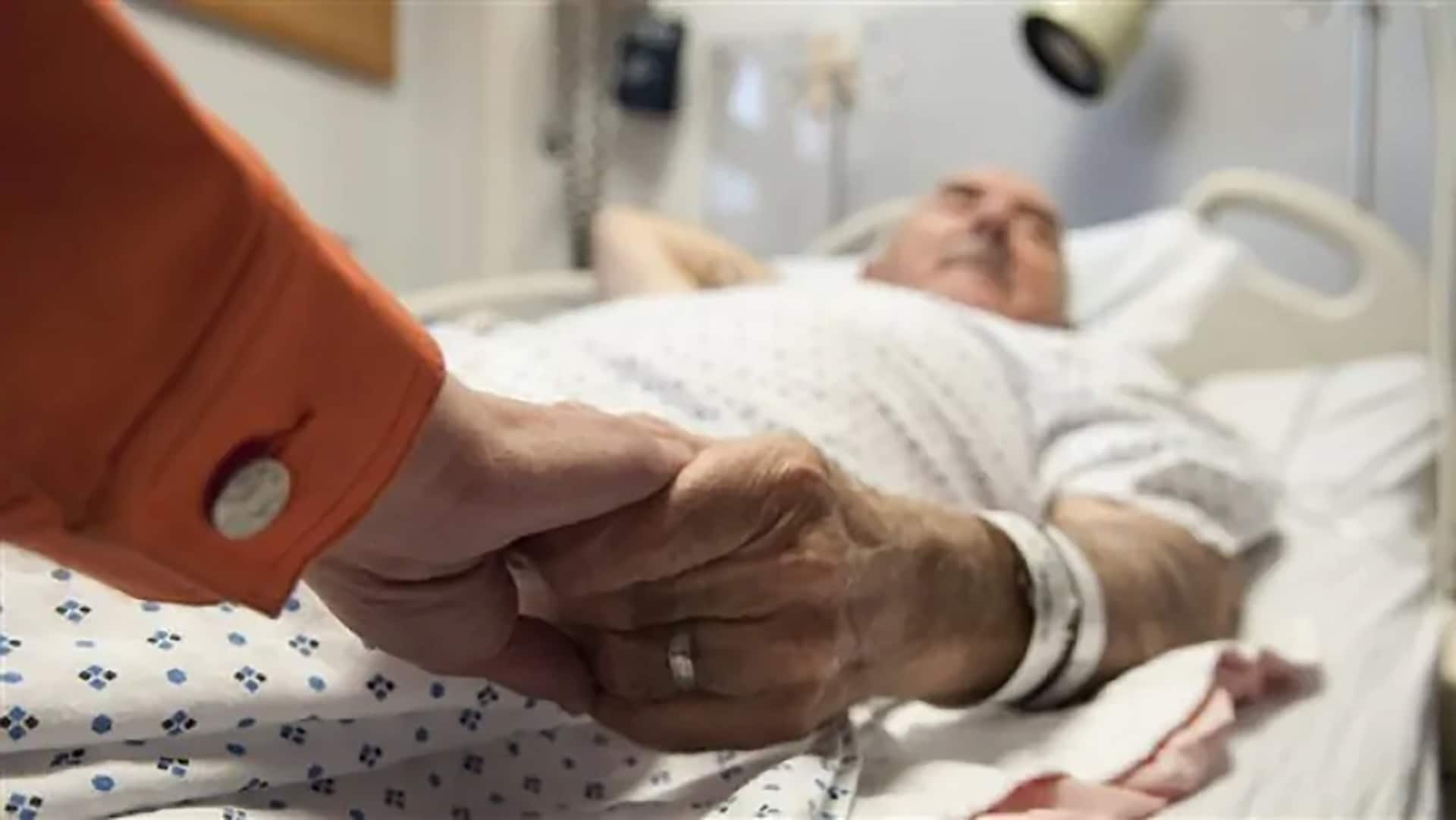
The Senate has passed Bill C-7, which expands access to medical assistance in dying, including, eventually, to people suffering solely from mental illnesses.  CBC

Labels: , , , , , ,

Sunday, January 23, 2022

COVID Helping Tuberculosis Comeback

"This report confirms our fears that the disruption of essential health services due to the pandemic could start to unravel years of progres against tuberculosis."
"This is alarming news that must serve as a global wake-up call to the urgent need for investments and innovation to close the gaps in diagnosis, treatment and care for the millions of people affected by this ancient but preventable and treatable disease."
Dr.Tedros Adhanom Ghebreyesus, Director General, World Health Organization
 
"In 2020, the COVID-19 pandemic pushed 100 million people into poverty."
"Nearly 20 percent of global tuberculosis incidence is attributable to under-nutrition."
"Without global vaccination, health-care systems in low- and middle-income countries will collapse."
"[Countries in southern Africa] are experiencing massive COVID-19 surges on top of already high tuberculosis and HIV co-infection burdens."
Article, New England Journal of Medicine 

"Once COVID came, we totally lost track of the TB stuff."
"Housing is the biggest issue we face. There are multiple families per house. People are sleeping on couches."
Eric Lawlor, mayor, Pangnirtung, Nunavut, Canada
With most private clinics closed, patients with H.I.V., TB and malaria have few places to go for the kind of medical care offered at this Doctors Without Borders clinic in Nairobi.
   Credit...Brian Inganga/Associated Press
In Canada, tuberculosis affects Inuit -- the majority of the Nunavut population -- disproportionately. Both TB and COVID are being spread in the territory by a housing crisis, since both diseases spread readily through person-to-person contact. Some 80 percent of Nunavut residents were given at least one dose of the COVID vaccine, and residents generally follow public health guidelines. 

There is a rising realization globally that tuberculosis is increasingly leading to rising deaths for the first time in a decade and a half, attributable to the presence of COVID. In November, the World Health Organization raised the alarm by citing approximately 1.5 million tuberculosis deaths worldwide in 2020.

Tuberculosis remains the leading cause of death from infectious disease, though it's thought of by most people as an illness of the long-gone past. During the AIDS crisis in the 1980s, cases of TB were seen on a rise when  AIDS patients with compromised immune systems were unable to fight off the infection. North American TB cases began decreasing in the mid-90s, but in many parts of Africa, Asia and Latin America it remains common.
 
Dr. Giorgio Franyuti said many patients with TB at a makeshift hospital in Mexico City were being misdiagnosed with Covid-19.
Credit...Meghan Dhaliwal for The New York Times
Six countries of the world: India, Indonesia, China, Nigeria, Pakistan and South Africa, see sixty percent of worldwide tuberculosis cases. TB is a disease, like COVID, that primarily affects the lungs and like COVID it is transmitted by tiny droplets int he air. Unlike COVID, there is no vaccine for tuberculosis, and what makes it deadly is the antibiotic-resistance of many strains of TB.

What has brought about its resurgence is the medical attention having been shifted wholesale toward treating people with COVID; as a result fewer TB patients were being treated, diagnosed and prevented from dying pf tuberculosis because of a lack of access to medical care. According to the article published in the New England Journal, vaccine inequity represents a large portion of the problem.

Poverty and malnutrition help spread tuberculosis; so that countries with high levels of poverty and malnutrition are also those countries with limited access to the COVID vaccine, as a result of which greater numbers of COVID cases translate to more TB deaths.
 

A patient with tuberculosis waits to be seen by a doctor at the Sizwe Tropical Diseases Hospital in Johannesburg, South Africa. Annual deaths from the infectious disease are on the rise after years of progress.   Michele Spatari /AFP via Getty Images


Labels: , , , ,

Monday, May 17, 2021

Canadian First Nations' Discrimination

"We see once again disparities across the board that put Indigenous peoples on the wrong side of the coin -- and we have to start to answer why."
"I think if we're to study this in further detail, I would predict that we would find racism as one of the crux points in terms of where the journey of an Indigenous person in Canada is different than a non-Indigenous person."
"But those are challenges in a high-income country that pretty much stamps the words, 'universal health care' onto our currency."
Dr.Nadine Caron, first female First Nations general surgeon in Canada

"If we have better data, that will show us what is working and what isn't working."
"It shouldn't matter if you live in Ottawa or Shamattawa, your access to quality of care should be the same."
Dr.Jason McVicar, Metis anesthesiologist, The Ottawa Hospital
qualicum bay first nation's canoe adventure - first nations stock pictures, royalty-free photos & images
Getty Images
 
Indigenous communities in Canada are well known  to suffer greater health issues than do other Canadians. A situation reflective of social-economic factors more than anything, accounted for largely by income, education,  housing, employment and food security. A recently published paper attributes these factors to 'vestiges' of colonialism and disastrous government policy, and this may be largely correct, though there are undoubtedly other factors at play. Not the least of which is Indigenous peoples' continued embrace of the past and their cultural preference for living in isolated communities on traditional tribal land.

In those communities employment is scarce, private property is not part of the reservations system, wholly funded by the federal government through the Department of Indian Affairs, now titled Indigenous and North Affairs Canada. Housing on reserve land is substandard and crowded. People who have no personal investment in the homes they occupy will not care for them and everything uncared for has a tendency to fall apart. Potable water is always an issue in Northern and isolated communities. The most basic ingredients for good health outcomes missing.

Indigenous peoples in Canada have not been well served by their leaders; many reservation band councils are corrupt and fail to share equally among all who live on reserves the benefits that should accrue to all through annual reserve funding through universal general tax-funded allocations, while other reservations are led by responsible, innovative councils who conduct band affairs fairly and equitably with a view to being self-sufficient and productive.

When health issues arise, both physical and mental, it would be of immense value to have expert health professionals available near at hand, but in remote communities this is obviously not possible. Clinics can have a role, but they can only be as efficient and useful as the medical staff that would agree to be posted in those communities. Isolation does not make for happy hunting grounds. Many who live on reserves live in extreme poverty, violence is common, alcohol and drug addiction and a high rate of suicide is as well.

A study was published in the Canadian Medical Association Journal out of research conducted in Ottawa, which found that Indigenous patients had a 30 percent higher death rate following surgery than non-Indigenous patients. That Indigenous patients are likelier to die following an operation than are other Canadians, and less likely to be able to schedule the surgery that they require for heart conditions, failing organ transplants, or joint replacement.
 
this new game is so much fun - first nations stock pictures, royalty-free photos & images
Getty Images
 
Post-operative complications such as pneumonia are more common with Indigenous patients, according to the CMAJ study which was based on a systemic review of 28 previously-published studies which also found that Indigenous people had lower rates of life-saving surgeries like kidney transplants, heart operations and C-sections, along with significantly lower rates of knee and  hip replacement surgeries. "There's real data here showing real differences in outcomes for Indigenous populations", Dr.Donna May Kimmaliardjuk, the first Inuk heart surgeon in Canada, pointed out.

The study authors feel that statistical evidence of systemic racism First Nations, Metis and Inuit medical patients have complained of in Canada, proves their complaints correct. According to the study it is past time for a comprehensive national plan to be developed with the goal of improving surgical care for Indigenous people. As well, such a plan would include a commitment to collect better health-care data on the Indigenous experience. 
 
There are complications that non-Indigenous patients don't face: For surgery, those living on reserves must be flown out to large city centers for hospital care. Being a long way absent from home and the emotional support of family members, having to be temporarily housed in a city for post-surgical follow-up care until complete recovery has been established is disorienting and emotionally upsetting for people, not liable to hasten recovery.

The goal of the study was to synthesize all available data on surgical access and outcomes for Indigenous people, which saw researchers identify 28 studies involving 2.9 million patients, roughly ten percent of whom were Indigenous, allowing them to compare surgical experiences of Indigenous people with those of other Canadians. Some 20 of the studies were used to compare rates of surgery and wait times between Indigenous and non-Indigenous patients.
 
beautiful kayaker - first nations stock pictures, royalty-free photos & images
Getty Images

Two of those studies found kidney transplant recipients for Indigenous patients seeing them experience wait times over three to seven months lengthier than their non-Indigenous counterparts. Four other studies found Caesarian delivery rates to be three to five percent lower among Indigenous women. (Since Caesarian deliveries have latterly transitioned from a medical necessity procedure to a convenience procedure in many cases despite certain dangers associated with the procedure, that can only be seen as a plus.)

Higher rates of amputation was seen among Indigenous patients in three studies on diabetic patients. Which could conceivably be traced to less self-monitoring and adjustment of daily insulin doses against blood-glucose level tests, linked perhaps to poorly diabetes-educated exposures, or simply personal neglect on the part of the person with diabetes, resulting in severe nerve damage ultimately requiring amputation.

Hip and knee replacement surgeries saw Indigenous patients about half the rate of non-Indigenous patients in other studies. Both urban and geographically isolated Indigenous populations experienced less effective surgical care than other Canadians, the researchers found, despite Indigenous people suffering a greater disease burden; living in poverty, lack of adequate education and employment opportunities, crowded living conditions, which should logically trigger an alert.

Quality surgical care requires screening and diagnosis, along with access to hospitals and followup appointments, representing a challenge when Canada's Indigenous population is culturally diverse and widely distributed, with great numbers living in remote Northern communities, the study noted. Needless to say, poverty, lack of education and remunerative employment, along with good housing conditions, afflicts many low-income and unemployed Canadians who are non-Indigenous. Their condition leaves them as well vulnerable to neglect and privation.

inuit mother and daughter traditional dress baffin island nunavut - first nations stock pictures, royalty-free photos & images
Getty Images


Labels: , , , , , ,

Saturday, December 26, 2020

Disciplined, Tough, Motivated, Drukpa Nuns, Nepalese Himalaya

Nepali Buddhist nuns
Nepali Buddhist nuns practise kung fu at the Amitabha Drukpa Nunnery on the outskirts of Kathmandu. Dressed alike with matching shaved heads, the women and girls finish their daily exercise and move on to their other duties as part of the Kung Fu Nuns of Nepal, a name they have proudly adopted. Prakash Mathema/AFP via Getty

"The biggest challenge has been explaining to people how dangerous this virus is."
Jigme Konchok Lhamo, 28, Buddhist Drupka nun
 
"We are scared ... But fear can't stop us."
"We can't change the whole world by ourselves but even if we manage to help one life, that's a big success. We feel happy about it. We feel encouraged."
Jigme Yeshe Lhamo, 30, Buddhist Drupka nun 

"They are a new generation of women who are not afraid to break century-old taboos and stereotypes."
"They took their practice off the meditation cushion and into the world -- often times against criticism and threats to their safety."
Carrie Lee, former president, Live to Love International
A Kung Fu nun hands a woman face masks. Thomson Reuters Foundation/Handout by Live to Love International
 
These nuns are different than how nuns are traditionally conceived. For one thing, His Holiness, The Gyalwang Drupka, leader of the thousand-year-old sect, a decade ago gave encouragement to the nuns to learn Kung Fu martial arts reasoning it would give them exercise for better health, and confidence in themselves and their mission. Ever since, they have been dubbed the "Kung Fu nuns". 
 
Women of the Drukpa lineage representing the sole female order in the Buddhist monastic system are also unique in that they share equal status with monks.

They broke ranks with tradition when they eschewed expectations of focusing primarily on cooking and cleaning, and set aside the injunction not permitting them to exercise. And now, during the global pandemic they set out to break old taboos and search for new horizons in their zeal to do good in their world through influencing the actions of others prone to superstition and surrender to what they deem to be preordained fate.

The Drukpa nuns have undertaken the dangerous and arduous work involved in trekking through the oxygen-thin altitudes of the Himalaya to reach small, isolated tribal villages where COVID-19 has struck, just as it has elsewhere in the world. Bearing weighted backpacks, hundreds of the Buddhist nuns garbed in maroon robes dispense health advice to villagers sickened by COVID, and destitute.

The vital aid they offer consisting of sacks of staples; rice and lentils, toiletries and face masks hauled on their backs is meant to save the lives of the helpless villagers, to convince them first of the dire threat that COVID-19 poses to their well-being. The dedicated nuns' activities in delivering aid has benefited villagers on both sides of the India-Nepal border. About two thousand indigent families have so far been supported by the nuns.
 
Villagers line up to receive aid from the Kung Fu nuns. Thomson Reuters Foundation/Handout by Live to Love International
 
They do their best to convince the villagers that the virus is not "just a cold". Without access to news sources taken for granted elsewhere in the world, villagers tend to shrug off the nuns' efforts through training sessions on social distancing, hand washing and mask wearing. Nonetheless, the nuns have taken to working industriously with little attention to the hours they sacrifice to ensure food and hygiene items are delivered to COVID-struck villagers in the mountains.

The Indian district of Lahani is home to half the global network of roughly 700 Drukpa nuns. The inhabitants of the village in its entirety have all been infected by the virus, including relatives of some of the nuns. The nuns have also realized that for women, the pandemic has highlighted added challenges. 
"When I spoke to my cousin, she said maintaining menstrual hygiene was very difficult because sanitary pads are not available and even if they are, they don't have enough money to purchase them."
"It's a very big issue for women."
Nima Sherpa, 28, northern Nepal
This situation has informed the nuns what their next mission would do well to focus on; women's health, including hygiene specifically addressing menstruation. Teaching villagers as well, how to perform breast self-examinations for cancerous lumps.

https://d8zcwdvc14g2e.cloudfront.net/contentAsset/image/58822090-e307-498c-a159-355b29e9bd6f/image/byInode/1/filter/Resize,Jpeg/jpeg_q/70/resize_w/1230
Family members of Kung Fu nuns in India sew cloth face masks. Thomson Reuters Foundation

Labels: , , , , , ,

Monday, October 19, 2020

Poverty and Food Insecurity, a Humanitarian Ill

"World Food Day is calling for global solidarity to help all populations, and especially the most vulnerable, to recover from the crisis, and to make food systems more resilient and robust so they can withstand increasing volatility and climate shocks, deliver affordable and sustainable healthy diets for all, and decent livelihoods for food system workers."
World Food Day, October 16

"It infects my life I want to say affects, but it's both. It affects my life on a daily basis."
"I felt like my story should be shared because I'm not the only one going through this. Because I am them, they are me."
"But I find that lower-income people tend not to share what's happening with them because of pride. Because of embarrassment. It's not cool to say you're poor. It's not cool to sit with a bunch of people at lunch and you're like, 'wow, I wish I could buy that but I can't. I'll have the soup'."
"I don't feel ashamed anymore. I used to feel embarrassed. But I don't want it to be a sad story -- it's an empowering story."
"I'm saying this so we can get policy changed. That's why I'm talking."
Nicola Moore, singer-0songwriter, peer advocate, Hamilton Community Food Centre

"These are all key things [difficulty in finding employment, food poverty] that add up to people being pushed further to the margins and their lives being diminished -- and frankly, the data shows, shortened as a result of being food insecure."
"First-person stories, whether you're left, centre or right on the ideological or political pendulum, you can't duck a story that is so clearly showing that people are working overtime to try and make ends meet for themselves and their families." 
"Food won't solve hunger, income will. If you frame the issue as hunger, you get food responses and you get charity. If  you frame the issue as poverty, you get policy responses and you get the right to food. That's where we need to be. It's not about supply."
Nick Saul, CEO, Community Food Centres Canada (CFCC)

"I could sit here and get Ontario Works payments or I could do something about it and change my life, which is what I'm trying to do right now. Advocacy and singing are my way out", says Nicola Moore, single mother of three young children and now an avid gardener in a community plot growing cucumbers, green beans, lettuce, squash, tomatoes, herbs and kale. She advises people how to use a tin of chickpeas they are given on trips to the food bank, in a multiplicity of ways.

And she has been featured in a newly released report: Beyond Hunger: The Hidden impacts of Food Insecurity in Canada. The CFCC made a survey of 561 people on low income living across the country. Ms.Moore sticks to "a very tight budget" for food between $120 and $140 weekly. Her youngest is not yet two, and almost half of that budget goes to baby-specific needs (like diapers), with $10 spent on milk per week. "And god forbid my son has a growth spurt and drinks the whole bag at one time, which he's been known to do. That is stressful for me and I have to put on a good face for them. I don't want them to know I'm worrying about that", she allows. 
 
WFP/Mehedi Rahman
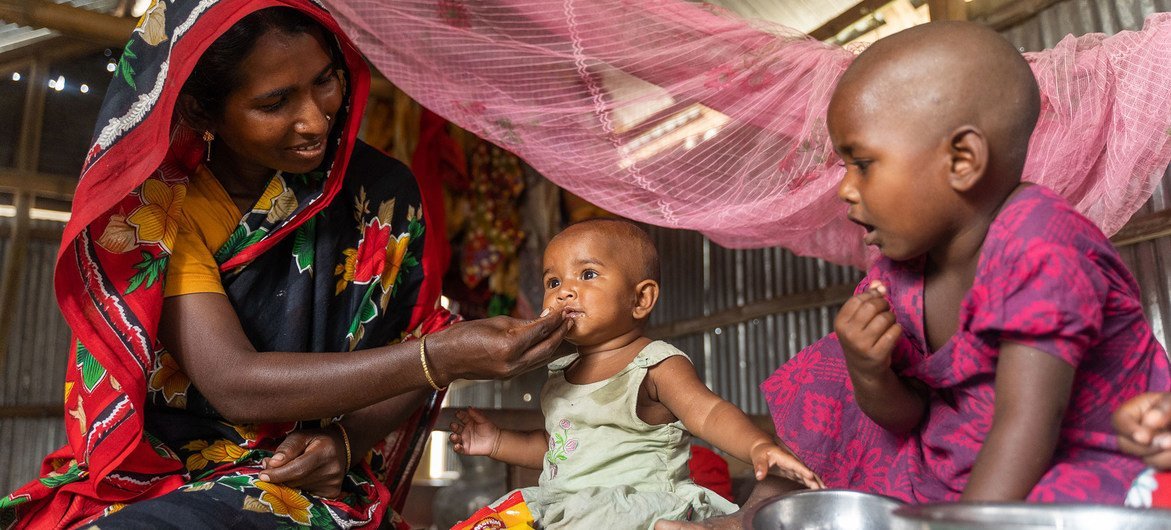
Families are being provided with food aid by the World Food Programme (WFP) after heavy monsoon rains flooded parts of Bangladesh in June 2020.

Before the onset of the pandemic an estimated 4.5 million Canadians, according to a CFCC report, experienced food insecurity. That number increased by 39 percent during the pandemic. Black, Indigenous and northern communities were disproportionately affected. Now, one in seven people is food insecure, their ability to afford sufficient food and concerns of running out without the means to purchase more, afflicting their sense of self-sufficiency and personal security. 

Poverty is the acknowledged cause of food insecurity, impacting peoples' health, leading to relationships being severed, diminishing a sense of self-worth, and eating away at opportunities for employment, according to a CFCC study. Food insecurity takes a toll on physical health, according to 81 percent of survey participants; 79 percent saying it impacts their mental health; 64 percent stating it erodes relationships, 69 percent claiming it has a deleterious effect on their children, and 57 percent that it becomes more difficult to find and retain employment.

Low wages and precarious jobs, low social assistance rates, the rising cost of living, along with  an aura of colonialism and systemic racism are all cited by the CFCC as issues relating to food insecurity in Canada. And according to Mr. Saul, preferentially the creation of an income floor that people cannot fall below would be an adequate response to an age-old problem of inequality and insecurity leading to poverty. "Making sure everyone has a dignified place at the table, should be a number one social, government-mandated priority."
 
Indisputable and necessary. On the other hand, in a country as wealthy as Canada, in comparison to Third-World countries, washable, reusable cloth diapers are far less expensive than the 'convenient' and expensive disposable diapers, a saving that could be used for food. Furthermore, aspiring to make a living through writing music is unrealistic; such artistic endeavours are for the young and unencumbered. One cannot expect to 'make a living' through such enterprises, and rare is the person who can. Even low-paid service industry employment will garner a wage, topped up by government social welfare.

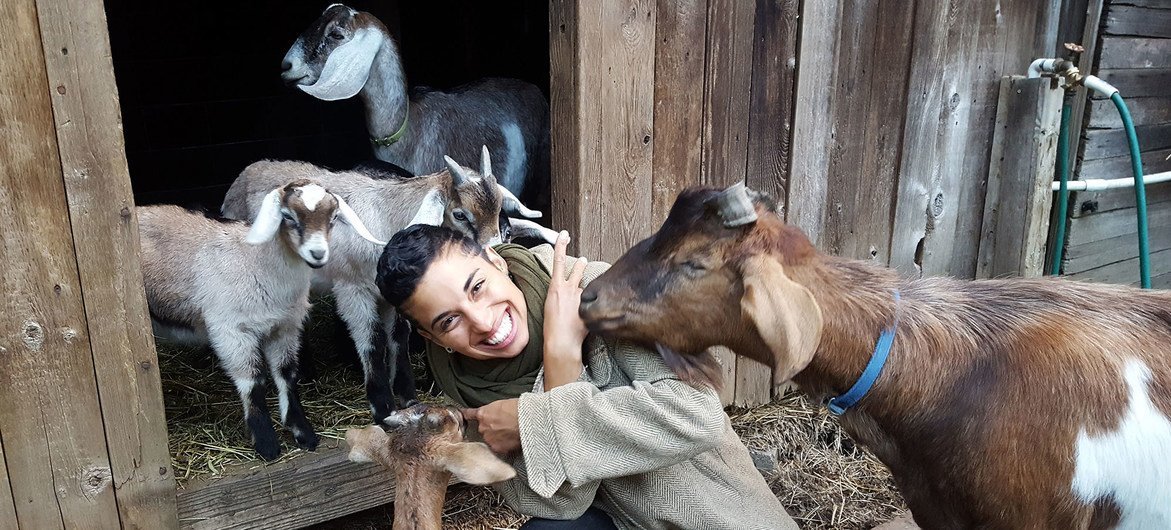
Naima is the Programme Director at Soul Fire Farm, a training farm that aims to help black, indigenous and people of colour have a greater say in, and control over, their food systems.

Labels: , ,

Saturday, February 08, 2020

Political Instability, High Crime Rates, Poverty and Dengue Fever

"In another country there would be many sick but not as many deaths."
"The cure for dengue is political."
Eduardo Ortiz, adviser, Pan American Health Organization, Honduras

"As a parent [of a child with dengue], I wasn't well prepared."
"And as doctors, they weren't well prepared [to diagnose her child's illness]."
Wendy Carcamo, resident, Choloma, Honduras

"People are thinking about other problems [in their daily lives]."
"If I'm a mother and I have three children, four children, I'm going to be thinking about what I'm going to feed them, whether my son is running with the gangs."
"They'll be thinking least of all about dengue."
Dr.Dinorah Nolasco, regional health director, Cortes, Honduras
  Credit...Daniele Volpe for The New York Times

There are other epidemics roiling parts of the world we hear little of, aside from the novel coronavirus striking China, that has the rest of the world on alert over its spread and threat as a new, unknown health danger. The World Health Organization has pointed out that developed areas of the world with thriving economies are well able to absorb the scientific and economic shock of dealing with a new virus that is demonstrating its potential to spread panic and death. Its concerns are mostly focused on less developed, less stable, less well-equipped emerging economies and how they will manage.

While international news media focus on the coronavirus, not much has been published to alert the world over an old concern, dengue fever, which is ravaging Honduras where 107,000 cases emerged last year killing over 175, in one of the worst dengue epidemics on record sweeping Central America killing a total of 400 people. Precisely the type of outbreak that many scientists and public health authorities warn may become more frequent and widespread in coming years.

Dengue fever epidemic - San Pedro Sula, Honduras
An MSF health promotion officer speaks to children at the school in the La Lopez neighbourhood in Choloma, about how to prevent the spread of dengue and eliminate sources of infection. Honduras, April 2019.

Over 40 percent of the dengue deaths in Central America occurred in Honduras last year. Where issues such as government dysfunction, political unrest and public apathy have all contributed to its spread. Last year's outbreak exceeded that of the year before, where in 2018 three people died from the disease and in 2019, 175 succumbed. Transmitted by the Aedes mosquito known to thrive in urban areas in the world's tropical and subtropical regions, tens of millions of cases occur yearly in over 100 countries.

Symptoms include fever, internal bleeding and shock. And given that this is such a familiar disease, the symptoms so clearly identified, it is inexplicable that seven-year-old Jostin Pineda, taken to three private clinics by his mother, Wendy Carcamo, was misdiagnosed by each, and when the last of the doctors referred her to the region's main public hospital, so much time had elapsed that medical intervention was too late, and her child died.

This is a nation that suffers from high murder rates and widespread poverty. The public health system has been gutted through budget cuts and endemic corruption. Medical facilities lack the capacity to handle normal demands, much less that of an epidemic which has been particularly acute in the north of the country, the province of Cortes, its industrial heartland. It has a large migratory population of factory workers, a circumstance helpful in spreading the disease to other regions.

Credit...Daniele Volpe for The New York Times

One of the major factors that contributed to the spread of the epidemic was the shortage of trained personnel, admitted Dr. Dinorah Nolasco who described her medical teams' difficulty in gaining access to gang-ridden neighbourhoods. In Choloma, one of the main cities of Cortes, medical teams secured access to those neighbourhoods only following a meeting with community leaders who then negotiated with gang leaders of the areas that had become dengue hot spots.

Meteorological conditions were also identified as contributing to the outbreak, when Honduras endured severe droughts alongside bouts of intense rainfall, reflecting a pattern of increased weather variability which scientists feel are related to climate change. Residents in neighbourhoods without reliable public water supplies during extreme drought tend to store water in their homes, making them potential mosquito breeding sites. Heavy rainfall with subsequent flooding also provides breeding environments.

On a visit to Lopez Arellano, Dr. Nolasco as the regional health director in Cortes, visited the home of a family that had lost a child to dengue. Inspecting a basin where water was stored, she discovered hordes of mosquito larvae swimming about in the basin. Moving to the next home, the very same situation prevailed.

Dengue outbreak in Honduras
Health promoters measure a water tank so they can apply the exact amount of larvicide necessary for it to be effective. Choloma, Cortes, Honduras. October 2019.  
MSF/Arlette Blanco


Labels: , , , , ,

Sunday, November 03, 2019

The Hungry Among Us

"I was trying to find something [that would bring people together in an effort to help others] that was universal and everyone can agree on -- and everyone has to eat."
"[Since then the Lowcountry Blessing Box project has] exploded."
"My response [to people who complain] has been that poor people are always here -- you can't judge somebody based on what you're observing." 
"Everybody goes up to the project the exact same way — whether you’re putting food in or taking food out. So no one knows what position you’re in."
Katie Dahlheim, Little Free Pantry network, South Carolina

"The reason people were so ready for this [Community Food Box Project] is because they see people in their neighbourhoods every day who are hungry, and this is something they can do about it."
Sierra Nuckols-Cosby, Little Free Pantries, Indiana
The Little Free Pantry


Most people have seen Little Free Library initiatives where people leave books they have read for others to pick up and take advantage of and leave behind books of their own. Usually there is a boxed arrangement of some kind with shelving set up innocuously in a public space and people are invited to help themselves, free of charge. It's a great way to spread books and the love of reading around; people are able to dispose of books they've read and offer to others the chance to read a book they might otherwise not know exists. The book, or others like it, can be returned to the shelves after reading and the entire community is set to be enriched by this mode of sharing.

The concept appealed for its simplicity and its open-handedness and its benefit to communities, and it inspired a global movement called Little Free Pantry, giving to those in need, with 24-hour access and no questions asked. Every community has its local Food Bank and its purpose is similar albeit not spontaneous. To qualify, people are screened to ensure they have access to Food Banks, an organized affair unlike the free pantries which ask no questions, are always open and accessible and are meant to serve without intruding.

The founder of the Little Free Pantry used the free library project as her model. Jessica McClard meant community members and local businesses to become involved, just as they have with free book access in over 90 countries, with free-standing boxes appearing in cities making books available to the interested. The first free pantry box was built by Ms. McClard in 2016 in Fayetteville, Arkansas on the grounds of a church. Arkansas, she stated, has always been one of the most food-insecure states in the country. She stocked diapers and hygiene products, along with non-perishable food.

Thank you @dandridgelibrary for showing how easy a #littlefreepantry can be! Thank you, too, for all the ways you care for your #dandridgetn neighbors! #publiclibraries are among the best places and people. ❤️


The 2008 recession had a profound effect on communities in the United States, just as it did all over the world where recovery is only yet still in progress. A September 2018 report from the U.S. Department of Agriculture indicated that over 11 percent of the American population live in "food-insecure" households. A damning statistic that is reflected all over the developed world, in very fact. Harvard University research in 2017 showed "severely burdened" households spend half of what secure households do on food.

Using the motto "Feeding Neighbours, Nourishing Neighbourhoods", the Little Free Pantry movement in four years has expanded to 670 recorded projects. Not only has it seen pick-up across the United States but abroad there are now similar projects in Europe, Canada, South Africa, the Philippines, New Zealand and Australia, according to Ms.McClard. South Carolina has the distinction of boasting one of the larger Little Free Pantry networks, born out of its founder Katie Dahlheim motivated two years ago by a nationally polarized atmosphere and deciding to build four pantries from old cabinets,

nets.
Simple #minipantry #littlefreepantry #blessingbox or anywhere at all upgrade. Need #courage #healing ? Take them.

Two years later, close to one hundred such boxes have spread throughout a third of South Carolina. When children are out of school in the summer, their families must face the need to feed them three meals daily, and these boxes respond to that need for impoverished families. In Indianapolis, old newspaper distribution boxes are the vehicle of choice for Sierra Nuckols-Cosby. In 2016, she realized the city had "food deserts" where people lack access to grocery stores and fresh produce. And so she used the decommissioned newspaper boxes for Little Free Pantries.

Two preteen girls stocked their refurbished dresser with fruit, canned goods, toothpaste, children's books and other items in Alexandria, Virginia. Twelve-year-olds, Amanda Santana and Anna Rissi, attached a sign to their cabinet that read "Take what you need, leave what you can", and the residents of the area make it their business to regularly stock the "pantry" with non-perishable food, toiletries and toys, readily available free, to anyone needing them.

Rafael erected her little free pantry about two years ago as part of a growing movement to help neighbours struggling with food insecurity.

Labels: , , ,

Monday, November 05, 2018

Prescriptions for Increasing Life Expectancy

"On the opioid crisis, heightened attention to overprescribing of pain medications, including new prescribing guidelines, has begun to reverse the two-decade-long increase in deaths from opioid prescription drugs. We need to drastically improve management of both pain and addiction. This will require improvements in how medical care, including physical therapy and addiction treatment, is provided and paid for. And law enforcement needs to stanch the inflow of illicit heroin and fentanyl, because lower prices and greater accessibility lead, inevitably, to increased use."
"For those addicted to opioids, easy access to medically-assisted treatment, particularly with buprenorphine and methadone, is important. For everyone else, we need to hit the reset button on opioid prescriptions, which, except for terminal palliative care and no more than three days for acute pain, should rarely be used. These are dangerous medications — a few doses and a patient can be addicted for life, and a few too many pills and a person can die; no other class of medication kills such a high proportion of people who take them. Doctors and their state medical boards should be informed each time a person dies from a prescription they wrote."
Thomas R. Frieden, director of the Centers for Disease Control and Prevention from 2009 to 2017

"Living in the US increasingly looks like a health risk. Average life expectancy here dropped for the second year in a row, according to recent data from the Centers for Disease Control and Prevention. The grim trend stems from a toxic mixture of more drug- and alcohol-related deaths and more heart disease and obesity in many parts of the country. And it puts Americans at a higher risk of early death compared to their counterparts in other wealthy countries."
Julia Belluz, Vox

"In Canada, the average life expectancy was 80 years for males and 84 years for females in 2018. For the United States those numbers were 71 years for males and 81 years for females. Of those considered in this statistic, the life expectancy of female Canadian infants born in 2015 was the longest, at 84 years. Female infants born in America that year had a similarly high life expectancy of 81 years."
Statista.com


”[Society in the U.S. is] very unequal to an extent the whole national performance is affected – it is the only country without universal health insurance."
"The U.S. has the highest child and maternal mortality, homicide rate, and body-mass index of any high-income country."
"The USA is also the only country in the OECD (Organization for Economic Co-operation and Development) without universal health coverage, and has the largest share of unmet health-care needs due to financial costs. Not only does the USA have high and rising health inequalities, but also life expectancy has stagnated or even declined in some population subgroups."
Majid Ezzati, professor, global environmental health, Imperial College London 

"There are some signs which are pointing in the same direction [that life expectancy in Canada may come under threat by factors similar to those causing falling life expectancy in the United States]."
"We find the same [trends], to a much lesser degree, in Canada. Ninety percent of what's happening with deaths of despair in the United States is happening in rural America. You cannot let large parts of a country have a net loss in salary over ten to fifteen years and expect those people to be as happy and as clear as before."
"Our life expectancy [in Canada] is increasing, but it's plateauing."
Juergen Rehm, Centre for Addiction and Mental Health, Toronto
Life expectancy in the United States has begun to decline -- rare in a wealthy country -- with most of the emerging decline seen to be the result of an increase of "deaths of despair" related to drug overdoses, suicide or alcohol abuse. In addition, the increase of those deaths are seen to be heavily weighted in areas with poorer and people living rurally. Mr. Rehm recently wrote a paper, published in the Canadian Medical Association Journal suggesting that the problems plaguing the United States are sliding over into Canada.

Overdose deaths, lethal enough to take the lives of well over 100 American citizens daily have been on a steady increase, amounting in 2017 to a total of 4,000 in Canada, according to the commentary by Mr. Rehm published in the Canadian Medical Association Journal. As deaths from drug overdoses rise, so too are those from alcohol-related diseases such as cirrhosis of the liver. Canadian income inequality may not quite reflect those of the United States, but World Bank figures indicate that income inequality is on the rise in Canada, as well.

A separate paper published in the same journal provides additional support for Mr. Rehm's contention. The average Canadian lifespan remains at 82 years -- representing the 10th-longest in the world, up slightly from 81 years in 2006. A decade ago, Canada's ranking among other nations was several notches higher than it now is. The death rate from mental and substance use disorders increased by 11 percent in Canada from 2006 to 2016, according to the same study.

Canadians' health overall is generally good, reports the Public Health Agency of Canada, while also noting health issues in an aging population are steadily shifting toward disease and disability as people age. With his experience at the teaching and research hospital at Toronto's Centre for Addiction and Mental Health, Mr. Rehm stresses that further decline in life expectancy driven by deaths of despair can be avoided by the simple expedient of making it more difficult to acquire inexpensive alcohol.

The obvious factor of doctors prescribing opioid painkillers too liberally and with too little oversight to patients is yet another partial solution to an intractable and growing problem within society. "While Canada has seen half the prescription opioids in the U.S., we’re still the second-highest-use country in the world", he emphasized. "We should allow those policies that are at least not worsening our gap between the rich and the poor. I’m a statistician, I’m not a member of a political party, I’m not a member of anything. I look at the data. Will I convince everybody? No, but I’ll do my best."

The Public Health Agency of Canada says the average Canadian lifespan is 82 years — still the tenth-longest in the world. But it’s up only slightly from 81 years in 2006. And Canada’s current ranking is two notches lower than it was a decade ago. The same study finds the death rate from mental and substance use disorders increased by 11 per cent from 2006 to 2016.
The Public Health Agency of Canada says the average Canadian lifespan is 82 years — still the tenth-longest in the world. But it’s up only slightly from 81 years in 2006. And Canada’s current ranking is two notches lower than it was a decade ago. The same study finds the death rate from mental and substance use disorders increased by 11 per cent from 2006 to 2016.  (Brian B. Bettencourt / Toronto Star)

Labels: , , , , , , ,

Sunday, August 05, 2018

Curing The Ills Of The World

"The scratching hurt my eyes so much I could barely go out in the sun to plow. I was always rubbing them."
"My vision is much better now. I can recognize people. I can work."
Shiva Lal Rana, farmer, Geta, Nepal

"The pain is excruciating. People tell me it's like sandpaper scratching over your eye every time you blink [Eventually, the cornea is scarred, slowly decreasing vision until blindness sets in]."
"Once you get to a particular stage, it's irreversible."
"Ghana has eliminated a painful eye disease which has devastated the lives of millions of its most vulnerable people for years. But the fight does not end here. Many other countries are on the cusp of elimination and must continue to push for the elimination of trachoma -- and other neglected tropical diseases -- across the world."
"The disease thrives in areas that are traditionally short of water."
Simon Bush, director, tropical diseases program, NGO Sightsavers
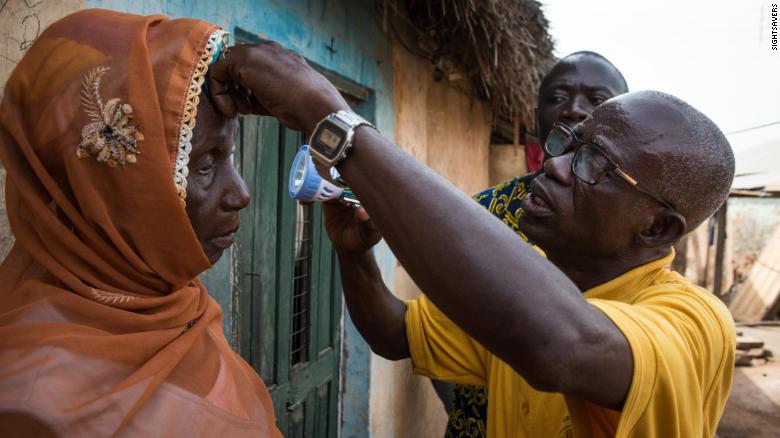
Fuseini Kwadja, an ophthalmic nurse, screens communities in Yendi, Ghana.

China, Gambia, Iran, Iraq and Myanmar claim to have been successful, as a result of a global campaign to wipe out the incidence of trachoma among their populations -- a common affliction of vulnerable people living in Third World conditions lacking proper hygiene and basic amenities that would ensure bacteria resulting from inadequate-to-no latrines are available to isolate human feces from contaminating food and water are kept to a minimum.

Worldwide, according to the World Health Organization's statistics, an estimated 1.2-million people have no vision whatever because of living conditions leading to infections causing trachoma, The WHO further estimates that 190 million people living in infection-vulnerable countries, some 41 in total, are at risk. More people are blinded by cataracts, but they do not result from infections.

While the scientific world community has been focused on fighting the horribly debilitating and often deadly effects of AIDS, malaria and Ebola, for several decade the medical community worldwide has also been focusing on trachoma. According to experts, enforcing basic public health practices is hugely effective in solving much of the problem of infections leading to trachoma.

Millions of people have lost partial eyesight from the effects of trachoma. And roughly seven million sufferers have undergone a brief intervention to reverse the effects of inward-torqued eyelids resulting from trachoma. In addition, 21 million trachoma sufferers suffer from infected lids that can be cured without resorting to surgery. The inversion of inward-torqued eyelids is a surgical procedure, one that takes only 20 minutes to complete.

Mr. Rana, a 65-year-old farmer in Nepal, arrived at the Geta Eye Hospital, a 32 kilometer trip he undertook by walking there, with the request that doctors pluck out his eyelashes. The bacterial infection had swollen and inverted his eyelids so that he suffered excruciating discomfort every time he blinked and his lashes raked his corneas. What he really feared was that the scratches they left and the resulting scar tissue would ultimate blind him.

Doctors responded to his plight by performing a new type of operation. His eyelids were sliced open, then rolled back and sutured, with the lashes facing outward once again. He was prescribed and given antibiotics to clear up the infection. That was fifteen years ago. Nepal's success in eliminating the outcome of this endemic infection led the WHO to declare Nepal's success in clearing up a critical public health condition; the sixth such country to manage that milestone.

Twenty years ago the global campaign to eliminate trachoma was launched, and it has been so successful that Cambodia, Laos, Mexico, Morocco and Oman have succeeded in eliminating the public health problem resulting from the infection. Now, Nepal and Ghana have joined them. The WHO still awaits requests from China, Gambia, Iran, Iraq and Myanmar to achieve certification attesting to their self-proclaimed success.

When fewer than five percent of a country's children show symptoms of trachoma and fewer than one in one thousand adults have vision loss from scarred eyeballs this is taken to represent elimination having succeeded. New cases of trachoma emerge in Nepal yearly, resulting from Nepalis working as seasonal labourers in India. Chlamydia trachomatis, the bacterium, is transmittable from person to person.
Zeinab Abukari in her home in Yendi district, Ghana. She was infected with trachoma many years ago.
Zeinab Abukari in her home in Yendi district, Ghana. She was infected with trachoma many years ago

In rural areas the common mode of transmission is flies creeping over children's faces eating the discharge from running eyes and noses. Those flies flit about on human feces to lay their eggs, contaminating the children with fecal matter. The first infections occur at the toddler stage; it takes decades for permanent eye damage to set in, after age 30.

A four-pronged strategy is recommended to break the chain of communication; surgery for advanced cases; annual antibiotic doses in hard-hit areas for the residents; teaching mothers to clean their children's faces frequently; and lastly, the use of pit latrines to reduce the fly populations. Suspicion in poor countries leads to problems in implementing the strategy, however.

About 20 percent of all patients requiring eyelid surgery in Tanzania refuse intervention because rumour has it that a six month recovery period follows surgery and they fear being unable to work to earn their daily bread. Attempts to reassure the reluctant patients so that the procedure can proceed to cure their problem are required, to emphasize that bandages are in place for only 24 hours.

And finally, Nepalis -- as elsewhere in poor countries of the world where custom and habit and lack of alternatives lead to outdoor field evacuation -- have resigned themselves to the use of outhouses rather than continue with the familiar traditions of defecating in fields. Many people were resistant to their use simply out of loyalty to old habits.

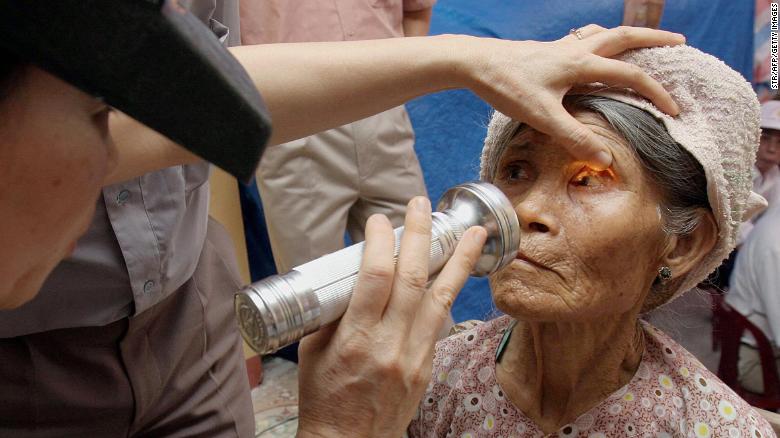
A farmer receives an examination for trachoma at a medical center in Vietnam, one of many countries aiming to eliminate the disease.

Labels: , , , , , ,

Sunday, October 01, 2017

It's A Dog's Life : India

"India is pretty unique."
"Maybe it's a karmic sense, this idea that the dog could be you, and if you don't watch out in life it could be you again."
"Or, maybe it's just that the poor have greater compassion because they can relate to other individuals who are having a hard time trying to survive."
Ingrid Newkirk, co-founder, People for the Ethical Treatment of Animals

"It comes down to tolerance. We've lived under Moghul rule, under British rule. It's crowded here, it's diverse, and to survive, you need to be tolerant."
"The more tolerant you are, the more compassion you have."
Niharika Kishan Gandhi, Mumbai, India
Blue dogs
Local residents spotted the blue dogs roaming the streets in an industrial neighbourhood of Mumbai, India. (Arati Chauhan/Facebook)

India must surely be among the most unique of nations, having enshrined in its very constitution (reflecting Hindu values) respect for animals. A passage within enjoins people of India to "have compassion for living creatures", which certainly goes a long way to explaining why cows are considered to be sacred, monkeys which can be a real nuisance are tolerated everywhere, and no real effort is made to secure storage of grain from predation by rats; everything, it seems, has a right to exist and to do so unharmed by the intention to see their presence as anything but normal.

The Supreme Court of India ordered Kerala state to see that vigilante action against the presence of stray dogs, seen as a threat resulting from deadly rabies proliferating, to cease and desist when strays were being hunted methodically to remove that threat. That presented as an anomaly in India where dogs are generally viewed as "community dogs", not strays. And as part of the community they are more often cared for as strays, to ensure they have enough to eat. Even the indigent poor with scarcely enough to eat themselves will feed strays.
A girl tries to protect her food from a stray dog in Mumbai on Oct. 3, 2005. Millions of strays roam India's growing urban centres, causing headaches for officials.
A girl tries to protect her food from a stray dog in Mumbai on Oct. 3, 2005. Millions of strays roam India's growing urban centres, causing headaches for officials.  (ADEEL HALIM / REUTERS FILE PHOTO)

There is a Bollywood actress who sees that vessels of freshly-prepared chicken and rice are set out each morning to feed neighbourhood dogs, while another woman makes the effort in her own way, driving about in her outfitted Honda to deliver meals to over one hundred dogs, and for good measure sprinkling those meals with seasonal spices; where turmeric is considered appropriate for the monsoon season to help boost canine immunity.

In India it is illegal to destroy healthy strays, leading to the presence of millions of dogs, an estimated 30 million right across the country. Typically, Indian dogs have a large and lean/muscular profile. Roughly two feet in height, with short-hair coats, long tails with a tendency to curl upward. They are descended from a venerable dog breed similar to and likely related to the Australian dingo dog. They roam about in packs through parks and can be seen around restaurants awaiting scraps.

Commuters inside railway stations are accustomed to seeing dogs sprawl in those environs on their stomachs, and they take care to leap over them on their way to the trains. That the dogs are generally cared for by a population that accepts them as they are says much of the philosophy of life in a country whose vast population runs the gamut from the middle class to the teeming millions who live hardscrabble lives of penury.

India is also known as a textile-industry country, a condition which gave rise recently to dogs in Mumbai being seen with a blue tint on their coats. Resulting when a dye company released colour chemicals into a drainage ditch flowing into a river running through Mumbai where dogs often play. The colouring meant for clothing staining the dogs' hair soon washed off by the following monsoon rains. Until that happened, however, the community was concerned to help the dogs living in that heavily industrialized part of Mumbai.

Where large plants crowd the landscape, factories stretching as far as the eye can see with smokestacks spilling effluent everywhere, and a stink of their products stifling the atmosphere with a pervasive stench of rotten eggs characteristic of sulphur, the devil's stink. The area, Taloja, teems with dogs whom factory workers and villagers alike feed. They will go to the extent of acquiring shampoo to wash the the dogs that roam the streets freely.
Twitter video is loading
Still from video  news.com

When the blue dye was first noticed on dogs, concerned workers contacted a neighbourhood human-rights activist who in turn contacted an animal-rights advocate who then called a veterinarian clinic nearby which rushed an ambulance to the scene. Soon afterward another incident with a dog occurred close to a factory where villagers waded into a ditch contaminated with nitric acid to rescue a trapped dog. The animal hospital named the rescued dog Babu and now cares for the dog who was blinded.

Charities dedicated to dogs, one named the Welfare of Stray Dogs, take to cruising about the city treating ill dogs and delivering healthy dogs to animal hospitals to be vaccinated and sterilized. Then, as required by law, the dogs are taken right back to the neighbourhood where they had originally been taken from. The government's plan is to reduce the population bit by bit through sterilization, a system thoroughly approved by animal welfare experts.

Sterilization also alters the behaviour of the dogs, which then have a tendency to be relaxed and friendlier, a condition that makes them even more attractive to the people among whom they live.

Labels: , , ,

 
()() Follow @rheytah Tweet