Inventing Brain Imbalance In Service of Pharmaceuticals
"You want to know why it took so long for the truth to come out?""I am afraid this has something to do with the toxic relationship between industry and academia. [Drug companies encourage MDs to prescribe often, and heavily and have] paid many academic psychiatrists to promote their products."Dr. Joel Paris, Montreal psychiatrist"But the main thing that has got people riled up is that we have dared to draw conclusions about anti-depressants.""It seems the main criticism is that antidepressants work. It doesn't mater how they work. It doesn't matter that the original idea, the original theory for how they work is unproven. They work, and that's all that matters.""[To me, it matters] Because whether they work or not depends on how we understand what they are doing. We have to consider other possible ways that they may be 'working' ... which include the fact they are drugs that change normal brain chemistry.""[When the first SSRI, Prozac was launched in the 1980s] the pharmaceutical industry knew it couldn't market them in the same way as [benzos], so, it had to convince people that they had an underlying disease and needed o take the drugs for an underlying disease.":If you think something is wrong with your brain and a drug is going to put it right, of course you're going to take it."Dr.Joanna Moncrieff, consultant psychiatrist, professor of critical and social psychiatry, University College, London
 |
| Chip Somodevilla/Getty Images; J. Scott Applewhite-Pool/Getty Images; Yulia Reznikov/Getty Images |
Dr.Moncieff is the co-founder of the Critical Psychiatry Network and agrees that sedatives like benzodiazepines can be useful short term in a crisis: "But I think that drugs that affect the brain, we should be cautious about". No evidence exists that such drugs reverse an underlying abnormality of the brain, but "they are doing something to the brain. And by doing that they change our normal mental states."
Dr. Moncrieff points out that specific drugs known as SSRIs (selective serotonin reuptake inhibiters that are believed to work by correcting abnormally low serotonin, a neurotransmitter helping to move messages between brain cells thought to play a role in how brains process emotions) represent a drug formulation whose efficacy is taken on trust as a tried-and-true medication for clinical depression, but that in actual fact they are not at all effective.
An international media frenzy broke out with news headlines such as "How were so many duped?" when it became all too evident that the "serotonin theory" of depression, the belief in too little of the brain chemical leading to depression was debunked. The hypothesis weathered well for decades becoming deeply entrenched throughout the psychiatric medical community, a huge assist in promoting a class of antidepressants taken by millions worldwide.
Several months ago a major review concluded there was no support for the hypothesis that depression is caused by lowered serotonin activity or concentrations, for basically, no convincing evidence of a "chemical imbalance" exists. The paper's authors have been ridiculed and attacked, accused of succumbing to urban myths that link antidepressants to mass shootings.
The suggestion and subsequent acceptance that a "chemical imbalance" in the serotonin theory first introduced 60 years ago seemed promising. However, said Dr. Allen Frances, professor emeritus of psychiatry at Duke University, involved in creating the fourth edition of the Diagnostic and Statistical Manual of Mental Disorders in 1994, the association was weak and failed to replicate. "Depressions are so remarkably heterogeneous, there can't possibly be any unitary cause", stated Professor Frances; further study "revealed just how ridiculously complicated is brain structure and function".
For their "umbrella" review published in Nature's Molecular Psychiatry, Dr. Moncrieff and her co-authors reviewed high-level studies in six major areas of research which spanned 56 years, involving tens of thousands of people. The studies involved indirect measures of serotonin activity in the knowledge that no "normal level" of serotonin exists. The investigators reviewed studies indicating indirect measures of serotonin activity; serotonin and its breakdown products in people's blood or cerebral spinal fluid comparing levels between people diagnosed with depression and those not diagnosed with depression, as healthy "controls".
No overall difference in levels of serotonin was found by the researchers between the two groups. Serotonin comes from tryptophan, an amino acid extracted from the diet. Healthy people on diets lacking tryptophan did not become depressed. Looking at studies of genes involved in the brain's serotonin system, researchers again found no consistent difference between depressed and healthy volunteers.
"I think people need to think carefully about why they are taking [SSRIs] and what they think the drug is doing for them."
"If they are taking the drug because they think it's correcting an imbalance in their brain,I would suggest that they could re-evaluate whether they need to take it", said Dr. Moncrieff.
According to Dr. Frances, what is often lost in the controversial conversation over chemical imbalance and depression, is that mild depressions are usually caused by life stressors which do not require medications. "Instead, they improve with time, support, reduced stress and/or psychotherapy", while severe depressions do require medication, rarely responding to anything else.
It is not just for depression that SSRIs are prescribed, but for social anxiety disorder, panic disorder, OCD (obsessive-cmpulsive disorder), phobias and an even longer list of complaints. Like all drugs, these carry side effects which include agitated feelings, low alcohol tolerance and loss of libido and sexual dysfunction.
 |
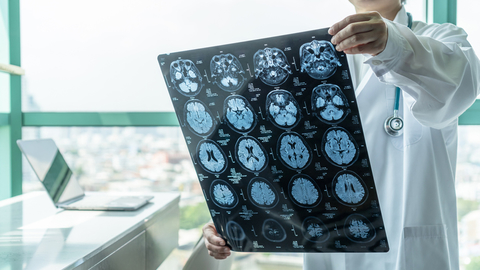
| A recent analysis paints a compelling picture that depression isn't caused by a chemical imbalance in the brain. But experts say this is already widely accepted and it's also true that antidepressants can be extremely beneficial to some patients — even if we don't know exactly why. (Shutterstock / Chanintorn.v) |
Labels: "Chemical Imbalance", Academia, Clinical Depression, Pharmaceuticals, Research, Serotonin
posted by Pieface @ 7:58 PM
0 comments